I love a good “kitchen scrap → thriving plant” story as much as anyone. Coffee grounds for plants sounds like the perfect loop: you brew coffee, your pothos gets a boost, and the trash can stays emptier. The only catch is that coffee grounds aren’t magic plant food on their own. They’re organic matter that soil life has to break down first—and if you pile them on thick (especially in containers), they can compact into a crust, hold too much moisture, and even slow seed germination.
The good news: used coffee grounds can absolutely be useful in the garden when you treat them like a compost ingredient or a light soil amendment, not a stand-alone fertilizer. In this guide, I’ll walk you through what coffee grounds do for plants, how to use coffee grounds in the garden (including balcony pots), which plants tend to benefit most, and what plants don’t like coffee grounds. I’ll also cover the tomato question—because someone always asks—and the common mistakes that get people into trouble.
What Coffee Grounds Actually Do for Plants
Used coffee grounds are best thought of as a soil-life snack and a structure helper. They contain some nitrogen (often around 1%–2%) and small amounts of other nutrients, but they’re not a complete fertilizer and they don’t “feed plants” instantly. Soil microbes need time to break them down, and during that process they can temporarily tie up nitrogen in the immediate area. That’s one reason dumping grounds straight into planting holes or seed trays can backfire.
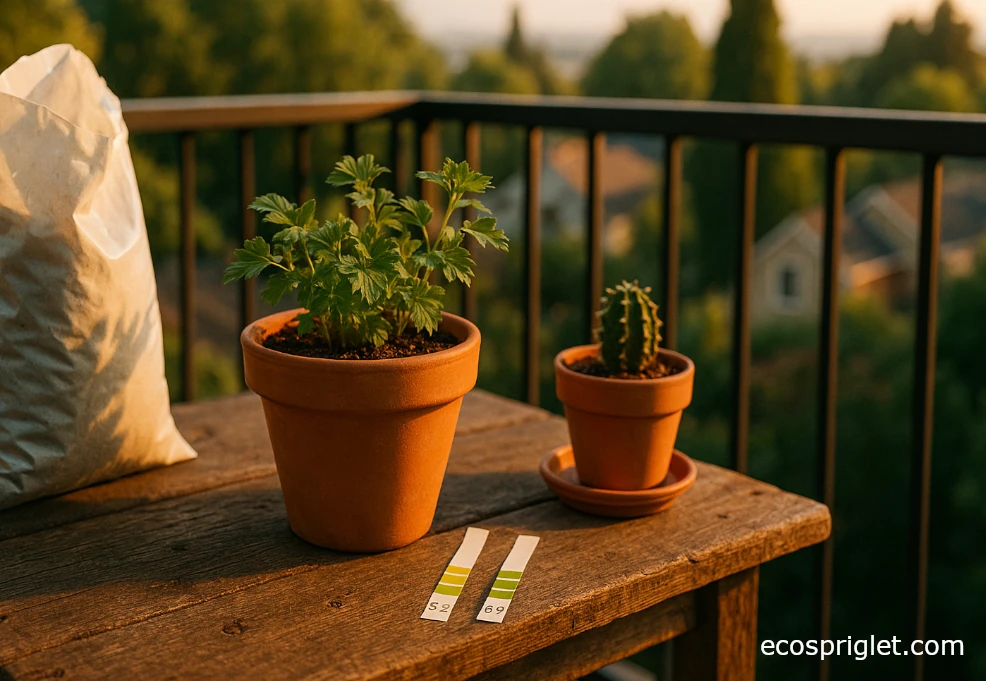
Another big myth: coffee grounds do not reliably acidify soil. After brewing, they’re generally close to neutral, and any pH effects tend to be minor and temporary. If you’re trying to improve soil pH for blueberries or azaleas, coffee grounds are not the tool for that job.
So what do coffee grounds do for plants? Used appropriately, the main benefit is improving soil texture and supporting the microbial life that helps build healthy structure. In beds and large planters, that can mean better aggregation and more consistent water movement over time—especially when grounds are composted first.
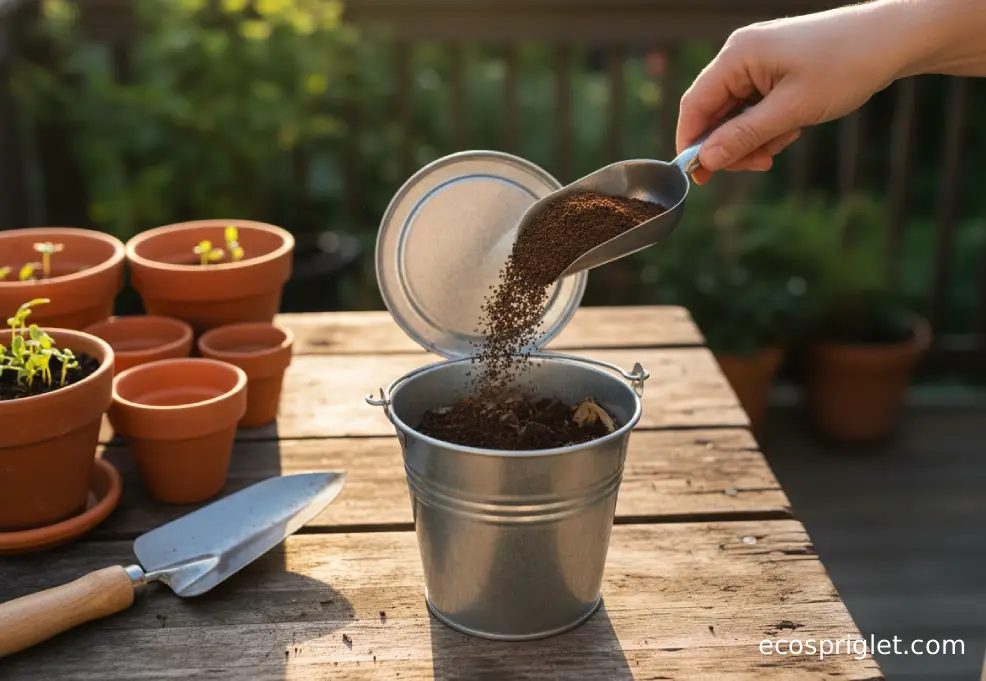
The Best Way to Use Coffee Grounds in the Garden: Compost First
If you do just one thing with used coffee grounds, make it this: add them to compost. Both Oregon State University Extension and Washington State University Extension emphasize moderation and mixing—coffee grounds are a helpful ingredient, but too much can stall composting or cause plant issues later. A solid rule is to keep coffee grounds to no more than about 20% of your compost pile by volume.
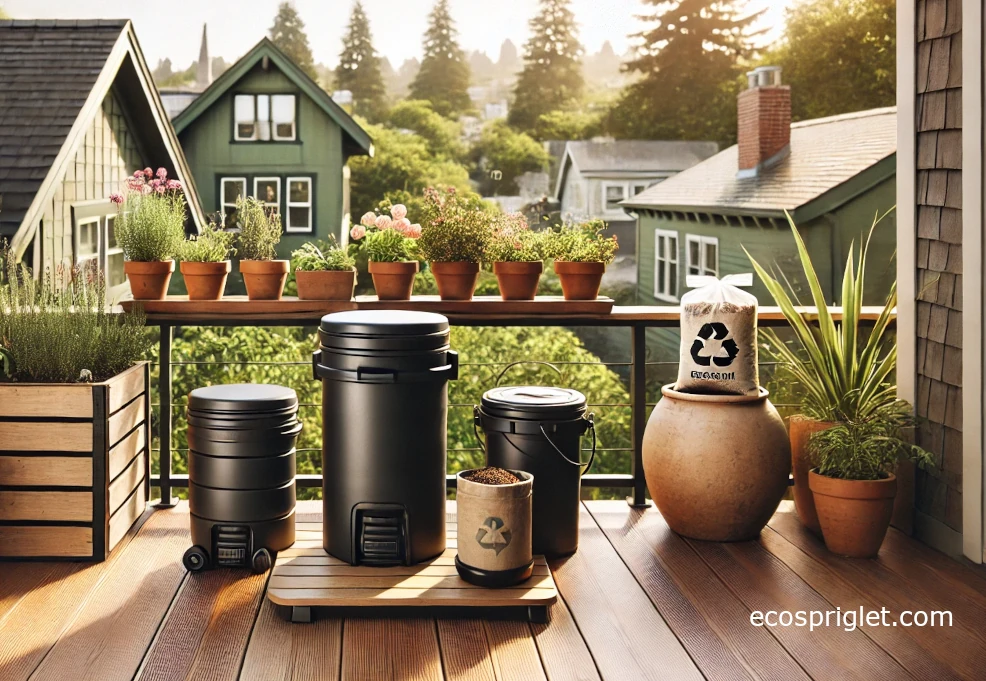
My apartment-friendly approach is a small lidded bin or tumbler and a simple rhythm: every time you add grounds, add a bigger “brown” handful too (dry leaves, shredded cardboard, plain paper). You’re aiming for a mix that looks like a salad, not a dense, wet paste. Turn when you can, keep it damp like a wrung-out sponge, and let the biology do the hard work.
- Keep it mixed: Grounds clump. Break them up as you add them so they don’t form a solid mat.
- Keep it balanced: Pair grounds with browns so the pile doesn’t go soggy and smelly.
- Keep it patient: Plan on months, not days—coffee grounds need time to fully break down.
Once composted, you can use that finished compost as a top-dress in containers or blend it into garden beds. If you want a broader balcony compost strategy, our starter guide can help: Composting at Home.
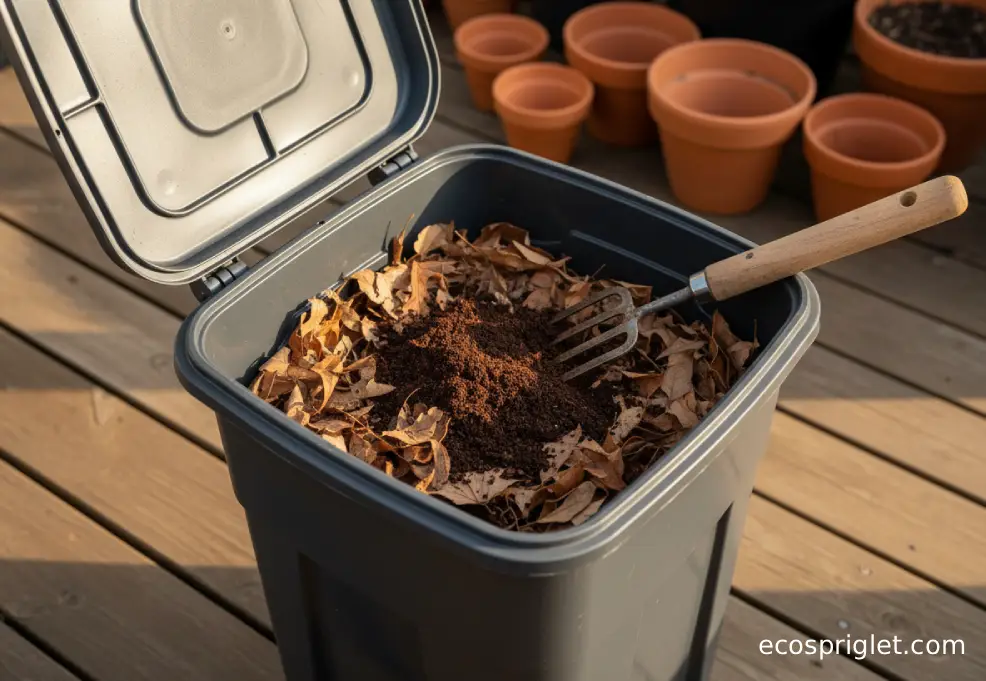
Direct Use Rules: When Coffee Grounds Help—and When They Hurt
Sometimes you don’t have compost ready, or you only have a small amount of grounds each week. You can still use coffee grounds in the garden directly—just follow “thin and mixed” rules.
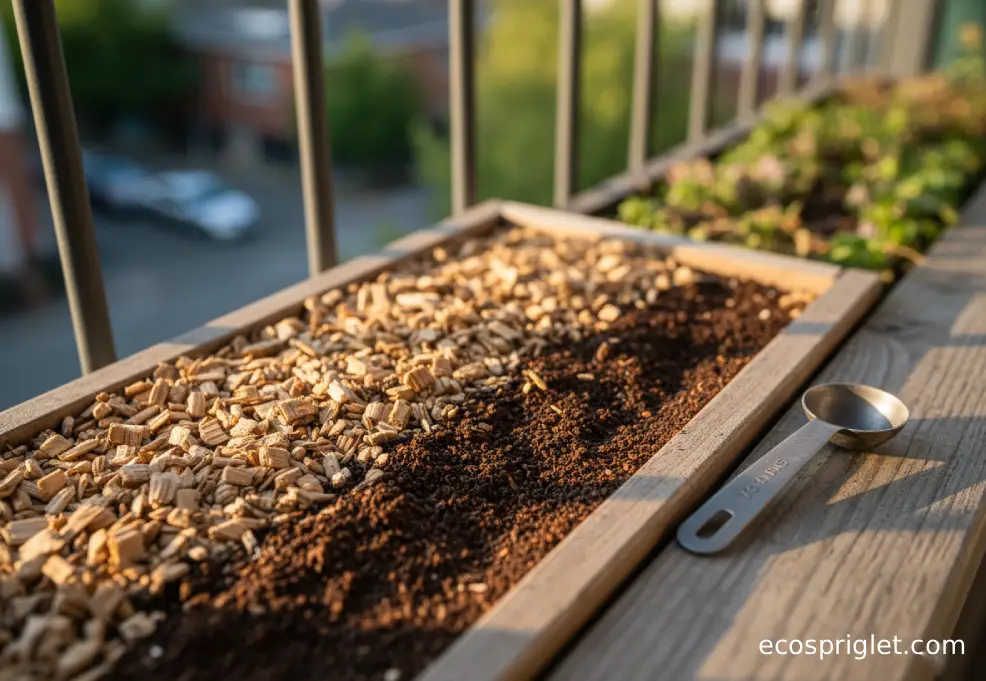
Washington State University Extension warns that coffee grounds are finely textured and can compact, interfering with water and air movement if you apply them in thick layers. Their practical recommendation for mulch-style use is a very thin layer (no more than 1/2 inch), covered with a thicker coarse mulch layer (about 4 inches) like wood chips to prevent compaction.
Oregon State University Extension offers a similar “moderation matters” message and notes that excess coffee grounds applied directly can temporarily tie up nitrogen and may inhibit seed germination or slow growth.
For balcony gardeners, here’s the easiest safe shortcut:
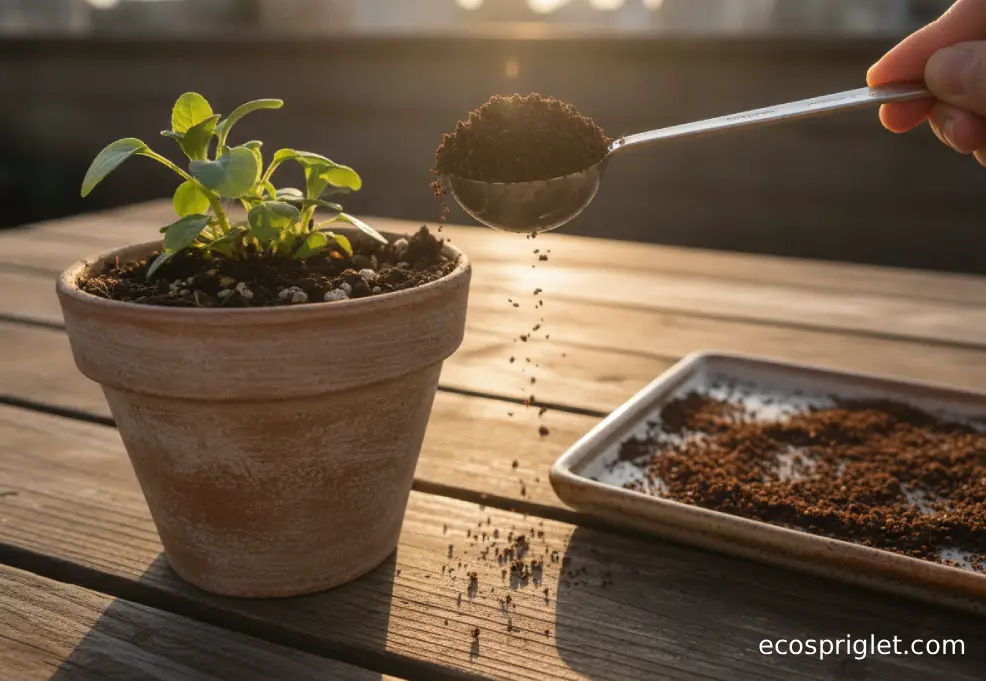
- Skip seedlings: Don’t add coffee grounds where you’re sowing seeds or rooting cuttings.
- Use a light top-dress: Think “dusting,” not “blanket.” If you can see a thick dark layer, it’s too much.
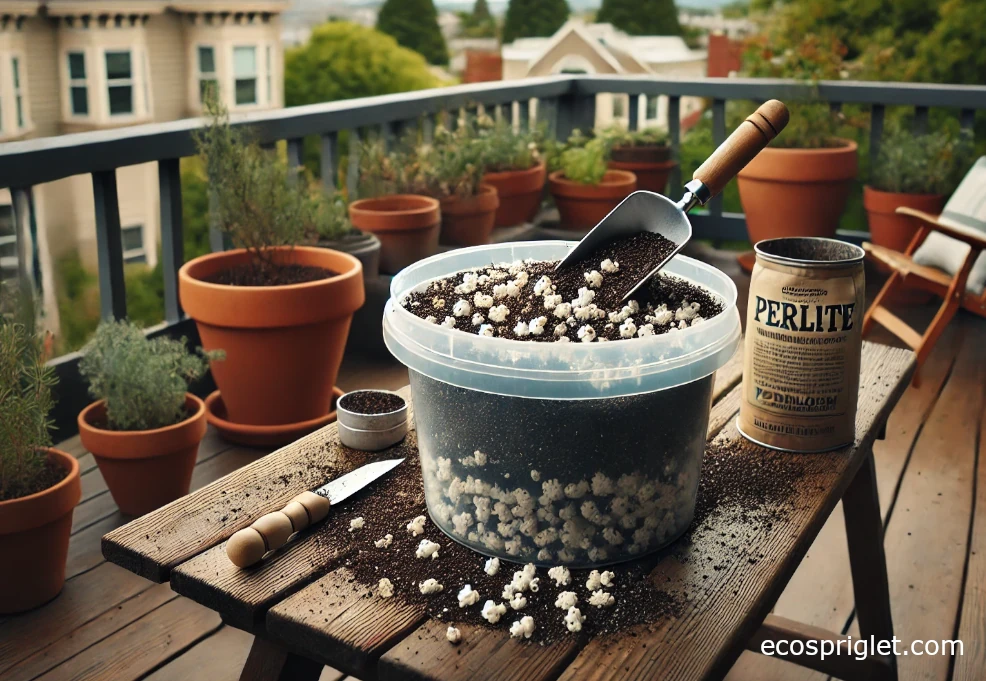
- Mix into a larger organic layer: Either compost, or mix grounds into an existing mulch layer so they don’t crust.
What Plants Like Coffee Grounds (and What That Usually Means)
When people ask “what plants like coffee grounds,” they’re usually asking one of two things:
- “Which plants can handle extra organic matter and mild nutrient trickle without stress?” Established, actively growing plants in beds or big containers tend to be forgiving—especially leafy crops and vigorous ornamentals.
- “Which plants want acidic soil?” That’s where coffee grounds get oversold. Used grounds don’t reliably lower pH, so don’t count on them to create a true acid-loving setup.
In practical balcony terms, compost that includes coffee grounds is a nice fit for:
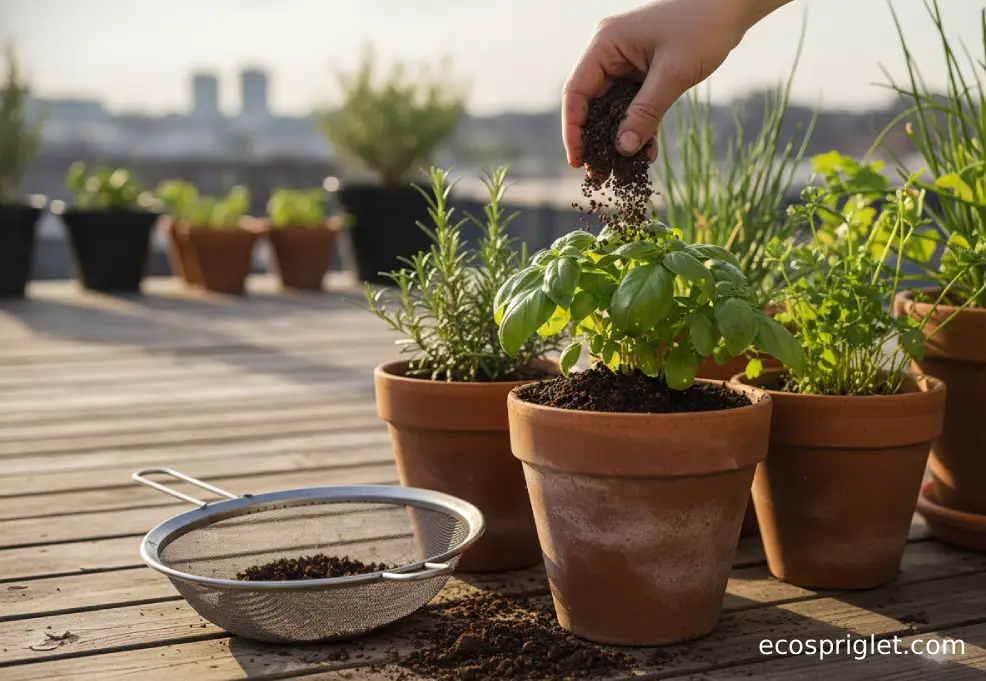
Leafy greens and many herbs (as a light top-dress), container flowers that appreciate richer soil biology, and shrubs in large planters when used as finished compost. For long-term container soil health, compost is your steady, boring hero—exactly what you want.
When growing “acid-loving” plants like blueberries in containers, treat coffee grounds as compost input, not a pH solution. A mix that truly needs to be more acidic calls for a different approach, often involving a soil test and appropriate acidifying materials.
What Plants Don’t Like Coffee Grounds
If you want a quick “do not” list, here it is: plants started from seed, very young transplants, and anything already stressed (rootbound, underwatered, pest-damaged) tend to respond poorly to experiments. Washington State University Extension notes reduced seed germination and reduced growth have been observed in experiments using coffee grounds as an amendment or mulch.
In containers, there’s another category: plants that hate soggy, compacted surfaces. If coffee grounds form a crust, water can pool on top and oxygen can struggle to reach roots. That’s not a “this plant hates coffee” problem—it’s a “the pot surface turned into a dense mat” problem. The fix is the same every time: use less, keep it mixed, and don’t let it sit as a thick standalone layer.
Are Coffee Grounds Good for Tomato Plants?
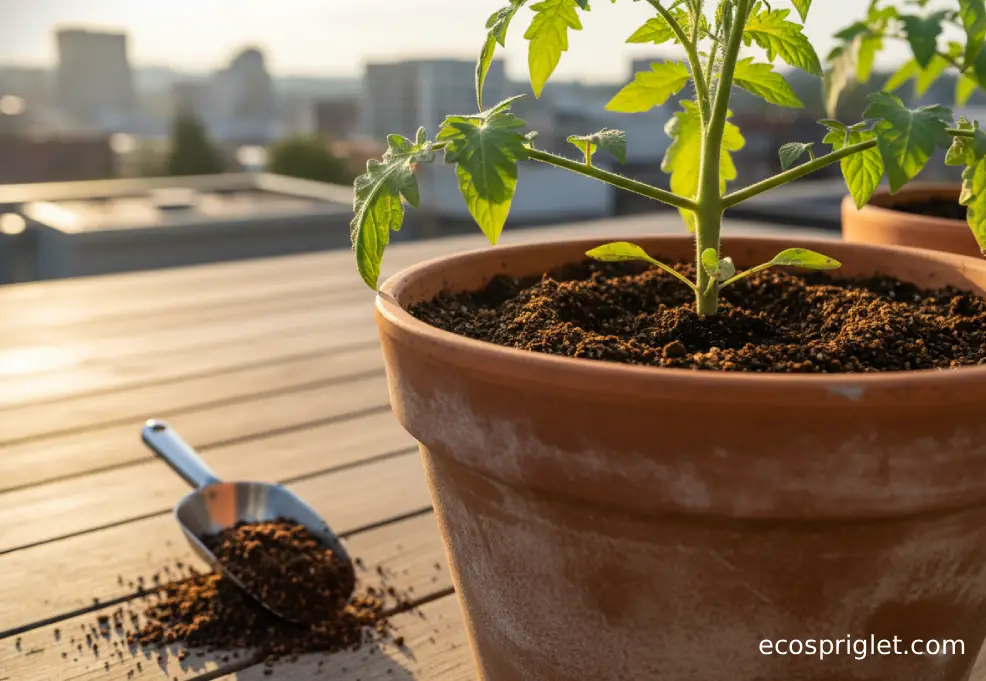
Used coffee grounds for tomato plants can be fine—if you use them the same way you’d use any other compost ingredient. Tomatoes are hungry plants, but they don’t need coffee specifically. They need consistent moisture, sufficient sun, and a balanced fertilizer plan appropriate for containers.
Here’s the tomato-safe way I do it on patios: I top-dress with finished compost (which may include coffee grounds) in a thin layer, then water it in. Oregon State University Extension notes that coffee grounds aren’t a major nutrient source and that excess fresh grounds can temporarily tie up nitrogen and inhibit germination or slow growth—so composted is the safer default.
If you’ve heard coffee grounds prevent blossom end rot—skip that. Blossom end rot is usually tied to uneven water movement and calcium transport, not a magical add-in. (If you want the practical tomato container setup, see: How to Grow Tomatoes in Pots.
Using Coffee Grounds in Containers and Houseplants Without Mold
I remember the first time I tried coffee as plant food indoors—I sprinkled wet grounds on a pothos pot, felt wildly resourceful, and then watched a fuzzy layer of mold move in like it paid rent. Lesson learned: houseplant potting mixes often don’t have the same microbial “workforce” as outdoor soil, and coffee grounds can stay wet and clumpy in a way that invites fungus gnats and surface funk.
For indoor plants, treat used coffee grounds as a compost input, not a topper. If you really want to bring the coffee loop inside, here are safer moves:
- Use finished compost only: A thin top-dress (think 1/4 inch or less) is plenty for most medium pots.
- Keep it off the stem: Leave a small bare ring around the plant base so it doesn’t stay damp against the crown.
- Dry, don’t dump: Never add wet clumps to a pot—clumps are where the mold party starts.
- Consider worm castings instead: If you want gentle nutrition for houseplants, worm castings are usually easier to manage than raw scraps.
So, are coffee grounds good for house plants? Sometimes—but they’re usually safer as part of compost than sprinkled directly into a pot.
Common Mistakes New Balcony Gardeners Make With Coffee Grounds
| Mistake | What It Causes | Better Move |
|---|---|---|
| Thick layer of grounds as mulch | Compaction, poor water/air movement | Keep it thin (≤1/2 inch) and cover with coarse mulch |
| Adding grounds to seed trays | Reduced germination, slow early growth | Skip grounds for seedlings; use finished compost later |
| Trying to acidify soil with grounds | Little or no lasting pH change | Use a soil test and real acidifying materials if needed |
| Dumping wet grounds into houseplant pots | Mold, gnats, soggy surface | Compost first, then top-dress lightly or use castings |
The “thin and mixed” theme is boring, but it’s the difference between coffee grounds in the garden being helpful versus becoming a crusty mess.
Creative (But Realistic) Uses for Coffee Grounds Around Plants
“Uses for coffee grounds” is a rabbit hole online, so let’s keep this grounded. Two ideas that are both common and at least partly supported by credible guidance:
- Boost compost heat. Coffee grounds can help a compost pile heat up and stay active when used as one ingredient among many—especially useful if your compost is mostly dry leaves. Keep the overall mix balanced and don’t let grounds exceed about 20% by volume.
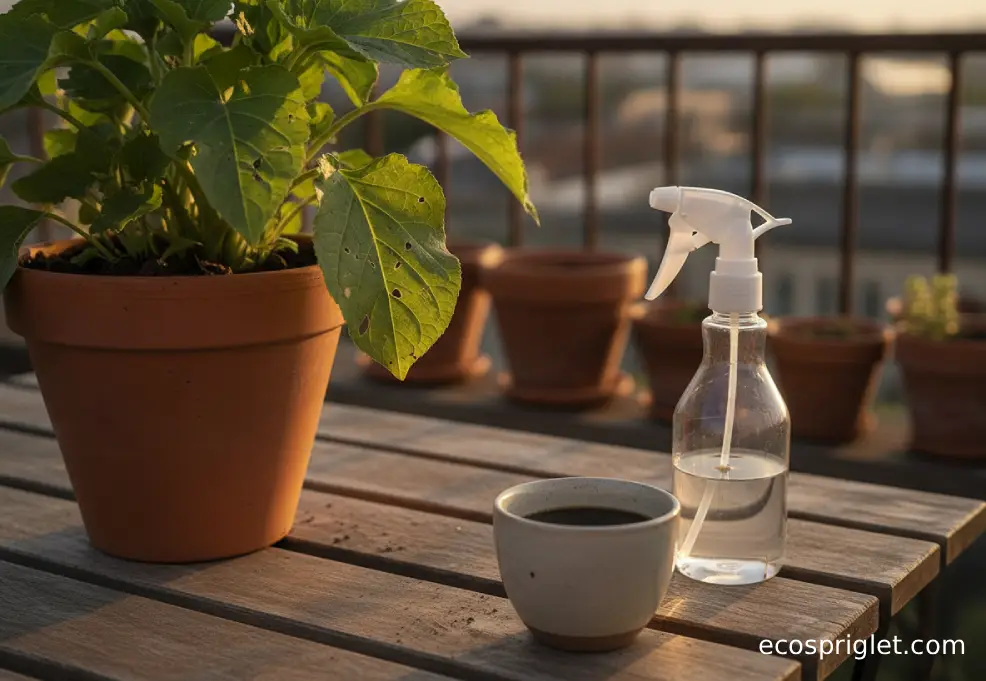
- Brewed coffee for slugs (carefully). Oregon State University Extension describes research on caffeine solutions affecting slugs/snails and shares dilution guidance for a soil drench and foliar spray testing approach. If you try it, test on a small area first and watch for leaf burn, especially in bright sun.
One important nuance: Washington State University Extension notes there’s no published evidence that coffee grounds themselves repel or kill garden pests. So if you’ve been sprinkling grounds like a magic barrier, it may not be doing what you think—and thick layers can cause their own problems.
Conclusion: Think “Compost Ingredient,” Not “Plant Food Shortcut”
If you take away one idea from all the noise: coffee grounds for plants work best when you route them through compost. That’s where they become a steady, low-drama soil builder instead of a clumpy, compacting layer. Used coffee grounds are not a reliable way to lower soil pH, and they aren’t a complete fertilizer—but they can support healthy soil biology and structure when used in moderation.
For urban apartment gardeners, the safest rhythm is simple: compost what you can, top-dress containers lightly with finished compost, and skip experiments on seedlings and houseplant pots. If you want more balcony-friendly soil tips, head to How to Make Potting Soil for Container Plants and keep your setups boring in the best way—stable moisture, breathable mixes, and small changes you can observe.