Timing onions can feel oddly confusing because seed packets, garden centers, and planting calendars seem to give different answers. The simple reason is that onions can be grown from seeds, sets, or transplants, and each one has a slightly different starting window. Your climate and the onion’s day-length type matter too.
For most home gardeners, the best time to plant onions outdoors is early spring, as soon as the soil can be worked without being soggy. You do not need to wait for tomato weather. Onions are cool-season vegetables, and established plants tolerate chilly spring conditions much better than warm-season crops. Gardeners starting onion seeds indoors should usually begin roughly 8–12 weeks before outdoor planting.
On a balcony, I use the same seasonal cues rather than waiting for a particular calendar date: workable potting mix, steadily improving daylight, and no severe freeze in the immediate forecast. This guide covers seeds, sets, starts, green onions, fall planting, Zones 5–7, and the small-space adjustments that make those dates genuinely useful.
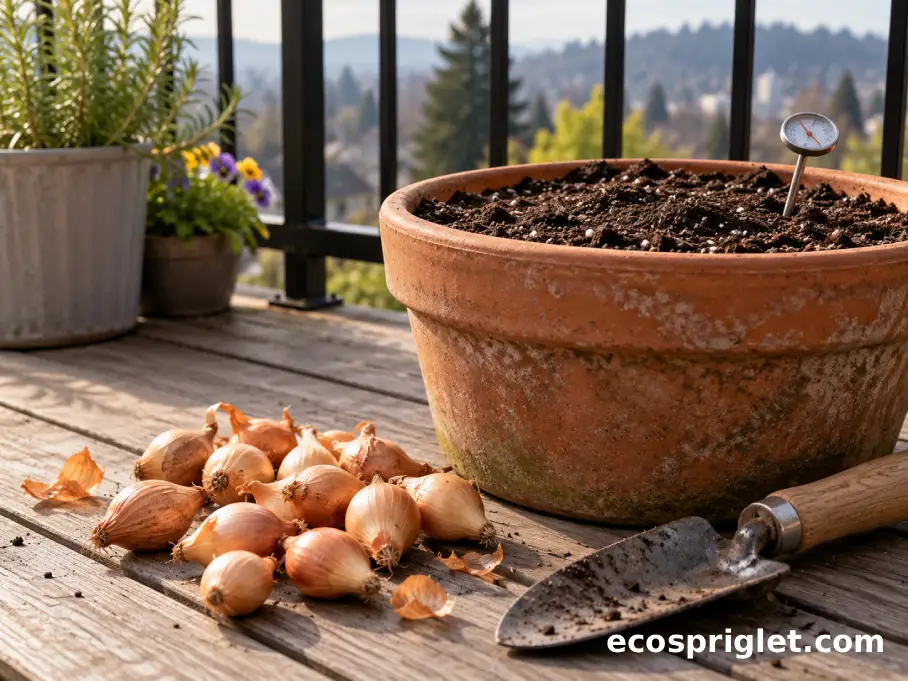
The Best Time to Plant Is Earlier Than Many Beginners Expect
For spring-grown bulb onions, think in terms of soil condition rather than the last frost date. University of Minnesota Extension and Iowa State University Extension both advise planting onions as soon as the soil is workable in spring. Onion sets and hardened transplants can tolerate cool weather and even light frost.
The practical signal is simple: squeeze a handful of garden soil or potting mix. If it is cold but loose enough to crumble rather than smear into a sticky lump, planting can usually begin. Utah State University notes that onion seed can germinate at soil temperatures above 40°F, although emergence is slower in cold conditions.
- Plant sets or transplants once soil can be worked and prolonged severe freezes are no longer expected.
- Direct-sow seed at roughly the same early-spring stage, knowing cold soil can make germination slow.
- Start indoor seedlings about 8–12 weeks before you expect to move them outside.
- Do not delay bulb onions until the soil is warm enough for peppers or tomatoes; that wastes valuable leaf-growing time.
That last point matters because onions need time to build leaves before increasing day length triggers bulbing. Each healthy leaf contributes to the developing bulb. Planting unnecessarily late can therefore leave you with perfectly edible but smaller onions.
Seeds, Sets, and Starts Need Different Calendars
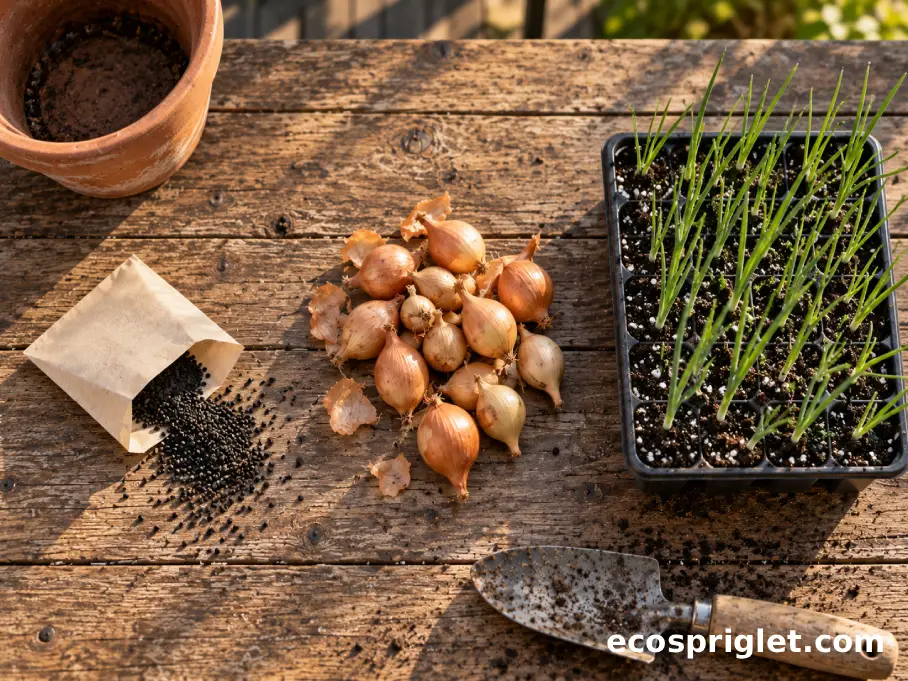
The question of onion seeds and when to plant them has a different answer from the question of when to plant onion sets. Seeds need the longest head start. Iowa State University Extension recommends starting them indoors approximately 8–10 weeks before outdoor planting, while other Extension guidance commonly uses a window up to about 12 weeks.
On my balcony, seed-grown onions are the option I choose when I care about variety. Seeds give you far more choices than the red, yellow, or white sets commonly sold at garden centers. They do require bright light and a little patience. A sunny windowsill is often not bright enough in late winter, so a basic grow light can produce stockier seedlings.
Sets are easier. They are small dormant bulbs produced during the previous season. Plant them directly outdoors in early spring as soon as your container or bed is workable. Iowa State recommends sets about 1–1½ inches deep. Smaller sets are generally better for producing mature storage bulbs because large sets are more prone to flowering prematurely.
Starts or transplants sit between those two options. Someone else has already done the seed-starting work, so you can plant them outdoors around the same early-spring period as sets after hardening them to outdoor conditions.
If you want the simplest first attempt, I would choose small sets or healthy transplants. If you want unusual varieties or tighter control over day-length type, seeds are worth the extra weeks.
Day Length Matters as Much as Your Planting Date
An onion does not simply make a bulb because it has been growing for a certain number of days. Bulbing is strongly influenced by day length, which is why buying an onion suited to your latitude can matter more than shifting your planting date by a week.
Long-day onions generally need roughly 14–16 hours of daylight to initiate bulbing and are suited to northern regions. Short-day onions begin bulbing with shorter days and are used farther south. Intermediate-day onions fit the middle of that range. Oregon State University Extension and University of Georgia Extension both emphasize this relationship between latitude, daylight, and bulb development.
Imagine planting a short-day variety far north. It may receive its bulbing signal while the plant is still small. Instead of spending spring producing a large canopy of leaves first, it moves toward bulb formation too soon, limiting its potential size.
This is why I check the variety description before worrying about whether planting happens on March 25 or April 2. Look for the words long-day, intermediate-day, or short-day on the seed packet or transplant label and choose a type recommended for your region.
If you are buying unnamed onion sets, you may have less control over variety. They are still convenient, particularly for green onions, but seeds or named transplants are better when producing reliable full-size bulbs is the priority.
Use Zones 5, 6, and 7 as Clues, Not Planting Deadlines
Questions about when to plant onion sets in Zone 5, Zone 6, or Zone 7 are common, but USDA hardiness zones describe average winter minimum temperatures. They do not tell you exactly when spring soil becomes workable. Two cities in the same hardiness zone can have very different rainfall, elevation, frost patterns, and spring temperatures.
| Area | Useful Starting Point | What to Check Before Planting |
|---|---|---|
| Zone 5 | Early to mid-spring | Soil is workable and the forecast does not show a prolonged hard freeze. |
| Zone 6 | Late winter to early spring, depending on location | Containers or beds have thawed and excess winter moisture can drain freely. |
| Zone 7 | Late winter to early spring in many locations | Local frost patterns, soil moisture, and whether fall planting is customary in your region. |
These are intentionally broad windows. For comparison, Iowa State Extension typically plants sets from late March into April, while regions farther south can plant substantially earlier. That difference is exactly why a local Extension planting calendar is more useful than the hardiness zone alone.
For an apartment gardener, containers add another twist. Potting mix can warm during sunny days and then cool rapidly overnight. I would rather plant into a well-drained container during a stretch of normal cool spring weather than rush into saturated mix simply because a zone-based chart says the month is right.
If a brief light frost follows planting, established onions are generally far less vulnerable than warm-season vegetables. For a balcony container that can be moved easily, sliding it beside a sheltered wall overnight is a simple precaution during an unusually cold spell.
Fall Planting Works, but Only With the Right Onion and Climate
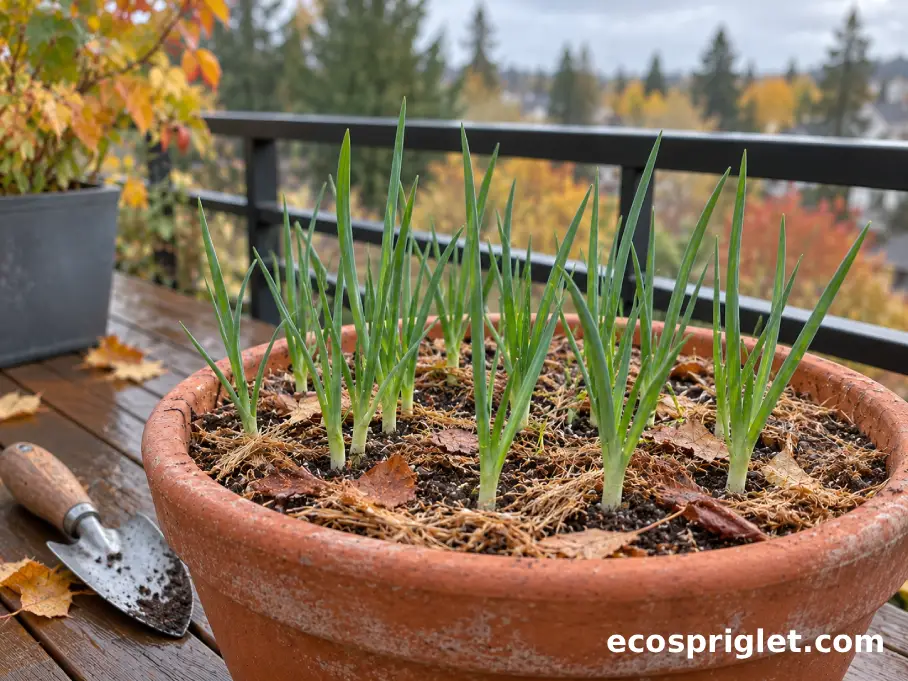
Planting onion sets in autumn can produce an early crop, but fall planting should not be treated as the default everywhere. It works best where winters are suitable and where you have a variety specifically adapted to overwintering.
Utah State University Extension notes that onion seed can be planted in late summer for overwintering, while Oregon State University Extension discusses overwintering onions as an established production method in the Pacific Northwest. The critical detail is plant size going into winter. Overwintered onions that become too large before sustained cold weather can be more likely to bolt the following spring.
That means the goal is establishment, not producing a large onion plant before winter.
- Choose a variety specifically described as suitable for fall planting or overwintering in your region.
- Plant early enough for roots and modest leaf growth to develop before winter.
- Avoid pushing growth with excessive nitrogen late in the season.
- Protect containers from repeated freeze-thaw stress where winters are severe.
Containers deserve extra caution because roots above ground are less insulated than roots in garden soil. In genuinely cold climates, spring planting is usually the simpler choice for apartment gardeners unless you have a sheltered setup and a locally proven overwintering variety.
I treat autumn onions as a regional technique rather than a shortcut. If the local seed catalog or Extension office does not recommend overwintering bulb onions in your area, waiting for early spring removes a lot of uncertainty.
Green Onions Give You a Much Wider Planting Window
If your goal is scallions rather than large storage bulbs, the calendar becomes much more forgiving. Green onions are harvested while young, so you are not depending on the plant to build a large mature bulb before a particular day-length trigger.
Seeds can be sown in early spring, and successive small sowings can continue while temperatures remain suitable. University of Maryland Extension lists green onions among vegetables that can grow in relatively shallow containers, making them especially useful for renters with a windowsill, narrow balcony, or limited soil volume.
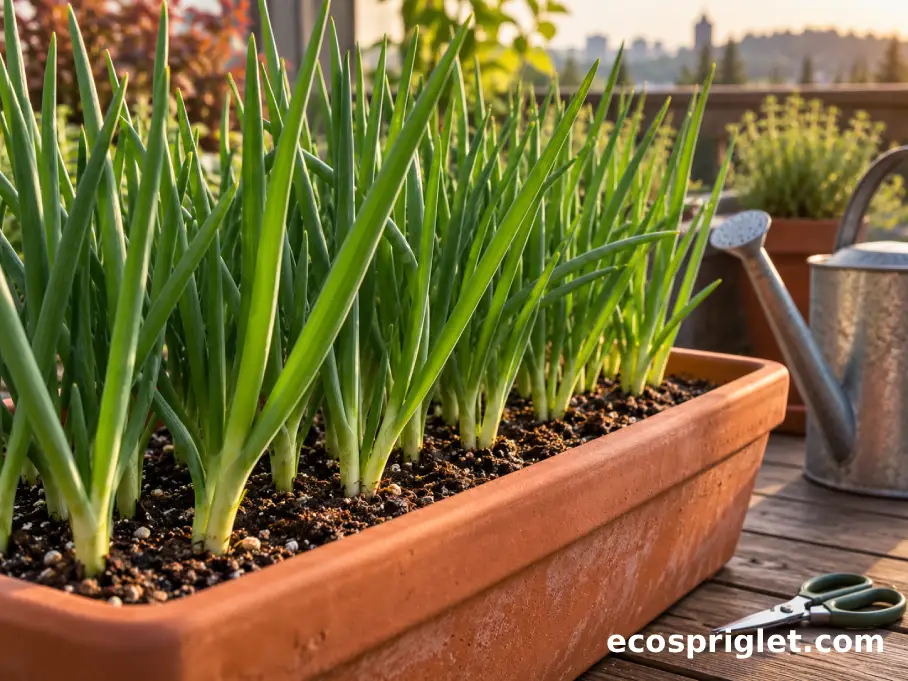
A 1-gallon container can handle a surprisingly useful little patch of green onions when plants are spaced closely. For repeated harvests, I prefer sowing a modest amount every 2–3 weeks rather than planting the whole seed packet at once. That keeps the kitchen supplied without creating a container full of onions that all need harvesting on the same weekend.
You can also turn oversized onion sets into green onions. Iowa State University Extension notes that larger sets are more likely to flower instead of producing excellent mature bulbs, so using those larger sets for scallions is a practical way to avoid wasting them.
Plant closely when the entire plant will be harvested young. If some onions are intended to mature into bulbs, thin the stand as you harvest green onions and leave roughly 3–5 inches around the remaining plants.
Planting for a Fall Harvest Starts Earlier Than Fall
When gardeners ask when to plant onions for fall harvest, the easy mistake is assuming they should be planted in fall. Mature bulb onions usually need a substantial growing season, so a late-season harvest generally begins with a spring planting.
Planting early gives onions time to build leaves before bulb initiation. Depending on variety and region, mature bulbs are commonly ready during summer or toward early fall rather than being started just before that harvest period.
For a genuinely late sowing, green onions are more realistic than full-size bulbs. They can be harvested young and do not require the same long bulbing period. This is one of my favorite small-space compromises: if you missed the main spring window for bulb onions, use the available planter for scallions instead of forcing a crop that no longer has enough season left.
Another option in climates suited to overwintering is to plant an adapted onion in late summer or fall for harvest the following year. That is a completely different schedule from planting a spring onion for the coming fall.
Keep those two strategies separate: spring planting generally leads toward the current season’s mature bulb harvest, while autumn overwintering aims at the following season.
Container Onions Need Room, Drainage, and Consistent Moisture
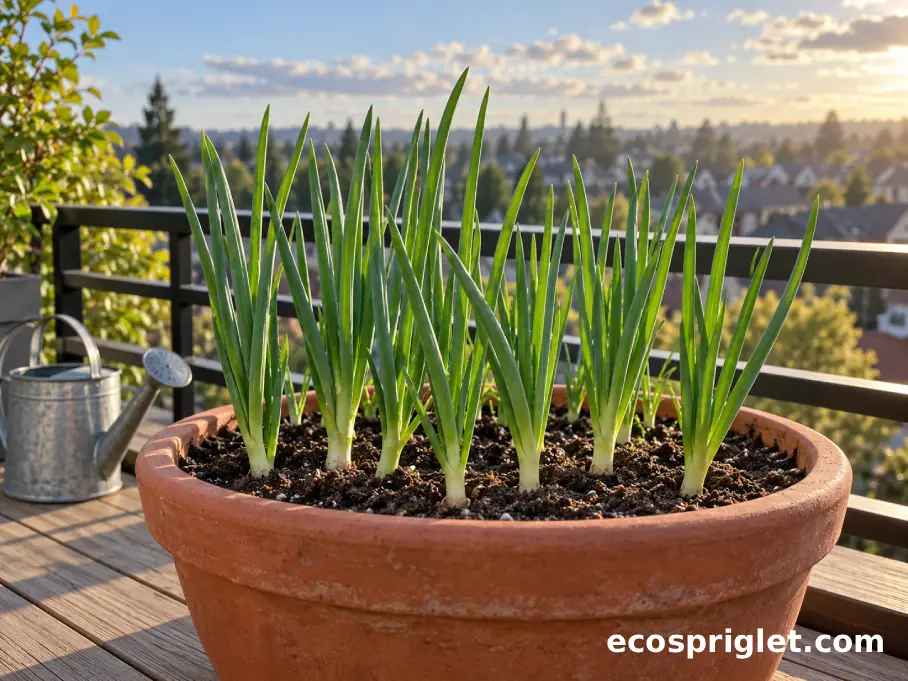
The planting date does not change dramatically just because your onions live on a balcony, but container conditions can make a good date succeed or fail. University of Maryland Extension suggests roughly 2–5 gallons of growing medium for a small group of mature bulb onions, with plants thinned to about 4–5 inches apart. Green onions can be grown far more densely.
I like a wide container more than a tall narrow pot because onions have relatively shallow root systems and benefit from usable surface area. A planter at least about 10 inches across works for a small planting, while a broad 2–5 gallon container gives several bulb onions more realistic spacing.
Drainage holes are essential. Use container growing mix rather than dense yard soil, and do not add a gravel layer beneath the potting mix. Good drainage comes from an appropriate growing medium and unobstructed holes, not from rocks at the bottom.
- Give bulb onions roughly 3–5 inches between plants; closer spacing generally produces smaller bulbs.
- Place the container in your sunniest practical location.
- Check moisture frequently because onion roots are shallow and balcony wind can dry pots quickly.
- Water thoroughly when the upper mix begins drying rather than giving frequent tiny splashes.
University of Minnesota Extension emphasizes steady moisture for good onion growth. Containers may need attention more often than garden beds, especially on sunny or windy balconies.
Also think about safety. Saturated containers are much heavier than dry ones. Keep larger planters on a stable floor or rated plant stand rather than improvising a heavy railing attachment.
For more small-space setup ideas, see our container gardening guide.
Common Mistakes to Avoid
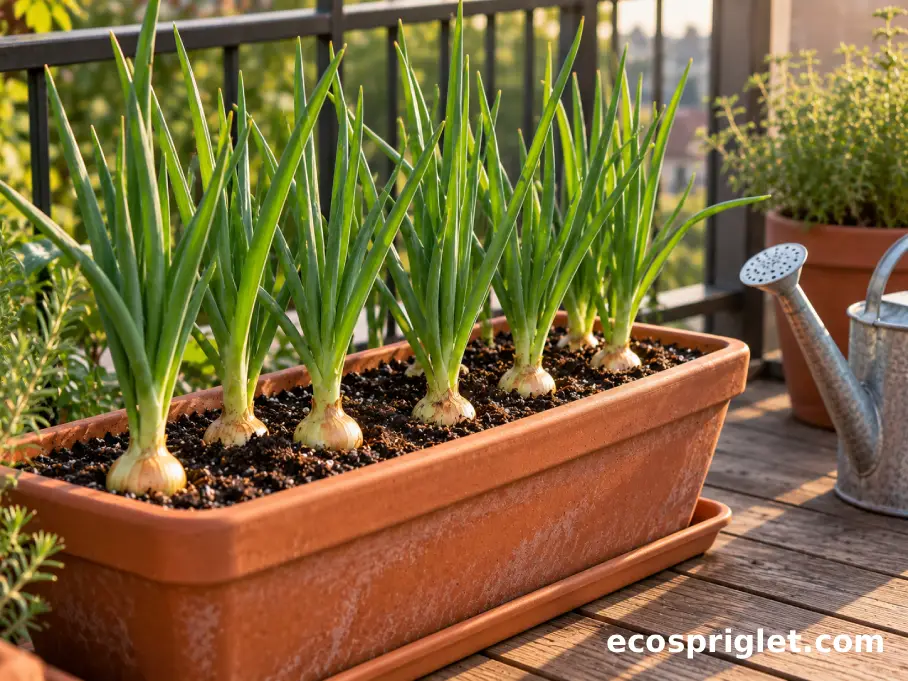
I learned one onion lesson the hard way: a big set does not necessarily make a big onion. Early on, I naturally planted the largest sets where I wanted the biggest bulbs. Several sent up flower stalks instead. Extension guidance explains why—larger sets have a greater tendency to bolt.
That is only one timing mistake beginners run into. Most are easy to prevent once you know what the onion is responding to.
- Waiting for warm weather: onions are cool-season crops. Delaying until late spring shortens the period available for vegetative growth before bulbing.
- Starting seed too late: if you want mature bulbs from seed, give seedlings roughly 8–12 weeks indoors when your season requires a head start.
- Ignoring day-length type: a beautifully grown onion can still produce a disappointing bulb if its daylight requirements do not match your latitude.
- Planting oversized sets for storage bulbs: use smaller sets for mature bulbs and reserve larger ones for green onions.
- Using the hardiness zone as an exact calendar: watch local soil conditions and weather instead.
Another mistake is crowding bulb onions because seedlings look tiny in March or April. Leave enough space from the beginning, or intentionally plant closer and harvest every second plant as a green onion. That way the remaining onions have room to expand.
If you see a flower stalk developing, harvest that onion sooner rather than expecting an excellent storage bulb. Once an onion bolts, bulb quality and storage potential are usually compromised.
A Simple Planting Rule You Can Use Every Spring
If all the seed-starting dates, zones, and onion types start blending together, come back to one rule: plant bulb onions early enough to make plenty of leafy growth before increasing day length tells them to bulb.
For most gardeners, that means planting sets, transplants, or direct-sown seed as soon as the soil is workable in spring. If you are growing from seed indoors, count backward about 8–12 weeks. Then check that your variety’s day-length category suits your latitude.
For balcony gardeners, add three practical checks before planting: the container drains freely, the potting mix is not saturated and compacted, and the planter has a bright position for the months ahead. Those details matter more than hitting one supposedly perfect date.
Green onions are the forgiving option when your timing is late or your space is small. Fall planting can also work, but only where adapted overwintering varieties and local conditions support it.
The best time to start planting onions is therefore less about finding one nationwide date and more about recognizing the right seasonal window. Get them growing during cool spring weather, choose the right day-length type, and give them enough room and steady moisture. That combination does far more for your harvest than obsessing over whether you planted a few days early or late.