Perlite and vermiculite often sit side by side at the garden center, yet they solve nearly opposite problems. Perlite creates larger air spaces and helps excess water move through a growing mix. Vermiculite absorbs more moisture and can hold certain plant nutrients until roots need them. That basic difference is the key to the perlite vs vermiculite decision.
For apartment gardeners, the right choice depends less on the plant label and more on what happens inside the pot. A rosemary plant in a cool apartment may need extra aeration, while basil growing in a windy balcony box may benefit from slightly better moisture retention. Seed trays, raised planters, and established houseplants also have different requirements.
Neither material is fertilizer, and neither should replace the main structure of a balanced potting mix. Think of them as adjustment tools: use perlite when roots need more air, vermiculite when the mix dries too quickly, or a little of both when you need balance. The sections below will help you choose a useful amount without turning every repotting project into a soil-science experiment.
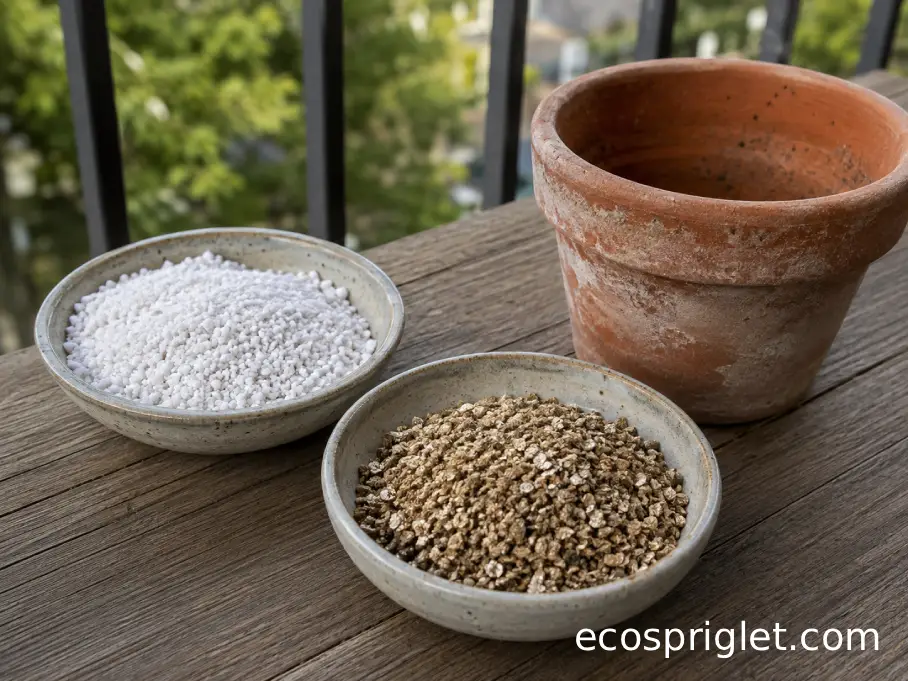
The Quick Answer: Choose Air or Moisture
Choose perlite when your potting mix stays wet for too long, collapses into a dense mass, or needs more air around the roots. Choose vermiculite when a light growing mix dries faster than you can reasonably water it or when you need a fine, moisture-retentive covering for seeds.
| Feature | Perlite | Vermiculite |
|---|---|---|
| Main Job | Improves aeration and drainage | Improves moisture and nutrient retention |
| Appearance | White, firm, popcorn-like particles | Golden-brown or gray, layered flakes |
| Best Fit | Succulents, Mediterranean herbs, dense potting mixes, cuttings | Seed trays, moisture-loving plants, fast-drying mixes |
| Possible Drawback | Dusty, lightweight, and may float upward during watering | Can keep an already wet mix too moist |
| Starting Amount | About 10%–20% of a potting mix by volume | About 10%–20% of a potting mix by volume |
Colorado State University Extension describes perlite as an amendment that promotes pore space and drainage, while vermiculite has a higher water-holding capacity. Container mixes often combine both because healthy roots need moisture and oxygen rather than one at the expense of the other.
The suggested percentages are practical starting points, not universal formulas. Change only part of the mix at first, then watch how long the pot remains moist after a thorough watering. If the top 1–2 inches still feel wet several days later and the plant prefers drier conditions, increase aeration at the next repotting rather than repeatedly adding material to the surface.
What Perlite Does Inside a Pot
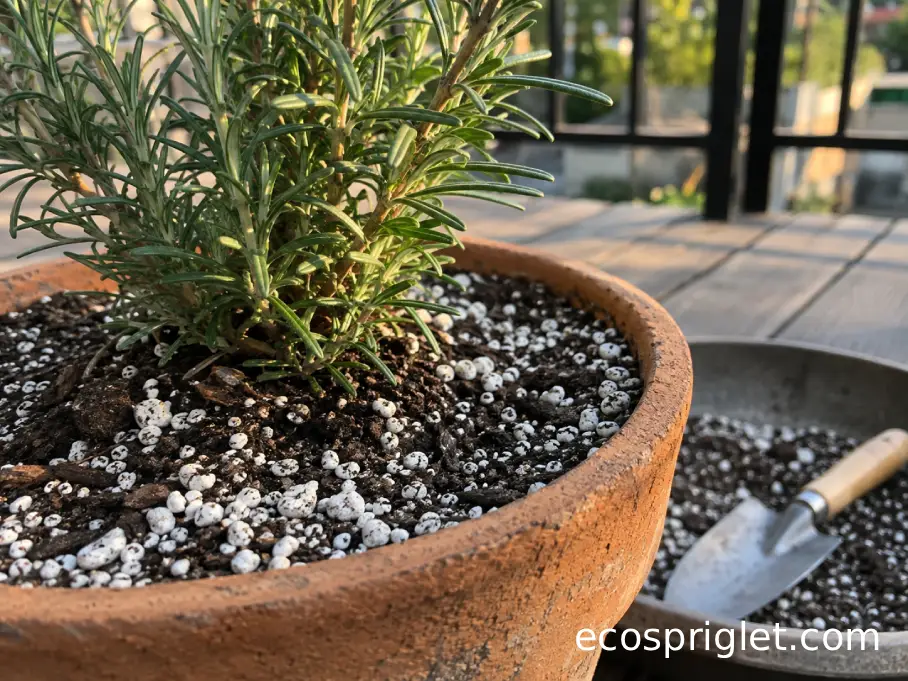
Perlite begins as volcanic material that expands into lightweight, porous granules when heated. In a container, those firm particles separate finer ingredients such as coir, peat, compost, and decomposed bark. The resulting gaps let air reach roots and give irrigation water clearer routes toward the drainage holes. Washington State University Extension and Colorado State University Extension identify perlite as a porous material used to improve aeration in container media.
This makes perlite especially helpful for plants that dislike a constantly wet root zone. Rosemary, thyme, lavender, many types of succulents, and numerous cacti generally perform better in an airy mix than in a dense, moisture-heavy one. It can also loosen compact commercial potting soil that has settled during storage.
For an ordinary houseplant mix, I usually test an addition of roughly 1 part perlite to 4 or 5 parts existing mix. For a drought-tolerant plant, the amendment may make up closer to one-quarter or one-third of the finished blend, provided the remaining ingredients still retain enough water for the plant and the conditions. NC State Extension recommends greater air space, including perlite, for root-rot-sensitive plants and plants that favor drier conditions.
Perlite does not make a pot drain properly if the container has no open drainage hole. It also cannot correct chronic overwatering on its own. Water thoroughly, let surplus water escape, and empty indoor saucers before the pot sits in runoff for hours. For more help balancing the complete mix, see our container potting mix guide.
Why Vermiculite Holds On to Water
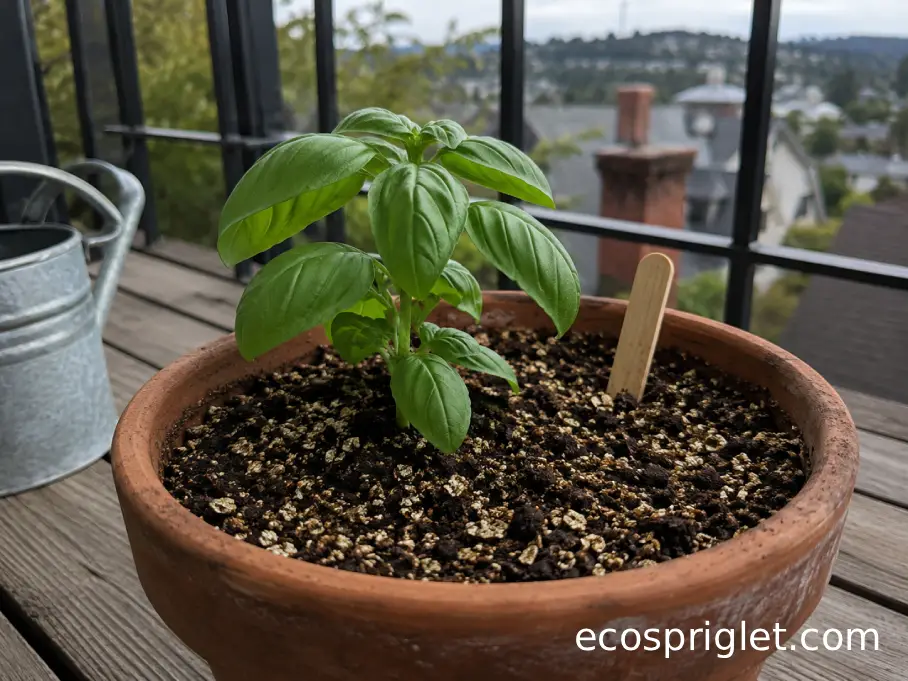
Vermiculite is a heat-expanded mineral with thin, folded layers. Those layers absorb moisture and retain certain nutrients, including potassium, magnesium, and calcium, more effectively than perlite. It still creates some pore space, but moisture management is its stronger feature. Washington State University Extension notes that vermiculite can hold water and several plant nutrients within a growing medium.
That ability can be useful in shallow balcony boxes, small nursery pots, and warm rooms where lightweight mixes dry rapidly. Basil, coleus, ferns, and other plants that dislike repeated wilting may benefit from a modest amount. NC State Extension specifically notes that mixes for plants with high water requirements can include vermiculite and compost for greater water-holding capacity.
Vermiculite is less helpful when the existing mix already remains damp. Adding a large quantity to a self-watering planter, a cool north-facing room, or an oversized pot may extend wet conditions around the roots. In those situations, improve airflow, confirm that drainage openings are clear, and let the surface begin drying before watering again.
A useful apartment-gardening test is to weigh or lift the pot immediately after watering and again when the upper inch feels dry. If the container remains heavy and the surface stays dark for many days, it probably does not need additional vermiculite. If it becomes feather-light within 24 hours during normal weather, a moisture-retentive adjustment may reduce stress between waterings.
Match the Amendment to Your Containers and Plants
The plant name gives you a starting point, but the pot, weather, and room conditions determine how the mixture behaves. A basil plant in a 3-gallon fabric pot on a hot, windy balcony may dry much faster than the same plant in a glazed ceramic pot beside an indoor window. That is why choosing perlite or vermiculite for plants requires a quick look at the whole setup.
I learned this with two identical herb planters on my Portland terrace. The planter near the exposed railing dried almost a full day earlier than the one protected by the wall. Adding more perlite to both would have made the difference worse. I adjusted only the exposed planter with a small amount of vermiculite and moved it several inches out of the strongest afternoon wind.
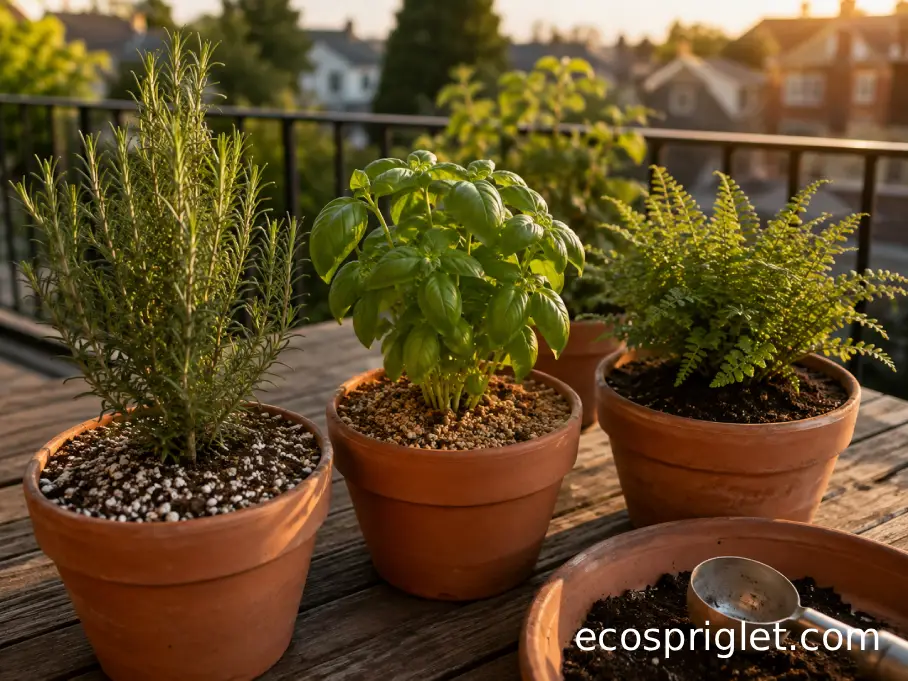
- Use more perlite for succulents, cacti, rosemary, thyme, and mixes that remain dense or soggy.
- Use modest vermiculite for basil, leafy greens, ferns, and small containers that wilt between reasonable waterings.
- Use both in balanced mixes for general seedlings and moisture-loving plants that still require root-zone oxygen.
- Use neither automatically when a quality commercial mix already drains and rewets evenly.
Start with an adjustment of about 10% by volume. Mix it evenly rather than creating separate layers, water the container thoroughly, and monitor it for one or two normal watering cycles. Increase toward 20% only when the original problem remains clear. A measuring scoop or small plastic container makes repeatable ratios much easier than estimating by handfuls.
On balconies and rooftops, remember that the final container becomes much heavier after watering. Illinois Extension advises consulting an architect or other appropriate building professional about weight limits for heavy balcony and rooftop pots. Renters should also check lease rules before placing large planters or attaching anything to railings.
Perlite vs Vermiculite for Seed Starting
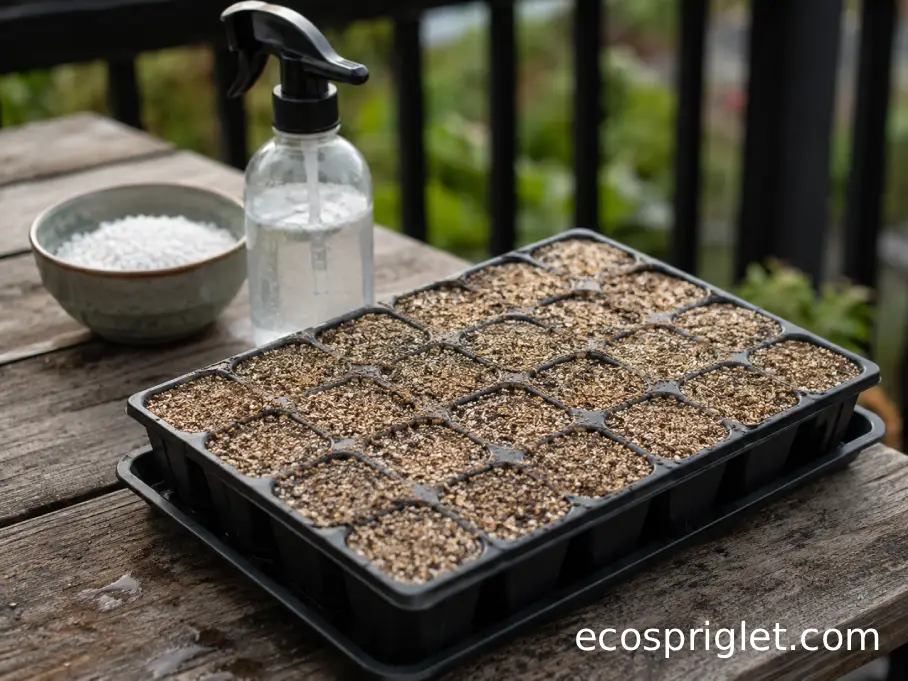
Seed-starting mixes need to stay evenly moist while preserving enough air for germinating roots. Both amendments can contribute, but fine vermiculite has one particularly useful job: it makes a light surface covering that reduces moisture loss without forming a hard crust. University of Minnesota Extension recommends commercial seed-starting mixes commonly made with peat and vermiculite and suggests covering appropriate seeds with a thin layer of fine vermiculite.
- Moisten the seed-starting mix before filling trays so dry particles do not float or shift.
- Cover seeds according to the packet, commonly to about twice the seed’s diameter rather than using one depth for everything.
- Leave very small light-dependent seeds uncovered or press them gently into the surface.
- Use perlite within the mix when it feels dense, but avoid large coarse pieces directly over tiny seeds.
- Remove a humidity dome once seedlings emerge so stagnant air does not remain trapped around the stems.
Penn State Extension also recommends vermiculite as a seed covering and advises leaving very fine seeds uncovered. A fine mist or bottom watering helps keep the covering in place.
For a small apartment setup, buying a sterile commercial seed-starting mix is usually simpler than storing several separate ingredients. You can then keep a small sealed bag of fine vermiculite for surface covering and a bag of perlite for later potting-on. Explore our small-space seed-starting guide for tray placement, lighting, and mess control.
Choosing an Amendment for Raised Beds
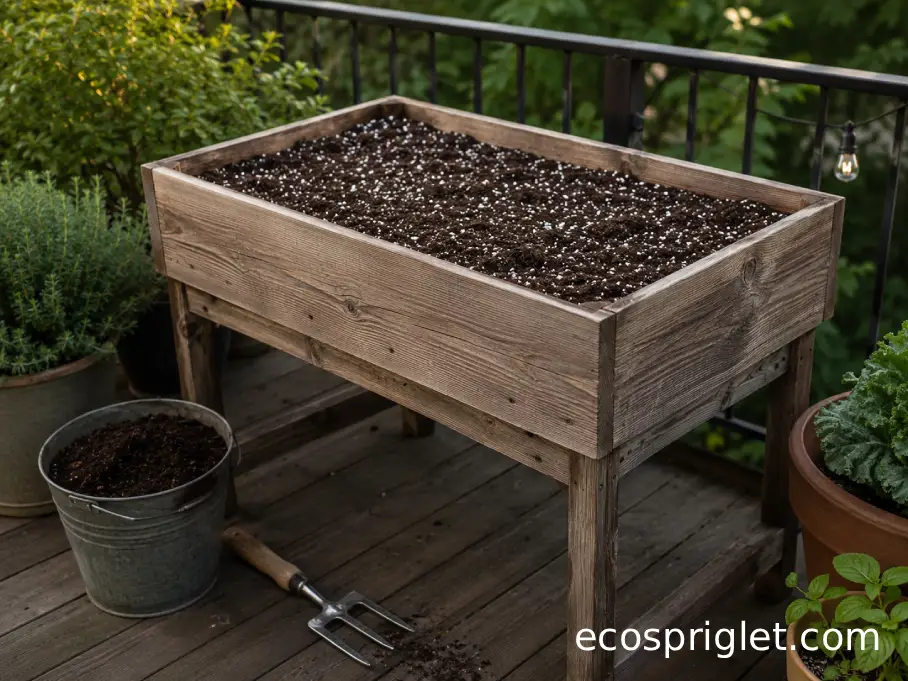
A raised bed does not automatically need either product. The first priority is a stable blend with adequate mineral soil, mature compost or another suitable organic component, and enough coarse structure to drain without shrinking excessively. University of Maryland Extension notes that raised-bed soil should be selected according to its existing texture and organic-matter content rather than filled from a universal recipe.
Perlite is the more useful choice when a compact elevated planter contains dense, fine-textured material that drains slowly. For a new blend, an aeration component may make up roughly 10%–20% by volume. NC State Extension provides an example raised-bed mixture using about 20% aeration material such as perlite, coarse sand, or pine bark fines. Treat that as one workable model rather than a requirement for every bed.
Vermiculite can help a very light, fast-drying bed hold moisture, but it may be expensive for a large volume and unnecessary where compost and mineral soil already retain water well. Raised beds dry faster than surrounding in-ground soil because roots cannot draw moisture from beyond the bed, so observe the actual drying pattern before choosing an amendment.
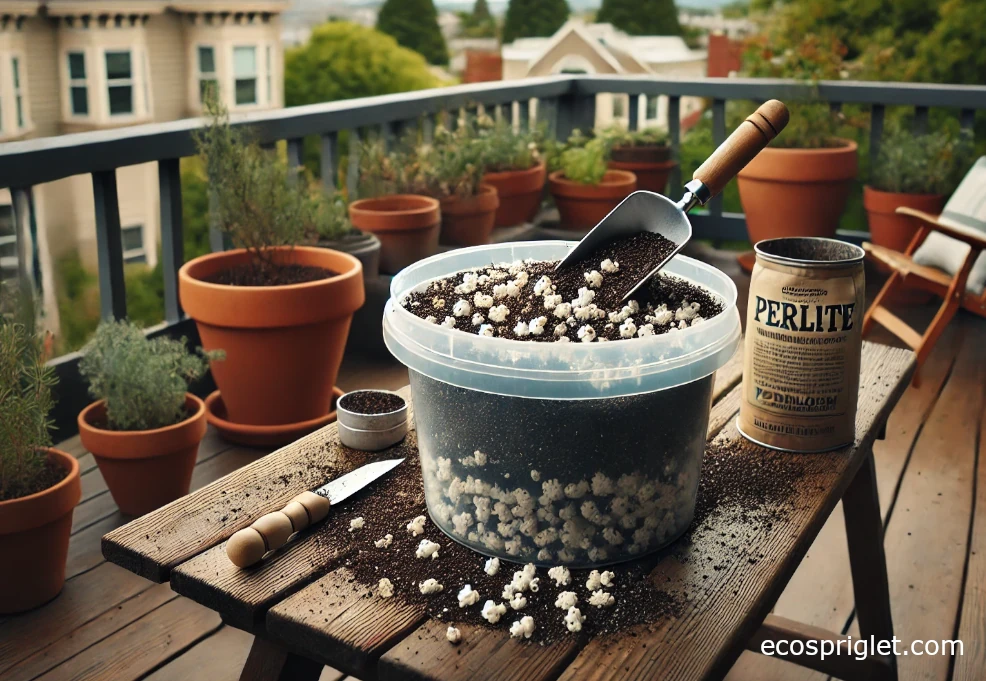
For a balcony-sized elevated planter, make a test batch in a 1-gallon bucket before altering the entire bed. Saturate it, let it drain, and squeeze a handful the next day. A good blend should feel moist and cohesive but break apart with light pressure. If water drips freely from a gentle squeeze, the mix may be holding too much. If it falls apart as dry dust, it needs better moisture retention or more consistent irrigation.
Common Mistakes to Avoid
I learned the most important lesson the messy way: more amendment is not automatically better. Years ago, I poured perlite into a herb mix until it looked impressively airy. The pots then dried so quickly during a warm week that I created a new problem while trying to fix the old one.
- Do not pour either material into the bottom as a drainage layer. Blend it through the growing medium instead.
- Do not add vermiculite to a pot that already remains wet for days.
- Do not expect perlite to compensate for a sealed decorative pot or blocked drainage hole.
- Do not use either amendment as fertilizer; plants still need an appropriate nutrient source.
- Do not mix dry material carelessly in a small room where dust can spread onto furniture and food-preparation surfaces.
A layer of gravel or other coarse material beneath fine potting mix does not create the healthy drainage pattern many gardeners expect. Use a container with open holes and a consistent growing medium instead. University of Maryland Extension specifically advises against filling the bottom of vegetable containers with pebbles, gravel, or rocks merely to improve drainage.
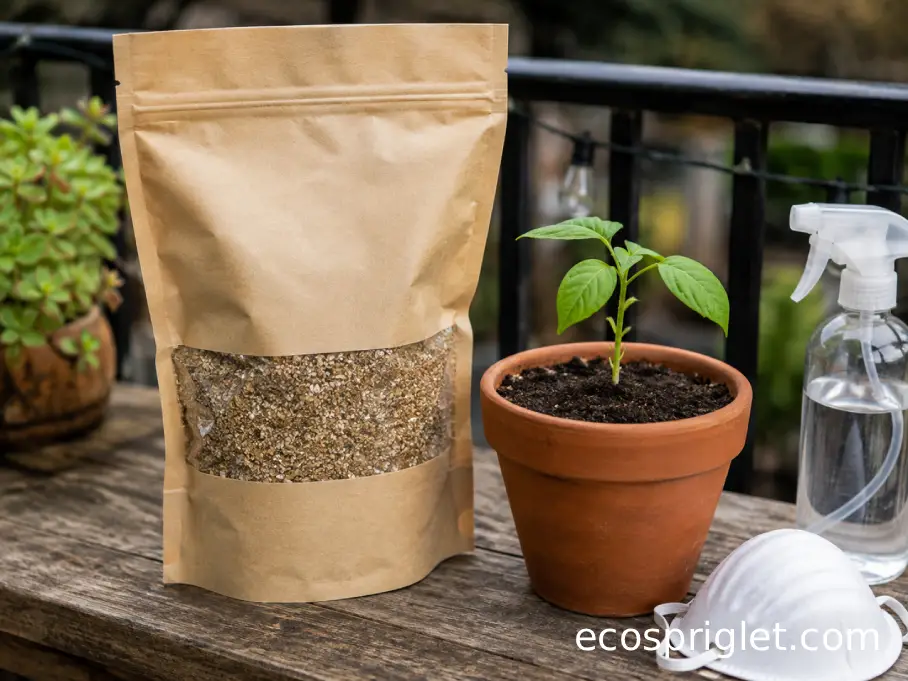
Both products can release nuisance dust during handling. Lightly dampen them before mixing, work outdoors or in a ventilated area, and consider eye protection and a well-fitting dust mask when handling a visibly dusty bag. NC State Extension recommends wetting perlite or wearing a dust mask, while Oklahoma State University Extension notes that perlite dust can irritate the eyes and respiratory system.
Finally, label any leftover material and store it in a sealed container away from children and pets. The granules may look harmless or even edible to a curious child, but horticultural amendments are not food or play materials.
Gardening Vermiculite Is Not Attic Insulation
The word vermiculite also appears in discussions about old building insulation, but horticultural products and material found loose in an attic must never be treated as interchangeable. Do not collect old insulation for planters, seed trays, or any household project.
The U.S. Environmental Protection Agency advises homeowners to assume that existing vermiculite attic insulation may contain asbestos and to leave it undisturbed. Disturbing the material can release fibers into the air, so assessment or removal should be handled by appropriately trained professionals rather than as a do-it-yourself project.
For packaged horticultural vermiculite, the EPA reports that consumers face only minimal health risk during ordinary home and garden use. It still recommends reducing dust by keeping the material damp, working in a ventilated area, and following the manufacturer’s handling instructions.
Buy a clearly labeled horticultural product from a normal garden-supply source and keep it in its original packaging or a labeled sealed container. If you discover unidentified pebble-like material in an attic, wall cavity, renovation area, or inherited storage space, do not test its gardening potential. Leave it alone and follow current EPA guidance.
The Best Choice Is the One That Fixes a Real Problem
Perlite and vermiculite are easiest to understand when you stop asking which product is universally better. Perlite favors air movement and faster drainage. Vermiculite favors moisture retention and the temporary holding of certain nutrients. Most healthy container mixes need both air and water, but they do not always need equal amounts of each material.
Begin with the problem you can observe. A pot that stays wet and heavy needs a different adjustment from a balcony planter that wilts by late afternoon. Change about 10% of the mixture first, water normally, and watch how the container behaves before making a larger alteration. That small test is cheaper and safer than rebuilding every pot around a generic recipe.
For seed starting, fine vermiculite is especially useful as a light covering, while perlite supports aeration within the mix. In raised planters, either product should remain a supporting ingredient rather than the bulk of the bed. And when you encounter old vermiculite insulation, leave it completely outside the gardening conversation.
Ready to improve a troublesome container? Start with one plant, one measured scoop, and one clear goal. A mix that gives roots both oxygen and dependable moisture will do more for your plants than choosing an amendment by habit.