A fresh bouquet can brighten a small apartment faster than almost anything else, but cats have a way of turning flowers into a snack, toy, or investigation project. The important question is not just what flowers are toxic to cats, but which ones are risky enough to keep out of your home entirely.
The biggest red flag is lilies. True lilies and daylilies can cause life-threatening kidney failure in cats, even from small exposures such as pollen, petals, leaves, or vase water. Other common bouquet flowers, including tulips, daffodils, peonies, carnations, chrysanthemums, and hydrangeas, are also listed as toxic to cats by the ASPCA, though the expected severity varies by plant and amount eaten.
The good news: cat-safer choices do exist. Roses, phalaenopsis orchids, sunflowers, gerbera daisies, and African violets are all listed by the ASPCA as non-toxic to cats. That does not mean your cat should munch them freely, but it gives apartment gardeners and bouquet lovers a much better starting point.
The Fast Answer: Flowers to Keep Away From Cats
For a cat household, I sort flowers into three practical buckets: never bring inside, bring in only with strong caution, and better choices. Lilies sit in the first bucket. If a bouquet includes true lilies, daylilies, Easter lilies, tiger lilies, Asiatic lilies, Oriental lilies, or stargazer lilies, I would not try to “place it high” or “watch the cat.” In a studio or one-bedroom apartment, pollen and dropped petals are too easy to miss.
| Flower | Cat Safety Category | Apartment Gardener Note |
|---|---|---|
| Lilies and daylilies | High-risk toxic | Do not bring indoors if you have a cat. |
| Tulips and daffodils | Toxic | Bulbs are especially concerning, but keep the whole plant away. |
| Peonies, carnations, mums, hydrangeas | Toxic | Skip them in reachable bouquets and balcony planters. |
| Roses | ASPCA-listed non-toxic | Remove thorns and avoid treated stems or dyed petals. |
| Phalaenopsis orchids, sunflowers, gerberas, African violets | ASPCA-listed non-toxic | Still prevent chewing to avoid stomach upset. |
The ASPCA notes that eating any plant material may cause vomiting or gastrointestinal upset in dogs and cats, even when the plant is listed as non-toxic. That is why “non-toxic” is not the same as “cat snack.” It simply means the plant is not expected to cause life-threatening poisoning when compared with known toxic plants.
Lilies Are the No-Compromise Flower for Cat Homes
Lilies deserve their own warning because they are not just “might cause an upset stomach” flowers for cats. The FDA says a cat can develop fatal kidney failure after eating a small amount of lily leaf or petal, licking pollen from its fur, or drinking water from a vase that held lilies. Cornell’s Feline Health Center also flags lilies as especially toxic to cats, with even tiny ingestions capable of causing life-threatening kidney failure.
On my own balcony, I’m comfortable experimenting with pet-safer herbs and flowers, but I do not experiment with lilies around cats. The problem in apartments is access. A vase on a bookshelf can drop pollen. A stem can shed leaves. Vase water can splash or tempt a curious cat. Even a careful person can miss one fallen petal behind a table leg.
- Skip mixed bouquets unless you can identify every flower before bringing them inside.
- Remove lilies from gift arrangements immediately and place them outside the home, not just in another room.
- Wipe the surface under the bouquet if lilies were already indoors, especially if pollen dropped.
- Call a veterinarian or pet poison control right away if exposure is possible.
Peace lilies and calla lilies are different from true lilies, but they are still not flowers I’d choose for a cat-friendly apartment. They can irritate the mouth and digestive tract, and the name confusion alone makes them easy to mishandle.
Popular Bouquet Flowers That Need Extra Caution
Tulips and daffodils are common spring flowers, but both are poor choices for a cat-accessible apartment. ASPCA lists tulips as toxic to cats, with the toxin most concentrated in the bulb, and daffodils as toxic as well, with bulbs listed as the most poisonous part. That matters for balcony gardeners because forced bulbs in pots can be more tempting than cut stems: loose soil, leaf tips, and bulb noses all invite digging and chewing.
Peonies are another flower I would skip indoors with cats. They are beautiful in late spring arrangements, but ASPCA lists peony as toxic to cats, with vomiting, diarrhea, and depression among the clinical signs. Carnations are also listed as toxic to cats and may cause mild gastrointestinal signs or mild dermatitis.
Chrysanthemums, often sold as mums or daisies, are listed as toxic to cats and may cause vomiting, diarrhea, hypersalivation, incoordination, or dermatitis. Hydrangeas are also listed as toxic, with cyanogenic glycoside noted as the toxic principle. In a small apartment, I would treat these as “admire elsewhere” flowers rather than “maybe on the counter” flowers.

Safer Blooms: Roses, Orchids, Sunflowers, Gerberas, and African Violets
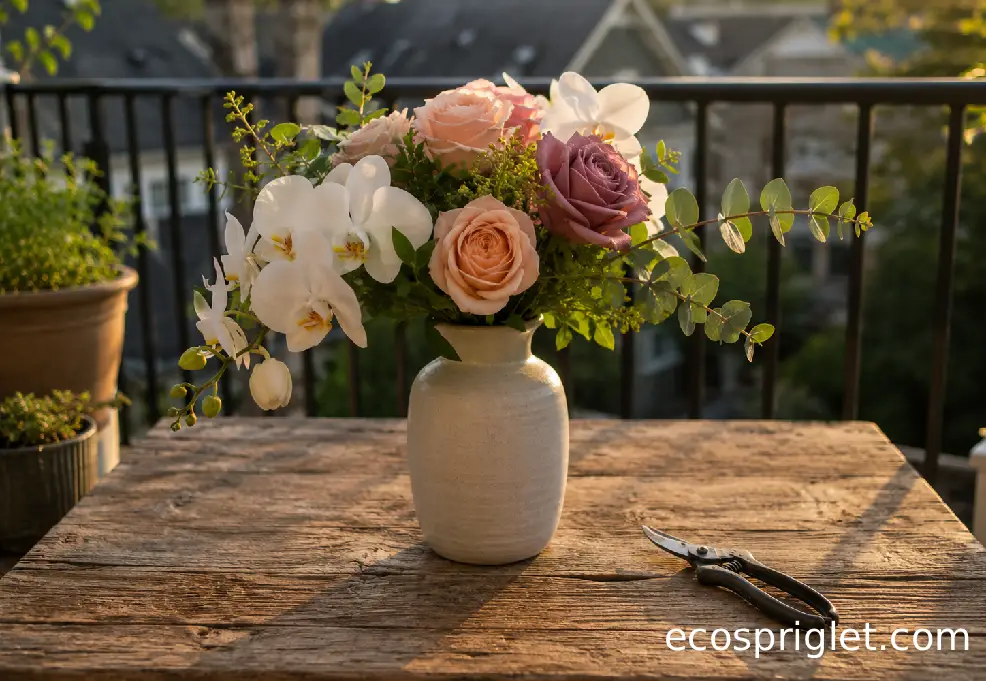
When readers ask what flowers are not toxic to cats, I usually start with this safer group: roses, phalaenopsis orchids, sunflowers, gerbera daisies, and African violets. These are all listed by the ASPCA as non-toxic to cats. For apartment dwellers, they also fit real spaces better than many dramatic cut flowers because you can grow or display several of them in modest containers near bright windows or on a protected balcony.
| Common Question | Practical Answer |
|---|---|
| Are roses toxic to cats? | Rosa species are ASPCA-listed as non-toxic to cats, including common red, white, pink, garden, spray, and mini roses. |
| Are rose leaves or petals toxic to cats? | Rose leaves and petals are not listed as toxic, but thorns, pesticides, floral preservatives, and stomach upset from chewing are still concerns. |
| Are orchids poisonous to cats? | Phalaenopsis orchids, also called moth orchids, are ASPCA-listed as non-toxic to cats and dogs. |
| Are sunflowers toxic to cats? | Sunflowers are ASPCA-listed as non-toxic to cats, dogs, and horses. |
| Are sunflower seeds toxic to cats? | Plain sunflower seeds are not the same concern as toxic flowers, but they are not a good cat treat; avoid salted, seasoned, shelled-in-bulk, or moldy seeds. |
| Are gerbera daisies toxic to cats? | Gerbera daisies are ASPCA-listed as non-toxic to cats. |
| Are African violet leaves poisonous to cats? | African violets are ASPCA-listed as non-toxic to cats, though chewing leaves can still upset the stomach. |
For roses, I always add one practical caution: non-toxic does not mean hazard-free. Clip thorns below the waterline and above any area your cat might nose around. If the roses came from a florist, keep the packet of floral preservative away from pets, refresh the water every 1–2 days, and compost dropped leaves or petals before your cat finds them.
How to Build a Cat-Safer Flower Habit in a Small Apartment
A cat-safer flower habit starts before the bouquet reaches your kitchen counter. I like to identify the flowers at the shop, remove risky stems before entering the apartment, and place safer flowers where cleanup is easy. In a compact home, the safest setup is not a tall vase balanced on a narrow shelf. It is a stable, heavy-bottomed container on a surface you can wipe down, away from food prep areas, pet bowls, and favorite cat perches.
For potted flowers, use containers with drainage holes and saucers, then empty standing water after watering. This is partly plant care and partly pet care. Stagnant saucer water, spilled potting mix, and fallen petals all make a plant more interesting to a bored indoor cat. A pot that is 6–8 inches wide is enough for many small African violets, while a mini rose often needs a heavier 8–10 inch pot to avoid tipping when stems get brushed.
- Keep one “flower landing zone” instead of scattering vases through the apartment.
- Check the floor once daily for fallen petals, leaves, pollen, and loose soil.
- Use plain water in vases if your cat can access the area; store preservative packets in a closed drawer.
- Pair flowers with cat grass in a separate, approved nibbling spot to redirect chewing.
For more small-space ideas, see our cat-safe houseplants guide.
Common Mistakes to Avoid With Cats and Flowers
The mistake I learned early is assuming height equals safety. A determined cat can reach a windowsill, fridge top, bookcase, or hanging planter if the route looks interesting enough. In small apartments, furniture becomes a ladder system.
- Do not rely on “out of reach” for lilies. Keep them out of the home entirely.
- Do not trust a mixed bouquet label that says “seasonal flowers” without identifying the stems.
- Do not leave vase water uncovered if the bouquet includes anything questionable.
- Do not assume non-toxic flowers are fine to chew; plant material can still trigger vomiting or diarrhea.
- Do not compost toxic petals in an open indoor bin your cat can access.
Another beginner mistake is focusing only on petals. Cats chew leaves, bat at pollen, drink vase water, and dig in potting mix. With tulips and daffodils, bulbs are especially concerning, so a potted spring bulb arrangement is often riskier than it looks. With roses, the plant itself is a safer choice, but thorns and chemical residues can still cause trouble.
What to Do If Your Cat Chews a Flower
If your cat may have chewed a toxic flower, do not wait for dramatic symptoms. Identify the plant if you can, take a photo of the bouquet or label, save a small sample in a bag, and call your veterinarian or a pet poison control service. ASPCA Poison Control lists its emergency number as (888) 426-4435 and advises contacting them or a local veterinarian if an animal may have ingested a poisonous substance.
For lilies, treat possible exposure as urgent even if your cat looks normal. The FDA specifically advises immediate contact with a veterinarian or pet poison control center if a cat has eaten any part of a lily, gotten pollen in its mouth or on its coat, or drunk vase water from lilies. Early signs can include decreased activity, drooling, vomiting, and loss of appetite, but waiting for signs can waste valuable time.
Do not induce vomiting unless a veterinarian or poison control professional tells you to. Cornell’s Feline Health Center gives the same caution: do not induce vomiting unless specifically directed by a veterinarian or poison control center operator.
Bring Home Flowers Without Guessing
Living with cats does not mean giving up flowers. It means becoming pickier, especially with bouquets that arrive unlabeled. I’d rather choose five stems I can identify than a lush arrangement with one mystery lily tucked in the middle. For cat homes, that simple habit removes a lot of stress.
Start with the safest practical swaps: roses with thorns trimmed, phalaenopsis orchids, sunflowers, gerbera daisies, and African violets. Keep them in sturdy containers, clean up fallen plant bits daily, and remember that any plant chewing can upset a cat’s stomach. Avoid lilies completely, and be cautious with tulips, daffodils, peonies, carnations, chrysanthemums, and hydrangeas.
The small-space rule is straightforward: if you cannot identify it, do not bring it into your cat’s reach. A balcony, windowsill, or apartment shelf can still feel full of color without gambling on risky stems. Build your go-to safe list now, and the next grocery-store bouquet or birthday arrangement becomes much easier to handle.
Sources consulted: ASPCA Animal Poison Control Center, FDA Animal Health Literacy, Cornell Feline Health Center, and UC Davis Veterinary Medicine.