Choosing companion plants for peppers is less about memorizing a magical planting chart and more about making better use of light, root space, flowers, and airflow. That distinction matters on a balcony, where one crowded container can turn a promising pepper plant into a thirsty, shaded mess by midsummer.
Good neighbors can fill unused space early in the season, provide nectar and pollen for beneficial insects, or simply give you another edible crop without competing heavily with your peppers. University of Minnesota Extension notes that companion planting can be useful for saving space and increasing garden diversity, but it also cautions that many popular pest-repelling combinations have little research behind them.
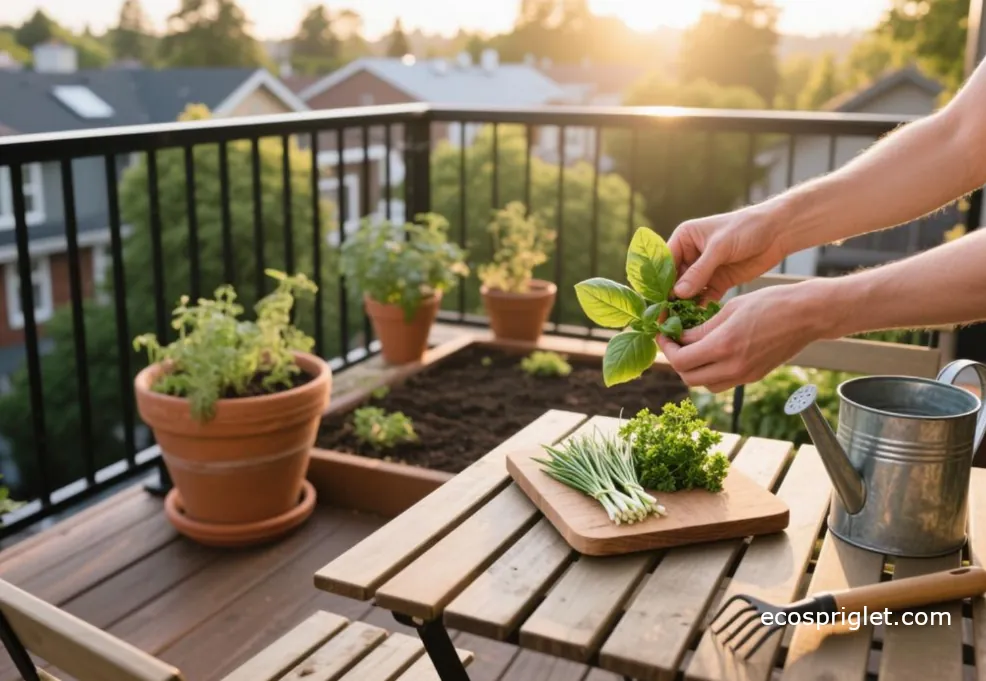
For bell peppers, jalapeños, chilies, and other container-grown peppers, I focus on practical partners: compact herbs, shallow-rooted greens, green onions, and small flowering plants. Tomatoes can work nearby too, although they need more room than many companion planting charts suggest. Here is how I would put those combinations together on a real apartment balcony.
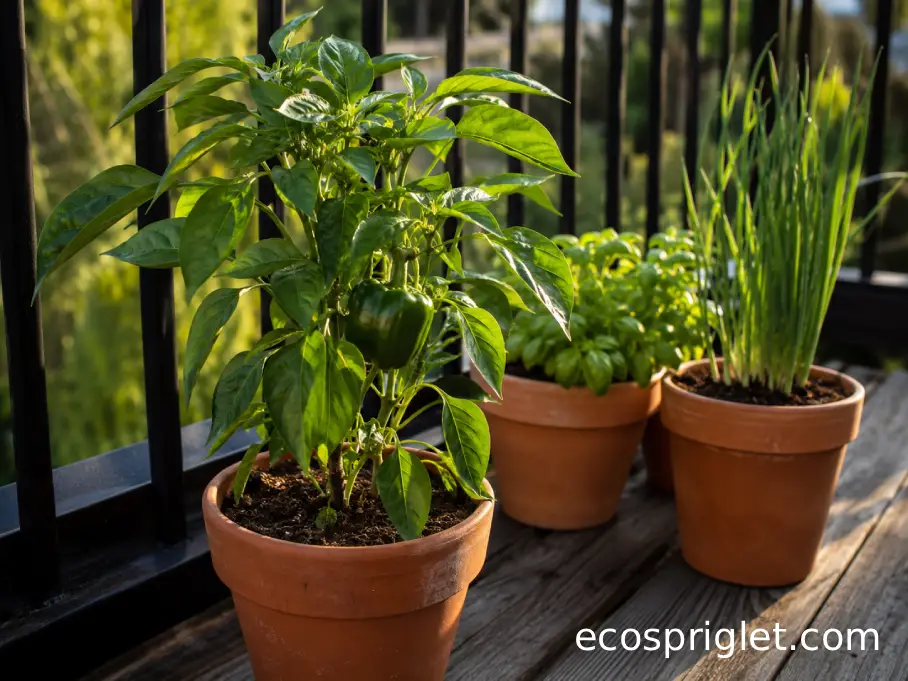
What Companion Planting Can Really Do for Peppers
A useful pepper companion does not need to release mysterious chemicals or scare every aphid off the balcony. It only needs to perform a job without making the pepper’s growing conditions worse.
That job might be filling bare soil early in spring, attracting beneficial insects, providing another edible harvest, or adding plant diversity around a larger vegetable. University of Minnesota Extension specifically describes lettuce, spinach, and basil as crops that can occupy space before peppers or tomatoes expand later in the season.
Research on companion planting is much less tidy than the charts make it look. Illinois Extension points out that plant density, timing, spacing, pests, and environmental conditions can matter as much as the species being paired. Simply putting two supposedly compatible plants together does not guarantee better growth.
On a balcony, I use three tests. A companion should stay short enough that it does not block the pepper’s sun, have modest enough roots that it does not consume the entire pot, and tolerate roughly the same watering schedule. If it fails one of those tests, I usually move it into its own pot and keep the containers beside each other instead.
That still counts as useful companion planting in my book. Your plants can share the same little ecosystem without sharing every inch of potting mix.
Best Pepper Partners at a Glance
The most useful pepper plant companions tend to be smaller than the pepper itself. That leaves the main crop with enough sunlight, air movement, water, and rooting space while giving you something worthwhile from the remaining space.
| Plant | Why It Fits | Best Small-Space Use | Main Caution |
|---|---|---|---|
| Basil | Compact, edible, and suited to warm-season planting | Small neighboring pot or edge of a large planter | Do not let a large basil plant crowd the pepper canopy |
| Leaf Lettuce | Fast, low-growing crop that can use space before peppers become large | Early-season understory crop | Harvest as hot weather arrives and the pepper expands |
| Spinach | Another short-season green suited to succession planting | Grow before the pepper canopy fills the planter | Usually declines once weather becomes hot |
| Green Onions | Narrow upright foliage uses little horizontal space | Plant around the edge of a roomy planter | Avoid packing so many in that watering becomes difficult |
| Sweet Alyssum | Small flowers provide food resources for beneficial insects | Separate small pot beside peppers | Trim if it begins spreading across the pepper container |
| Dill or Cilantro | Flowers can provide nectar and pollen for beneficial insects | Nearby pot allowed to flower | Both can become tall; position them where they will not shade peppers |
| Tomato | Shares similar warm, sunny growing conditions | Separate large container beside the pepper | Large root systems and shared diseases make one small pot a poor choice |
Small flowering plants can have value beyond appearance. University of Minnesota Extension recommends shallow flowers such as alyssum, coriander, and dill for supporting lady beetles, whose adults and larvae consume small, soft-bodied insects.
Illinois Extension also notes that flowering plants can bring pollinators and other beneficial insects into vegetable gardens. Peppers are capable of setting fruit without another pepper variety beside them, so think of flowers as habitat support rather than a requirement for fruit production.
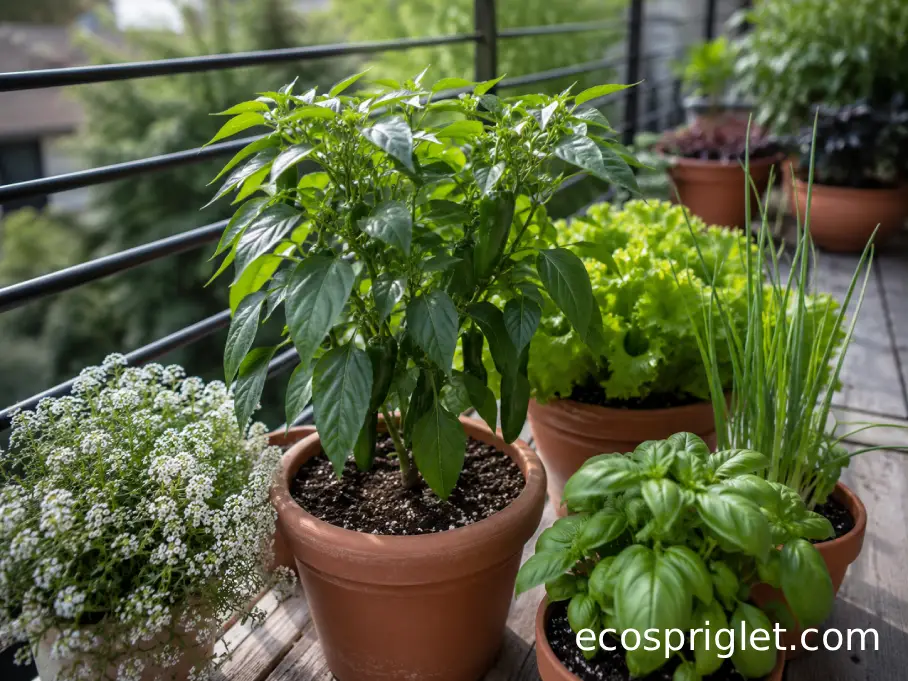
Herbs and Flowers That Earn Their Balcony Space
If I only had room for a pepper plus two companion pots, I would usually choose one herb I actually cook with and one flowering plant that supports insects. That gives every square foot of the balcony a purpose.
Basil is an easy starting point. It enjoys warm-season conditions and works especially well in a neighboring container where you can prune and harvest it without disturbing pepper roots. Companion-planting research involving basil is stronger for tomatoes than peppers, so I would not promise that basil will repel specific pepper pests. University of Minnesota Extension notes that some tomato studies found reduced thrips when basil was intercropped, while also warning that many broader companion claims lack reliable evidence.
For beneficial-insect habitat, useful choices include:
- Sweet alyssum in a roughly 1-gallon or larger pot beside the pepper.
- Cilantro allowed to flower after you finish harvesting most of the leaves.
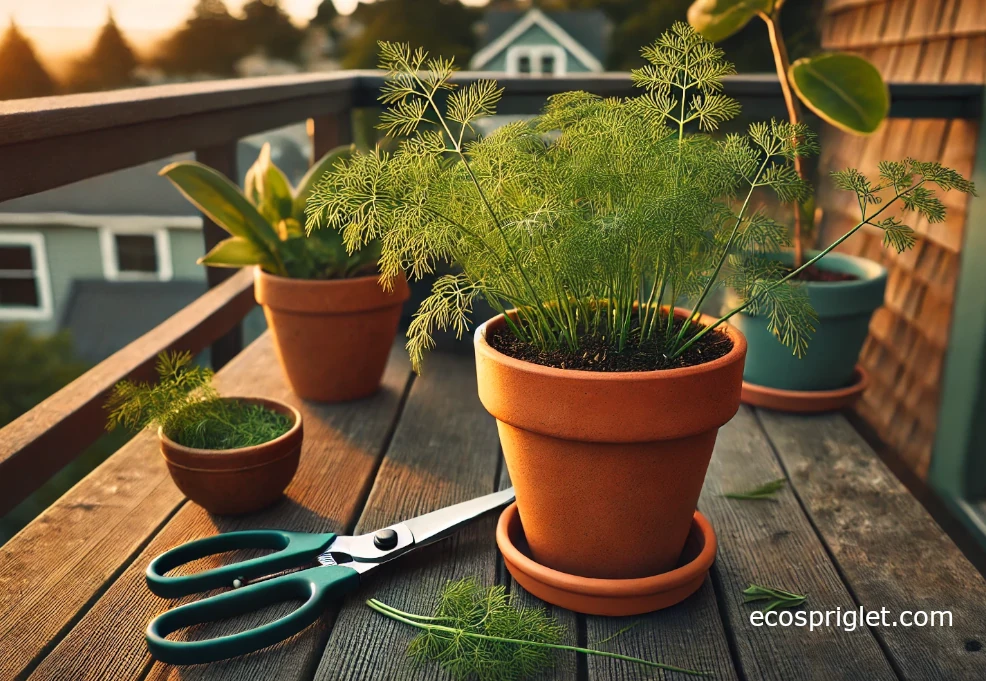
- Dill positioned behind or beside the pepper so its taller stems do not shade it.
- A compact annual flower chosen for your local conditions and kept in its own container.
Oregon State University Extension recommends maintaining flowers through the season and lists plants such as alyssum and dill among options for attracting beneficial insects.
I learned to favor separate flower pots after squeezing too many plants into one balcony container years ago. The combination looked wonderfully abundant in June. By August, I was watering constantly, the basil was leaning into the pepper, and reaching the soil surface without snapping something became an annoying little puzzle. Since then, I have treated proximity as more important than forcing every companion into the same pot.
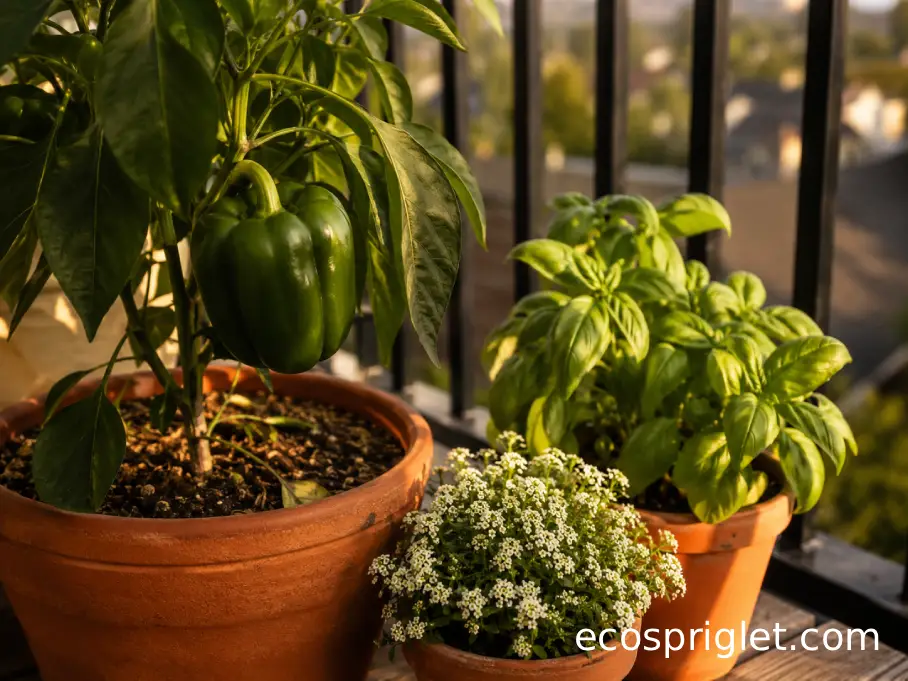
Can You Plant Tomatoes and Peppers Together?
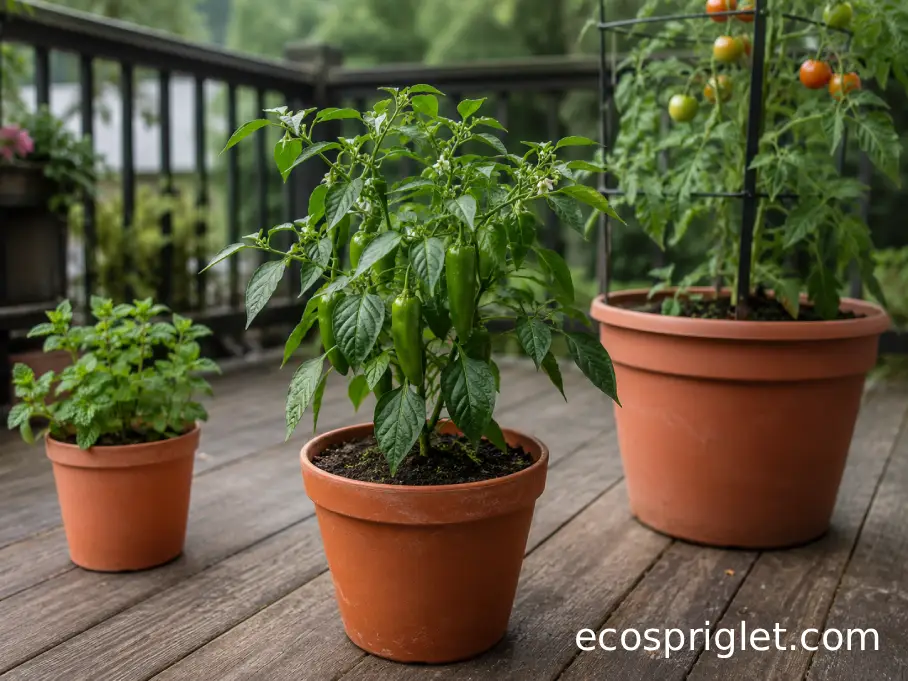
Yes. Tomatoes and peppers can grow beside each other, and their preference for warm weather and sunny locations makes the pairing convenient. The important question is not whether the two plants are somehow incompatible. It is whether you can give both enough room.
A pepper planted in the ground is commonly spaced about 18 inches from the next pepper, according to University of Minnesota Extension. Peppers should also wait to go outdoors until nighttime temperatures are reliably above 50°F.
Containers make spacing more important because roots cannot simply explore farther into surrounding soil. Colorado State University Extension recommends at least a 5-gallon container for larger fruiting vegetables including peppers and tomatoes, while Illinois Extension advises generous container diameters and notes that bigger soil volumes are particularly helpful for these crops.
For an apartment balcony, I would give a full-size tomato its own container and give the pepper its own container rather than squeezing both into one 5-gallon bucket. Set the containers far enough apart that you can still see daylight through much of the foliage and reach both soil surfaces for watering. If the tomato starts casting several hours of shade across the pepper, move the shorter pepper toward the sunnier side.
There is one other reason not to treat tomato-and-pepper planting as a perfect partnership: they belong to the same broader crop family and can share some disease problems. University of Minnesota Extension documents bacterial spot affecting both tomatoes and peppers and recommends rotation away from those crops after infection.
So yes, bell peppers and tomatoes can grow together. Hot peppers and tomatoes can too. Just remember that growing them side by side does not count as crop rotation, and cramming them together can reduce airflow rather than improve the garden.
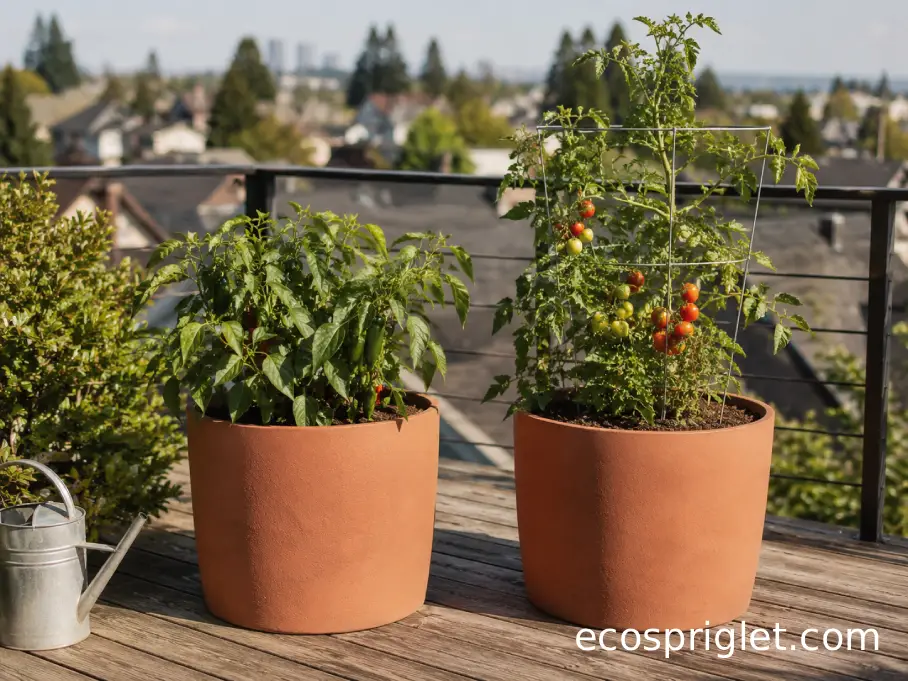
How to Arrange Peppers and Companions in Containers or Raised Beds
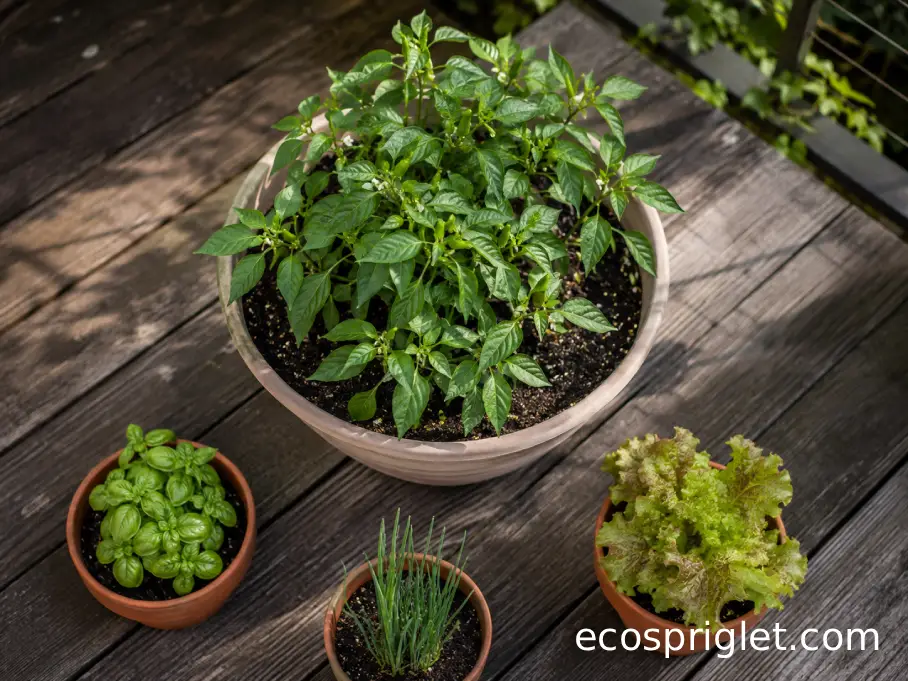
The easiest arrangement is usually a large pepper in the center of its own container with companion plants clustered nearby rather than packed underneath it. Colorado State University Extension recommends a minimum 5-gallon container for peppers and other substantial fruiting vegetables. Illinois Extension gives peppers a minimum top diameter of more than 16 inches in its small-space container guidance.
I prefer giving one mature pepper most of that root volume. If you have a much larger planter, a few shallow or narrow companions can occupy the edge, but leave an open ring around the pepper stem so you can inspect the soil and water cleanly.
A simple layout might look like this:
- One pepper as the dominant plant in a generous container.
- Two or three green onions around the outer edge of a large shared planter.
- One basil plant in a separate pot placed 6–12 inches away.
- One flowering pot such as sweet alyssum nearby for insect habitat.
In raised beds, use the same logic with more freedom. Keep peppers near their recommended spacing rather than shrinking the distance merely to make room for companions. Plant quick greens between young transplants early, then harvest those greens as pepper canopies expand. University of Minnesota Extension specifically recommends this succession-style approach as an efficient use of garden space.
Watering matters too. Pepper quality is better with reasonably consistent soil moisture, and overhead watering can leave foliage wet and increase disease risk. In containers, check moisture with a finger 1–2 inches below the surface instead of watering by the calendar; hot, windy balconies can dry pots much faster than garden beds. University of Minnesota Extension recommends thorough watering rather than repeatedly wetting only the soil surface.
What Not to Plant With Peppers
There is no dependable scientific blacklist saying peppers must never grow near broccoli, beans, cabbage, or most of the other plants commonly condemned in online companion charts. Extension guidance repeatedly cautions that many supposed positive and negative pairings are based more on tradition than garden-scale evidence.
For small-space gardeners, I would worry much more about competition and disease management than folklore.
Avoid putting another large fruiting plant into a container that is barely big enough for the pepper itself. Tomatoes and eggplants can be perfectly reasonable neighbors in separate pots, but all three eventually demand substantial water, nutrients, and root space. A crowded container dries quickly and makes maintaining airflow harder.
Be especially thoughtful about repeatedly growing tomatoes, peppers, eggplants, potatoes, or related crops in the same garden soil when disease has been an issue. University of Minnesota Extension places peppers and tomatoes in the same crop family for rotation purposes and advises keeping a location free of the same plant family for 2–4 years as a general disease-management practice.
In containers, replacing old disease-affected potting mix and cleaning reused containers and supports can be more realistic than trying to rotate crops across four different balcony beds. Do not reuse soil from a pot that held a seriously diseased plant simply because a chart says the next crop is a compatible companion. Colorado State University Extension likewise advises against reusing old container potting soil because it may harbor disease organisms.
I also keep aggressive or bulky plants in separate pots. Mint is a good example: you may love having it nearby, but there is little reason to make your pepper compete with a vigorous mint root system when a small dedicated mint pot solves the problem.
Common Mistakes to Avoid
The biggest companion planting mistake I see is treating the planting combination as more important than the pepper’s basic needs. A wonderful herb cannot compensate for inadequate sun, poor drainage, cold nights, or a container that is constantly drying out.
Watch for these problems:
- Stuffing a pepper, tomato, basil, marigold, and several onions into one small pot because they appear together on a planting chart.
- Letting a tall companion shade the pepper during the sunniest 6–8 hours of the day.
- Watering every plant on the same schedule even when containers differ dramatically in size.
- Assuming one flower or herb will eliminate aphids, thrips, or other pests.
- Repeating nightshade crops in disease-prone soil while calling the new arrangement crop rotation.
Peppers are warm-season plants. University of Minnesota Extension recommends waiting until nighttime lows remain above 50°F before transplanting them outdoors, and notes that consistent soil moisture supports better fruit quality.
I learned the crowding lesson with a balcony pepper that looked fantastic in early summer. I had tucked several herbs around its base because the planter still looked empty. Six weeks later, everything had doubled or tripled in size. The pepper was fine, but keeping the shared container evenly watered became more work than the extra herbs were worth.
Now I deliberately leave some bare-looking space in May and June. Plants grow into it. On a small balcony, planning for mature size rather than nursery-pot size is one of the simplest ways to avoid trouble later.
Three Easy Pepper Combinations for a Balcony
You do not need a dozen companion species to make the idea useful. Three or four pots arranged thoughtfully can give you a more functional balcony than an overcrowded mixed planter.
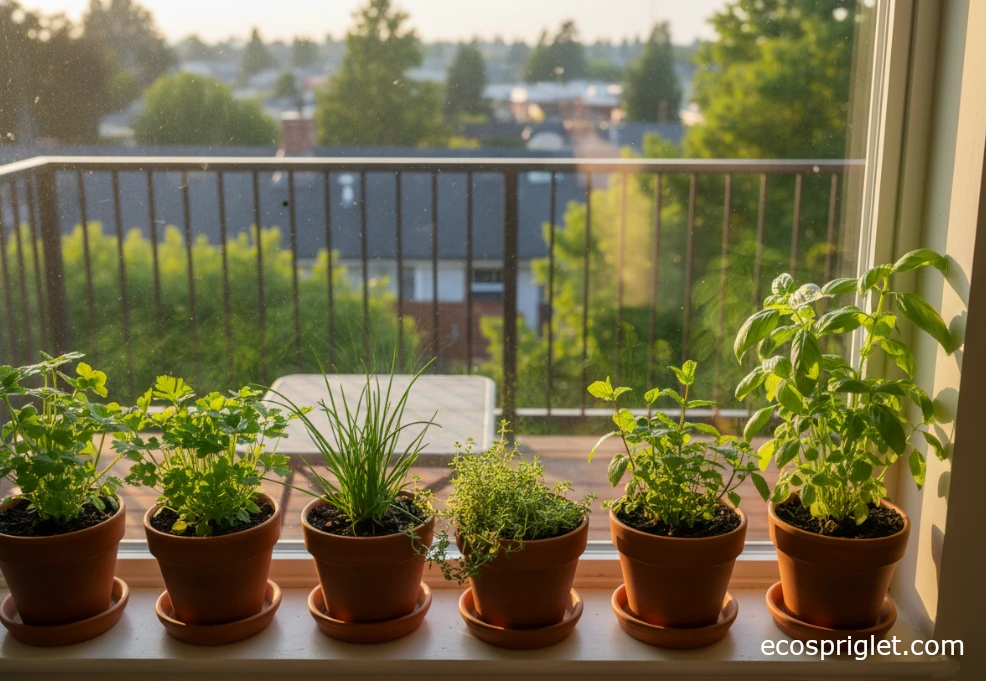
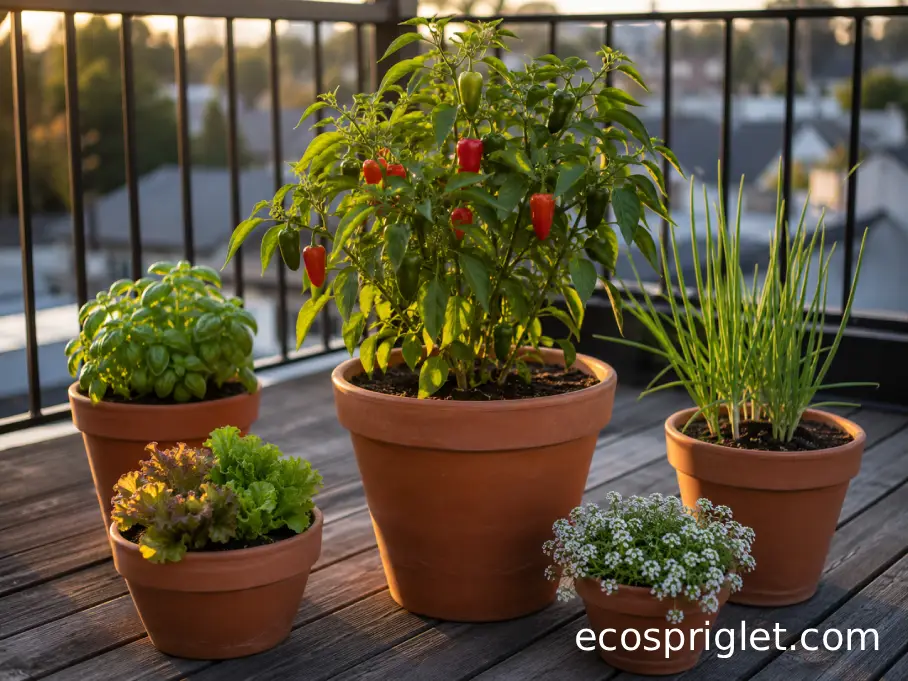
- For cooking: one pepper pot, one basil pot, and a small container of green onions.
- For beneficial insects: one pepper pot with sweet alyssum and flowering cilantro or dill nearby.
- For maximum early-season harvest: one pepper plus lettuce or spinach planted while the pepper is still small, then harvested as summer heat arrives.
The last combination is especially useful where balcony space is limited. University of Minnesota Extension specifically highlights early lettuce, spinach, or basil followed by expanding peppers or tomatoes as a practical form of companion planting and succession cropping.
For bell peppers, I tend to prioritize generous root space because the plants need enough foliage and moisture to support developing fruit. Hot pepper types can also be grown with the same basic companion strategy: give the pepper priority, then fit smaller plants around it rather than asking the pepper to compete.
If wind is strong on your balcony, use heavier containers or place pots where they cannot topple. Keep planters and supports securely inside the railing rather than relying on loose railing attachments, and follow any building rules concerning balcony loads and planters. A wet container can be much heavier than the empty pot you carried upstairs.
Once you start thinking in functions rather than fixed pairs, companion planting becomes much easier: one crop for the harvest, one for the kitchen, perhaps one for beneficial insects, and enough empty space for every plant to mature.
Build a Better Pepper Pot, Not a Superstition
The best pepper companion planting plan is usually simpler than a chart with dozens of green checkmarks and red Xs. Start by giving your pepper the conditions it needs: generous root space, good drainage, warm weather, enough direct sun, and consistent moisture. Then add smaller plants that perform a useful job without interfering with those basics.
Basil, green onions, early lettuce or spinach, sweet alyssum, cilantro, and dill can all make practical neighbors in the right arrangement. Tomatoes can grow beside peppers too, but large plants are much easier to manage in separate containers. And because tomatoes and peppers share some disease concerns, growing them together should never be confused with crop rotation.
On my own small-space setups, I would rather see three healthy pots with a little air between them than one overflowing planter fighting for water by July. Companion planting works best when it makes the garden easier to use, not harder to maintain.
Start with one pepper and one useful neighbor this season. Once you see how they fill the space, you can build from there.