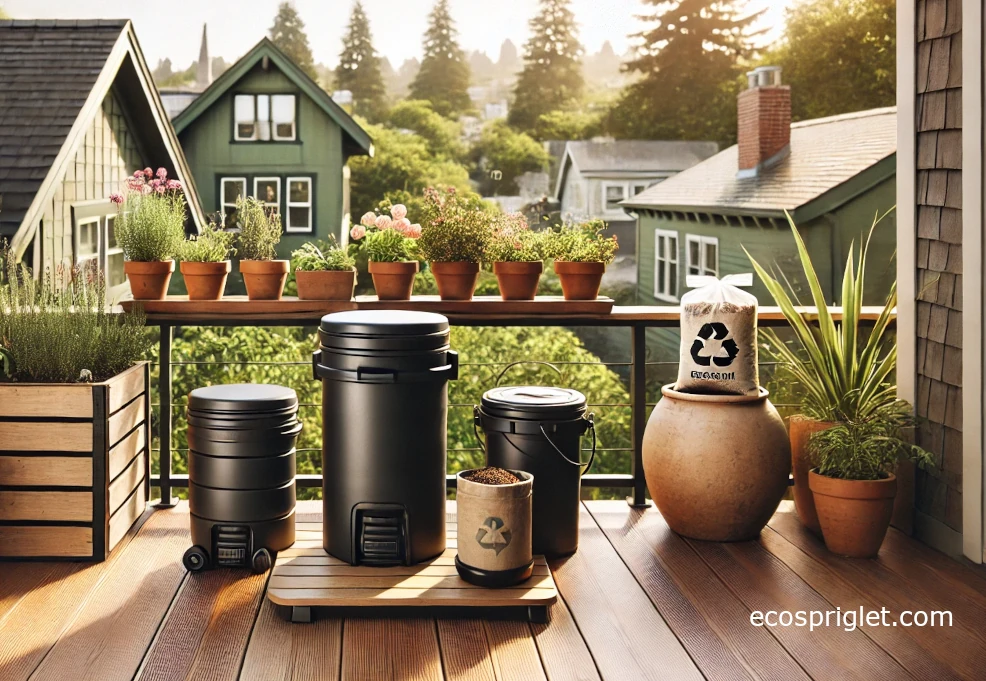
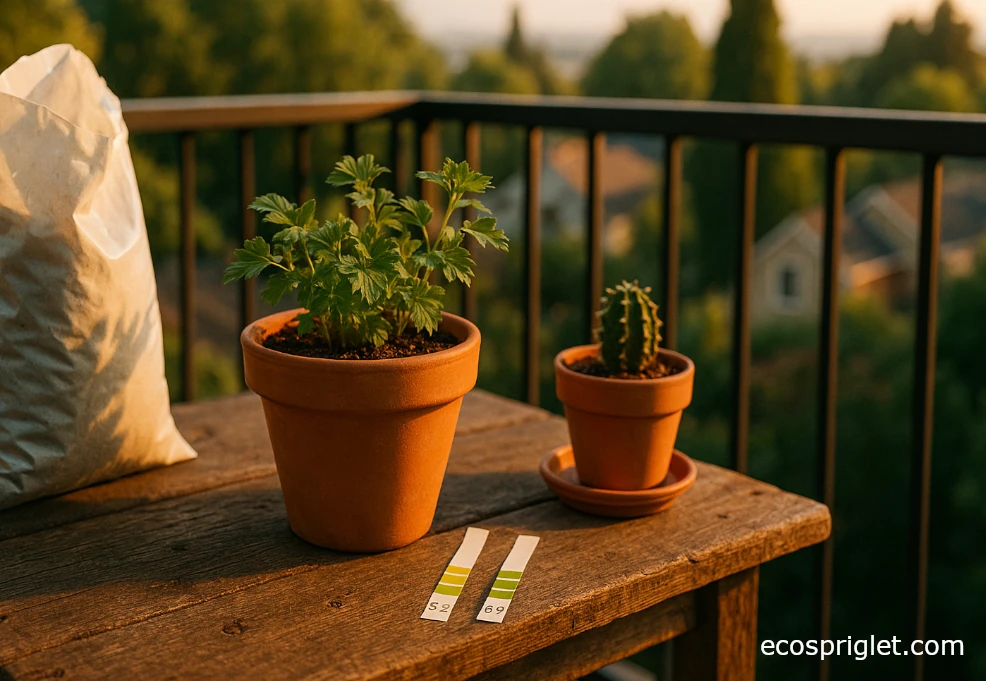
A soil acid test kit is really a soil pH test kit. It helps you see whether your soil or potting mix is acidic, neutral, or alkaline before you start adding lime, sulfur, fertilizer, or fresh compost. For small-space gardeners, that matters because one 5-gallon tomato pot or herb planter can swing out of balance faster than a big backyard bed.
Soil pH runs from 0 to 14, with 7 considered neutral; numbers below 7 are acidic and numbers above 7 are alkaline. Oregon State University Extension notes that pH affects how available nutrients such as nitrogen, phosphorus, and potassium are to plants, so poor pH can make plants struggle even when fertilizer is present.
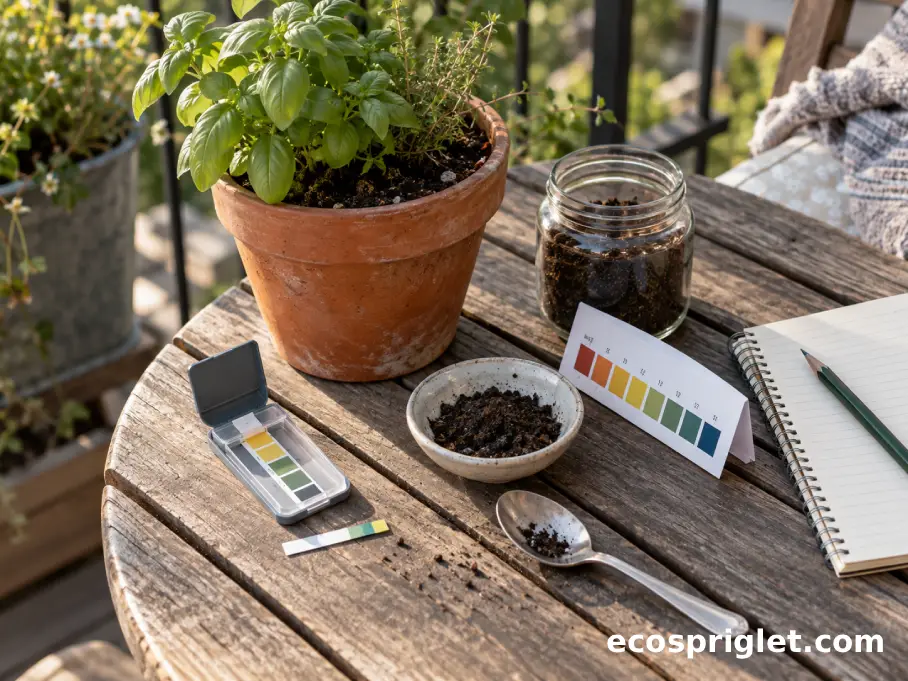
Quick Picks for Different Small-Space Gardeners
| Pick | Best For | Main Strength | Watch Out For |
|---|---|---|---|
| Best Overall: Garden Tutor Soil pH Test Kit | Beginners testing container soil, herbs, flowers, and balcony planters | pH-only strips made for soil, with 100 listed strips | Does not test nitrogen, phosphorus, or potassium |
| Best Budget Multi-Test Kit: Luster Leaf Rapitest 1601 | Gardeners who want pH plus basic NPK clues | Includes 40 listed tests, 10 each for pH, nitrogen, phosphorus, and potash | Color matching can be subjective |
| Best Lab Mail-In Kit: MySoil Soil Test Kit | Edible container growers who want a fuller nutrient picture | Tests 13 nutrients plus pH, with listed lab results in 6–8 days | Slower than an at-home strip or capsule test |
| Best Premium Reusable Meter: Bluelab Soil pH Pen | Repeat testers, serious indoor growers, and shared garden setups | Measures pH and temperature directly in soil or growing media | Expensive and needs careful probe care |
| Best High-Capacity Kit: LaMotte Garden Guide Soil Test Kit | Community gardens, multiple container zones, and teaching setups | Detailed pH and NPK kit with refill option | More kit than most apartment gardeners need |
How I Chose These Soil Acidity Testing Kits
For apartment and balcony gardeners, I give more weight to ease of use, low mess, storage size, and whether the kit helps you make a better next move. A large lab-style kit can be excellent, but it is not always the best purchase for someone with six pots and no shed.
I also separated pH-only tools from full soil test kits. A pH-only acidity test for soil is enough when you mainly want to know whether blueberries, hydrangeas, herbs, or vegetables are in the right range. A fuller lab or NPK kit makes more sense when plants look weak, you reuse potting mix, or you are growing food crops in the same containers year after year.
One caution: home soil test kits are convenient, but they are not the same as a professional lab test. Montana State University Extension notes that test kits commonly measure pH and NPK, but lab testing may be more accurate and can prevent decisions based on poor results.
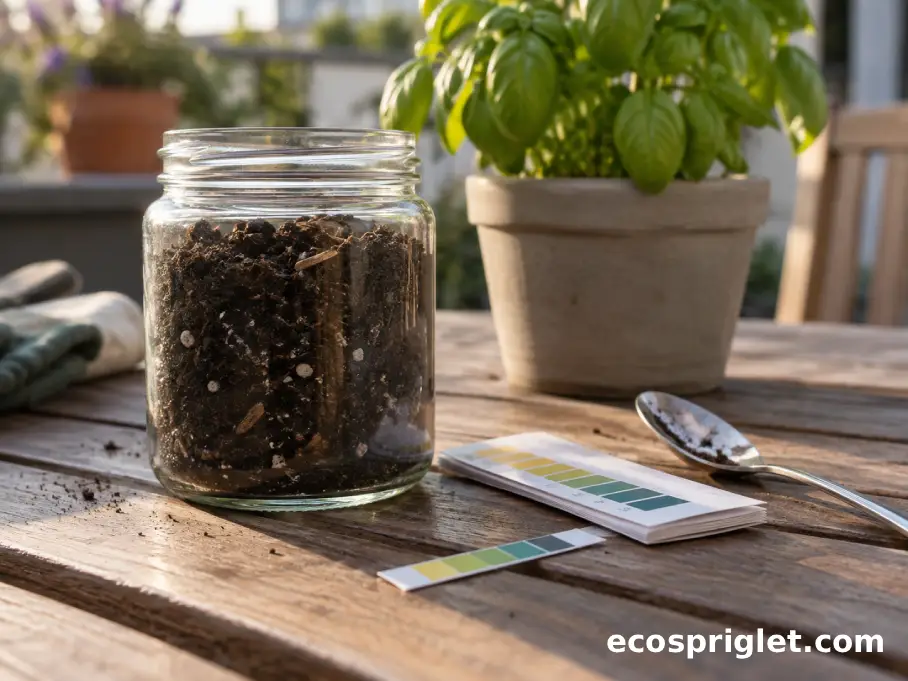
Best Overall: Garden Tutor Soil pH Test Kit
Best for: beginners who want a simple soil acidity test kit for containers, raised planters, balcony herbs, flowers, and small edible gardens.
Not best for: gardeners who need a full nutrient report or specific fertilizer recommendations.
Why I’d consider it: Garden Tutor lists this as a soil-specific pH strip kit with 100 test strips, a pH testing handbook, an AI reader template, and an online lime and sulfur estimator. The company’s product page says the strips are designed for soil pH testing rather than general-purpose liquid testing.
- Key feature: pH-only strips with a listed 3.5–9.0 range.
- Practical benefit: small, easy to store, and less intimidating than bottles of reagents.
- Drawback: it will not tell you whether nitrogen, phosphorus, or potassium is low.
- Check before buying: confirm the strip count, current instructions, and whether you are comfortable reading color changes.
Bottom line: This is the soil acidity testing kit I’d point most balcony gardeners toward first. It answers the main question without turning one basil pot into a science project.
Best Budget Multi-Test Kit: Luster Leaf Rapitest 1601 Soil Test Kit
Best for: gardeners who want one inexpensive kit for a basic soil test for acidity plus nitrogen, phosphorus, and potash.
Not best for: anyone who dislikes color matching or wants lab-level precision.
Why I’d consider it: Luster Leaf lists the Rapitest 1601 as a 40-test kit with 10 tests each for pH, nitrogen, phosphorus, and potash. Retail listings for the same model also describe the capsule system and color comparator, which are common reasons beginners choose it over separate pH-only strips.
- Key feature: tests pH plus three basic macronutrient categories.
- Practical benefit: useful if you are reusing potting mix and want more than a pH number.
- Drawback: pH and nutrient colors can be hard to interpret in poor light.
- Check before buying: make sure the kit is fresh, sealed, and includes the current instructions.
Bottom line: This is a sensible budget pick if you want a broader at-home soil test for acidity and basic fertility. I would still use a lab test before making major amendment decisions in expensive edible containers.
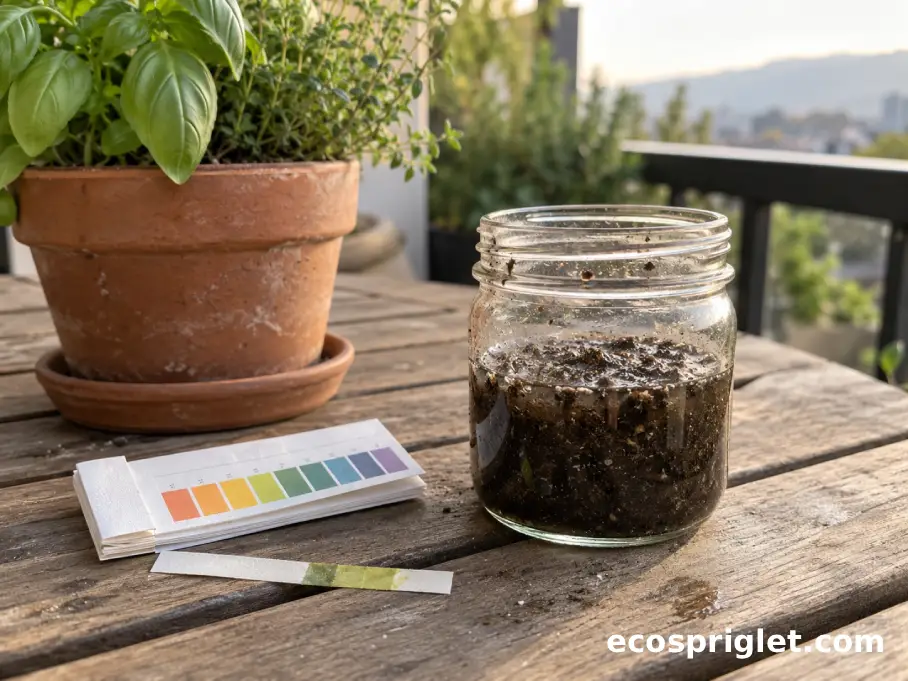
Best Lab Mail-In Kit: MySoil Soil Test Kit
Best for: balcony vegetable growers, renters growing food in reused potting mix, and gardeners who want more than a quick acidity test for soil.
Not best for: gardeners who need an instant answer before planting this afternoon.
Why I’d consider it: MySoil lists its kit as a mail-in lab test for 13 nutrients plus pH, with results in 6–8 days and fertilizer recommendations. That makes it more useful than a pH-only kit when you are trying to understand a tired container mix or a raised bed that has had several seasons of fertilizer added.
- Key feature: lab analysis covering pH and a wider nutrient panel.
- Practical benefit: better for diagnosing patterns than guessing from leaf color alone.
- Drawback: you have to mail the sample and wait for results.
- Check before buying: confirm turnaround time, shipping instructions, and whether recommendations match container or raised-bed gardening.
Bottom line: Choose this if your goal is not just “how do you test soil for acidity?” but “what should I actually change before I plant again?” It costs more than strips, but it can save you from adding the wrong amendment.
Best Premium Reusable Meter: Bluelab Soil pH Pen
Best for: serious indoor growers, repeat testers, and community gardeners who will use a meter often enough to justify the cost.
Not best for: most first-time apartment gardeners with only a few pots.
Why I’d consider it: Bluelab lists its Soil pH Pen as a handheld tester that measures pH and temperature in soil, coco coir, rockwool, potting mixes, and nutrient solutions. The product page also says it reads in 0.1 pH increments and is temperature compensated.
- Key feature: reusable direct-reading soil and growing media pH pen.
- Practical benefit: no strips to restock if you test often.
- Drawback: pH probes require careful storage, calibration, and gentle handling.
- Check before buying: read the care instructions and budget for calibration and storage solution.
Bottom line: This is not the frugal pick, but it can make sense for gardeners who test many containers, manage indoor growing media, or share the tool in a community garden.
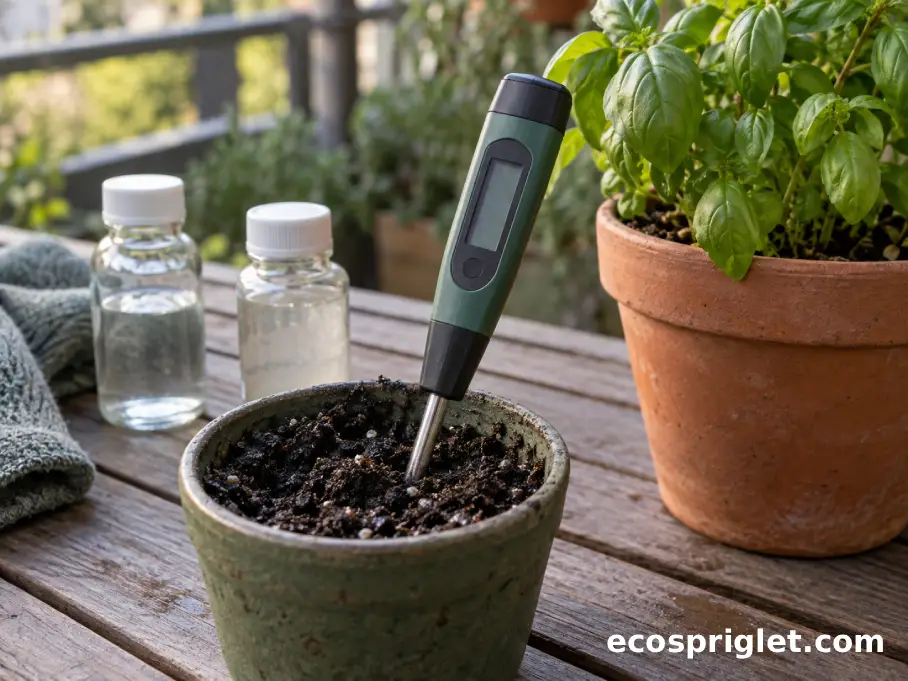
Best High-Capacity Kit: LaMotte Garden Guide Soil Test Kit
Best for: multiple garden zones, community gardens, school gardens, and gardeners who want repeated pH and NPK testing from one organized kit.
Not best for: a renter with three herb pots and limited storage.
Why I’d consider it: LaMotte lists the Garden Guide Soil Test Kit as a pH, nitrogen, phosphorus, and potassium kit with simplified test methods. Its specifications list a pH range of 4.0–8.0 with 30 pH tests, plus separate listed tests for nitrogen, phosphorus, and potassium.
- Key feature: larger, more complete home testing setup with manuals and color chart.
- Practical benefit: useful when several people or several planting areas need repeat testing.
- Drawback: more parts, more storage, and more process than many balcony gardeners need.
- Check before buying: confirm current contents, refill availability, and safe storage for reagents around children or pets.
Bottom line: I would not buy this for one windowsill planter. I would consider it for a shared rooftop garden, a teaching setup, or a serious container gardener managing many different crops.
When to Skip Cheap 3-in-1 Probe Meters
Cheap moisture-light-pH probe meters are tempting because they promise fast answers with no mixing. I use caution with them as a primary soil acidity testing kit, especially for beginners. They can be fine as rough moisture reminders, but pH readings from low-cost probes can be inconsistent in potting mixes, dry soil, or containers with fertilizer salts.
For a real test for soil acidity, I would rather use soil-specific strips, a capsule reagent kit, a lab mail-in test, or a well-maintained pH pen designed for growing media. That small step of mixing a representative soil sample usually gives you a more thoughtful result than poking one spot in one pot.
How Do You Test Soil for Acidity at Home?
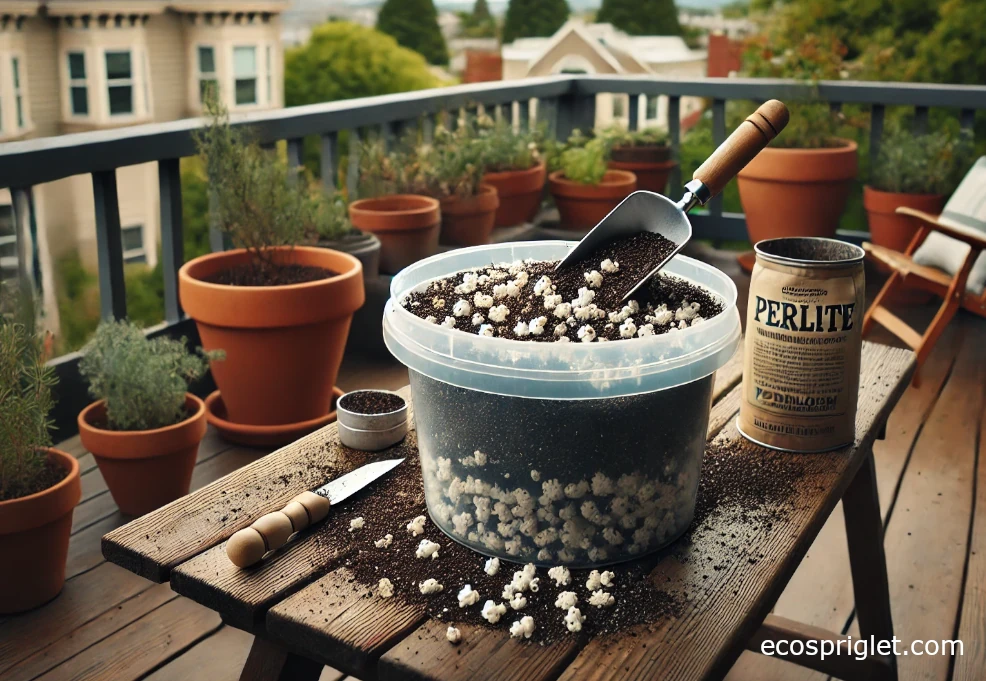
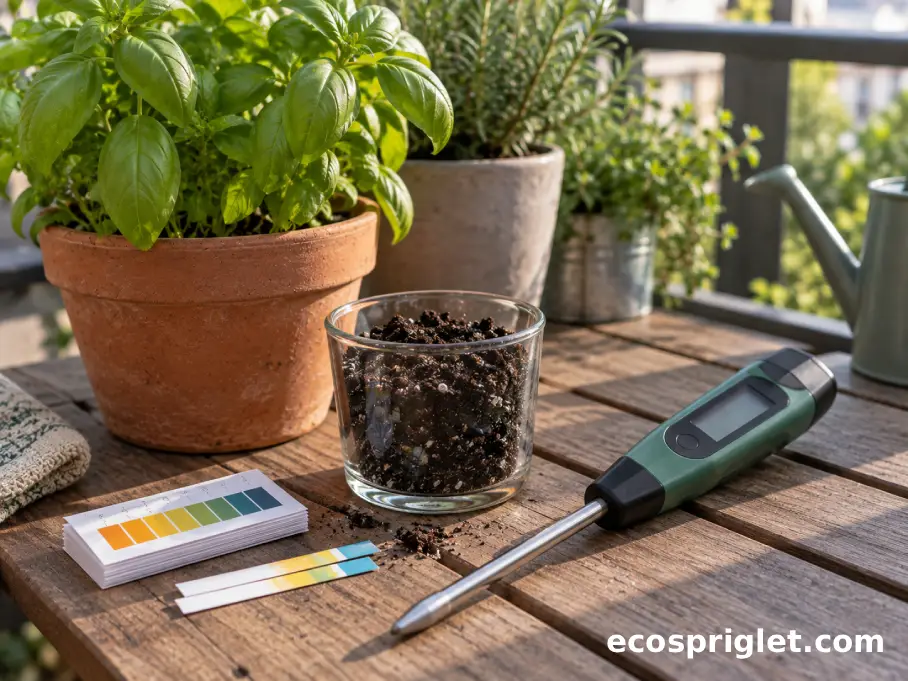
The basic method is simple, but the sample matters more than the gadget. Take small amounts from several spots in the same container, bed, or planter, mix them together, remove roots and bark chunks, then test that blended sample. Oregon State University Extension recommends taking separate samples from different growing areas, because a vegetable garden, lawn, and perennial bed may not have the same pH.
- Use a clean spoon, trowel, cup, or jar.
- Test each growing area separately instead of mixing every pot together.
- Let very wet soil air dry if your kit instructions call for it.
- Use distilled water if the kit recommends it, especially if your tap water is hard.
- Read the result in bright, natural light if you are matching colors.
- Write down the date, pot, plant, and result before you forget.
For container gardens, I like testing before adding amendments, not after. Lime and sulfur move slowly and can be overdone in a small pot. If a result surprises you, repeat the test before changing the soil.
How to Choose the Right Soil Acidity Test Kit
Choose strips if you want the simplest pH answer
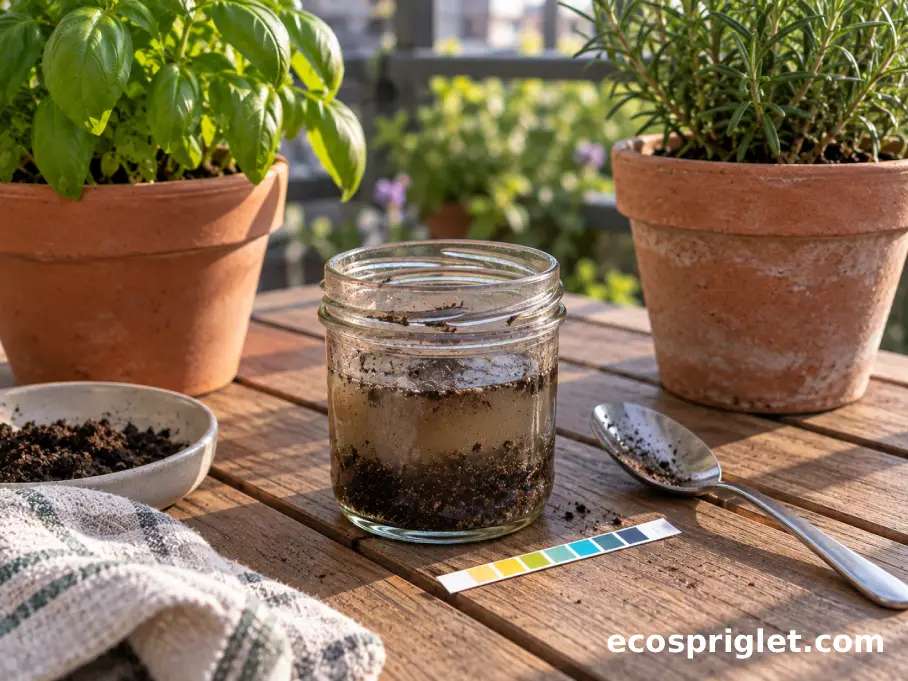
Soil pH strips are the easiest starting point. They are compact, usually low mess, and good for checking whether your planter is acidic enough for acid-loving plants or close enough for common herbs and vegetables.
Choose a capsule kit if you want pH plus basic NPK
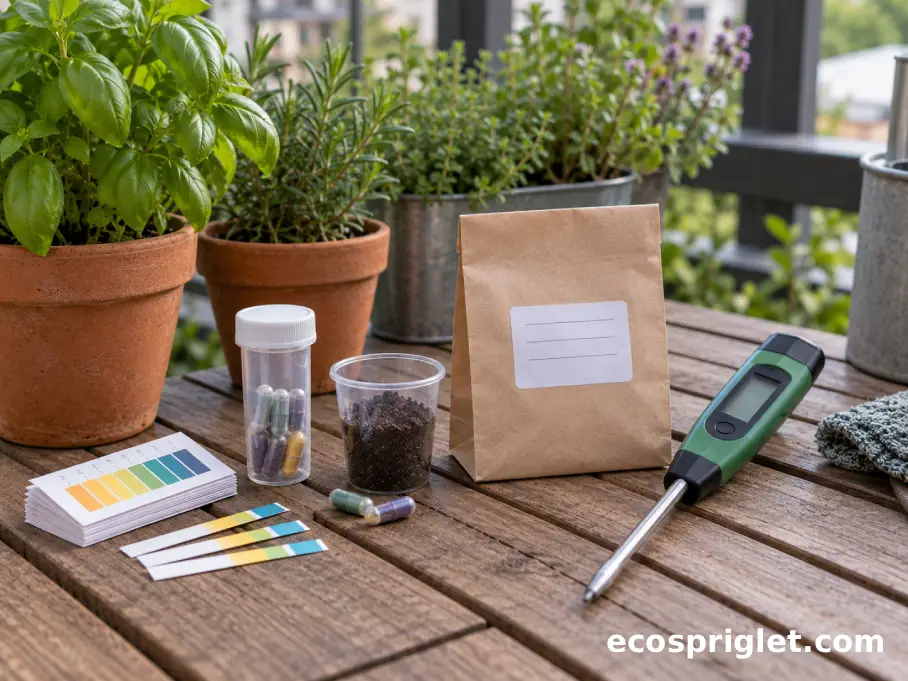
Capsule kits take more patience, but they can be useful if your containers look weak and you want a rough read on pH, nitrogen, phosphorus, and potassium. Treat the results as directional, not as a perfect fertilizer prescription.
Choose a mail-in lab kit if the garden matters financially or emotionally
If you are growing a lot of food on a balcony, dealing with repeated failures, or reusing a large volume of potting mix, a lab kit can be worth the wait. This is especially true before adding lime or sulfur, because pH correction is easier to do slowly than to undo quickly.
Choose a reusable pH pen only if you will maintain it
A good pH pen is a tool, not a magic wand. It needs calibration, storage solution, gentle cleaning, and careful use. If you are not going to care for the probe, strips may be more reliable for your real life.
Common Mistakes When Testing Soil Acidity
- Testing one tiny spot and assuming the whole planter is the same.
- Using dirty cups or spoons that may affect the reading.
- Reading color charts indoors under yellow light.
- Testing right after fertilizing or adding amendments, then reacting too quickly.
- Adding lime because the soil is “acidic” without checking what the plant actually prefers.
- Using a pH kit to diagnose every plant problem, even when light, watering, roots, or pests are more likely.
The biggest beginner mistake is treating one pH number like a command. A pH of 6.2 might be perfectly fine for many vegetables and herbs, but not acidic enough for blueberries. The right result depends on what you are growing.
Safety and Storage Notes for Apartment Gardeners
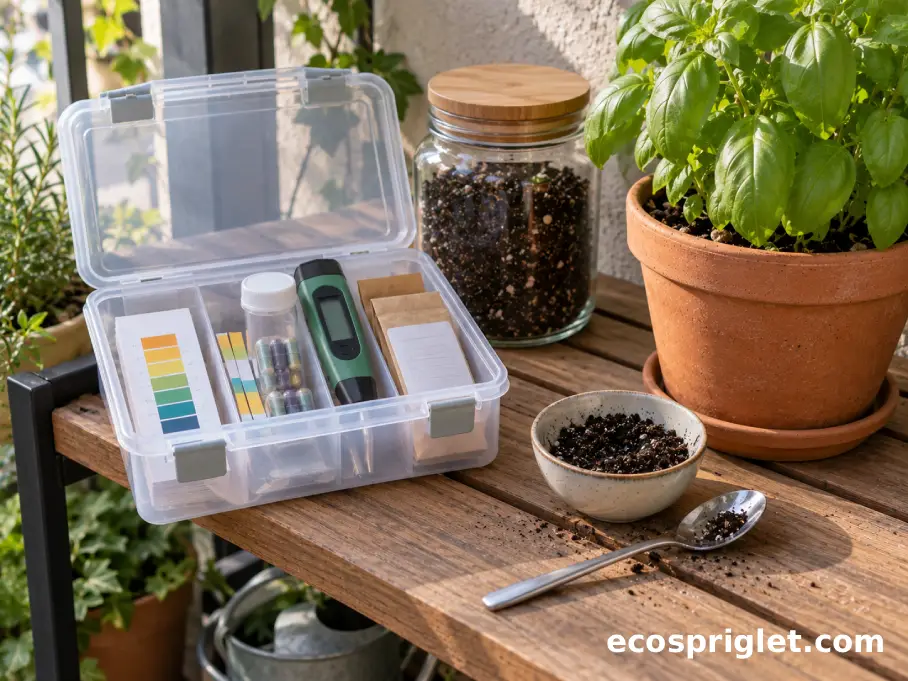
Even small test kits deserve careful storage. Keep reagents, capsules, strips, and calibration solutions away from children, pets, food prep surfaces, and open drink cups. Wash your hands after handling soil, especially if the sample came from an older urban lot, alley-side planter, or unknown raised bed.
If you grow food on a balcony or in a shared urban space, pH is only one part of soil safety. A soil acidity test kit does not test for lead, arsenic, pesticide residue, or other contaminants. Use fresh, reputable potting mix for edible containers when the soil history is unknown, and consider a lab test if you are growing in existing urban soil.
FAQ About Soil Acid Test Kits
Is a soil acid test kit the same as a soil pH test kit?
Yes. Most products call it a soil pH test kit, soil acidity test kit, or soil acid test kit. They are all trying to answer the same core question: how acidic or alkaline is this soil sample?
What is the easiest way to test for soil acidity?
For most apartment gardeners, soil-specific pH strips are the easiest option. Mix a representative soil sample with water according to the kit instructions, dip the strip, and compare the result with the chart.
Do I need a full NPK kit if I only care about acidity?
No. A pH-only kit is enough if your main question is whether the soil is acidic, neutral, or alkaline. Choose a broader NPK or lab kit when you are also trying to understand fertilizer needs.
How often should I test container soil pH?
For most containers, test before planting, when reusing old potting mix, or when a plant is struggling and watering, light, and pests have already been checked. You do not need to test every week.
Can I use a soil acidity test kit on potting mix?
Usually, yes, but follow the kit instructions. Potting mixes can contain bark, compost, peat, coir, perlite, lime, and fertilizer, so take a blended sample instead of testing one chunky spot.
Should I add lime or sulfur after one low or high reading?
Not immediately. Repeat the test, check the plant’s preferred pH range, and use small, measured amendments only when needed. In containers, it is easy to overcorrect.
Final Verdict: Which Soil Acidity Test Kit Should You Buy?
For most urban apartment gardeners, I’d start with the Garden Tutor Soil pH Test Kit because it is simple, compact, and focused on the main question: is your soil too acidic, too alkaline, or close enough for the plant you want to grow?
Choose the Luster Leaf Rapitest 1601 if you want a budget-friendly acidity test for soil plus rough NPK clues. Choose MySoil if you want a fuller lab-backed picture before changing a valuable edible container setup. Choose Bluelab only if you will test often and maintain the probe. Choose LaMotte if you are managing many planting areas or teaching others how to test.
The practical gardener’s rule is simple: test first, amend slowly, and match the result to the plant. A good soil acidity testing kit should help you make fewer guesses, not push you into adding more products.