Rice water for plants sounds almost too easy: rinse dinner rice, save the cloudy water, and give your pothos or balcony basil a little treat. I like the idea, especially in apartment gardening where every inch, dollar, and cup of water feels worth using well. But rice water is not magic fertilizer, and it is not automatically safe just because it came from the kitchen.
The helpful version is mild, unsalted, diluted, and used only once in a while. The risky version is thick, sour, salty, poured onto already-wet soil, or used as a replacement for real plant care. In small pots, those mistakes show up fast as fungus gnats, crusty potting mix, limp roots, or a strange smell near the windowsill.
Here is the practical way to think about it: rice water can be a light soil supplement for actively growing, soil-based plants. It works best when your plant already has the basics right: enough light, a pot with drainage holes, and watering based on the soil, not the calendar.
What Rice Water Actually Is
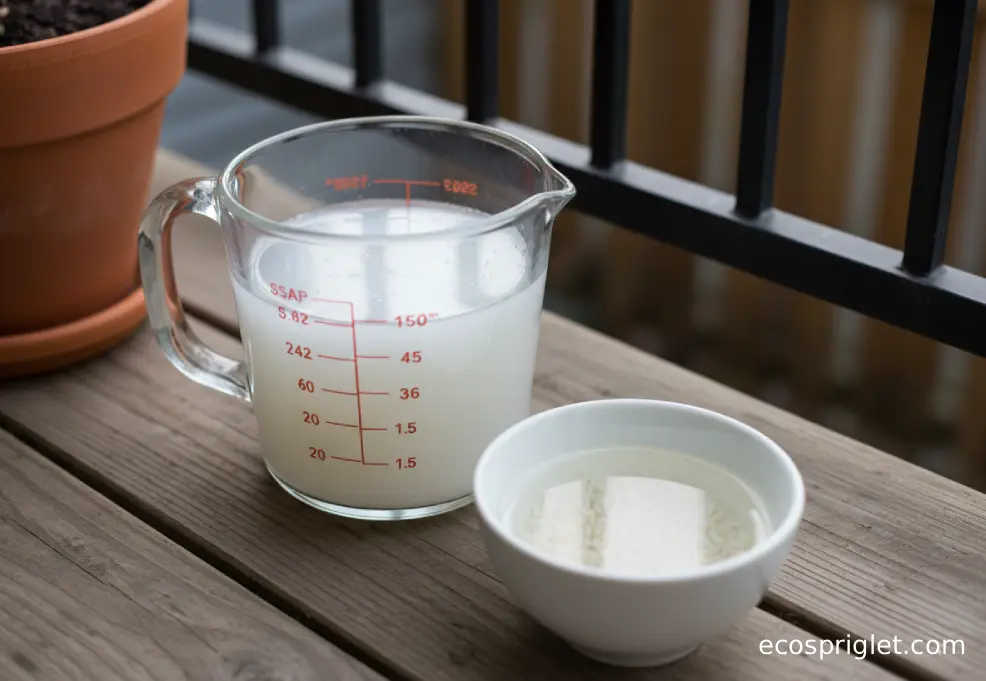
Rice water is the cloudy liquid left after rinsing uncooked rice, soaking rice briefly, or saving plain unsalted cooking water. For plants, the rinse-water version is usually the easiest and safest because it is thin, cool, and not gluey. If you cooked rice with salt, oil, broth, butter, spices, or coconut milk, skip that water for plants.
What is in rice water depends on the rice, the rinse time, and whether it has fermented. Research on washed rice water describes it as containing leached rice materials, including starch and small amounts of nutrients that may increase during short fermentation, but the same research also notes that strong scientific evidence for garden use is still limited. That is why I treat it as a mild supplement, not a balanced fertilizer.
The simplest way to picture it is this: rice water may feed soil microbes and add a tiny nutrient nudge, while regular fertilizer and healthy potting mix still do the heavy lifting. University of Maryland Extension explains that nitrogen, phosphorus, and potassium each support different plant functions, but plants need those nutrients in appropriate amounts and forms.
Is Rice Water Good for Plants?
The honest answer is yes, rice water can be good for plants when it is diluted, unsalted, and used sparingly. It is most useful for soil-grown houseplants, leafy herbs, and balcony vegetables that are actively growing. It is least useful for plants sitting in low light, wet soil, compacted old potting mix, or containers without drainage.
Rice water may help in a few modest ways:
- It reuses water you already had in the kitchen, which is handy for apartment gardeners.
- Its starch can act as a light food source for soil microbes, especially in living potting mixes.
- It may provide a small amount of leached nutrients, though not enough to replace a balanced fertilizer.
- It encourages you to observe the soil before watering, which is often more valuable than the rice water itself.
I have had the best results using it on sturdy plants like pothos, basil, mint, and balcony peppers during active growth. I do not use it on every plant. A cactus on a dim shelf, a soggy fern, or a struggling orchid with weak roots does not need kitchen experiments; it needs better basic care first.
If your plant is producing pale new leaves, stalled growth, or older yellowing leaves, rice water may not solve the issue. Light, root health, pot size, and a proper fertilizer routine matter more than any kitchen rinse.
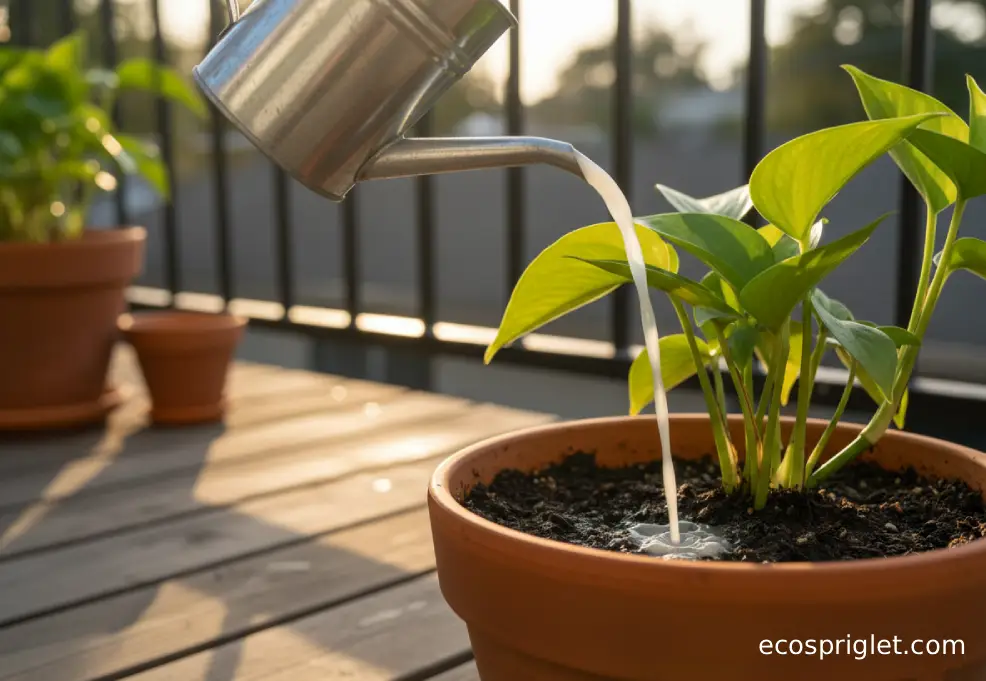
Use the Right Ratio Before You Water
Ratios matter because a little cloudy water is gentle, while thick starchy water can sit on the potting mix like soup. For making rice water, not cooking rice to eat, a useful starting point is 1 part uncooked rice to 3 parts room-temperature water by volume. One peer-reviewed study on washed rice water used a 3:1 water-to-rice ratio for preparing samples, which translates neatly to 1/2 cup rice plus 1 1/2 cups water at home.
| Method | Starting Ratio | Dilution Before Use | Best Frequency |
|---|---|---|---|
| Quick Rinse Water | 1 part rice to 3 parts water | Use as-is if lightly cloudy, or dilute 1:1 if milky | Every 3 to 4 weeks in active growth |
| Unsalted Boiled Rice Water | Only plain cooking water, cooled completely | Dilute about 1 part rice water to 2 parts clear water | About once a month |
| Fermented Rice Water | Start with quick rinse water | Start with 1 part fermented liquid to 10 parts clear water | Every 4 to 6 weeks, only on healthy plants |
| Orchid Test Mix | Plain unfermented rinse water only | 1 tablespoon rice water in 1 cup room-temperature water | Every 6 to 8 weeks at most |
The water should look like weak skim milk, not cream. If you can barely see the bottom of a glass, dilute it. If the water feels slippery or leaves a paste on your fingers, it is too concentrated for small pots.
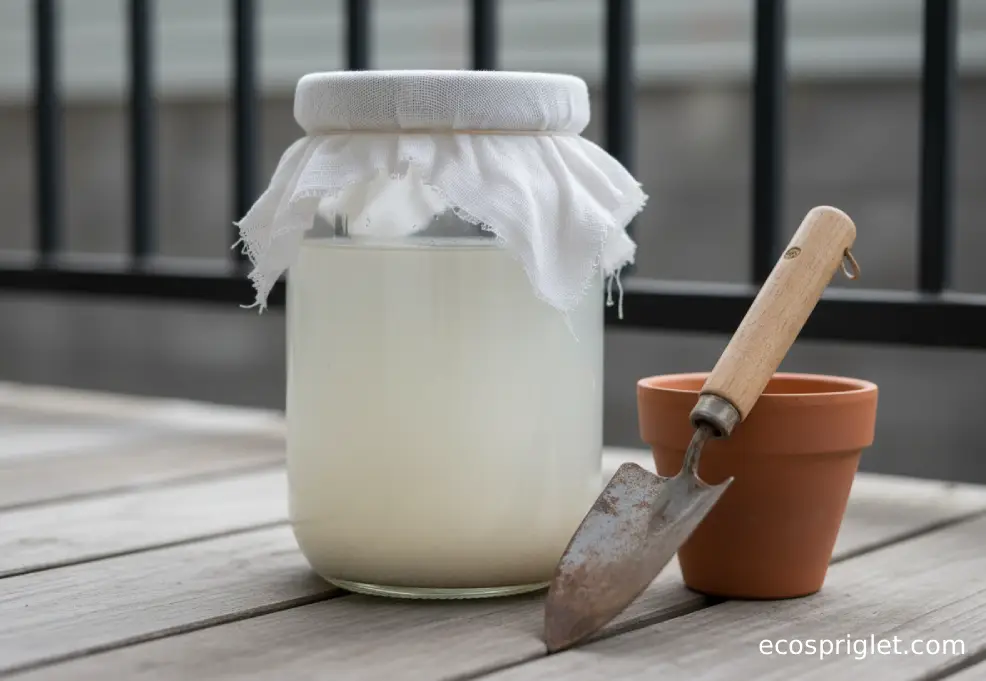
How to Make Fermented Rice Water Without a Smelly Jar
Fermentation is the part where gardeners can get either a useful mild amendment or a jar they regret opening. Research on fermented washed rice water found that short fermentation changed nutrient concentrations and microbial activity, with several beneficial measures highest after about 3 days in that study. That does not mean longer is better on a windowsill. It usually is not.
Here is my apartment-safe method:
- Rinse 1/2 cup uncooked rice in 1 1/2 cups room-temperature water for 30 to 60 seconds.
- Strain out the rice and pour the cloudy water into a clean jar.
- Cover the jar with breathable cloth or a loose lid; do not seal it tight.
- Let it sit 2 to 3 days at normal room temperature, about 65°F to 75°F.
- Dilute 1 part fermented rice water with 10 parts clear water before using it on soil.
I remember trying a longer batch years ago on my Portland balcony, thinking stronger must mean better. By day six, the jar smelled like a dare. The basil survived, but the potting mix stayed sour for a week, and I had to rinse the container heavily. Since then, I stop at 2 to 3 days or skip fermentation completely.
University of Hawaiʻi researchers studying fermented rice water and milk cultures found only some lactic acid bacteria in their samples and noted that many online claims lacked systematic evidence. That is a good reminder: fermented rice water for plants is a living, variable liquid, not a sterile bottled product. Keep it off leaves, avoid adding sugar or milk for indoor plants, and skip hair-care recipes that include oils, fragrance, or extra pantry ingredients.
Apply It to Apartment Houseplants and Balcony Pots
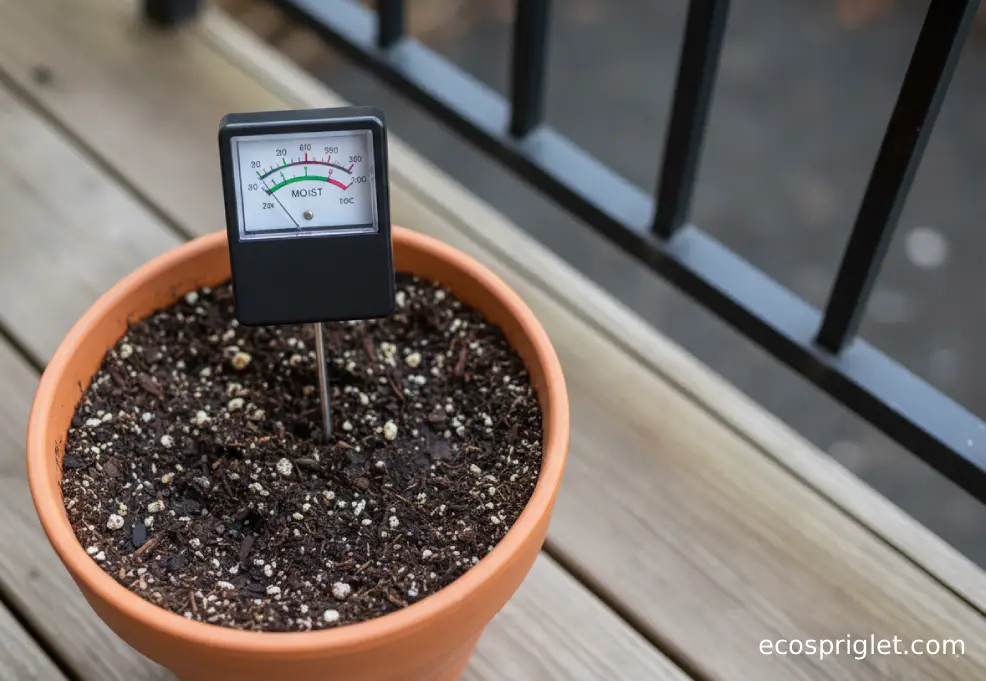
Most apartment plants prefer a quiet routine: bright-enough light, a draining pot, and water only when the soil is ready. Before using rice water, push a finger about 1 inch into the potting mix. If that top inch still feels damp, wait. University of Minnesota Extension gives the same kind of houseplant guidance: check the soil and water when the top inch feels dry, then empty saucers so roots are not sitting in water.
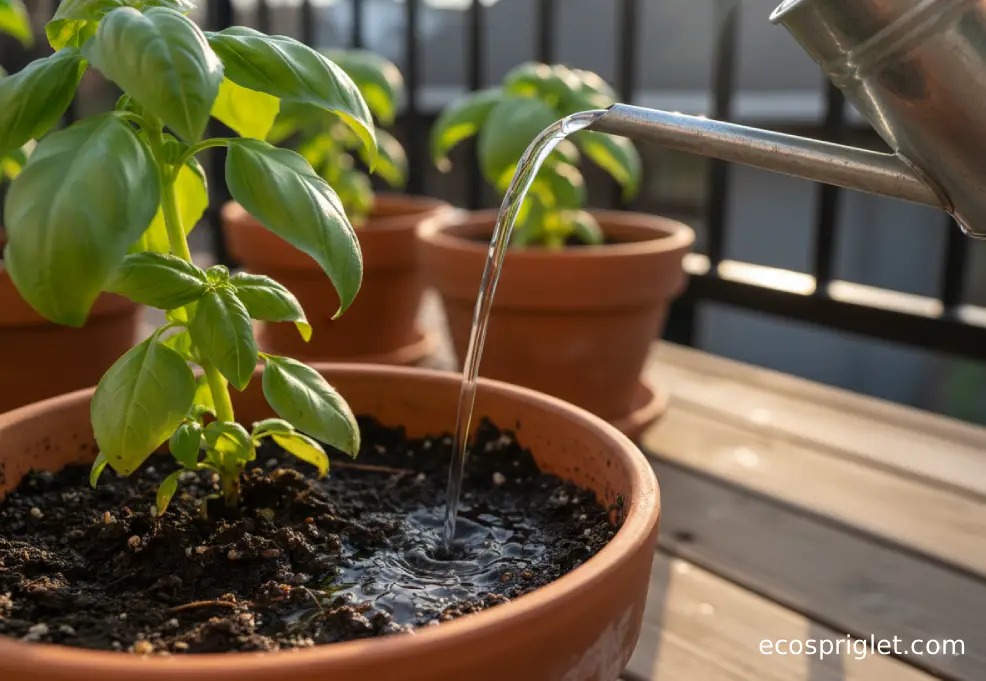
Pour rice water onto the soil, not over the leaves. For a 6-inch pot, start with about 1/4 cup of diluted rice water. For a 10- to 12-inch balcony container, 1 to 2 cups is usually plenty. Water slowly enough that the top layer absorbs it instead of channeling down one dry crack and out the bottom.
Use it during active growth, usually spring through early fall for balcony plants and bright-window houseplants. In winter, low-light plants slow down, and extra organic liquids are more likely to linger in cool, damp potting mix. If you want a simple rhythm, alternate like this: one rice-water feeding, then two or three normal clear-water irrigations.
For edible herbs and greens, keep rice water on the soil and rinse harvested produce under running water before eating. The FDA recommends washing produce thoroughly under running water, including homegrown produce. For more basic watering help, pair this with our houseplant watering schedule and apartment herb garden guide.
Rice Water for Orchids Needs a Lighter Touch
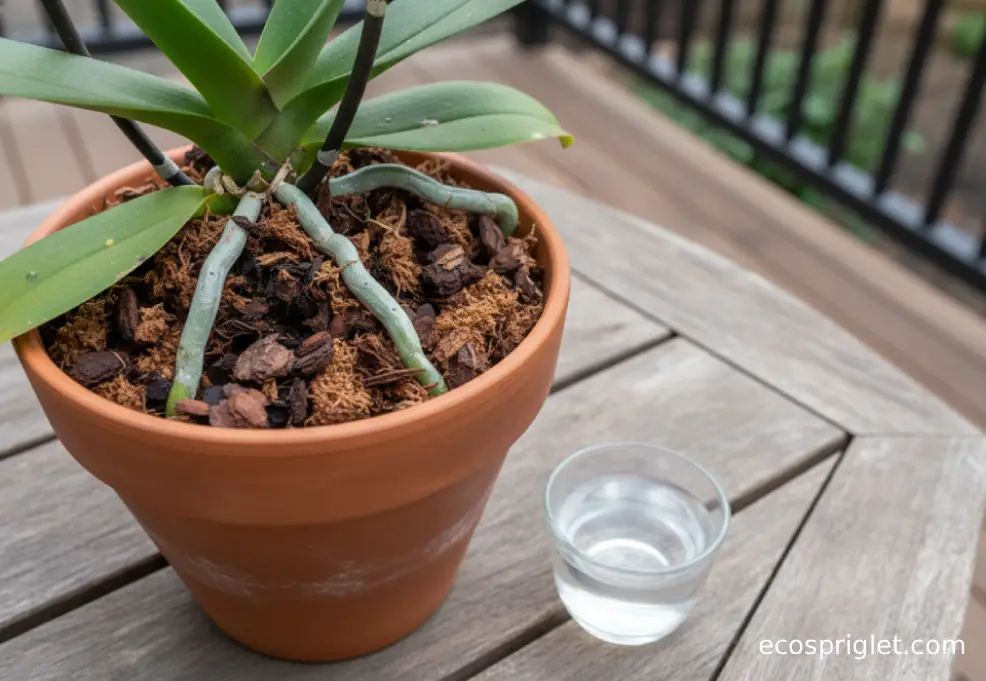
Orchids are where I slow down. Most common moth orchids are epiphytes, which means their roots are adapted to airy conditions, not dense soil. University of Maryland Extension notes that orchids and other epiphytes need a porous, lumpy mix that does not hold water for long; regular potting mix can rot their roots.
So, is rice water good for orchids? Sometimes, but only as a very occasional, very diluted soil-level experiment on a healthy plant. My cautious rice water for orchids recipe is simple: mix 1 tablespoon of plain, unfermented rice rinse water into 1 cup of room-temperature water. Pour it through the bark mix only after the orchid already needs watering, then let it drain completely.
I would not use fermented rice water on a stressed orchid, a newly repotted orchid, or any orchid with mushy roots. Bark mixes can hold residues in pockets, and orchids are sensitive to salt and mineral buildup. The American Orchid Society recommends dilute feeding and regular flushing with fresh water to reduce mineral salt buildup, while University of Maryland Extension advises flushing indoor plant media when deposits accumulate.
The safest orchid rule is boring but effective: when in doubt, skip the rice water and use a proper orchid fertilizer at a weak rate during active growth.
Common Mistakes to Avoid
I learned this the hard way: small containers have very little room for error. A half cup too much of anything can change the moisture, smell, and texture of the potting mix. Watch for these common mistakes before they become a root problem.
- Using salted cooking water. Salt and mineral buildup can damage roots and interfere with water uptake, so only use plain, unsalted rice water. :
- Pouring it onto wet soil. Wait until the top inch of potting mix feels dry, then water slowly.
- Using it every week. For most houseplants, every 3 to 4 weeks during active growth is enough.
- Making it too thick. Dilute milky or gluey rice water until it looks lightly cloudy.
- Fermenting too long indoors. Stop at 2 to 3 days, and discard anything moldy, rotten-smelling, or fizzy enough to pressure the jar.
- Replacing fertilizer completely. Rice water is not a complete feeding program for hungry balcony vegetables or flowering plants.
- Spraying leaves. Keep it on the soil to avoid sticky residue and unnecessary microbial growth on foliage.
If you see a white crust on the potting mix, brown leaf tips, sour odor, or new gnats hovering at soil level, stop using rice water. Flush the pot with clear water if the container drains well, or repot if the mix has turned compacted and stale.
Troubleshooting When Rice Water Backfires
Backfires usually look like watering problems, because that is what they are. Rice water adds moisture plus organic material. If the pot already stays damp for too long, the extra starch can make the surface unpleasant before the plant ever benefits.
If the soil smells sour, pause rice water for at least a month and water only when the top 1 to 2 inches dry. If gnats appear, let the surface dry more between waterings; Penn State Extension notes that drying the top 1 to 2 inches of soil helps minimize fungus gnat problems.
If leaves yellow after rice water use, do not assume the plant needs more food. Check the roots and drainage first. A pot without drainage holes can trap water at the bottom even while the top looks normal. If the plant is valuable and the mix smells stale, slide the root ball out gently. Brown, mushy, collapsing roots mean you should trim damaged roots and repot into fresh mix rather than keep adding supplements.
For crusty pots, clear water is your reset button. University of Maryland Extension recommends flushing houseplant media from the top with several volumes of fresh water to reduce mineral buildup, then letting the pot drain completely.
Creative Uses for a Tiny Terrace
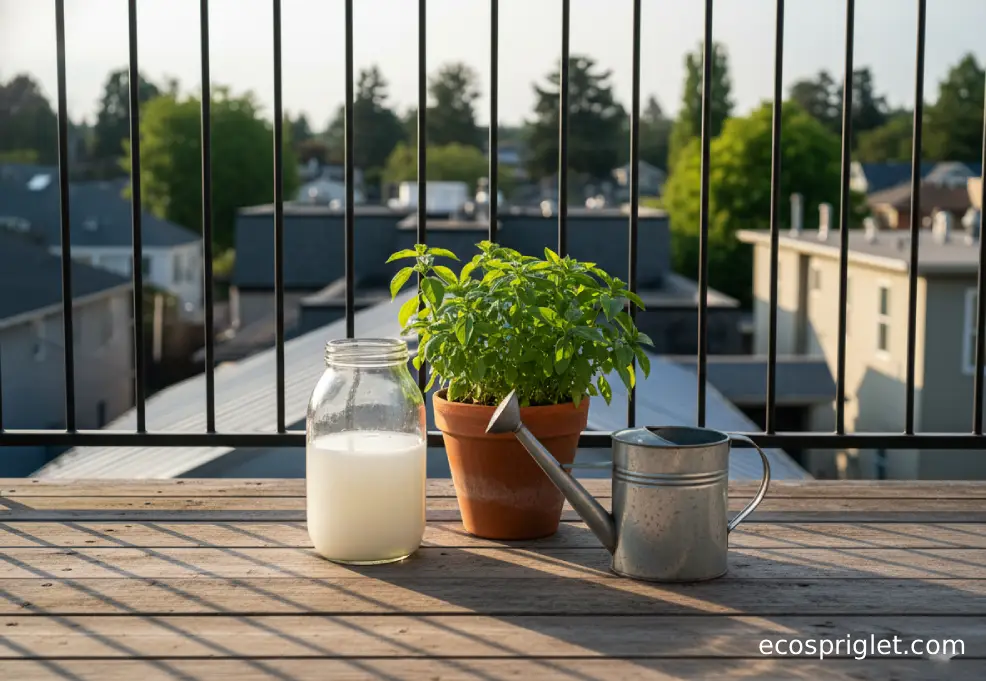
A small terrace does not need a complicated feeding station. The best creative use is also the most controlled one: make rice water only on days you already cook rice, label one small jar for plants, and use it on one or two containers rather than the whole collection.
- Give a diluted splash to leafy herbs after a light harvest, especially basil, mint, parsley, or cilantro in bright light.
- Use it on one test plant first, then wait 10 to 14 days before using it again elsewhere.
- Add it to outdoor balcony containers before a normal clear-water week, not right before travel.
- Reserve plain water for succulents, cacti, seedlings, hydroponic jars, and any plant with root stress.
I keep a tiny note in my phone with the date, plant, and dilution. It sounds fussy, but it prevents the classic apartment-gardener problem: forgetting that you already experimented last week. If a plant looks perkier after two weeks, great. If nothing changes, that is still useful information. Rice water is free, but your plant shelf is not a lab bench.
Final Takeaway: Treat Rice Water as a Light Supplement
Rice water works best when you keep it humble. Use plain rinse water, dilute anything milky, avoid salt completely, and apply it only when the plant already needs watering. For most soil-grown houseplants and balcony herbs, once every 3 to 4 weeks during active growth is plenty. For orchids, use a much weaker mix or skip it altogether if the plant is stressed.
The bigger lesson is not that rice water is a miracle. It is that good gardeners notice small things: how fast a pot dries, whether new leaves are forming, whether the soil smells fresh, and whether a plant actually improves after a change. That kind of observation is what turns a windowsill collection into a reliable little garden.
Start with one sturdy plant, use a light dilution, and wait before repeating. If the plant responds well, you have found a simple way to reuse kitchen water. If it does not, plain water and good basic care are still the best tools on the terrace.