Garlic companion plants are often discussed as if certain vegetables are natural friends and others are sworn enemies. Real gardens are a little less dramatic. Companion planting can be useful, but the strongest benefits usually come from sensible spacing, efficient use of the growing season, plant diversity, and pairing crops that want similar conditions—not from expecting garlic to create an invisible pest-control force field. University of Minnesota Extension and the Royal Horticultural Society both emphasize practical forms of companion planting such as intercropping, succession planting, and using flowers to support beneficial insects.
That approach is especially useful on a balcony, where every inch of potting mix matters. Garlic wants plenty of sun, good drainage, and enough room for bulbs to develop. The best neighbors either stay relatively compact, mature quickly, or occupy a different layer of the container without smothering the garlic. Below, I’ll show you combinations that make sense in pots and small beds, explain which popular “bad companion” claims deserve skepticism, and give you a simple way to decide what belongs beside your garlic.
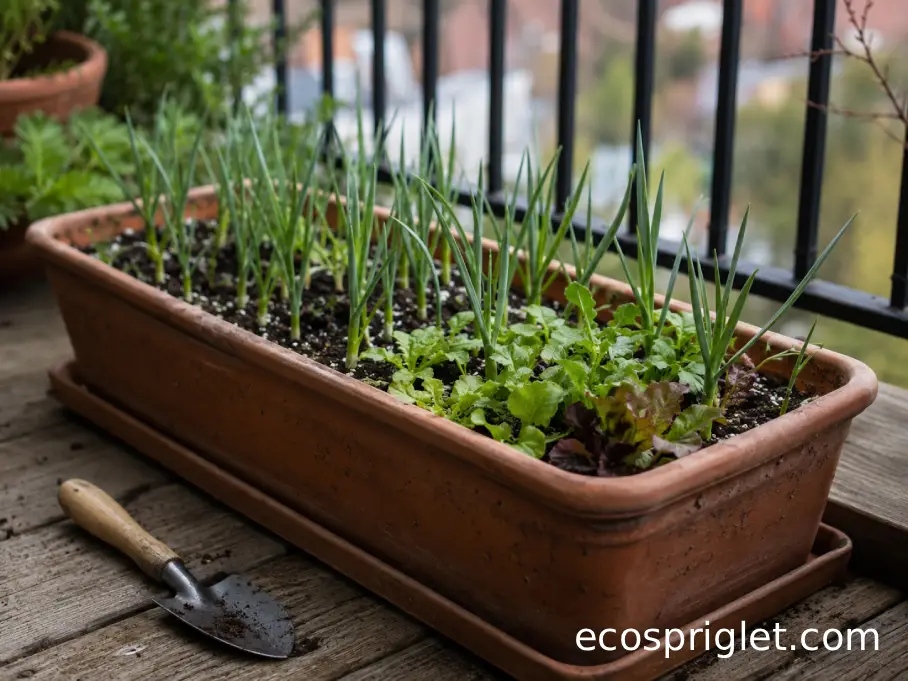
What Makes a Good Neighbor for Garlic?
I choose a garlic companion plant by looking at three things before I think about pest-repelling claims: timing, size, and growing conditions. Garlic is a long-season crop. In many regions it goes into the soil in fall and stays there until the following summer, so a neighbor that matures quickly can use otherwise empty space without competing during the period when garlic bulbs are swelling. University of Minnesota Extension recommends fall planting in its climate and commonly spaces garlic about 6 inches apart; Oregon State University guidance also uses close spacing in this general range depending on the production system.
Height matters too. Low-growing lettuce beside upright garlic is usually easier to manage than putting a sprawling squash vine in the same container. The RHS describes this same principle with intercropping: fast crops such as lettuce and radishes can occupy gaps around slower crops and be harvested before the larger plants need the room.
Finally, match the basic care. OSU’s container garlic guidance recommends a pot at least 12 inches deep, a drainage hole, about 6–8 hours of sunlight, and soil kept evenly moist rather than wet. Those conditions are a better starting point for choosing companions than a chart claiming that one plant mysteriously “likes” another.
Best Garlic Companion Plants for Small Spaces
For a balcony, I favor companions that earn their space rather than plants with the biggest reputation online. Salad greens and radishes are useful because they grow quickly; carrots have a compatible upright habit; and small flowering plants can add insect diversity without shading the crop. Extension and RHS guidance supports these broader intercropping and beneficial-insect strategies.
| Plant | Why It Fits | Best Small-Space Use | Main Caution |
|---|---|---|---|
| Lettuce | Low-growing and relatively quick to harvest | Use around the outer edge of a wide garlic planter | Thin it before leaves begin crowding garlic |
| Spinach or Arugula | Cool-season foliage can use open space early | Sow lightly between widely spaced garlic rows | Remove plants as garlic growth becomes dense |
| Radishes | Fast-growing roots make efficient use of temporary gaps | Sow in open pockets rather than directly against cloves | Do not pack seedlings so tightly that watering becomes difficult |
| Carrots | Upright tops and deeper roots can complement garlic | Best in a deep trough or raised planter | Both crops still need their normal spacing |
| Sweet Alyssum | Small flowers can support beneficial insects | Grow at a planter corner or in an adjacent pot | Trim it if stems begin covering garlic foliage |
| Cilantro or Dill | Flowers can provide resources for beneficial insects | Use one plant near garlic rather than filling the pot | Letting several plants mature can create unnecessary competition |
| Strawberries | They can occupy a lower layer around garlic | Better in a roomy trough or separate neighboring pot | Do not rely on garlic as guaranteed aphid protection |
Carrots are one of the more interesting pairings. Oregon State University specifically suggests growing carrots with Allium-family plants such as garlic, onions, or chives as a companion-planting tactic against pests. The RHS is more cautious about scent-masking claims and notes that results are not consistent for every crop or situation. I treat that potential pest benefit as a bonus; the more dependable advantage is that carrots and garlic can use vertical space efficiently when the container is deep enough.
Sweet alyssum is useful for a different reason. OSU recommends alyssum and other small-flowered plants for attracting beneficial insects, and University of Minnesota Extension cites research in which alyssum-containing plantings increased natural enemies of aphids in another vegetable crop. That does not mean alyssum guarantees pest-free garlic, but it gives the flower a more defensible role than many traditional companion charts suggest.
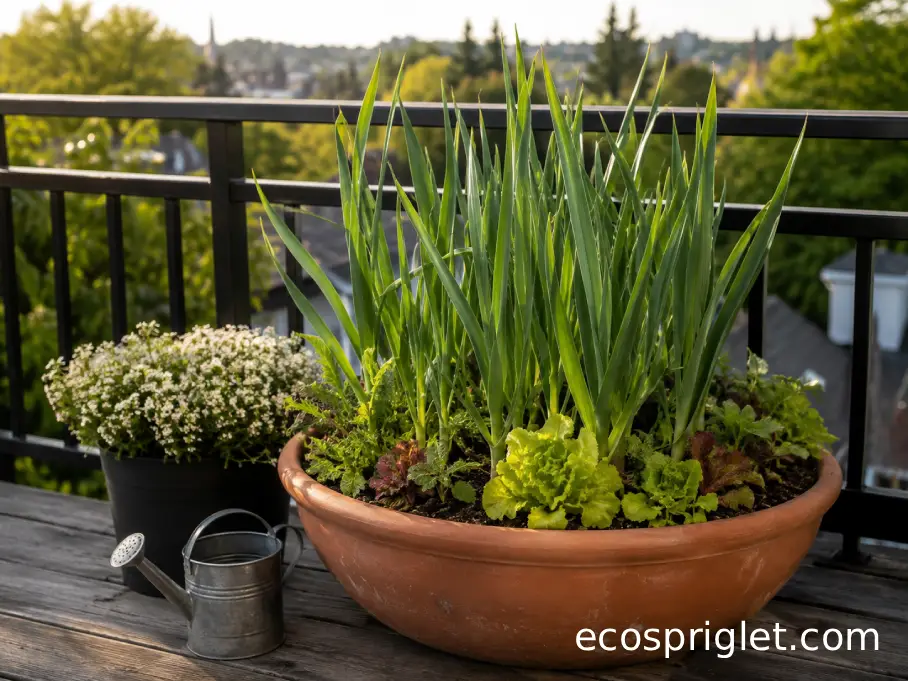
How to Pair Garlic in Pots and Balcony Planters
Container companion planting works best when garlic gets first claim on the root space. I learned this after cramming a balcony trough with enough “compatible” plants to make the arrangement look wonderfully productive for about six weeks. By spring, the garlic was buried under leaves and watering the planter without soaking everything became awkward. Compatibility did not matter nearly as much as overcrowding.
For bulb production, I now start with a container at least 12 inches deep and keep garlic cloves roughly 4–6 inches apart. OSU recommends that minimum pot depth for growing garlic and provides the same general spacing range for sprouted cloves. Containers also need drainage because garlic performs better in evenly moist soil than in waterlogged mix.
- Put garlic toward the center of a wide pot and use short-lived greens around the outer edge.
- Leave each garlic plant its normal spacing instead of squeezing companions into the gaps between cloves.
- Harvest lettuce, spinach, or radishes once their leaves begin touching or shading the garlic heavily.
- Keep larger herbs and flowering plants in neighboring pots when the garlic container is less than about 18 inches wide.
A nearby pot still counts as companion gardening in my book. If sweet alyssum, cilantro, or another insectary plant can sit 6 inches away without taking garlic’s water and root space, that is often a better small-balcony design than forcing everything into one container. For more help choosing containers and drainage setups, see our container gardening basics.
Remember that pots dry faster than garden beds, particularly on sunny or windy balconies. RHS container guidance notes that smaller containers have less reserve moisture and root space, while OSU similarly warns that container soil may dry more quickly than soil in a traditional garden. Check the mix with a finger rather than watering on an automatic calendar, and avoid leaving the container standing in water.
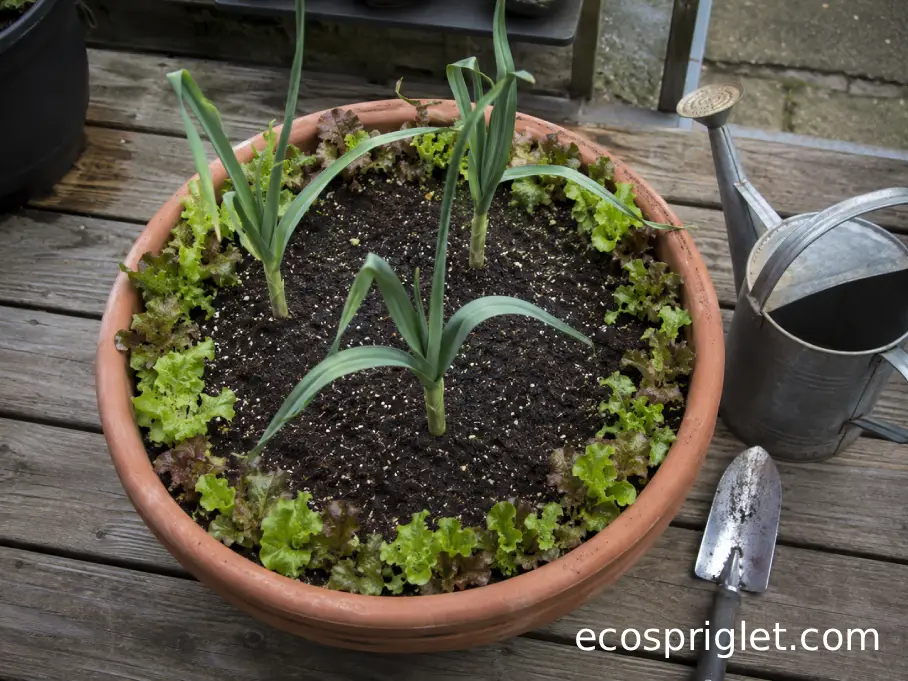
What Not to Grow in the Same Garlic Container
Lists of bad companion plants for garlic often include beans, peas, asparagus, sage, parsley, and several other crops, usually without explaining why. I would not build a balcony plan around those blanket rules. University of Minnesota Extension notes that some traditional companion practices have uncertain origins, while the RHS makes the same broader point: a claimed pairing may help in some circumstances without working consistently everywhere.
Keep Blueberries in Their Own Pot
This is one combination with a clear cultural mismatch. Oregon State University notes that blueberries prefer much more acidic soil than garlic. Its guidance gives blueberries a preferred range around pH 4.5–5.5, while garlic performs better at pH 6 or above. On a balcony, separate containers are the easy answer because each plant can have the potting mix it needs.
Do Not Squeeze Garlic Under Large, Fast-Growing Crops
Squash, large cabbage-family plants, mature tomatoes, and other vigorous vegetables are not necessarily chemically incompatible with garlic. They are simply poor roommates in a modest container because they can take over light, water, and root space. The RHS recommends planning intercropping so that one vigorous crop does not overwhelm another, and OSU makes the same point about intensive planting: plants still need adequate room for light and root growth.
Beans and Peas Are Not Proven Garlic Enemies
You will often see categorical warnings against co planting garlic with legumes. The research-based Extension guidance I reviewed does not justify treating that as a universal rule. In a tiny pot I would still separate climbing beans or peas from garlic because a trellis can create shade and the roots add competition, but that is a space-management decision rather than evidence that garlic poisons or suppresses them. Companion-planting claims are best treated cautiously unless a mechanism or trial supports them.
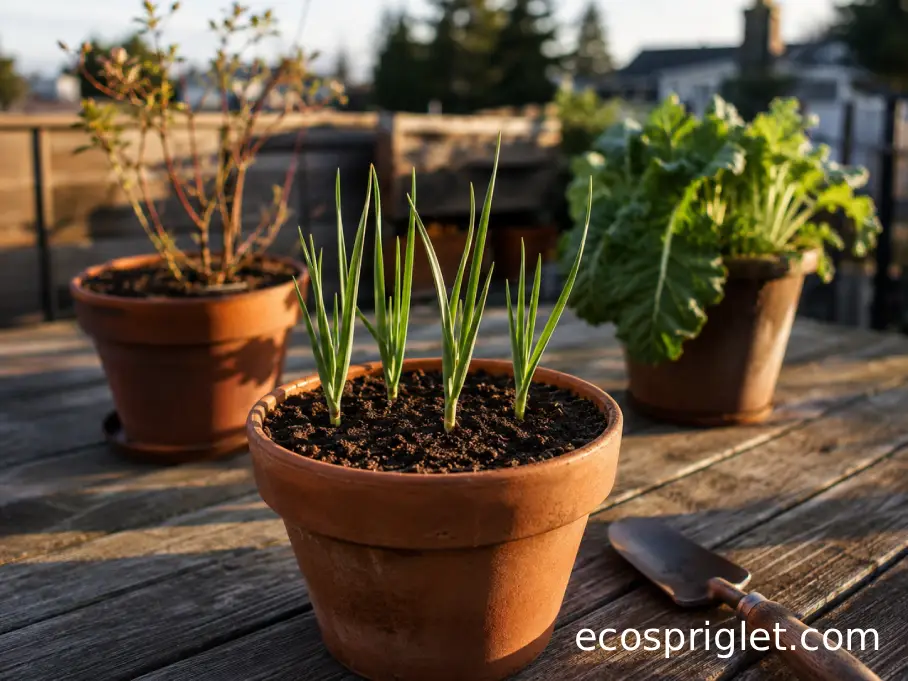
Can Garlic and Onions Grow Together?
Yes, you can grow garlic and onions near each other. They have broadly compatible sunny, well-drained growing conditions, and there is no need to treat them as mutually hostile plants. The bigger concern is that both are alliums, so grouping them concentrates plants that can share certain pest and disease problems. RHS guidance identifies onion white rot as a serious disease of onions, garlic, leeks, and related alliums, while University of Minnesota diagnostic guidance lists onion maggot among pests capable of damaging garlic bulbs.
In a clean balcony pot, a few onions beside garlic may work perfectly well. Give each plant its normal spacing rather than creating a dense allium mat, and make sure air and water can move through the container normally. The issue becomes more important if you reuse large planters year after year. Crop rotation guidance from the RHS recommends moving vegetable families because repeated planting can allow family-specific pest and disease problems to build up.
I therefore treat onions and garlic as one rotation group. If a large planter held garlic this year, I would use a different crop family there next season instead of following immediately with onions, leeks, shallots, or more garlic. If you have ever seen suspicious bulb rot in that container, replacing contaminated growing medium and cleaning the container is more sensible than experimenting with another allium crop.
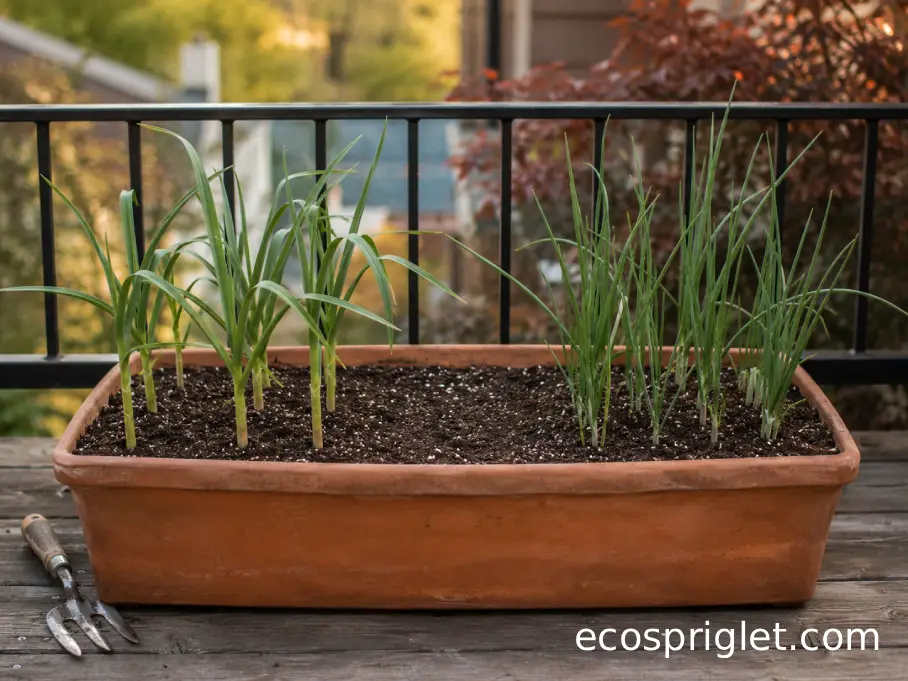
What to Plant Beside Garlic in Fall
Fall is where companion planting with garlic becomes particularly useful, but climate matters. Garlic is commonly planted in fall, although the exact date varies widely across the United States. University of Minnesota Extension recommends planting after the first killing frost in its region, while Oregon State University describes fall as the preferred garlic-planting season in Oregon.
On a relatively mild Portland-style balcony, I would consider these temporary neighbors if the local planting calendar still gives them time to establish:
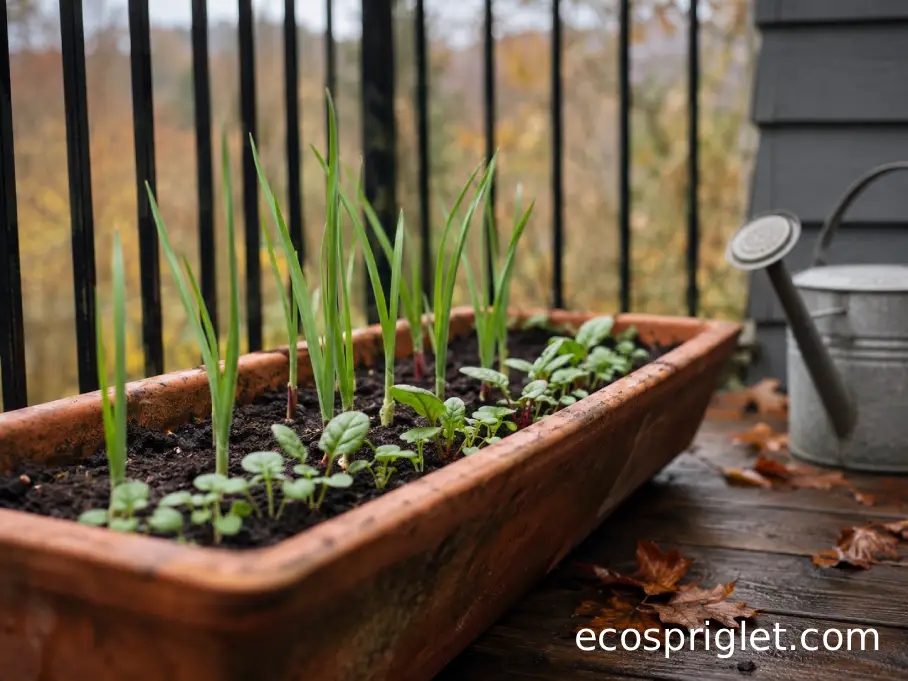
- Spinach: sow lightly in open spaces and harvest young leaves before spring garlic growth becomes dense.
- Leaf lettuce or arugula: useful for quick cool-season greens along the edge of a broad container.
- Radishes: a compact crop that can occupy temporary gaps and be removed early.
- Cilantro or parsley: better near the edge or in an adjacent pot, particularly if you plan to let herbs grow beyond the baby-leaf stage.
OSU lists leafy greens, garlic, parsley, and several other vegetables among useful fall or winter crops in Oregon, while University of Minnesota emphasizes matching late-season planting to the number of growing days available before cold weather.
If winter arrives hard and early where you live, do not force the pairing. Plant the garlic at the right local time, mulch as recommended for your region, and add fast-growing companions in spring after the garlic emerges. A half-empty fall planter is better than a crowded container full of seedlings that never establish.
Common Mistakes to Avoid
Expecting Garlic to Replace Pest Management
The mistake I see most often is treating companion garlic as a pesticide. Mixing crops and adding flowering plants can contribute to a more diverse garden, and some combinations have research behind them, but neither Extension nor RHS guidance presents companion planting as guaranteed protection. Look at damaged leaves, identify the actual pest, and use the appropriate control instead of simply planting another clove nearby.
Filling Every Inch of Soil
A balcony planter can look wasteful when bare potting mix is visible, but garlic needs room. If your cloves are already about 4–6 inches apart, companions should use the edges or genuinely unused areas rather than splitting those spaces in half again. Harvest temporary crops when their leaves begin overlapping the garlic instead of waiting until the container turns into a solid canopy. OSU and University of Minnesota garlic guidance both emphasize deliberate spacing for bulb development.
Combining Plants With Opposite Water Needs
A rosemary-sized Mediterranean herb that prefers drying between waterings is awkward in the same root zone as young garlic that you are trying to keep evenly moist. Put those plants in neighboring pots instead. Container gardening is easier when each planter contains crops with reasonably similar water requirements. Smaller pots also fluctuate between wet and dry more quickly, which is one reason the RHS favors adequately sized containers for vegetables.
Forgetting About Pets
Garlic deserves special placement if a dog or cat can chew balcony plants. The ASPCA lists garlic as toxic to dogs and cats and warns that Allium species can cause gastrointestinal irritation and red blood cell damage when enough is ingested. Keep garlic and other alliums inaccessible to pets rather than assuming an edible human crop is automatically pet-safe.
Finally, resist planning an entire container from a companion chart before checking light and drainage. Garlic needs a sunny position, and pots should drain freely. A simple planter containing properly spaced garlic plus one modest companion will usually be easier to manage than a complicated six-species combination.
A Practical Final Takeaway
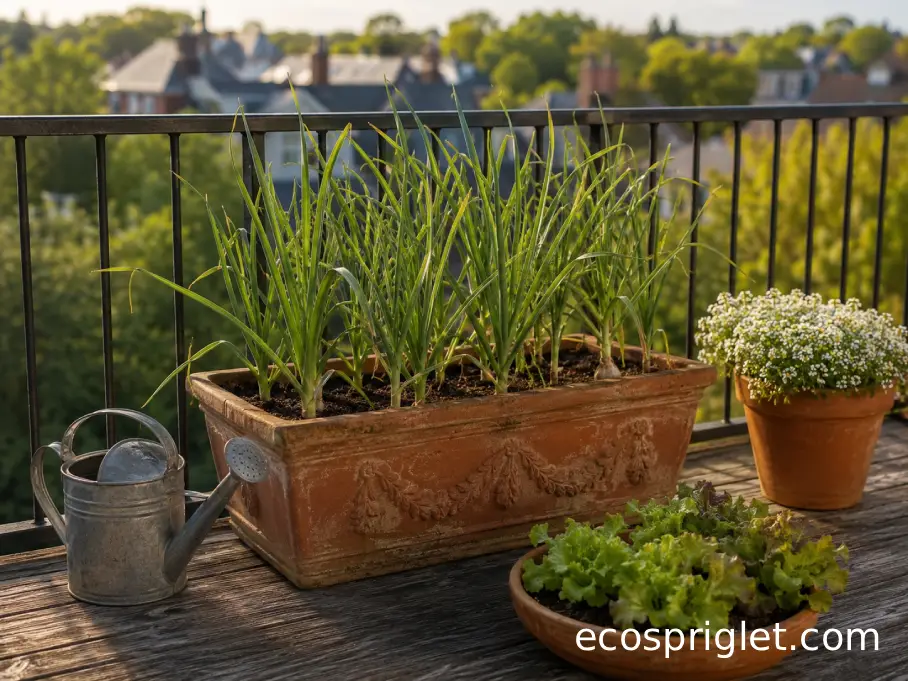
The best companion plants for garlic are the ones that make the growing space easier to use without interfering with the garlic itself. For most small gardens, I would start with lettuce, spinach, arugula, radishes, or carrots where the container has enough depth and width. Add sweet alyssum, cilantro, or dill nearby when you want flowers that can support beneficial insects. University Extension and RHS guidance gives much stronger support to those practical ideas—efficient intercropping, biodiversity, and compatible growth habits—than to rigid lists of friendly and unfriendly plants.
You also do not need to panic about onions or legumes. Garlic and onions can share space when they are properly spaced, although I would rotate alliums together because they can share pest and disease problems. Beans and peas are better judged by available light and root space than by old companion-planting prohibitions. Blueberries, on the other hand, are an easy plant to keep separate because their preferred soil acidity differs sharply from garlic.
On a balcony, keep the design simple: give garlic its sun, drainage, and spacing first, then let one compact companion use the remaining space. That usually produces a healthier container—and a much calmer watering routine.