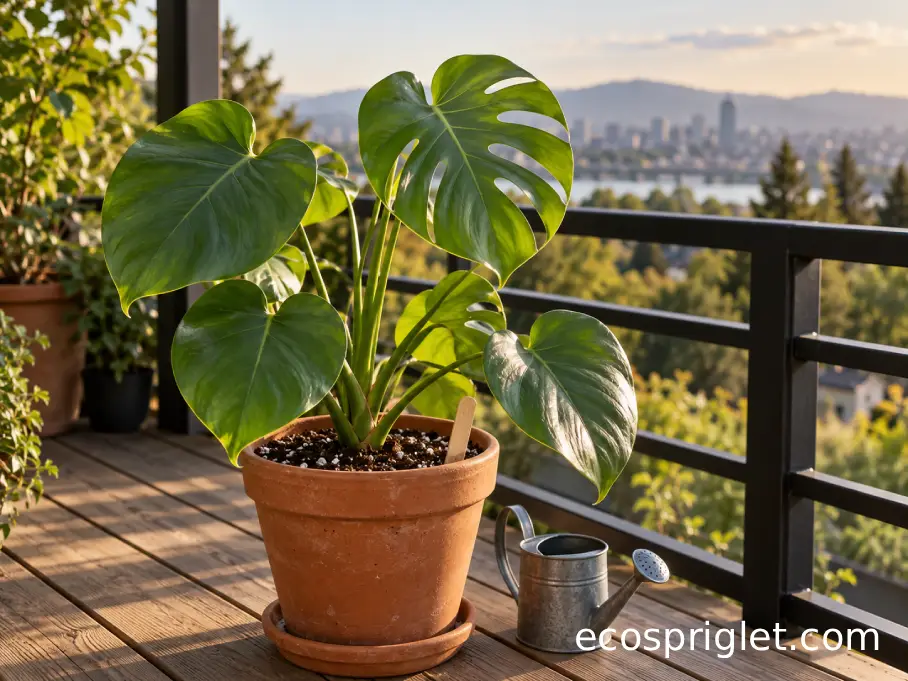
A Monstera plant can turn an ordinary apartment corner into something special. Its broad, glossy leaves, dramatic splits, and climbing stems bring a tropical feel to even a modest living room. The best part? You don’t need a greenhouse, a large house, or years of gardening experience to keep one looking good.
Monstera deliciosa, commonly called the Swiss cheese plant, is surprisingly adaptable when its basic needs are met. Give it bright indirect light, a pot with proper drainage, and enough room to climb, and it can become one of the most rewarding houseplants you own.
Still, a few familiar mistakes can cause problems. Too much water leads to struggling roots, oversized pots stay wet longer than expected, and a dark apartment corner can leave you wondering why those beautiful leaf holes never appear.
I’ve found that the secret to successful Monstera plant care is paying attention to a handful of simple signals rather than following a rigid schedule. Whether you’ve brought home a small starter plant or you’re trying to manage a giant, sprawling specimen, here’s how to help it grow well without letting it take over your apartment.
Get to Know Your Monstera Before Choosing One
First, let’s clear up a common naming confusion. Monstera deliciosa and the Swiss cheese plant are usually two names for the same species. The familiar nickname comes from the openings that develop in mature leaves, known as fenestrations.
There are several types of Monstera, though, and they don’t all grow to the same size.
Monstera Deliciosa vs. Other Swiss Cheese Plants
| Type | Appearance | Best Use Indoors |
|---|---|---|
| Monstera deliciosa | Large, heart-shaped leaves with splits and sometimes interior holes | Floor plant or vertical climbing display |
| Monstera adansonii | Smaller leaves with oval holes that usually remain enclosed within the leaf | Shelves, climbing supports, and compact spaces |
| Variegated Monstera deliciosa | Green leaves marked with white or cream sections | Bright indoor positions with filtered light |
A young Monstera deliciosa may have completely solid leaves. That’s normal. As the plant matures, gets sufficient light, and develops climbing growth, newly emerging leaves are more likely to have larger splits and holes.
For a small apartment, I’d usually start with a healthy specimen in a 6- to 8-inch nursery pot rather than buying an enormous one immediately. You can learn how it responds to your light and watering habits before it becomes difficult to move.
If you want something that stays more manageable, Monstera adansonii is worth considering. The Royal Horticultural Society identifies it as a smaller-growing alternative to the vigorous Monstera deliciosa.
Whichever you choose, inspect the leaves and stems for pests, check for unpleasantly soggy soil, and avoid plants with extensive unexplained yellowing. Keep a new purchase separate from your other houseplants for roughly two to three weeks while you monitor it.
Find the Right Light Without Scorching the Leaves
Light makes an enormous difference to how a Monstera develops. A plant in a bright apartment can produce strong, attractive foliage, while an identical plant in a dark corner may develop smaller leaves and elongated stems.
The sweet spot is bright, indirect light. An east-facing window is often a convenient choice because it provides gentle morning sunlight. A west-facing window can also work, although strong afternoon sun may need filtering with a sheer curtain.
Near a south-facing window, start the plant a few feet back from the glass or diffuse intense midday light. Adjust the position according to the actual conditions in your room rather than relying on window direction alone.
What If Your Apartment Doesn’t Get Much Sun?
Monsteras tolerate some shade, but tolerating low light isn’t the same as growing vigorously in it. If new leaves keep emerging small and solid, the stems lean toward the window, or growth becomes sparse, consider moving the pot closer to natural light.
For a room with limited daylight, a suitable LED grow light can help. As a practical starting point, follow the manufacturer’s recommended distance and try a consistent 10- to 12-hour daily lighting period, adjusting if the plant shows stress.
Temperature matters too. The RHS recommends approximately 65–77°F for comfortable indoor growth. Avoid cold drafts, direct blasts from heating vents, and abrupt temperature changes.
On my Portland terrace, I’d only move a Monstera outside during reliably warm weather, starting it in deep shade and gradually introducing brighter conditions. Bring it indoors before cooler nights approach. For beginners, keeping it indoors year-round is often simpler and safer.
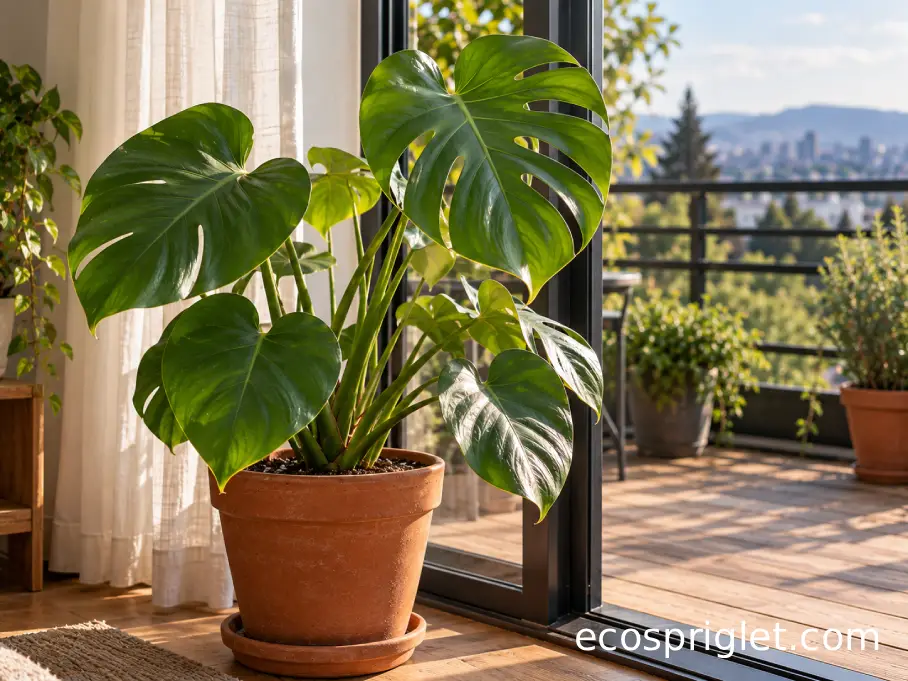
Choose a Pot and Soil That Let the Roots Breathe
Choosing the right Monstera plant pot is more important than buying the fanciest planter in the store. Monsteras need a container that can hold their roots securely while allowing excess water to escape.
When repotting, select a new container about 1–2 inches wider than the existing one. For example, a plant doing well in an 8-inch pot will usually be better moved into a 9- or 10-inch pot than a huge 16-inch planter.
Extra soil isn’t automatically better. An oversized pot can remain damp around a relatively small root system, increasing the risk of root problems.
What Soil Mix Works Best?
Monstera deliciosa prefers a loose, well-drained growing medium containing enough organic material to retain some moisture without remaining waterlogged.
For a practical homemade potting mix, try roughly two parts quality peat-free indoor potting mix, one part orchid bark, and one part perlite. This is a starting blend rather than a strict requirement; adjust it if your home is unusually dry or the mixture drains too quickly.
Never rely on a layer of gravel at the bottom of the planting pot to improve drainage. University of Illinois Extension explains that gravel beneath potting mix can leave water perched in the soil above it. Proper drainage holes and a suitable potting medium work better.
A decorative outer planter is fine, provided the inner nursery pot can drain and any collected water is emptied.
Repot in spring or early summer when possible, especially if roots are tightly circling the container, growing through drainage holes, or the pot dries unusually quickly. A large Monstera may eventually need a heavier container or sturdy outer pot to prevent tipping.
Water the Soil, Not the Calendar
Overwatering is one of the easiest ways to turn a thriving Monstera into a struggling one. The problem usually isn’t the amount of water used in a single thorough watering. It’s watering again before the root zone has had time to dry sufficiently.
For most potted Monsteras, begin checking when the top 1–2 inches feel dry. In a large, deep container, check farther down as well. The upper quarter to third of the potting mix should generally have dried noticeably before watering again, while deeper roots should not be left bone-dry for extended periods.
A simple watering routine works well:
- Check the soil every few days with a finger or wooden stick, especially during warm weather.
- When watering is needed, pour slowly and evenly until water starts draining from the bottom.
- Empty the saucer or decorative outer pot after about 15–20 minutes so the roots are not left standing in water.
Depending on pot size, light, temperature, and season, watering intervals can vary considerably. A Monstera might need water much sooner in a bright, warm room than it does in a cool winter apartment.
I prefer checking the pot’s weight alongside the soil. Once you’re familiar with how it feels just after watering, a noticeably lighter container becomes another useful signal.
Does a Monstera Need Extra Humidity?
Monsteras appreciate moderately humid air, but they can adapt to many ordinary homes. If the room is persistently dry and leaf edges become crispy, consider using a room humidifier near the plant.
Keep humidity at a comfortable indoor level without encouraging condensation on windows or dampness on walls. A humidifier is generally more effective for sustained humidity than occasional leaf misting.
The NC State Extension Gardener Plant Toolbox recommends thorough watering followed by partial drying of the growing medium, rather than constantly saturated soil.

Feed for Healthy Growth Without Overdoing It
Monstera plant food doesn’t need to be complicated. A balanced liquid houseplant fertilizer provides nutrients during active growth, especially when the plant has spent a long time in the same container.
From approximately April through September, feed about once a month while new leaves are developing, using the product’s recommended dilution. If you’re uncertain about your plant’s needs, begin at half the labeled concentration and watch its response.
Slow growth in winter is normal when daylight is limited. Reduce or pause feeding until stronger growth resumes. Fertilizer cannot replace insufficient light.
If you’ve recently repotted into a potting mix that contains added fertilizer, check the product label before applying more. Fresh mixes may already contain enough nutrients for the initial weeks or months.
A common mistake is adding extra fertilizer whenever a leaf looks yellow. First check soil moisture, drainage, and lighting. Overfeeding can lead to fertilizer salts accumulating in the growing medium, sometimes causing brown leaf tips or stressed roots.
The RHS recommends balanced liquid fertilizer during the active growing season. I follow that general approach rather than trying to push rapid growth with strong, frequent feeding.
Support Climbing Stems to Encourage Bigger Leaves
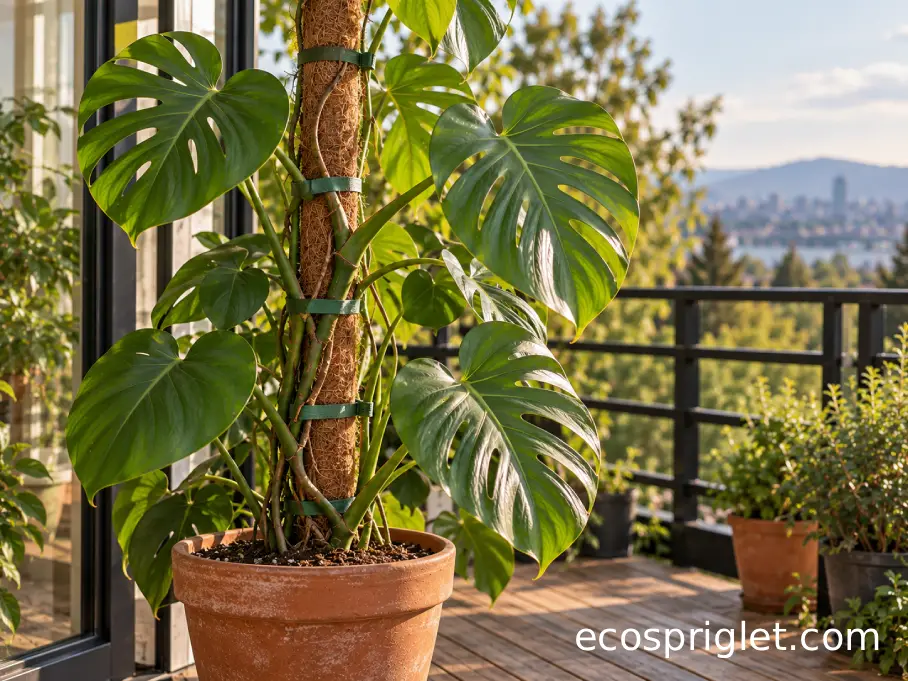
In its natural habitat, Monstera deliciosa climbs trees using aerial roots. Inside an apartment, a strong climbing support can help recreate this growth habit while keeping the plant more manageable.
Without support, mature stems tend to lean, sprawl, or creep away from the container. That’s particularly inconvenient when furniture and floor space are limited.
A moss pole, sturdy coir pole, or solid indoor trellis can guide growth upward. For a young plant, a support extending roughly 2–3 feet above the soil may provide a useful starting point, while a larger specimen may require a taller, stronger structure.
Install the support securely, ideally during repotting when you can see the root ball and position it with less risk of damaging established roots.
Use soft ties to secure the main climbing stem at suitable intervals. Avoid tightly tying the long leaf stalks, called petioles, because they need room to move and orient their leaves toward light.
How Big Can an Indoor Monstera Become?
A well-established Monstera deliciosa can reach approximately 6–8 feet tall indoors under favorable conditions, and its foliage can spread widely. Some specimens grow larger when supported and given enough space.
Climbing encourages mature growth, but light, age, root health, and available space all influence leaf size. Adding a pole won’t immediately turn small, solid leaves into giant perforated ones.
Those dramatic openings generally develop in new leaves as the plant matures. Existing solid leaves do not later acquire fenestrations.
For apartment growers, I prefer an upright support over letting stems wander horizontally. It creates a neater silhouette, protects the leaves from accidental damage, and makes watering around the base easier.
Prune and Propagate Without Damaging the Main Plant
Eventually, even a well-supported Monstera can become too wide or tall for its spot. Pruning helps manage its size, and suitable stem cuttings can become new plants.
Spring and summer are generally convenient times for pruning because growth is more active. Use clean, sharp pruning shears and decide which climbing stems need shortening before making any cuts.
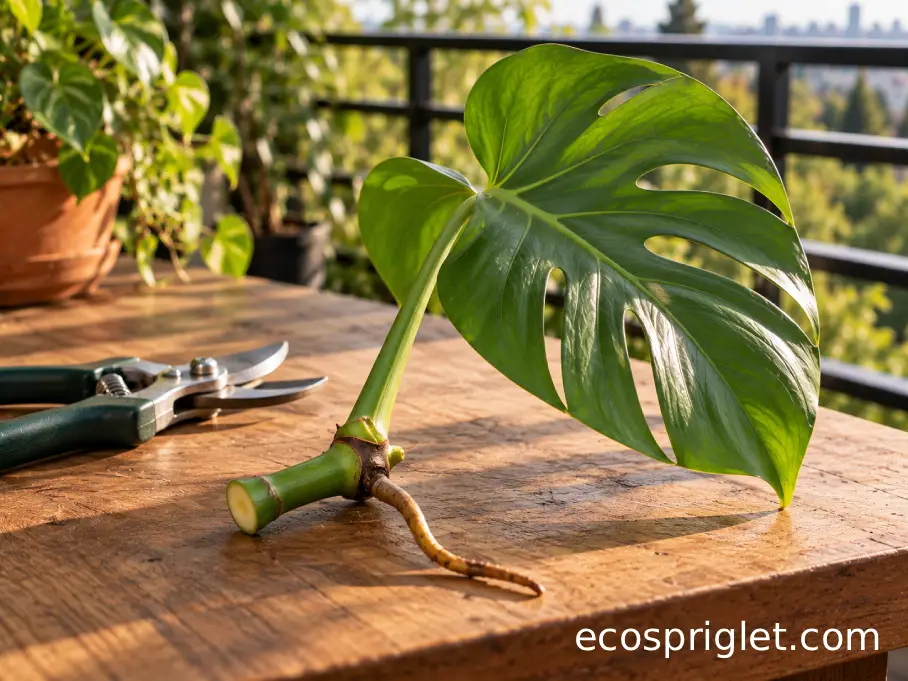
For propagation, the important detail is the node. This is a point along the stem where leaves and aerial roots can develop.
A leaf with only its leaf stalk but no stem node may remain attractive in water for some time, but it cannot produce a normal new Monstera vine. A viable cutting needs an appropriate section of stem containing at least one node.
A Simple Water Propagation Method
Cut a healthy stem section just below a node. Place the node in a clean container of water while keeping the leaf above the waterline. Position the container in bright, indirect light and replace the water about once a week, or sooner if it becomes cloudy.
Once the cutting has developed a healthy network of roots several inches long, transfer it into a small pot of loose, well-draining potting mix. A 4- to 6-inch container may suit a modest rooted cutting, depending on its root size.
Keep the potting medium lightly and evenly moist during the initial transition, then gradually return to normal watering as the plant establishes itself.
Propagation isn’t always equally fast. Temperature, available light, and the condition of the cutting affect rooting. Don’t assume a cutting has failed simply because it hasn’t developed an extensive root system after a short period.
Another useful trick is to keep selected aerial roots intact when practical. These roots help the plant climb, and they can sometimes be guided toward a support or into the potting medium without forcing or breaking them.
Read the Leaves When Something Goes Wrong
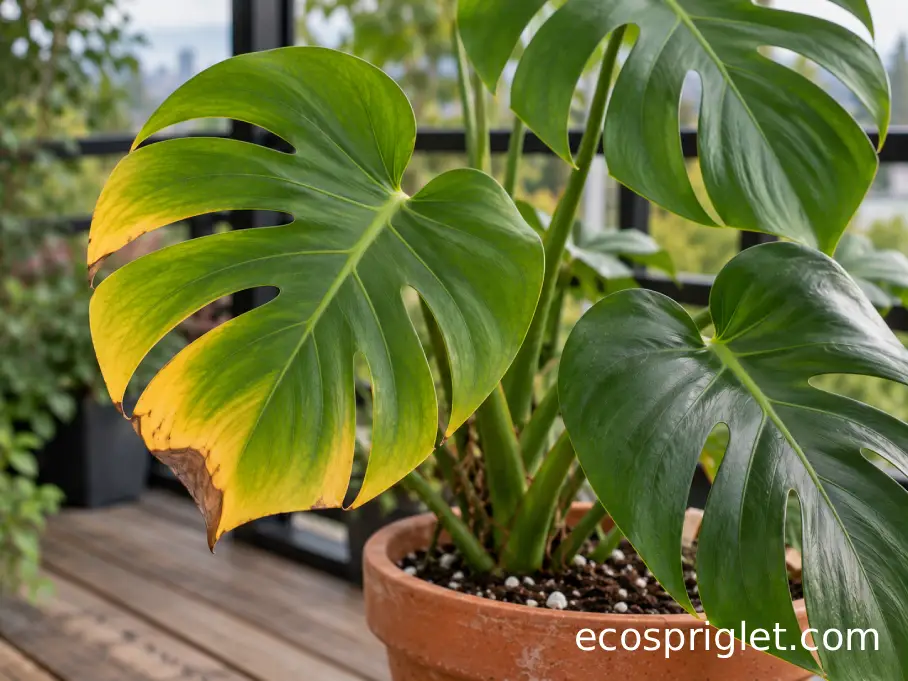
Monstera leaves are useful clues, but one symptom can have several causes. A yellow leaf doesn’t automatically mean overwatering, just as a brown edge doesn’t always mean the plant needs more water.
Before changing anything, inspect the soil, roots where accessible, light exposure, and the undersides of the leaves.
- Yellow leaves: If several leaves yellow while the soil remains wet and the plant looks limp, suspect poor drainage or overwatering. Let the mix dry appropriately and inspect the roots if the problem continues.
- Brown, crispy edges: Check for prolonged dryness, very dry indoor air, and exposure to direct heat. Correct the environment before increasing watering frequency.
- Small leaves without splits: Give the plant brighter filtered light and adequate climbing support. Young growth may also need time to mature.
- Stippling, webbing, or sticky leaves: Look for spider mites, scale insects, or other pests, especially beneath leaves and around stems.
For pests, isolate the affected plant from other houseplants and remove what you can with a gentle rinse or careful wiping. If treatment is necessary, choose a product labeled for the identified pest and indoor ornamental plants, following its instructions exactly.
One older leaf gradually yellowing isn’t always a crisis. Plants naturally replace aging foliage. The bigger concern is persistent yellowing across several leaves, especially alongside wet soil, soft stems, unpleasant odors, or declining growth.
If roots are dark, mushy, and deteriorating, remove badly damaged portions with clean tools and replace saturated, degraded mix. Also correct the watering and drainage conditions that caused the problem; fresh soil alone isn’t enough.
Common Mistakes to Avoid
Most Monstera problems begin with good intentions. We want the plant to grow faster, so we give it a bigger pot, more water, or extra fertilizer. Unfortunately, those well-meaning changes can sometimes make matters worse.
I learned to be especially careful with container size. On a small terrace, it’s tempting to move a plant into its final decorative pot and avoid another repotting job. But a large mass of unused, damp growing medium can create more trouble than convenience.
Here are the mistakes I’d watch for first:
- Choosing a huge pot too early: Increase pot diameter gradually, usually by 1–2 inches, rather than surrounding a small root ball with excessive soil.
- Watering on a fixed weekly schedule: Check actual soil moisture and adjust to seasonal changes.
- Expecting instant leaf splits: Provide good light, warmth, and support, then allow the plant to mature naturally.
- Using fertilizer to fix weak lighting: Move the plant into better light before trying to encourage additional growth.
Another overlooked mistake is constantly relocating the plant. Moving a Monstera between very different light and temperature conditions can interrupt its adjustment. Once you’ve found a suitable position, give it time to respond before making another major change.
If growth slows during winter, don’t immediately respond with more fertilizer or water. Reduced daylight often means slower growth and lower moisture use. The smarter adjustment may be to water less frequently and wait for brighter conditions.
Make Room for a Large Monstera in a Small Apartment
A large Monstera can be a beautiful centerpiece, but its size deserves some planning. Those broad leaves may eventually extend well beyond the rim of the pot, and an unsupported plant can take up more floor space than expected.
Before buying a particularly large specimen, measure both the intended floor area and nearby walking space. Think beyond the current pot: a mature plant may need several feet of horizontal clearance for its foliage.
A stable corner near a bright window is often better than a narrow hallway. A heavy outer planter, secure climbing support, and waterproof drainage tray help protect furniture and reduce the chance of tipping.
For renters, avoid drilling climbing supports into walls without permission. A self-supporting pole anchored securely in a stable pot is usually easier to manage and move.
Keep Pets and Children Safe
Monstera deliciosa contains insoluble calcium oxalate crystals. According to the ASPCA, it is toxic to cats and dogs if chewed, potentially causing mouth irritation, drooling, vomiting, and difficulty swallowing.
Keep the plant completely inaccessible to pets that chew foliage and to young children. Large leaves can be difficult to keep out of reach, so a separate room or a genuinely secure barrier may be safer than simply raising the pot.
If a pet chews the plant, contact a veterinarian or animal poison-control service promptly. Seek urgent veterinary care if there is difficulty swallowing or breathing. Wear gloves when pruning if you have sensitive skin, and wash your hands afterward because the plant’s sap can irritate skin.
Protect It From Seasonal Changes
During winter, move the pot away from cold glass, drafty balcony doors, and heaters that blow directly onto the leaves. Check soil moisture less automatically, since cooler conditions and shorter days often slow water consumption.
In summer, watch for stronger sun through windows and sudden heat buildup near glass. A sheer curtain or slight change in position may be enough to protect exposed foliage.
For a truly huge Monstera, plan ahead before moving it outdoors. A heavy pot, tall support, and large leaves can make it awkward to transport, while balcony wind can overturn an unstable setup. Never place a heavy planter near a railing without checking the balcony’s load restrictions and making sure everything is secure.
The most apartment-friendly arrangement is often a vertically trained Monstera that receives good natural light, has reliable drainage, and leaves enough room for everyday movement.
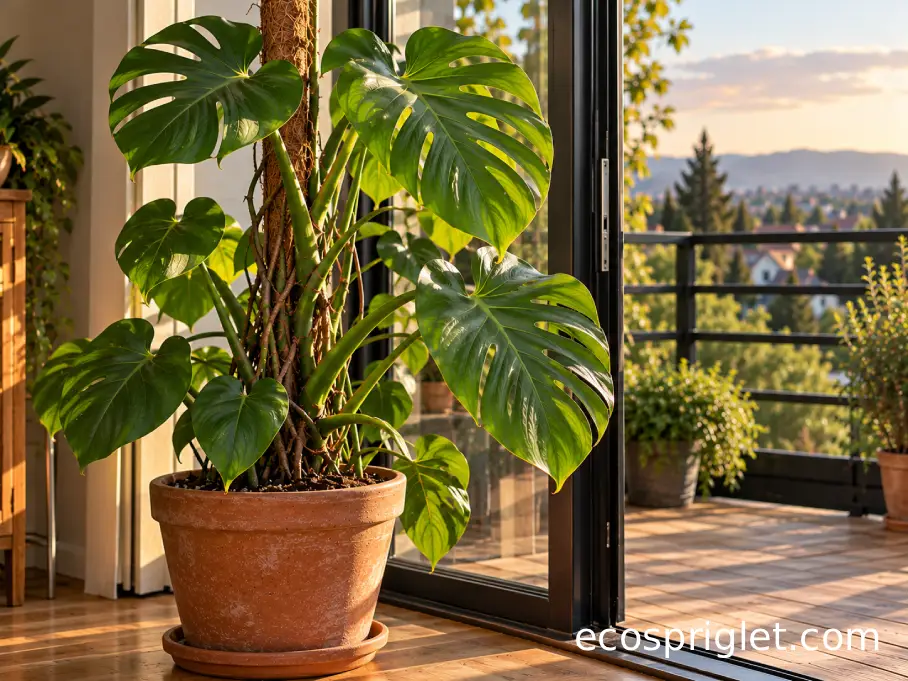
Keep Your Monstera Healthy With a Few Consistent Habits
Growing a beautiful Monstera deliciosa indoors doesn’t require complicated equipment or constant attention. What matters most is creating conditions that suit the plant and allowing it to develop at its own pace.
Start with a bright location that avoids harsh direct sunlight. Choose a container with drainage holes and a growing medium that allows both moisture and air around the roots. Check the soil before watering, feed modestly during active growth, and provide a stable support as the stems become larger.
It’s also worth remembering that every apartment has its own growing conditions. A Monstera near a sunny Portland window may need different watering attention from one in a cooler, shaded room. Watch the plant’s responses instead of trying to match someone else’s exact schedule.
If yours is still small, there’s no need to rush toward enormous leaves. Healthy roots, steady new growth, and strong stems matter more than instant size. Those characteristic holes and deep leaf splits often become more pronounced as the plant matures under favorable conditions.
Give your Monstera a suitable spot, keep an eye on its soil, and make small adjustments when something changes. With a little patience, it can become a long-lasting, impressive feature of your home without demanding your entire weekend.
Ready to improve your indoor growing setup? Begin with your plant’s light and drainage, then build a simple care routine around what you observe.