Few houseplants make a room feel as welcoming as a fiddle leaf fig. With its large, sculptural leaves and upright growth, this tropical tree can turn an ordinary apartment corner into a beautiful green focal point. But those impressive leaves also have a reputation for developing brown spots, dropping unexpectedly, or refusing to grow.
The good news? Fiddle leaf fig care becomes much easier once you understand what the plant actually needs. Most problems come down to three things: insufficient light, inconsistent watering, and soil that stays wet for too long.
Botanically known as Ficus lyrata, the fiddle leaf fig comes from tropical western and central Africa. Indoors, it prefers bright light, comfortable temperatures, and a potting mix that holds some moisture without becoming waterlogged. You don’t need a greenhouse or a huge living room to grow one successfully.
I’ve always liked how a single well-placed indoor tree can make a small space feel greener without filling every shelf with pots. The trick is finding a position that works for both the plant and your everyday routine.
Here’s how to give your fiddle leaf fig the right start, recognize problems early, and keep it growing comfortably through the seasons.
Get to Know Your Fiddle Leaf Fig Before Bringing It Home
The fiddle leaf fig is a broadleaf evergreen tree in the fig family. Its name comes from the distinctive shape of its leaves, which can resemble a violin or lyre.
According to NC State Extension, indoor specimens can grow approximately 2–10 feet tall, depending on their age and growing conditions. Mature leaves may reach 18 inches in length.
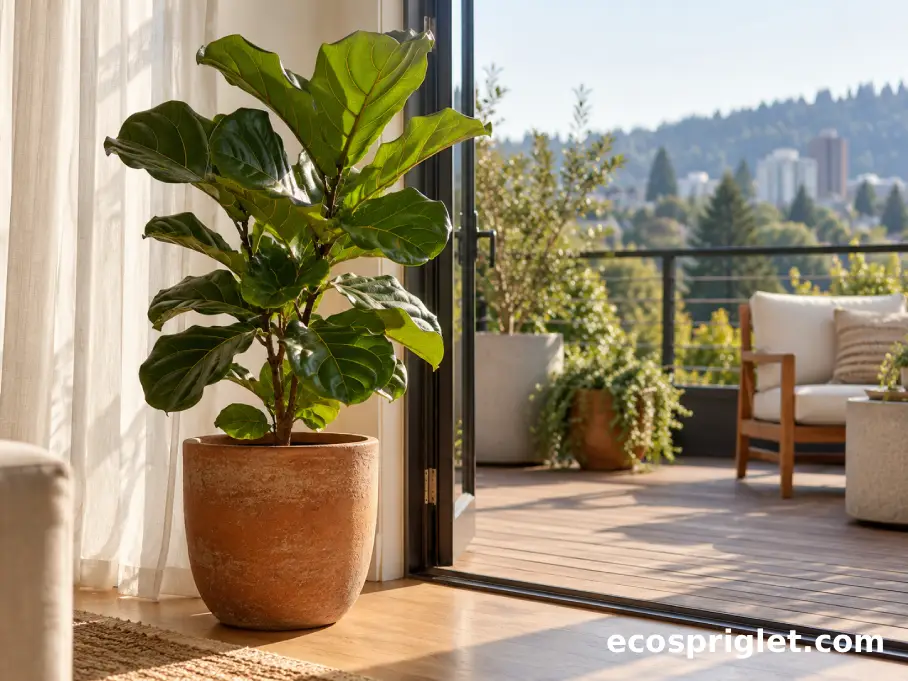
That makes the plant surprisingly versatile. A young specimen can sit on a sturdy stand near a window, while an established fiddle leaf fig tree can become a striking floor plant.
Tree Form, Bush Form, or Bambino?
Not every fiddle leaf fig looks the same when you buy it. A tree-form plant usually has one prominent trunk with foliage concentrated higher up. It creates a clean, upright silhouette that works well in a bright living room.
A bush-form Ficus lyrata has several stems or dense foliage beginning closer to the soil. It feels fuller and more informal, but it can occupy more horizontal space.
For smaller apartments, consider the Bambino fiddle leaf fig, a compact cultivar with shorter internodes and closely spaced leaves. The Royal Horticultural Society describes ‘Bambino’ as a compact, upright plant that generally remains much smaller than the standard species.
It’s a useful option when you want the characteristic foliage without committing to a large indoor tree.
Before buying, check the underside of several leaves for pests, examine the stems for damage, and make sure the pot has drainage holes. A plant with firm green leaves and no signs of persistent soggy soil is a better starting point than one with several unexplained dark patches.
One important distinction: a fiddle leaf fig is grown for its decorative foliage, not for edible fig harvests. Unlike the common edible fig, Ficus carica, it rarely flowers or produces fruit indoors.

Find the Brightest Spot Without Scorching the Leaves
Light is often the difference between a fiddle leaf fig that simply survives and one that produces healthy new foliage. In an apartment, I would start with the brightest window that doesn’t expose the plant to harsh afternoon sunlight for hours at a time.
An east-facing window is often a good choice because it provides gentle morning sunshine. A south-facing or west-facing window can also work, especially with a sheer curtain to soften intense summer rays.
If you’re unsure where to begin, position the plant approximately 1–3 feet from a bright window and observe how the leaves respond. This is a starting point, not a universal distance: window size, shading, season, and local climate all affect the light reaching your plant.
How to Tell Whether Your Plant Gets Enough Light
Healthy plants typically have firm leaves, reasonably compact new growth, and foliage that maintains its rich green color.
When light is inadequate, growth may slow noticeably. New leaves can emerge smaller than expected, and the plant may begin leaning toward the window.
Rotate the container approximately a quarter-turn every week or two if one side receives noticeably more light. Small, gradual adjustments usually work better than repeatedly moving the plant to entirely different rooms.
Direct sunlight also needs some judgment. A little gentle morning sun is often tolerated, but intense afternoon exposure can damage leaves, particularly when the plant has been growing in lower light.
If pale, dry patches appear on the window-facing side after a sudden increase in sunshine, move the plant back slightly or filter the light. Previously scorched tissue will not turn green again, so watch whether new damage stops developing.
The Royal Horticultural Society’s ornamental fig guidance recommends bright, generally indirect light and protection from sudden environmental changes.
For a darker apartment, a suitable full-spectrum grow light may help. Position it according to the manufacturer’s intensity and distance recommendations, and use a consistent daily light period rather than leaving it on continuously.
For more help comparing window positions, see our grow lights für indoor plant guide.
Water According to the Soil, Not the Calendar
One of the most common questions about this houseplant is how often to water a fiddle leaf fig. There isn’t a reliable fixed schedule, because the plant’s water needs change with light, temperature, container size, and season.
A plant beside a sunny window in summer may use water much faster than the same plant sitting in a cooler room during winter.
The most useful rule is simple: check the soil before watering.
A Practical Watering Routine
- Check the top 1–2 inches of potting mix with your finger or a wooden probe. If this layer is dry and the soil deeper down is no longer very wet, watering may be appropriate.
- When the plant needs water, pour room-temperature water slowly over the soil until some drains through the bottom. Allow excess water to escape.
- Empty the drainage saucer or decorative outer pot after watering. Never leave the roots standing in collected water.
- Check moisture every few days during warm, bright weather. In winter, inspect less frequently if the potting mix remains moist for longer.
For many indoor plants, thoroughly watering and then allowing the upper soil layer to dry slightly is safer than adding a small splash every day.
The aim is not to keep the entire pot permanently wet or to let the root ball become bone-dry. It is to maintain a balance between moisture and oxygen around the roots.
How Often Should You Water in Winter?
During winter, shorter days and slower growth usually mean less water is needed. A plant that dries sufficiently for watering after about a week in summer might take considerably longer in winter. The actual interval depends on conditions inside your apartment.
Check the soil around once a week as a starting habit, but only water when its condition calls for it. If the pot still feels heavy and the mix below the surface remains damp, check again later.
It’s worth remembering that a heated apartment can still be relatively warm and dry. Winter does not automatically mean every plant needs very little water.
The University of Minnesota Extension emphasizes using soil moisture rather than a rigid calendar to guide indoor watering.
What if You Accidentally Overwater?
If the soil is persistently soggy, stop watering and check that the drainage openings are clear. Move the plant to suitable bright light and allow the soil to dry to an appropriate level before watering again.
When wet soil is accompanied by widespread yellowing, leaf drop, or a foul smell, carefully inspect the roots. Soft, blackened, decaying roots can indicate serious root trouble and may require removing damaged tissue and repotting into fresh, well-draining mix.
Don’t assume every drooping leaf means the plant needs another drink. Both underwatered and waterlogged roots can leave foliage looking limp.
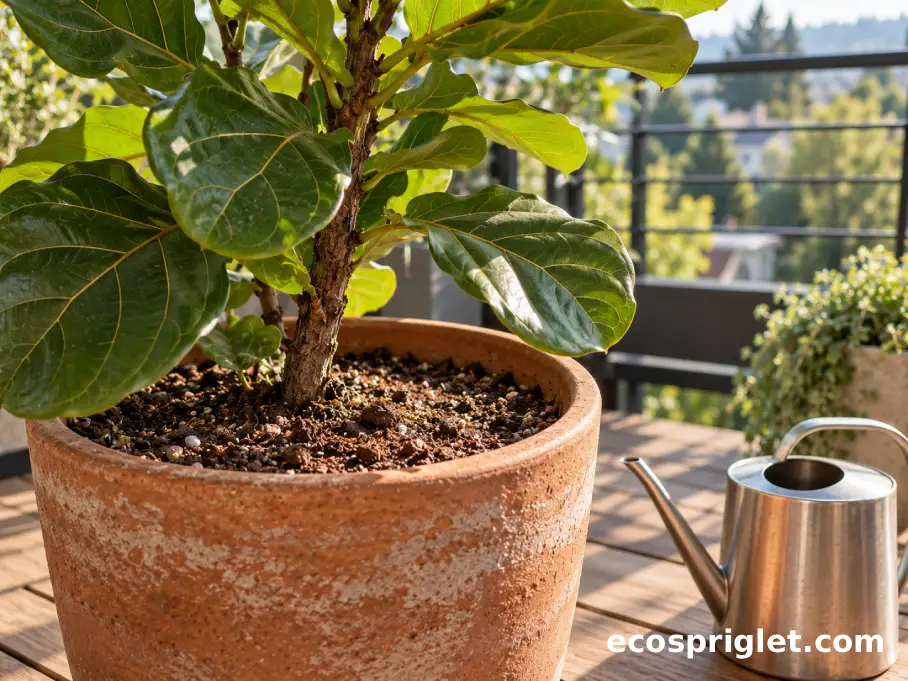
Give the Roots a Pot and Soil That Drain Properly
Even careful watering won’t solve much if the roots are growing in compacted soil that stays saturated.
Fiddle leaf figs prefer a potting mix that retains some moisture while allowing excess water to drain and air to reach the roots.
What Makes a Good Potting Mix?
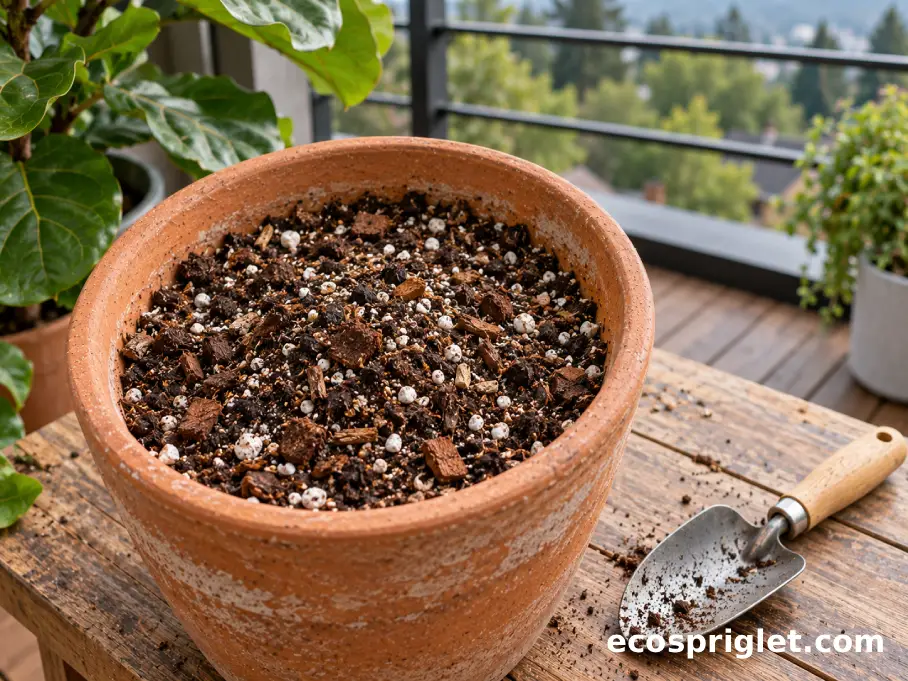
A quality indoor potting mix is usually a sensible foundation. For a looser blend, you can combine approximately two parts indoor potting mix with one part fine pine bark and one part coarse perlite.
This is a practical starting recipe rather than an exact requirement. Adjust the blend if your particular pot dries too quickly or remains wet for too long.
The bark helps create larger air spaces, while perlite reduces compaction. The remaining potting mix provides moisture retention and supports the roots.
Avoid using ordinary garden soil in apartment containers. It may compact in pots, drain poorly, and introduce unwanted organisms.
Choose the Right Pot Size
The safest container size depends on the plant’s existing root system, not simply its height. When repotting, choose a container approximately 1–2 inches wider than the current pot. This follows general houseplant recommendations from University of Illinois Extension.
Moving a small plant directly into a very large container can leave an excessive volume of wet soil around the roots.
For apartment gardening, I prefer a lightweight nursery pot with drainage holes placed inside a decorative planter. It’s easy to lift out for watering, inspect the roots when necessary, and empty any excess water before returning it to its outer container.
Terracotta is another option, but its porous walls may allow the mix to dry faster than plastic. That can be helpful in some homes and inconvenient in others.
Whatever material you choose, protect wooden floors with a waterproof saucer or tray. Don’t assume a decorative planter is watertight.
And skip the gravel layer at the bottom. According to NC State Extension’s container-growing guidance, adding rocks beneath potting mix does not improve drainage and can leave the soil above them wetter.
Keep Temperature, Humidity, and Feeding in Balance
Ficus lyrata likes conditions that remain reasonably steady. Sudden cold drafts, hot blasts from a heating vent, and repeated temperature swings can stress the plant.
A comfortable indoor range around 65–80°F is a practical target. Avoid prolonged temperatures below approximately 55°F, especially when the soil is wet.
If your plant sits close to a window in winter, check how cold the glass and surrounding air become overnight. Leaves pressed against cold glass can be damaged even when the rest of the apartment feels comfortable.
Does a Fiddle Leaf Fig Need High Humidity?
Moderate indoor humidity is generally suitable, although very dry air can contribute to crisp leaf edges and make spider mite problems more likely.
If your home becomes unusually dry during winter, consider a small humidifier positioned nearby. Avoid directing constant mist onto the foliage or allowing surrounding walls and furnishings to remain damp.
A pebble tray with water below the level of the pebbles is another option, provided the plant’s pot does not sit directly in water. Its effect on room humidity is usually limited, so it should not replace appropriate watering and placement.
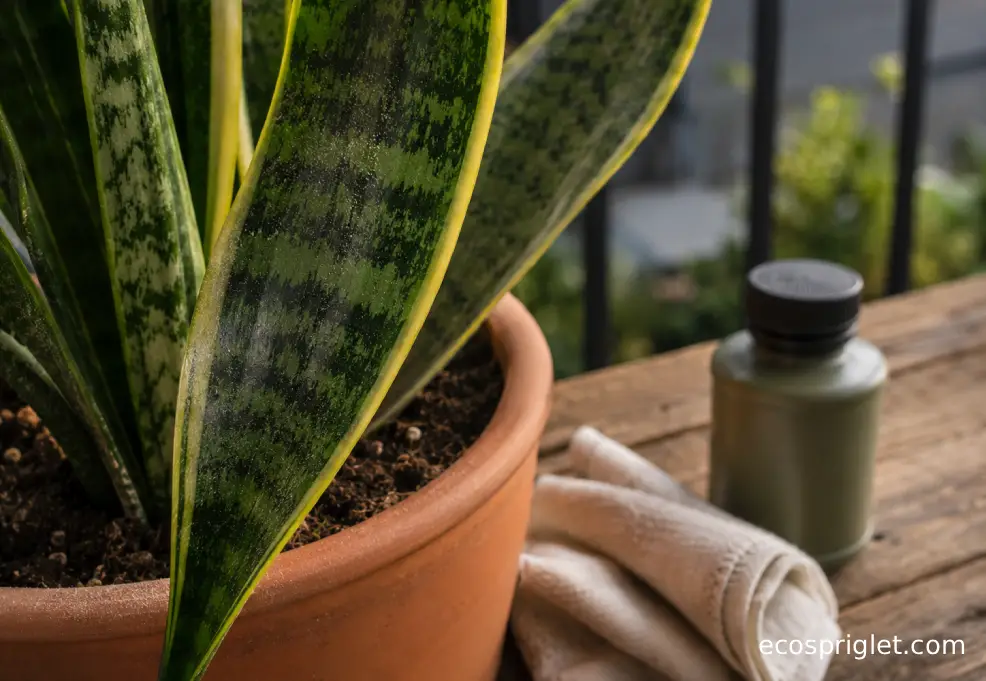
Regularly wiping dusty leaves with a soft, damp cloth is more useful than relying on leaf-shine products. Dust can reduce the amount of light reaching the leaf surface and can hide early pest activity.
When Should You Fertilize?
Feed when the plant is actively growing, usually during spring and summer. A balanced liquid houseplant fertilizer applied at about half the label strength every 2–4 weeks is a reasonable starting point, provided your product’s instructions allow that dilution.
If the plant is growing slowly, has recently been repotted into nutrient-rich mix, or receives limited light, it may need less.
Reduce or pause feeding during winter when growth slows significantly. Fertilizer won’t compensate for insufficient light, and excessive applications can cause salt buildup around the roots.
One final safety detail matters in homes with animals or young children: fiddle leaf figs are not safe to chew or eat.
The ASPCA notes that the plant can cause gastrointestinal irritation in cats and dogs, while its milky sap may irritate skin. Keep it out of reach of pets that chew plants, supervise young children, and wear gloves when cutting stems or handling sap.
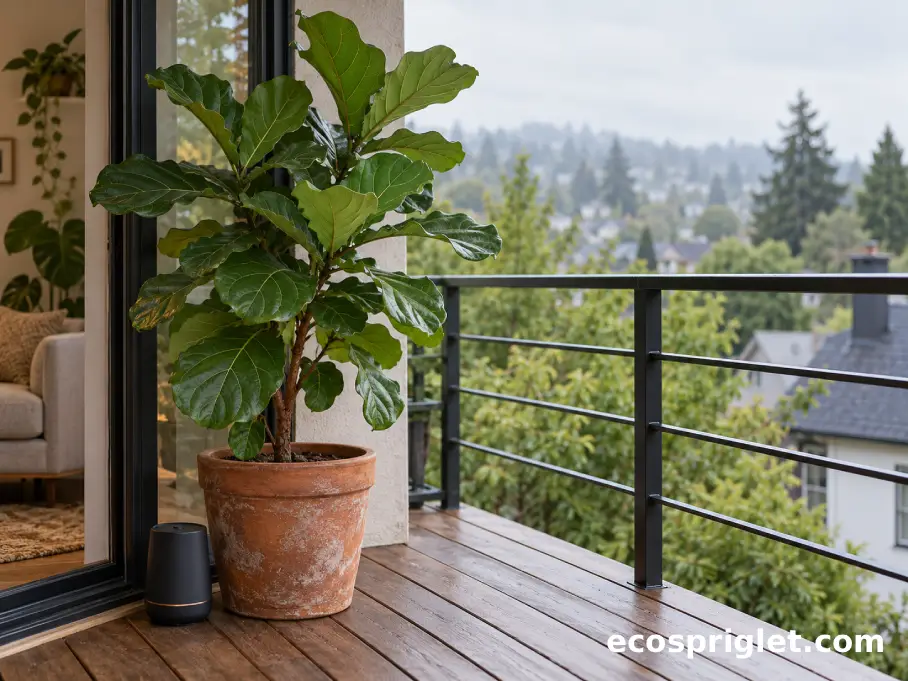
Repot, Prune, and Shape Your Plant Without Stressing It
A healthy fiddle leaf fig doesn’t need frequent repotting or constant pruning. In fact, doing too much at once is an easy way to stress a plant that was growing perfectly well.
I learned to be cautious about repotting indoor trees simply because their containers looked small. A tall plant isn’t necessarily root-bound, and unnecessary repotting can create watering problems that weren’t there before.
Instead, look for signs that the root system has genuinely outgrown its space.
When It’s Time to Repot
Spring is generally a good time to repot, especially when active growth is beginning.
Look for roots circling densely inside the container, emerging through drainage holes, or occupying so much space that the pot dries unusually quickly after thorough watering.
Many plants can remain in the same container for a couple of years, particularly once they reach a manageable indoor size.
To repot without unnecessary disturbance:
- Water lightly beforehand if the root ball is extremely dry, making it easier to slide the plant out without tearing roots.
- Choose a clean pot with drainage holes that is only about 1–2 inches wider than the current container.
- Gently loosen tightly circling outer roots where necessary, without aggressively breaking apart the entire root ball.
- Replant at approximately the same soil depth, water thoroughly, and allow excess water to drain.
Keep the newly repotted plant in familiar, bright conditions rather than combining repotting with a major change in light exposure.
How to Encourage a Fuller Shape
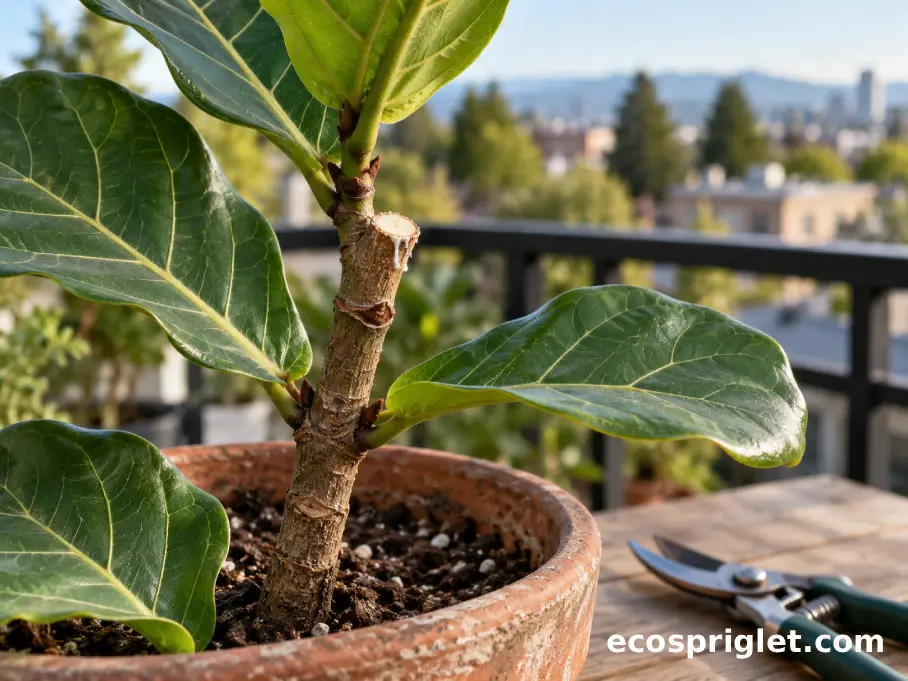
If your indoor tree is becoming too tall, selective pruning can help control its height and may encourage branching below the cut. Late winter or early spring is usually a suitable time, as new growth is likely to follow when conditions improve.
Use clean, sharp pruning shears and cut just above a healthy leaf or node. Start conservatively, removing only what is necessary rather than drastically reducing the canopy of an already stressed plant.
New branches are not guaranteed to appear in exactly the shape you imagine. Light levels, plant vigor, and the location of the cut all influence the result.
For propagation, use a healthy stem cutting that includes at least one node. A detached leaf without a suitable stem node may develop roots under some conditions but will not reliably produce a new growing tree.
Place cuttings in a warm environment with bright, indirect light and an appropriate rooting medium. Expect rooting to take time rather than assuming every cutting will succeed immediately.
Wear gloves during pruning because the white sap can irritate skin, and keep freshly cut stems away from pets and children.
Learn What Brown Spots, Yellow Leaves, and Leaf Drop Mean
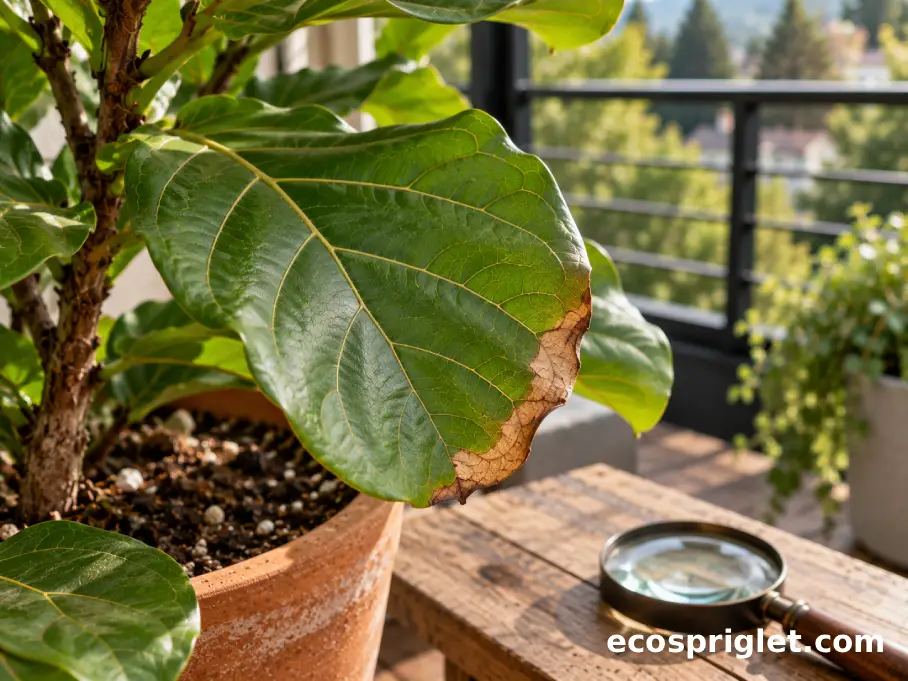
A damaged fiddle leaf fig leaf can look alarming, especially when the plant has only a few large leaves to begin with. But one imperfect leaf doesn’t necessarily mean the plant is failing.
The useful question is whether the damage is old and stable or continuing to spread. A single older leaf that yellows and falls away is different from several leaves developing new spots over a few days.
Match the Symptoms to the Likely Cause
- Dry, crispy brown edges: Often associated with inconsistent watering, overly dry conditions, or excessive sun exposure. Check soil moisture, drafts, and light intensity before changing your routine.
- Yellow leaves and dark patches: Can occur when the roots remain too wet. Inspect the soil and drainage, particularly if several leaves are affected together. Leaf diseases and other stresses can also produce spotting.
- Sudden leaf drop: May follow abrupt temperature changes, cold drafts, insufficient light, watering problems, or relocation. Review what changed during the previous couple of weeks.
- Small, pale new leaves or weak growth: Often suggest inadequate light, but root crowding or nutrient limitations may contribute. Evaluate the growing conditions before increasing fertilizer.
It’s tempting to respond to every brown spot by watering more. I would resist that instinct until checking the soil several inches below the surface. When the soil remains saturated, additional watering may worsen the problem.
Check for Pests Before Blaming Watering
Spider mites, mealybugs, and scale insects can also affect ornamental figs. Look closely at leaf undersides and where the leaves join the stems. Fine webbing, cottony white clusters, sticky residue, or small attached bumps may indicate pests.
Inspect the plant every week or two, especially during periods of indoor heating or when introducing new houseplants.
If you find pests, isolate the affected plant from nearby greenery. For light infestations, gently wipe visible insects from leaves and stems using a damp cloth, then inspect again after several days.
When further treatment is necessary, choose a product labeled for the identified pest and indoor ornamental plants. Follow the label carefully and test a small leaf area first, since some treatments can damage foliage.
The University of Minnesota Extension’s indoor pest guidance emphasizes early detection, isolation, good growing conditions, and correct pest identification.
Will Damaged Leaves Recover?
Brown, dead portions of a leaf will not become green again. However, the remaining green tissue may continue supporting the plant. There’s usually no need to remove every slightly damaged leaf.
If a leaf is mostly healthy, leaving it in place is often better than removing a large amount of foliage for cosmetic reasons.
Focus on preventing new damage. Healthy leaves emerging over the following weeks and months are a more meaningful sign of recovery than changes to old brown spots.
Common Mistakes to Avoid With Indoor Fig Trees
Most fiddle leaf fig problems don’t start with one dramatic mistake. They usually develop from several small habits that seem reasonable at the time.
Watering Before the Soil Needs It
Giving the plant a drink every Saturday may feel organized, but roots don’t follow your calendar.
If the soil is still damp, postpone watering. The simple habit of checking moisture first prevents many avoidable problems.
Using an Oversized Decorative Pot
A small root system surrounded by a large volume of damp potting mix is vulnerable to poor aeration and root trouble.
Increase container diameter gradually, usually by 1–2 inches at a time, and always maintain drainage.
Moving the Plant Around Too Frequently
Fiddle leaf figs can react to abrupt changes in lighting and temperature.
Once you find a suitable spot, leave the plant there unless its condition indicates that a change is necessary. If you need to increase sunlight or move it outdoors temporarily in warm weather, introduce the change gradually.
For summer terrace visits, keep it in a sheltered location, acclimate it slowly to brighter conditions, and bring it inside well before cold nights arrive. An exposed, windy balcony is not automatically a better home for a tropical indoor tree.
Trying to Fix Slow Growth With Extra Fertilizer
A fiddle leaf fig may grow slowly during winter even when its care is appropriate.
Adding extra fertilizer won’t solve low light or cold roots. Wait for active growth before resuming a normal feeding schedule.
Ignoring the Weight and Stability of a Tall Plant
A large indoor tree can become top-heavy, particularly in a lightweight container.
Choose a stable floor position away from busy walkways, open doors, and places where children or pets could pull it over. If using a stand, check its weight rating and make sure the container sits securely.
What works for a small tabletop specimen may not be safe for a mature tree with broad, heavy foliage.
Create a Simple Care Routine That Fits Apartment Life
A healthy fiddle leaf fig doesn’t require constant attention. What matters more is a routine that catches small problems before they become serious.
During the growing season, take a few minutes every several days to feel the soil and observe the foliage. Check for new leaves, changes in leaf color, and signs of pests.
Once a month, clean dusty leaves with a soft damp cloth and make sure the pot drains properly. Notice whether the plant is leaning noticeably toward its light source or has become unstable in its container.
During autumn and winter, pay particular attention to window drafts, lower light levels, and slower soil drying. These changes often matter more than following the same care schedule throughout the year.
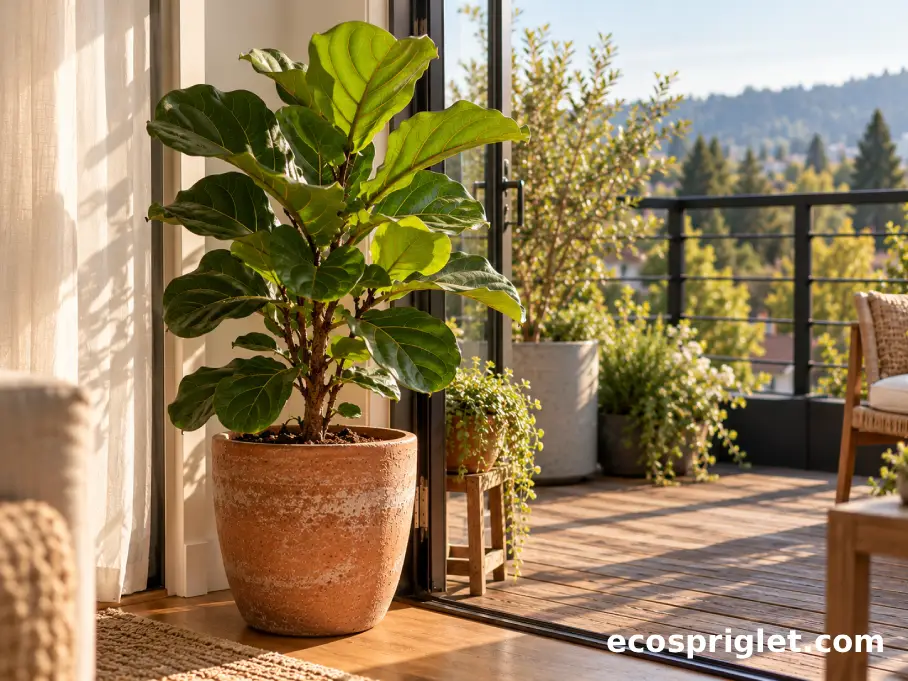
If you have limited floor space, a compact ‘Bambino’ near a bright window can be just as attractive as a much larger tree. If you have room for a taller specimen, give its branches enough clearance so the leaves aren’t continually rubbing against walls or furniture.
Keep the plant accessible for watering and inspection. A beautiful corner isn’t particularly useful if you have to drag a heavy container across the floor every time you need to empty its saucer.
Small practical decisions like these make indoor gardening easier to maintain over the long term.
Final Thoughts: A Healthy Fiddle Leaf Fig Starts With Consistency
Growing a fiddle leaf fig successfully is less about finding a perfect watering formula and more about understanding how the plant responds to its surroundings.
Give it plenty of bright light without suddenly exposing it to intense sunshine. Water thoroughly when the soil needs moisture, then allow excess water to drain away. Use an airy potting mix, keep temperatures relatively stable, and avoid unnecessary changes when the plant is already growing well.
Remember that a little leaf damage is normal. An older leaf may yellow, a brown edge may remain visible, or growth may pause during the darker months. None of those changes automatically means you have failed.
What matters is the overall pattern. Firm foliage, healthy new growth during favorable conditions, and soil that dries at a reasonable pace are encouraging signs.
For your first month, focus on just three habits: observe the light, check the soil before watering, and inspect the leaves regularly. Once those feel natural, decisions about feeding, pruning, and repotting become much easier.
With patience and a little consistency, your fiddle leaf fig can become a long-lasting part of your apartment garden, adding height, texture, and greenery without demanding attention every day.
Start with the brightest suitable spot in your home, get the drainage right, and let your tree show you what it needs.