A money tree plant has a way of making even a small apartment feel a little greener. With its glossy, hand-shaped leaves and often braided trunk, this tropical houseplant brings the look of a miniature indoor tree without demanding an entire room. It’s also associated with good fortune and prosperity, which makes it a popular housewarming gift.
But keeping a money tree healthy is less about luck and more about understanding a few simple habits. Give it bright, indirect light, water when the upper soil begins to dry, and make sure excess water can escape from its pot. Those three choices prevent many of the problems beginners encounter.
The tricky part is that money trees sometimes react to stress by dropping leaves. Too much water, too little water, cold drafts, and sudden changes in light can produce surprisingly similar symptoms.
Whether you’ve just brought home a small braided tree or you’re trying to revive one that’s looking unhappy, this guide will help you make sensible decisions about watering, placement, soil, pruning, and everyday care. Everything is geared toward real apartment conditions, including limited window light, dry indoor air, and tight growing spaces.
Meet Your Money Tree: What Makes This Plant Special?
The money tree, botanically known as Pachira aquatica, is a tropical evergreen tree native to parts of Central and South America. It’s also called Guiana chestnut or Malabar chestnut.
In its natural habitat, the tree can become enormous. Indoors, however, container size, pruning, and available light usually keep it much smaller. Many houseplants remain a manageable few feet tall, although established specimens can eventually reach 6 feet or more.
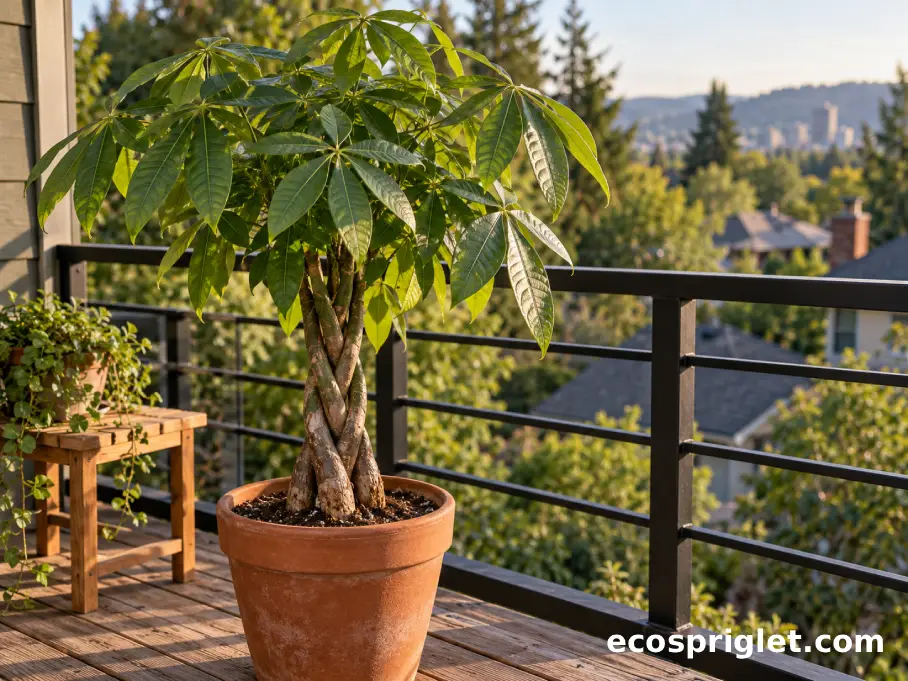
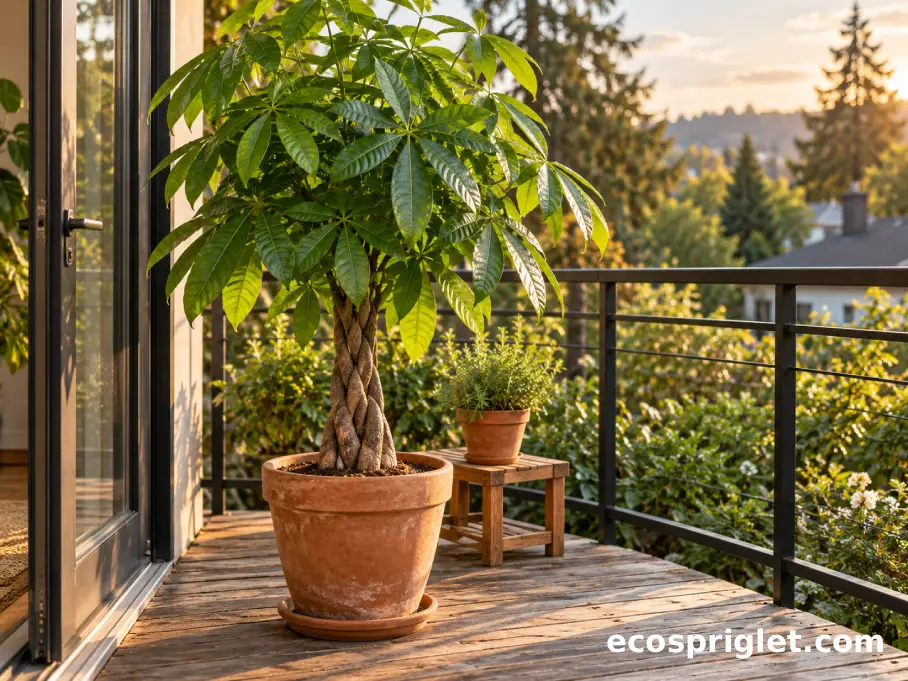
Its most recognizable features are the long leaf stalks and clusters of five to nine narrow leaflets. Together, they give the foliage a graceful, umbrella-like appearance.
Why Do Money Trees Have Braided Trunks?
A braided money tree plant usually consists of several young trees planted together. Their flexible trunks are woven into a decorative pattern while they’re still small. As the stems mature, they become woody and hold much of that shape.
The braid is ornamental, not something the plant needs to grow. In fact, keeping a mature braid tightly bound can damage the trunks.
If your tree has wire, string, or plastic ties around its stems, inspect them occasionally. Remove or loosen any material that is digging into the bark, taking care not to injure the trunks.
What About Variegated Money Trees?
Some specialty money trees have cream, pale yellow, or white patterns mixed into their foliage. These are often sold as variegated money trees.
Variegated plants generally benefit from bright, filtered light because pale leaf tissue contains less chlorophyll. However, strong direct afternoon sun can still damage the leaves.
Don’t confuse irregular yellowing on an ordinary green tree with natural variegation. If previously green leaves develop yellow patches, check moisture, light, and pests before assuming the color change is harmless.
For botanical background, the North Carolina State Extension Gardener Plant Toolbox provides a useful reference on Pachira aquatica and its growing requirements.
Give Your Tree the Right Light and Temperature
Finding the right window is one of the easiest ways to improve money tree care. These plants appreciate brightness, but that doesn’t mean they want to sit in intense sunlight all afternoon.
An east-facing window is often an excellent starting point. It supplies gentler morning sun and plenty of ambient daylight for the rest of the day.
Near a south- or west-facing window, use a sheer curtain to soften stronger sunlight or position the plant a little farther back from the glass.
How Much Light Is Enough?
Start with a location that receives bright, indirect daylight for much of the day. A spot approximately 1–3 feet from a bright window may work well, although the best distance depends on your window’s direction, nearby buildings, and the season.
Watch the plant for clues. Long, weak stems with widely spaced leaves can indicate inadequate light. Pale, bleached patches or crispy areas on sun-facing leaves suggest that the sunlight may be too intense.
If you move your tree to a brighter location, make the change gradually over about a week rather than suddenly placing it in strong direct sun.
Keep Indoor Temperatures Comfortable
According to North Carolina State Extension, Pachira aquatica grows well in warm conditions around 65–75°F. Avoid placing it directly beside heating vents, air conditioners, or frequently opened exterior doors. Sudden changes in temperature can stress foliage, even when the rest of the room feels comfortable.
During winter, check whether leaves are touching cold window glass. Pull the pot slightly back if the area becomes chilly overnight.
If you’re considering moving your tree outdoors during summer, use a sheltered, shaded location and introduce outdoor conditions gradually. Bring it back inside before nighttime temperatures approach 50–55°F, and protect it from strong balcony winds.
A bright room with stable temperatures usually serves this tropical plant far better than a dramatic but drafty windowsill.

Water Without Guesswork: The Habit That Matters Most
If there’s one habit I would encourage every new plant owner to develop, it’s checking the soil before reaching for the watering can.
Money trees come from tropical environments, but their roots still need oxygen. Keeping potting mix constantly saturated can cause root damage, while letting it become severely dry for extended periods may trigger wilting and leaf drop.
How Often Should You Water a Money Tree?
For many indoor money trees, watering approximately every 1–2 weeks during brighter, warmer months is a reasonable starting expectation. In winter, some plants may go 2–3 weeks or longer between waterings.
Those are observation ranges, not fixed instructions. A small pot in a heated apartment may dry much faster than a larger container in a cool room.
The more reliable test is to check the upper 1–2 inches of soil. When that layer feels dry and the pot has become noticeably lighter, it’s usually time to water.
A Simple Three-Step Watering Method
- Check below the surface. Insert a finger or wooden stick approximately 1–2 inches into the potting mix. If the soil still feels distinctly moist, wait and check again in a few days.
- Water thoroughly. When watering is needed, pour room-temperature water slowly over the soil until a little runs through the drainage holes. Make sure the root ball is being moistened, not just the edges of the pot.
- Empty excess water. Allow the pot to drain, then empty its saucer or decorative outer container after about 10–20 minutes. Roots shouldn’t remain submerged.
I remember being tempted to give a slightly droopy houseplant another drink simply because its leaves looked tired. That’s often the worst first reaction. Drooping can happen with both dry roots and waterlogged roots, so checking the soil is much more useful than guessing from the leaves alone.
How Does Winter Change the Routine?
Shorter days generally slow growth and reduce water demand. Start by checking the soil every 10–14 days during winter, but water only when the plant actually needs it.
Don’t assume that all winter apartments behave alike. Central heating can dry the air and potting mix surprisingly quickly, while a cool, dim apartment may keep soil damp for much longer.
If the pot stays wet beyond two weeks, check the drainage holes, container size, and light exposure before adding more water.
The Royal Horticultural Society’s houseplant guidance supports watering according to soil condition rather than an automatic schedule.
For a more detailed routine, explore our indoor plant watering guide.

Choose the Right Pot and Soil for Strong Roots
A beautiful container isn’t necessarily a good growing container. For money trees, what happens beneath the soil matters as much as the attractive leaves above it.
Start with a pot that has at least one unobstructed drainage hole. A decorative ceramic outer pot is perfectly fine, but it’s often easier to keep the plant in a removable nursery pot inside it. That way, you can lift the plant out for watering and drainage without spilling water across your apartment floor.
What Kind of Soil Does a Money Tree Need?
Choose a loose, well-draining houseplant potting mix that holds some moisture without remaining waterlogged. A mixture containing ingredients such as composted bark, coir, and perlite can provide a useful balance of moisture retention and air space.
If your existing mix feels unusually dense and stays soggy, you can improve its structure when repotting by mixing approximately three parts quality houseplant potting mix with one part perlite. Treat that as a practical starting blend, not a required formula.
Avoid using dense outdoor garden soil in an indoor pot. It may compact and restrict airflow around the roots.
Also skip the familiar trick of placing gravel underneath the soil. A rock layer does not improve drainage inside a planting container and can leave water perched in the soil above it. This is explained by the University of Illinois Extension.
When Should You Repot?
Repotting is usually easiest during spring, when the plant is entering a period of more active growth.
Look for roots emerging from drainage holes, tightly circling roots, a tree that frequently tips over, or potting mix that dries unusually quickly because roots have occupied much of the available space.
If repotting is needed, choose a container approximately 1–2 inches wider than the old one. Moving a small root system into a dramatically larger pot leaves more unused soil that may stay wet for too long.
Set the tree at approximately its previous soil depth, gently fill around the root ball, and water to settle the mix. Keep the pot in bright, indirect light while it adjusts.
A healthy tree doesn’t need an annual pot upgrade simply because another year has passed. If its roots are comfortable and growth looks good, leave it alone.

Keep the Leaves Healthy With Humidity and Gentle Feeding
Money trees generally adapt to ordinary indoor living conditions, but very dry air can make their foliage less attractive, especially during winter heating season.
If you notice persistent brown leaf tips while soil moisture and watering are otherwise appropriate, consider measuring room humidity with an inexpensive hygrometer.
When readings remain below about 40% and the plant shows signs of dryness, a clean room humidifier may help. Keep air circulating and avoid making nearby walls, furniture, or window frames damp.
A humidity level around 40–60% is a reasonable household target for many tropical foliage plants, provided the room remains well ventilated. Money trees do not need a constantly steamy environment.
Grouping houseplants can modestly improve the humidity immediately around their leaves, although it won’t replace a humidifier in an especially dry room.
How Much Fertilizer Is Enough?
During spring and summer, when new leaves are appearing, use a balanced liquid houseplant fertilizer at about half the label’s recommended strength once every four weeks. Reduce or stop feeding when growth slows in fall and winter. If you’re using a potting mix that already contains slow-release fertilizer, account for that before adding more nutrients.
Never use fertilizer as the first treatment for a visibly declining plant. A money tree with waterlogged roots cannot make good use of extra nutrients, and fertilizer salts may add stress.
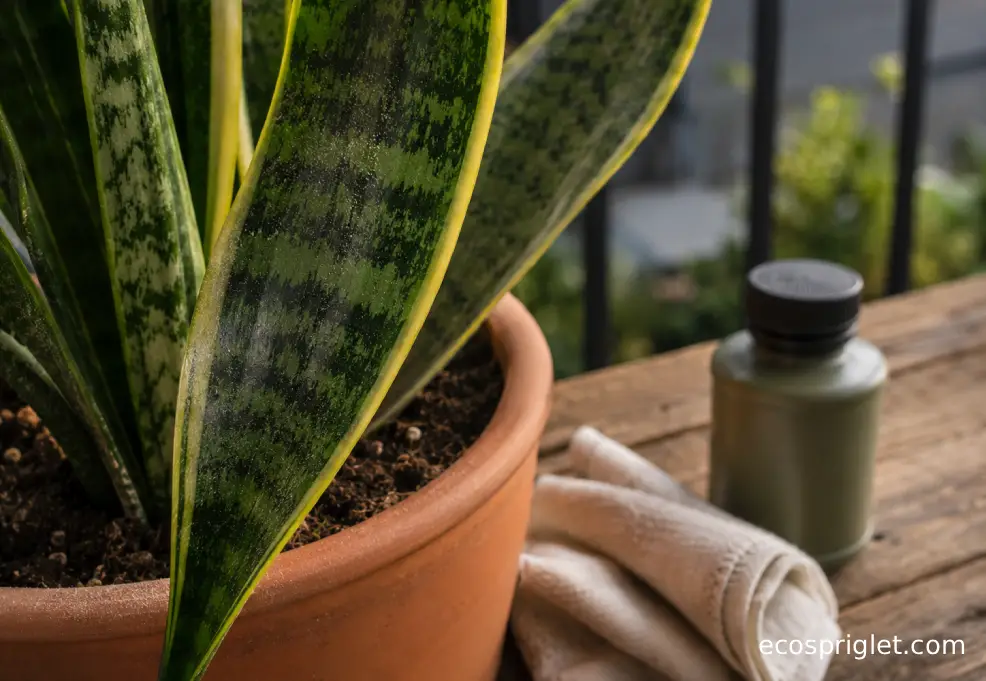
Dust also accumulates on broad indoor leaves. Every few weeks, gently wipe the foliage with a soft, damp cloth, supporting the leaf with your other hand. There’s no need for commercial leaf-shine sprays.
In my experience, a little consistent upkeep does more for indoor foliage than complicated feeding schedules. Clean leaves, adequate light, and healthy roots are the foundation.

Prune and Shape Your Money Tree Without Stressing It
Money trees can eventually become tall or uneven, particularly when most of their light comes from one direction. Fortunately, careful pruning helps keep their shape suited to an apartment.
Early spring is a sensible time for most shaping work. The plant is entering its active growing season and is better positioned to produce new shoots.
How to Prune a Money Tree
- Identify the growth you want to control. Look for one or two stems that extend well beyond the main canopy or lean toward the window.
- Make clean cuts above a node. Use clean, sharp pruning shears and cut approximately 1/4 inch above a healthy leaf node or branching point. New growth may develop from nearby nodes.
- Remove unhealthy growth first. Trim dead or clearly damaged shoots back to healthy tissue. Don’t remove healthy leaves simply because they hang slightly lower than the others.
- Keep the first session modest. As a conservative guideline, avoid removing more than about one-quarter of the healthy foliage at once. Reassess the shape after new growth appears.
For a compact, fuller tree, shorten the longest shoots rather than cutting every branch to the same height. This keeps a more natural canopy.
Should You Keep Braiding the Trunk?
There’s usually no reason to continue braiding an established indoor tree. Its mature woody stems are less flexible, and forcing them into position risks breaking or constricting growth.
If a young stem is naturally flexible and already part of a loose braid, avoid tightening it around neighboring trunks. The priority is healthy growth, not a perfectly symmetrical pattern.
Rotate the pot about a quarter turn every week or two if the canopy is leaning noticeably toward the window. Even light exposure can reduce the need for corrective pruning.
The Royal Horticultural Society recommends pruning Pachira aquatica in spring to control its size.

Read the Leaves: How to Recognize and Fix Common Problems
When a money tree starts looking unhappy, the leaves usually provide the first warning. The challenge is working out which growing condition has changed.
Resist the temptation to water, fertilize, repot, and move the plant all on the same day. Changing too many things makes it harder to identify the original problem.
Yellow Leaves: Check Moisture First
A yellow leaf doesn’t automatically mean your tree needs water. If several leaves turn yellow while the soil remains damp, inspect the pot’s drainage and look for signs of overwatering. A heavy pot, lingering moisture, unpleasant soil odor, or soft stems near the base can indicate trouble.
If the soil is very dry and the foliage is drooping, the roots may simply need a thorough watering.
Occasional yellowing of a single older leaf can be normal as the plant replaces aging foliage. Widespread or accelerating yellowing deserves closer attention.
Brown Tips and Crispy Edges
Dry leaf margins can develop when a plant experiences repeated underwatering, excessively dry air, strong sunlight, or a buildup of fertilizer salts.
Start with the simplest checks. Feel the soil, review the plant’s window exposure, and look for white mineral deposits on the potting mix.
If the tree receives strong afternoon sun, move it into filtered light. If it has been repeatedly drying out completely, aim for more consistent watering based on the upper soil layer.
Existing brown tissue won’t turn green again. Judge your progress by the condition of new leaves.
Why Is My Money Tree Suddenly Losing Leaves?
Sudden leaf drop often follows an environmental change: moving the plant, exposing it to cold air, leaving the soil very dry, or keeping it excessively wet.
Think about the previous one or two weeks. Was a window left open during cold weather? Did you move the plant into a darker corner? Has water collected inside its decorative pot?
Correct the most likely cause and keep conditions stable rather than moving the tree every few days.
A tree that retains firm, living stems and healthy roots may produce new foliage once conditions improve. Recovery isn’t guaranteed, especially if the root system is badly damaged.
What If the Trunk Feels Soft?
This symptom deserves more immediate attention than a few discolored leaves. A firm lower trunk is normal. Soft, collapsing, or foul-smelling tissue near the soil line may indicate serious decay.
Gently remove the plant from its container and examine the roots. Healthy roots should generally feel firm, while rotten roots are often dark and mushy.
If decay is limited, remove affected roots with clean tools and repot the remaining healthy root system into fresh, freely draining mix. Reduce unnecessary disturbance and avoid fertilizing until the plant resumes growth.
If much of the trunk and root system is soft, recovery may be unlikely. Taking a cutting from a healthy stem, if one remains, may be worth trying.
The University of Maryland Extension’s indoor plant diagnostic guide is particularly helpful for distinguishing root problems from light stress and pest damage.

Common Mistakes to Avoid With Indoor Money Trees
Most money tree problems don’t begin with some mysterious disease. They start with a small care habit that seems harmless.
Here are the mistakes I would watch for first, especially in apartments where light, airflow, and drainage aren’t always ideal.
- Watering on a strict schedule. Watering every Sunday can leave one plant soggy and another thirsty. Use the top 1–2 inches of soil as your main cue and adjust for the season.
- Leaving water in a decorative container. An attractive outer pot can hide standing water. Remove the inner pot after watering, let it drain, and empty the outer container before replacing it.
- Moving the tree into direct summer sunshine. Leaves raised indoors can scorch under strong sunlight. Introduce brighter conditions gradually and offer afternoon protection.
- Repotting into an oversized planter. A pot several inches wider than the root ball can hold too much moisture. Increase container diameter modestly, usually by about 1–2 inches.
- Fertilizing a struggling tree. Extra nutrients won’t fix poor drainage, damaged roots, or cold exposure. Correct the growing conditions first, then resume light feeding after healthy growth returns.
One lesson I learned with container plants is that more attention doesn’t always mean better care. I used to think a struggling plant needed something added immediately. Quite often, the better choice is to correct one obvious problem and give the roots time to respond.
A small weekly inspection is more useful than constant intervention. Check the leaves, touch the soil, look beneath the pot, and make a change only when there’s a clear reason.
Watch for Pests Before They Spread to Other Houseplants
Even a well-cared-for money tree can attract unwanted visitors. The most common concerns include mealybugs, scale insects, spider mites, and fungus gnats.
Check the undersides of leaves and the joints where leaf stalks meet stems every week or two, especially after bringing a new plant home.
Recognize the Warning Signs
White, cottony clusters often indicate mealybugs. Small brown or tan bumps attached to stems can be scale insects. Fine webbing and tiny pale speckles on leaves may suggest spider mites.
Small dark flies hovering around damp potting mix are often fungus gnats. They can become more noticeable when soil remains excessively wet. If you discover pests, move the affected plant away from your other houseplants while identifying the problem.
For a light mealybug infestation, carefully remove visible insects with a cotton swab. A swab lightly moistened with rubbing alcohol can be used on individual pests, but avoid saturating leaves and test a small area because alcohol can damage foliage.
A gentle rinse can help dislodge some insects and mites. Protect the potting mix from excessive water during cleaning.
If pests persist, consider a product specifically labeled for the pest and suitable for indoor ornamental plants, such as an appropriate insecticidal soap. Follow label directions, test a small area, and keep treated plants away from pets and children as instructed.
Inspect the tree again after approximately 5–7 days. Pest control often takes repeated monitoring, even when the first treatment seems successful.
With fungus gnats, review watering habits first. Letting the upper layer dry between waterings often makes the potting mix less favorable for them.

Make a Money Tree Fit Your Apartment and Everyday Life
One of the nicest things about a money tree is how easily it can become part of a small living space. You don’t need a dedicated plant room or a large balcony to give it a comfortable home.
A compact tree can sit on a sturdy low plant stand near a bright window. Taller specimens work well as floor plants in a living room corner, provided that corner actually receives enough daylight.
For narrow apartments, prune outward-growing branches occasionally rather than pushing the tree against a wall or window. Leave some clearance around the foliage for airflow and easy inspection.
Can a Money Tree Live on a Balcony?
It can spend time on a sheltered balcony during consistently warm weather, but it is not a year-round outdoor plant in climates with cold winters.
Introduce it outdoors gradually over about 7–10 days, beginning in full shade before allowing gentle morning light. Keep the pot away from exposed railings where strong wind could tip it over.
Use a stable plant stand or floor position, and don’t place a large, heavy planter on a balcony railing. Follow your building’s rules regarding plant containers and loading.
Bring the tree indoors before chilly nights arrive, and inspect the leaves and soil for pests before returning it to your other plants.
Is a Money Tree Safe Around Cats and Dogs?
The ASPCA lists Pachira aquatica as non-toxic to cats and dogs. That makes it a more practical choice for many pet-owning households than some other decorative houseplants.
However, non-toxic doesn’t mean suitable for eating. Chewing plant material can still cause stomach upset, and curious pets may also disturb the soil or tip over a container.
Keep the tree in a stable location, clean up fallen leaves, and discourage pets from chewing the foliage. If your pet develops symptoms after eating plant material, contact your veterinarian.
Be careful with common names, too. Some jade plants are also called money plants or money trees, but they are different species with different toxicity profiles.
Conclusion: A Healthy Money Tree Starts With Simple Habits
A healthy money tree doesn’t need daily attention or a complicated maintenance routine. What it needs is a comfortable, reasonably consistent environment.
Begin with a bright location away from harsh afternoon sunlight and cold drafts. Check the upper 1–2 inches of soil before watering, and always let excess water drain away. Use a loose potting mix, feed lightly while the plant is actively growing, and prune only when its shape needs attention.
If the leaves turn yellow or begin dropping, don’t immediately assume the plant is dying. Inspect the soil, consider recent temperature or light changes, and examine the roots if there’s evidence of serious overwatering. Often, identifying one correctable problem is more helpful than making several changes at once.
For a small apartment, the money tree offers something especially satisfying: the feeling of growing a real tree without needing a backyard. Over time, its leafy canopy and distinctive trunk can become a familiar part of your home.
Start by finding its best window and checking the soil today. A few sensible habits, repeated consistently, give your money tree the best chance to remain healthy and attractive for years.