That beautiful orchid on your windowsill can look almost unreal when it’s covered in flowers. Then, one by one, the blooms fall, leaving behind green leaves and a bare flower spike. If you’re new to orchids, it’s natural to wonder whether something went wrong or when you’ll see those flowers again.
Here’s the reassuring part: most common indoor orchids bloom about once a year, while some varieties can flower two or more times under favorable conditions. Moth orchids, the kind commonly sold in supermarkets and garden centers, are especially generous. Their flowering displays can last several months, and healthy plants may produce another spike after a suitable growing and resting period.
Flowering isn’t identical for every orchid, though. The variety, available light, seasonal temperature changes, and overall plant health all influence the schedule.
I’ve found that the easiest way to enjoy orchids in a small apartment is to stop expecting constant flowers and start recognizing their natural cycle. Once you understand what happens between displays, it’s much easier to tell whether your plant is resting normally or needs a change in care.
The Usual Blooming Schedule for Popular Orchids
Orchids don’t all follow the same flowering calendar. Some produce one spectacular display every year, while others can develop new flower spikes more frequently. The biggest difference often comes down to the orchid’s genus and the growing conditions it prefers.
For a mature, healthy plant, these are useful expectations:
| Orchid Type | Typical Bloom Frequency | Approximate Flower Display |
|---|---|---|
| Moth Orchid (Phalaenopsis) | Usually once a year; some hybrids rebloom | 1–4 months |
| Cattleya | Usually once a year; some hybrids flower more often | 1–4 weeks |
| Cymbidium | Usually once a year | 6–8 weeks per flower stem |
| Dendrobium | Often annually; some types bloom more than once | About 3–4 weeks for many types, sometimes longer |
| Lady Slipper Orchid (Paphiopedilum) | Often one flowering cycle per mature growth | Several weeks; some hybrids last 3 months or longer |
These are general ranges, not deadlines. The American Orchid Society explains that flowering frequency and duration vary considerably between orchid groups and growing conditions.
Moth Orchids Are Especially Good for Apartments
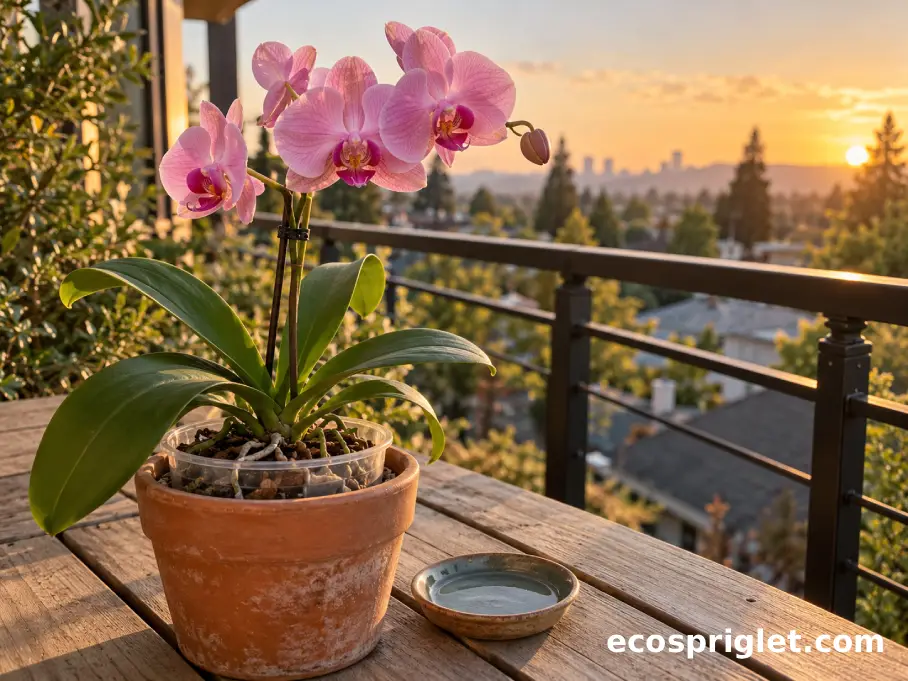
Phalaenopsis orchids are popular for good reason. They tolerate typical indoor temperatures, stay relatively compact, and can hold their flowers for weeks or months.
If you’re growing a miniature orchid, check what kind it is. A mini Phalaenopsis generally follows a similar flowering cycle to a standard-sized moth orchid. Its smaller size doesn’t automatically mean shorter-lived flowers or more frequent blooming.
Cattleyas are different. They often need brighter light, and their flowers typically last for a shorter period. Cymbidiums can produce impressive displays, but many standard varieties need cooler seasonal temperatures that can be difficult to provide in a constantly heated apartment.
If you’re buying another orchid for a small space, check the plant label rather than choosing by flower color alone. Knowing whether it prefers warm or cool conditions will make future flowering much more predictable.
How Long Do Orchid Blooms Last on the Plant?
There’s an important difference between the lifespan of one orchid flower and the length of the entire flowering display.
A moth orchid might open its first flower in January and still have blossoms in March. That doesn’t mean every flower opened on the same day. Buds often develop and open in sequence, extending the display considerably.
For common indoor Phalaenopsis hybrids, one to four months of flowering is possible, although two to three months is a reasonable expectation under comfortable home conditions.
Other orchids can be much more fleeting. Some Cattleya flowers remain attractive for only a week or two, even when the plant is perfectly healthy. Cymbidium stems commonly stay in flower for six to eight weeks, according to the Royal Horticultural Society.
What Makes Orchid Flowers Fade Faster?
Temperature is one of the biggest influences. Flowers can deteriorate more quickly if the plant sits beside a radiator, above a heating vent, or in strong afternoon sunshine.
For a flowering moth orchid, a comfortable room around 65–75°F is usually suitable. Avoid hot air blowing directly across the flowers, and don’t position the plant against freezing-cold winter glass.
Avoid moving a budding orchid repeatedly, too. Sudden changes in temperature, light, or moisture can cause developing buds to yellow and drop before opening. This is often called bud blast.
Normal aging looks different: older flowers gradually fade and drop while the leaves stay firm and healthy. If that happens after several weeks of flowering, there’s usually nothing to fix.
When Indoor Orchids Bloom Throughout the Year
Unlike many outdoor garden flowers, orchids don’t share one universal flowering season.
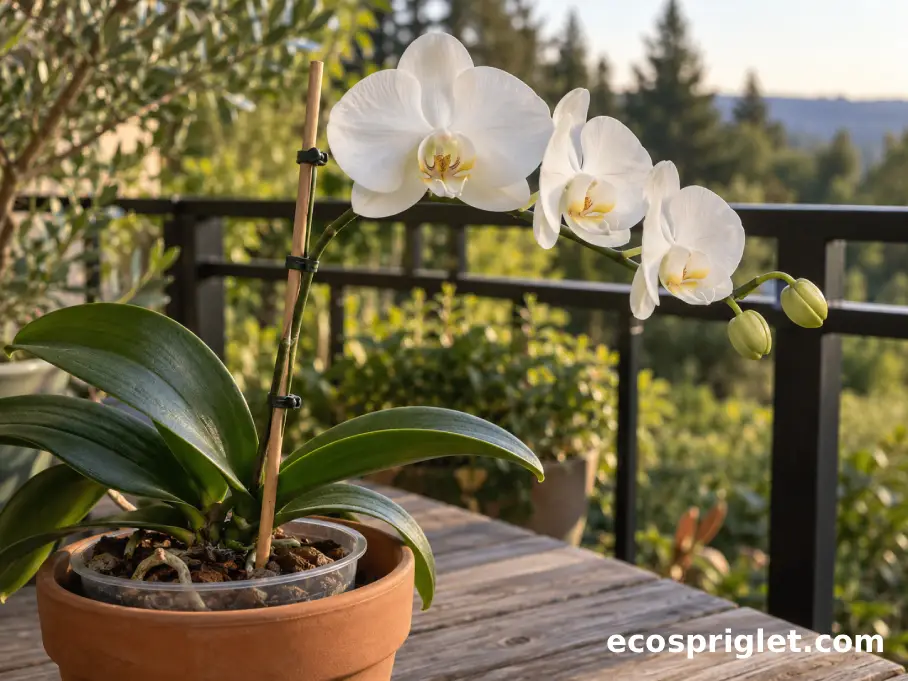
In a typical apartment, a moth orchid may begin developing its flower spike during fall or winter and open its flowers in winter or spring. However, modern Phalaenopsis hybrids can bloom at almost any time of year.
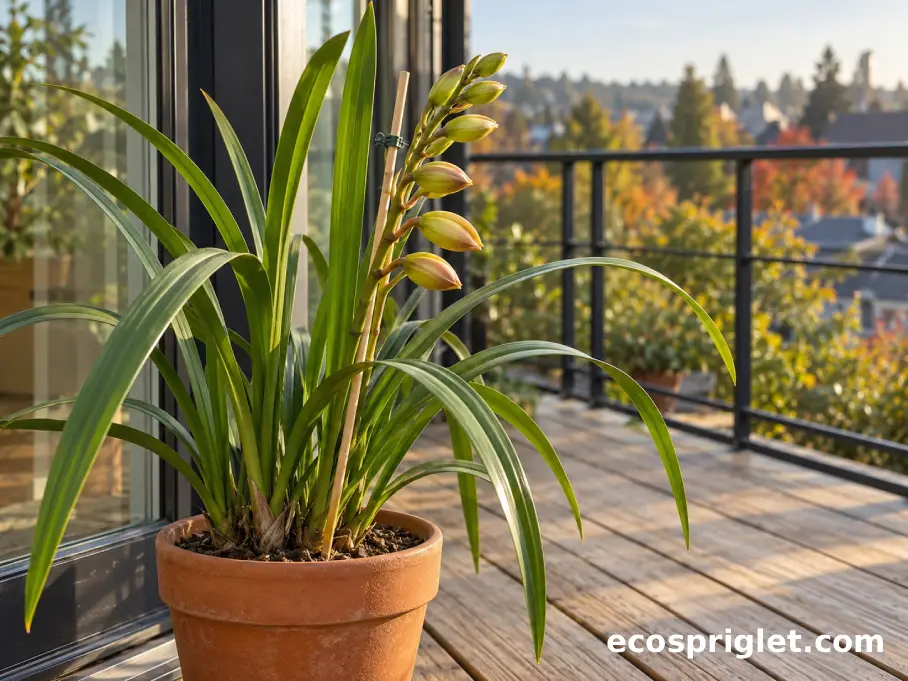
Cymbidiums commonly flower during the cooler months, often winter into spring. Many nobile-type Dendrobiums bloom in late winter or spring following a cooler, relatively dry rest. Cattleya flowering seasons differ widely by species and hybrid, while many lady slipper orchids are winter bloomers.
Artificial lighting, steady indoor temperatures, and commercial greenhouse production can shift these schedules. That explains why stores sell flowering orchids throughout the year.
What About Orchids in Florida?
Florida’s warmer climate allows many orchids to grow outdoors or in sheltered patio spaces for much of the year. But warm weather doesn’t make every orchid bloom continuously.
The University of Florida’s UF/IFAS Extension notes that the native Florida butterfly orchid commonly blooms between May and July. Cultivated Phalaenopsis and Cattleya orchids follow schedules influenced by their particular variety and growing environment.
In warmer Florida locations, some orchids may have more opportunities for seasonal growth, while others still require cooler nights to initiate flowering.
For apartment gardeners in cooler regions, there’s no need to imitate a tropical outdoor climate exactly. Matching the conditions your particular orchid needs is far more important than trying to force flowers during a specific month.
Give Your Orchid the Right Signals to Bloom Again
A healthy orchid doesn’t necessarily need more fertilizer or a larger pot to flower again. Often, it needs better light or the right seasonal temperature change.
I remember keeping a moth orchid on a shelf where it looked perfectly healthy for months. The leaves were dark green, and I assumed everything was fine. But I wasn’t giving it enough light to encourage flowering. Moving it closer to a bright window made much more sense than buying another bottle of fertilizer.
For a typical indoor Phalaenopsis, I’d work through three things first:
- Improve the light. Choose a bright east-facing window or a position with filtered light near a south-facing window. Protect the leaves from harsh midday summer sun. If the plant produces very dark green leaves but never flowers, insufficient light may be part of the problem.
- Allow a modest nighttime temperature drop. Healthy moth orchids can respond to several weeks of nights around 60–65°F, with warmer daytime temperatures around 70–80°F. Avoid cold drafts and temperatures below the range recommended for your orchid.
- Keep roots healthy. Grow most commonly sold epiphytic orchids in an airy orchid bark mix, with a pot that has drainage holes. Water thoroughly, let the pot drain, and avoid keeping the roots constantly saturated.
The Iowa State University Extension identifies inadequate light and unsuitable temperature patterns among the common reasons orchids fail to flower again.
Temperature cues are not universal, though. Many Cymbidiums need substantially cooler conditions, while different Dendrobium groups have very different seasonal requirements. Always identify the orchid before changing its winter care.
If your apartment stays warm all year, a cooler bedroom or bright room away from heating vents may be enough for a moth orchid. Avoid leaving it outside overnight simply to force a temperature drop.
And be patient: the appearance of a new spike isn’t the same as immediate flowering. A moth orchid can take several weeks to develop the spike and open its first flowers.
Watering and Feeding While Your Orchid Is Blooming
One of the most common questions about orchid care is whether flowering plants need extra water.
The answer is: not automatically. Developing buds and flowers are part of the plant’s active growth cycle, but watering needs still depend mainly on the potting medium, root condition, room temperature, light, and airflow.
For a moth orchid growing in bark, checking moisture about once or twice a week is a good starting routine. Many plants need water roughly every five to ten days in typical home conditions, but the actual interval can be shorter or longer.
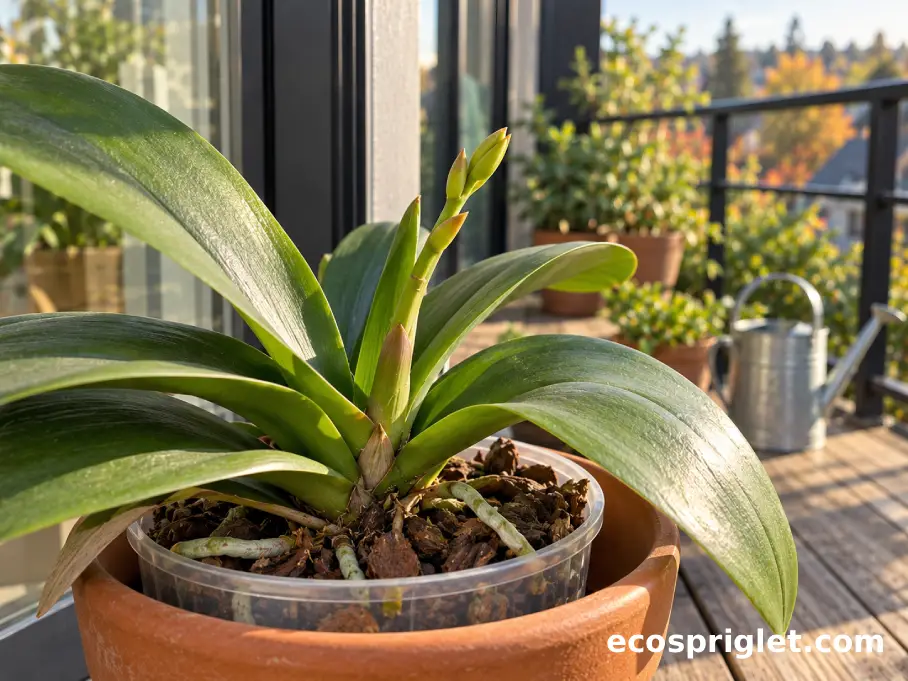
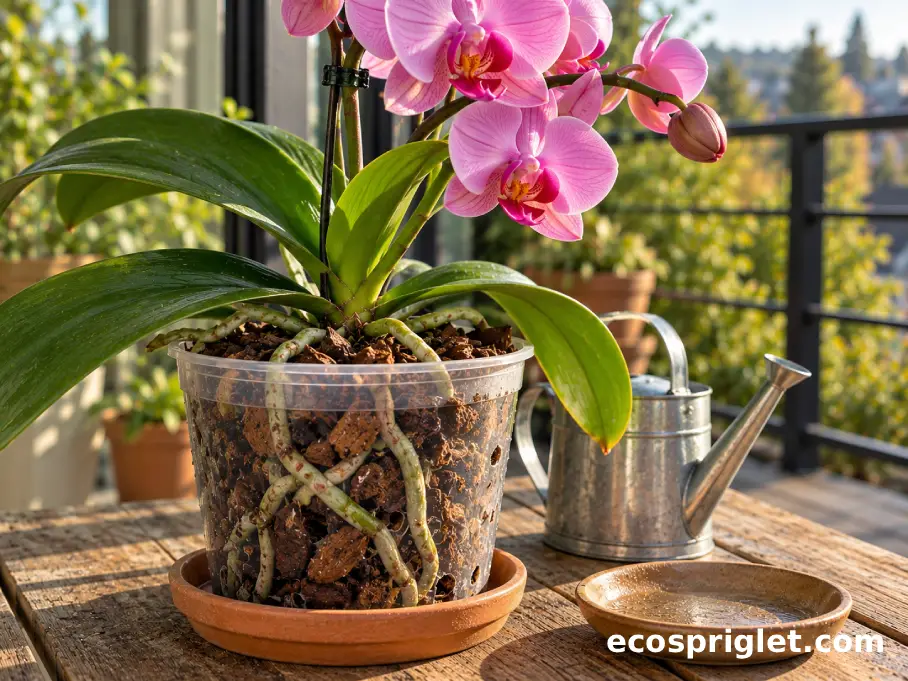
If the clear pot shows green roots and the bark still feels damp, check again later. If the roots look silvery and the bark is nearly dry, it’s usually time to water.
Water thoroughly with room-temperature water, then allow the pot to drain completely before returning it to its decorative container. Never let the inner pot sit in standing water.
Also, try to keep water out of the center of a moth orchid’s leaves. Water trapped in the crown, especially in cool conditions, can encourage rot.
Should You Fertilize an Orchid While It’s Flowering?
Yes, you can feed many orchids while they’re blooming, but there is no need to increase fertilizer just because flowers are open.
For a Phalaenopsis that is actively growing, a balanced orchid fertilizer diluted to one-quarter to one-half of the label’s recommended strength, applied every second or third watering, is a reasonable conservative approach. Follow the specific fertilizer label and adjust feeding when growth slows.
Too much fertilizer can damage roots and leave mineral deposits in the potting mix. It also won’t guarantee more flowers.
Some orchids, especially certain Dendrobiums and Cymbidiums, need a reduction in fertilizer during their seasonal resting periods. Those plants should follow their own care schedules rather than a standard moth-orchid routine.
For a more detailed moisture routine, see our guide to watering indoor plants.
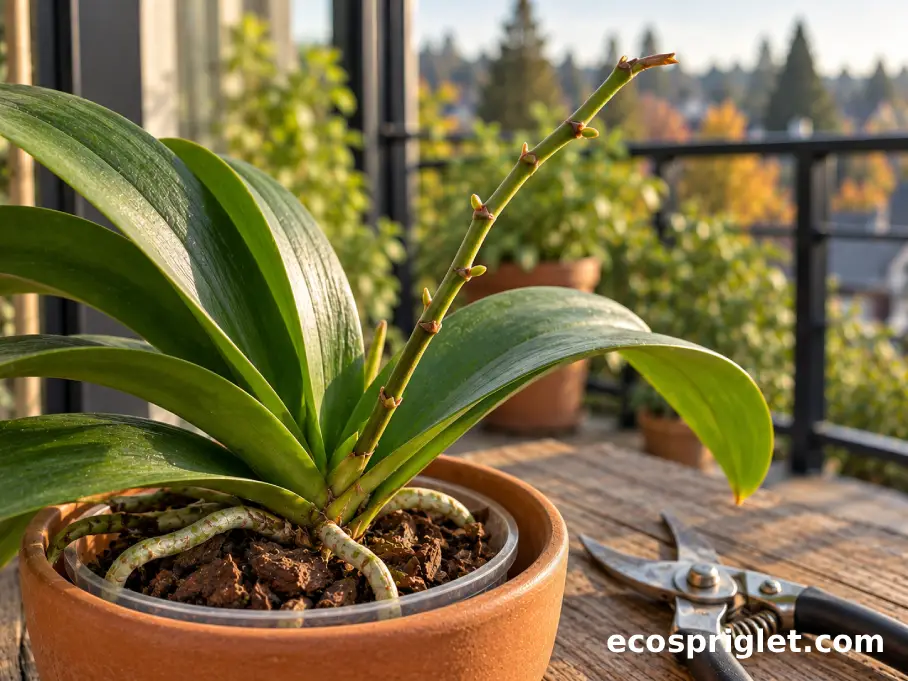
After the Last Flower Falls: Should You Cut the Spike?
Once the final flower drops, the next decision depends on what kind of orchid you own. For a healthy moth orchid, a green flower spike may still be capable of producing a flowering side branch.
One option is to use clean scissors to cut the green spike just above the second healthy node from its base. A node is the slightly raised joint visible along the spike. Under favorable conditions, a side shoot may develop, sometimes producing new flowers in roughly eight to twelve weeks.
That possibility isn’t guaranteed, and forcing another flowering display can use some of the plant’s energy.
If your moth orchid has weak leaves, damaged roots, or hasn’t grown well recently, I’d choose the simpler route: remove the finished spike near its base and let the plant focus on recovery.
If the spike has turned completely brown and dry, remove it. A dry spike won’t produce new flowers.
Other Orchid Types Need Different Pruning
Most Cattleyas and many Paphiopedilums won’t flower again from the same spent flower stem. Remove the old stem once flowering is finished.
Dendrobiums require particular care. Their upright, cane-like stems aren’t disposable flower spikes. Even when the leaves fall, healthy canes may store important reserves, and some types can flower from older growth. Don’t cut them off simply because they look bare.
The American Orchid Society provides orchid-specific guidance on removing or retaining flower spikes.
After pruning, continue normal care. Check the roots, watch for new leaves, and repot only when the growing medium is breaking down or the plant genuinely needs it. Most established orchids don’t require repotting immediately after every flowering cycle.
Common Mistakes That Delay the Next Display
An orchid that hasn’t flowered in several months isn’t automatically unhealthy. However, a plant that keeps producing leaves without flowers may be telling you something about its growing conditions.
These are the mistakes I’d check before changing everything at once:
- Keeping the orchid in a dim corner. Leaves may remain green even when the plant lacks enough light to initiate flowers. Move it gradually to a brighter window and observe the new growth over the following weeks.
- Watering by the calendar rather than the roots. A fixed weekly schedule can leave slow-drying bark permanently wet. Check the potting medium first and avoid standing water in decorative containers.
- Using too much fertilizer. Strong fertilizer won’t replace proper light or seasonal cues. Feed at a diluted rate during active growth and reduce feeding when the orchid’s growth naturally slows.
- Expecting instant flowers after pruning. Removing the old spike doesn’t force the plant to flower. Many orchids need several months to mature fresh growth before another display.
- Repotting into an oversized container. Extra potting material can remain wet long after the roots need water. Choose a pot that comfortably accommodates the existing roots without surrounding them with a large volume of damp mix.
I’ve learned that changing one thing at a time works better than trying five different remedies in the same week. If the roots are healthy and the leaves look firm, start by checking light exposure. Then review watering and temperature conditions.
If the leaves become soft or wrinkled, inspect the roots before adding more water. A dehydrated orchid and an orchid with damaged, waterlogged roots can look surprisingly similar above the pot.
For homes with pets, the ASPCA lists Phalaenopsis orchids as non-toxic to cats and dogs. Even so, it’s sensible to keep fertilizer, potting materials, and loose plant parts out of reach.
Conclusion: Build a Simple Routine and Let the Flowers Return
Orchid flowering becomes much less mysterious once you know what to expect. Most common houseplant orchids have a natural annual rhythm, while some varieties can bloom more frequently. Moth orchids are particularly rewarding because a single flowering display may remain attractive for several months.
Between flowering periods, remember that your orchid is still doing important work. New leaves, growing roots, and maturing stems all help prepare the plant for future flowers.
One habit I recommend for apartment gardeners is keeping a simple bloom record. Note the month your orchid starts producing a spike, when the first flower opens, and when the last one falls. A few photos taken each month can make the pattern even easier to recognize.
After a year or two, you’ll have a much better idea of your own plant’s schedule instead of relying on a general flowering calendar.
For now, focus on bright but appropriate light, a healthy root system, careful watering, and the seasonal temperature conditions your orchid prefers. Don’t worry if it spends several months without flowers. That’s often part of growing a mature, healthy plant.
The goal isn’t to keep an orchid flowering every week of the year. It’s to give it the conditions to produce another beautiful display when it’s ready.