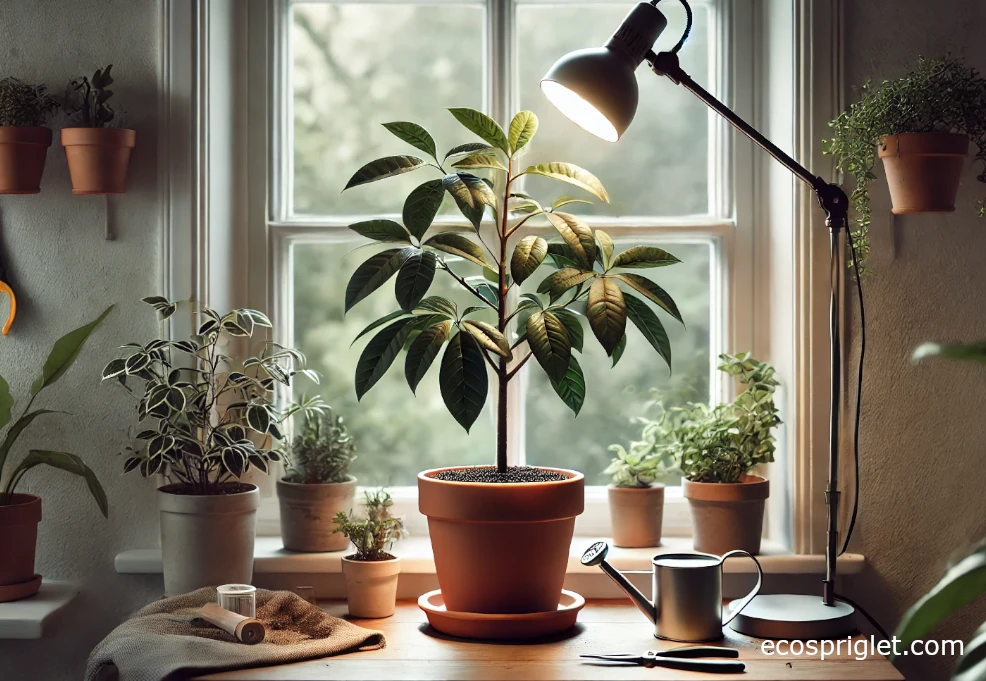
Growing eucalyptus indoors is one of those “sounds simple, acts picky” projects—especially in a bright-but-not-tropical apartment. Eucalyptus isn’t a typical low-light houseplant. It wants sun, fresh air, and room for roots, and it would happily become an outdoor-sized tree if you let it. But if you treat it more like a cut-foliage shrub you keep compact (instead of a forever-living living-room tree), an indoor eucalyptus plant can be totally doable.
What helps most is being honest about the tradeoffs: indoors, growth is slower, leaves can drop if light is weak, and the plant will demand a real window (or a grow light) rather than “near a window.” The payoff is worth it if you love that silvery foliage and the clean, herbal scent—plus you can harvest small sprigs without feeling like you’re dismantling the plant.
I’ll walk you through realistic expectations, setup choices, and the day-to-day care that keeps a eucalyptus indoor plant from turning into a leggy stick with a few sad leaves.
Can You Grow Eucalyptus Indoors? What to Expect
Eucalyptus can be grown indoors, but it behaves differently than it does outdoors. Many growers keep it in a pot as a compact, pruned plant (more “indoor eucalyptus shrub”) rather than expecting a true indoor eucalyptus tree to thrive for years without management. One reason it gets mentioned alongside the “fastest growing indoor plants” is that eucalyptus can grow quickly when it has intense light and steady warmth—but indoors, light is usually the limiting factor.
Two reality-checks that save a lot of disappointment:
- Light decides everything. If it doesn’t get strong direct sun (or supplemental light), it stretches, drops leaves, and sulks.
- You’re going to prune. Regular trimming is what keeps the plant leafy and apartment-sized instead of tall and bare at the bottom.
Also: if you bought eucalyptus for round “silver dollar” leaves, know that many species shift leaf shape as they mature. Keeping it pruned encourages more juvenile-style growth—one of the sneaky perks of growing eucalyptus indoors.
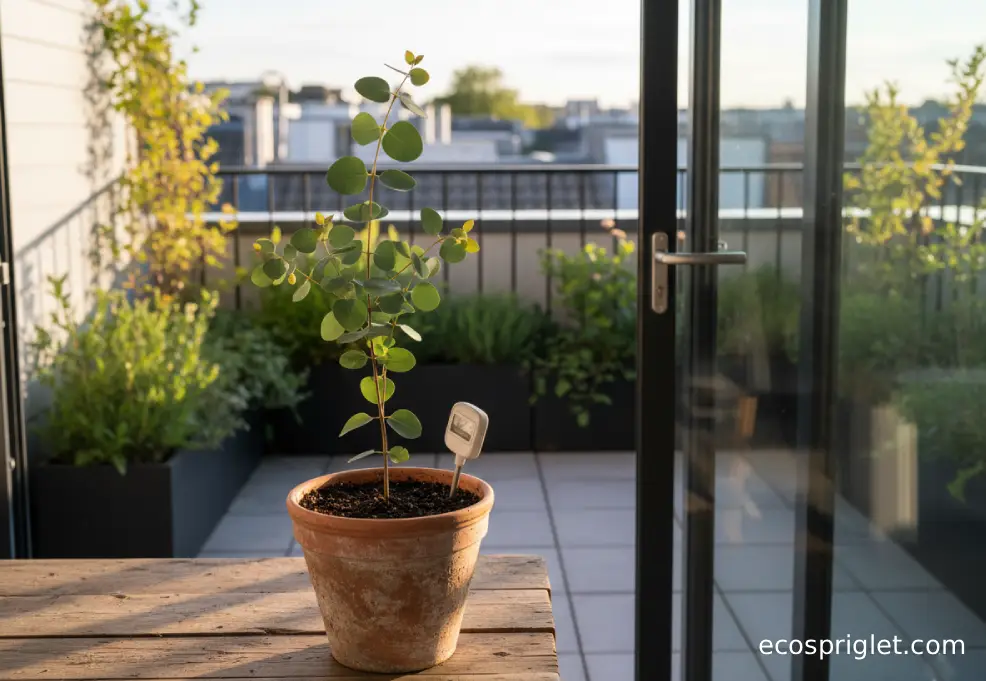
Choosing the Right Eucalyptus for Indoor Life
Most apartment growers do best starting with a young plant (4–10 inches tall) rather than trying to “train” a big nursery specimen indoors. Smaller plants adapt faster to indoor light levels, and you can shape them from the beginning.
If you see “silver dollar eucalyptus,” that’s often Eucalyptus cinerea (frequently grown for foliage). NC State Extension specifically notes it’s commonly grown in containers in cooler climates and prefers full sun and good drainage—exactly the clues you want when you’re planning an indoor setup with a bright window and a pot that dries properly.
Quick buying tips I use on my own terrace:
- Pick the stockiest plant. Choose thicker stems and tighter leaf spacing over height. Tall + skinny usually means it was already reaching for light.
- Check the pot for roots. If roots are circling the bottom in a dense mat, plan to repot within a week.
- Smell the foliage. A healthy plant smells fresh and aromatic, not sour or musty (musty can hint at chronically wet soil).
And yes, you can grow eucalyptus from seed indoors—just know it’s slower, fussier about light, and easier to dry out at the seedling stage. For most beginners, a small starter plant is the smoother on-ramp.
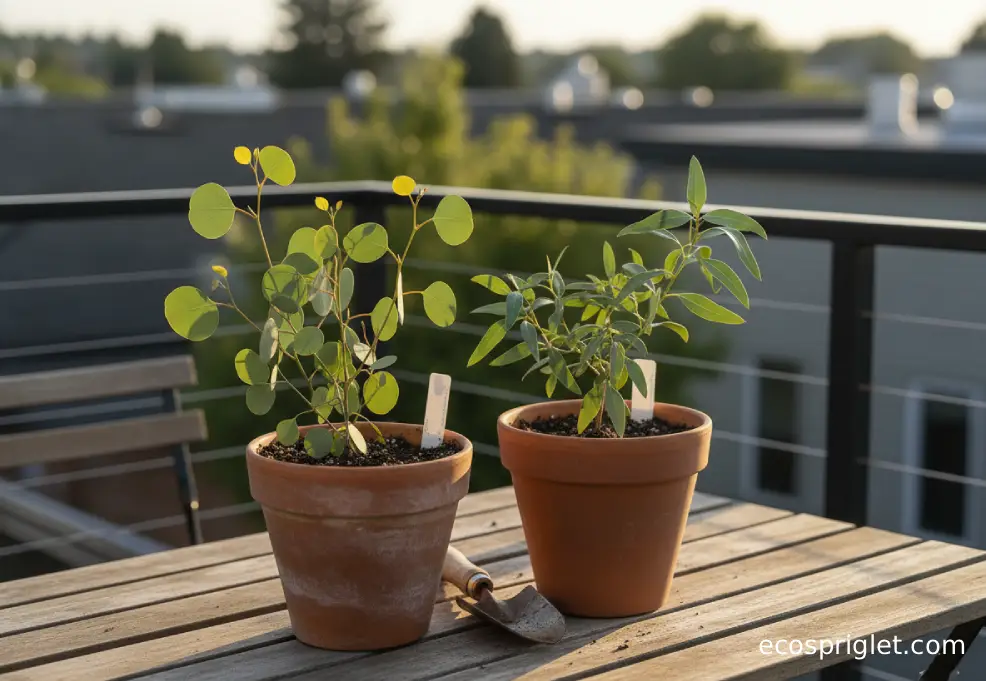
Sources: NC State Extension (Eucalyptus cinerea profile and cultural conditions).
Light, Temperature, and Airflow for a Happy Indoor Eucalyptus
If your eucalyptus struggles indoors, the culprit is usually light. For Eucalyptus cinerea, NC State Extension lists full sun as 6+ hours of direct sunlight per day. That’s your baseline target for a eucalyptus indoor plant sitting in a window.
Two practical ways to hit that in an apartment:
- Claim your brightest window. South- or west-facing is usually best. Rotate the pot a quarter-turn every 5–7 days so it doesn’t lean.
- Use a grow light like a “sun extender.” If you add supplemental lighting, Extension guidance for indoor lights often places fluorescent fixtures about 6–12 inches from foliage and LEDs farther away (commonly 12–24 inches), adjusting as the plant responds.
Temperature is rarely the problem indoors—most apartments run in a comfortable range. What matters more is avoiding cold drafts right against the foliage in winter and giving the plant some airflow. A small fan across the room (not blasting directly) makes a noticeable difference in pest pressure in my experience, especially with spider mites.
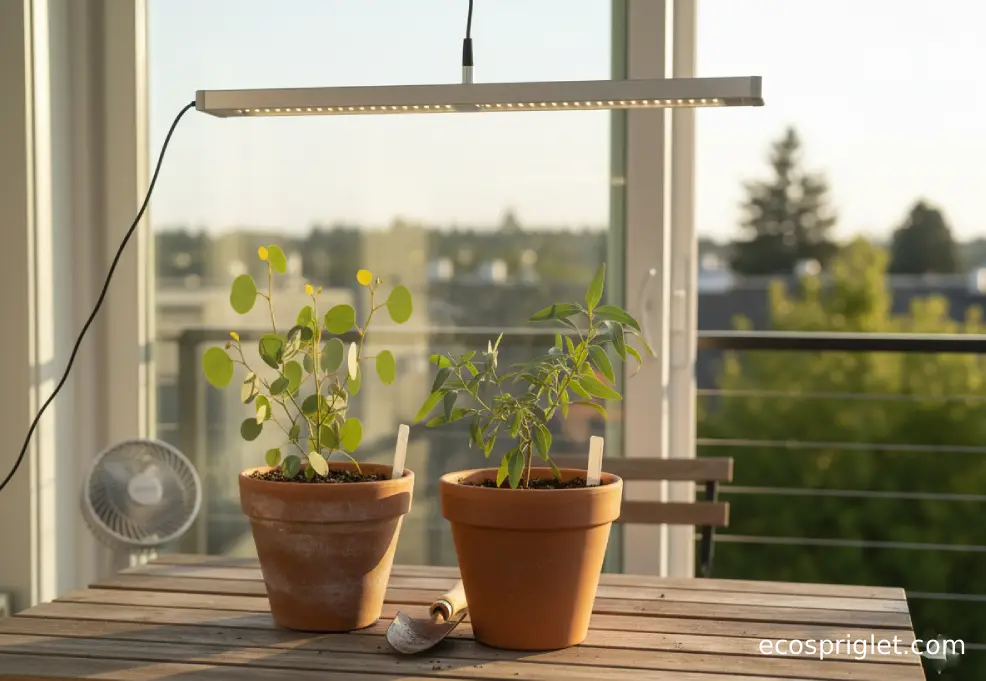
Sources: NC State Extension (full sun guidance); Iowa State Extension and Missouri Extension (supplemental light distance guidance).
Pots, Soil, and Repotting Without the Gravel Myth
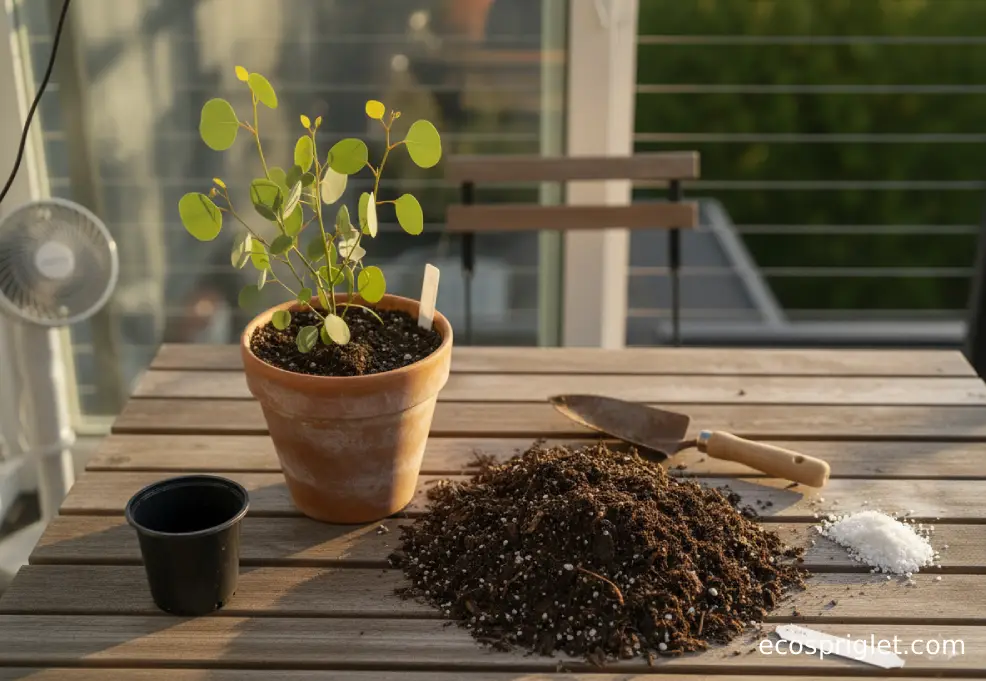
Eucalyptus wants “good drainage,” but that doesn’t mean gimmicks. Skip the gravel layer at the bottom of the pot. Washington State University Extension explains that adding coarse “drainage material” can actually hinder water movement and increase water retention above the layer—exactly the opposite of what you want. UCANR echoes the same point for container plantings.
Instead, aim for three fundamentals:
- A pot with real drainage holes. Non-negotiable.
- A quality potting mix. Avoid heavy garden soil indoors; it compacts and stays wet.
- An airy structure. Michigan State Extension notes potting media structure should provide adequate drainage and includes an “air space” component—think fluffy, not muddy.
My apartment-friendly pot sizing rule: go up gradually. Jumping from a small pot into a huge one can keep the root zone wet for too long indoors.
| Plant Size | Suggested Pot Diameter | When to Up-Pot | Notes for Indoor Growth |
|---|---|---|---|
| Starter plant (4–10 in tall) | 8–10 in | Roots circling bottom, dries in under 24 hours | Easy to manage on a bright sill |
| Established (10–24 in tall) | 10–14 in | Water runs through too fast, frequent wilting | Good “forever pot” for many apartments |
| Big indoor specimen | 14–18 in | Only if you have strong light and room | Heavier, thirstier, needs pruning discipline |
If you’re dreaming of a long-term, large container plant (often outdoors), the RHS notes eucalyptus can be grown in large containers and suggests very large pots around 24 inches in diameter for best results—great perspective on how much root room these plants really want.
Watering and Feeding an Indoor Eucalyptus Plant
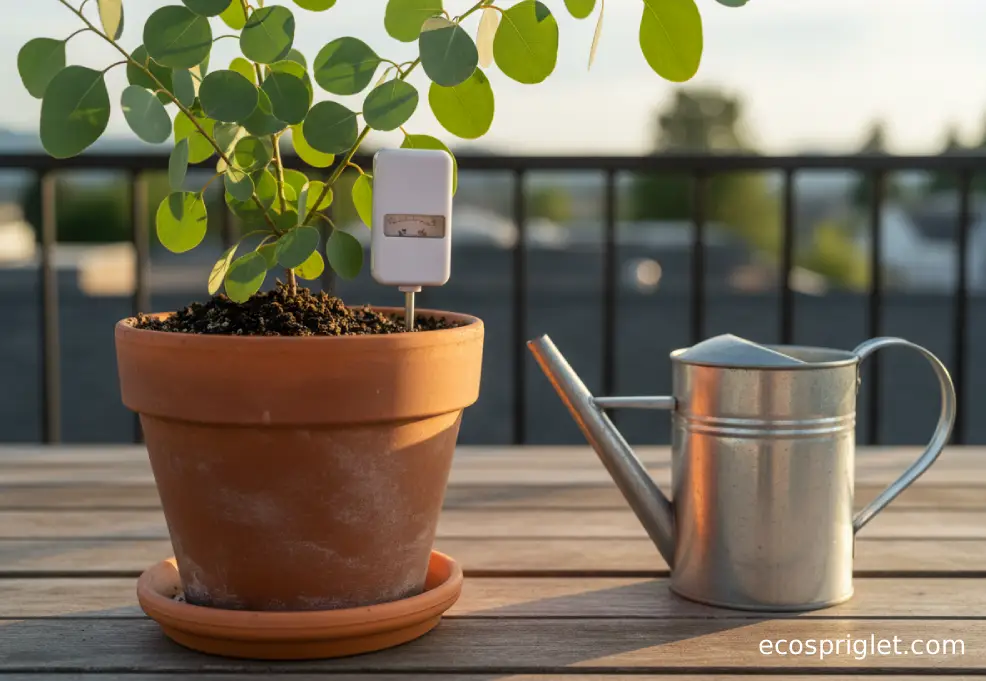
Indoor eucalyptus care gets way easier when you stop watering by calendar and start watering by feel. Illinois Extension puts it plainly: if about the first inch of soil is dry, it’s time to water—and you should water thoroughly so the entire root zone gets moistened and excess drains out. Purdue’s container guidance uses the same “top inch dry” trigger.
My practical routine (that keeps beginners out of trouble):
- Check depth, not surface color. Stick a finger in 1 inch; dry at that depth means water.
- Water until it drains. Then empty the saucer 10–15 minutes later so roots don’t sit in water.
- Expect faster drying in summer. Ohio State notes containers may need daily watering in the warmest stretch, depending on conditions. Indoors, that “daily” is more likely if you’re in intense sun or using a grow light and airflow.
Feeding: keep it moderate. In spring and summer, a balanced houseplant fertilizer at half strength about every 4–6 weeks is usually plenty. The most common mistake I see is pushing nitrogen too hard and getting weak, floppy growth that still can’t compensate for low light.
Pruning and Training to Keep an Indoor Eucalyptus Tree Compact
I remember when I first tried to grow eucalyptus indoors, I treated it like a “set it and forget it” houseplant. It shot up toward the window, then dropped leaves along the lower stems like it was shedding ballast. The fix wasn’t more fertilizer—it was pruning, better light, and a little patience while it re-leafed.
Think of pruning as your steering wheel. You’re shaping the plant to stay bushy, not tall.
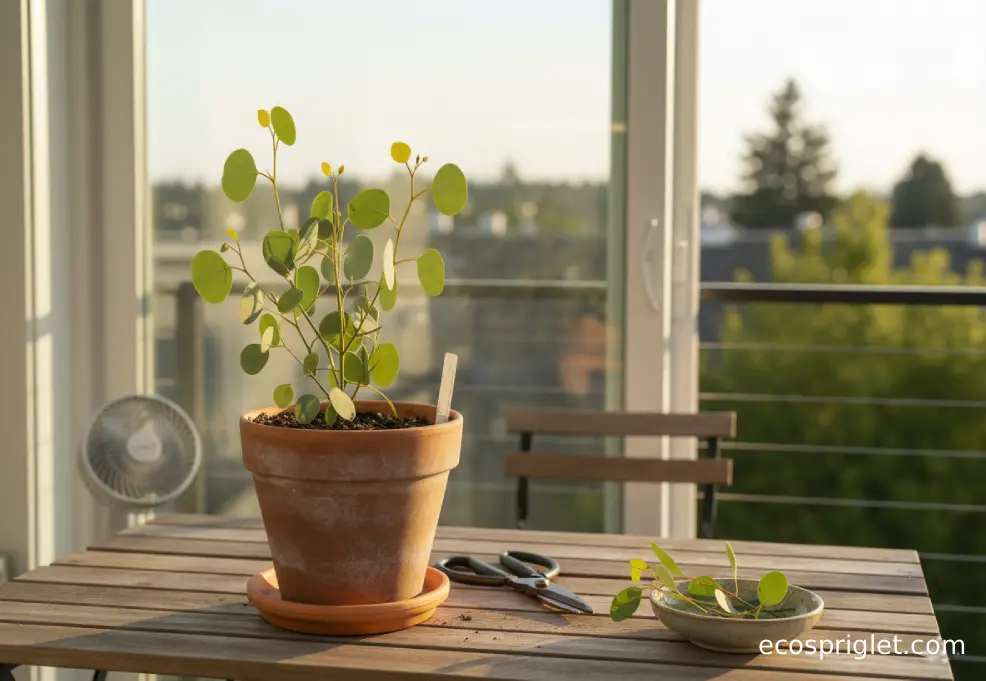
- Pinch or snip tips every 2–3 weeks during active growth. Taking 1–2 inches off the newest shoots encourages branching.
- Do a bigger “shape cut” in spring. If it got leggy over winter, reduce the tallest stems by about one-third to push new side growth.
- Keep one main goal. Either: (a) a compact leafy plant for foliage, or (b) a small “tree form” with a single trunk. Mixing both usually looks awkward indoors.
- Sanitize your shears. A quick wipe-down before pruning helps prevent spreading problems between plants.
Beginner mistake to avoid: removing too much at once in low light. If your plant only gets a few hours of direct sun, keep pruning lighter and focus on improving light first (window placement or supplemental lighting).
Common Indoor Problems and Quick Fixes
Leaf drop (especially lower leaves): Usually low light or sudden change (new window, heat vent, a chilly draft). Move it to the brightest spot you have, rotate weekly, and avoid relocating it every few days. Eucalyptus likes consistency.
Brown tips: Often watering swings—too dry, then soaked—or salt buildup from fertilizer. Do a “reset watering” for two weeks: water only when the top inch is dry, then water thoroughly and let excess drain. (That thorough-watering approach is exactly what container experts recommend for getting the whole soil ball evenly moist.)
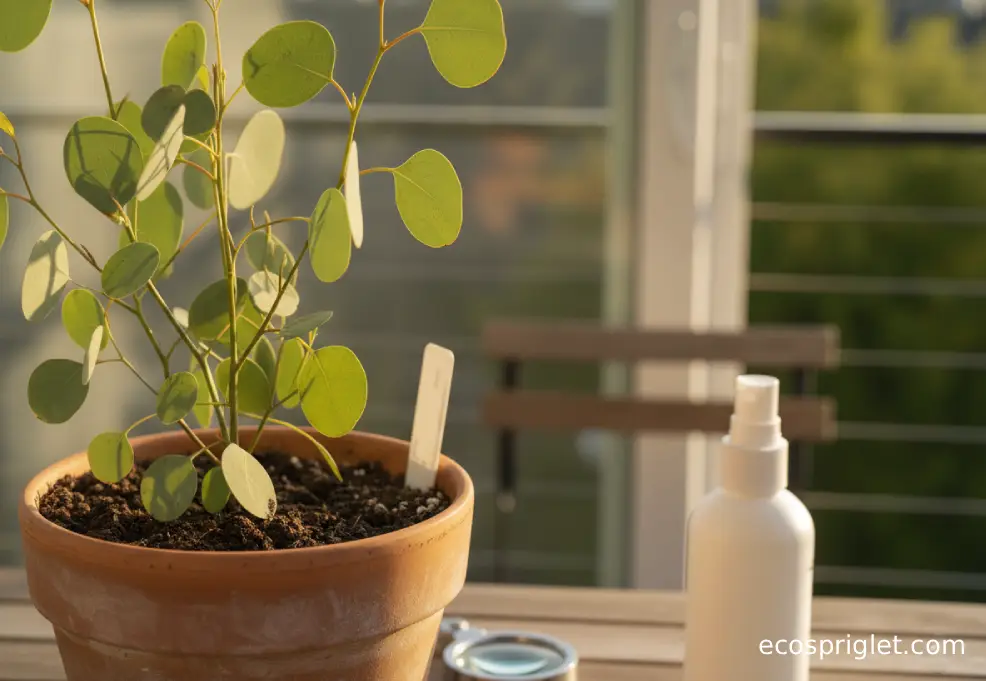
Spider mites: Dry indoor air and stressed plants invite them. Check undersides of leaves. If you see stippling, rinse foliage in the sink or shower, then repeat every 5–7 days for 3 rounds. The goal is to break the pest cycle, not “one-and-done” spray and hope.
Soil stays wet for days: That’s a pot-and-mix issue. Make sure there are drainage holes, remove any gravel layer, and consider repotting into a fresher, airier mix.
Common Mistakes New Indoor Eucalyptus Growers Make
- Too little sun, too much hope. If the plant gets bright shade but not direct sun, it will stretch and thin out. Aim for 6+ hours of direct sun when possible (or add supplemental lighting).
- Overpotting. A tiny plant in a huge pot dries slowly indoors and invites root problems. Step up pot sizes gradually.
- Adding gravel “for drainage.” It can backfire by keeping more water in the root zone above the layer.
- Light pruning once a year. Indoor eucalyptus responds better to frequent tip-trimming than rare, dramatic haircuts.
- Watering on schedule. Use the top-inch dryness test, then water thoroughly so excess drains out.
Apartment-Friendly Eucalyptus Plant Indoor Benefits and Uses
The nicest “benefit” of an indoor eucalyptus plant is simple: it smells great, and you can harvest a few sprigs without buying a whole bunch that dries out in three days. If you keep it compact, it becomes a living source of foliage for small arrangements.
Two easy, apartment-friendly uses:
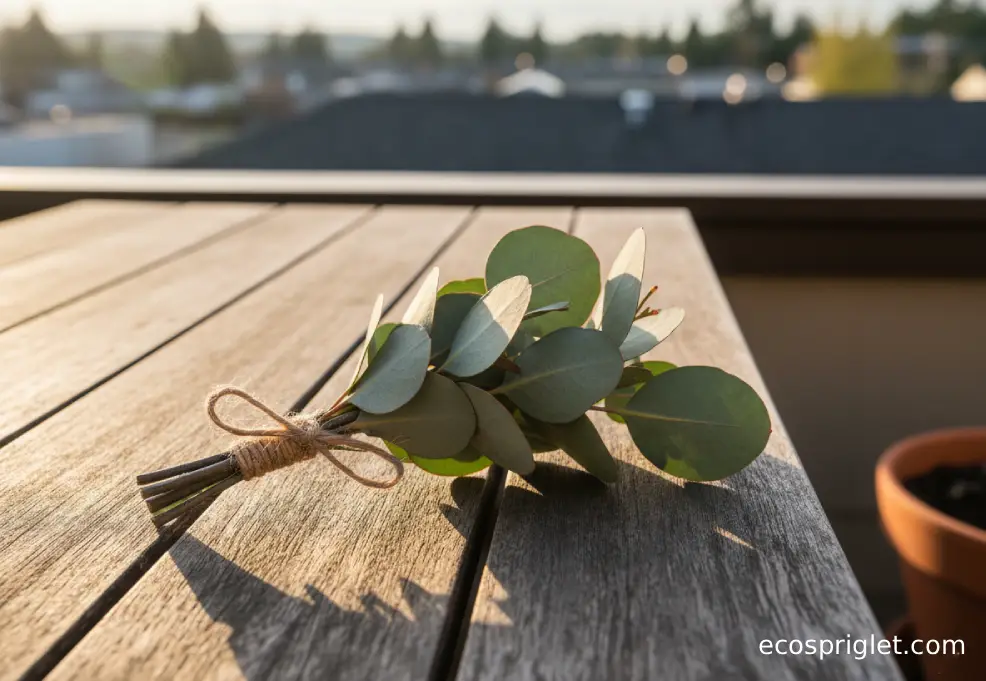
- Air-dry small bundles. Tie 5–8 stems with twine and hang them in a dry spot for 1–2 weeks until crisp. University of Arkansas Extension even notes eucalyptus branches can be cut and air-dried for indoor arrangements.
- “Pinch-and-place” jars. Drop a couple fresh sprigs into a narrow vase or jar on a bathroom shelf for a subtle scent (no need for essential oils).
One big safety note: eucalyptus is listed as toxic to cats and dogs by the ASPCA (the oils are part of the problem). If your pet chews plants, place eucalyptus completely out of reach or choose a pet-safer foliage plant instead.
Wrapping It Up: A Realistic Routine for Growing Eucalyptus Indoors
If you take one thing from this: growing eucalyptus indoors is mostly a light-and-routine game. Give it the brightest spot you can, water based on the top-inch dryness test, and prune often enough to keep it leafy and compact. When those pieces are in place, the plant becomes much less dramatic—and a lot more enjoyable.
My simple weekly rhythm looks like this: check soil moisture twice, rotate the pot once, scan leaf undersides for pests, and snip tips if it’s actively growing. That’s it. The mistakes happen when we overreact—moving it daily, “fixing” low light with fertilizer, or keeping soggy soil because we’re afraid it’ll dry out.
Sources referenced in this guide: NC State Extension (sun and container culture); Illinois Extension and Purdue (watering triggers); Washington State University Extension and UCANR (no gravel layer myth); RHS (container size perspective); ASPCA (pet safety); University of Arkansas Extension (cut foliage use).