I grow parsley in terracotta pots on my little Portland balcony, and somehow I still manage to “lose” half a bunch in the fridge every so often. Fresh parsley is one of those herbs that looks sturdy at the store, then collapses into a damp green mess if you store it the wrong way. The good news: once you understand what parsley is asking for (a drink, a little airflow, and not-too-much moisture on the leaves), it’s easy to keep it perky.
This guide covers how to store fresh parsley for day-to-day cooking, how to keep parsley fresh in the fridge when space is tight, and what to do when you’ve already chopped it. I’ll also share a couple of long-term options—freezing and herb cubes—so you can save a surplus harvest instead of watching it wilt.
Food-safety note: keep your refrigerator at 40°F or below, and your freezer at 0°F or below.
What Makes Parsley Go Limp So Fast
Parsley wilts for two main reasons: it dries out from the cut stems, or it stays too wet on the leaves and starts breaking down. In an apartment fridge, both problems can happen at once—dry air from the cooling system pulls moisture out of the bunch, while the grocery-store plastic bag traps condensation against the leaves.
Think of parsley like a bouquet you plan to eat. The stems want access to water. The leaves want to be mostly dry, with just enough humidity around them to prevent crisping. If you give it that balance, you’ll be surprised how much longer it holds up.
One more factor: age. The day you bring parsley home (or cut it from a pot) matters. I’ve learned to check the cut ends—if they’re already brown and gummy, you’re starting with a shorter clock. Trim it, store it right away, and you’ll get the best out of what you have.
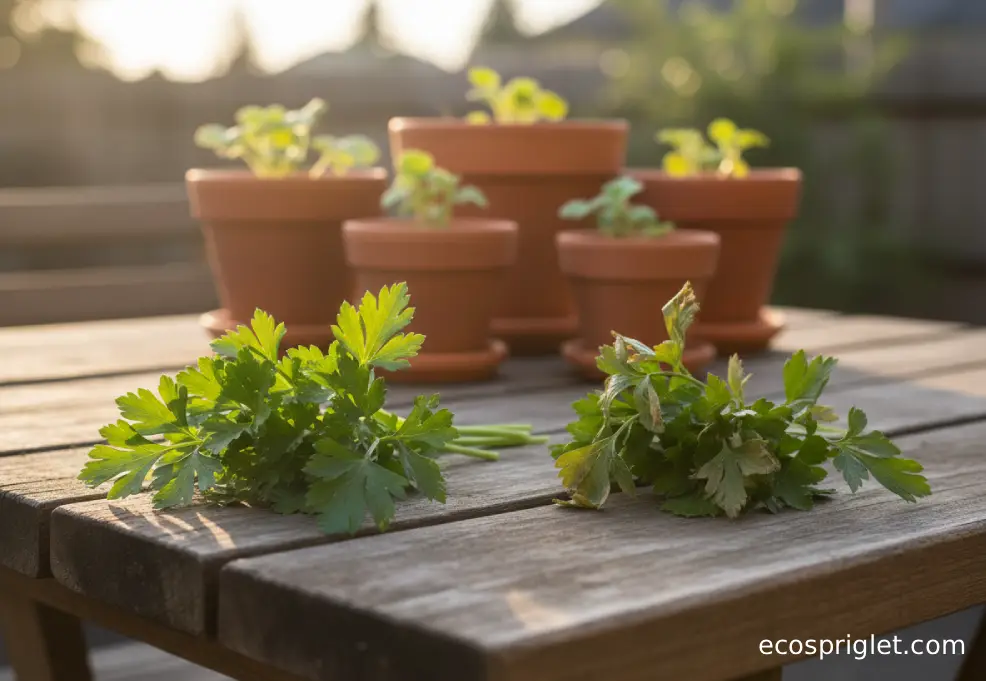
Set Up Your Parsley for Fridge Success in 3 Minutes
I remember the first time I tried to “save” a bunch of parsley by shoving it into the crisper as-is. Two days later it smelled swampy, and I swore parsley was just impossible. It wasn’t the parsley—it was my zero-prep approach.
- Unband the bunch: tight rubber bands bruise stems and speed decay.
- Trim 1/4–1/2 inch off the stem ends: fresh cuts drink water better (especially if the ends look dry or brown).
- Pull off any damaged leaves: one slimy leaf can “share” rot with the rest.
- Decide if you’re storing it whole or chopped: whole bunches like the “bouquet” approach; chopped parsley needs dryness and a towel barrier.
If your parsley is visibly gritty (balcony harvests sometimes are), rinse it under running water and dry it very well before storing. The FDA recommends washing produce under running water before preparing and/or eating; if you wash ahead of time, the drying step is what prevents the soggy breakdown later.
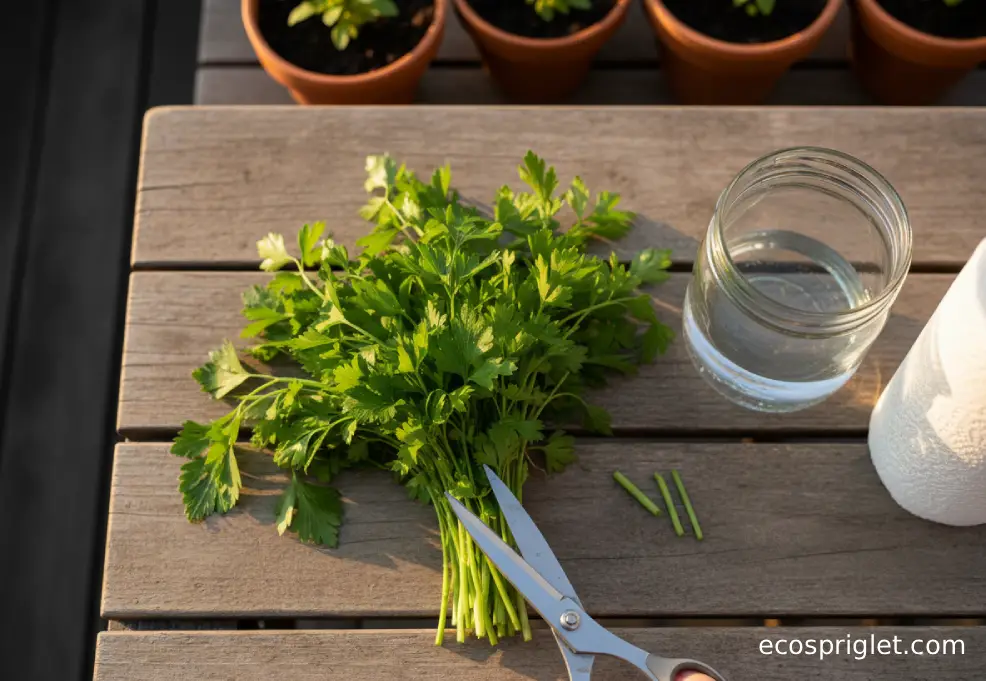
Method 1: The Jar-and-Bag Bouquet
This is my go-to when I want parsley to stay perky for daily cooking. It’s also a practical answer to how to store parsley in the fridge when your crisper is full, since the jar can sit on a regular shelf if you have enough height.
Here’s the setup:
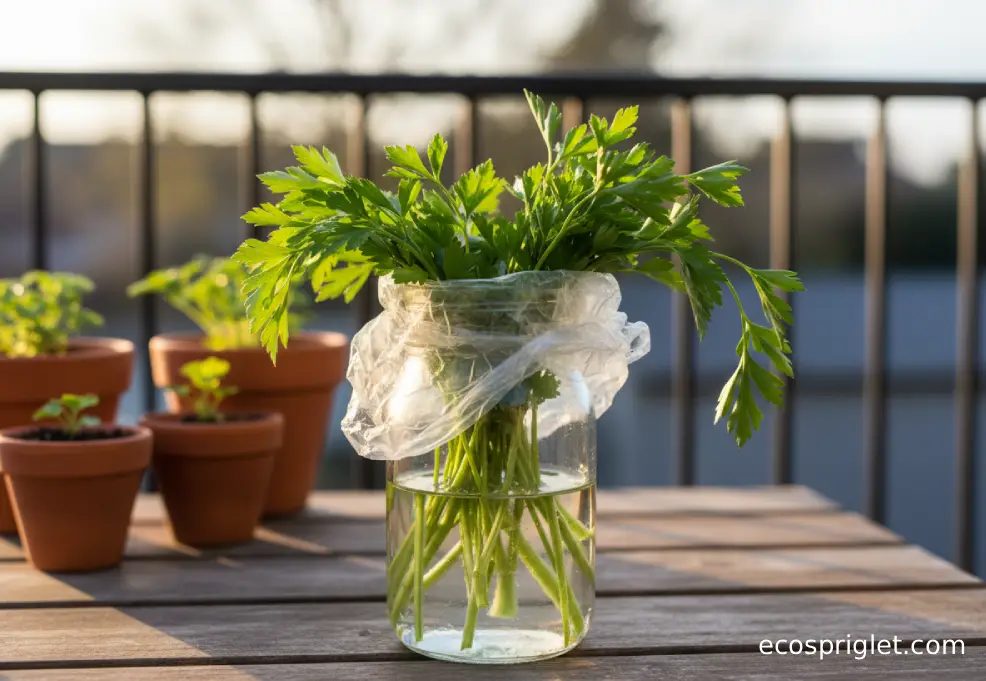
Fill a glass jar with about 1–2 inches of water. Stand the parsley in the jar like flowers. Strip off any leaves that would sit below the waterline (those are the first to get slimy). Then loosely cover the tops with a plastic bag or plastic wrap, leaving a little air space so condensation doesn’t rain back down on the leaves.
Change the water every 2–3 days. Clemson’s Home & Garden Information Center specifically calls out storing parsley in water and changing it every 3 days.
Storage time varies with freshness, but a practical expectation is several days, and sometimes up to around a week if it started out in good shape and you keep the water clean. University of Georgia Extension charts list parsley at about 1 week refrigerated.
Method 2: The Slightly Damp Towel Roll for Leafy Bunches
If your fridge shelves are too short for the jar method (hello, tiny apartment fridge), the towel roll is a close second. The goal is to keep humidity near the leaves while preventing wet spots that turn to slime.
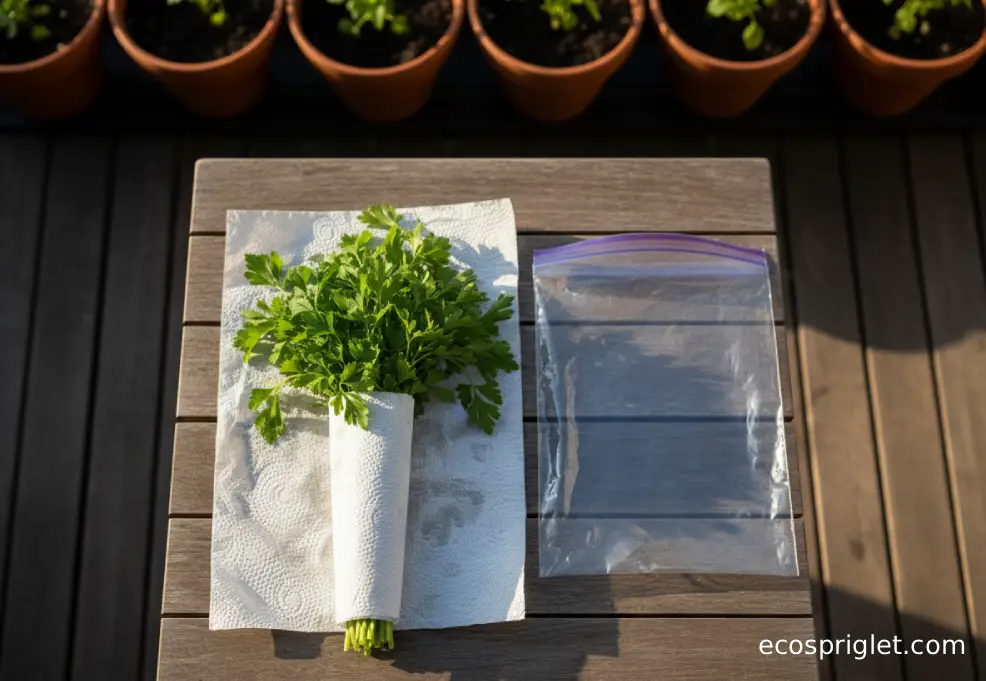
Lightly dampen a paper towel—think “barely moist,” not dripping. Lay the parsley in a single layer, roll it up gently, and slip it into a zip-top bag or reusable container. Leave the bag slightly unsealed if you tend to get heavy condensation, or seal it if your fridge runs dry; you’re aiming for balanced humidity, not fog.
This method also plays nicely with busy weeks: if the towel feels wet after a couple days, swap it for a fresh one. When I’m cooking a lot, I’ll keep the roll right at eye level so I remember it’s there (parsley forgotten is parsley wasted).
For realistic storage times, New Mexico State University Extension lists parsley at about 2–3 days refrigerated, and notes the stems-in-water approach; in practice, the towel method usually lands in the same “several days” zone depending on how fresh the bunch was.
Storing Chopped or Cut Parsley Without the Slimy Surprise
Chopped parsley is convenient, but it’s also easier to ruin because every cut edge leaks moisture. Your job is to keep it dry enough to avoid slime, while preventing it from turning crispy.
- Dry matters more than you think: if you washed it, spin it in a salad spinner and blot until it feels almost fluffy, not damp.
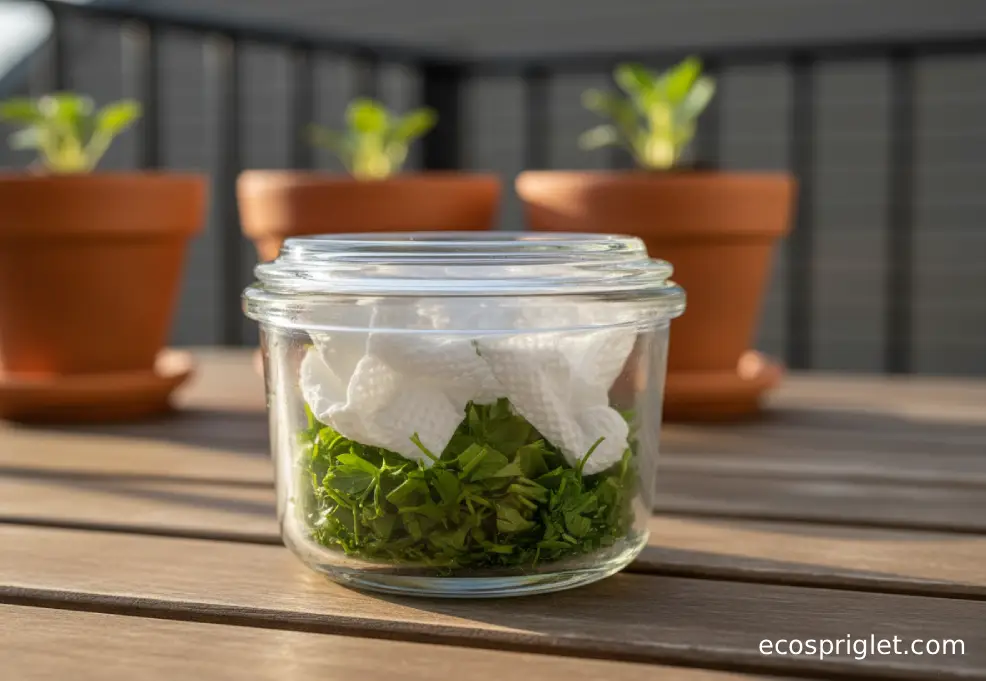
- Use a container plus a towel buffer: line the bottom of a small lidded container with a dry paper towel, add chopped parsley, then place a second small towel piece on top before closing.
- Don’t compress it: packed-down chopped herbs trap moisture. Fill the container no more than about 3/4 full.
- Check daily: if the towel gets wet, replace it. That one tiny habit prevents the “green sludge” effect.
If you want the simplest solution for how to keep cut parsley fresh, this is it: dry, towel, container, and a quick look each day.
How Long Parsley Lasts and When to Toss It
Parsley doesn’t have a single perfect shelf life—freshness at purchase (or harvest), fridge humidity, and storage method all matter. Two trustworthy extension references give a useful range: University of Georgia Extension lists parsley around 1 week refrigerated, while New Mexico State University Extension lists about 2–3 days.
In real life, I plan for 3–7 days in the fridge. If it’s still crisp, smells like parsley, and shows no slime or mold, it’s typically fine for cooking. If you’re ever unsure, err on the side of tossing—mold on herbs spreads fast.
| Storage Method | Best For | Typical Fridge Window | Make-It-Last Tip |
|---|---|---|---|
| Jar-and-bag bouquet | Whole bunches you use daily | Several days, often up to about a week | Change water every 2–3 days; remove submerged leaves |
| Slightly damp towel roll | Short fridges, crowded crispers | Several days | Keep towel barely moist; swap if it turns wet |
| Chopped in container with dry towel | Meal prep and garnish-ready herbs | Usually 1–3 days | Dry thoroughly; replace towel as soon as it’s damp |
Quick toss checklist:
- Slime on stems or leaves
- Musty or sour smell (not the clean “green” parsley scent)
- Fuzzy mold, dark wet patches, or a weeping puddle at the bottom of the container
Also remember the two-hour rule for perishables left at room temperature; bacteria grow quickly in the 40–140°F “danger zone.”
Longer-Term Storage: Freezing, Herb Cubes, and Drying
If you’ve got more parsley than you can reasonably eat this week, freezing is the easiest save. Extension guidance varies on “best quality” windows, but a good, conservative range is roughly 1–4 months in the freezer.
- Freeze chopped parsley flat: spread it on a tray to pre-freeze, then transfer to a freezer bag. This keeps it from clumping.
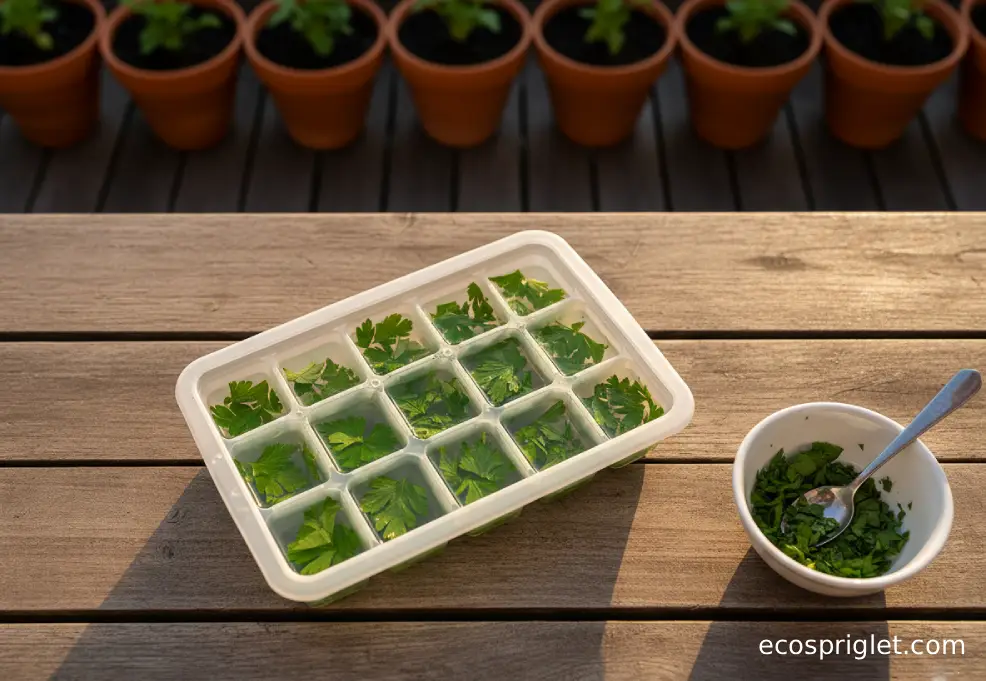
- Make herb cubes: pack chopped parsley into an ice cube tray and top with water, then freeze. Oregon State University Extension includes “herbed ice cubes” as a practical preservation method.
- Drying: you can dry parsley, but expect a milder flavor than fresh. OSU Extension notes the Apiaceae family (including parsley) tends to be milder when dried.
My apartment-friendly trick: freeze parsley in small portions you’ll actually use (1 tablespoon per cube is a nice mental target). Then you can drop a cube straight into soup, beans, or pasta sauce—no thawing fuss, no forgotten bag in the freezer abyss.
Common Mistakes New Cooks and Gardeners Make
- Leaving it in the store bag: thin produce bags trap moisture and speed decay. Oregon State University Extension specifically warns that keeping herbs enclosed in a grocery-style plastic bag can trap moisture and cause decay.
- Letting leaves sit in water: submerged leaves get slimy fast. Strip the lower stems clean before the jar method.
- “Washing and walking away”: if you rinse parsley, dry it thoroughly or it breaks down quickly. FDA guidance supports washing produce under running water before preparing/eating; for storage, the practical key is drying well afterward.
- Storing it near raw meat juices: keep herbs away from drips and cross-contamination.
- Forgetting to look at it: parsley rewards quick check-ins. If you catch one wet spot early, you can swap the towel and save the rest.
Quick Ways to Use Up Parsley Before It Turns
Even with perfect storage, life happens—travel, a sudden takeout week, or a growth spurt on the balcony. When parsley is still green but starting to soften, I treat it like a “use it tonight” ingredient.
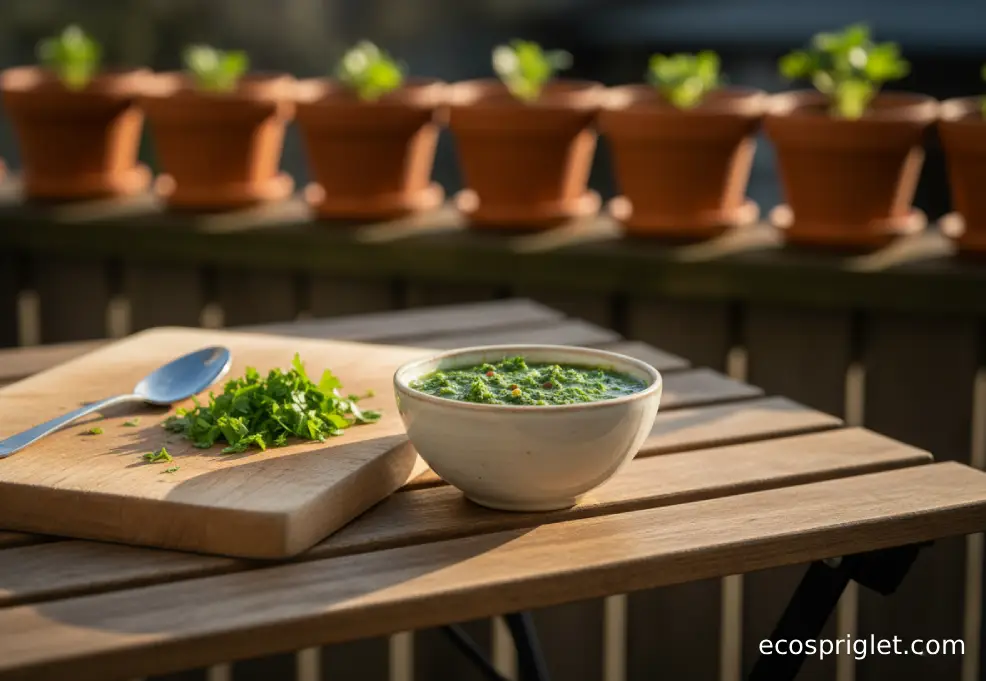
- Parsley pesto: blend with olive oil, nuts or seeds, garlic, and a pinch of salt, then freeze in small portions.
- Chimichurri-ish sauce: parsley, vinegar or lemon, oil, chili flakes, and a little oregano—great on roasted veggies or eggs.
- Soup starter: sauté onion and add a big handful of parsley near the end for a fresh finish.
- Herb butter: mash chopped parsley into softened butter, portion, and freeze.
This is where growing parsley on the balcony really pays off: if you only cut what you need (and leave the plant to keep going), you end up storing less and wasting less. That’s the apartment win, right there.
Once you know what parsley hates—standing moisture on leaves and bone-dry fridge air—the whole “how to keep parsley fresh” problem gets a lot simpler. For most homes, the jar-and-bag bouquet is the most reliable way to store fresh parsley, especially if you’ll use it a little each day. If your fridge is short on vertical space, the slightly damp towel roll does an excellent job of balancing humidity without creating slime. And if you’ve already chopped it, keep it dry, add a paper towel buffer, and plan to use it quickly.
If you’re trying to store fresh parsley in the fridge for longer than a week, freezing is the smarter move—especially as herb cubes you can toss straight into dinner. That’s my favorite “future me” habit: a few minutes now, several easy meals later.