Cucumbers are generous plants, but they are not quiet neighbors. A healthy vine can climb several feet, cast a surprising amount of shade, drink heavily in warm weather, and quickly turn a tidy balcony into a wall of leaves. That makes choosing cucumber companion plants less about finding a magical pairing and more about fitting plants together without creating competition.
For apartment gardeners, the best companions usually fall into three groups: compact vegetables that use otherwise empty soil, herbs and flowers that add insect diversity, and plants that mature before cucumber vines reach full size. Lettuce, radishes, scallions, dill, nasturtiums, marigolds, and a few bush beans can all make sense when space allows. Tomatoes can grow near cucumbers too, although I would rarely squeeze both into the same pot.
There is also a useful reality check here. University Extension guidance notes that many traditional companion-planting charts make claims that have not been tested well at garden scale. The strongest strategy is to combine compatible growth habits, adequate spacing, flowers for pollinators and beneficial insects, and good cucumber care rather than expecting one neighboring plant to repel every pest.
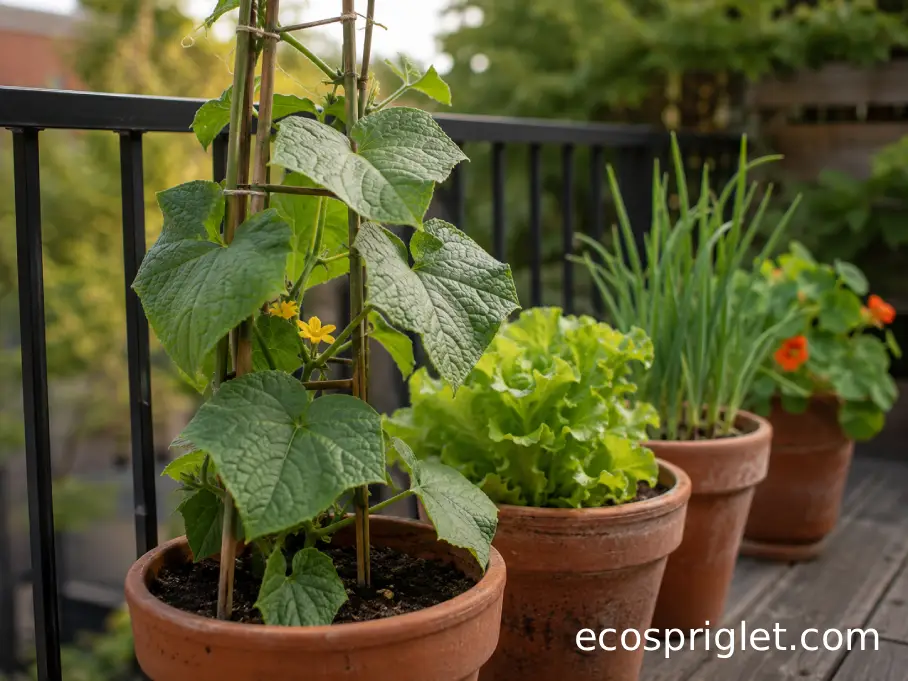
What Companion Planting Can—and Can’t—Do
A useful companion plant earns its space. It might cover bare soil while the cucumber is young, provide flowers for pollinators, attract insects that prey on pests, or simply occupy a different layer of the garden without stealing the cucumber’s sunlight. University of Minnesota Extension describes space efficiency, insect management, soil diversity, and habitat for beneficial insects as legitimate goals of companion planting.
What companion planting cannot reliably do is guarantee a pest-free cucumber crop. Research behind many traditional pairing lists is limited, and Illinois Extension specifically cautions that garden-scale evidence is still thin for plenty of commonly repeated combinations.
- Use companions to fill space: put shallow or compact crops near the base while cucumber vines are still small.
- Use flowers to increase diversity: keep at least one flowering plant near your cucumber if a balcony has room.
- Keep cucumber basics first: aim for at least 6 hours of direct sun, good drainage, and enough room for a trellis. Illinois Extension classifies 6 or more hours as full sun for container vegetables.
- Watch moisture: in-ground cucumbers generally need about 1 inch of water weekly, while exposed containers may need checking much more often.
On my own small-space setups, I judge a companion by a simple test: if I have to move cucumber leaves aside every morning just to find the smaller plant, I planted too much. Good companion planting should make the space easier to use, not turn it into a wrestling match.
Best Companion Plants for Cucumbers
The most useful cucumber companion planting chart is not a list of guaranteed biological friendships. It is a planning tool. I favor plants that stay relatively compact, flower usefully, mature at a different time, or occupy space the cucumber does not need yet.
| Companion | Why It Fits | Small-Space Placement | Main Caution |
|---|---|---|---|
| Radishes | Compact roots and a short growing cycle make them useful early-season fillers. | Sow near the front edge of a bed or around a young trellised cucumber. | Harvest before dense cucumber foliage shades them heavily. |
| Leaf Lettuce | Uses low space while cucumber growth is still developing. | Place on the cooler or partially shaded side of the cucumber. | It may decline as summer heat increases. |
| Scallions or Green Onions | Narrow upright growth fits between larger plants without creating much shade. | Plant along bed edges rather than directly against the cucumber crown. | Do not pack them so tightly that watering becomes difficult. |
| Dill | Flowers can contribute nectar and pollen for beneficial insects. | Use one plant near, rather than underneath, the cucumber trellis. | Mature dill becomes tall, so position it where it will not block sun. |
| Nasturtium | Adds flowers and plant diversity; research in cucurbit systems suggests potential pest-management value. | Let it trail over a planter edge instead of through cucumber vines. | One plant can spread farther than expected. |
| Marigold | Adds flowers and insect diversity; some studies in cucurbit systems have found reduced pest damage. | Use one compact plant at the sunny edge of a container or bed. | Do not treat it as a guaranteed cucumber-beetle repellent. |
| Bush Beans | Stay lower than pole beans and make better spatial neighbors in a sunny bed. | Place beyond the cucumber’s densest root and leaf zone. | Both crops still need enough water, fertility, and air movement. |
Flowering companions have one particularly sensible role around cucumbers because cucurbits depend on pollination for fruit set in varieties that produce separate male and female flowers. Illinois Extension recommends incorporating flowering plants to attract pollinators, while University of Minnesota Extension notes that poor pollination can lead to poor cucumber fruit set.
Nasturtiums and marigolds deserve a measured recommendation rather than the usual miracle claims. University of Minnesota Extension cites research in cucurbit plantings where these flowers reduced some squash bug or cucumber beetle damage, but it also warns that companion-plant claims vary widely in evidence quality.
If you are deciding what grows well with cucumbers in a tiny garden, start with growth habit first. A compact scallion that leaves the trellis open is often more useful than a supposedly perfect companion that becomes a 4-foot mass of foliage.
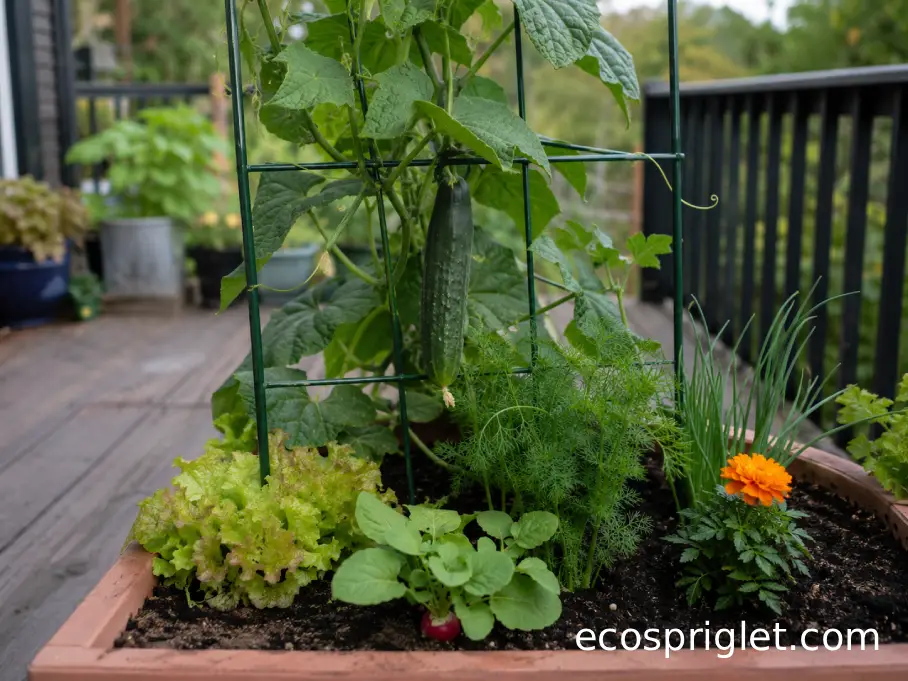
Flowers and Herbs That Earn Their Space
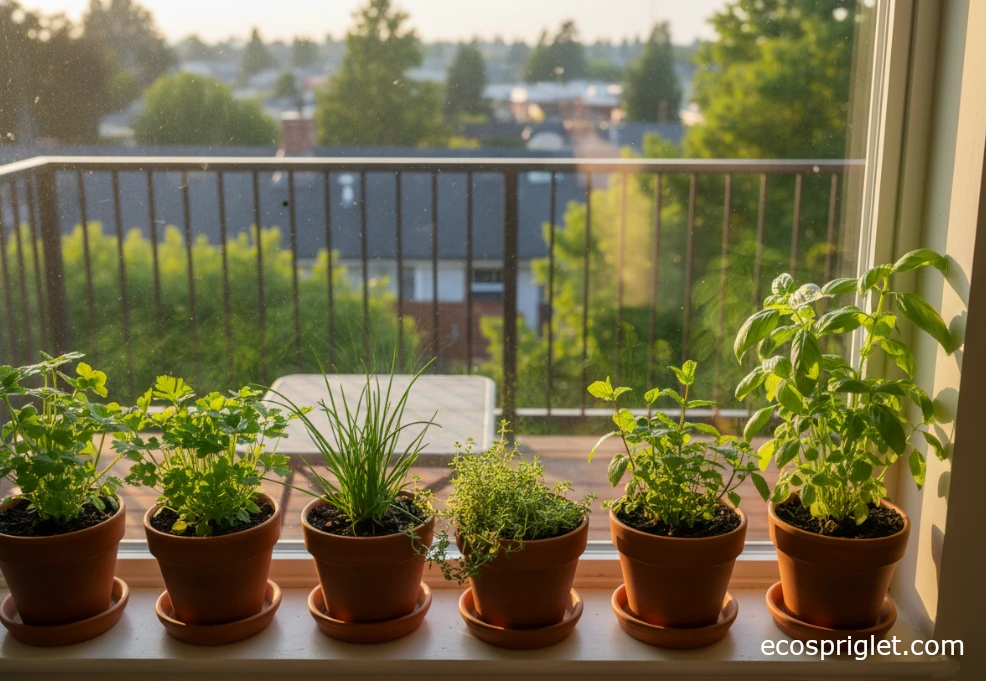
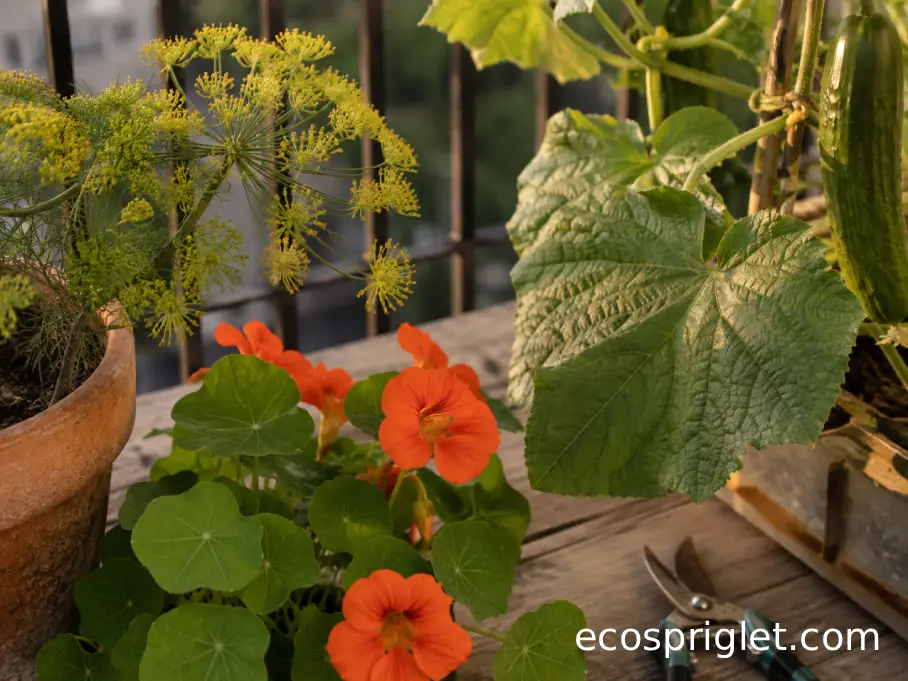
Herbs and flowers are where companion planting gets both useful and exaggerated. I like them around cucumbers, but mostly because they create a more diverse little habitat and give pollinating or predatory insects more reasons to visit—not because their scent creates an invisible force field around the vine.
Illinois Extension notes that flowering plants provide pollen and nectar for pollinators and for beneficial insects such as parasitoid wasps and adult syrphid flies. Utah State University Extension also identifies dill as a plant that attracts beneficial insects and includes flowering herbs and ornamentals among plants used to support pollination.
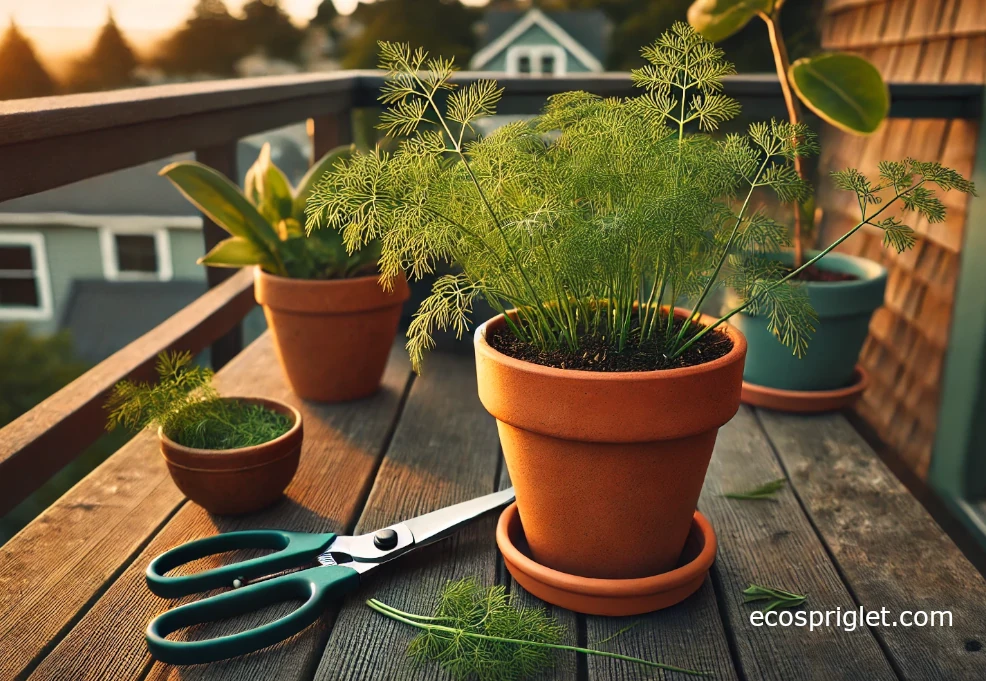
- Dill: let one plant flower instead of harvesting every stem. Give it roughly 12 inches of breathing room from the cucumber trellis so its mature foliage does not disappear inside the vine.
- Nasturtium: direct it over the edge of a pot or raised bed. Trim it back if stems begin climbing through the cucumber canopy.
- Marigold: one compact plant near the sunny edge is enough for a small container grouping; several can consume valuable root space.
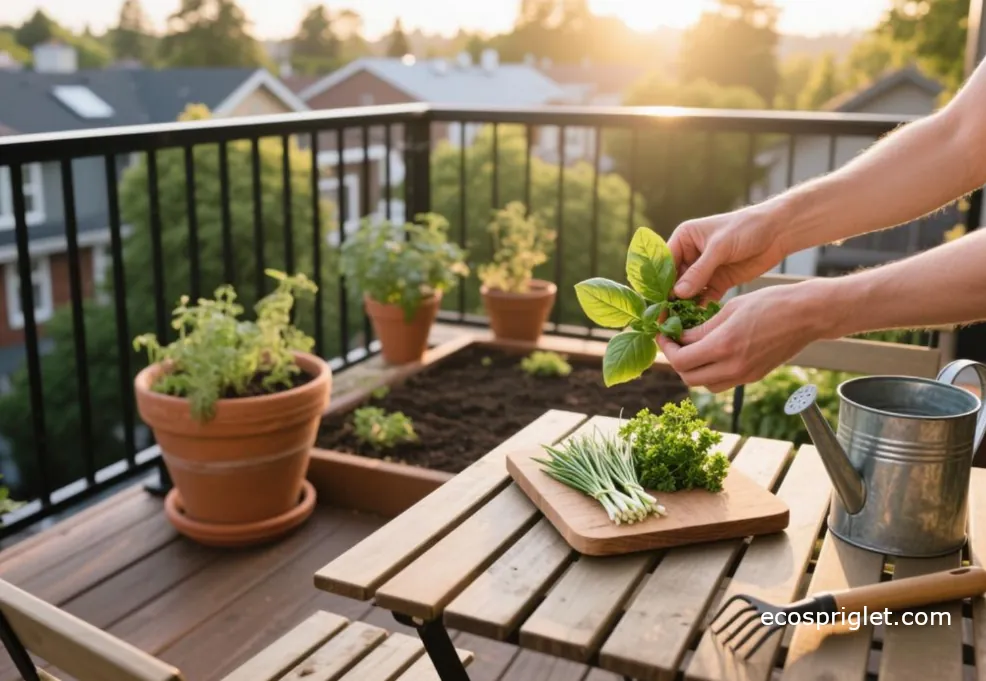
- Chives or scallions: their narrow growth makes them easier to fit around a cucumber than broad, bushy herbs.
I remember one balcony planter where I became far too enthusiastic and tucked herbs into nearly every open inch. It looked wonderful for about three weeks. By midsummer the cucumber had shaded the basil, the dill leaned through the trellis, and watering anything at soil level required contortions. Since then I leave visible patches of potting mix between plant crowns. Empty space is not wasted space when it improves access and airflow.
If pest prevention is your main concern, pair companion plants with actual monitoring. Check the upper and lower leaf surfaces two or three times a week, especially once the weather turns warm. Row covers can protect young cucumber plants from insects, but University of Minnesota Extension advises removing covers when flowering begins so pollinators can reach the flowers, except where the cucumber type does not require insect pollination.
Can Cucumbers and Tomatoes Grow Together?
Yes, cucumbers and tomatoes can be planted together. There is no good reason to treat the pairing as inherently incompatible. In fact, Penn State Extension has demonstrated raised beds containing both bush cucumbers and bush tomatoes, and both crops share a preference for sunny, warm-season growing conditions.
The real problem is size. University of Minnesota Extension recommends thinning cucumber seedlings to roughly 8–12 inches apart and notes that vines can be trained on a 3- to 4-foot trellis. Utah State University Extension recommends about 2 feet between tomato transplants in garden rows. Those recommendations are a reminder that mature plants need substantially more room than they appear to need on planting day.
In a raised bed, I would put the cucumber trellis on the side where it will not shade the tomato as the sun moves across the garden. Give the tomato its own cage or stake and leave enough open soil between the main stems that you can reach both plants for watering and pruning. Tomatoes and cucumbers both benefit from full sun, and crowded foliage makes routine inspection considerably harder.
In one container, the answer changes. Even though compact varieties of both vegetables can be grown in pots, combining a tomato and cucumber in a single small planter creates unnecessary competition for water, nutrients, trellis space, and root volume. Illinois Extension lists container-grown cucumbers and tomatoes separately and emphasizes choosing containers, support, moisture, and sunlight to suit each vegetable.
For a balcony, I would rather use two containers side by side: one cucumber in a roomy pot with a trellis and one tomato in its own sturdy container. You get the visual effect of companion planting without forcing two thirsty plants to share the same limited reservoir of potting mix.
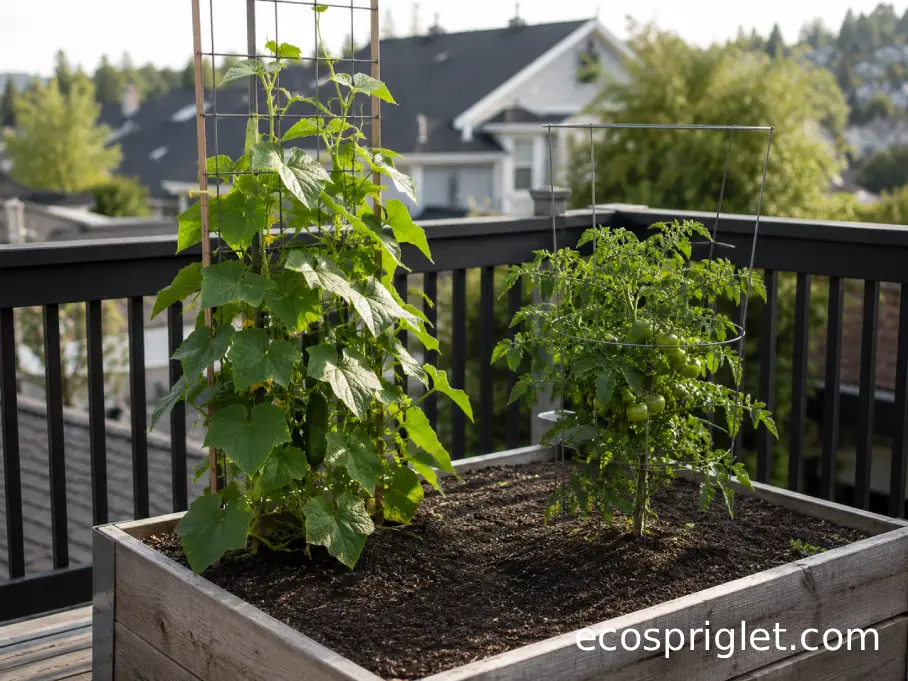
How to Arrange a Raised Bed or Balcony Container
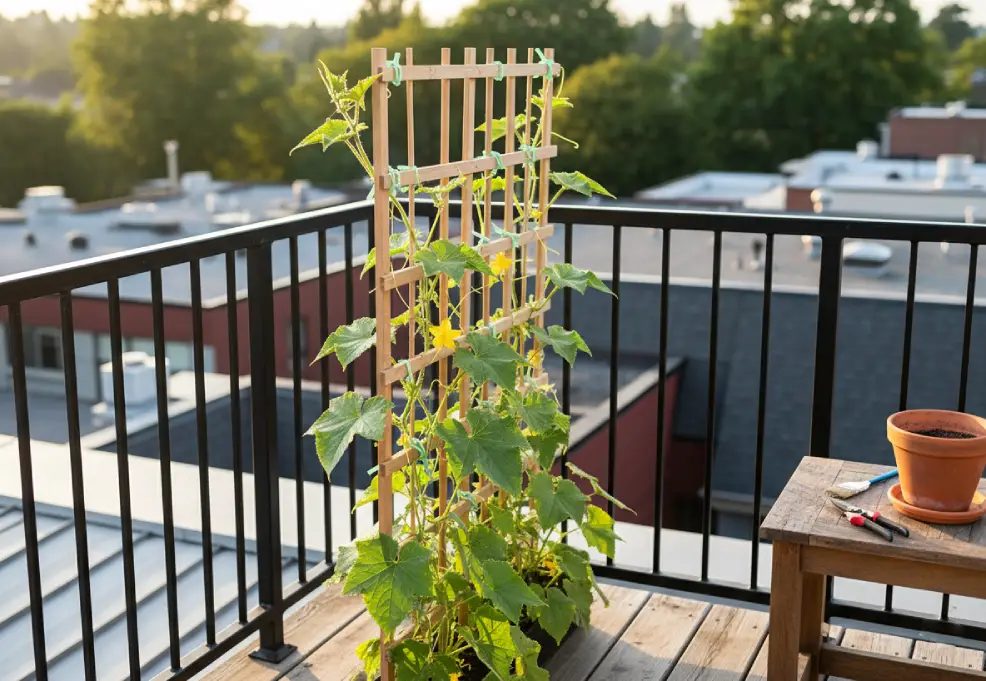
A small cucumber planting works best vertically. University of Minnesota Extension notes that trellising saves horizontal space, while Illinois Extension recommends supports for vining crops when garden space is limited.
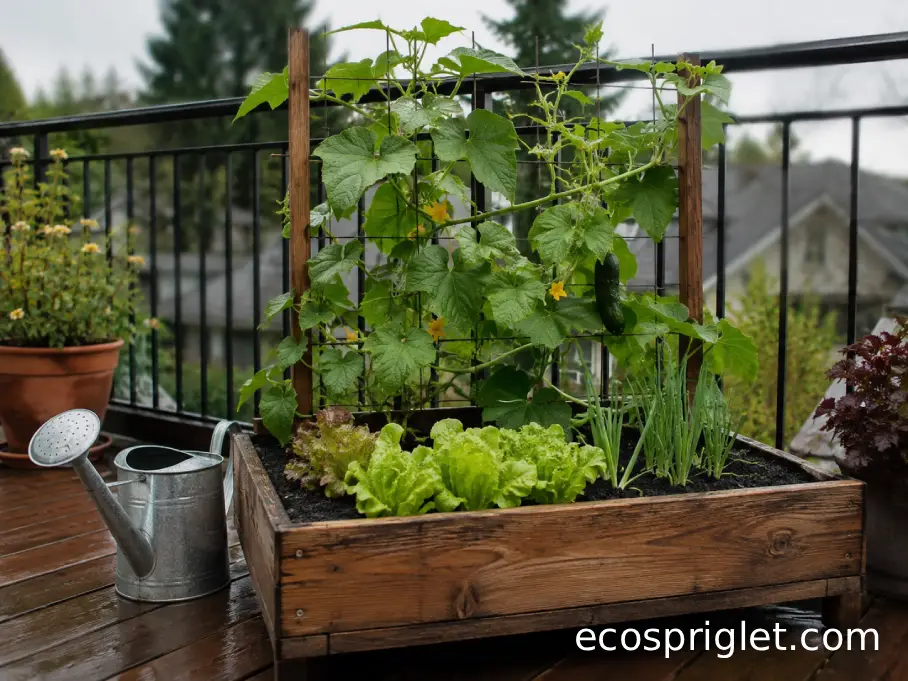
In a 4-foot-wide raised bed, place the trellis toward the north side when that orientation works for your site so the cucumber canopy is less likely to shade shorter crops. Keep lettuce, radishes, or scallions closer to the accessible front edge. If you add dill or a flower, place it toward a corner instead of directly around the cucumber stem. That leaves room to water at soil level and inspect the vine.
Raised beds dry faster than surrounding ground, and University of Minnesota Extension recommends watering near the soil surface to reduce leaf wetting. Containers are even less forgiving: Illinois Extension advises watering until water drains through the bottom and notes that container media require adequate moisture throughout the season.
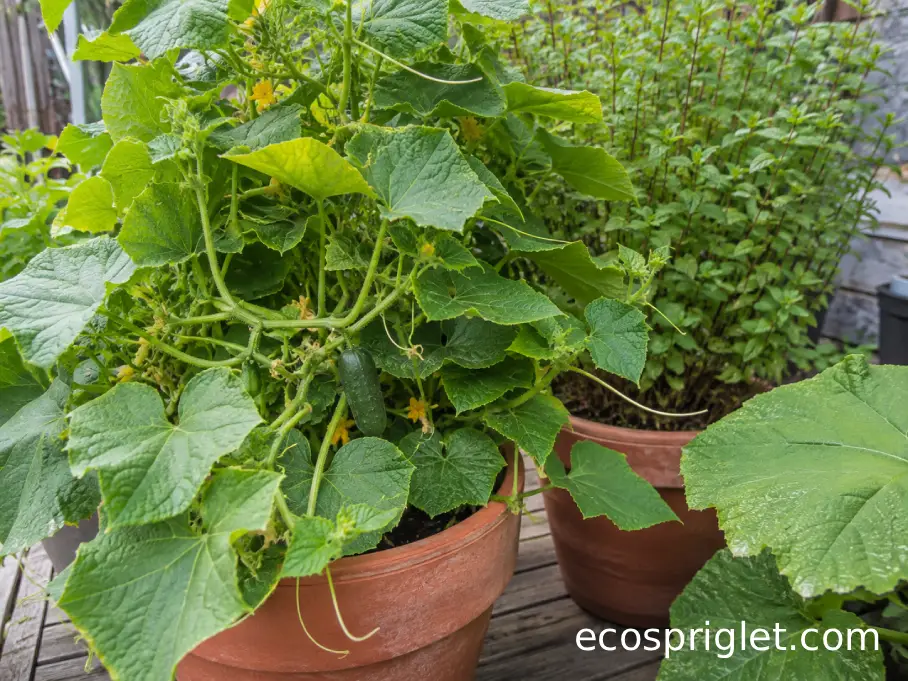
For a balcony cucumber, I prefer a container around 5 gallons or larger for one plant even though some compact cucumbers can technically grow in smaller volumes. The extra potting mix gives you a larger moisture buffer on hot, windy afternoons. Check the soil daily during warm weather; if the top inch feels dry, water thoroughly enough that excess drains from the bottom. Keep a saucer where runoff could bother neighbors, but do not leave the root zone permanently sitting in water.
Before filling a large planter, think about weight and wind as well as plant combinations. Wet potting mix is much heavier than the empty container, and a cucumber-covered trellis can catch wind. Use a freestanding support secured to the planter rather than improvising with a railing attachment you are unsure about, and follow your building or balcony rules for heavy containers.
If you are new to arranging edible plants in a limited footprint, our container gardening guide for beginners can help with layout and pot selection.
What Not to Plant With Cucumbers
Lists of bad companion plants for cucumbers often sound more certain than the evidence deserves. Illinois Extension points out that many companion-planting recommendations are based on anecdote or research that may not translate neatly to home gardens. So I would not ban a plant simply because an internet chart puts a red X beside it.
Instead, avoid combinations that are clearly impractical. Another vigorous cucurbit such as squash or melon can overwhelm a small bed with broad leaves and competing vines. It is not that the plants mysteriously dislike each other; they simply want much of the same sunlight, root space, water, and trellis territory. Keep them in separate containers or give them generous bed space.
Mint is another plant I would keep in its own pot. Illinois Extension notes that mint spreads aggressively through underground roots, making container restriction useful. A separate mint pot placed near your cucumber is easy to manage; mint planted directly into a compact raised bed may become a long-term maintenance problem.
Dry-loving Mediterranean herbs are awkward roommates in the same pot as a cucumber for a different reason. Cucumbers perform best with consistent moisture, and Extension guidance recommends roughly 1 inch of water per week in garden soil, with extra attention to moisture as vines and fruit develop. A plant that prefers its root zone to dry substantially between waterings is better kept in a neighboring container where you can manage it independently.
Tall crops can also become bad companions simply because of shade. Before planting, picture the garden in July rather than May. If a neighboring plant will stand directly between your cucumber and its 6–8 hours of useful sun, change the layout now.
Common Mistakes to Avoid
The mistakes I see most often have less to do with choosing the wrong species and more to do with trying to fit a full garden into one container. I learned this the hard way: young transplants make every pot look enormous in spring.
- Planting every empty inch: leave access to the cucumber crown and trellis. If neighboring foliage is already touching heavily while plants are still young, thin or move something before summer growth accelerates.
- Adding flowers but forgetting pollination access: if you use insect-excluding row cover, remove it once flowering begins unless your cucumber type does not need pollinating insects.
- Using companion plants instead of watering correctly: cucumbers need consistent moisture. In garden soil, Extension guidance is roughly 1 inch weekly; container plants should be checked frequently because pots dry faster.
- Letting companions block the trellis: trim or relocate fast-growing plants once they interfere with tying vines, harvesting, or checking leaves.
- Expecting one flower to stop pests: companion planting can support a broader pest-management plan, but research does not justify treating marigolds, nasturtiums, or herbs as guaranteed protection.
One quick weekly reset keeps small plantings under control. Move trailing nasturtium stems away from the cucumber, harvest lettuce before it bolts, guide loose cucumber tendrils onto the trellis, and look beneath leaves for feeding damage. Five minutes of maintenance is usually more useful than adding another supposed pest-repelling herb.
A Simple Small-Space Planting Plan to Try
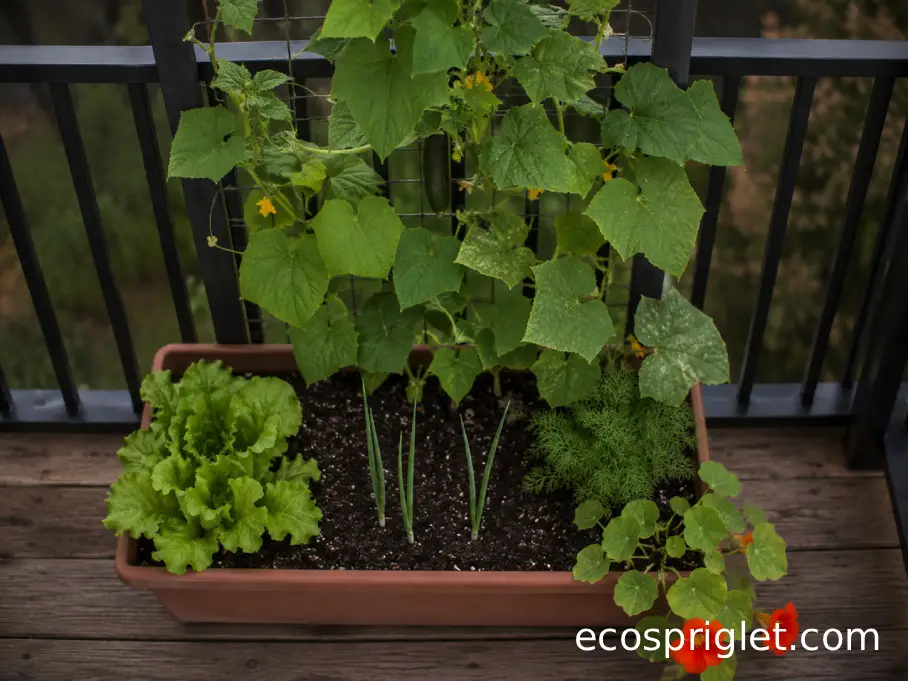
If you want an easy answer to what to plant with cucumbers in a raised bed, keep the first attempt simple. Put one trellised cucumber toward the back of the planting area. Use a small patch of leaf lettuce or a short row of radishes toward the front early in the season. Add a few scallions along an edge, then choose either one dill plant or one compact flowering companion such as nasturtium or marigold.
This arrangement works because each plant has a different job. The cucumber owns the vertical layer. Lettuce or radishes use early open space. Scallions stay narrow. The flower or dill contributes blooms and insect diversity rather than becoming another large vegetable competing for the trellis. Flowering plants can help support pollinators and beneficial insects, which is one of the more defensible reasons to use companion planting around cucurbits.
Once the cucumber starts climbing strongly, reassess the lower layer every week. Harvest radishes when ready rather than leaving mature roots in place. Remove declining lettuce as summer heat arrives. If dill reaches the cucumber canopy, pinch or harvest enough stems to keep light moving through the planting. When the cucumber begins flowering, make sure blossoms remain accessible to pollinating insects.
For a container version, simplify again. Give the cucumber the main pot and place the herb or flower in a separate 1- to 2-gallon companion pot right beside it. You still gain diversity and color, but each container can be watered or moved independently. On a hot balcony, that flexibility is more valuable than squeezing every plant into the same soil.
Final Thoughts
The best companion plants for cucumbers are the ones that make your limited growing space work better. Radishes, lettuce, scallions, dill, nasturtiums, marigolds, and compact beans can all fit that description in the right layout. Tomatoes can share a raised bed with cucumbers as well; just give both crops enough root space, sunlight, support, and access for watering instead of squeezing them into one undersized container.
I would also resist the temptation to build your garden around rigid good-and-bad pairing charts. University Extension sources make it clear that companion planting has useful applications, especially for space efficiency, plant diversity, pollinator habitat, and some pest-management strategies, but plenty of popular pairings remain weakly studied.
On a balcony or patio, start with one vigorous cucumber and two or three modest neighbors. Trellis the vine, watch how the sun moves, keep the root zone evenly moist, and remove companions that become crowded rather than protecting them simply because a chart told you they belong together. A little open space often produces a healthier garden than one more plant.