You spot a cucumber hiding behind the leaves, reach in expecting a crisp green harvest, and pull out something yellow, swollen, or oddly shaped instead. If you are wondering why are my cucumbers yellow, start with the fruit itself before reaching for fertilizer or assuming the plant is diseased. On most standard green cucumber varieties, a uniformly yellow cucumber is simply overmature. Cucumbers grow surprisingly fast, and a fruit that looked fine a few days ago can become oversized, yellowish, and full of large seeds before you notice it.
That is not the only possibility, though. Naturally yellow varieties, incomplete pollination, inconsistent watering, heat stress, and a few diseases can produce similar-looking symptoms. Balcony-grown cucumbers add another complication because containers can dry much faster than garden soil, particularly beside warm walls or on windy upper floors.
The useful question is not just whether the cucumber is yellow, but how it became yellow. Check its size, shape, firmness, leaves, and the age of nearby fruit. Those clues usually narrow the problem down quickly.
Start With the Fruit: Uniform Yellow Usually Means Overripe
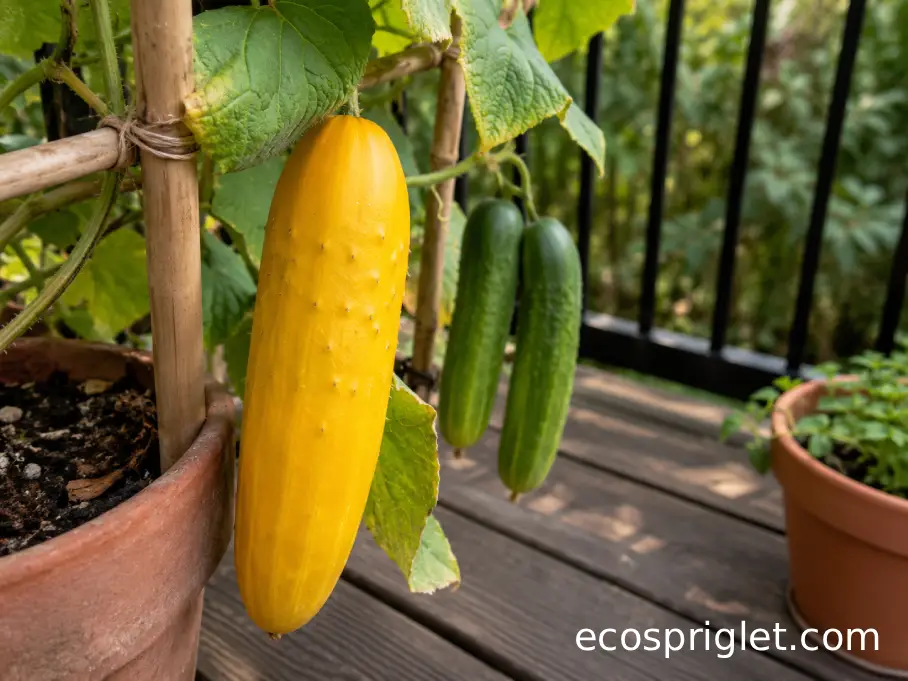
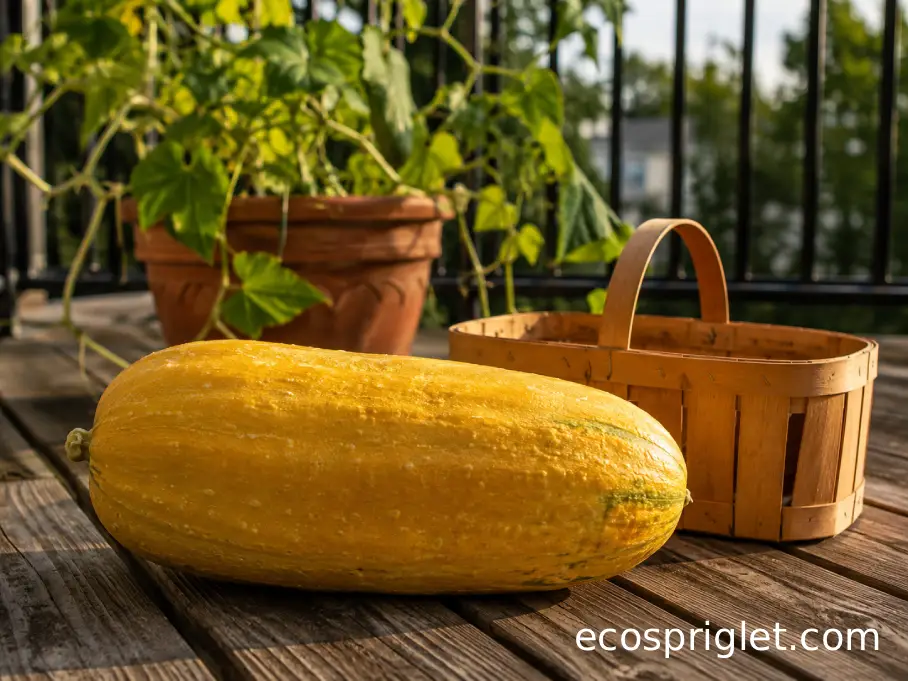
If the fruit is large, firm, and evenly yellow rather than green, overmaturity is the first thing I would suspect. University of Illinois Extension advises gardeners not to leave overmature yellow cucumbers on the vine, while University of Minnesota Extension recommends harvesting salad cucumbers before they become oversized, large-seeded, and yellowish.
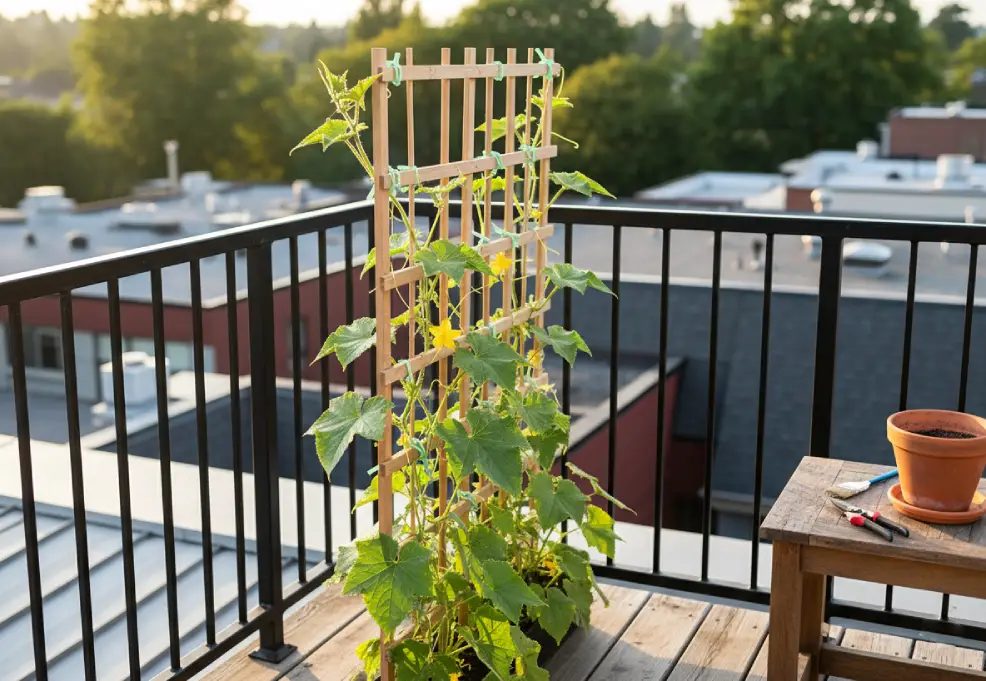
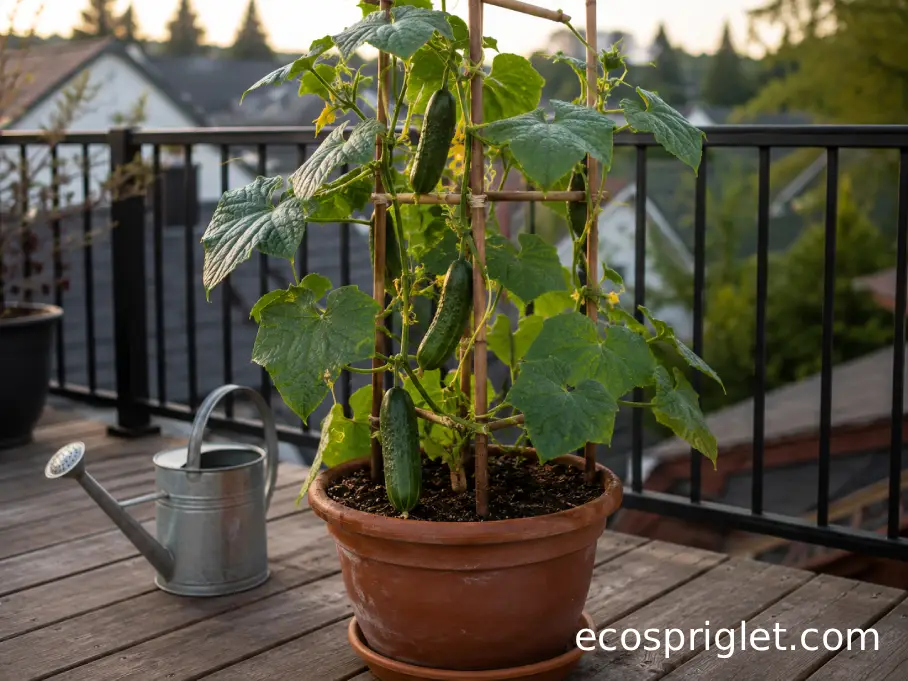
Cucumbers are normally harvested while botanically immature. Waiting for them to reach full seed maturity gives the fruit time to lose its desirable green color and develop larger, tougher seeds. The problem can sneak up on balcony gardeners because mature leaves easily hide fruit against a railing or trellis.
This quick visual check is usually enough to point you in the right direction:
| What You See | Most Likely Explanation | What to Do |
|---|---|---|
| Large, evenly yellow fruit | Overmature cucumber | Harvest it now and check the vine for more hidden fruit |
| Round or yellow fruit from the beginning | Naturally yellow variety | Check the seed packet or plant label |
| Tiny fruit that stops growing or becomes misshapen | Pollination or growing stress | Check flowers, moisture, and recent weather |
| Yellow or green blotches, rings, and distorted leaves | Possible disease | Inspect the entire plant rather than treating it as a ripeness issue |
| Sunken, soft, oozing, or moldy areas | Fruit rot or infection | Remove damaged fruit and investigate disease conditions |
Once cucumbers begin producing heavily, check behind leaves and along the back of the trellis at least every other day. Illinois Extension notes that cucumbers develop quickly and may need harvesting every other day during production.
Check Whether Your Variety Is Supposed to Be Yellow
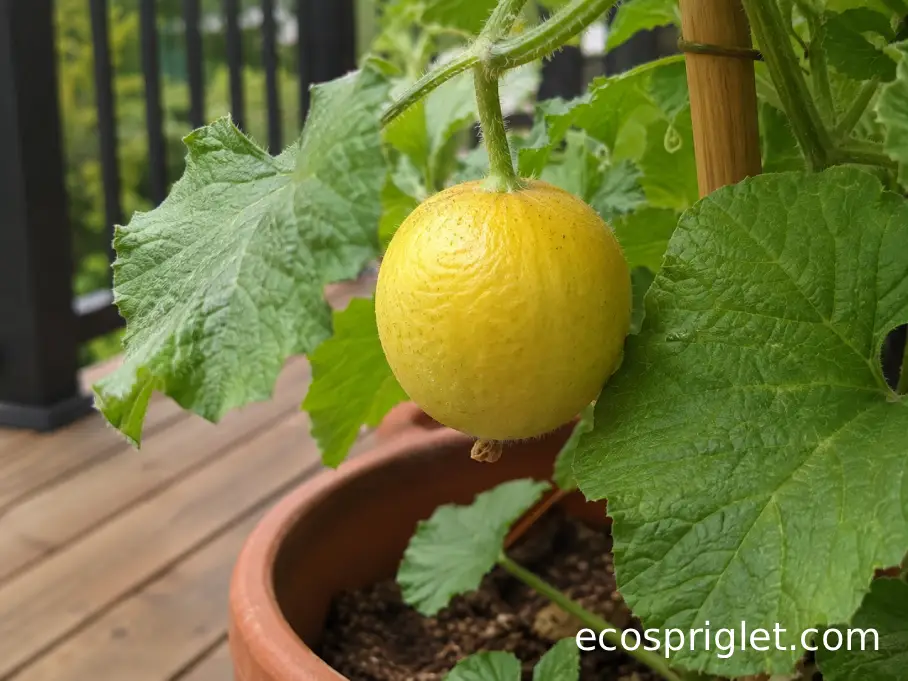
Not every yellow cucumber has a problem. Some varieties are supposed to mature yellow, cream, or nearly white. Illinois Extension, for example, describes Lemon cucumber as a round variety with light yellow skin, while Oregon State University Extension notes that good-quality cucumbers can be green, white, or yellow depending on the variety.
Before changing your watering or feeding routine, find the seed packet, nursery tag, or order confirmation. Compare the expected mature color and shape with the fruit on your plant. This matters especially if you bought a mixed seed packet or received a seedling from another gardener.
Color alone is therefore not a reliable diagnosis. A naturally yellow cultivar should still have the shape, firmness, and harvest characteristics described for that variety. A standard green slicer that started green and gradually became deep yellow is a very different situation.
I have learned to leave the plant label tucked into the back edge of a balcony pot all season. It is not very glamorous, but in July, when several vines have woven themselves together, that little tag saves a surprising amount of guessing.
Tiny Cucumbers Turning Yellow and Shriveling Need a Different Diagnosis
A baby cucumber that starts growing and then becomes pale, yellowish, misshapen, or shriveled is not simply an old cucumber. Poor fruit set deserves a closer look. Standard cucumbers produce separate male and female flowers, and sufficient pollen must reach the female flower for normal fruit development. Utah State University Extension notes that inadequate pollen transfer can result in small or misshapen cucurbit fruit.
On an exposed apartment balcony, pollination can be less dependable than it is in a flower-filled yard. Cool conditions, rain, strong wind, limited bee activity, or screened-in growing spaces may all reduce opportunities for insects to visit open flowers. Oregon State University Extension notes that cool temperatures and rainy weather can interfere with cucumber pollination.
- Look for female flowers with a tiny cucumber-shaped ovary immediately behind the blossom.
- Check whether male flowers with pollen are open at the same time.
- If your variety requires pollination and insects rarely visit, transfer pollen from a freshly opened male flower to a female flower on the morning it opens.
- Check the seed packet first: some parthenocarpic cucumber varieties can set fruit without pollination.
Do not expect a badly misshapen fruit to straighten itself later. Utah State Extension recommends removing severely misshapen young cucumbers and correcting pollination, soil moisture, or fertility conditions for subsequent fruit.

Why Fat, Yellow Cucumbers Usually Mean Overmaturity
If you are looking at a cucumber that is both unusually fat and yellow, the simplest explanation is usually the correct one: it stayed on the vine too long. As cucumber seeds mature, the fruit becomes larger and the skin may change from green toward yellow. University of Minnesota Extension specifically advises harvesting before slicers become overlarge with large seeds and yellowish skins.
A bulging middle is another clue. Illinois Extension notes that yellow skin and bulging cucumbers can be associated with watery flesh or large seeds.
Harvest the fruit rather than leaving it as an experiment. Removing mature cucumbers also keeps the plant focused on continued production; both Illinois and Minnesota Extension advise against leaving oversized mature fruit on productive vines because yield can decline.
If the cucumber is still firm and free of rot, an older fruit may be more useful peeled and seeded than eaten as a crisp slicer. Oregon State University Extension suggests using more mature or oddly shaped cucumbers for relishes and bread-and-butter-style pickles. For anything you intend to preserve for shelf storage, stick to a tested Extension or USDA preservation recipe rather than improvising the acid or processing time.
Water and Heat Stress Can Change Fruit Shape and Color
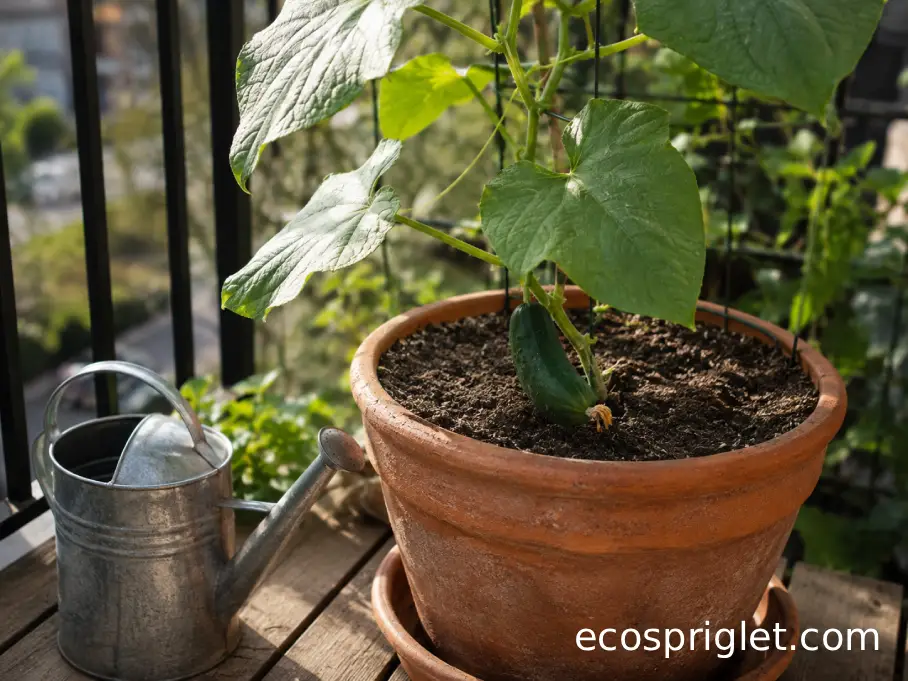
Water stress is more likely to cause poor fruit development, bitterness, or misshapen cucumbers than to turn a healthy mature fruit uniformly yellow. Still, inconsistent watering can affect fruit size, shape, flavor, and color development, so it belongs on the troubleshooting list when several young cucumbers look wrong at once. Utah State University Extension emphasizes regular, uniform moisture during flowering and fruit set.
This is where balcony cucumbers can be unforgiving. I once had a container beside a west-facing wall that looked perfectly moist at breakfast and was noticeably dry by late afternoon. The vine kept growing, but the new cucumbers became increasingly crooked. Moving the pot a little farther from the reflected heat and changing how I checked moisture solved more than adding fertilizer ever would have.
- Push a finger about 1 inch into the potting mix. If that layer feels dry, water thoroughly.
- Continue watering until excess water begins draining from the bottom rather than giving the pot frequent shallow sips.
- During hot, dry, windy spells, check containers morning and again later in the day instead of following a fixed calendar.
- Empty standing water from catch saucers so the root zone does not remain waterlogged.
Illinois Extension recommends watering container plants when roughly the first inch of growing medium is dry and applying enough water to moisten the root ball and produce drainage. Oregon State University Extension similarly notes that containers may need daily watering in hot conditions.
For a broader small-space setup that keeps roots cooler and watering more predictable, see our container gardening guide.
When Yellowing Points to Disease Instead of Ripeness
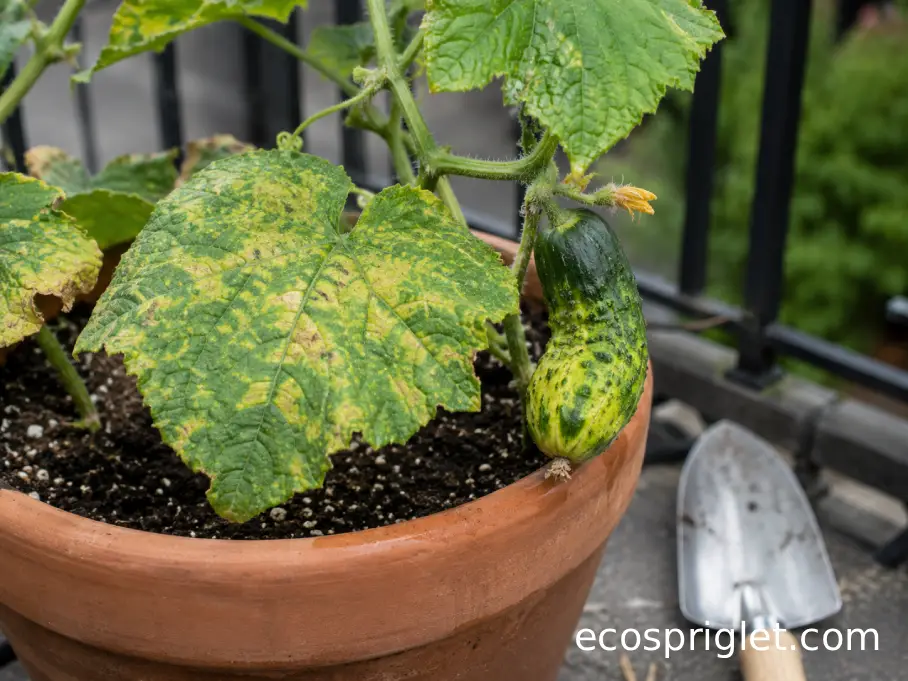
Disease becomes more plausible when the color change is irregular rather than a smooth progression from green to yellow. University of Minnesota Extension describes virus symptoms that can include yellow-and-green mottling, curled or distorted leaves, stunted plants, and fruit with unusual blotches, rings, or deformation.
Fruit infections can look different again. Sunken spots, oozing lesions, dark fungal growth, or soft rotten tissue are not normal signs of an overripe cucumber. University of Minnesota and Utah State Extension diagnostic resources describe these kinds of symptoms with cucumber fruit diseases such as scab and other fruit rots.
If one large fruit is evenly yellow while the leaves and younger cucumbers look healthy, disease moves much lower on my list. If several leaves are mottled or distorted and multiple fruits develop unusual markings, isolate the diagnosis to the whole plant instead. Remove obviously rotten fruit, avoid leaving foliage wet for long periods, and compare your symptoms with your local Extension plant-disease resources before applying a pesticide.
If You Mean the Leaves Are Yellow
Yellow cucumber leaves are a separate troubleshooting problem from yellow cucumber fruit. Root-zone stress, excessive moisture, nutrient problems, insects, and several diseases can all affect foliage. Start by checking moisture and drainage rather than assuming that every yellow leaf means the plant needs fertilizer. In containers, repeatedly saturated potting mix can deprive roots of healthy growing conditions, while prolonged drying can stress the plant just as quickly.
Common Mistakes to Avoid
Most yellow-cucumber problems get harder to solve when the first response is to add more fertilizer or water without checking the fruit. I learned this the hard way with a trellised plant where one cucumber matured almost completely out of sight against the railing. I was checking the leaves every morning and somehow ignoring the one place the fruit had hidden itself.
- Do not fertilize simply because one cucumber turned yellow. An otherwise healthy vine with one oversized yellow fruit probably has a harvest-timing problem.
- Do not leave mature fruit hanging on the vine. Check the back of the trellis and the space between the pot and railing every day or two during peak production.
- Do not assume every shriveled baby cucumber is overripe. Small or misshapen fruit points more toward pollination or environmental stress.
- Do not water on a rigid schedule. Feel the top inch of the potting mix and adjust for heat, wind, container size, and drainage.
- Do not diagnose a naturally yellow variety as unhealthy before checking its label.
Continuous harvesting is one of the simplest preventive habits. Illinois and Oregon State Extension both recommend keeping cucumbers picked rather than allowing mature fruit to linger on the plant.
A Seven-Day Balcony Reset
You usually do not need to overhaul a healthy plant because of one yellow cucumber. On day one, harvest every oversized or clearly mature fruit and inspect the vine from both sides. Look underneath leaves, behind the trellis, and between the container and railing. If the foliage is healthy and the newest fruit looks normal, keep the response simple.
For the next several mornings, check the top inch of potting mix. Water thoroughly when it has dried rather than adding a small amount automatically each day. On particularly hot or windy afternoons, check again. Container media can dry rapidly, and Extension guidance notes that some pots may require watering daily or even more frequently during hot, dry weather.
At the same time, watch the flowers. If your variety needs pollination, note whether insects are visiting and whether female flowers develop into steadily enlarging fruit. If young cucumbers repeatedly remain tiny or become misshapen, pollination and moisture deserve attention before fertilizer.
Finally, harvest promptly. University of Illinois Extension recommends picking slicing cucumbers before the skin begins to yellow and checking productive plants frequently because the fruit develops quickly.
Within a week, the new growth should give you far more useful information than the old yellow fruit did. Troubleshoot what the plant is producing now.
Get Back to Crisp, Green Cucumbers
A yellow cucumber usually looks more alarming than it really is. For a standard green variety, a large, uniformly yellow fruit is most often simply overmature. Pick it, search the vine for any others you missed, and begin checking productive plants every day or two. If the yellowing is happening to tiny fruit instead, shift your attention toward pollination, moisture, and environmental stress. Irregular blotching, distorted leaves, lesions, or rot deserves a disease-focused inspection rather than a ripeness diagnosis.
For balcony growers, consistent moisture is especially important. Check the potting mix instead of watering by the calendar, soak the root zone when the upper inch has dried, and let excess water drain freely. Just as important, learn where cucumbers hide on your particular trellis. A two-minute look behind the leaves can prevent most oversized yellow surprises.
The goal is not to rescue an old cucumber and turn it green again. It is to use that fruit as a clue and improve the next one. Once harvest timing, watering, and pollination are on track, a healthy container vine can quickly get back to producing the firm cucumbers you were expecting.