Strawberries are the kind of fruit that can go from “wow” to “why?” in a blink—especially in a small apartment fridge that gets opened all day. If you’ve ever brought home a beautiful pint and found fuzzy mold two mornings later, you’re not alone. Learning how to store strawberries well is mostly about controlling two things strawberries hate: moisture sitting on the fruit and rough handling that bruises them.
The good news: you don’t need special gadgets or internet-famous tricks to keep strawberries fresh. You need a quick sort, a dry resting spot, and a fridge that’s actually cold enough. USDA FSIS recommends keeping your refrigerator at 40°F or below for food safety, and that one detail alone changes the game in warm-weather kitchens. If your berries are from your own balcony planter, cooling them quickly matters even more—strawberries don’t keep ripening after picking, but they do keep breaking down.
Below is my simple, repeatable setup for the fridge, plus the best approach for cut strawberries, freezing, and even chocolate-covered berries (which are surprisingly finicky).
Why Strawberries Go Soft and Moldy So Fast
Strawberries spoil faster than a lot of other fruits because they’re tender, thin-skinned, and naturally carry microbes that love a damp surface. Add one bruised berry to the mix and it can “share” trouble with its neighbors. University of Illinois Extension notes that unwashed berries do best loosely covered in the coldest part of the refrigerator and should be used within a couple of days for best quality. Clemson’s Home & Garden Information Center also emphasizes quick sorting (toss the moldy ones) and gentle storage in the fridge.
Here’s what usually goes wrong in real life:
- Moisture gets trapped (from washing early, condensation, or airtight containers), and mold takes off.
- Berries get bruised (deep containers, heavy stacking, or a crowded grocery bag), and those bruises turn soft fast.
- The fridge isn’t cold enough. USDA FSIS recommends 40°F or below—and it’s worth checking with a cheap fridge thermometer.
If you remember just one line: keep them dry, shallow, and cold.
The Best Way to Store Fresh Strawberries in the Fridge
I remember when I first tried to “help” my strawberries by washing the whole pint right away. I patted them dry, felt very responsible… and then watched them get mushy and spotty by the next day. Maine Cooperative Extension is blunt about it: store berries unwashed and wash just before eating. That one change is the easiest way to keep strawberries fresh longer.
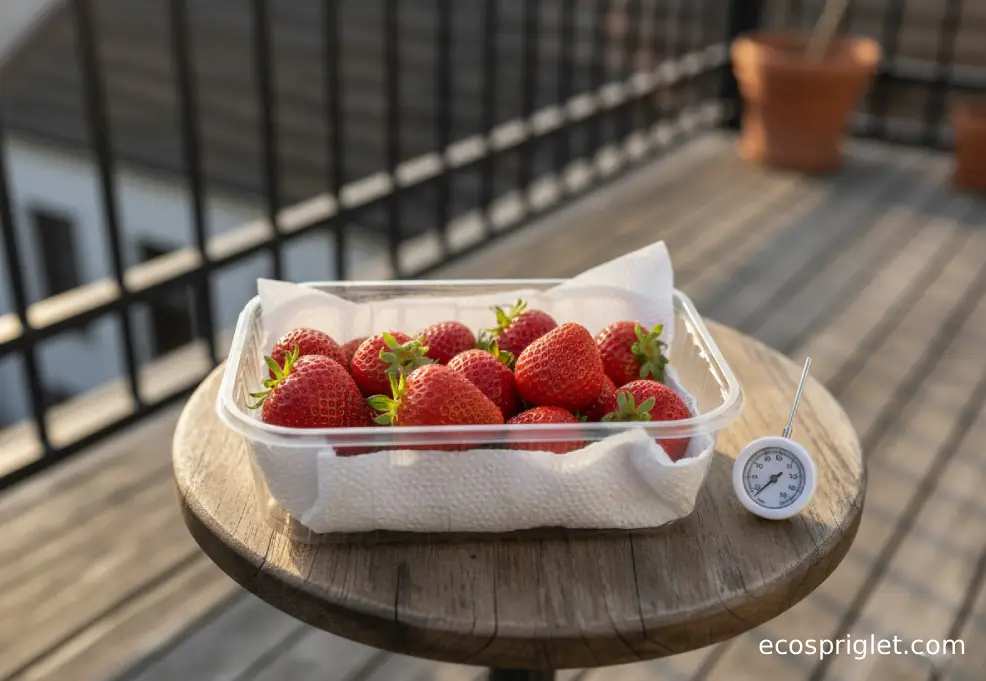
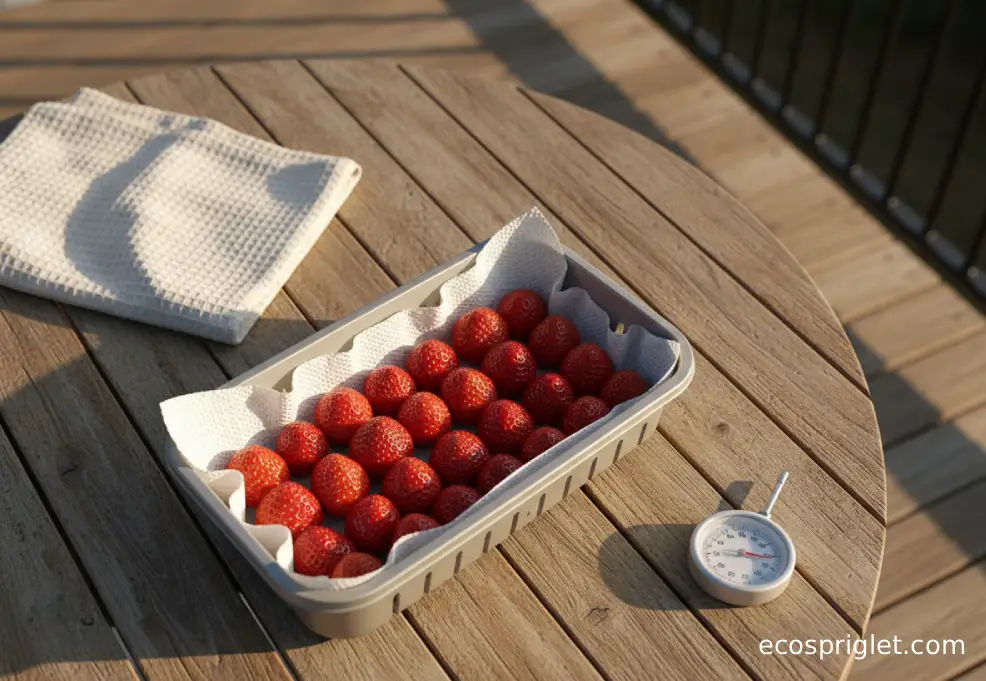
Here’s the method I use every time—the best way to store fresh strawberries in the fridge without fuss:
- Check and sort (2 minutes): Tip berries onto a plate. Remove any moldy, leaking, or badly bruised ones right away (they speed-spoil the rest). Sources: Clemson HGIC; University of Illinois Extension.
- Keep them dry: Don’t wash yet. Keep green tops on. Sources: Maine Cooperative Extension.
- Line a shallow container: Use the original vented clamshell if it’s clean, or a shallow container. Add a dry paper towel on the bottom.
- Single layer if you can: If you must stack, separate layers with another paper towel.
- Cover for airflow, not sealing: Loosely cover (or use a vented lid). Too airtight often means more condensation.
- Store cold: Put them in the coldest steady spot of your fridge, and keep the fridge at 40°F or below. Source: USDA FSIS.
If you’re working with a tiny apartment fridge, this is where an appliance thermometer earns its keep. FDA and USDA FSIS both emphasize verifying fridge temps with a thermometer when food safety is on the line.
How to Keep Strawberries Fresh Longer (Without Weird Hacks)
Once the basics are right, the “fresh longer” upgrades are small but meaningful. UC ANR notes that strawberries store best at very cold temperatures at home—about 32–36°F—and high humidity helps prevent shriveling (that’s tough to perfectly control in a home fridge, but you can reduce drying by keeping berries loosely covered). UC Davis Postharvest materials also emphasize rapid cooling and cold storage for disease control and quality.
- Don’t crowd them: A single layer reduces bruising and slows mold spread.
- Swap the paper towel if it gets damp: Moisture management is the whole game.
- Eat the fragile ones first: Soft berries go into oatmeal, yogurt, or a quick sauce the same day.
- Let them warm briefly for flavor: Cold dulls sweetness a bit—10–20 minutes on the counter (not hours) can bring flavor back before eating.
Beginner mistake I see a lot: storing strawberries right next to drippy produce or uncovered leftovers. If the fridge smells like last night’s takeout, your berries will pick up that vibe. A clean, dry container in a steady-cold spot helps more than any fancy rinse.
How to Store Fresh Picked Strawberries From Your Balcony
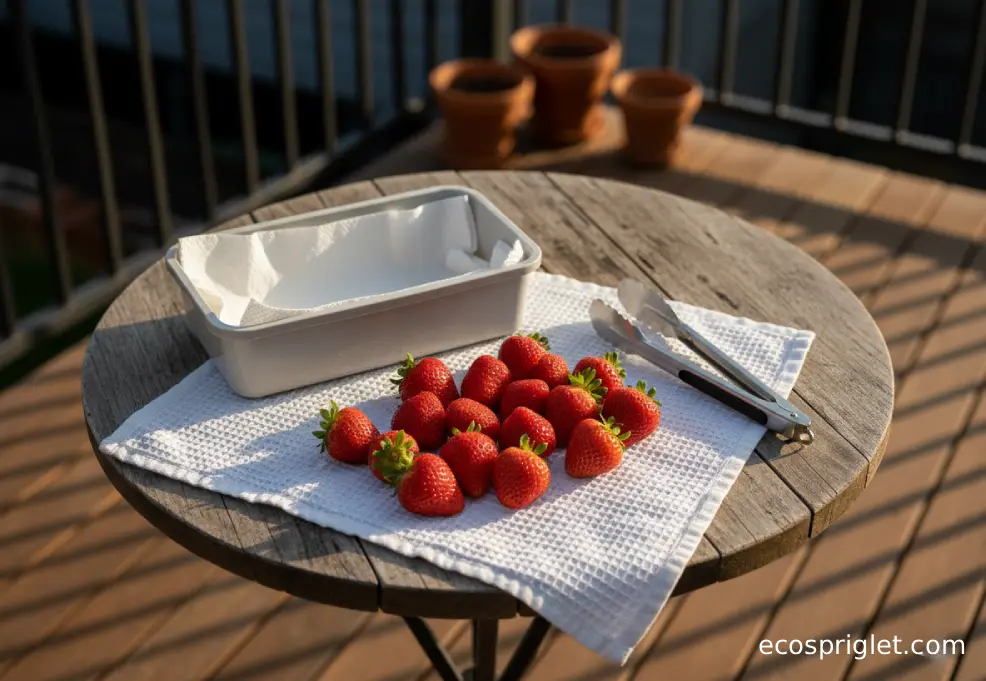
Homegrown strawberries are often softer and more fragrant than store berries—which also means they’re easier to bruise. My rule is simple: pick into a shallow container, bring them inside, and cool them quickly. UC Davis Postharvest guidance highlights prompt cooling as a key step for limiting decay.
Apartment-friendly steps that work:
- Pick gently. Use scissors/snips if needed and avoid squeezing the fruit. Keep the caps on.
- Don’t rinse your whole harvest. Store unwashed and rinse only what you’ll eat now. Source: Maine Cooperative Extension.
- Chill fast. Get them into the fridge soon after picking, and keep the fridge at 40°F or below (USDA FSIS).
Common balcony-gardener mistake: leaving a bowl of berries on the counter “just for a bit” while you water plants, answer messages, do laundry… and suddenly it’s evening. If you want berries tomorrow, they need cold today.
How to Store Cut Strawberries Safely
Cut berries are a different animal. Once strawberries are sliced, you’ve exposed juicy surfaces that spoil faster—and they count as cut fruit from a food-safety standpoint. FoodSafety.gov recommends refrigerating cut fruit within 2 hours (or 1 hour above 90°F) and keeping cold foods at 40°F or below. Maine Cooperative Extension also notes that cut produce should be stored in clean, covered containers and eaten within a few days.
My practical routine:
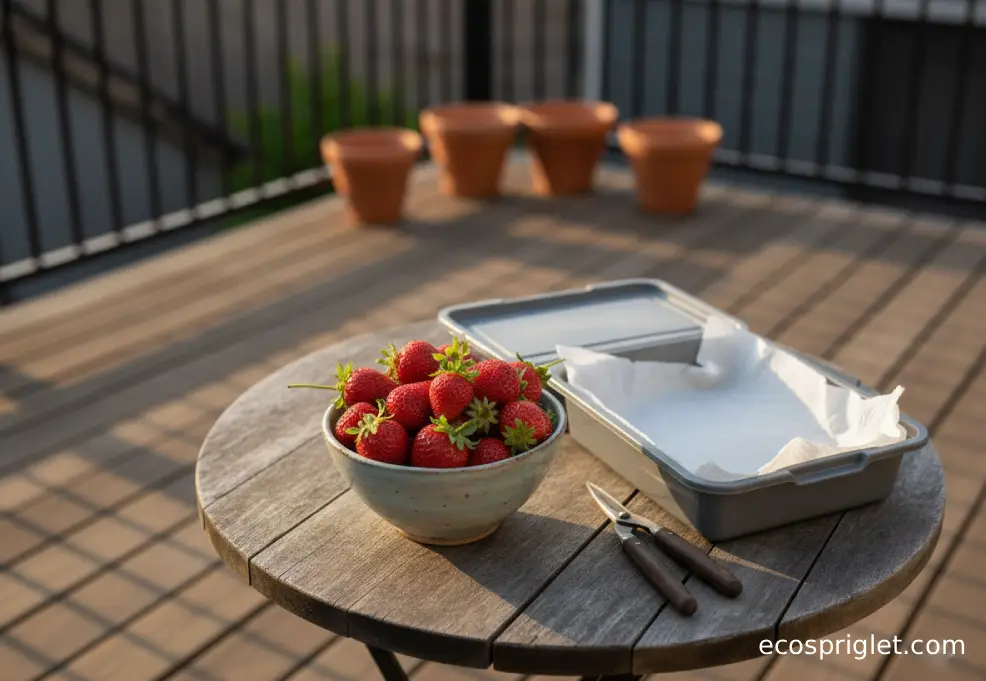
- Slice only what you’ll use soon (same day is best for texture).
- Refrigerate promptly in a clean, covered container.
- Add a paper towel under (or over) the slices to soak up extra juice.
- Skip the sugar “for storage” unless you’re intentionally macerating for dessert—sugar pulls out juice and turns slices soft faster.
If you open the container and smell anything fermented, or see slime or mold, toss it. Strawberries are not the fruit to “maybe it’s fine” your way through.
How to Store Strawberries in the Freezer for Smoothies and Baking
If you can’t finish a batch in time, freezing is the cleanest save. Mississippi State University Extension suggests washing, drying thoroughly, removing caps, cutting as desired, then freezing in labeled freezer bags—and notes they can be used within a year for best quality.
Here’s the freezer method that keeps berries from turning into one giant brick:
- Wash and dry very well. Water becomes ice, and ice becomes freezer burn.
- Hull (remove caps) and slice if you want. Whole berries are great for smoothies; slices are great for quick thawing.
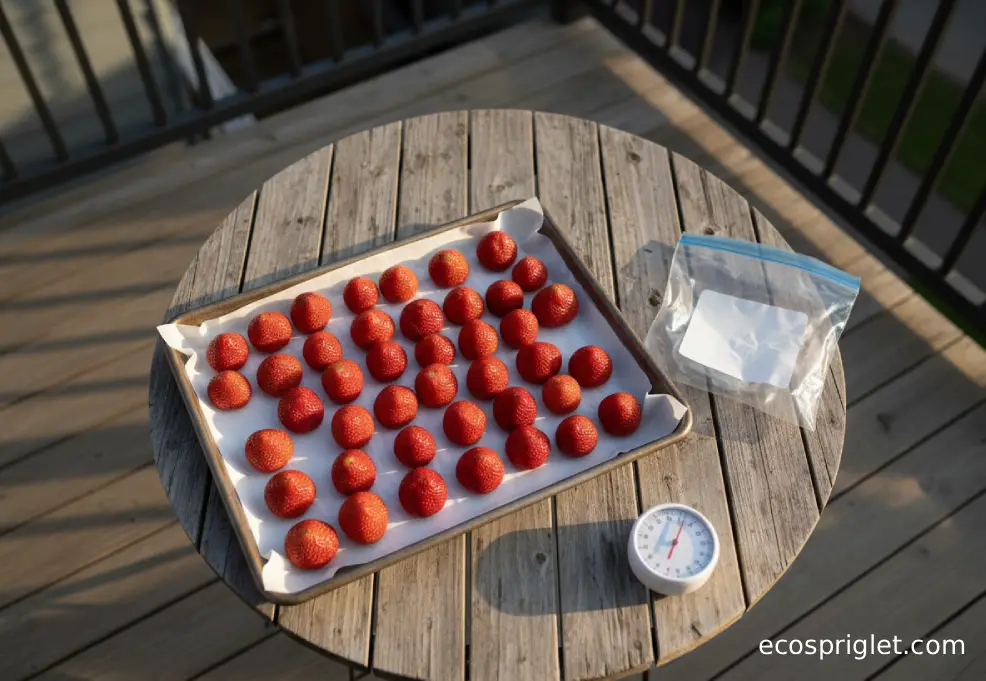
- Freeze on a tray first in a single layer, then transfer to a freezer bag.
- Keep the freezer at 0°F. Source: USDA FSIS.
Beginner mistake: tossing damp berries straight into a bag. They’ll freeze, sure—but you’ll get icy clumps and watery thaw. Drying is the difference between “future dessert” and “mystery mush.”
How to Store Chocolate-Covered Strawberries Without Ruining the Finish
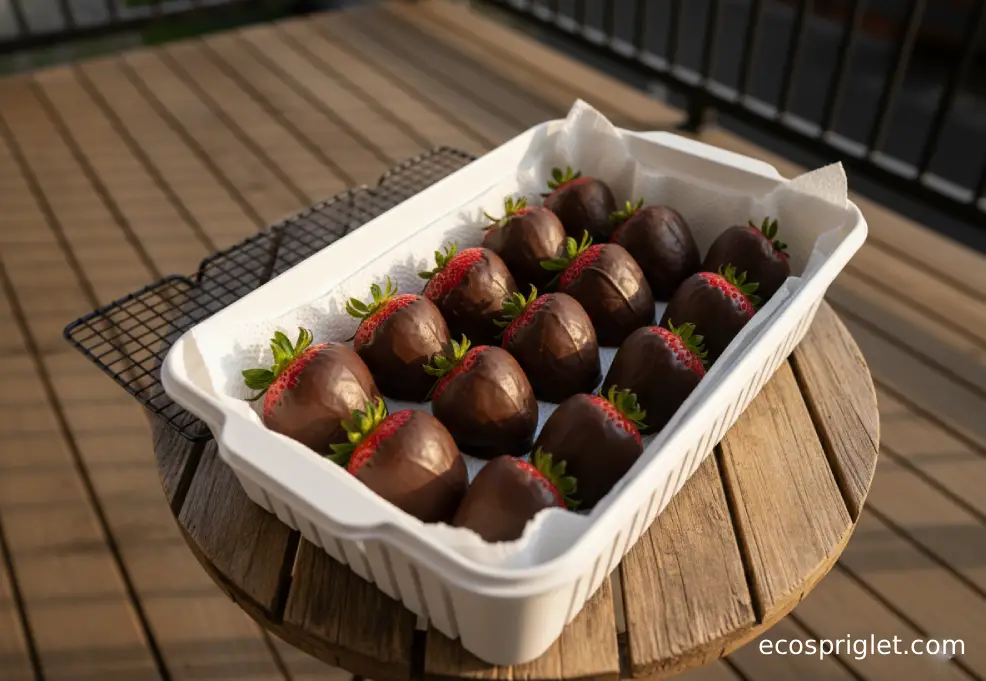
Chocolate-covered strawberries are basically a tiny humidity experiment: cold air can cause condensation, and condensation makes the chocolate look dull or “sweaty.” But they’re still fresh fruit, so if you’re not eating them the same day, they should be kept cold for safety. USDA FSIS recommends refrigerator temperatures of 40°F or below.
What I do in a small apartment kitchen:
- Let the chocolate set fully before storing.
- Store in a single layer in a shallow container lined with paper towels, with parchment under the berries to reduce sticking.
- Cover loosely rather than sealing airtight, so moisture doesn’t get trapped.
- Keep cold and steady. Avoid moving them from fridge to warm counter and back again—big temperature swings invite condensation.
Beginner mistake: popping them into a tight sealed container while they’re still a bit warm. That traps moisture fast. If presentation matters (a gift, a party tray), plan to serve them soon after making or buying them.
Common Mistakes New Strawberry Lovers Make
- Washing the whole pint immediately: Store unwashed; rinse right before eating. Source: Maine Cooperative Extension.
- Keeping one moldy berry “because the rest look fine”: Remove problem berries ASAP. Sources: Clemson HGIC; University of Illinois Extension.
- Using a deep bowl: Weight + stacking = bruising. Go shallow.
- Forgetting fridge temperature: Keep your fridge at 40°F or below. Sources: USDA FSIS; FDA guidance on fridge thermometers.
- Storing cut strawberries like whole ones: Cut fruit needs prompt refrigeration (within 2 hours). Source: FoodSafety.gov.
If you want a simple “best way to store strawberries in the refrigerator” checklist: sort, keep dry, line with a paper towel, go shallow, and keep the fridge cold. That’s 90% of it.
Bonus: How to Save Strawberry Seeds for a Tiny Apartment Project
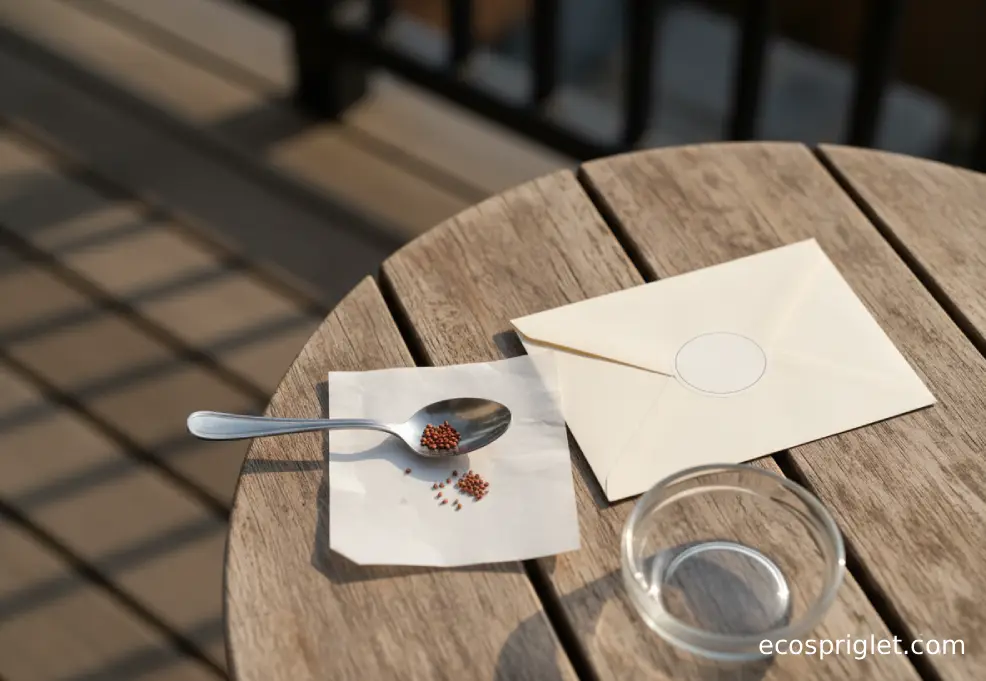
This isn’t the fastest way to get strawberry plants (runners are easier), but it’s a fun balcony experiment—especially if you like little science projects on the windowsill. The key is dry seeds thoroughly and store them cool, dark, and dry in a paper envelope or small jar with a tight lid. I like to label the date and the berry source, then tuck the packet into a cabinet away from the stove.
Beginner mistake: storing seeds while they’re still damp from the fruit. If they clump or smell “sweet,” they’re not dry enough yet. Give them extra time to air-dry, then store them.
If you do sprout them, treat it like a hobby—not a guarantee. Even when seeds germinate, the resulting plants may not match the parent berry exactly.
When strawberries are good, they’re pure happiness—bright, fragrant, and gone in five minutes. Keeping them that way is mostly about respecting how fragile they are. Store them unwashed, keep them dry, and don’t let them get crushed in a deep container. If you do those things and your fridge is truly at 40°F or below (USDA FSIS), you’ll notice fewer moldy surprises and more “grab one on the way out the door” mornings.
My last little apartment tip: build a habit of sorting berries the moment you get home. It’s the kind of two-minute task that saves you money and prevents that sad, fuzzy discovery when you’re already hungry. And if you’ve got more berries than you can reasonably eat, freeze them early—frozen strawberries are still gold in smoothies, oatmeal, quick sauces, and baking.