Onions feel like the easiest kitchen staple in the world… until you find a soft spot, a mysterious sprout, or that one cut onion that perfumes your whole fridge for a week. If you’re an urban apartment dweller, you’ve got an extra challenge: storage space is tight, temperatures fluctuate, and your “pantry” might be one cabinet above the toaster.
The good news is that the best way to store onions is mostly about three things: airflow, dryness, and temperature. Get those right and you’ll stretch freshness, reduce waste, and keep flavors clean. In this guide, I’ll walk you through how to store onions whole, how to store fresh onions from the garden (including curing), and exactly how to store cut onions in the refrigerator so they stay safe and usable. I’ll also cover pickled onions, caramelized onions, and the “can onions go bad?” signs you should never ignore.
Know Which Onions Store Well (And Which Don’t)
Different onions behave differently in storage, and knowing that upfront helps you avoid the classic “why did these get mushy already?” moment.
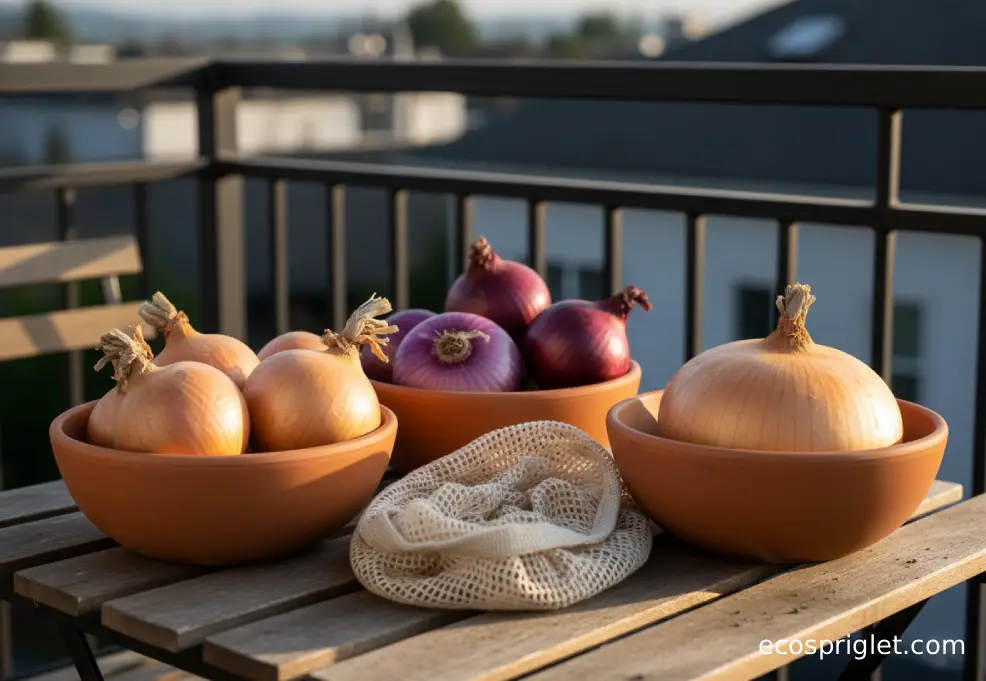
Storage onions (most yellow onions, many red onions) have tighter skins and lower moisture—these are your long-haul champs. Sweet onions (like Walla Walla types) have more water and thinner skins, so they usually don’t last as long at room temperature and may do better in the fridge if your kitchen runs warm. If you grow onions, varieties bred for storage typically keep longer than mild, sweet types (Michigan State University Extension materials often separate “storage” vs. “fresh use” handling).
Green onions/scallions are a different category entirely: they’re basically a leafy vegetable and belong in the refrigerator.
Apartment tip: if you’re shopping and want onions that last, choose bulbs that feel rock-firm, with dry, papery skins and no visible mold. Avoid ones with thick, wet-looking necks (they’re more likely to rot) or any soft give when you press near the root end.
How to Store Onions From the Garden (Cure First, Then Store)
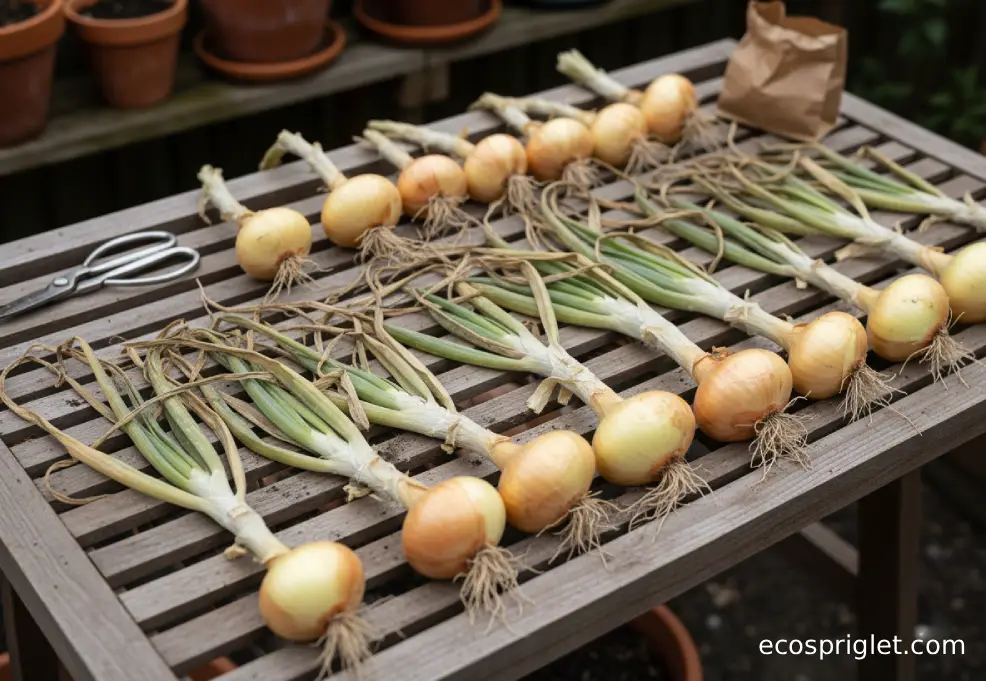
If you’re wondering how to store onions long term from the garden, the secret isn’t a fancy container—it’s curing. Curing dries the neck and outer layers so the onion seals itself before you tuck it away.
I learned this the hard way the first time I grew balcony onions in fabric pots. I harvested, trimmed everything neatly, and stacked them in a basket because it looked “organized.” A week later, I had a sad pile of soft necks. What I skipped was air-drying long enough for that neck to fully dry down.
Here’s the practical cure-and-store flow (aligned with Extension guidance like Iowa State University’s onion harvesting and storage notes):
- Dry them warm and airy: spread onions in a single layer out of direct sun, with good airflow.
- Wait for dry necks: when the tops/neck area are fully dry and papery, they’re ready for longer storage.
- Trim for storage: once cured, trim tops down to about 1–3 inches if you prefer tidy bulbs (many Extension resources use this range).
Apartment workaround: no garage? Use a wire rack near a cracked window or a spot with a small fan on low. The goal is dry air movement, not heat-blasting.
The Best Way to Store Whole Onions in a Small Apartment
For most whole onions, the best ways to store onions are simple: cool, dark, dry, and ventilated. That means a basket on the counter (near the stove) is usually the worst spot—heat and light push sprouting, and trapped moisture invites rot.
Instead, aim for a place that feels boring: the back of a lower cabinet, a ventilated pantry shelf, or a closet corner that stays cooler. Postharvest and Extension guidance often emphasize cool temperatures and moderate humidity for dry bulb onions; for example, Iowa State University Extension notes storage temperatures around 32–40°F with moderate humidity for ideal long storage, while Michigan State University Extension materials also highlight cool, dry conditions for longer keeping.
Most apartments won’t naturally sit in the low 30s °F range—so in real life, you’re aiming for: as cool as your home reasonably stays, plus good airflow and dryness.
Setups that work well in tight spaces:
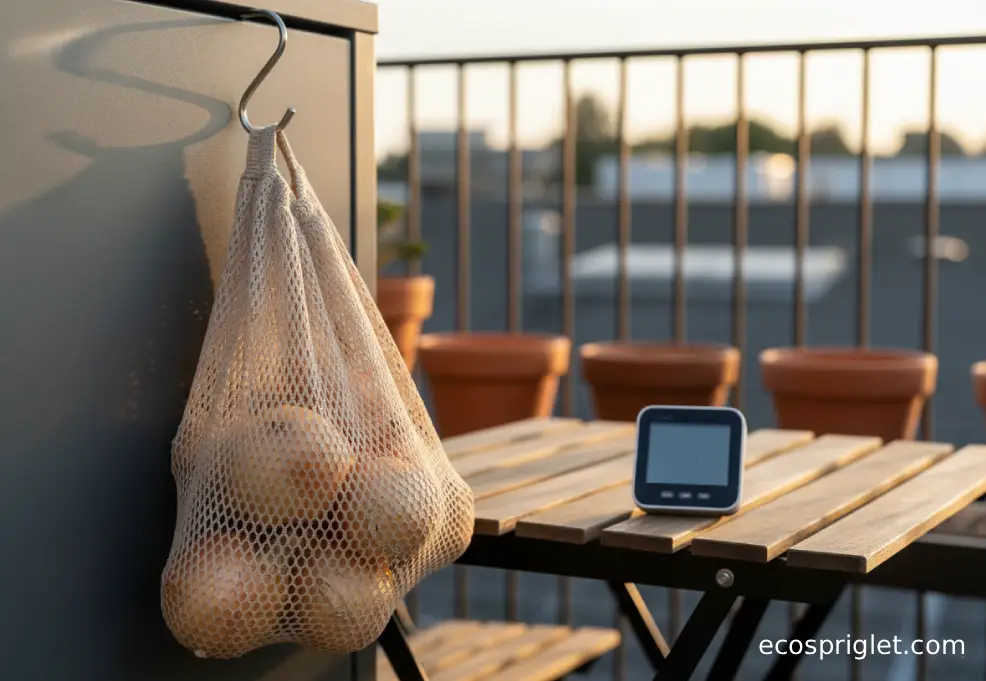
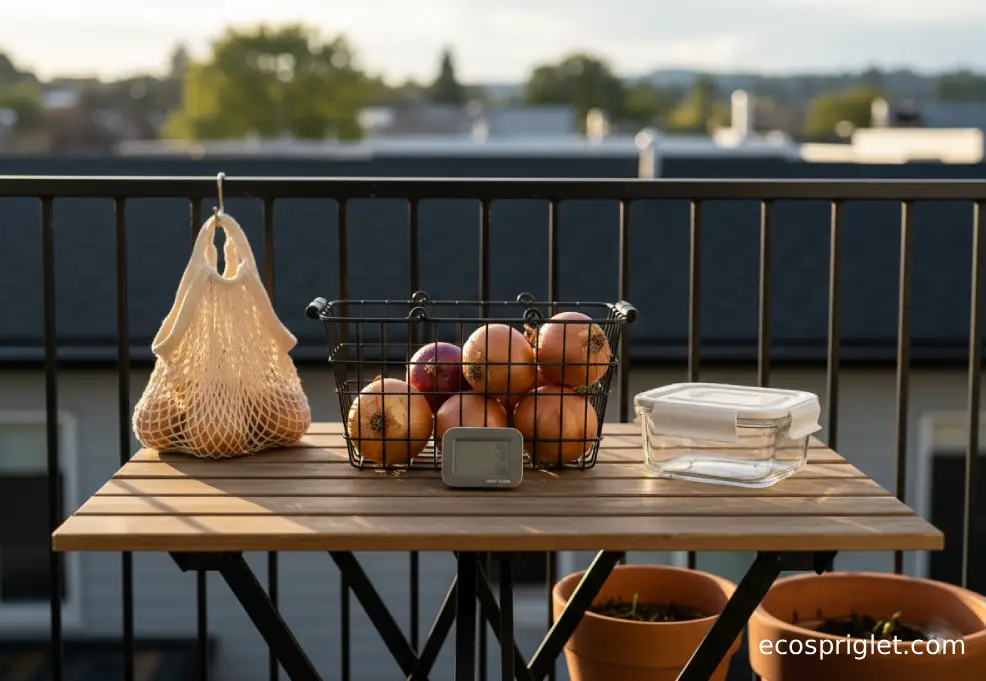
- Mesh bag hung from a hook (airflow on all sides).
- Open bowl or wire basket in a dark cabinet (not sealed).
- Paper bag with holes punched in it (a nice compromise if you hate loose skins).
A big don’t: don’t seal whole onions in plastic. Trapped moisture shortens life (the National Onion Association also stresses airflow and avoiding plastic for whole bulbs).
How Long Do Onions Last? A Practical Storage Timeline
If you’ve ever asked “how long are onions good for?” the honest answer is: it depends on the onion type, your room conditions, and whether it’s cut. Here’s a safe, kitchen-useful cheat sheet that matches authoritative guidance where it exists and stays conservative where home conditions vary.
| Onion Type | Best Storage Method | Typical Keep Time |
|---|---|---|
| Whole storage onions (yellow/red) | Cool, dark, dry place with airflow | Often weeks; longer in truly cool conditions (Extension guidance supports multi-week to multi-month potential when kept cool and dry) |
| Whole sweet onions | Cool spot; fridge if your home is warm | Usually shorter than storage onions |
| Cut, sliced, or diced onions | Sealed container in fridge ≤40°F | 7–10 days (USDA Agricultural Marketing Service specs for refrigerated ready-to-use onions) |
| Caramelized or cooked onions | Covered container in fridge ≤40°F | 3–4 days (USDA FSIS leftovers guidance) |
| Frozen chopped onions | Freezer ≤0°F, airtight | Months for best quality (USDA/food-safety guidance commonly supports freezing as a longer hold) |
| Quick pickled onions (refrigerator pickles) | Airtight jar in fridge ≤40°F | Up to 2 weeks (university recipe guidance such as UC Berkeley UHS) |
One more key baseline: keep your refrigerator at 40°F or below (FoodSafety.gov and USDA FSIS both use this threshold). If your fridge runs warmer, everything—especially cut onions—spoils faster.
Should Whole Onions Go in the Fridge?
This is where a lot of “what is the best way to store onions” advice gets confusing, because both approaches can be true depending on the onion and the home.
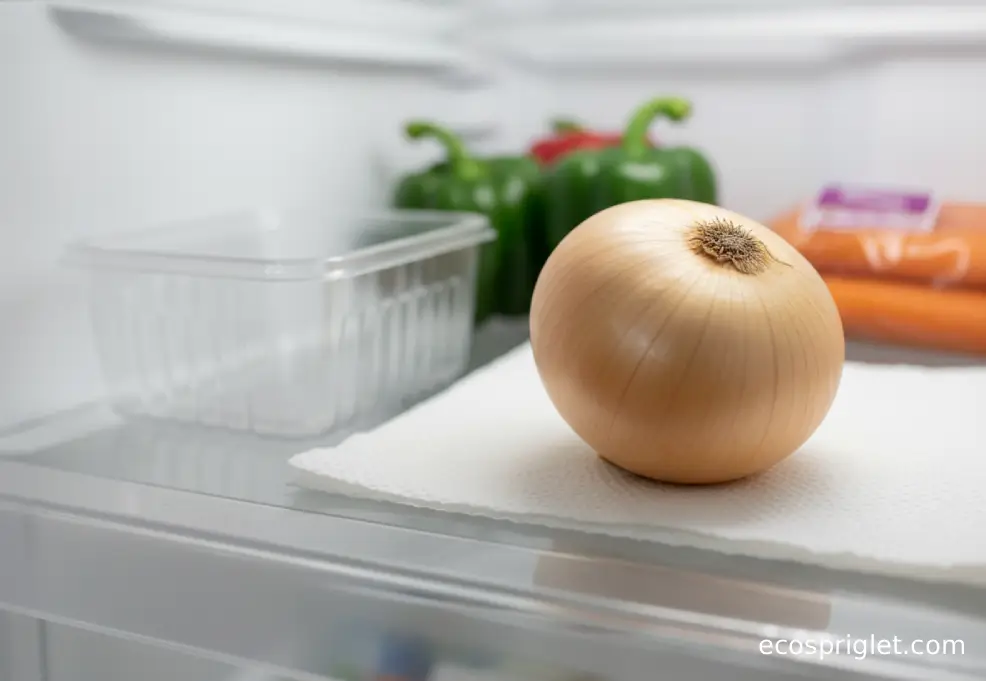
In many kitchens, whole onions do best outside the fridge—cool, dry, dark, airy—because refrigeration can add moisture and soften texture over time. But if your apartment is warm (or you only buy sweet onions), the fridge can be a reasonable backup. Some Extension-style consumer guidance notes that sweet onions may last longer refrigerated, especially in a crisper drawer.
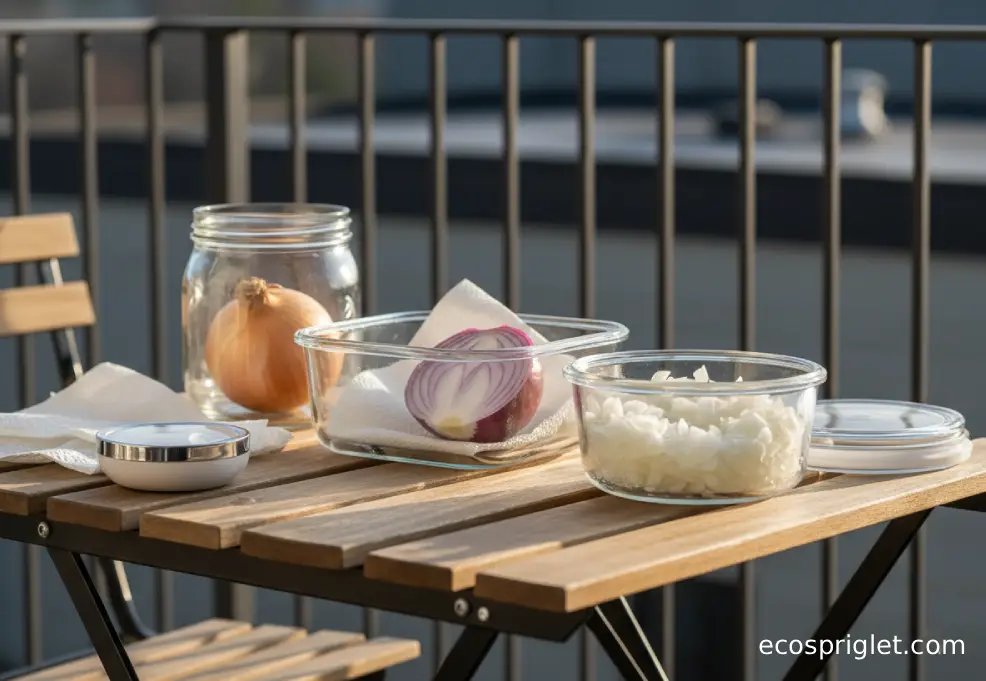
If you refrigerate whole onions, keep them dry and away from moisture-heavy produce. A simple trick is to store them in the crisper with a dry paper towel under or around them to buffer condensation.
Two strong rules either way:
- Don’t store onions next to foods that trap moisture in sealed bags (mushy onions happen fast).
- Don’t store onions with potatoes—quality tends to drop faster when they’re kept together (also noted by onion industry handling guidance).
How to Store Cut Onions (Without Stinking Up Your Fridge)
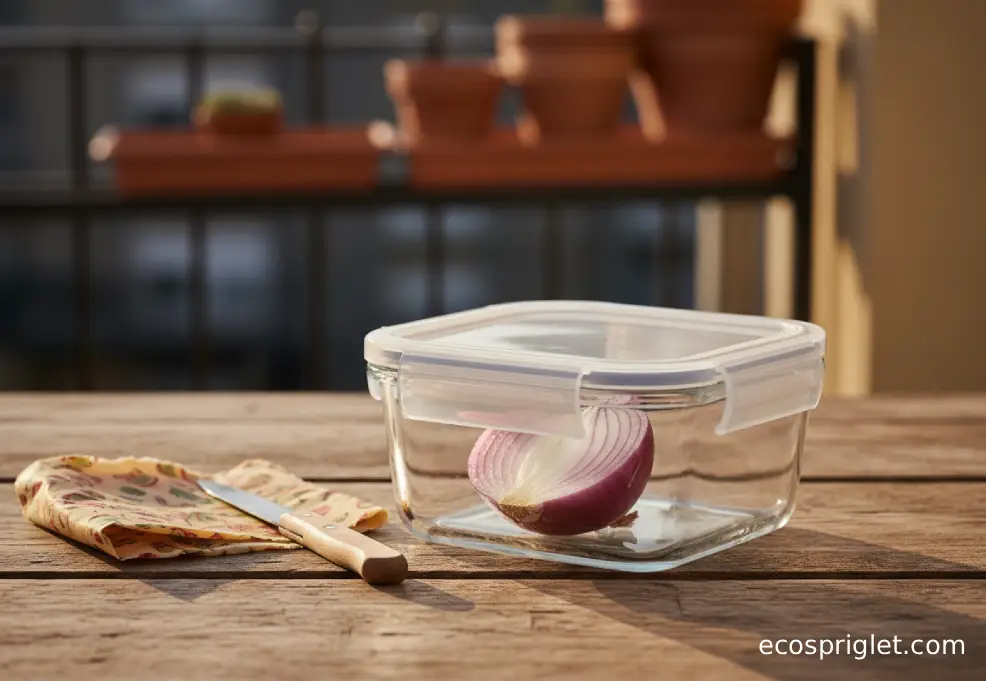
If you’ve got half an onion left, the best way to store a cut onion is simple: seal it, chill it, and don’t delay.
USDA-ready-to-use onion specifications (USDA Agricultural Marketing Service) commonly reference 7–10 days of refrigerated shelf life for diced or sliced onions when kept cold. In home terms, that means:
- Refrigerate within 2 hours of cutting (FoodSafety.gov’s “two-hour rule” is a solid kitchen standard).
- Use an airtight container (glass or hard plastic) or wrap tightly so the cut surface doesn’t dry out.
- Keep your fridge at 40°F or below (FoodSafety.gov/USDA FSIS guidance).
How to store chopped onions: pack them in a small container so there’s less trapped air, press a piece of wrap directly onto the onion surface if you want to reduce drying, then snap the lid on.
Beginner mistake I see all the time: tossing cut onion on a plate “just for tonight” and forgetting it. Open air = faster drying, more odor transfer, and a bigger chance you’ll find it slimy later. Seal it right away and you’ll be shocked how much nicer it stays.
How to Store Onions Long Term: Freeze What You Won’t Use
If you’re trying to store onions long term in a small apartment, your freezer is the most reliable “extra pantry.” Frozen onions won’t stay crisp for salads, but they’re perfect for soups, stir-fries, sauces, and weeknight skillet meals.
Here’s the method that wastes the least space:
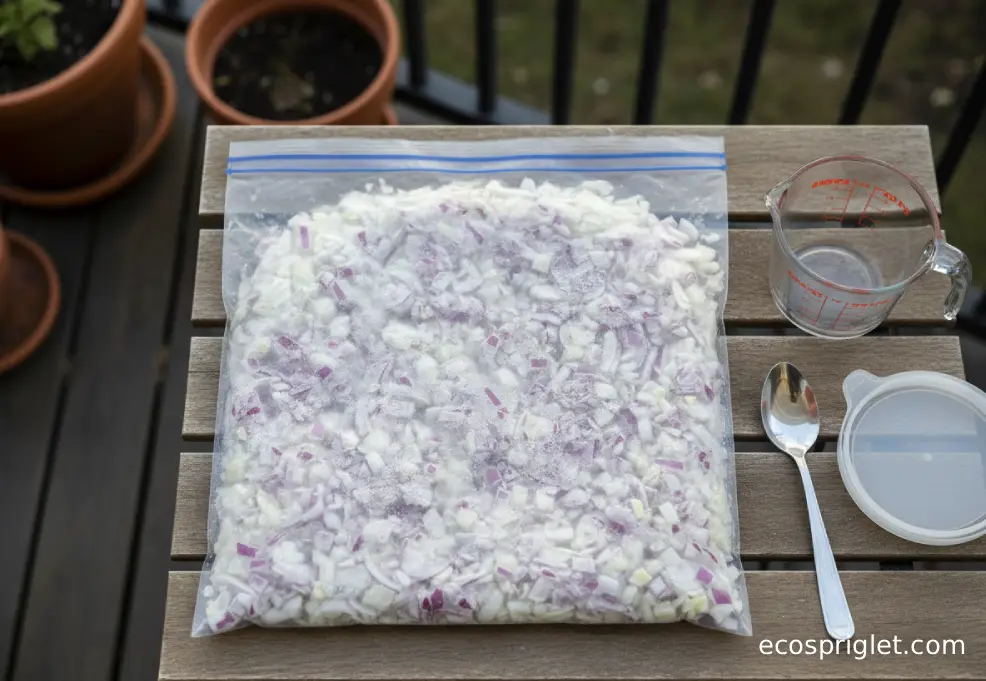
- Chop onions to your usual cooking size (diced or sliced).
- Freeze flat in a zipper freezer bag—press into a thin sheet so it stacks like a book.
- Portion smart: freeze in 1/2-cup or 1-cup “zones” so you can break off what you need.
Keep your freezer at 0°F or below (FoodSafety.gov and USDA FSIS guidance). For best quality, use frozen onions within a few months—safe longer, but flavor and texture slowly fade.
Pickled and Caramelized Onions: Storage Rules That Actually Work
This is the “make a batch once, enjoy all week” corner of onion storage—great for apartment cooking.
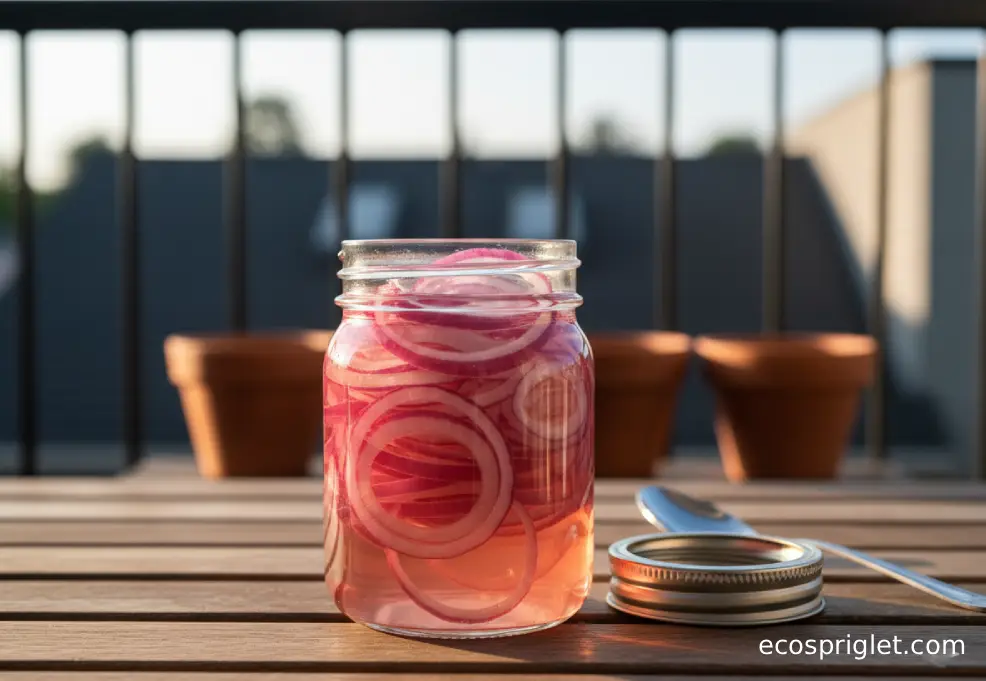
Quick pickled onions (refrigerator pickles): Use a clean jar, keep onions submerged in brine, and refrigerate. Many university recipe handouts for quick pickles note a short refrigerated life; for example, UC Berkeley’s UHS recipe guidance lists up to 2 weeks in the refrigerator in an airtight container. If you see mold, fizzing you didn’t expect, or a sharp “off” smell, toss them.
Caramelized onions: Treat them like leftovers. USDA FSIS guidance is a good anchor here: most cooked leftovers are best used within 3–4 days refrigerated. Cool them quickly, store in a shallow container, and keep the fridge at ≤40°F.
If you’re meal-prepping, this pairs nicely with other small-space kitchen habits—see Composting at Home for how I handle onion scraps without turning my place into a funk factory.
Can Onions Go Bad? Spoilage Signs You Shouldn’t Ignore
Yes—onions can absolutely go bad, and the tricky part is that they don’t always look dramatic until they’re really far gone.
Toss a whole onion if: it’s leaking, has widespread mold, smells sour/rotting, or has a large soft/mushy area. A small sprout isn’t an emergency, but sprouting usually means texture and sweetness are headed downhill—use those onions soon in cooked dishes.
Toss cut onions if: they’re slimy, sticky, unusually wet, or have an off odor (beyond normal onion sharpness). Dark spots and mushy edges are also a strong “no.” When in doubt, err on the safe side—cut produce doesn’t improve with time.
One more myth-buster: you may have heard scary claims that cut onions become “toxic.” What matters is normal food safety—keep them cold, sealed, and used within a reasonable window (USDA and food-safety guidance supports this approach).
Common Mistakes New Apartment Cooks Make With Onion Storage
If I could stop just a few habits, these would be it:
- Sealing whole onions in plastic: moisture builds up, and you get soft spots fast. Use mesh or open storage instead.
- Storing onions in sunlight: light + warmth encourages sprouting. Dark is your friend.
- Parking them next to the stove: heat swings shorten shelf life more than people think.
- Leaving cut onion uncovered: it dries out, shares odor, and is easier to forget.
- Assuming “no smell” means safe: some spoilage isn’t obvious. Watch texture (slime/mush) and visible mold.
Quick fix: designate one spot in your kitchen as “onion home”—a single basket in a dark cabinet or a hanging mesh bag. Consistency prevents the wandering-onion problem that ends with forgotten bulbs behind the blender.
A Simple Apartment Onion Storage Setup You Can Copy Tonight
If you want the best way to store onions without overthinking it, here’s the setup I’d do in almost any apartment:
- Whole onions: mesh bag or wire basket in a dark, cooler cabinet. Keep them away from the dishwasher (steam) and the oven (heat).
- Cut onions: one dedicated airtight container. The container matters because it reduces odor transfer and keeps the onion from drying out. Store it on a consistent fridge shelf so you actually remember it exists.
- Long-term backup: a freezer bag of chopped onions stored flat. This is my “future me will be grateful” move for busy weeks.
And if you grow onions on a balcony, keep a small drying rack or wire shelf handy for curing before you store them away. That single step makes the biggest difference in how long your homegrown onions stay firm.
Storing onions well isn’t fancy—it’s repeatable. Whole onions like airflow and darkness. Cut onions like a tight seal and a cold fridge. Cooked onions behave like any leftover: chill fast, cover, and use within a few days. And if you want onions to last longer than your weekly cooking plan, freezing chopped onions is the most apartment-proof option I know.
If you take just one thing from this, make it this: match the storage method to the onion’s form. Whole bulbs get ventilation; cut pieces get containment. That tiny shift prevents most “can onions go bad?” surprises and makes weeknight cooking smoother (and less stinky).