Cilantro is one of those herbs that makes you feel like a kitchen wizard… right up until it suddenly shoots up, flowers, and gets a little scruffy overnight. If you’re growing coriander in a small pot on a balcony or a bright windowsill, harvesting can feel oddly high-stakes—like one wrong cut and the whole plant sulks.
The good news: cilantro is forgiving as long as you harvest with a simple “outside-in” rhythm and you don’t scalp the plant every time taco night rolls around. In this guide, I’ll walk you through when and how to harvest cilantro for the best flavor, how to cut cilantro so it keeps growing, and how to shift gears when it starts flowering so you can harvest cilantro seeds (aka coriander) like a pro.
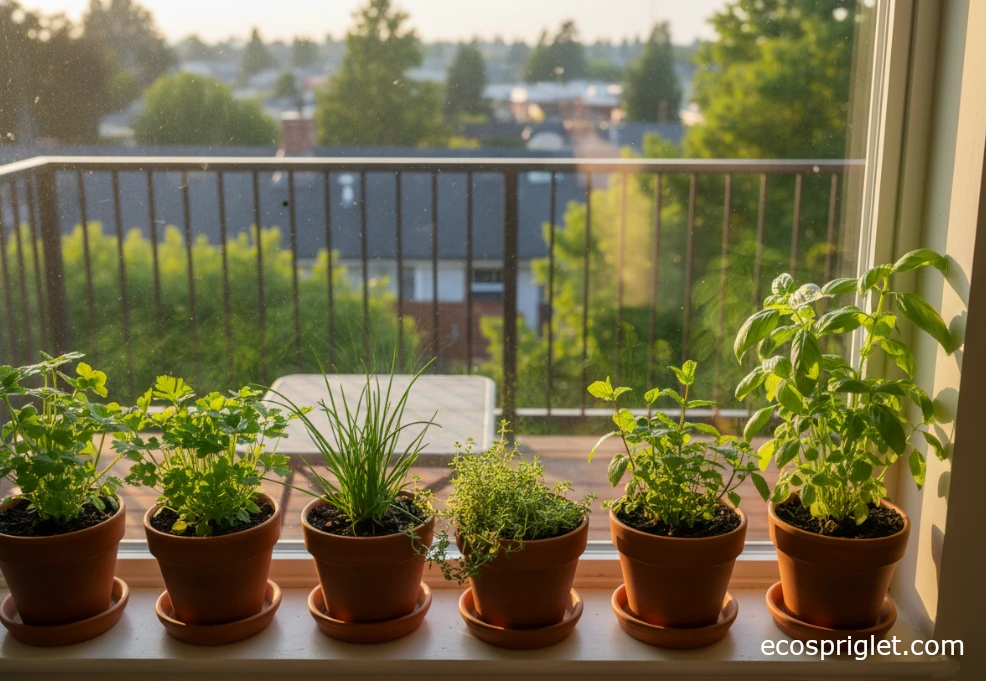
I’m writing this from my own small Portland terrace setup—terracotta pots, limited space, and a habit of needing “just a little cilantro” three times a week. Let’s make your plant last longer and give you leaves and seeds along the way.
When and How to Harvest Cilantro for Best Flavor
If you want that classic bright cilantro flavor, aim to harvest before the plant starts bolting (sending up tall flower stalks). Several university and Extension resources note you can begin picking once plants are around 6 inches tall, and the leafy harvest is best before bolting changes the flavor and texture.
Here are a few “ready to harvest” cues that work well in small containers:
- Height: around 6 inches tall (or taller) with multiple stems.
- Leaf size: outer leaves/stems are often 4–6 inches long and look fully formed.
- Timing: many herbs have great flavor if harvested just before flowering; mid-morning (after dew dries) is a classic sweet spot.
Quick harvest cheat sheet (bookmark this mentally):
| What You Want | What to Cut | Best Visual Cue | What Happens Next |
|---|---|---|---|
| Fresh leaves now | Outer stems/leaves | Plant ~6 inches tall | Center keeps pushing new growth |
| A “bunch” harvest | Whole plant above soil line | Lots of usable stems present | Often regrows for a second cutting if not bolting |
| Coriander seeds | Seed heads | Seed heads turning brown/drying | Dry seeds store well in a jar |
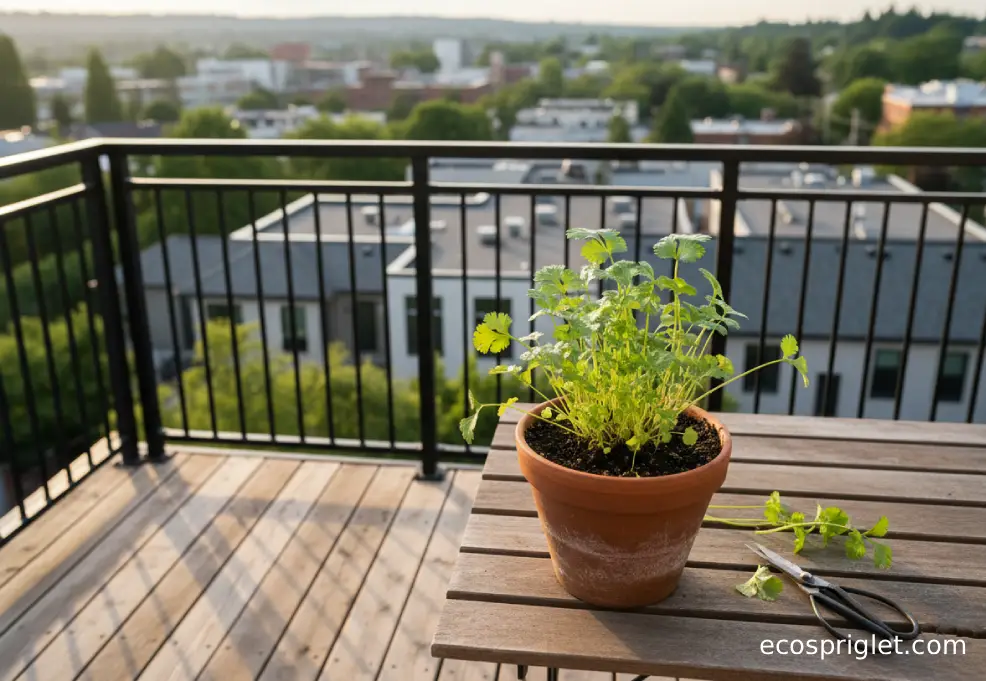
Tools and Prep for a Clean Cut in a Small Space
You don’t need fancy gear, but you do want clean cuts—especially indoors where airflow can be limited and plants stay damp longer after watering.
- Use scissors or snips: A clean snip bruises less than tearing. (Pinching works too, but scissors are more consistent.)
- Start with dry leaves: If the plant is wet, let it dry a bit first so you’re not spreading moisture around cut points.
- Have a “holding spot”: A small bowl or plate keeps sprigs clean and off potting mix.
One balcony-friendly habit I swear by: keep a tiny pair of herb scissors near the kitchen door. If you’re only grabbing what you’ll use that day, the plant barely notices—and you avoid the classic beginner move of “harvesting everything at once.” (I did that my first year and spent the next week eating sad grocery-store cilantro.)
If you’re also growing other herbs, this is a good moment to bookmark our broader guide: Indoor Herb Garden.
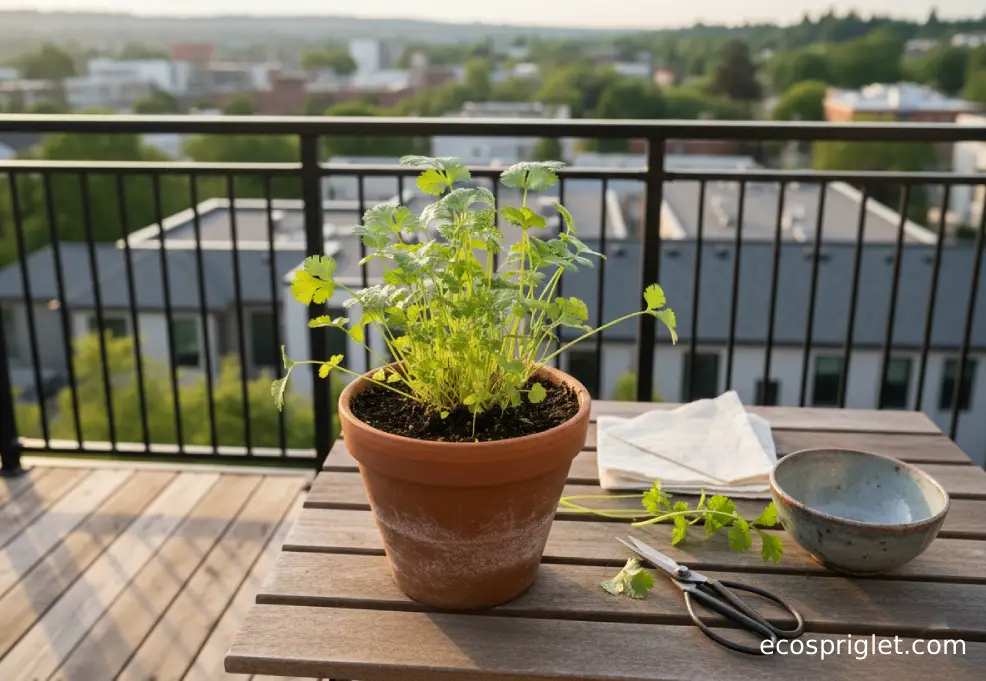
How to Cut Cilantro From the Plant So It Keeps Growing
This is the core move for cilantro how to harvest without killing the plant: take from the outside, leave the center alone. Several Extension resources describe harvesting outer leaves/stems and letting the plant continue producing new growth.
Here’s the method I use in pots:
- Find the biggest outer stems. These are the older, fully developed ones around the edge.
- Snip low, but don’t gouge the crown. Cut the stem close to the base, leaving the central cluster intact so it can keep pushing new leaves.
- Don’t take too much at once. A Penn State Extension guide suggests harvesting by cutting about one-third of the plant at a time. In containers, that “one-third rule” is a great guardrail.
Regrowth tip: If your pot dries quickly (sunny balcony, windy rail), water the plant when the surface feels dry and avoid letting it fully wilt—stress can speed up bolting. Oregon State University Extension also notes cilantro tends to bolt in peak heat and does better in cooler/part-shade conditions in warm periods.
Want a deeper dive on watering in containers? This helps cilantro a lot: How Often to Water House Plants.
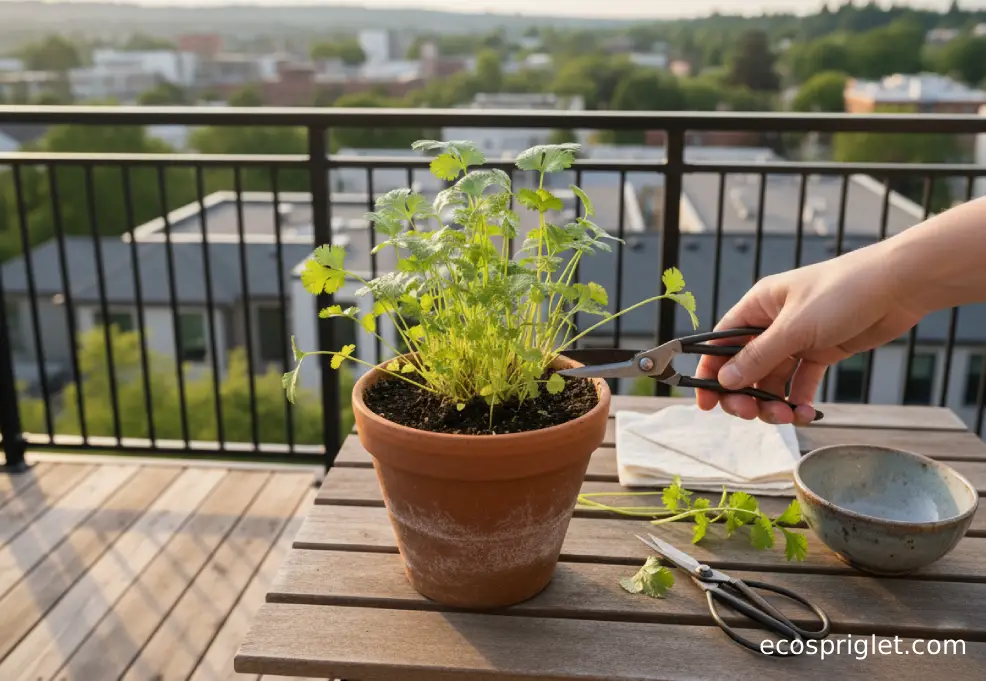
How to Harvest a Whole Bunch Without Killing the Plant
Sometimes you need more than a few sprigs—salsa party, soup night, or you’re freezing a batch. If your cilantro is still leafy (not fully bolting yet), you can do a bigger harvest.
Texas A&M AgriLife Extension describes an approach where you can cut the whole plant, leaving about 1–2 inches above the soil so you capture both small and large leaves. Wisconsin Extension also notes whole plants can be cut about an inch above the ground and may regrow for a second cutting.
Two practical rules that keep this from backfiring in containers:
- Only do a full cut when the plant is robust. If it’s thin, stick to outer-stem harvesting.
- Give it recovery conditions for 3–5 days. Bright light, steady moisture, and a little afternoon shade if it’s warm.
If the plant is already throwing tall flower stalks, a “whole bunch cut” usually just accelerates the end of leaf production. At that point, you’ll be happier switching to seed-harvest mode (we’ll get there).
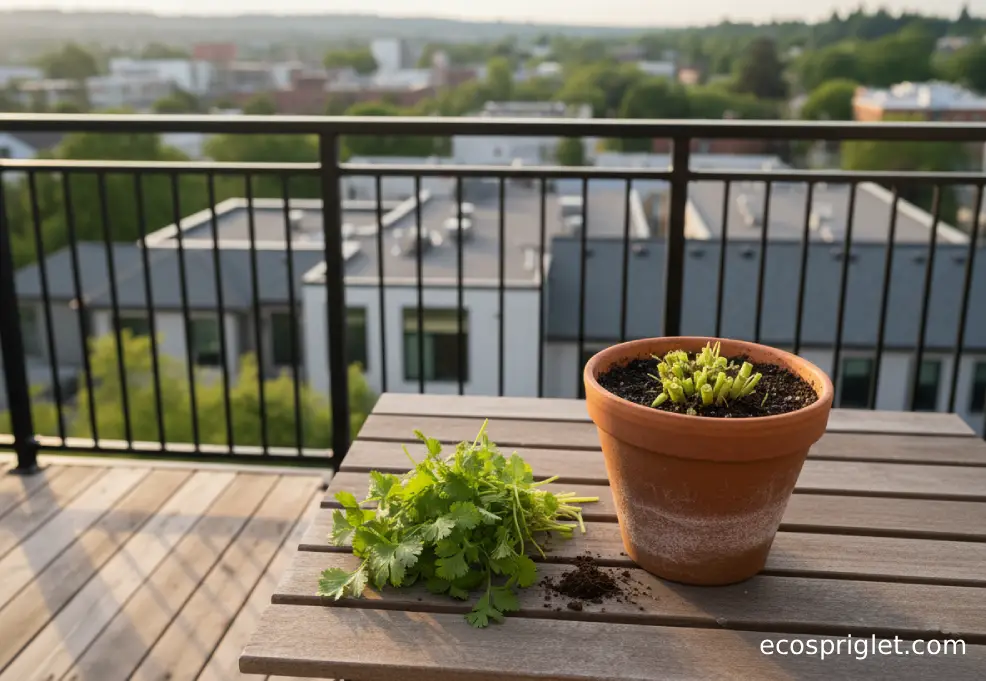
Keeping Cilantro Going Longer in Warm Apartments
I remember one July where I kept “fixing” my cilantro by watering more—only to watch it bolt even faster. The lesson (for me, anyway): cilantro is a cool-season herb at heart, and once it decides it’s time to reproduce, it gets very determined about it. NC State’s plant profile calls out that it bolts easily in hotter climates, and Oregon State University Extension recommends cooler/part-shade placement during warmer periods.
Here’s the mixed-format strategy that works best in pots (and keeps you from fighting the plant):
Make it comfortable: morning sun is great; harsh afternoon heat is what pushes bolting.
- Shift to partial shade when days warm up. Even moving a pot 2–3 feet can change the heat load.
- Harvest regularly (lightly). Taking outer stems often encourages fresh leaf production—just don’t strip the plant.
- Succession plant. OSU Extension recommends sowing small batches every few weeks to keep leafy cilantro coming instead of relying on one plant forever.
Container note: You’ll see mixed advice on pot depth. One NC State container guide recommends a container depth around 8 inches for cilantro, while OSU Extension notes cilantro can grow in shallower containers. In practice, I like 8 inches or deeper because it buffers moisture swings on balconies.
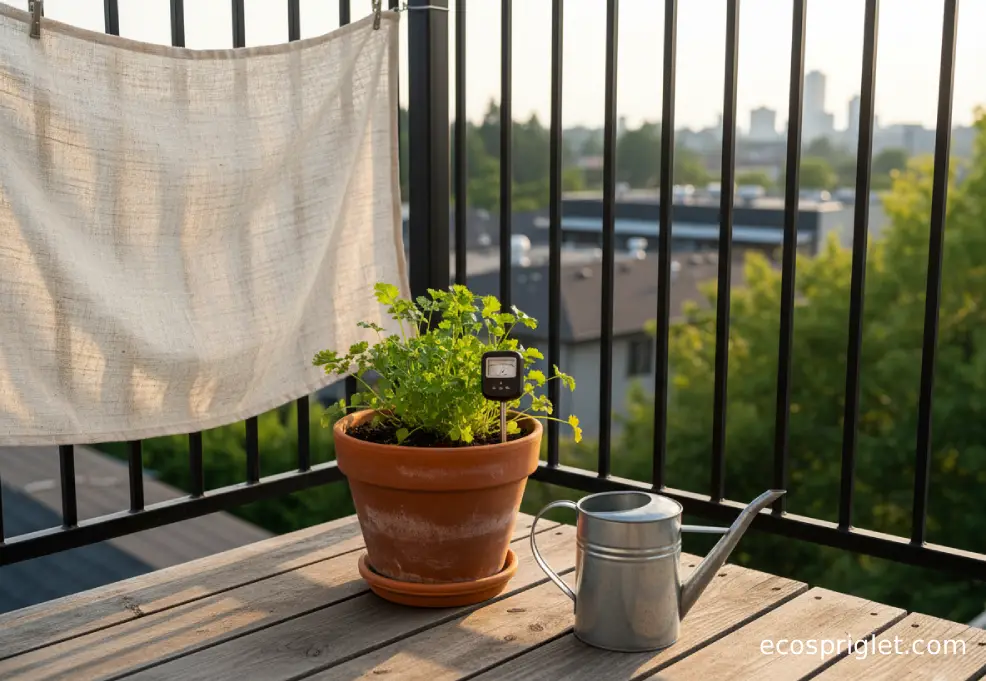
How to Harvest Cilantro Seeds (Coriander) From the Plant
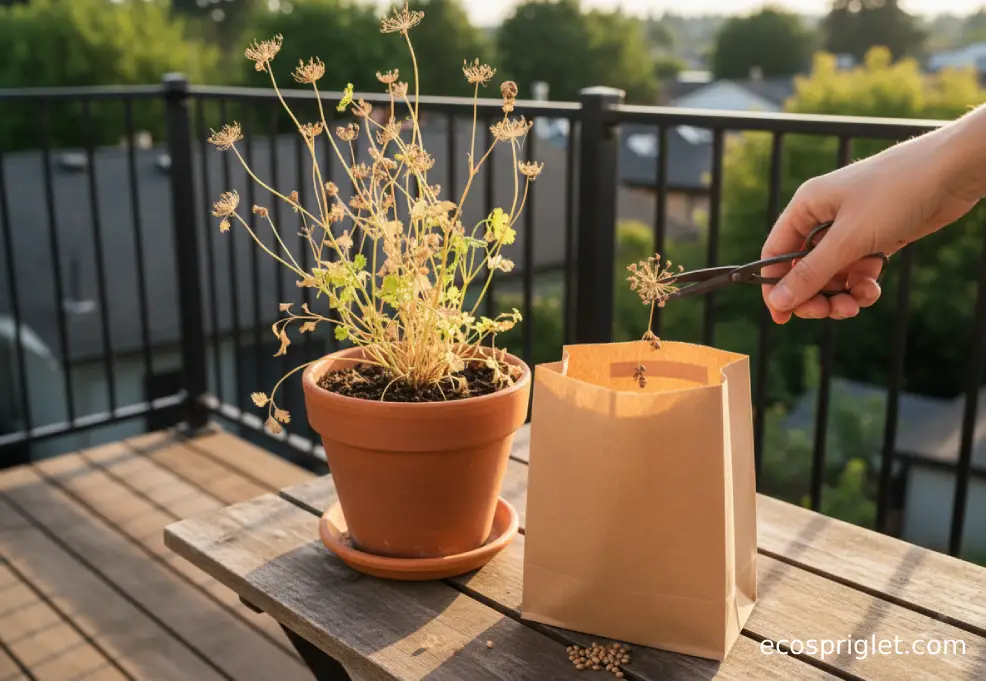
If your cilantro bolts, don’t take it as failure—think of it as the plant offering you coriander. Utah State University Extension gives a simple, very reliable method: let seeds form, then when plants/seed heads begin to turn brown, cut the seed heads and dry them in a paper bag so the seeds drop to the bottom.
My step-by-step for how to harvest coriander seeds from cilantro in a small apartment setup:
- Wait for the “brown phase.” Green seed heads are still immature; brown and drying is the easy, low-mess stage for most home seed saving.
- Snip whole seed heads. Do it on a dry day if possible.
- Bag and hang (or bag and set aside). Put seed heads in a paper bag and let them dry until seeds fall free.
- Finish drying before storage. Once the seeds are out, let them air-dry another day or two, then store in a sealed container away from light.
Balcony tip: If wind is a factor, do the snipping and bagging indoors over a plate. Coriander seeds bounce like tiny marbles.
Storing Cilantro Leaves and Seeds So They Stay Worth Eating
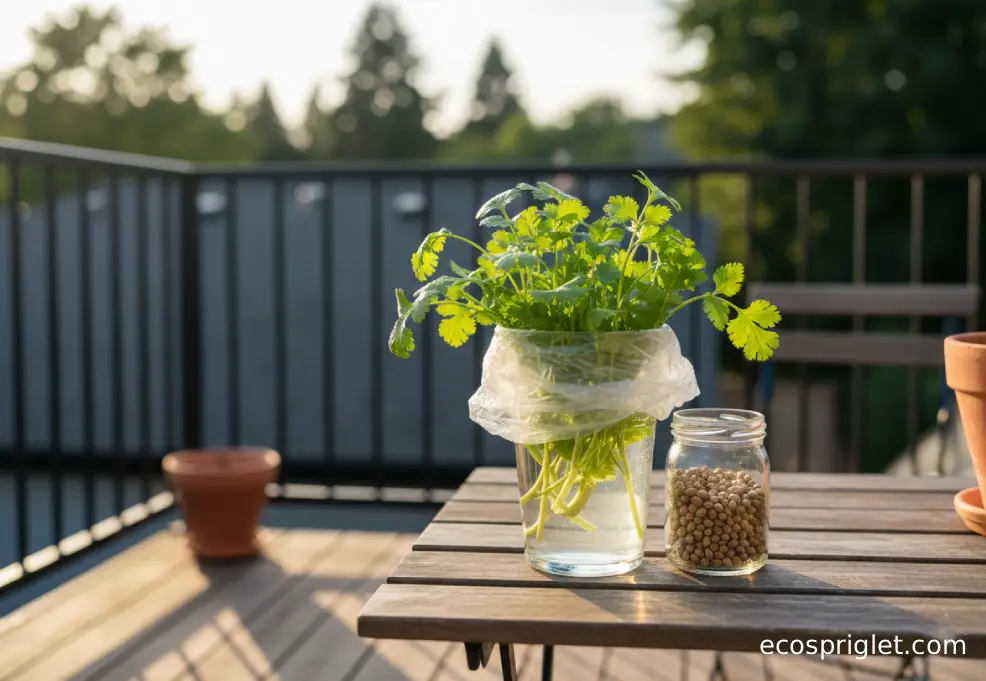
Harvesting is only half the win—storing it well is how you stop cilantro from turning to limp confetti in 24 hours. UC Master Gardener guidance suggests storing cut stems unwashed in a container or using the “bouquet in water” approach in the refrigerator, changing water every few days. Wisconsin Extension also mentions the bouquet method for freshness.
- Refrigerator bouquet: Trim stem ends, stand in water, loosely cover (helps humidity).
- Use leaves as needed: Keep stems intact; wash right before cooking.
- Freeze for cooking: Chop and freeze in small portions (great for soups and sauces).
For coriander seeds, fully dry matters more than anything. Once dry, keep them in a sealed jar in a cool, dark cabinet—your future self will thank you when you open it and it still smells citrusy and warm.
Common Mistakes New Balcony Gardeners Make With Cilantro
- Stripping the whole plant “for efficiency.” Use the one-third rule (or harvest outer stems only) so the plant can rebound.
- Cutting the center crown. If you take the newest growth, regrowth slows way down.
- Waiting too long and then blaming the plant. Cilantro bolts readily in warmth; plan on succession sowing instead of expecting one plant to last forever.
- Using a too-tiny pot in full heat. Smaller pots swing from wet to dry fast; deeper containers can help buffer moisture.
- Harvesting only the baby leaves. Many guides recommend cutting exterior/outer leaves once they reach a usable size (often 4–6 inches).
If you only fix one thing: harvest more often, but in smaller amounts. Cilantro rewards consistency.
Creative Ways to Use Every Stage: Leaves, Stems, Flowers, and Seeds
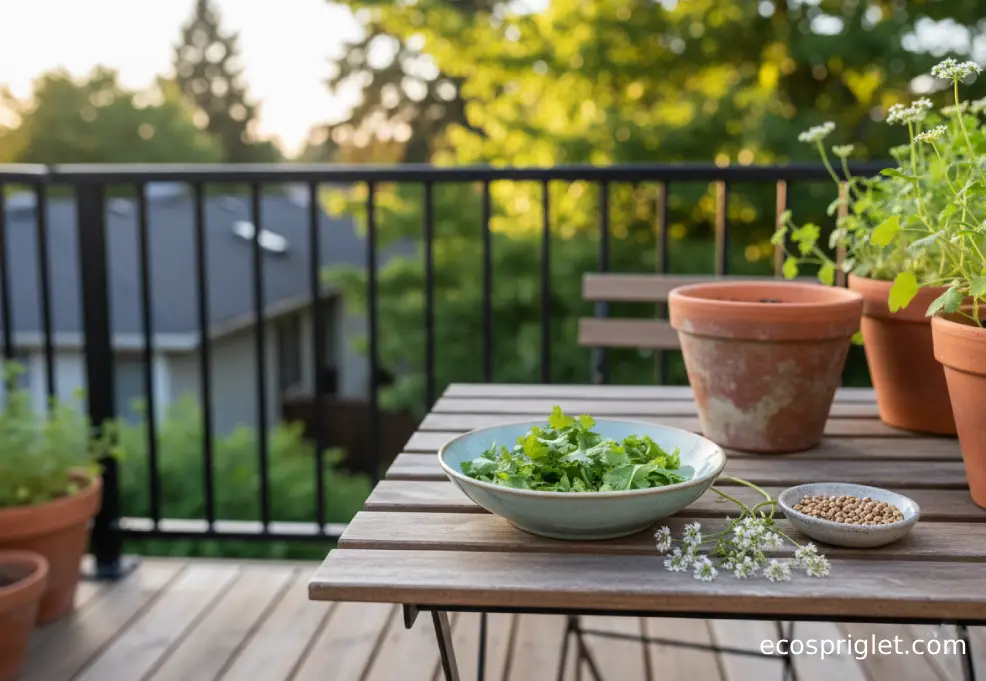
If your cilantro is mid-bolt and you’re feeling betrayed, try this reframing: it’s no longer a “leaf plant,” it’s a flavor plant. Tender stems are absolutely usable (especially blended), flowers are surprisingly pretty as a garnish, and coriander seeds are the long game.
A few apartment-kitchen-friendly ideas:
- Use stems on purpose: Finely chop them for salsa, or blend stems + leaves into chimichurri-style sauces. Stems carry plenty of aroma.
- Let a few flowers happen: If you’re growing outdoors, cilantro flowers can support beneficial insects while you still harvest some greens.
- Toast your homegrown coriander: A quick dry-toast in a pan (then grind) makes the spice taste fresher and warmer than most pre-ground jars.
If you take nothing else from this guide, take this: cilantro likes a steady rhythm. Start harvesting once the plant is around 6 inches tall, focus on outer stems, and keep the center growth intact. When you need a bigger harvest, cut above the soil line and give it recovery conditions—but don’t be surprised when warm weather nudges it toward flowering.
And when bolting happens (because it will, especially in small pots), you’re not “too late.” You’re just switching harvests. Collect those seed heads when they’re browning and drying, let them finish in a paper bag, and you’ve got coriander that tastes like it actually came from somewhere—because it did.