If your bathroom has no windows, it can feel more like a subway tunnel than a spa. Adding plants is an easy way to soften all that tile and metal, but there’s a catch: plants still need light. The good news is that with the right setup, you absolutely can have bathroom plants in a room with no window. You just can’t skip the lighting step.
In this guide, I’ll walk you through what actually works in a windowless bathroom: how much light plants really need, when to use grow lights, and which species cope best with low light and high humidity. We’ll look at classic tough plants like snake plant and ZZ plant, trailing options for shelves and shower rods, and pet-friendlier choices if you share your space with a curious cat or dog. Along the way, I’ll flag common mistakes I see all the time—like loving your plants to death with water—and share a few tricks I use in my own small-apartment bathrooms to keep everything green instead of sad and yellow.
Can Plants Really Live in a Bathroom With No Window?
Here’s the honest answer: no plant can live forever in a completely dark bathroom without some kind of light source. Even “low-light” plants still need low light, not zero light. University and Extension sources put low light for houseplants at roughly 25–75 foot-candles—basically what you get in a dim room near a window, not in a closed, windowless box.
That’s why any realistic plan for bathroom plants with no window starts with artificial light. Think of your grow light as the “fake window” for your plants. LED or fluorescent fixtures designed for plants can supply enough light to keep low-light species happy, and Extension resources confirm that artificial lighting can successfully substitute for natural light indoors when it’s bright enough and on for 12–16 hours per day.
If adding a grow light isn’t possible, your only options are short-term displays (rotating plants back to a brighter room every few days) or realistic fake plants. Personally, I’d rather run a small LED bar on a timer. They use very little power, and you get a bathroom that feels like a tiny greenhouse every time you walk in.
Setting Up Light in a Windowless Bathroom
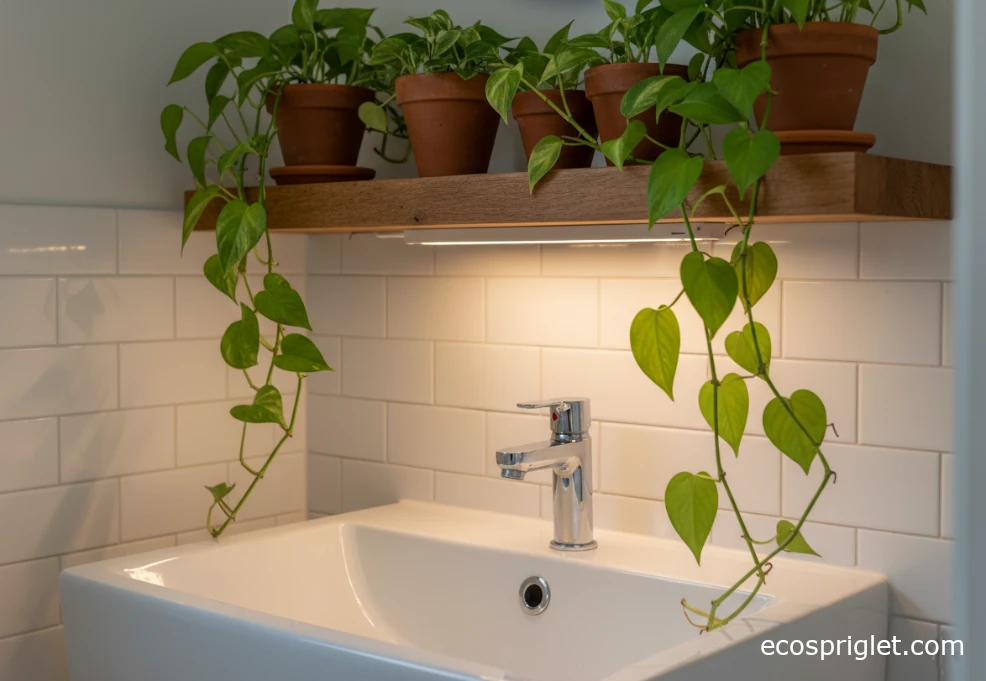
Once you accept that bathroom plants with no window need artificial light, the setup is pretty simple. I like to treat the main grow light like a tiny skylight and build the plant layout around it.
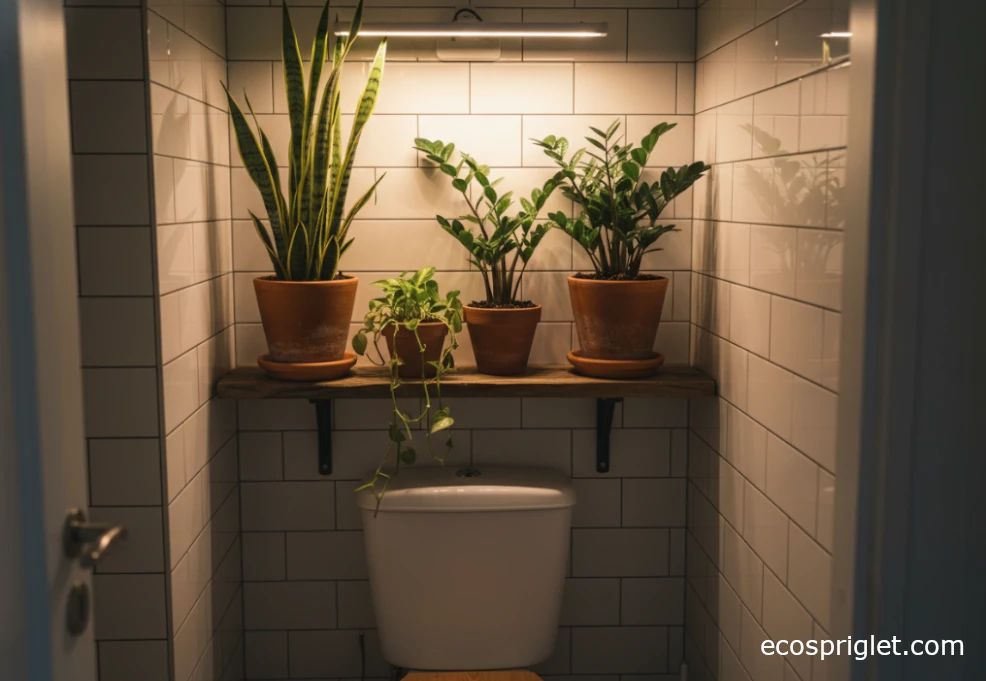
For most low-light species, a compact LED grow bar or panel works well when it’s:
- Mounted about 12–24 inches above the plant leaves.
- On a timer for roughly 12–16 hours per day, every day.
- Placed so light hits the tops of leaves, not just the sides.
University guidance suggests that a basic two-tube fluorescent or small LED fixture can support low- to medium-light plants when used close to the foliage and for long enough each day, which is perfect for a windowless bathroom.
In my last apartment, I mounted a 24-inch LED bar under a shallow shelf above the toilet, then tucked plants along that shelf and on the tank. The light came on at 6 a.m. and shut off at 10 p.m. automatically, so I never had to remember it. Just make sure any electrical components are rated for damp areas, and keep them well away from direct splashes. If your bathroom is really steamy, aim a small fan at the plants for an hour or two after showers so leaves dry off instead of staying wet and inviting fungal issues.
Best Plants for Bathrooms With No Windows
With light handled, you can finally pick the stars of your windowless bathroom. The best plants for a bathroom with no window are species that tolerate low light, uneven watering, and higher humidity.
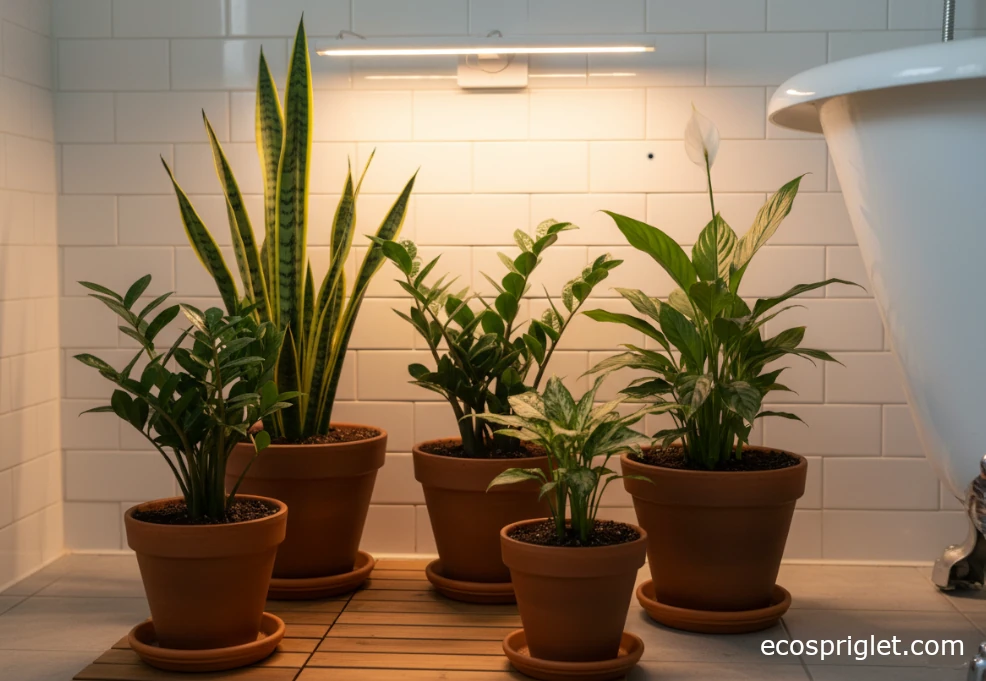
- Snake plant (Sansevieria): Famous for being forgiving, snake plant tolerates low light but grows best with brighter indirect light from your fixture. Extension sources call it a classic low-light houseplant, especially good for beginners.
- ZZ plant (Zamioculcas zamiifolia): Slow-growing, thick, glossy leaves, and super tolerant of lower light and missed waterings. It still needs at least some indirect light from your grow light each day to really thrive.
- Pothos (Epipremnum aureum): Great trailing plant for shelves or hanging pots. It tolerates low light but will make longer, sparser vines if the light is too weak.
- Peace lily (Spathiphyllum): Loves humidity, tolerates low light, and will droop slightly when it wants water, which makes it very beginner-friendly.
- Chinese evergreen (Aglaonema): A classic low- to medium-light foliage plant with patterned leaves that look great against white tile.
- Cast iron plant (Aspidistra): True to its name, it tolerates neglect, low light, and temperature swings.
Most of these are considered low-light plants by Extension lists and bathroom plant roundups, but remember that “low light” still means measurable light. Without a grow light, they’ll gradually decline.
One more important note: many of these species (pothos, peace lily, philodendron, Chinese evergreen, ZZ plant) are toxic if chewed by pets or small children. Always double-check specific species on the ASPCA’s Toxic and Non-Toxic Plants database, and keep toxic plants up high if you have curious roommates—human or otherwise.
Plants for a Shower With No Window
If you want plants right in or near the shower, look for humidity-lovers like Boston fern, bird’s nest fern, or some orchids. They still need that overhead grow light, but they’ll enjoy the extra moisture from daily showers as long as they can dry out between them.
Trailing and Shelf Plants for Tiny Bathrooms
Windowless bathrooms are usually short on floor space, so I like to go vertical. Trailing and compact plants turn boring shelves and shower rods into a living curtain of green.
Good candidates include:
- Pothos: Training a pothos along a shelf edge or shower-safe tension rod instantly softens hard lines.
- Heartleaf philodendron: Similar look to pothos but with softer, more heart-shaped leaves.
- Spider plant: Works nicely in a hanging pot where the plantlets can dangle down.
Just keep them within the bright area cast by your grow light. I like to hang my lowest vines so the tips are still within that light “cone.” If the stems are crawling into dim corners, those sections will eventually yellow out.
If you’re working with very little depth, look for narrower, upright plants in slim pots (think snake plant or ZZ plant) and pair them with a single trailing species. You don’t need a jungle—two or three well-placed plants can make the whole room feel softer and more inviting.
If you want just one plant for a bathroom with no windows, I’d choose a medium-sized ZZ plant under a small LED bar. It tolerates a bit of neglect, looks polished in almost any container, and doesn’t mind if your schedule is all over the place—as long as it gets that consistent artificial light.
Pet-Safe Plants for a Windowless Bathroom
If you live with pets, the plant list for a bathroom with no window narrows a bit. Many popular low-light species are at least mildly toxic. That doesn’t mean you can’t use them at all, but it does mean thinking about placement—or choosing pet-friendlier options.
According to ASPCA-based plant lists, several humidity-loving plants are considered non-toxic to cats and dogs, including Boston fern, parlor palm, African violet, calathea, Christmas cactus, and many Phalaenopsis orchids. Always double-check individual species, but this gives you a good starting point for a pet-safe bathroom oasis.
- Boston fern: Loves humidity and looks great on a stool or hanging basket.
- Parlor palm: Slow-growing, compact palm that handles low to medium light under a grow light.
- Calathea: Beautiful patterned leaves that really pop against white tile; appreciates consistent moisture and humidity.
- African violet: Adds flowers to the mix; keep the foliage dry and water from below.
- Phalaenopsis orchid: Likes bright, indirect light, so keep it closest to the grow light.
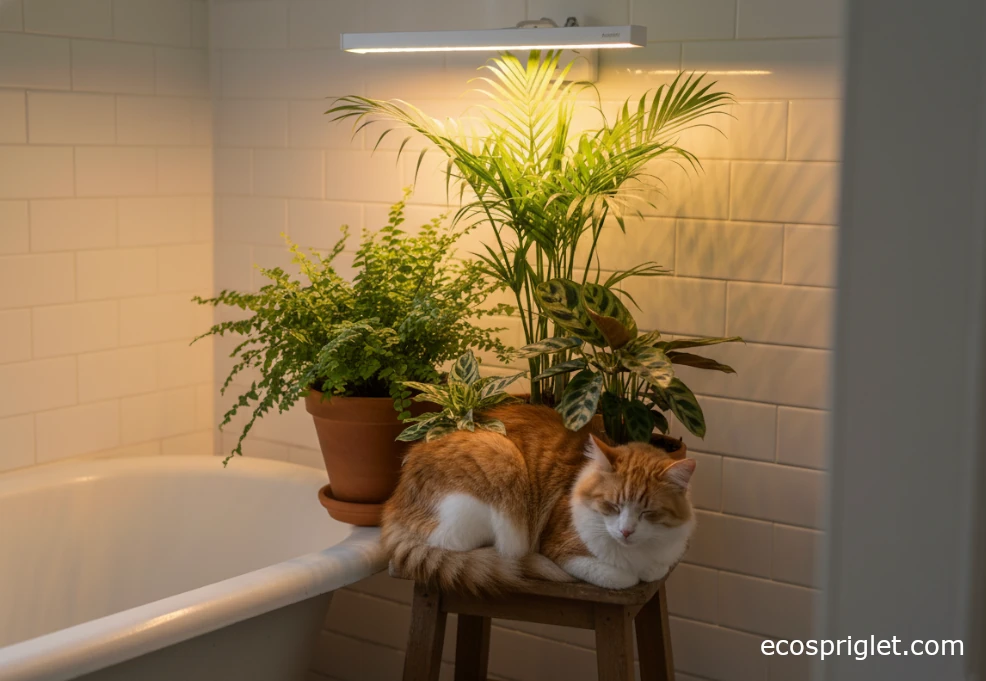
In my own place, I keep toxic plants high and pet-friendly plants at “tail level.” It’s an easy way to enjoy the full palette of foliage without stressing every time the cat wanders into the bathroom.
Find more cat-safe plants in this guide.
Everyday Care in a Dark, Humid Bathroom
Caring for plants in a no-window bathroom is mostly about getting water and light in balance. Low light means growth slows down, so plants drink less. If you water them on the same schedule you’d use for a bright windowsill, you’ll almost certainly end up with root rot.
Here’s a simple routine that works well for most bathroom plants:
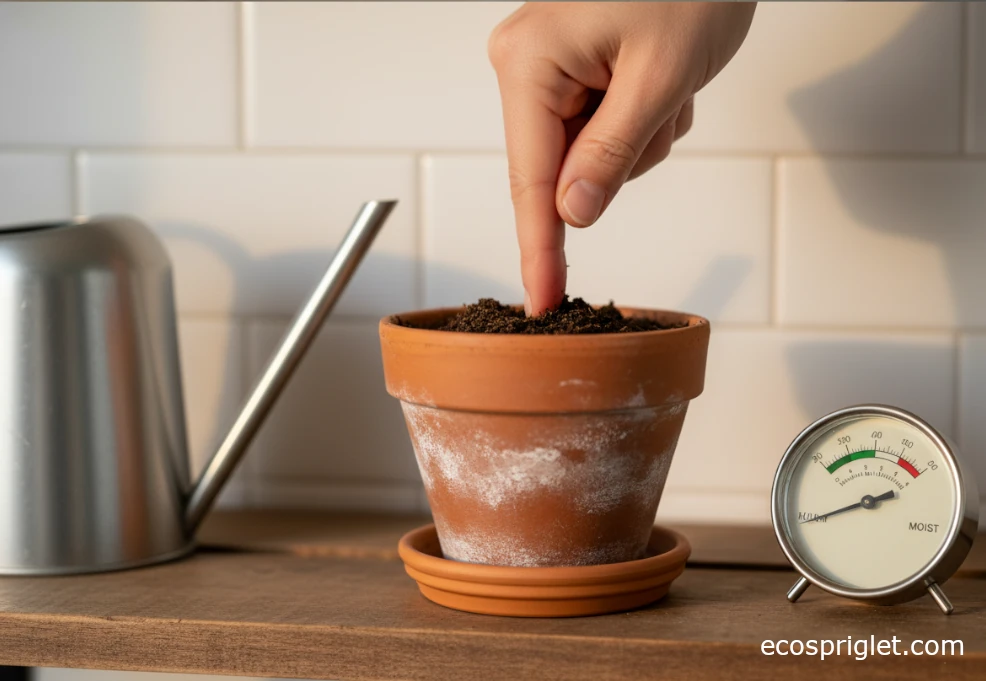
Watering: Once a week, poke your finger into the potting mix about 1–2 inches deep. If it feels dry at that depth, water thoroughly until a little water drains from the bottom of the pot, then empty any saucer underneath. If it still feels moist, wait a few days and check again. Extension resources emphasize that low-light plants use water more slowly, so let the soil dry toward the top before watering again.
Humidity and airflow: Bathrooms usually have great humidity but terrible airflow. After hot showers, crack the door or run the fan for 15–20 minutes so leaves can dry. Constantly wet foliage is an invitation for fungi and bacterial spots.
Cleaning leaves: Dust and soap residue can build up fast. Every month or so, take plants to the sink and gently rinse the leaves with lukewarm water, then let them drain before returning them to the bathroom.
Fertilizing: In a low-light bathroom, plants aren’t racing to grow, so go light on fertilizer. Use a balanced liquid houseplant fertilizer at half-strength once a month in spring and summer, and skip feeding entirely in fall and winter unless you run strong grow lights.
If you like tracking things, a small moisture meter can be helpful at first, but your finger is still the best tool you own.
Common Mistakes to Avoid With Bathroom Plants
I’ve definitely killed more than one plant in a dark bathroom by being “too nice” to it. Here are the big mistakes to dodge with plants for a bathroom with no windows:
- Expecting plants to live in true darkness. No window and no grow light means no long-term plants. Rotate them out weekly or invest in a small LED bar.
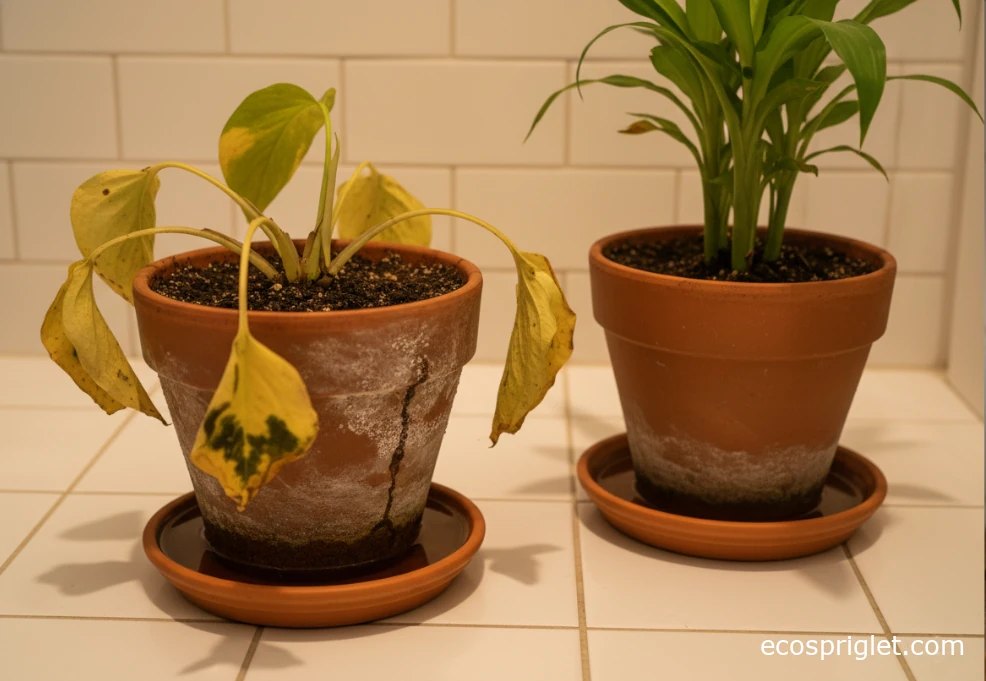
- Overwatering in low light. Soggy soil plus low light is the fastest way to root rot.
- Using pots without drainage holes. Extra risky in humid rooms where evaporation is slower.
- Placing plants where they’re constantly splashed. A little mist is fine; a daily shower on the pot isn’t.
- Ignoring toxicity. Pothos, peace lilies, philodendron, ZZ plant, and others can all be problematic for pets if chewed.
I remember one winter when I stuck a pothos on the back of a toilet in a bathroom with no window, thinking it would “get used to it.” No grow light, lots of love from the watering can. Within two months it was pale, stretched, and the soil smelled swampy. When I finally gave it a grow light and a well-draining mix, it bounced back—but it taught me that toughness doesn’t mean invincibility.
If you’re ever unsure what’s wrong, start with the basics: Is there enough light? Is the pot draining freely? Is the soil staying wet for more than a week? Fix those first before buying any special sprays or treatments. And if you want a bigger-picture troubleshooting view, there’s a handy checklist in our balcony herbs guide that also applies to indoor bathroom plants.
A bathroom with no window doesn’t have to feel like a storage closet. With a single well-placed grow light and a few tough plants, you can turn it into the calmest, greenest room in your apartment.
Start by choosing your “fake window”—a small LED bar or panel—then build a simple layout below it: one or two upright plants, one trailing plant, and maybe a fern or palm for softness. Add a shallow wooden shelf, a small stool, or a corner stand if you need more surfaces. Stick to breathable pots with drainage holes, check the top 1–2 inches of soil before watering, and keep an eye on how far your plants are from the light.
Over time, adjust your mini jungle just like you would a gallery wall: move a plant closer to the light if it’s stretching, rotate in a new species when you want a different texture, or swap pots to match new towels. The whole setup is surprisingly low-maintenance once it’s dialed in—and you get that little hit of “ahh, this is nice” every time you step into the room.
If this article has you daydreaming about greenery beyond the bathroom, the same principles work beautifully on balconies and dim corners of your living room. Once you get the hang of light and watering, you can grow more than you think—even in the darkest parts of an urban apartment.