If you’ve ever bought (or cut) a lovely bunch of dill and found it limp or slimy two days later, you’re not alone. Dill is delicate—those feathery leaves lose moisture fast, and once the stems sit in a puddle or the leaves stay damp, things go downhill in a hurry. Storing fresh dill is a little balancing act: give it enough moisture to stay perky, but enough airflow that it doesn’t get slimy.
In this guide, I’ll walk you through the best way to store fresh dill for the fridge (two reliable methods) and the freezer (two options depending on how you cook). You’ll also get quick troubleshooting for common “why is my dill gross?” moments, plus a few practical ways to save fresh dill in small portions—perfect for apartment kitchens where space matters. Along the way, I’ll lean on storage guidance from Purdue Extension and Michigan State University Extension, plus safe fridge/freezer temperature standards from FoodSafety.gov.
Start With a Quick Dill “Reset” Before You Store It
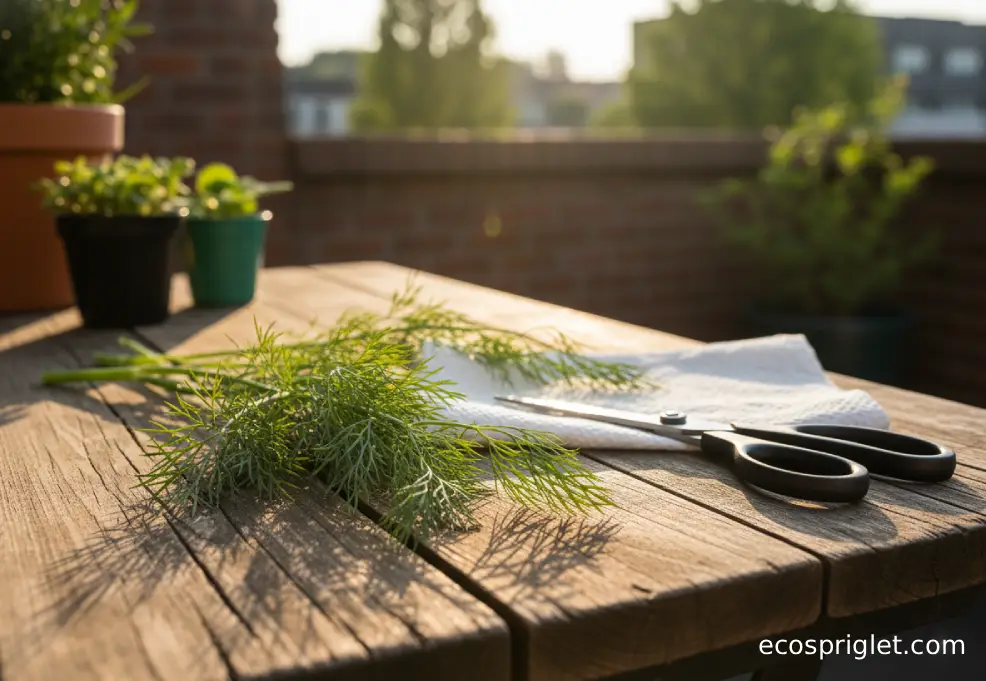
The fastest way to keep dill fresh is to store it clean-ish and dry-ish—without over-handling it. Here’s a little ritual I follow after harvesting dill from the pots on the balcony or after bringing a bunch home:
- Trim the ends: Snip 1/4–1/2 inch off the stem bottoms. This helps with water uptake if you use the “jar method.”
- Remove the trouble spots: Pull off any yellowing fronds or bruised bits. One slimy leaf can take the whole bunch with it.
- Skip washing until use (most of the time): Purdue Extension notes rinsing dill just before use, then shaking or patting dry. If you wash now and store it damp, you’re basically inviting spoilage.
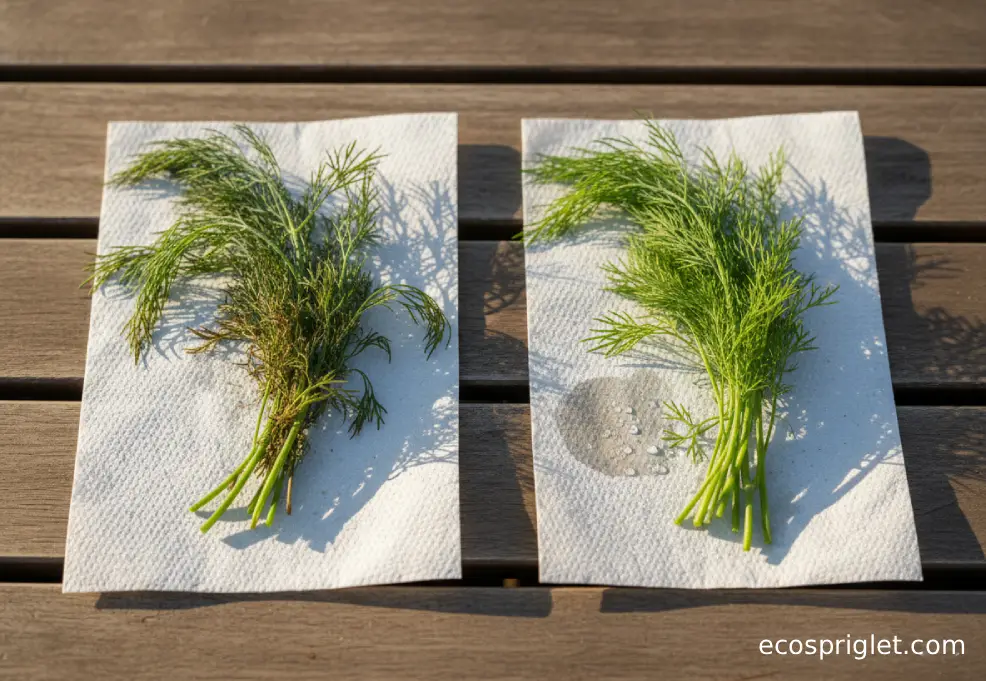
Small apartment note: if your dill is visibly gritty (farmers market bunches can be), do a quick rinse, then dry it aggressively—shake well and let it sit on paper towels until it feels truly dry to the touch. Michigan State University Extension recommends rinsing under cool water and drying on paper towels when preparing herbs for freezing/drying.
The Two Best Ways to Store Fresh Dill in the Fridge
If you’re asking “how do you store fresh dill?” for weeknight cooking, these are the two methods worth memorizing. They both show up in Extension guidance, and they solve slightly different problems.
Method A: “Bouquet in a jar” (best for perkiness)
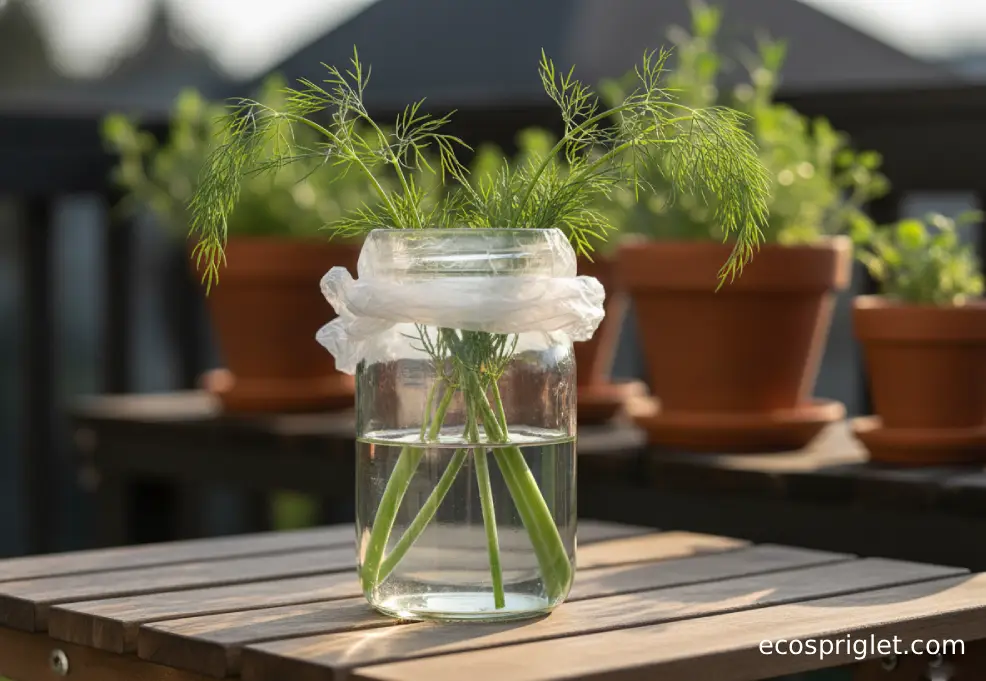
Michigan State University Extension suggests storing fresh herbs in the refrigerator for about a week in a container with about an inch of water, covered with a clear plastic bag that isn’t sealed tight. This is my go-to when I know I’ll use dill across a few meals.
- Put dill stems in a jar with ~1 inch of water.
- Loosely cover the top with a bag (leave a little gap so it can breathe).
- Change the water every 1–2 days if you can. Cloudy water is the start of the “slime spiral.”
Method B: Damp towel + bag (best for crisper drawers)
Purdue Extension and NDSU Extension both describe wrapping dill in a slightly damp paper towel and then placing it in a plastic bag. The trick is “slightly damp,” not wet—think wrung-out sponge.
What to expect for freshness: Dill can be short-lived. Purdue notes dill stored these ways may last only about two days. In real life, I usually get 2–5 days depending on how dry the leaves were when stored and how cold my fridge runs, while the jar method can stretch longer when you keep the water clean. (If your fridge is warm, everything shortens.) FoodSafety.gov recommends keeping the refrigerator at 40°F or below.
Where Dill Usually Goes Wrong (And How to Fix It Fast)
Dill doesn’t give you subtle hints—it goes from “fine” to “sad” quickly. Here are the most common failure modes I see in apartment fridges (including mine, on tired weeks):
Slimy leaves or a funky smell
Usually too much moisture + not enough airflow. Fix: pull out the bunch, discard any slimy bits, and re-store with a fresh, only-slightly-damp towel and a clean bag. If you’re doing the jar method, dump the old water and rinse the jar.
Dill is limp but not slimy
Usually dehydration. Fix: switch to the jar method for a day (trim stem ends again), or refresh your towel so it’s lightly damp. A totally dry towel can wick moisture out of the leaves.
The tips turn brown in the bag
Often a combo of bruising and condensation. Fix: don’t cram dill into a tight bag; give it room, and keep it away from the coldest back wall where leaves can partially freeze.
If you want more herb-growing help so you’re not buying bunches every week, my balcony-friendly rundown is here: kitchen herbs in pots.
How to Store Fresh Dill in the Freezer (Two Practical Options)
Freezing is the easiest way to save fresh dill if you cook with it in soups, eggs, potatoes, or sauces. The texture won’t be garnish-perfect after freezing (most herbs go limp), but the flavor holds up well for cooked dishes—Michigan State University Extension points out frozen herbs are best used chopped in cooked foods rather than as a garnish.
Option 1: Ice cube portions (best for cooking)
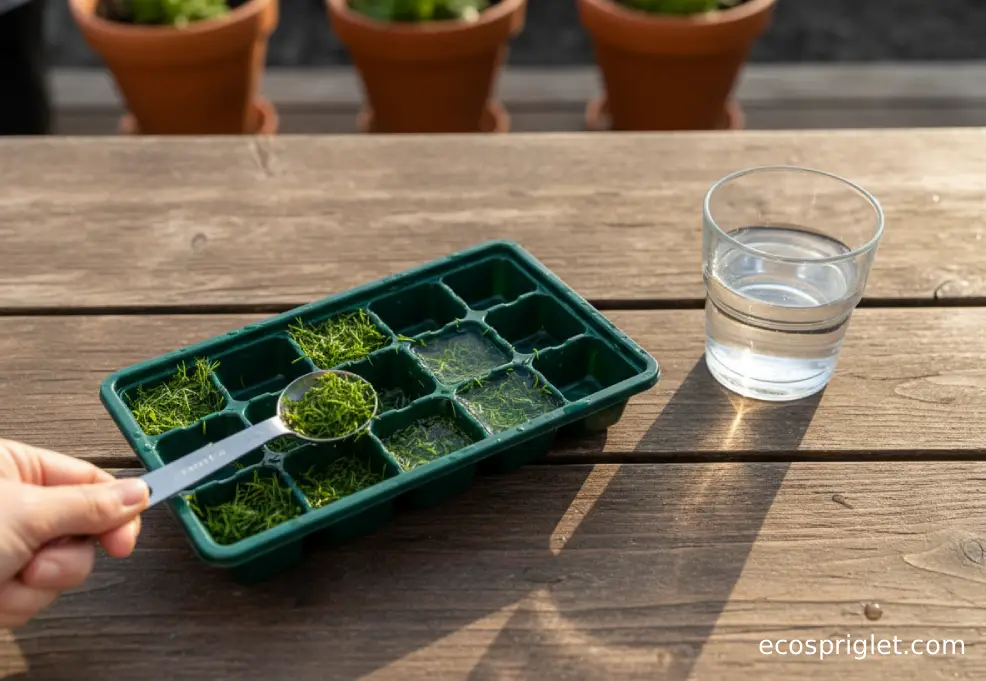
This method is recommended by multiple Extension sources for herbs, and NDSU specifically suggests chopping and freezing dill in trays covered with water.
- Chop dill the way you’d cook with it.
- Add about 1 tablespoon chopped herb per cube compartment (Oklahoma State and SDSU both describe this “tablespoon per cube” approach).
- Cover with water, freeze solid, then pop cubes into a labeled freezer bag.
Option 2: Whole sprigs, tightly wrapped (best when you want quick pinches)
Penn State Extension describes freezing dill weed stems by wrapping a few stems in plastic wrap and then over-wrapping in foil before freezing. (If you can’t find foil in the drawer chaos, at least double-wrap well to prevent freezer burn.)
FoodSafety.gov recommends keeping the freezer at 0°F or below. If your freezer runs warmer, herbs dry out faster and pick up off-flavors.
A Simple Storage Cheat Sheet for Apartments
| Method | Best For | What You Do | What to Watch |
|---|---|---|---|
| Jar “bouquet” in fridge | Keeping dill fluffy for several meals | Stems in ~1 inch water, loose bag cover | Change water every 1–2 days; keep fridge ≤40°F |
| Damp towel + bag | Criper-drawer storage, less counter space | Wrap loosely in slightly damp towel, bag it | Towel must be barely damp, not wet |
| Ice cube freezing | Cooking portions | ~1 Tbsp chopped dill per cube, cover with water | Label cubes; use in cooked dishes |
| Wrapped sprigs freezing | Quick pinches without chopping | Wrap stems well (plastic wrap + foil works) | Prevent freezer burn; freezer at 0°F |
Fridge temperature note: FoodSafety.gov emphasizes 40°F or below for the refrigerator and 0°F or below for the freezer. In many apartments, that’s the quiet reason herbs don’t last—fridges set a little too warm.
Common Mistakes New Dill-Storers Make
I learned this the hard way after stuffing a wet bunch into a sealed bag and basically creating a tiny dill sauna overnight. Here are the mistakes that cause most “how to keep dill fresh” frustration:
- Washing and bagging while wet: Purdue suggests rinsing dill just before use. Store it dry to avoid slime.
- Sealing the bag airtight: A little airflow helps. MSU Extension notes covering herbs with plastic but not sealing it tight for fridge storage.
- Using a soaking-wet towel: “Slightly damp” is the goal (NDSU’s wording is a good mental check).
- Letting stems sit in cloudy water: If you do the jar method, refresh water every 1–2 days.
- Freezing for garnish: Frozen dill goes limp—plan to use it in cooked dishes instead.
Creative Ways to Use Dill Before It Fades
Sometimes the best storage strategy is using the herb while it’s at its peak. Dill’s flavor is brightest fresh, and NDSU notes it’s often added near the end of cooking to preserve flavor. If you’ve got a big bunch, these are fast “use it up” moves that still feel weeknight-realistic:
- Quick yogurt-dill sauce: Stir 2–3 tablespoons chopped dill into 1/2 cup yogurt or sour cream, plus lemon and salt. Keeps 2–3 days in the fridge.
- Dill butter coins: Mix chopped dill into softened butter, roll into a log in parchment, chill, and slice. (It’s basically meal prep for fish, potatoes, and eggs.)
- Freeze “starter portions”: If you’re already chopping, go straight into ice cube trays so you’re not staring at a wilting bunch tomorrow.
If you grow dill on a balcony, one little trick: snip what you need and store the rest on the plant as long as possible. Fresh-on-the-stem usually beats fresh-in-the-fridge.
Conclusion: Pick One Fridge Method and Make It a Habit
When it comes to storing fresh dill, consistency beats perfection. If you remember just one thing, make it this: dill hates sitting wet. Keep it dry on the leaves, give it gentle humidity (not puddles), and don’t trap it in an airtight bag. For most apartment kitchens, the “bouquet in a jar” method is the best way to keep dill fresh for multiple meals—especially if you refresh the water every day or two. If you need a low-effort option that fits in a drawer, the slightly damp towel + bag approach is solid too, and it’s backed by Extension guidance for dill storage.
And if you know you won’t use it quickly, move straight to the freezer: chopped dill cubes are ridiculously practical, and they turn “I have nothing for dinner” into “okay, this soup tastes like I tried.” Keep your fridge at 40°F or below and your freezer at 0°F or below for best quality and safer storage.