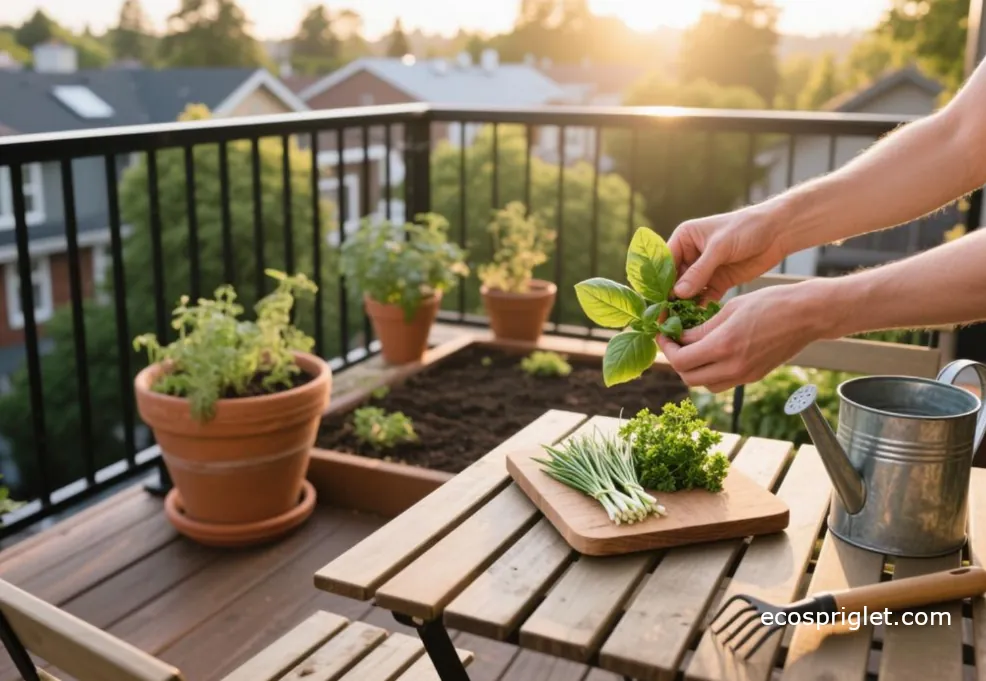
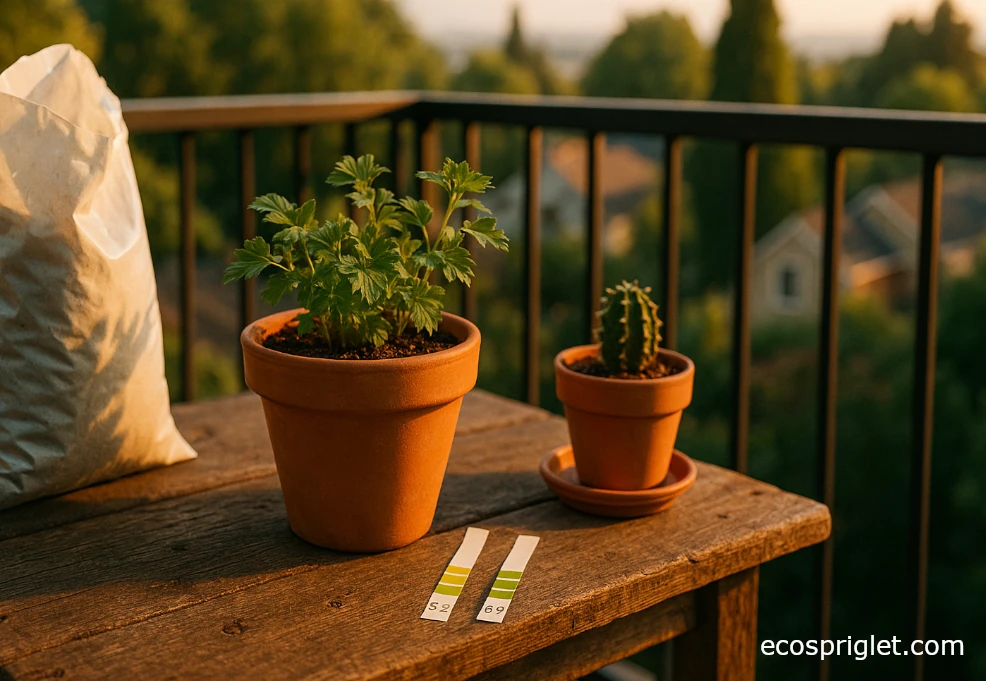
I garden on a small Portland balcony, so I like weed control that is tidy, low-odor, and realistic for containers, pavers, window boxes, and tiny courtyards. If weeds keep popping up in pots, cracks, or bare soil, you do not need harsh chemicals. The most reliable natural approach is simple: remove young weeds early, keep soil covered, and use smothering or careful heat only where it fits the space.
What Counts As A Weed In Tiny Spaces
On a small balcony or courtyard, a weed is any plant stealing light, water, root space, or nutrients from the plants you actually want. The label is practical, not moral. A volunteer tomato in a planter might be charming in June and a crowded problem in July.
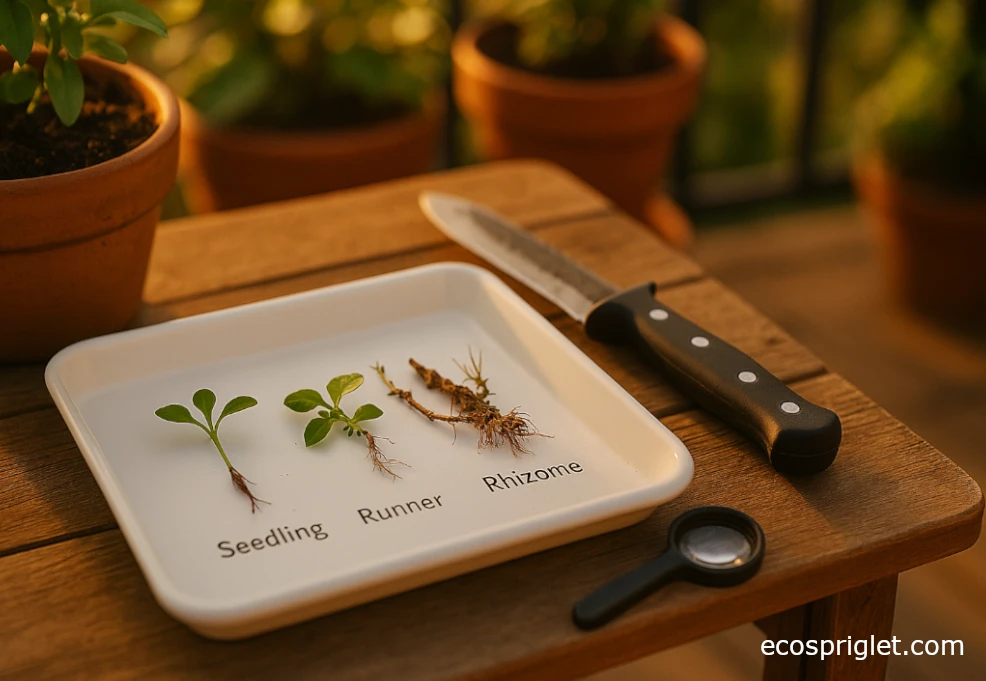
Annual weeds usually grow from seed and are easiest to stop early. Perennial weeds can return from crowns, taproots, stolons, or rhizomes, so they need deeper removal or repeated light-blocking. A quick habit: when you see an unfamiliar sprout, pinch near the soil and feel for the growth pattern. A single straight root is usually easier. Creeping runners or snapping roots mean you need to slow down and remove more than the top growth.
- Taproot weeds: Dig out the crown and as much root as you can instead of snapping the stem.
- Runner or stolon weeds: Trace the vine and lift the rooted nodes, not just the leaves.
- Rhizome weeds: Expect repeat sessions. Remove pieces carefully, then block light with mulch or cardboard where possible.
Start With Prevention: Cover Bare Soil
The easiest weed is the one that never gets enough light to sprout. In containers and small beds, prevention usually works better than dramatic rescue treatments. Start with clean materials, cover exposed soil, and keep plant canopies full enough that wind-blown seeds do not find an open nursery.
Use Clean Potting Mix And Clean Containers
- Use fresh, bagged potting mix for containers instead of garden soil, which can bring weed seeds, poor drainage, and compaction into pots.
- Quarantine new nursery plants for about a week if you can. Pinch any hitchhiker seedlings before they settle in.
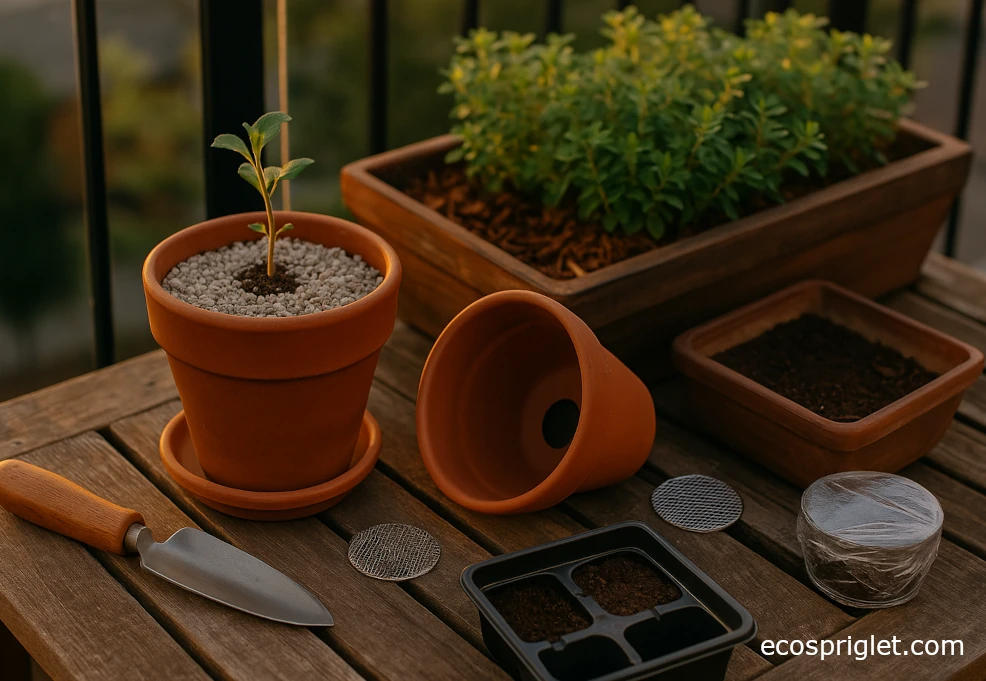
- Before reusing a pot, brush out old roots and loose debris, then rinse it. If you are dealing with pests, mold, or disease carryover, it is worth learning how to sanitize soil before planting again. If drainage holes are large, cover them with mesh so soil stays in and debris stays out.
Plant Densely Enough To Shade The Soil
In window boxes, troughs, and balcony planters, weeds love open patches between young plants. You do not need to overcrowd, but you can use low companions and trailing plants to cover the surface. Thyme, sweet alyssum, nasturtium, low sedums, and compact herbs can help shade the soil while still looking intentional.
Once plants fill in, aim to see very little bare mix from above. In containers, this also helps reduce splash, crusting, and quick surface drying.
Top Dress Containers The Right Way
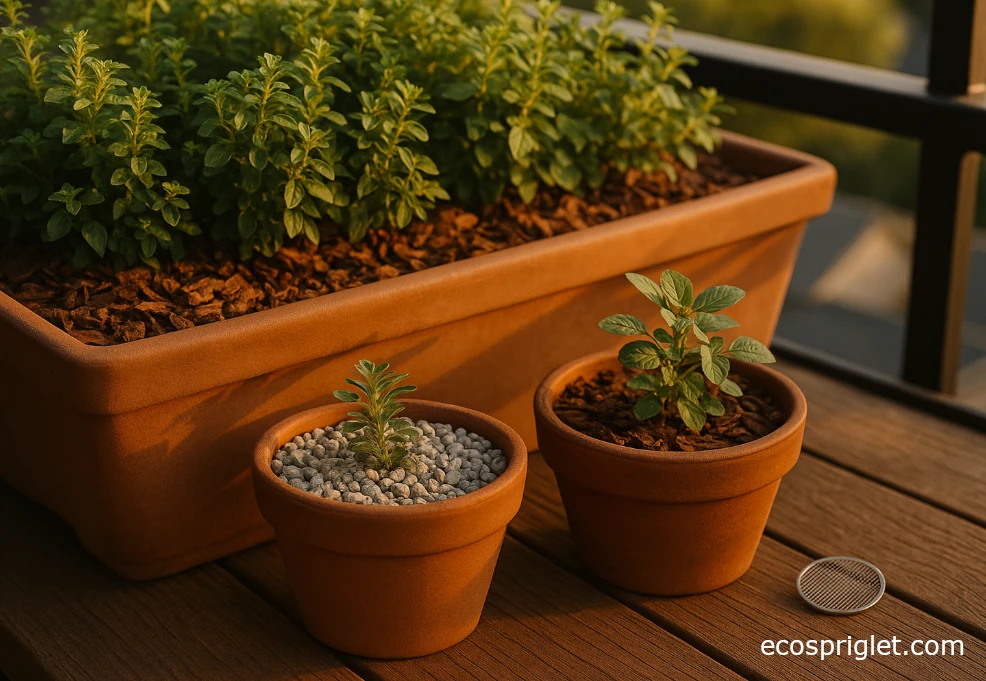
- Large planters and raised beds: Use 1 to 2 inches of shredded bark, fine wood chips, or leaf mold.
- Small indoor or balcony pots: Use 1/2 to 1 inch of fine gravel, pumice, or coarse horticultural sand where it suits the plant.
- Keep mulch away from stems and crowns. Leave a small breathing ring so moisture does not sit directly against tender stems.
- For edibles, use clean, untreated materials. Avoid dyed, oily, salty, or mystery mulch in food containers.
For small trailing plants that look better off the windowsill, a DIY macrame plant hanger can free up surface space while keeping the pot easy to check and water.
Use Manual Weed Control First
For small spaces, hand weeding is not a punishment. It is usually the fastest, safest, and most precise method. Ten minutes after watering often beats an hour of dry, frustrating pulling later. Damp soil releases roots more cleanly, which matters especially for taproots and weeds tucked into container corners.
Small-Space Tools That Actually Help
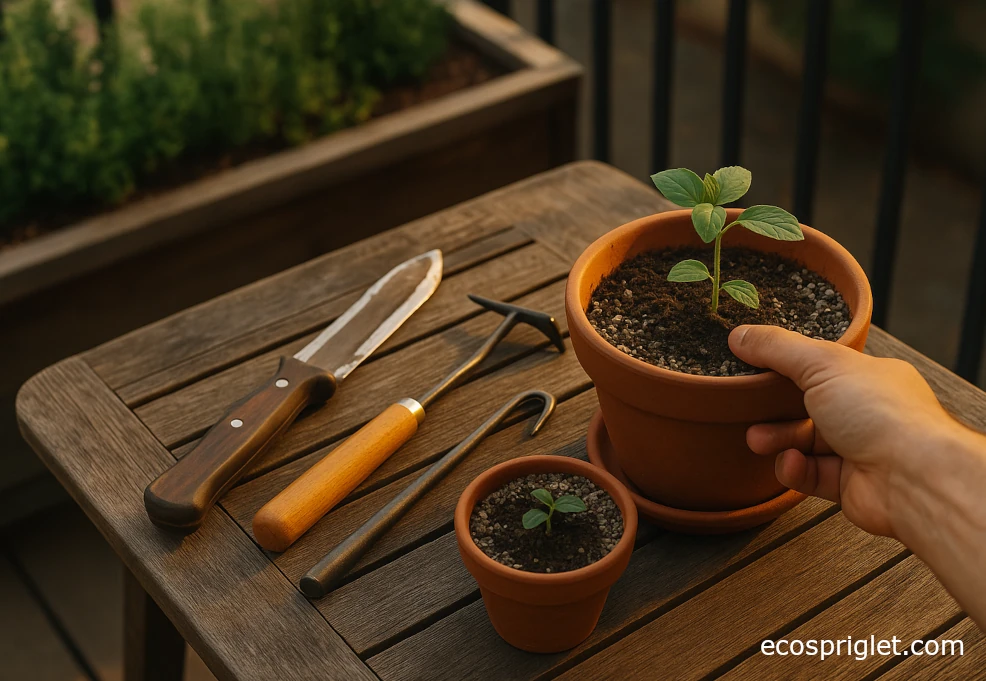
- Narrow hand fork: Good for lifting crowns without disturbing the whole pot.
- Weeding knife or hori-hori: Useful for taproots, cracks, and tight planter edges.
- Loop or collinear hoe: Helpful for shallow passes in larger boxes without throwing soil everywhere.
- Crack weeder or paving knife: Best for joints between pavers, bricks, and balcony tiles.
- Old spoon or chopstick: Surprisingly useful indoors when seedlings appear near houseplant roots.
Timing And Technique
- Pull seedlings when they have cotyledons or their first true leaves. At that stage, roots are small and the win is instant.
- Grip near the crown, not halfway up the stem. Pulling from the top often leaves the root behind.
- For taproots, loosen the soil beside the root and lift upward rather than yanking.
- For runners, follow the stem and remove each rooted node. One missed node can restart the patch.
- After weeding, smooth the surface and replace mulch or top dressing so the soil is not left exposed.
Smother Weeds With Cardboard, Paper, And Mulch
Smothering is one of the best natural weed control methods for courtyards, raised beds, and larger planters because it blocks light instead of relying on sprays. It is especially useful for low-growing annual weeds and patches that keep reseeding.
Use plain cardboard or kraft paper under an organic mulch. Remove plastic tape, glossy labels, and staples. Water the area first, lay the material with overlaps, and cover it so it stays in place. On my balcony, I keep this method for larger planters and shared courtyard edges because it looks tidy and does not create spray drift.
How To Layer A Small Bed Or Courtyard Edge
- Cut weeds low or pull the biggest ones first.
- Water the soil lightly so the cardboard settles against the surface.
- Lay plain cardboard or kraft paper with 2 to 3 inches of overlap.
- Add about 2 inches of shredded bark, arborist chips, or fine wood chips.
- Keep a 1 to 2 inch gap around woody stems, herb crowns, and vegetable stems.
- Refresh thin spots when cardboard softens or mulch shifts after wind or rain.
For containers, use a lighter version. A full cardboard layer can interfere with watering in a small pot, so I usually choose gravel, pumice, fine bark, or a living mulch instead.
Vinegar, Boiling Water, Salt, And Homemade Sprays
Homemade weed killers sound simple, but they are not all equally useful. University Extension weed guidance generally treats vinegar as a contact herbicide: it burns the plant parts it touches, especially young annual weeds, but it does not reliably kill established roots, rhizomes, or tubers. That makes it a spot tool, not a permanent fix.
- 5% household vinegar: Can scorch tiny annual seedlings on a dry, sunny day. Keep it away from desirable plants, edible leaves, and container soil.
- 20% horticultural vinegar: Much stronger and more hazardous to skin and eyes. I do not like it for small balconies because drift and splash are too easy in tight quarters.
- Boiling water: Useful for weeds in pavement cracks where runoff will not reach wanted plants. It can burn skin and may only kill top growth on established weeds.
- Salt: Skip it. Salt can damage soil, nearby roots, containers, metal edging, and runoff-sensitive areas.
- Bleach: Skip it. It is not a garden-safe weed control method and can harm surfaces, plants, pets, and people.
- Dish soap boosters: They may help a spray spread on leaves, but they do not solve the root problem and can injure wanted plants.
For small spaces, I would rather pull the weed, scrape the crack, or smother the area. Those methods are less dramatic, but they create fewer problems.
Container-Specific Tactics For Balconies And Indoor Pots
Weeds in containers usually arrive by wind, birds, reused potting mix, compost, nursery plants, or messy repotting. They are easier to control than weeds in a yard, but they also compete faster because root space is limited.
- Top dress after planting: Add 1/2 to 1 inch of pumice, gravel, coarse sand, or fine bark, depending on the plant’s moisture needs.
- Cover disturbed soil the same day: After pruning, repotting, or moving plants around, smooth exposed mix and replace the top dressing.
- Do not bury crowns: Keep mulch away from basil, lettuce, strawberries, succulents, and other plants that dislike damp crowns.
- Refresh the top layer between seasons: Remove the top 1 to 2 inches of tired, seed-filled mix and replace it with fresh potting mix before replanting.
- Use saucers carefully indoors: Empty standing water after watering so weed seedlings, fungus gnats, and algae do not get an easy foothold.
- Link weeding with watering: When the top inch feels dry and you are already checking moisture, scan for tiny green sprouts too. This pairs well with a simple houseplant watering routine.
Pet, Kid, And Balcony Safety Notes
Natural does not automatically mean safe. In a small apartment garden, the safer choice is usually the method with the least drift, residue, and mess.
- Choose inert top dressing, such as pumice or gravel, where pets like to dig.
- Skip cocoa hull mulch if dogs visit the space. ASPCA safety guidance warns that cocoa mulch can be attractive to dogs and may cause chocolate-related toxicity if eaten.
- Do not use salt, bleach, or strong vinegar where children or pets walk, sit, or play.
- Be careful with boiling water on balconies. Steam, splashback, and slippery surfaces are bigger risks than most people expect.
- Avoid flame weeders on balconies, near fences, dry mulch, railings, outdoor furniture, or shared buildings. Even if allowed locally, they are rarely worth the fire risk in tight spaces.
- Check balcony weight before adding large wet planters, stones, or deep mulch layers. Wet materials are much heavier than they look.
Simple Weekly Weed Routine
This is the routine I use because it fits into normal plant care. It is not fancy, but it keeps small spaces from turning into a weekend cleanup project.
- After watering, scan for tiny green sprouts while the soil is damp.
- Pinch seedlings immediately, especially around pot edges and between closely planted herbs.
- Use a weeding knife or crack tool on pavers, bricks, and joints before roots thicken.
- Fluff and top up mulch where bare soil is showing.
- Trace repeat weeds to the crown, node, or rhizome instead of removing only the leaves.
- Bag weeds with seeds, invasive runners, or unknown disease problems instead of composting them in a small home system.
Troubleshooting Weeds That Keep Coming Back
The Tops Die But The Weed Returns
You are probably removing or burning foliage without reaching the crown or root system. Switch from vinegar or boiling water to digging, crown removal, or repeated smothering.
Seedlings Keep Appearing In Pots
The soil surface is too exposed, or seeds are arriving from nearby plants, bird activity, or reused mix. Add a clean top dressing, remove seedlings earlier, and replace the top 1 to 2 inches of mix between plantings.
Mulch Is Not Stopping Weeds
The layer may be too thin or too coarse. Small seedlings can germinate in broken-down mulch, especially if dust and potting mix collect on top. Refresh thin areas and pull young weeds before they root through the layer.
Cracks Keep Greening Up
Cracks collect dust, grit, and seeds. Scrape them clean, use boiling water only where it cannot reach wanted plants, and refill stable joints with the appropriate sand or filler for that surface.
Weeds Came In With A New Plant
Remove the top layer of nursery mix, pinch seedlings, and top dress the pot right away. For aggressive runners, lift the plant from the pot and inspect the root ball before placing it near other containers.
FAQs
Will Vinegar Kill Weeds Permanently?
No. Vinegar usually burns the top growth, especially on small annual weeds, but established roots often survive. Use it only as a careful spot treatment, not as your main weed control plan.
Is Landscape Fabric Eco-Friendly?
It can suppress weeds for a while, but in small gardens it often clogs, frays, shows at the edges, and traps soil on top where weeds germinate anyway. For balcony beds and courtyards, plain cardboard or kraft paper under mulch is usually easier to refresh and remove.
Can I Use Salt To Kill Weeds In Cracks?
I would not. Salt can move with water, damage nearby roots, harm soil, and corrode some surfaces or metal edging. Scraping, boiling water in safe hardscape-only spots, and joint maintenance are better small-space options.
What Mulch Works Best In Small Pots?
For most small pots, 1/2 to 1 inch of fine gravel, pumice, coarse sand, or fine bark works well. Match the material to the plant: succulents usually prefer mineral top dressing, while moisture-loving herbs and ornamentals may handle fine bark better.
How Do I Stop Weeds From Arriving With New Plants?
Check the nursery pot before it joins your collection. Remove visible seedlings, scrape the top layer if it looks weedy, isolate the plant for a few days, and add fresh top dressing once you are confident nothing is sprouting.
The Best Natural Weed Control Plan
For small spaces, the best plan is boring in the best way: pull weeds young, keep soil covered, use clean potting mix, and smother repeat patches before they spread. Save vinegar and boiling water for limited hardscape situations, and skip salt or bleach entirely. A tidy 10-minute weekly pass will do more for a balcony, courtyard, or container garden than any homemade spray recipe.