Rosemary is the herb that makes new container gardeners feel personally targeted. It looks tough, smells amazing, and seems like it should thrive on “set it and forget it” care—yet it’s oddly easy to lose in a pot. The reason is simple: rosemary loves bright light, airflow, and soil that dries down between waterings… and many balconies (and indoor windowsills) deliver the opposite.
The good news is you absolutely can grow rosemary in a pot. In fact, pots are often the best option for apartment life because you can chase the sun, dodge winter cold snaps, and keep the plant near your kitchen. The trick is to build a setup that drains fast, then water like you mean it—deeply, but not often—while giving it enough light to stay compact and flavorful.
This guide walks you through pot size, soil mix, outdoor vs indoor placement, a simple watering rhythm, and the pruning moves that keep rosemary from turning into a woody, sparse broom.
Can You Grow Rosemary in a Pot Successfully?
Yes—rosemary does very well in containers when you mimic its favorite conditions: bright sun, excellent drainage, and a little restraint. Rosemary is naturally adapted to drier, Mediterranean-style environments, which is why soggy potting mix is the fastest route to decline. Sources you’ll see echo this over and over: give it full sun, well-drained soil, and don’t water too frequently. (Sources: UF/IFAS Extension, RHS, UC Master Gardeners.)
One more bit of encouragement: rosemary can look “fine” right up until it isn’t. The needle-like leaves don’t always wilt dramatically when thirsty, and overwatered roots can rot quietly. That’s why container success comes down to a few repeatable checks (pot size, soil texture, and a finger test), not vibes.
If you’re building a small herb cluster, rosemary is the one I treat like a semi-succulent roommate: it likes company, but it wants its own space and airflow. If you want a bigger balcony-herb plan, see Indoor Herb Garden.
Choosing the Right Pot Size and Material
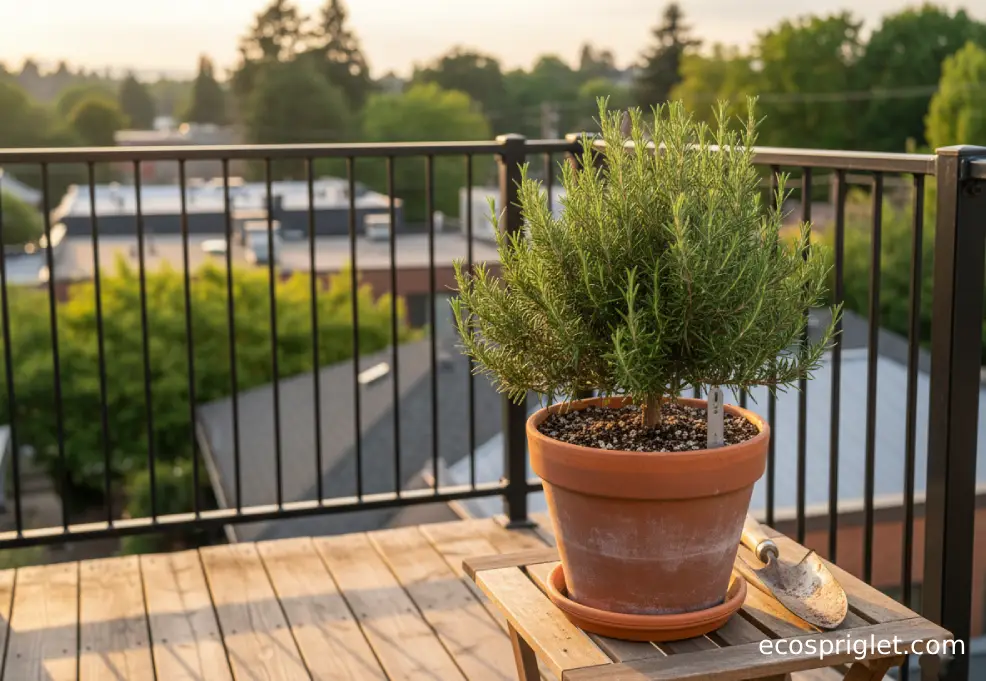
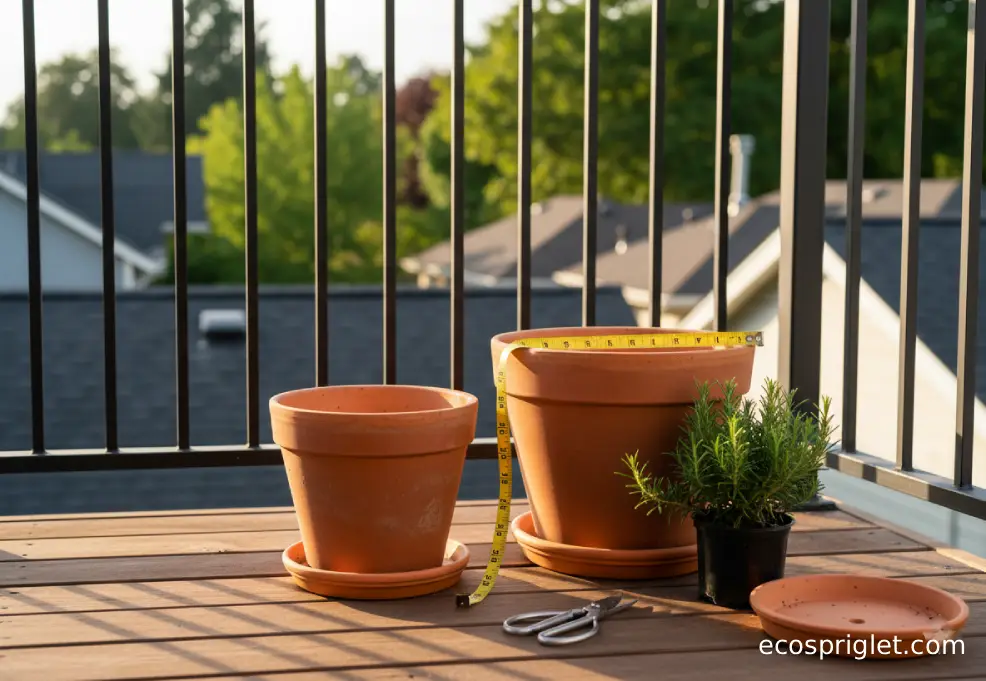
If you want rosemary to look like a real plant (not a stressed twig), start with a pot that supports stable moisture swings: wet-to-dry, not wet-to-soggy. For most balcony growers, a pot around 12 inches wide is a practical minimum for one rosemary plant, and 14–16 inches wide is even better if your balcony gets hot, windy, or full afternoon sun.
Why size matters:
- Small pots swing fast: they go from soaked to bone-dry in a day, which stresses roots.
- Medium/large pots buffer heat: roots stay cooler and hydration is easier to manage.
- Rosemary gets woody: it’s a perennial shrub in the right climate, so it appreciates room.
Material is your second big lever:
- Terracotta breathes and helps the mix dry down—great if you tend to overwater.
- Glazed ceramic/plastic holds moisture longer—useful on very windy balconies, but you’ll need extra discipline with watering.
Whatever you choose, make sure it has drainage holes. If it doesn’t, it’s a decorative basket, not a rosemary pot.
Soil Mix and Drainage That Actually Works
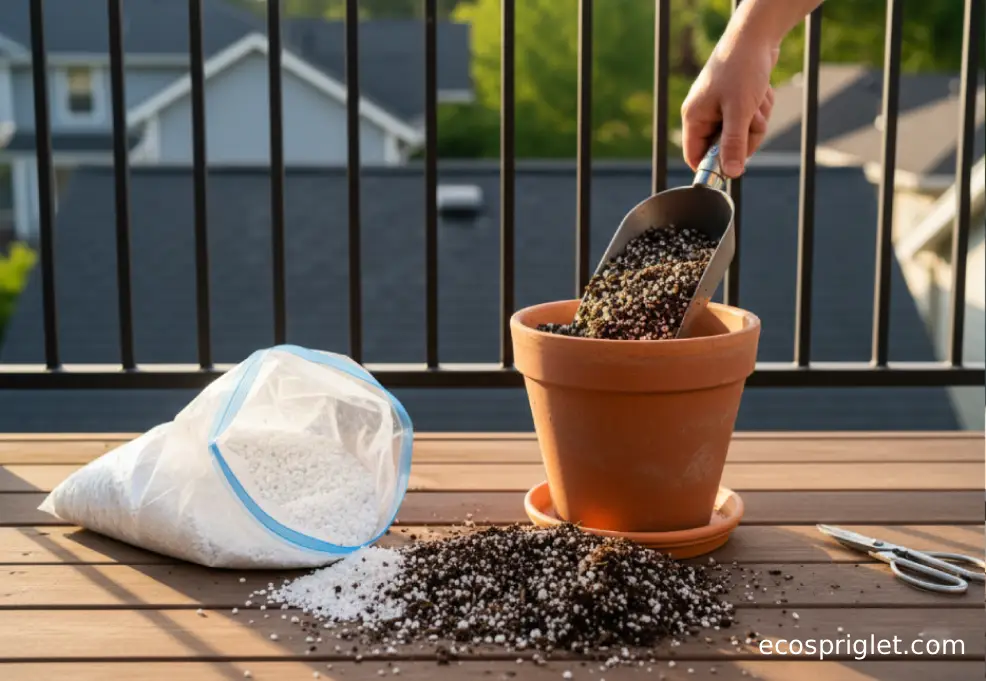
Rosemary wants a mix that drains fast and dries down between waterings. Regular potting mix alone can hold too much water for too long—especially indoors—so it helps to “open it up” with gritty amendments.
A simple, container-friendly rosemary mix:
- 2 parts quality potting mix
- 1 part perlite (or pumice) and/or coarse sand
I also like adding a small handful of compost to refresh biology if the potting mix is very sterile, but don’t turn the pot into a compost bin. Rosemary is not impressed by rich, constantly moist conditions.
One myth to skip: putting gravel or rocks at the bottom “for drainage.” In containers, layering materials can actually create a perched water situation where moisture hangs above the coarse layer. Use one consistent mix from top to bottom, and rely on drainage holes. (Sources: Garden Professors / Extension horticulture educators; peer-reviewed drainage-layer research.)
Light and Placement Outdoors vs Indoors
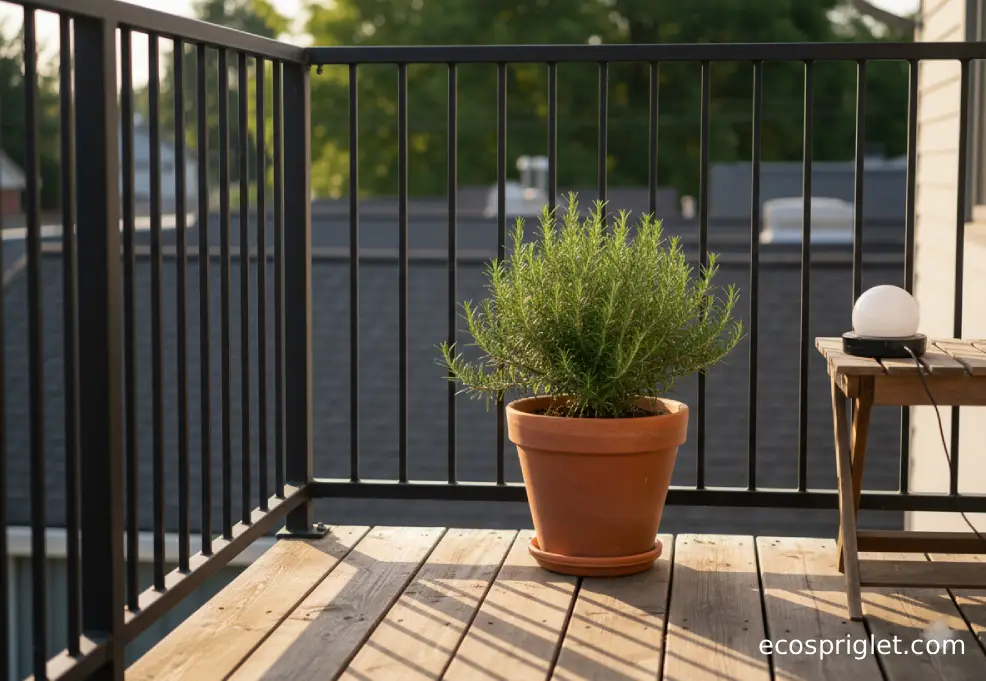
Outdoors, rosemary is happiest with at least 6 hours of sun (more is fine if the pot doesn’t overheat and the mix drains well). If you have only partial sun, aim for the brightest stretch you’ve got—morning-to-midday is often “cleaner” light than late afternoon between buildings.
Indoors is where rosemary gets fussy. The plant can survive inside, but it usually needs:
- A very bright, sunniest window you have (south-facing is the classic winner)
- Extra airflow (a small fan on low a few feet away helps)
- A cooler room if possible in winter
Michigan State University Extension has a useful reality check: many indoor rosemary plants struggle because winter homes are warm and light levels are low. If you can give it bright light and keep it on the cooler side indoors, you’ll have a much better shot.
My balcony rule: if nights are reliably dipping toward frost, I move the pot to a protected spot (close to the building wall, out of wind) first. If real freezing weather is coming, that’s when I transition indoors or into an unheated but bright stairwell/windowed landing if available.
Watering and Feeding Without Root Rot
This is the make-or-break section for growing rosemary in a pot. The goal is a deep watering followed by a real dry-down period.
Here’s the rhythm I teach beginners:
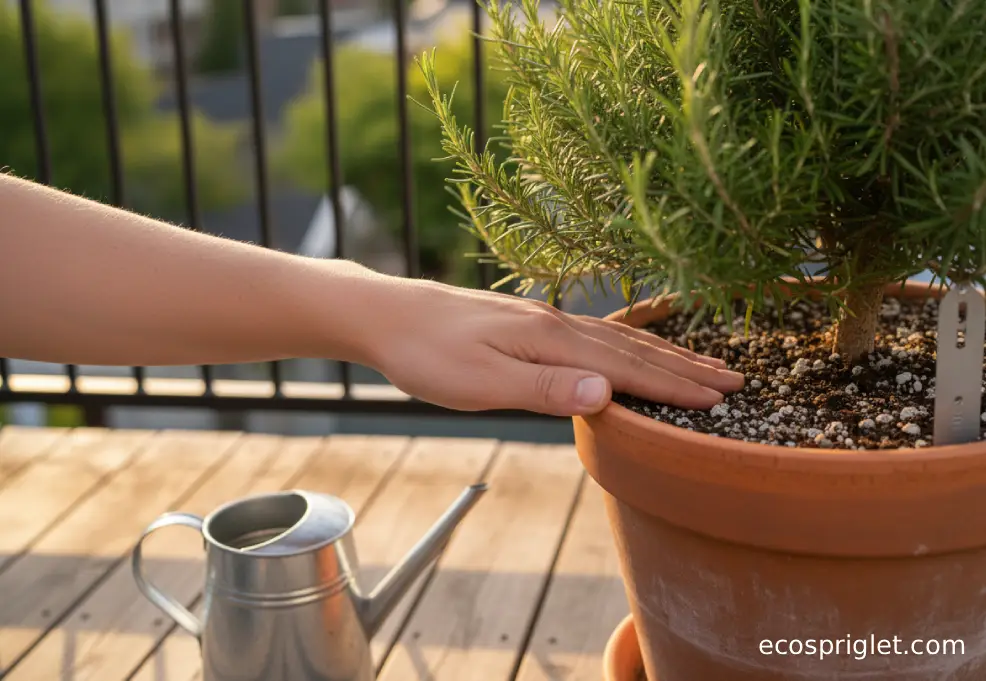
- Check: if the top 2 inches feel dry, it’s a candidate for watering.
- Water deeply: water until excess runs out the bottom, then empty the saucer.
- Wait: don’t “top off” the pot every day. Let it dry again.
How often is that in real life?
- Summer outdoors: often every 3–7 days, faster in heat/wind, slower in mild weather.
- Winter indoors: often every 10–14 days (sometimes longer), because growth slows and evaporation drops.
Feeding: rosemary rarely needs much fertilizer. If your plant lives in the same pot for a long time, a light, balanced feed in spring can help—but heavy fertilizing tends to make plants soft and less aromatic. (Sources: Texas A&M AgriLife Extension, UC Master Gardeners.)
One small apartment trick: if you’re unsure, err slightly on the dry side rather than the wet side. Rosemary forgives “I forgot for a day.” It rarely forgives “I kept it damp for a week.”
Pruning, Harvesting, and Keeping Rosemary Bushy
I remember when I first tried to “shape” my balcony rosemary like a tiny hedge. I got confident, cut into the woody parts, and ended up with a plant that looked like it had lost a fight. Rosemary can be forgiving, but it responds best to small, frequent trims—especially when you stay in the green, leafy growth.
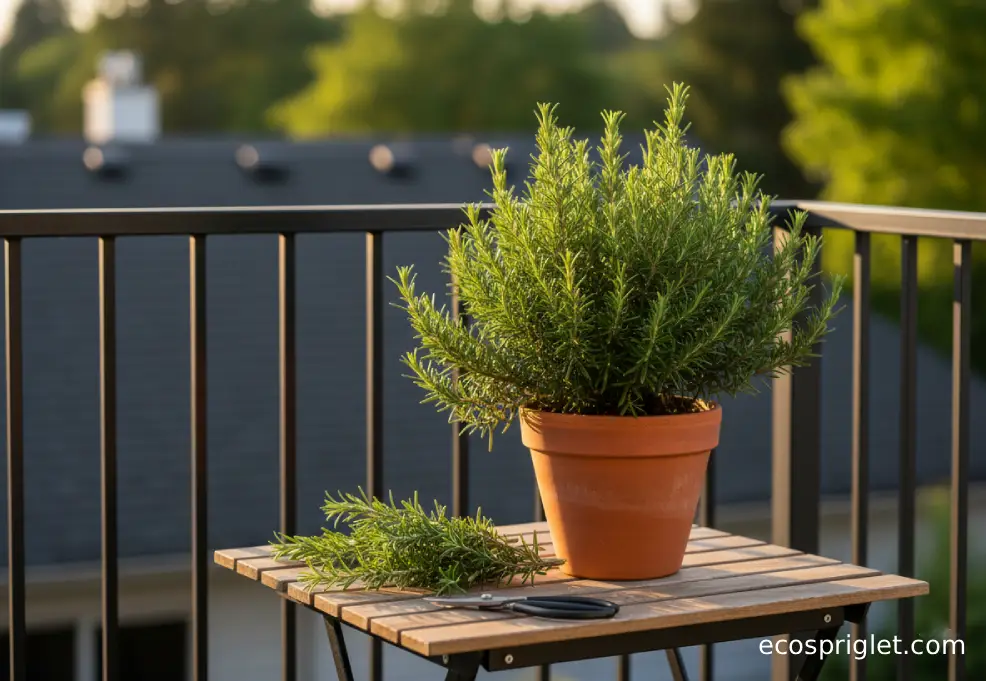
For a dense plant you can harvest from weekly, focus on the soft tips:
- Pinch or snip the top 1–2 inches of new growth to encourage branching.
- Avoid hard cuts into thick, leafless wood unless you’re correcting shape slowly over time.
- Harvest lightly: taking a modest amount regularly is better than stripping big sections.
Best timing: spring through early fall is prime pruning season outdoors. Indoors, go gentler in winter—light tip harvests only—because the plant is already fighting for light.
If you want the “mini tree” look, it’s doable. Just stake early, rotate the pot weekly for even light, and commit to small trims rather than one dramatic haircut.
Troubleshooting Common Rosemary Pot Problems
When rosemary is unhappy, it usually points to one of three things: too little light, too much water, or not enough airflow. Here’s a quick diagnostic table I use on balconies and windowsills.
| Symptom | Most Likely Cause | What to Do This Week |
|---|---|---|
| Yellowing leaves, limp stems, soil stays damp | Overwatering / poor drainage | Let the pot dry; confirm drainage holes; switch to a grittier mix next repot; water only after the top 2 inches dry. |
| Brown tips, crispy feel, pot dries super fast | Underwatering or heat/wind stress | Water deeply; move pot out of wind tunnel; consider a larger pot or less porous container if it’s drying daily. |
| Long, leggy growth with weak flavor | Not enough light | Move to brighter sun; rotate pot weekly; indoors consider a grow light and better airflow. |
| Fine webbing or stippled leaves indoors | Spider mites (often + dry indoor air) | Rinse foliage, isolate plant, increase airflow; treat with insecticidal soap if needed, following label directions. |
| Gray/white film, especially indoors | Mildew from stagnant air | Improve airflow (fan), give more spacing, avoid misting, and keep leaves dry overnight. |
Good airflow matters more than most people expect—especially indoors. That’s why I’d rather you run a tiny fan than spray something as a first step.
Pet note: rosemary is listed as non-toxic to cats and dogs, which is comforting if your “helper” likes to sniff your pots. (Still, any plant can cause mild stomach upset if a pet eats a lot of it.)
Common Mistakes New Balcony Gardeners Make
- Keeping the soil constantly moist: rosemary wants a dry-down between waterings. If the pot is never drying, change the mix and your schedule.
- Using a tiny “cute” pot: small pots overheat and dry too fast. Start around 12 inches wide; go larger if your balcony is sunny and windy.
- Adding gravel at the bottom: skip it—use one consistent mix and proper drainage holes.
- Crowding it with other herbs: rosemary appreciates space and airflow. Give it breathing room.
- Trying to overwinter it in a dim room: low light + warm temps + “just a little water” is a classic failure combo. If it must be indoors, it needs your brightest spot and better airflow.
If you’ve made any of these mistakes—welcome to the club. Most of us learn rosemary by losing one. The win is turning those losses into a repeatable setup that works every season.
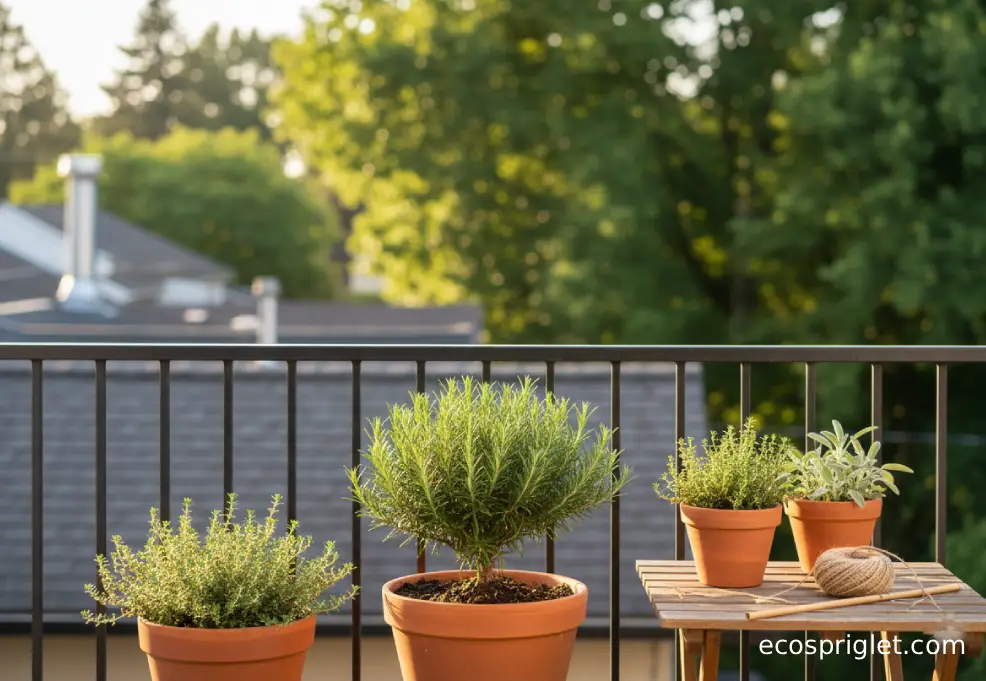
Creative Ways to Use Rosemary on a Small Balcony
Once your rosemary is stable, it becomes one of the best “multi-purpose” balcony plants: useful, fragrant, and handsome year-round in milder climates.
A few small-space ideas:
- Kitchen-door pot: place rosemary closest to your door so you’ll brush it and release fragrance as you pass.
- Mini topiary: a single bamboo stake and light trimming can create a tidy form that looks intentional even in winter.
- Heat-buffer pairing: group pots together (without crowding) so they shade each other’s sides and reduce root overheating in summer.
And yes—this is the herb that makes balcony dinners feel fancier with almost no effort. A few sprigs on roasted potatoes or tossed into a pan while you cook, and your apartment smells like you planned your life.
Conclusion:
Growing rosemary in pots is mostly about setting boundaries. Give it a container big enough to buffer heat and moisture swings, use a gritty mix that drains fast, put it in the brightest spot you can manage, and then water deeply only after the pot has genuinely dried down. That combination solves the “why is my rosemary dying?” mystery more often than any special product ever will.
If you’re growing outdoors, rosemary often thrives on a sunny balcony with minimal fuss once established. Indoors, it’s still doable—but it becomes a plant that needs premium real estate: strong light, airflow, and a cooler corner in winter if possible. Either way, a little tip-pruning keeps it bushy, and a consistent moisture check prevents the classic container problems before they start.