I grow a lot of vegetables in containers (mostly because I live with railings, wind, and limited floor space), and cucumbers are one of those plants that look “too big” for a pot—until you set them up the right way. If you’ve been asking, “can you grow cucumbers in a pot?” the honest answer is yes, and they can be surprisingly productive when they’re warm, well-fed, and given something sturdy to climb.
The trick is to think like a cucumber: big leaves, thirsty roots, and a habit of reaching for the sky. That means a generously sized container, an airy potting mix (not heavy garden soil), steady moisture, and a trellis that won’t wobble every time the wind kicks up. I’ll walk you through the whole container setup—what size pot actually works, how to plant, how often to water, and the most common balcony mistakes that cause bitter fruit, yellow leaves, or sad vines.
Why Cucumbers Do So Well in Pots (If You Set Them Up Right)
Cucumbers are natural climbers. In the ground, they’ll sprawl; in a pot, you get to “tell” them where to go. On a balcony, that’s a gift—vertical growth saves space, improves airflow, and keeps fruit cleaner.
Container-growing also gives you control over soil quality and drainage. If your patio gets hammered by rain one week and dries out the next, the pot is your buffer. The downside? Pots dry faster than garden beds, and cucumbers hate inconsistent moisture. That’s why container cucumbers are less about luck and more about a repeatable routine.
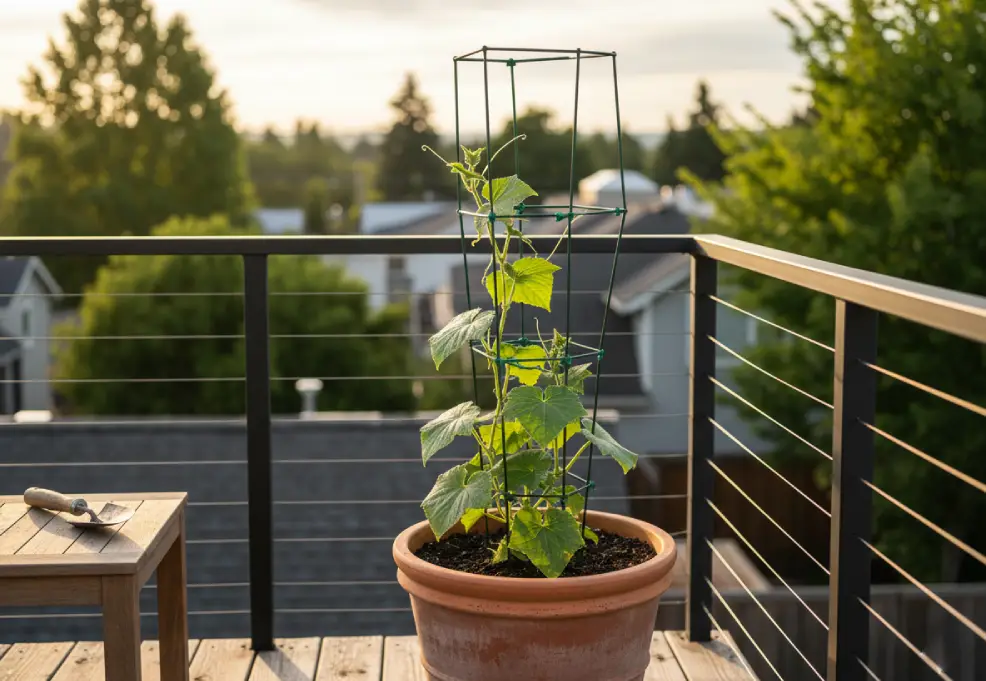
Pick the Right Cucumber Type for a Balcony Pot
If you’re growing cucumbers in a pot, you’ll have an easier time if you match the plant’s growth habit to your space:
- Vining cucumbers climb well and can be very productive, but they need a real trellis and consistent watering.
- Bush or compact cucumbers stay shorter and are easier in tighter spaces, but still benefit from a small support to lift leaves and fruit off the soil.
On most balconies, I lean vining + vertical trellis, because floor space is precious. But if your railing blocks sun or you can’t anchor a tall support, a compact variety can be the difference between “easy win” and “constant battle.”
Timing matters too. Cucumbers are warm-season plants; they sulk in cold soil. Many Extension resources recommend planting once soil is warm—around 70°F for sowing or steady warm conditions for transplanting.
Personal note: I once “jumped the season” and planted cucumbers early because we had a sunny week in April. The plants just sat there like they were offended. Once the nights stayed warmer, they finally took off—but I lost weeks of growth for no real gain.
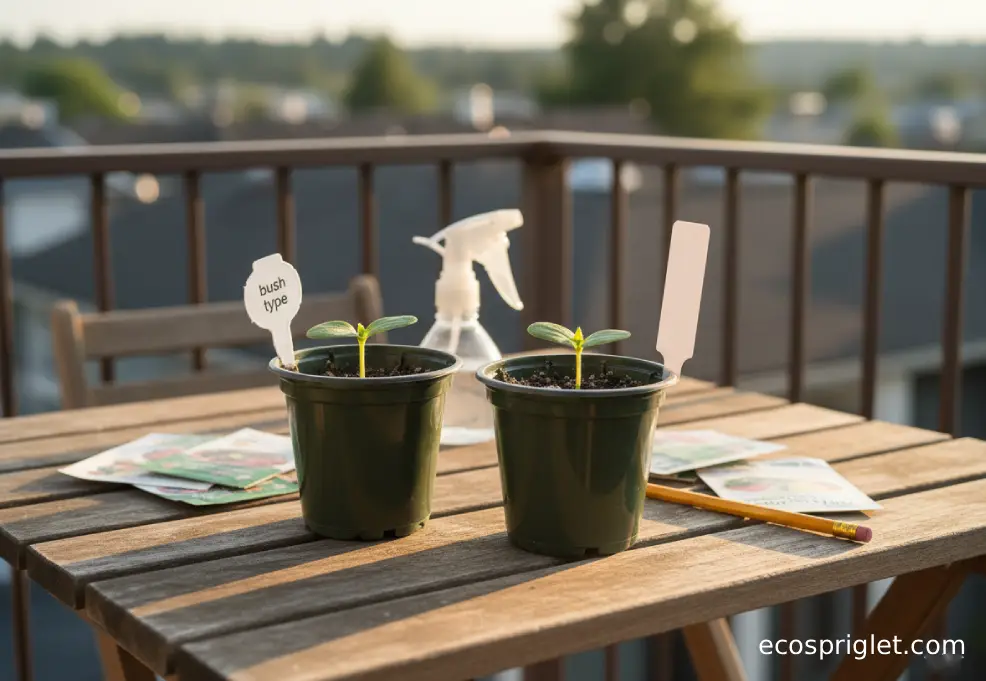
Choose a Pot Size That Won’t Hold You Hostage All Summer
Here’s the container truth: the smaller the pot, the more often you’ll be watering and feeding—and cucumbers already ask for a lot. For most balcony growers, a larger container is the “less work” option.
A solid baseline is one cucumber plant per large container. University of Maryland Extension lists cucumbers among “large vegetables” and suggests a container with about 8–10 gallons of growing media and substantial depth.
You’ll also see credible guidance that container cucumbers can work in the 5–8 gallon range depending on setup and whether you’re training vertically (University of Alaska Fairbanks notes one or two plants can be grown in containers with 5–8 gallons of media in greenhouse-style production).
If you want my practical “balcony buffer” rule: go bigger when you can. A larger pot buys you steadier moisture on hot, windy days.
| Balcony Situation | Recommended Container Approach | Why It Helps |
|---|---|---|
| Full sun + wind exposure | 8–10 gallon container, 1 plant | Slower drying, fewer stress swings |
| Partial sun or sheltered corner | 5–8 gallon container, 1 plant | Still workable if watering is consistent |
| Very tight space | Compact/bush type + sturdy small trellis | Less vine length to manage |
Build a Trellis That Won’t Tip Over (Mixed Format + My “Oops” Story)
On a balcony, a trellis isn’t just “plant support.” It’s also “wind engineering.” If your trellis wobbles, your vine will snap, your flowers will drop, and you’ll spend the summer annoyed at a vegetable (ask me how I know).
I remember my first container cucumber trellis: a cute little bamboo fan stuck into the pot like a cocktail garnish. One gusty afternoon, the whole thing leaned over, kinked the main stem, and the plant basically stopped growing for a week. That was my lesson: cucumbers don’t need cute support; they need boring, sturdy support.
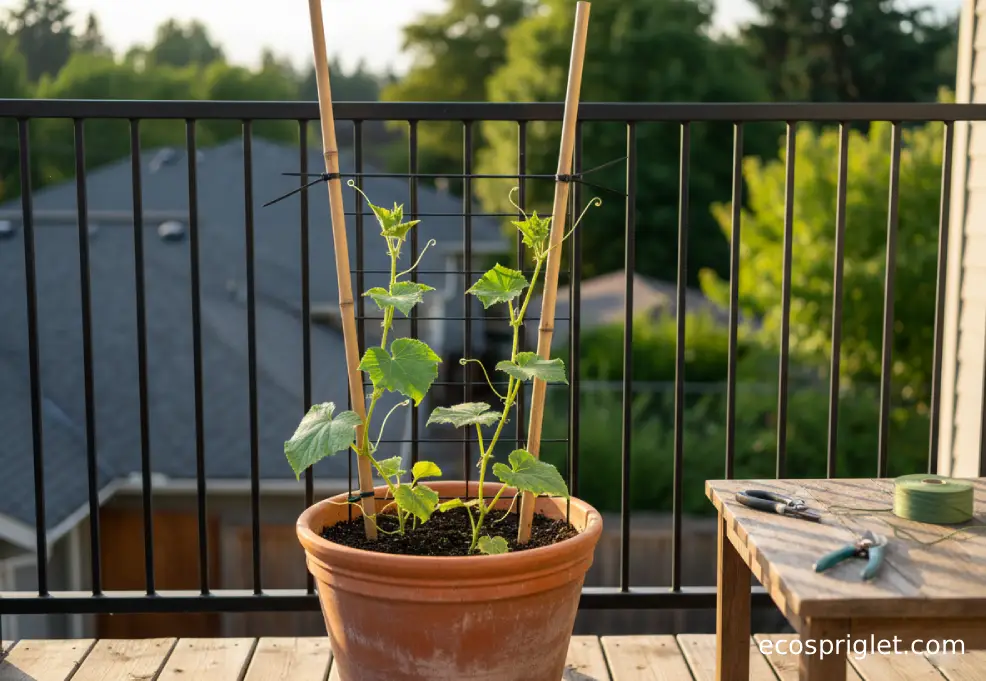
- Anchor the trellis in the container (not just to the railing). Think: metal grid panel, strong bamboo teepee, or a compact cattle-panel-style piece, secured to stakes pushed deep into the pot.
- Use soft ties (Velcro garden tape or coated wire) and tie loosely—snug enough to guide, loose enough to avoid stem pinching.
- Plan for height: aim for a trellis that gives you at least 4–5 feet of climb if you’re growing a vining type. If it hits the top, you can guide the vine sideways along the rail line.
If your building rules prevent attaching anything to railings, you can still go vertical by anchoring the trellis in the pot and positioning the pot close to the wall for a windbreak.
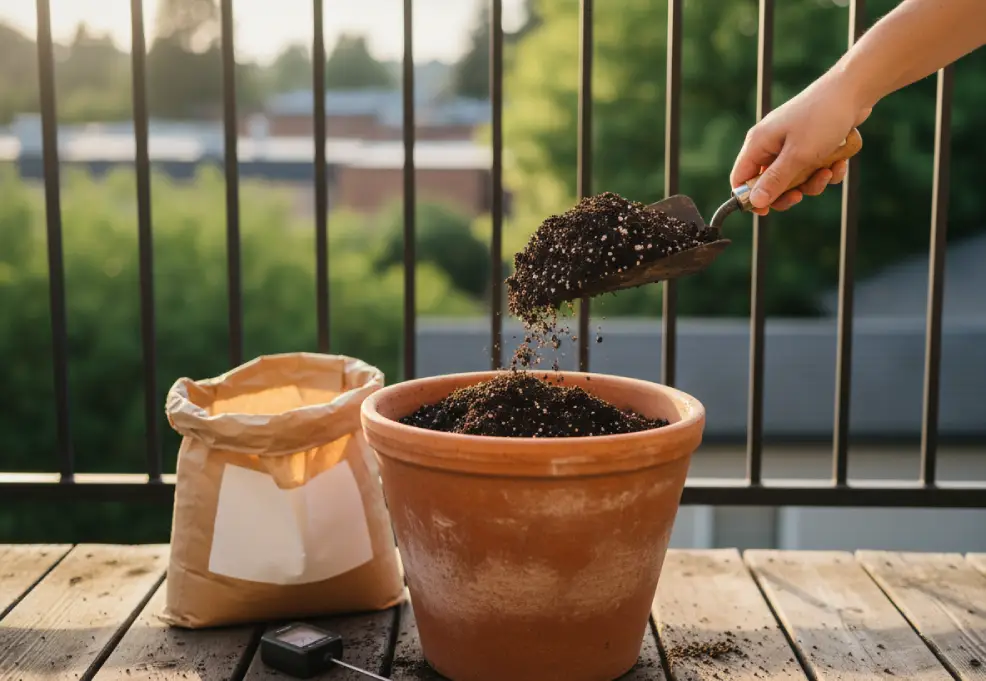
Use a Potting Mix That Drains Well (And Skip the Rocks Trick)
For growing cucumber in a pot, use a high-quality potting mix, not garden soil. Garden soil compacts in containers and can turn into a heavy, airless brick—exactly what cucumber roots don’t want.
Also: don’t add rocks, broken pottery, or gravel “for drainage” at the bottom. Research-based Extension guidance shows that layering coarse material under potting mix can impede drainage by creating a perched water zone. The University of Wisconsin Extension article on container vegetables is blunt about this, and Washington State University has published a clear myth-busting explanation.
What works instead:
- Choose a pot with real drainage holes (multiple holes are better than one).
- Fill the pot fully with mix—don’t leave a big empty “sump” at the bottom.
- If your mix is very peat-heavy and you tend to overwater, blend in extra perlite for air space (a moderate addition is usually enough—avoid turning the pot into a bag of white rocks).
Planting tip: cucumbers hate root disturbance. If you’re transplanting, handle the root ball gently and plant at the same depth it was growing in the starter pot. If you’re direct sowing, plant seeds about 1/2 inch deep and keep the surface consistently moist until sprouts appear.
Water Like You Mean It (Then Let the Top Dry a Bit)
If container cucumbers fail, it’s usually water stress—either the pot dries out repeatedly, or it stays soggy from poor drainage (and the roots can’t breathe). The “sweet spot” is consistent moisture with oxygen.
Here’s a simple balcony method that matches Extension-style guidance:
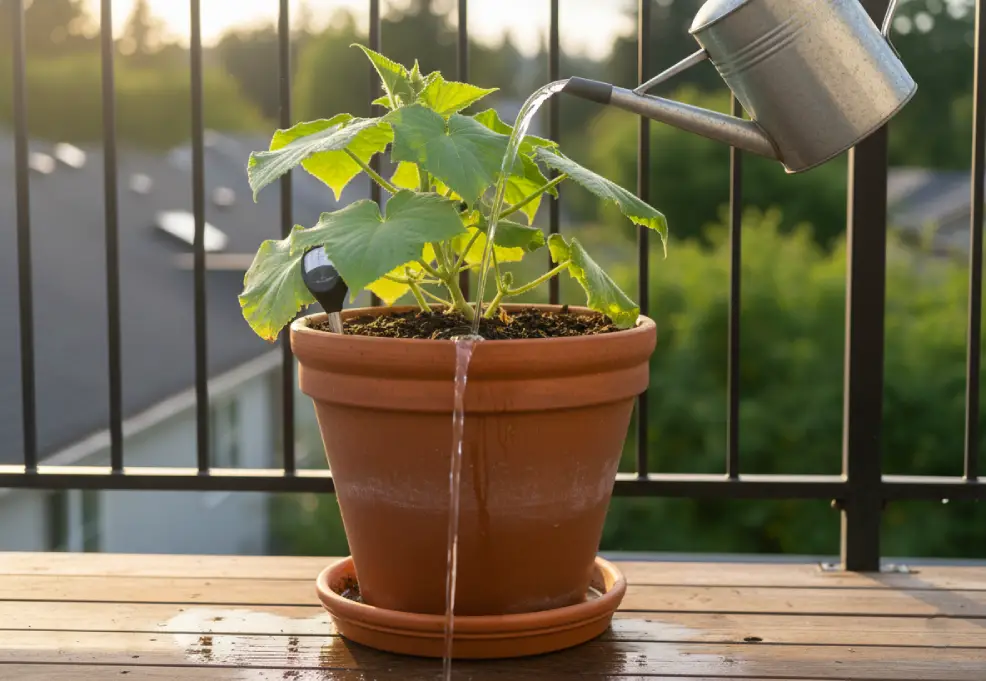
- Check moisture with your finger: if it’s dry about 2 inches down, it’s time to water (a good general trigger used in vegetable watering guidance).
- Water deeply so the entire root zone gets soaked—then let excess drain out. Avoid quick sips that only wet the top. (University of Maryland Extension recommends avoiding shallow watering and watering when the soil feels dry.)
- Expect daily watering in hot spells if your pot is in full sun and wind. The goal is steady moisture, not a dramatic cycle of desert → flood.
A tiny trick that helps: add a thin mulch layer (fine bark, chopped straw, or even a couple handfuls of compost) on top of the potting mix. It won’t eliminate watering, but it does slow evaporation and reduces the stress swings that can lead to bitter cucumbers.
Feed Container Cucumbers So They Can Keep Producing
Cucumbers are hungry, and containers leach nutrients faster because you water more often. If you want a steady harvest, plan for steady feeding.
A practical approach that lines up with Extension advice:
- Start with a potting mix that includes slow-release fertilizer, or mix a slow-release product into the potting mix at planting time.
- Then “top up” with light, regular feeding. University of Maryland Extension notes that long-season container vegetables like cucumber may need light fertilizing about every 2 weeks to keep producing.
- Watch the leaves: pale new growth and slow flowering often means the plant is running out of fuel—especially after you’ve been watering daily for a while.
If you’re nervous about overdoing fertilizer, go with a diluted liquid feed more often rather than a heavy dose all at once. And if you use a strong liquid fertilizer, always water first so dry roots don’t get burned.
Train the Vines, Keep Airflow, and Help Pollination When Needed
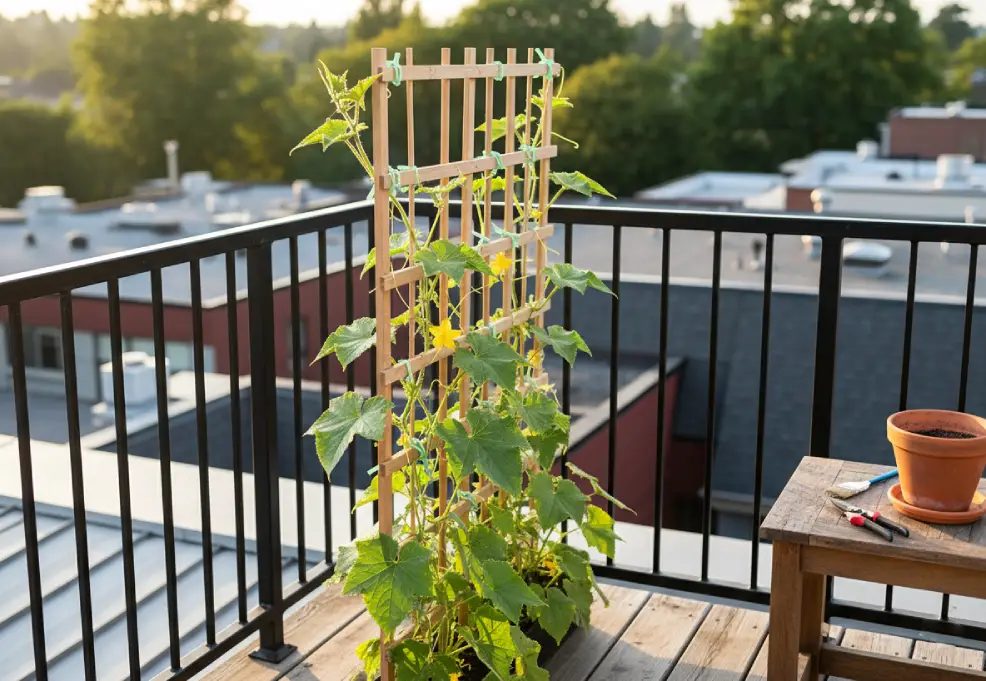
Training is simple: every few days, gently wrap or tie the main vine to the trellis so it climbs instead of tangling. When the plant is happy, it grows fast—so a “little and often” approach beats a big wrestling match once a week.
Airflow matters on balconies, especially if you have a warm wall behind the plant. If leaves are packed tightly, powdery mildew becomes more likely. You don’t need to prune heavily, but you can remove one or two of the oldest, most crowded leaves if they’re blocking airflow at the base.
Pollination: cucumbers usually need pollinators to set fruit well (and poor pollination can lead to misshapen fruit or fruit that aborts). If your balcony is high up and you don’t see many bees, you can hand-pollinate—Penn State Extension has a straightforward explanation of cucumber pollination and why it affects fruit set.
My lazy hand-pollination method: use a small, soft paintbrush in the morning. Brush the center of a male flower, then brush the center of a female flower (female flowers usually have a tiny “baby cucumber” behind the petals). Do that for a few days and see if fruit set improves.
Troubleshooting: Bitter Fruit, Yellow Leaves, and Balcony Pests
Most cucumber problems in pots come down to stress: inconsistent water, too little sun, or nutrient imbalance. Here’s a quick, practical cheat sheet:
| Symptom | Most Likely Cause | Fast Fix |
|---|---|---|
| Bitter cucumbers | Water stress + heat + low nutrition | Water consistently, mulch lightly, keep feeding steady; harvest earlier |
| Yellowing leaves | Overwatering/poor drainage, low nitrogen, or pests | Check drainage, adjust feeding, inspect undersides for mites/aphids |
| Flowers drop, few fruits | Not enough sun, inconsistent moisture, low pollination | Move to sunnier spot, stabilize watering, try hand pollination |
| Misshapen fruit | Incomplete pollination | Hand-pollinate in the morning for a week |
For bitterness specifically, Purdue’s yard and garden guidance notes that bitterness tends to increase when cucumbers are stressed by low moisture, high temperatures, or poor nutrition—basically a summary of why “steady care” matters.
Balcony pest watch: spider mites love hot, dry, sheltered corners. If leaves look dusty or stippled, flip them over and look for tiny moving dots and webbing. A strong water spray to the leaf undersides (in the morning) can knock populations back, and raising humidity around the plant (grouping pots, not misting at night) can help.
Harvest Often for Better Flavor and More Cucumbers
Harvesting is one of the easiest ways to improve both flavor and productivity. Overripe cucumbers tend to get tougher, more seedy, and sometimes bitter—plus the plant slows down once it “thinks” it’s finished.
Two practical harvesting habits:
- Pick while fruits are firm and nicely green (don’t wait for them to get huge).
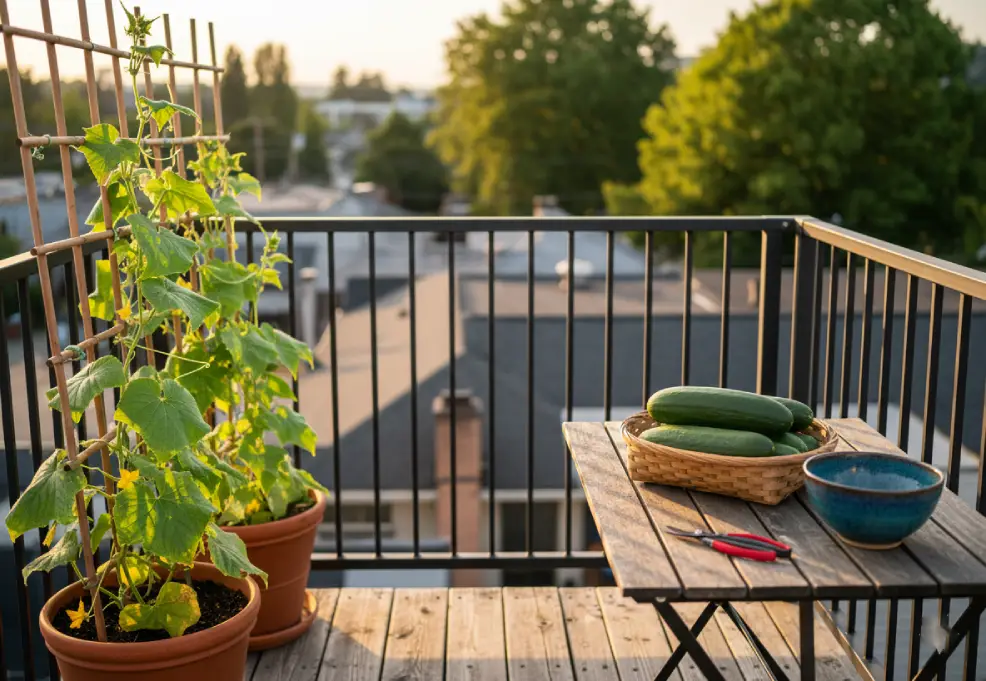
- Use scissors or snips to avoid tearing the vine—especially when it’s climbing a trellis.
If you’re growing a pickling type, harvest smaller and more frequently. If you’re growing a slicer, keep an eye on size and firmness rather than chasing a perfect length—different varieties mature to different sizes.
Common Mistakes New Balcony Gardeners Make (And How to Avoid Them)
I learned most of these the hard way—usually in the middle of a hot week when I forgot how fast pots can dry out.
- Using too small of a pot: It “works” for a while, then turns into constant watering and bitter fruit. Start with a larger container if you can.
- Adding rocks at the bottom for drainage: This can backfire and hold water higher in the pot. Use a continuous column of potting mix instead.
- Letting the trellis wobble: A stable trellis prevents broken stems and makes training easy instead of stressful.
- Feeding once and forgetting: Containers leach nutrients. Light, regular feeding keeps cucumbers producing.
- Assuming pollinators will visit a high balcony: If fruit set is poor, hand-pollination can make a real difference.
If you want a simple routine, set a phone reminder for a quick “balcony check” every 2–3 days: moisture, ties, pests, and any fruit ready to pick. It’s a small habit that prevents most problems.
Creative Small-Space Tricks for Growing Cucumbers in a Pot
Once the basics are solid, you can get clever with balcony space:
- Use the “shade edge” wisely. Let the cucumber vine climb on the sun side, then guide it along the railing line. The pot stays put, the vine does the traveling.
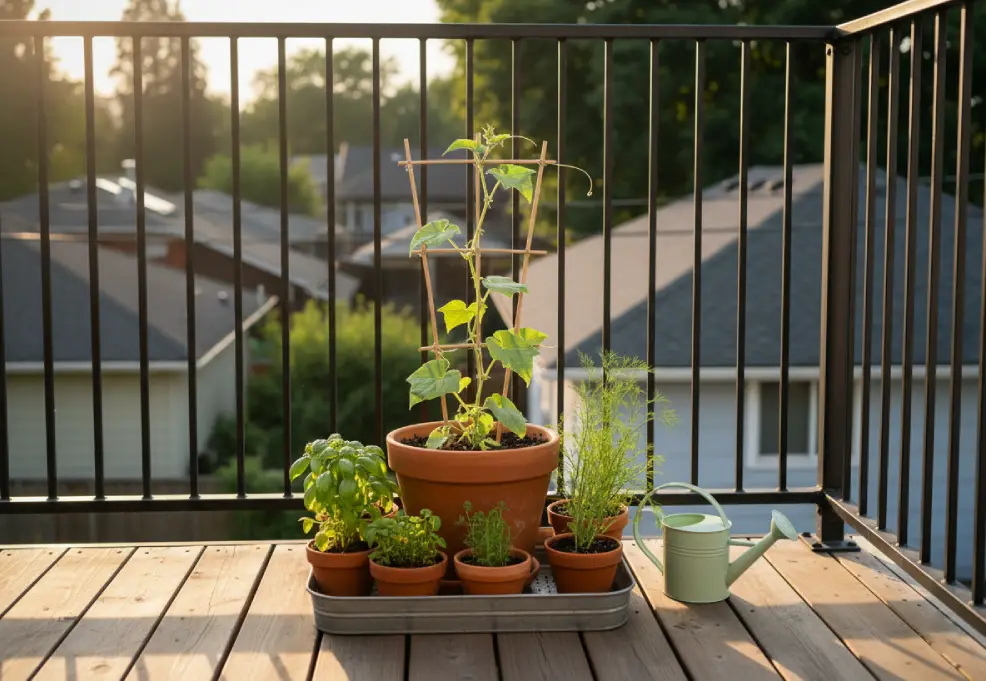
- Group pots to reduce drying. Clustering containers creates a slightly more humid microclimate and shields pot sides from direct sun and wind.
- Add a simple drip bottle for travel. If you’re gone for a weekend in summer, a slow-drip bottle can prevent the pot from fully drying out (not a long-term irrigation plan, but a handy backup).
- Companion herbs as “living helpers.” Tuck small herb pots nearby to attract pollinators and make your balcony feel like a mini kitchen garden.
Pet Safety Note for Balcony Growers
If you share your apartment with a curious cat or dog, it’s normal to worry about toxicity. The ASPCA lists cucumber (Cucumis sativus) as non-toxic to dogs, cats, and horses.
That said, “non-toxic” doesn’t mean “a great snack in big amounts.” Any plant chewing can still cause a mild upset stomach, and pets can knock over pots. If your pet is a dedicated leaf-nibbler, consider a simple barrier ring around the container or keep the pot behind a plant stand.
Now that you’ve got the full setup, here’s the big picture: if you give cucumbers warmth, steady moisture, regular feeding, and a sturdy trellis, they’re one of the most satisfying balcony crops you can grow. Start with one well-supported plant in a properly sized container, and you’ll learn more from that one success than from juggling four stressed plants in tiny pots.