Rosemary is one of those balcony herbs that makes you feel wildly capable. One minute you’re watering a terracotta pot, the next you’re snipping piney sprigs for potatoes, soup, or a loaf of focaccia. But rosemary is also a woody shrub, and that changes the harvesting rules. If you cut too low into old, bare stems, it may not bounce back the way basil does. If you take too much at once, you can stall new growth right when you want it most.
The good news: harvesting rosemary is simple once you know what you’re aiming for. You’ll focus on tender, green tips (not the brown, woody base), make your cuts just above leaf nodes so the plant branches, and keep your “big harvest” timing lined up with active growth. I’ll walk you through when and how to harvest rosemary, how to harvest rosemary for cooking, and how to harvest and dry rosemary so you’re stocked for weeks—without stressing your plant.
Harvesting Rosemary Basics
Think of harvesting rosemary as “light pruning you can eat.” The goal isn’t just getting sprigs today—it’s keeping the plant compact, leafy, and productive for months.
Here’s the baseline that keeps most Rosemary in a Pot happy:
- Cut the tender green growth, and avoid cutting back into old, woody stems.
- Make cuts just above a leaf node (where needles/leaves cluster) so the plant branches from that point.
- For a bigger harvest, take a little from several spots instead of stripping one side bare—this keeps the plant balanced in a windy balcony corner.
If you’re gardening with pets around, rosemary itself is listed as non-toxic to cats and dogs, but nibbling any plant can still cause mild stomach upset in some animals.
When and How to Harvest Rosemary for Best Flavor
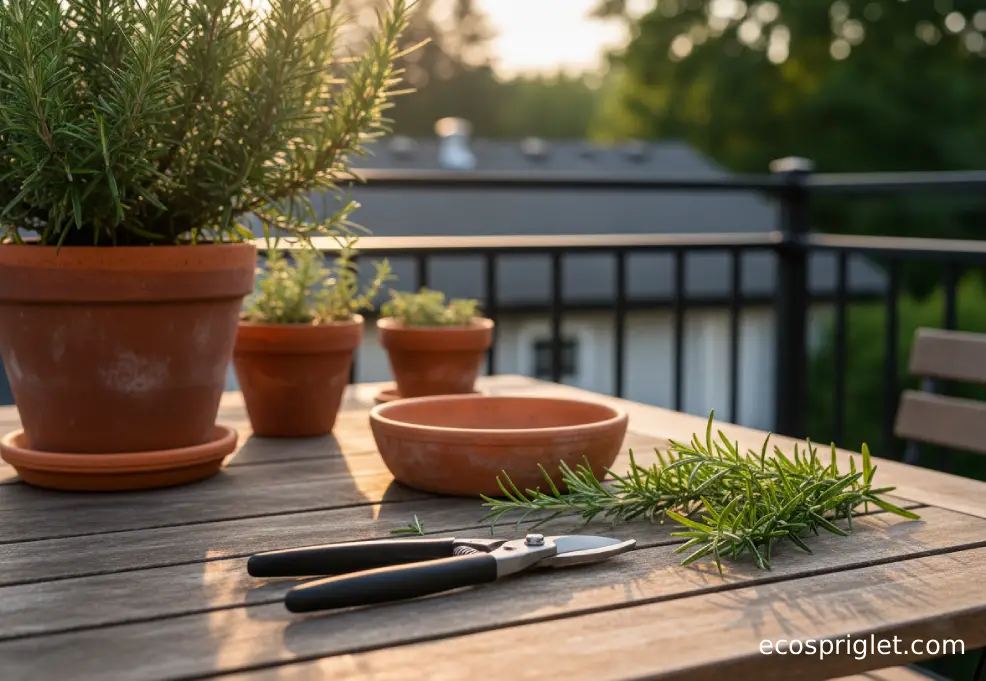
If you want rosemary that tastes like rosemary (bold, resinous, sweet), timing helps. Multiple Extension sources recommend harvesting herbs in the morning after dew has dried, before the heat of the day, and often before flowering for peak aroma and flavor.
On a balcony, I treat it like this:
If you’re snipping a few sprigs for dinner, harvest whenever you need it—just stay conservative with how much you remove. If you’re planning to dry rosemary or do a bigger trim, pick a mild day when the plant is actively growing (spring through early fall in many climates) and your potting mix isn’t bone-dry. You’ll get better regrowth and less stress on the plant.
How to Harvest Rosemary So It Keeps Growing
I remember when I first tried harvesting rosemary like I did basil—big handfuls, low cuts, “it’ll grow back!” It didn’t. The plant survived, but it stayed awkwardly bare at the base for ages. That’s when I learned rosemary plays by woody-shrub rules: keep cuts in the leafy zone, and don’t expect miracles from old wood.
Use this repeatable method for “how to harvest rosemary without killing the plant”:
- Pick your stems: Choose green, flexible tips (the newest growth) that are 4–8 inches long.
- Find a node: Look for a spot where needles cluster, then cut about 1/4 inch above that node.
- Spread your cuts: Take small amounts from 5–10 places around the plant for an even shape.
- Stay conservative: As a safe rule, don’t remove more than about one-third of the plant in one go, especially in containers.
Beginner mistake I see all the time: “I only harvested from the outside.” That leaves the center dense and shaded. Instead, take a few selective tips from the top and a couple from the interior to improve airflow—your plant stays less mildew-prone and more evenly leafy.
How to Harvest Fresh Rosemary for Cooking
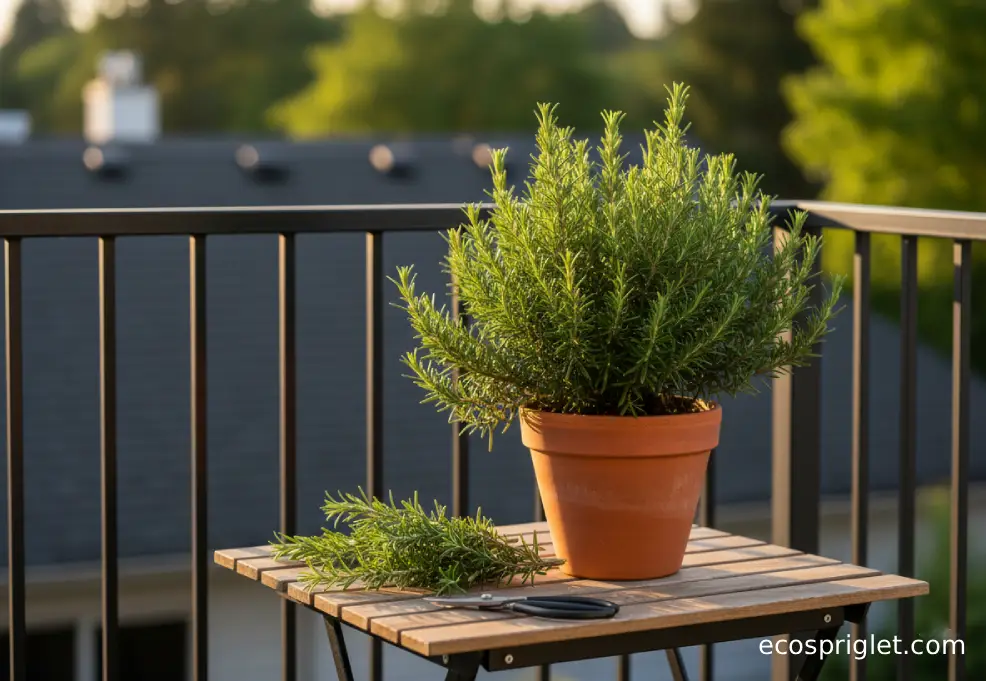
For cooking, you usually want tender tips—those needles strip easily and the flavor is less “woody.” Snip a sprig, then either:
- Slide your fingers backward along the stem to strip needles, or
- Use the whole sprig like a mini “aroma wand” in soups, stews, and braises, then pull it out before serving.
My balcony trick: harvest what you need, then stand leftover sprigs in a small glass with a splash of water while you cook. It keeps them perkier if your kitchen runs warm or dry.
If you’re cooking tonight and want a longer fridge life, NDSU Extension suggests wrapping sprigs in a slightly damp paper towel and placing them in a plastic bag; stored properly, fresh rosemary can keep about 10–14 days in the refrigerator.
How to Harvest Rosemary for Drying
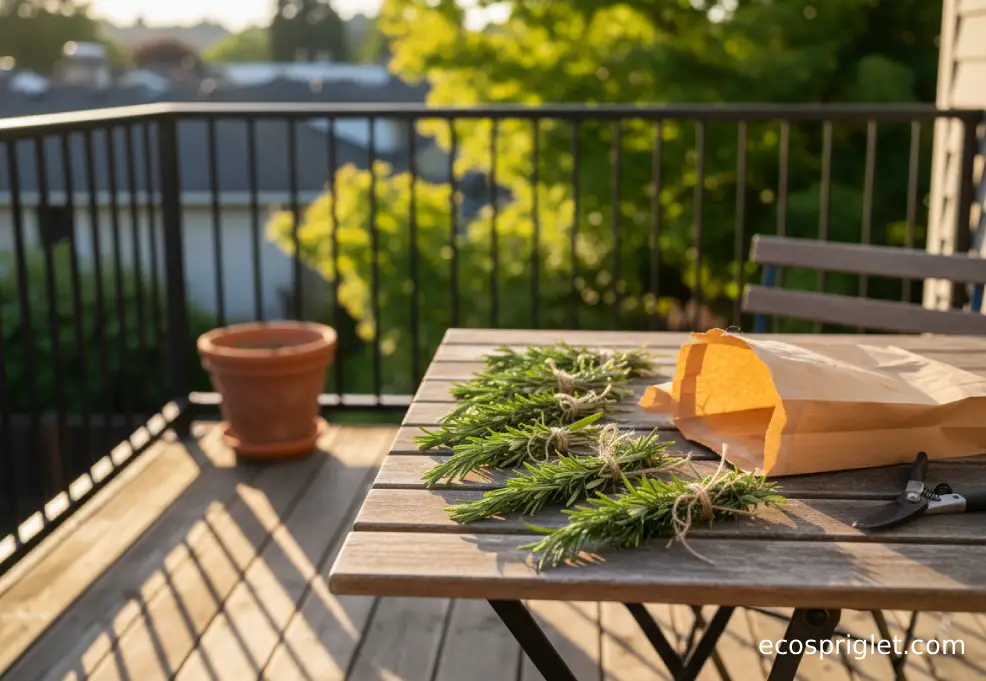
If you’re harvesting rosemary for drying, you’re usually taking a bit more at once—so be intentional. Extension guidance on herb harvesting for drying often points to cutting at the “bud stage” (just before flowers open) and gathering in the morning after dew evaporates to reduce wilting.
A simple balcony-friendly approach:
- Harvest 6–10 sprigs across the plant (not all from one side).
- Choose clean, healthy tips with no blackened needles or sticky residue.
- Skip washing unless you truly need to; extra moisture can slow drying. If you do rinse, dry thoroughly first.
If your plant is small, do smaller drying batches and give it time to replace growth between harvests. (Rosemary is generous, but it’s not instant.)
How to Harvest and Dry Rosemary Without Losing Aroma
The two most reliable home methods are air-drying and dehydrator drying. Here’s a quick comparison using Extension guidance:
| Method | How To Do It | Key Notes |
|---|---|---|
| Air-dry (bundles) | Tie small bundles and hang in a well-ventilated spot; a paper bag can help protect from dust. | Warm, dry air works best; avoid direct sun for better color and flavor retention. |
| Dehydrator | Dry herbs at low heat until leaves crumble easily. | OSU suggests 95–115°F (up to 125°F in humid areas). Penn State suggests about 95–110°F if your dehydrator can be set that low. |
When it’s dry, strip the needles, store them in an airtight container, and keep it away from heat and light. If you want maximum potency, keep dried herbs cold (fridge or freezer storage can extend quality).
Troubleshooting After Harvest
If your rosemary looks unhappy after harvesting, it’s usually one of these container problems—not the harvesting itself:
Leggy, bare stems at the base: This often comes from low light and delayed trimming. Keep your cuts in the leafy zone and trim lightly to encourage fresh young growth, but avoid cutting into old wood.
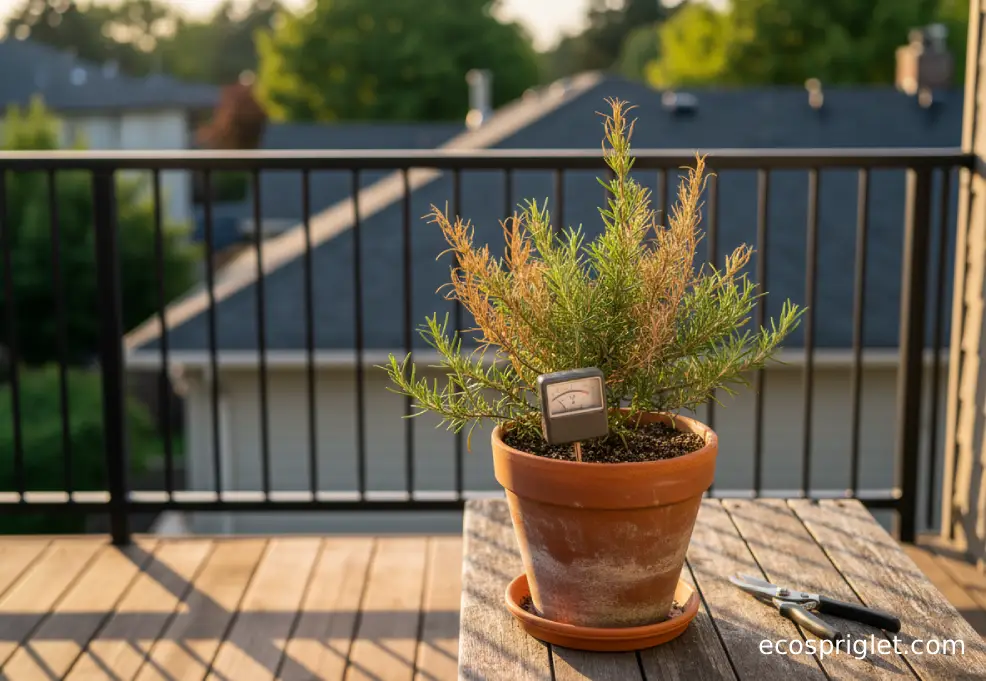
Browning tips: Check watering and wind exposure. Containers can dry fast on railings or corners. After harvesting, water normally (don’t “pamper water”), but do make sure the root ball isn’t dust-dry for days in hot weather.
No regrowth where you cut: That’s the classic “cut too low” issue. Rosemary often won’t push new green growth from woody, leafless stalks, so future harvests should stay up in the green growth.
Common Mistakes New Balcony Gardeners Make
- Cutting into old wood: Stick to leafy green growth; RHS specifically advises avoiding cutting back into old wood.
- Taking too much at once: Keep big harvests to about one-third of the plant (less if it’s small), then let it rebound.
- Harvesting only from one “favorite side”: Rotate where you cut so the plant stays balanced and doesn’t lean toward the light.
- Harvesting herbs for drying at the wrong time: For best results, harvest in the morning after dew dries and often before flowers open.
- Storing fresh sprigs loose and dry: Wrap properly; NDSU notes fresh rosemary can keep 10–14 days in the fridge with the right approach.
Creative Ways to Use Extra Rosemary
Once you get comfortable harvesting, you’ll suddenly have “extra” rosemary—especially after a shaping trim. A few of my favorites:
- Freezer cubes: Chop rosemary and freeze in ice cube trays with water or oil for quick cooking add-ins (store oil infusions in the refrigerator).
- Roasting bundles: Toss whole sprigs onto a sheet pan with vegetables and pull them off after roasting.
- Balcony propagation: Take a few healthy tip cuttings after a harvest and root them to make a backup plant (handy if your main rosemary gets woody over time).
This is also where rosemary earns its keep in tiny spaces: it’s decorative, fragrant, and useful—even a small pot can flavor a weeknight meal.
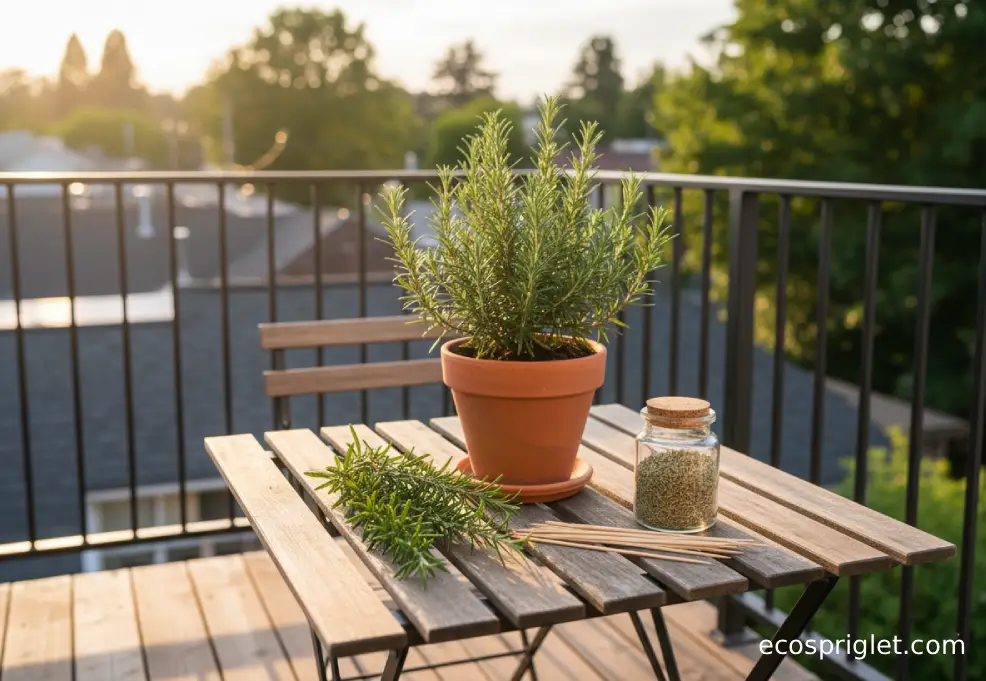
If you take one thing from this: harvest rosemary like a woody shrub, not a soft herb. Stay up in the green growth, cut just above leaf nodes, and spread your snips around the plant so it keeps a tidy, bushy shape. When you want peak flavor (especially for drying), aim for morning harvest after dew has dried, and try to catch the plant before flowers open.
On an apartment balcony, this approach pays off fast. Your rosemary stays compact instead of lanky, you get better airflow in a tight space, and you can harvest little bits for cooking without stressing the plant. Then, when you do a bigger trim, you’ll have enough sprigs to air-dry or use a dehydrator at low temperatures for a pantry stash that actually tastes like rosemary.