Biodegradable plant pots sound simple until you try to use them on a windowsill, balcony shelf, or tiny patio table. Some are excellent for seed starting. Some dry out faster than expected. Some need a watertight tray underneath unless you enjoy wiping muddy rings off your apartment floor. And a few “biodegradable” flower pots are better thought of as lower-plastic decorative containers, not seedling pots you bury whole.
For this roundup, I looked at biodegradable plant containers through a small-space lens: footprint, mess, drainage, transplanting, material honesty, storage, and whether the pot actually makes life easier for an apartment gardener. This is a research-based guide, not a hands-on test. Product details were checked against manufacturer pages, retailer specifications, and gardening organizations where relevant.
The biggest takeaway: peat-free biodegradable seedling pots are usually the calmer choice if your main goal is reducing plastic waste without leaning on peat. Classic seedling peat pots still have practical uses, especially for budget seed starting, but peat has real environmental baggage. Oregon State University Extension notes that peat moss harvesting releases carbon and can harm peatland ecosystems, while the RHS highlights wood fiber, coir, bark, and other peat-free materials as more sustainable growing media options.
Quick Picks
| Pick | Best For | Material | Small-Space Note | Main Trade-Off |
|---|---|---|---|---|
| Back to the Roots Organic & Plantable 2.4-inch Seed Starting Pots | Best peat-free pick for beginners | Peat-free, organic, no glues or binders | Small 2.5-inch diameter works well on a windowsill tray | Better for seedlings than larger balcony flowers |
| CowPots #3 Square | Best overall biodegradable grow pots | Composted cow manure | Fits loosely in standard 1020-style trays; good for herbs and quick seedlings | Usually sold in larger quantities direct from CowPots |
| Jiffy 3-inch Peat Pots | Best budget seedling peat pots | Canadian sphagnum peat moss | Familiar, compact, and easy to find | Peat is biodegradable but not the strongest eco choice |
| Jiffy-Strips 50 Cells | Best biodegradable seed trays for batch sowing | Canadian sphagnum peat moss and wood pulp | Good for starting many flowers or herbs in one narrow setup | Needs careful watering and a tray underneath |
| Johnny’s 4-inch Round Fertil Pots | Best 4-inch peat-light upgrade | 80% wood fiber, 20% peat moss | More soil volume for tomatoes, peppers, and slower starts | Bulk count may be more than a casual apartment grower needs |
| Jiffy 5-inch Peat Pots | Best large peat pots | Peat | Useful when seedlings need more root room before outdoor transplanting | Takes more tray space and still has peat concerns |
| EcoForms Nova Rice Hull Pot | Best biodegradable flower pot for display | Rice hulls and natural binding agents | Looks more finished on a balcony than raw seed starter cups | Not the same job as plantable seed starter pots |
How We Evaluated These Biodegradable Pots
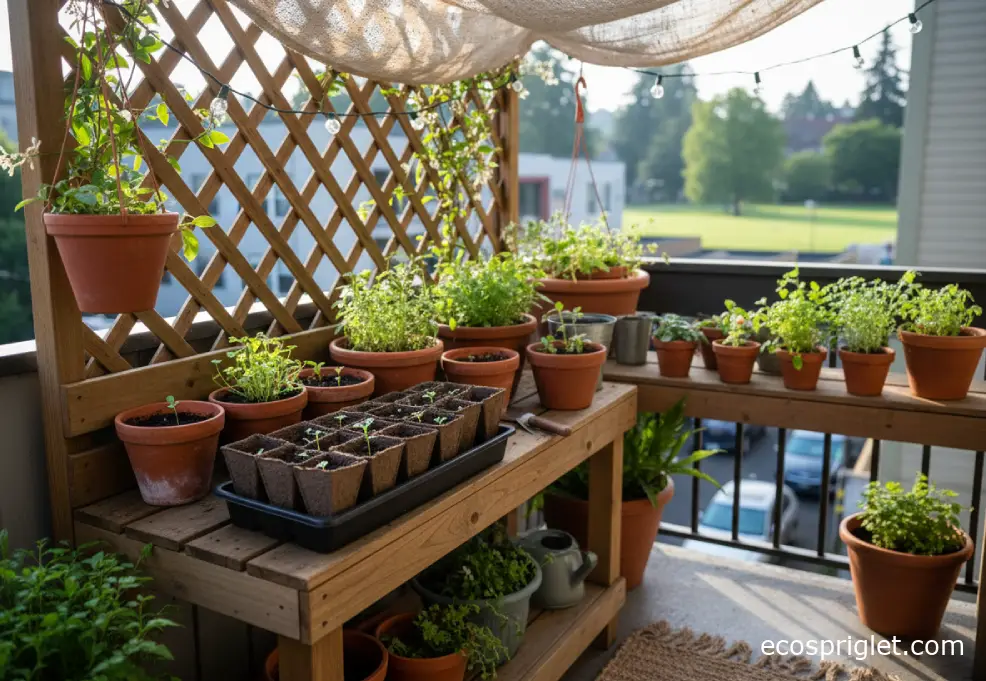
Because EcoSpriglet is written for apartment and balcony gardeners, I did not rank these biodegradable potting pots the same way a greenhouse grower might. A pot that works beautifully in a nursery can be annoying on a kitchen counter if it leaks, sheds fibers, wicks water from the soil, or needs a full storage bin between seasons.
The main scoring lens was practical: does the pot reduce transplant disturbance, avoid plastic waste, fit a small tray, and stay manageable in a rented home? I also looked for clear material claims. “Eco-friendly” is not enough by itself. A better biodegradable pot should explain what it is made from, whether it is peat-free, whether it uses binders, and whether it can be planted directly into soil or a larger container.
- Small-space fit: windowsill, shelf, countertop, and balcony table use.
- Mess control: drainage, water wicking, fiber shedding, and need for a saucer or tray.
- Transplant practicality: whether the whole pot can be planted and how roots move through it.
- Material logic: peat-free materials scored better than peat-heavy options.
- Beginner friendliness: simple setup, forgiving size, and fewer hidden accessories.
- Value: not just lowest price, but whether the pack size makes sense for a small household.
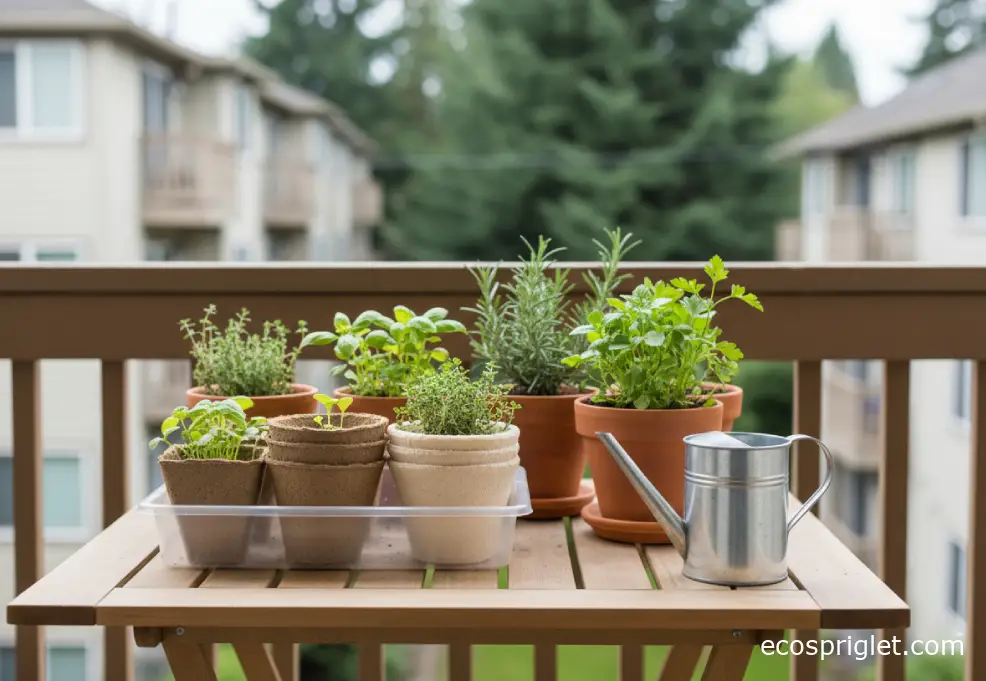
A small practical note: even biodegradable planters for seedlings usually need a tray. Ferry-Morse’s Jiffy 5-inch instructions specifically tell users to place the pots on a watertight tray to avoid spillage, which is exactly the kind of detail that matters in an apartment.
Best Overall: CowPots #3 Square
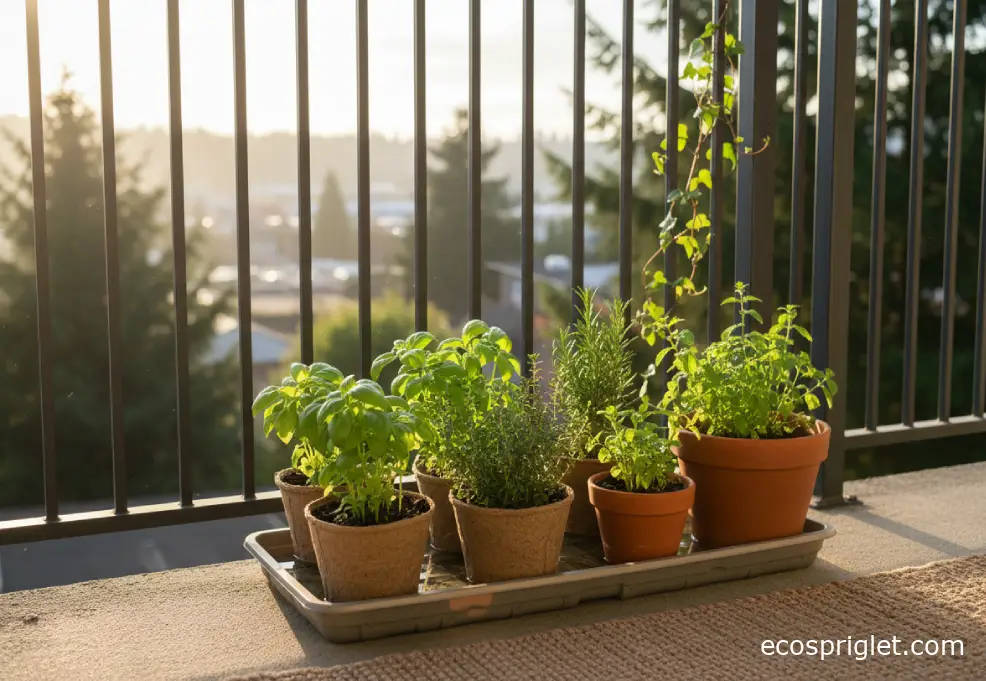
CowPots #3 Square is the most balanced pick here if you want biodegradable grow pots that feel genuinely useful rather than just less-plastic. CowPots says its pots are made from 100% renewable and recycled composted cow manure, and the #3 Square is intended for herbs, vegetables, annuals, quick seed-to-transplant growing, and stepping up into larger containers. The listed size is 3 inches by 2 7/8 inches by 1 7/8 inches, with a 200 mL cell volume.
The apartment appeal is the shape. Square pots waste less tray space than round pots, and CowPots notes that this size loosely fits 18 to 21 pots in a 1020 short tray. For a balcony gardener starting basil, nasturtiums, lettuce, marigolds, or a few tomatoes, that is enough capacity without turning the dining table into a greenhouse.
The trade-off is ordering and storage. CowPots are often sold in larger case quantities directly, which is sensible for serious seed starters but a bit much if you only grow six herbs a year. I’d lean toward this one if you sow regularly, share extras with neighbors, or want a biodegradable pot that avoids peat entirely.
- Best for: herbs, annual flowers, vegetables, and balcony gardeners who start seeds every season.
- Skip it if: you only need a tiny pack of planting cups for one windowsill project.
- Buying tip: keep unused pots dry. CowPots notes that dry storage is critical for long shelf life.
For more seed-starting basics, see EcoSpriglet’s small-space seed starting guide.
Best Peat-Free Beginner Pick: Back to the Roots Organic & Plantable 2.4-Inch Seed Starting Pots
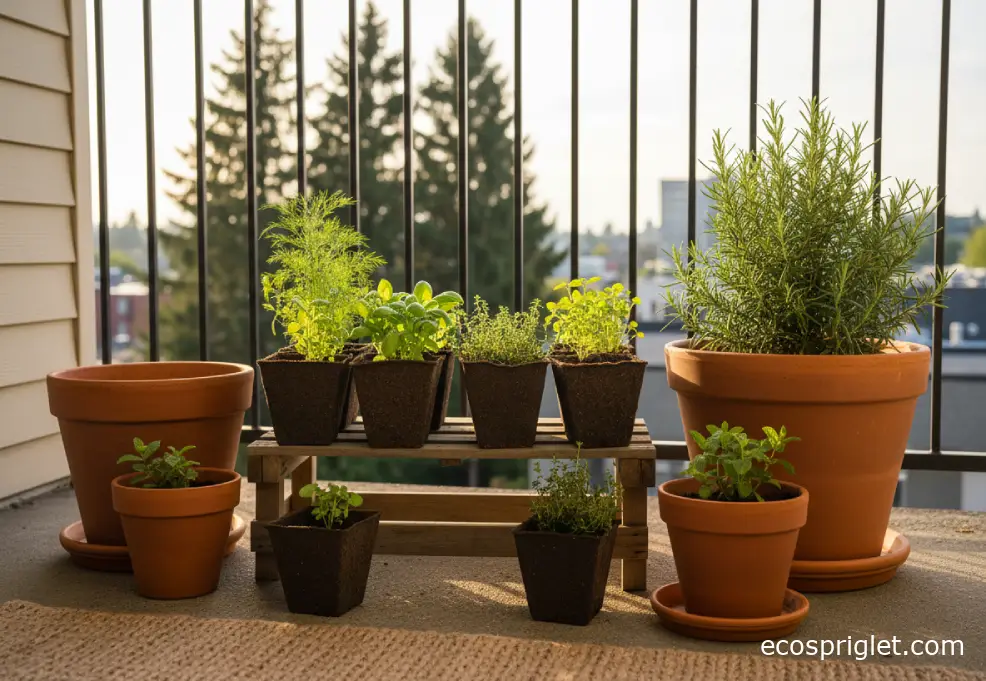
Back to the Roots Organic & Plantable 2.4-inch Seed Starting Pots are the easiest recommendation for beginners who want biodegradable seedling pots without peat. The product page describes them as peat-free, organic, sustainably sourced, USDA Certified 100% Biobased, and made without glues or binders. The listed pot diameter is 2.5 inches.
That 2.5-inch size is modest, which is a good thing in an apartment. You can start a tidy tray of basil, cilantro, dwarf marigolds, lettuce, zinnias, or compact balcony flowers without committing to a bulky propagation station. These are biodegradable seed starter pots rather than long-term decorative planters, so the practical use is clear: sow, grow until the seedling is ready, then plant the pot into a larger container or garden bed.
The limitation is soil volume. Small biodegradable planting cups dry out sooner than deeper pots, especially under a grow light or on a warm south-facing sill. They are also not the right size for plants that need a long indoor runway before transplanting, like large tomatoes or peppers in cold climates.
- Best for: first seed-starting projects, herbs, flowers, and quick balcony seedlings.
- Skip it if: you want large peat pots or a deeper pot for long indoor growing.
- Apartment note: pair them with a shallow watertight tray so watering stays boring, which is exactly what you want indoors.
Best Budget Peat Option: Jiffy 3-Inch Biodegradable Peat Pots
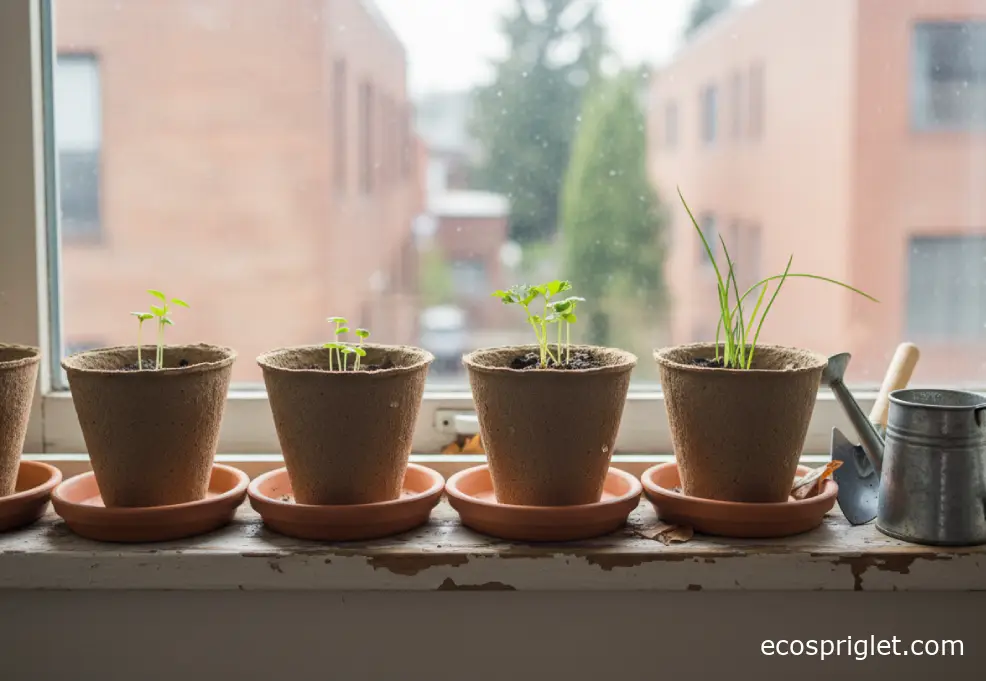
Jiffy 3-inch Biodegradable Peat Pots are the familiar choice: affordable, widely recognized, and simple to understand. Ferry-Morse lists these as organic and OMRI listed, with individual package dimensions of 3.125 inches by 3.125 inches by 2.25 inches. The page also states that the peat used is responsibly sourced Canadian sphagnum peat moss.
These biodegradable pots make sense if your top priority is low-cost seed starting and you already know you will transplant the whole pot into a larger outdoor container or community garden plot. They are a reasonable fit for beginner herbs, annual flowers, and vegetables with delicate roots, provided you do not let the pot rim sit above the soil line after transplanting.
The trade-off is pretty clear here: they are biodegradable, but peat-based. That means they reduce plastic pot waste, yet they do not avoid the peat issue. For an EcoSpriglet-style balcony setup, I’d use these when budget and availability matter, but I would choose peat-free wood fiber, manure-based, coir, or other plant-fiber options when those are easy to buy.
- Best for: budget seed starting and widely available biodegradable seedling pots.
- Skip it if: your main goal is avoiding peat.
- Buying tip: keep a spray bottle nearby; small peat pots can dry at the edges before the center looks thirsty.
Best Biodegradable Seed Trays: Jiffy-Strips 50 Cells
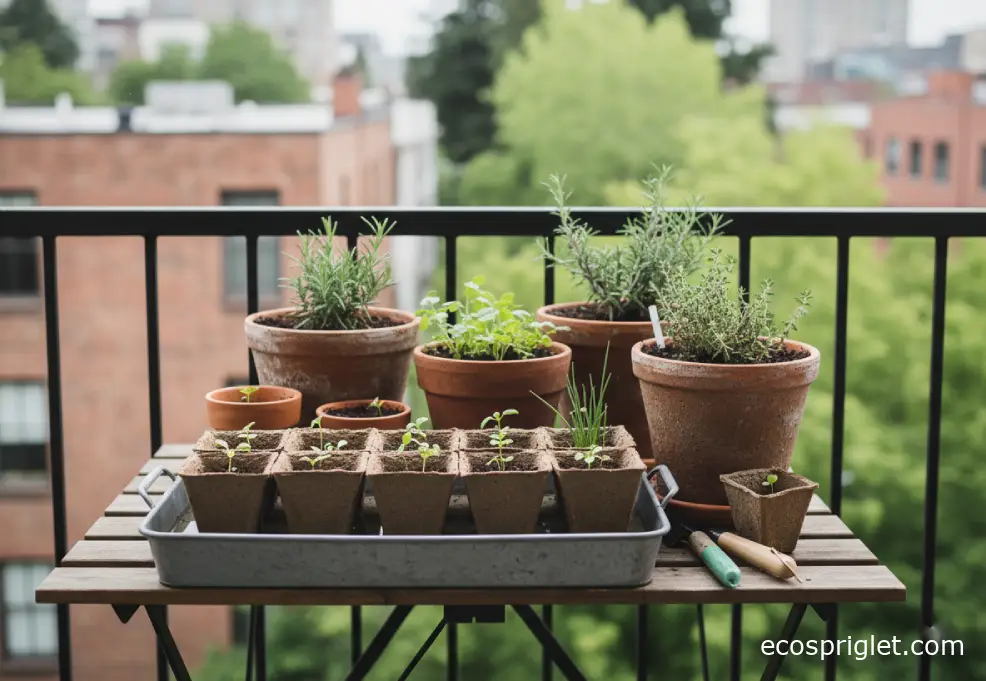
Jiffy-Strips are useful when you want biodegradable seed trays rather than separate little pots rolling around a shelf. Ferry-Morse says this pack includes strip trays with ten seed starting cells each, and the product is made from Canadian sphagnum peat moss and wood pulp. The listed package dimensions are 10 inches by 4 inches by 4 inches.
I like the concept for apartment gardeners who start flowers in small batches. You can sow a row of calendula, basil, chives, or compact pollinator flowers without using a pile of individual planting cups. The joined-cell format is tidier than loose pots, especially on a narrow shelf.
There are two catches. First, these are still peat-based, so they are not my first choice for a peat-free setup. Second, strips can be fussier to move once wet. A dry strip is neat; a saturated strip full of seedlings is something you want supported from underneath. Use a rigid tray, and avoid carrying it across the apartment after watering unless you enjoy living dangerously.
- Best for: batch sowing flowers, herbs, and small vegetables.
- Skip it if: you want reusable rigidity or a peat-free seed tray.
- Apartment note: treat the outer tray as required, not optional.
Best 4-Inch Pot: Johnny’s 4-Inch Round Fertil Pots
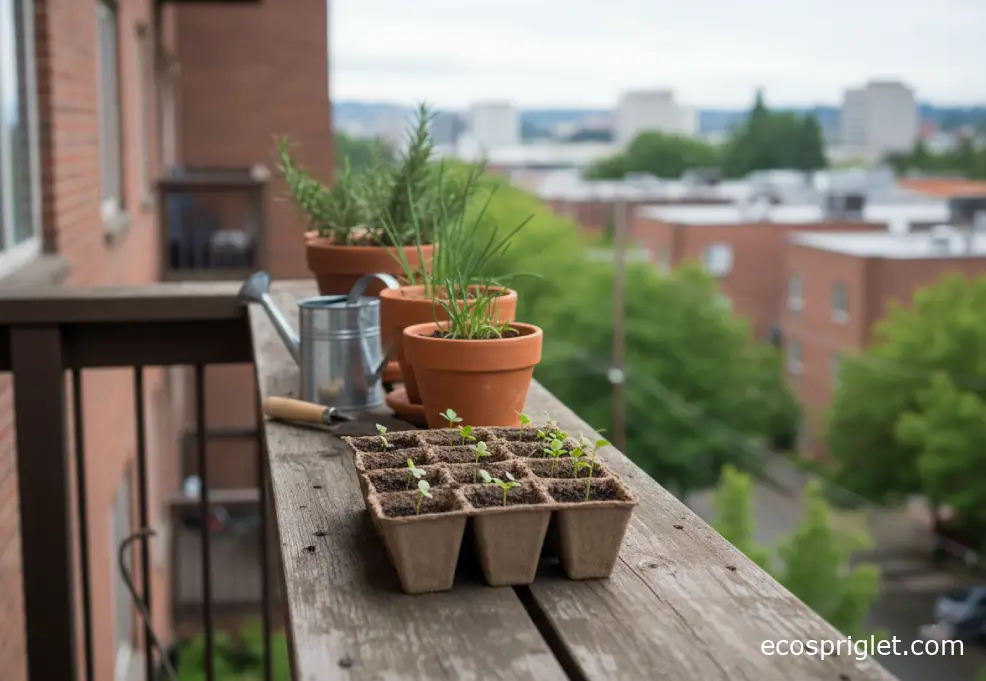
Johnny’s 4-inch Round Fertil Pots are a better fit when seedlings need more room than small planting cups can give. Johnny’s lists them as 4 inches in diameter by 4 inches high, OMRI Listed, and made from two ingredients: 80% wood fiber and 20% peat moss.
This is not a fully peat-free pick, but it is less peat-heavy than classic seedling peat pots. The extra depth makes more sense for tomatoes, peppers, eggplants, and larger flowers that may sit indoors longer before moving to a balcony container. For renters who grow just a few substantial plants, fewer larger pots can be easier than managing a crowded seed tray.
The main limitation is quantity. These are often sold in grower-friendly counts, which may be overkill for a studio apartment unless you start seeds for friends or reuse storage space carefully. They also need the same moisture awareness as other biodegradable plant containers: once the walls stay wet for too long, they may soften before you are ready to transplant.
- Best for: larger seedlings, slower starts, and growers who want more root room.
- Skip it if: you only grow quick herbs or want a completely peat-free pot.
- Buying tip: choose 4 inch peat pots or wood-fiber pots only when the plant actually needs the space; otherwise, smaller pots save soil, tray space, and water.
Best Large Peat Pots: Jiffy 5-Inch Biodegradable Seed Starting Peat Pots
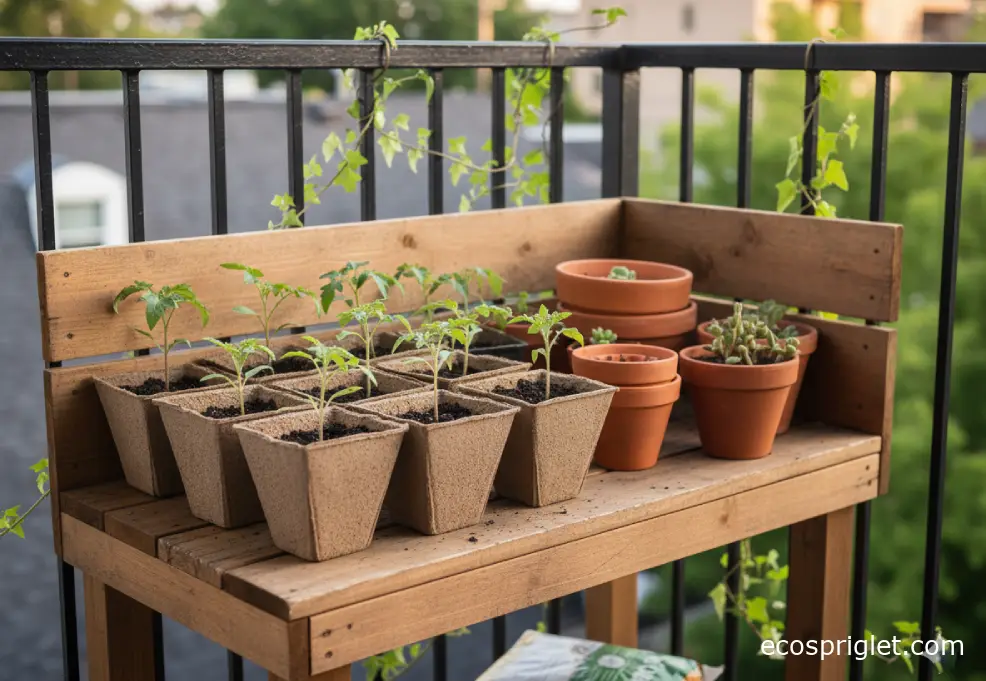
Jiffy 5-inch Biodegradable Seed Starting Peat Pots are the practical large peat pots in this roundup. Ferry-Morse lists the dimensions as 5 inches by 3.75 inches by 3.25 inches each, and describes them as suitable for plants with larger root systems or longer maturation times. The same page notes that the pots are available in pack sizes of 6, 12, 18, and 100.
These make sense for a balcony gardener starting squash, cucumbers, larger flowers, or vegetables that dislike root disturbance. The pot-and-all transplant idea is appealing when you do not have a backyard potting bench and want to move seedlings into a grow bag or railing planter with minimal fuss.
The downside is footprint. A few 5-inch pots can fill a windowsill quickly, and they need more seed starting mix than smaller biodegradable grow pots. They also need a watertight tray underneath; Ferry-Morse explicitly recommends one to avoid spillage. For apartment use, I would buy the smallest pack that matches your actual plan, not the bulk peat pots just because the per-pot price looks nicer.
- Best for: larger seedlings and short-term indoor growing before outdoor transplant.
- Skip it if: you are tight on tray space or trying to avoid peat.
- Apartment note: measure the tray first; large peat pots are wider in real life than they look online.
Best Biodegradable Flower Pot for Display: EcoForms Nova Rice Hull Pot
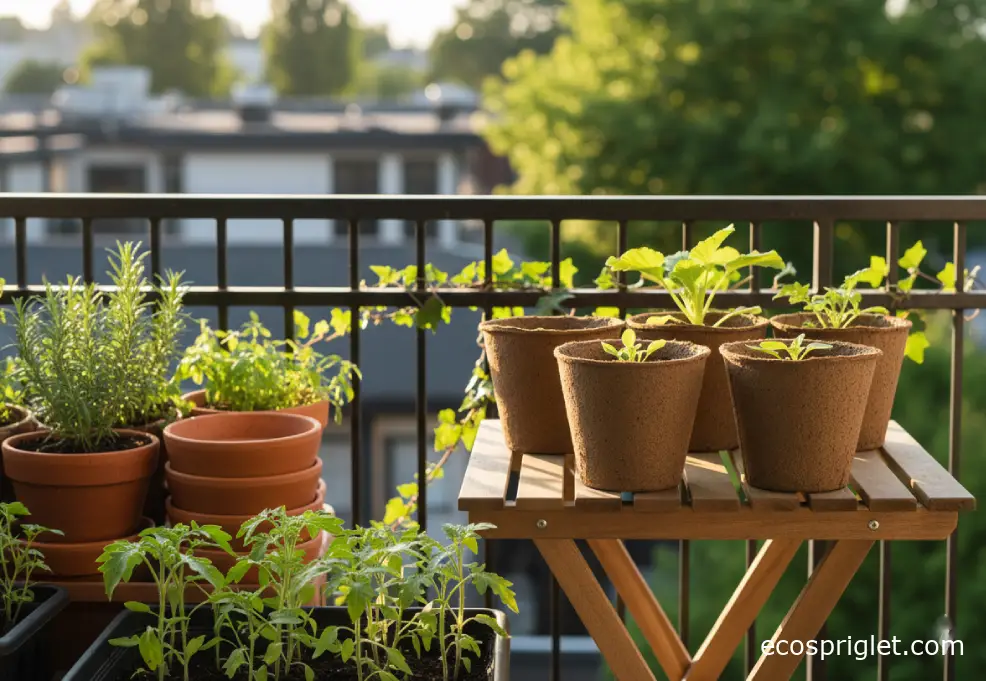
EcoForms Nova Rice Hull Pot is a different kind of pick. It is not a biodegradable seed starter pot you bury with a tomato seedling. It is a more finished-looking biodegradable flower pot for a balcony, patio, or bright indoor plant corner. EcoForms says its pots are made from rice hulls and natural binding agents that are starch-based, water-soluble, and biodegradable. Garden Goods Direct lists the 5-inch Nova at 5.6 inches by 5.5 inches with a 1.5-quart volume, and says each planter includes a pot and saucer.
This is the one I’d consider for visible use: a small flowering annual, compact basil, a houseplant cutting, or a balcony table arrangement. It looks less like a nursery supply and more like something you meant to leave out.
The trade-off is that it solves a different problem. If you are shopping for biodegradable seedling pots, Jiffy, CowPots, Back to the Roots, or Fertil Pots are more direct choices. If you want degradable flower pots that reduce reliance on conventional plastic while still looking tidy on a balcony, EcoForms is more relevant.
- Best for: visible balcony flowers, herbs, and small decorative plants.
- Skip it if: you need biodegradable seed starter pots for burying whole at transplant.
- Buying tip: choose the included saucer version for apartment use; drainage without a saucer is just a future cleanup.
What to Look For Before Buying Biodegradable Plant Containers
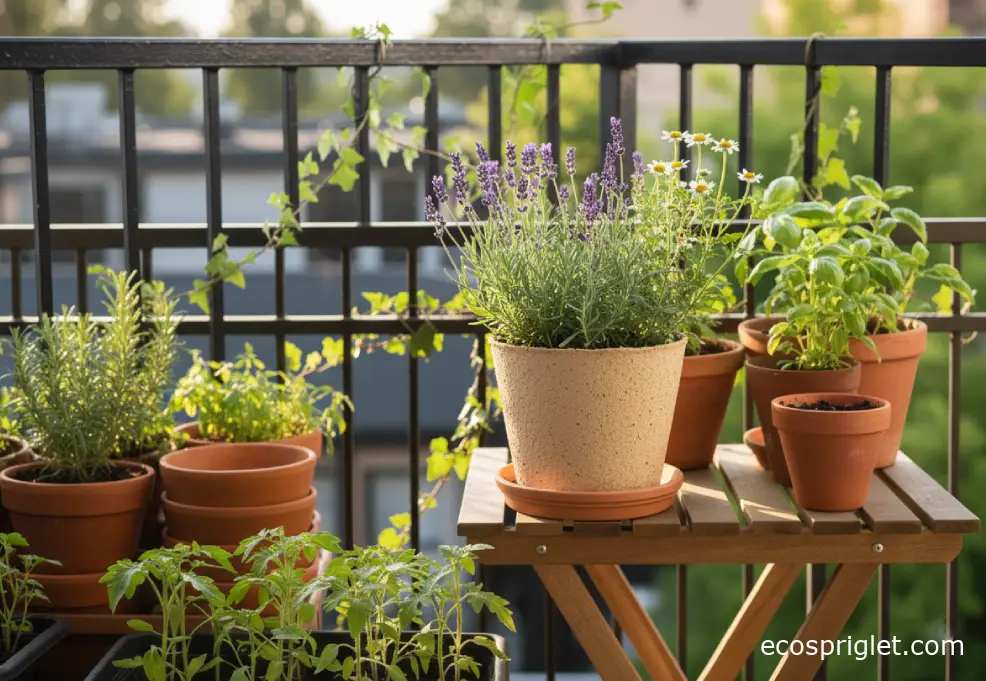
The first question is not “Is it biodegradable?” It is “Where will this pot live for the next six weeks?” In a small apartment, that answer matters more than most product pages admit.
For seed starting, look for biodegradable seedling pots that match the plant’s timeline. Tiny planting cups are fine for basil, lettuce, marigolds, and quick annual flowers. Tomatoes, peppers, eggplants, dahlias, and other longer-running starts usually benefit from more soil volume. A pot that is too small dries fast; a pot that is too large wastes seed starting mix and takes up shelf space.
Material matters too. Peat pots for plants are common, inexpensive, and biodegradable, but they are not the cleanest eco story. Wood fiber, composted manure, rice hulls, coir, and other plant-fiber materials may be better fits when you are trying to reduce both plastic and peat dependence. The RHS lists several peat-free growing media ingredients, including wood fiber, coir, bark, green waste compost, and others.
- For windowsills: choose smaller pots and a rigid tray.
- For balcony shelves: square pots save space better than round pots.
- For flowers: decide whether you need seed starter pots or display-ready biodegradable flower pots.
- For renters: avoid any setup that drains directly onto wood floors, shared balconies, or downstairs neighbors.
- For storage: do not buy bulk peat pots unless you have a dry place to keep extras.
One Daniel-style observation from too many small-space projects: the tray is often more important than the pot. A biodegradable pot can be wonderful, but if water seeps through onto a bookshelf, nobody is feeling very eco-minded by dinner.
Common Mistakes to Avoid
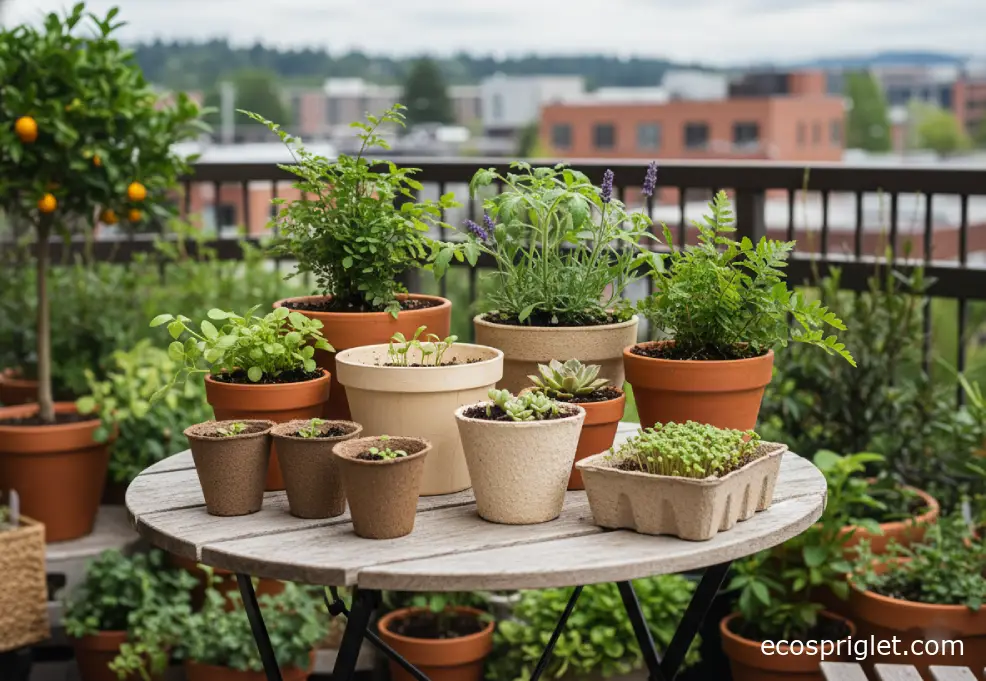
The most common mistake is leaving the pot rim exposed after transplanting. CowPots specifically warns that exposed biodegradable pot material will not break down as quickly and can wick water away from the plant. That advice applies broadly: when planting a pot biodegradable into a larger container, bury the full rim under soil.
Another mistake is overwatering because the outside of the pot looks dry. Biodegradable materials can darken, soften, or wick water unevenly. Use the soil surface and pot weight as clues, not just the outer wall. CowPots also notes that overwatering can cause its pots to break down prematurely.
- Do not skip the tray indoors.
- Do not assume “biodegradable” means peat-free.
- Do not buy large peat pots for tiny herb seedlings.
- Do not store unused biodegradable pots in a damp closet.
- Do not transplant with the rim sticking above the soil line.
The quiet win is matching the pot to the job. Biodegradable seed starter pots are for starting seedlings. Biodegradable flower pots are for display. Biodegradable seedling trays are for batch sowing. When those roles get mixed up, the setup usually gets messier than it needs to be.
FAQ
Are biodegradable plant pots actually better than plastic?
Sometimes. They can reduce single-use plastic waste and reduce root disturbance at transplanting. But the material matters. Peat-based biodegradable pots still rely on peat, while peat-free materials like wood fiber, composted manure, coir, and rice hulls may be a better environmental fit depending on sourcing and use.
Can I plant biodegradable pots directly into a balcony container?
Yes, if the product is designed as a plantable seedling pot. Bury the whole pot fully, including the rim, and water the surrounding soil well. For decorative biodegradable flower pots like rice-hull planters, treat them more like standard containers unless the manufacturer specifically says to plant them whole.
Are jiffy peat pots the same as biodegradable seedling pots?
Jiffy peat pots are one type of biodegradable seedling pot. They are widely used and easy to find, but they are peat-based. If you are searching for biodegradable planters for seedlings with a lower-peat or peat-free angle, look at wood fiber, composted manure, or other plant-fiber options.
What size should I choose for apartment seed starting?
For herbs and quick flowers, 2.4- to 3-inch biodegradable planting cups are usually enough. For tomatoes, peppers, eggplants, or larger annuals, 4 inch peat pots or 4-inch wood-fiber pots give roots more room. Large peat pots are useful, but they take over a windowsill quickly.
Are bulk peat pots worth buying?
Only if you start a lot of seeds or share supplies. Bulk peat pots can lower the per-pot cost, but apartment storage is real. If your closet gets damp, biodegradable pots can soften or degrade before you use them.
Final Verdict
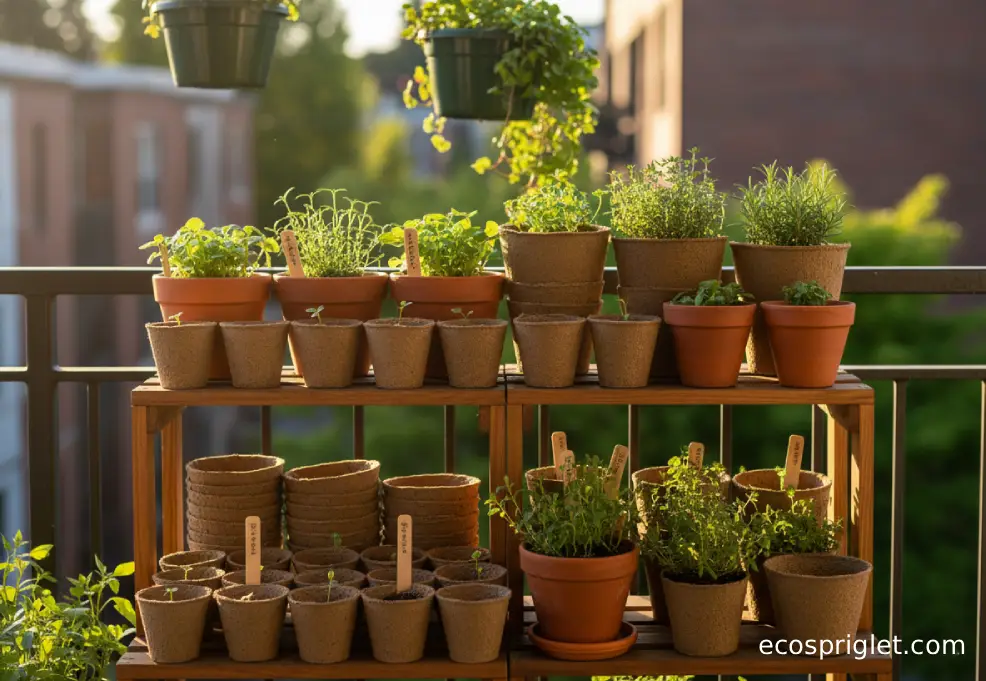
For most small-space gardeners, I’d start with Back to the Roots Organic & Plantable 2.4-inch Seed Starting Pots if you want a simple peat-free beginner setup. They are small, approachable, and make sense for herbs and flowers on a windowsill. If you start seeds more seriously, CowPots #3 Square is the stronger all-around pick because it avoids peat, uses composted manure, and fits the rhythm of balcony vegetables and annuals well.
Jiffy 3-inch peat pots and Jiffy-Strips still have a place. They are familiar, affordable, and practical, especially when availability matters. I just would not call them the greenest option without explaining the peat trade-off. Johnny’s 4-inch Fertil Pots are a good middle ground for larger starts, while EcoForms Nova Rice Hull Pot is the better choice when you want biodegradable flower pots that look presentable on a balcony table.
The calmest approach is to buy less, choose the smallest pot that suits the plant, use a tray every time, and bury plantable pots fully at transplanting. That keeps your seed starting simple, your apartment cleaner, and your “eco” choice grounded in what actually works.