If you’ve ever opened a bag of potting mix and wondered about those bright white “popcorn” bits, that’s perlite. In this guide, I’ll break down what perlite is (in plain English), how it’s produced, where it shines versus vermiculite, and exactly how much to use for houseplants, herbs, and succulents. You’ll also get a quick troubleshooting playbook, a sustainability snapshot, and a simple checklist you can follow every time you repot. By the end, you’ll know when perlite is the right tool—and how to dial in mixes so your balcony and windowsill planters stay healthy, upright, and easy to care for.
What It Is and Why Gardeners Use It
Perlite is the bright white, super-light “popcorn” you see in potting mixes. It starts as volcanic glass that gets heated until it puffs up, trapping air inside. In containers, those tiny air pockets do two big favors: they keep roots supplied with oxygen and they help water move through the mix instead of pooling and going sour. On my own terrace, mixing a couple of handfuls of coarse perlite into a dense houseplant soil turned droopy basil into sturdy, upright plants within a week.
- Aeration & drainage: Prevents compaction so roots can breathe.
- Steadier moisture curve: Water soaks in and drains cleanly, reducing rot risk.
- Consistency over time: Mixes stay lighter, especially in glazed ceramic and plastic pots.
Where you’ll see perlite: most bagged potting soils, cactus/succulent blends, and DIY mixes for indoor plants.
What Perlite Is Made From (and How It’s Produced)
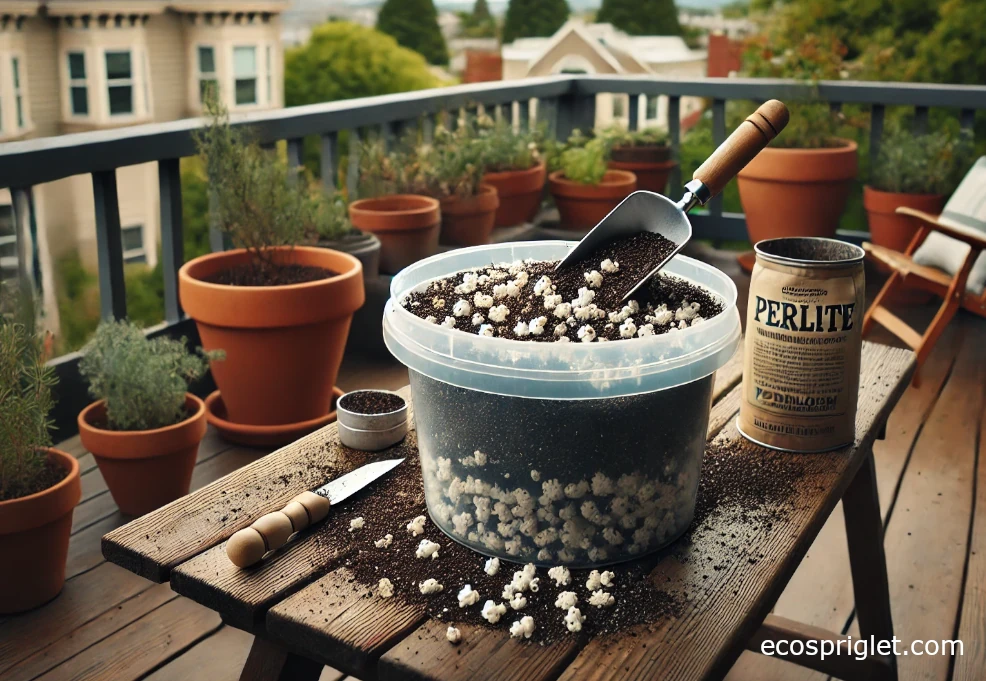
Perlite starts as natural volcanic glass that contains a bit of locked-in water. When heated rapidly in an industrial “popper,” that water flashes to steam and forces the glass to expand up to 10–20× its original size—like puffed cereal. What you get is a sterile, inert, pH-neutral, snow-white granule that’s incredibly lightweight and full of internal pores.
- Sterile & inert: Won’t add nutrients or pathogens; it’s a structural amendment.
- Neutral pH: Plays nicely with most potting mixes.
- Ultra-light: Makes balcony containers easier to lift and move.
Perlite Grades & When to Use Each
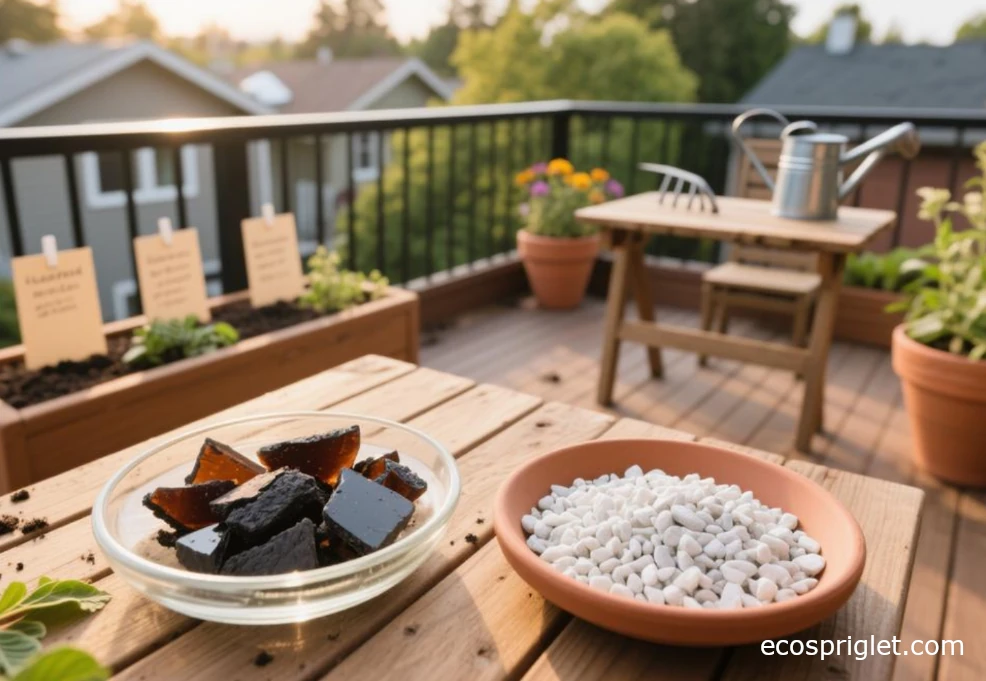
Perlite is sold in different particle sizes. Naming isn’t perfectly standardized, but you’ll usually find fine, medium, and coarse (sometimes “#3” or “#4” for coarse). Size matters because bigger particles create bigger pores and faster drainage.
- Fine/Medium: Seed starting, small houseplants (4–6″ pots), blends where you want gentle aeration.
- Coarse: Pots 8–12″ and up, succulents/cacti, heavy mixes that need a real lift.
- Tip: If your bag doesn’t state a grade, pinch: powdery = fine; pea-like = coarse.
Perlite vs. Vermiculite
Think of perlite as the “air-and-drainage” amendment and vermiculite as the “moisture-holding” amendment. If your mix stays too wet, you likely need more or a coarser grade; if it dries too fast, vermiculite can stretch the watering window—especially for seed trays and ferns.
Perlite
-
Rigid, porous granules that speed drainage and resist compaction.
-
Best for: succulents, cacti, woody herbs, mixes that stay wet.
-
Watch out: water-hungry plants may need shorter but more frequent watering.
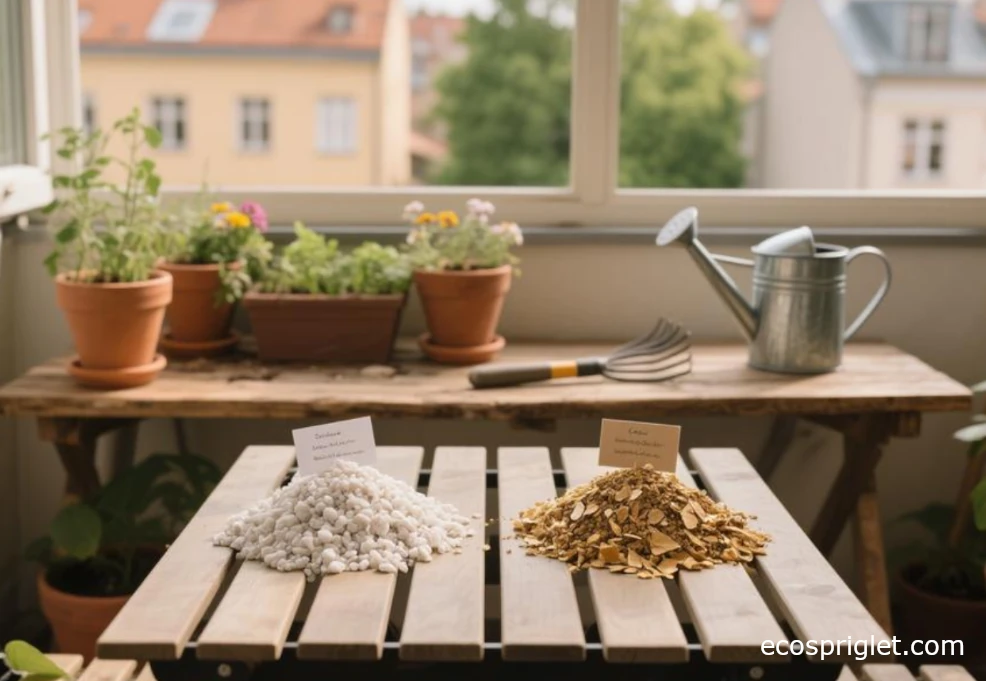
Vermiculite
-
Layered, spongy mineral that absorbs and slowly releases water (and holds some nutrients).
-
Best for: seed starting, ferns, mixes that dry too fast.
-
Watch out: not ideal for plants that hate “wet feet.”
Together?
-
Seed trays: start with 1:1 seed-starting mix : vermiculite.
-
If cells stay soggy or damping-off appears, swap in some perlite for extra air.
Typical amendment range
-
Use 10–50% (by volume) depending on plant needs, pot size, and container material.
Quick chooser
-
Stays too wet → add perlite (coarser grade if needed).
-
Dries too fast → add vermiculite.
Practical Potting Mix Recipes (By Plant Type)
All ratios below are by volume. For small batches, use cups; for bigger batches, use a scoop or bucket—it scales cleanly.
- General Houseplants: 2 parts all-purpose potting mix : 1 part perlite.
- Succulents & Cacti: 1 part potting mix : 1 part perlite : 1 part chunky bark or mineral grit (pumice, coarse sand).
- Herbs in Containers: 3 parts potting mix : 1 part perlite (optional 10% sifted compost for nutrition).
- Seed Starting: 1 part seed-starting mix : 1 part perlite (or use 1 part seed-starting mix : 1 part vermiculite if you need more moisture).
Watering note: With more perlite, soil dries faster—water thoroughly, then let the top 1–2″ dry before watering again (adjust by plant).
When you’re ready to branch out, check our The Best Plants for a Balcony Garden.
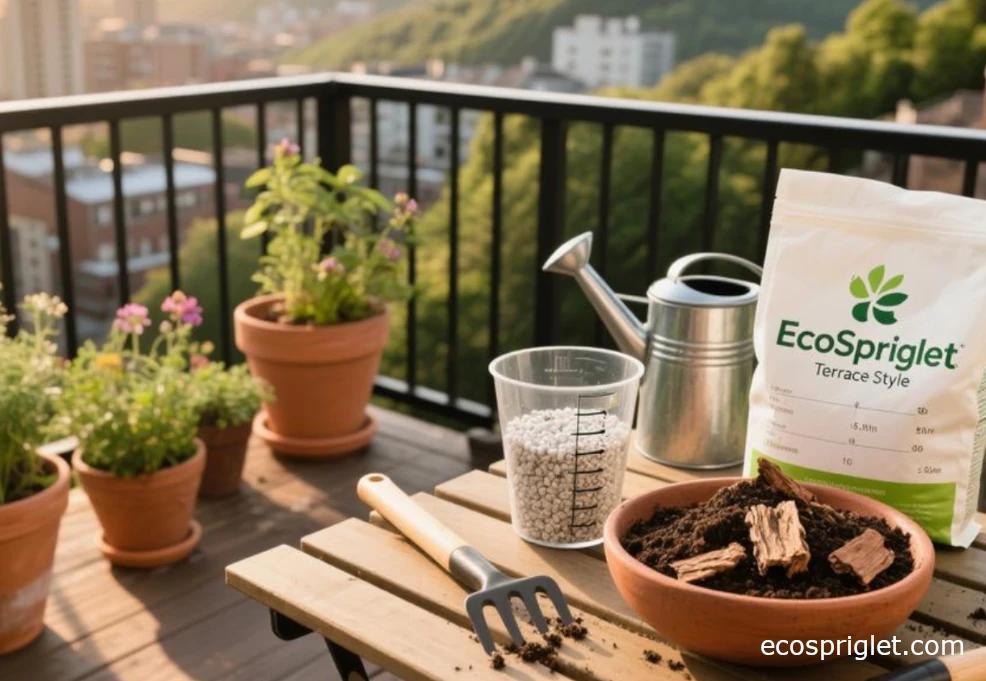
How to Use Perlite Step-by-Step (Indoors & on the Balcony)
- Pre-moisten: Sprinkle a bit of water over perlite to knock down dust.
- Blend outside if possible: In a tub, mix your soil and perlite thoroughly. Aim for even distribution—no pure perlite pockets.
- Prep the pot: Ensure at least a 1″ drainage hole (or multiple). Add pot feet if your saucer sits flush with the floor.
- Potting: Fill halfway, set the plant, backfill, and tap the pot sides to settle (don’t over-compress).
- Water-in: Water until it drains freely. Expect slightly faster dry-down vs. perlite-free mixes.
- Adjust: Observe leaves and soil. If leaves wilt early, you may be underwatering; if they yellow and soil stays wet, reduce watering or add more perlite next time.
Avoid the “drainage layer” myth: Rocks at the bottom don’t improve drainage; they just raise the water table. Use a good mix with perlite instead.
Safety, Dust & Clean-Up
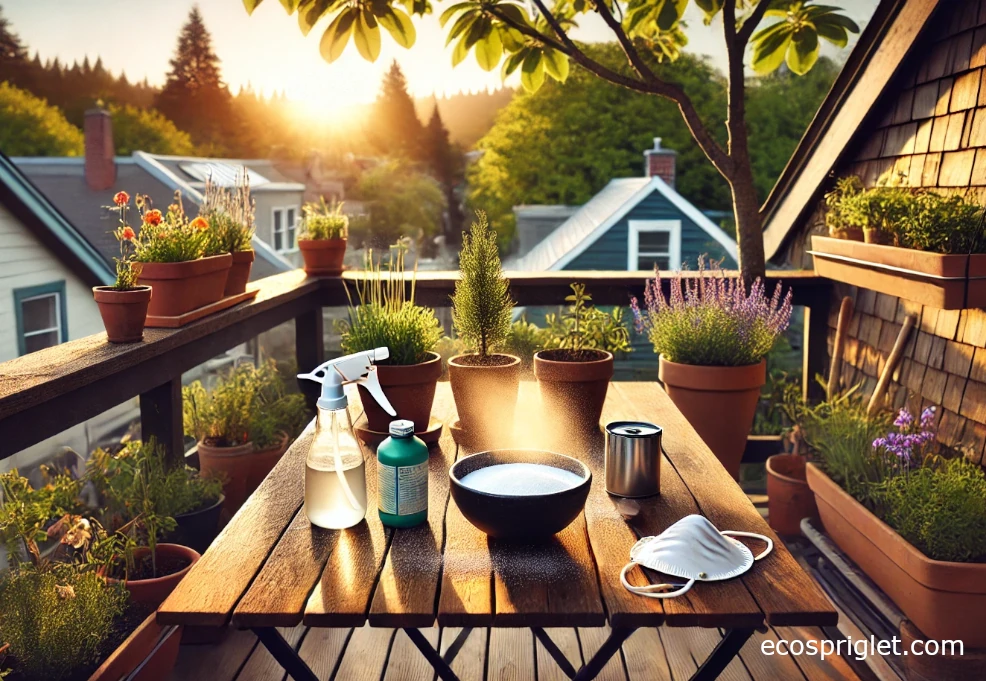
Perlite itself is inert, but the dust can be irritating. I keep it simple:
- Dust control: Pre-wet perlite lightly, mix gently, and avoid pouring from a height. A basic dust mask is optional but nice indoors.
- Clean-up: Brush surfaces before wiping; keep it out of sinks and drains. A hand vac on “gentle” works well.
- Kids & pets: Store bags closed and off the floor. It isn’t toxic, but it’s not food.
Troubleshooting & FAQs
- Perlite floats to the top: Normal during watering. Gently mix the top inch or top-dress with a thin layer of fine bark to hide it.
- Soil still compacts: Increase perlite percentage or switch to a coarser grade.
- Post-repot droop: Plants often pause after repotting. Check moisture—perlite mixes dry faster; water thoroughly, then wait for the top 1–2″ to dry.
- Reuse? Rinse, sift out roots, then re-sterilize by baking on a tray at low oven temps until dry (use common-sense kitchen safety).
- What is perlite soil? A potting mix that includes it for better aeration and drainage.
- Is it good for indoor plants? Yes—especially in dense mixes or with plants sensitive to overwatering.
- What is perlite made from? Expanded volcanic glass that’s been heated until it puffs.
- What’s the difference between perlite and vermiculite? Perlite drains and aerates; vermiculite holds moisture—choose by plant needs.
- Does it change soil pH? It’s generally pH-neutral and doesn’t meaningfully change pH.
- Is it safe for seed starting? Yes—use fine/medium grade; add vermiculite if you need more moisture retention.
Sustainability, Cost & Alternatives
Perlite is abundant, but expansion requires heat (energy). For many balcony gardeners, the water savings and plant health benefits outweigh the footprint—especially if you reuse perlite over multiple seasons. If you’d like to diversify your amendments:
- Pumice: Similar function, heavier, often pricier, great for bonsai and succulents.
- Rice hulls: Plant-based, gradually breaks down; good light aeration booster.
- Chunky bark: Adds long-lasting structure to mixes for aroids and woody herbs.
Budget tip: Buy coarse perlite once and sift for finer tasks; the big bag usually costs less per use.
Takeaways & Next Steps
- Pick a grade: fine/medium for small pots and seed trays; coarse for bigger containers and succulents.
- Choose a ratio by plant: 25–50% perlite for fast-draining mixes; 25% is a solid default for houseplants.
- Adjust watering: perlite dries faster—water thoroughly, then wait for the top 1–2″ to dry.
- Test and tweak: your light, pot size, and plant type all nudge the ideal blend.
From here, explore How to Grow an Indoor Herb Garden.
Perlite is simple but mighty: it opens up dense mixes, keeps oxygen at the root zone, and speeds drainage so containers stay lively instead of waterlogged. Choose the right grade, match the ratio to your plant type, and tweak your watering rhythm—that’s the whole game. If you want a softer, more moisture-holding mix (seed trays, ferns), pull in vermiculite; for succulents and herbs that hate wet feet, lean on coarse perlite. Once you’ve dialed in a couple of signature mixes for your space, repotting becomes quick, clean, and predictable—and your plants will show it with steady growth and fewer “mystery” droops. Ready to mix? Grab a bag of coarse and start with the houseplant ratio above—you’ll feel the difference the first time you water.