If you’ve ever looked at the price of saffron and wondered, “Can I grow this at home?” the answer is yes — even in a city apartment. Saffron comes from the stigmas of the saffron crocus (Crocus sativus), a small fall-blooming bulb that’s surprisingly happy in containers as long as you give it bright light, sharp drainage, and a dry summer rest. You won’t replace a commercial farm on your balcony, but you can absolutely grow enough saffron indoors or on a tiny terrace to flavor a few special dishes and enjoy the flowers up close.
In this guide I’ll walk you through how to grow saffron at home step by step: choosing corms and containers, planting depth and spacing, how to grow saffron indoors under lights or near a sunny window, and how to harvest those bright red threads without wasting a single flower. I’ll also cover common mistakes to avoid and give an honest look at whether growing saffron indoors for profit is realistic for a home gardener.
Saffron Basics: What You’re Growing and What to Expect
Saffron doesn’t come from a shrub or a tall plant — it comes from a low, fall-blooming crocus grown from corms (bulb-like storage organs). Each saffron flower gives just three red stigmas, which are picked and dried to become the spice you know from risotto, paella, and fragrant teas. Extension programs and horticultural groups like the RHS and UC Master Gardeners note that it takes roughly 150 flowers to produce about 1 gram of dried saffron, and each plant usually offers only a few flowers.
That sounds a little sobering, but for a home grower the goal is different. A pot with 15–25 corms can still give you a small jar of threads over a couple of seasons — enough for several meals and a fun story every time you use them. I still remember the first time I sprinkled homegrown saffron into a simple rice dish; it wasn’t a huge harvest, but the color and aroma felt like a miracle from a single small pot on my balcony.
Saffron crocus has a quirky rhythm: it sends up grassy leaves in fall, flowers in fall or early winter, keeps its foliage through winter, then goes dormant and disappears in late spring or early summer. As long as you give it:
- Well-drained, gritty potting mix so the corms never sit in soggy soil,
- At least 5–6 hours of strong light (sun or grow lights),
- Cool to mild temperatures during active growth (roughly 50–70°F), and
- A dry rest in summer with little to no watering,
you can grow saffron at home in a container without needing a garden bed.
Setting Up: Corms, Containers, and Safe Spots Indoors
Before you plant saffron at home, it pays to get your “hardware” right. Start with good-quality corms from a reputable bulb supplier; look for firm, plump corms with no moldy or soft spots. Skip anything shriveled or damaged — it’s rarely worth the space in a small apartment pot.
For containers, saffron is happiest in wide, relatively shallow pots with excellent drainage. For indoor or balcony growing, aim for:
- Depth: at least 6 inches deep (8 inches is even better) so roots and new corms have room,
- Width: 10–12 inches across for 10–20 corms, or a larger bowl-style pot for a dense display,
- Drainage: multiple holes in the base and a saucer you can empty after watering.
Guides on growing saffron in containers recommend pots of at least 6–8 inches deep with free-draining mix to prevent rot, which is especially important indoors where rain doesn’t naturally flush the pot.
Use a high-quality, peat-free potting mix for containers, then lighten it further with coarse sand or perlite (up to about 20–30% by volume) so water drains quickly. A slightly neutral to slightly alkaline pH is ideal for saffron, but in containers that usually takes care of itself if you’re using a general-purpose mix and not adding a lot of acidic material.
If you share your space with pets, one more note: autumn crocus (Colchicum autumnale), sometimes nicknamed “meadow saffron,” is highly toxic to cats and dogs, and many crocus and bulb species can cause serious digestive upset if eaten. To be safe, keep any saffron or crocus pots out of reach of curious animals and double-check plant labels so you’re buying true saffron crocus (Crocus sativus), not colchicum. Sources: ASPCA Poison Control guidance on autumn crocus and other toxic bulb plants.
Good places for your pots include a bright south- or west-facing windowsill, a sunny glass door, or a shelf under LED grow lights. If you’re not sure your light is strong enough, pairing saffron with a simple grow-light strip is often easier than chasing the perfect window in a small apartment.
How to Plant Saffron at Home Step by Step
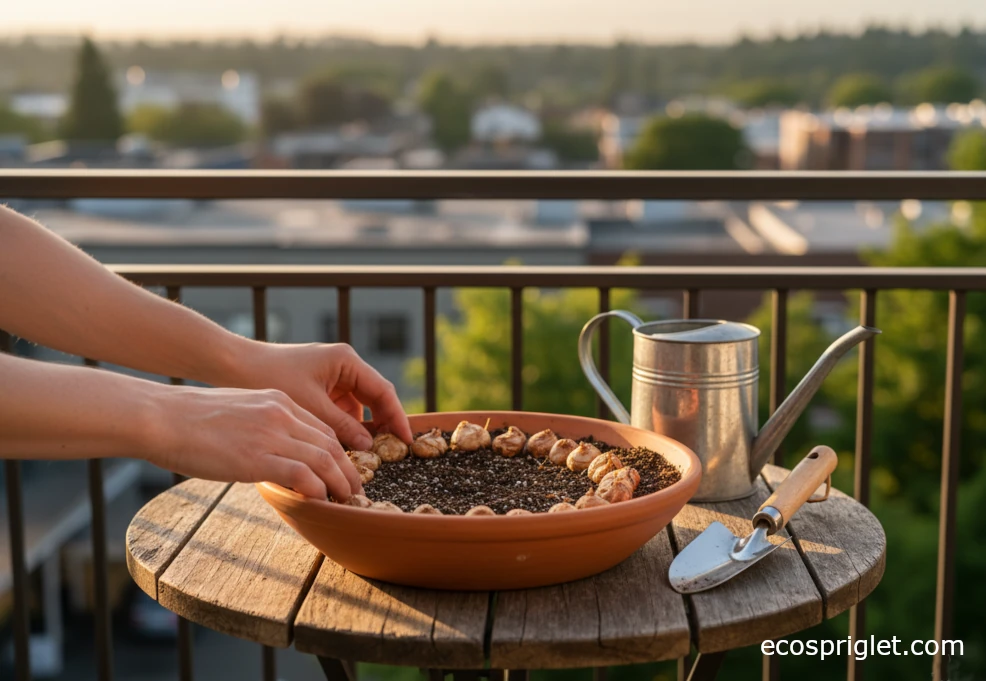
Planting saffron at home looks a bit like tucking marbles into a pie dish. I still remember my first attempt: I crammed too many corms into a deep, narrow pot and then overwatered. The plants survived, but the flowers were sparse and the soil stayed wetter than saffron likes. The next year, switching to a wide bowl-shaped pot with gritty mix and careful spacing made all the difference.
Here’s a simple way to plant saffron indoors or on your balcony:
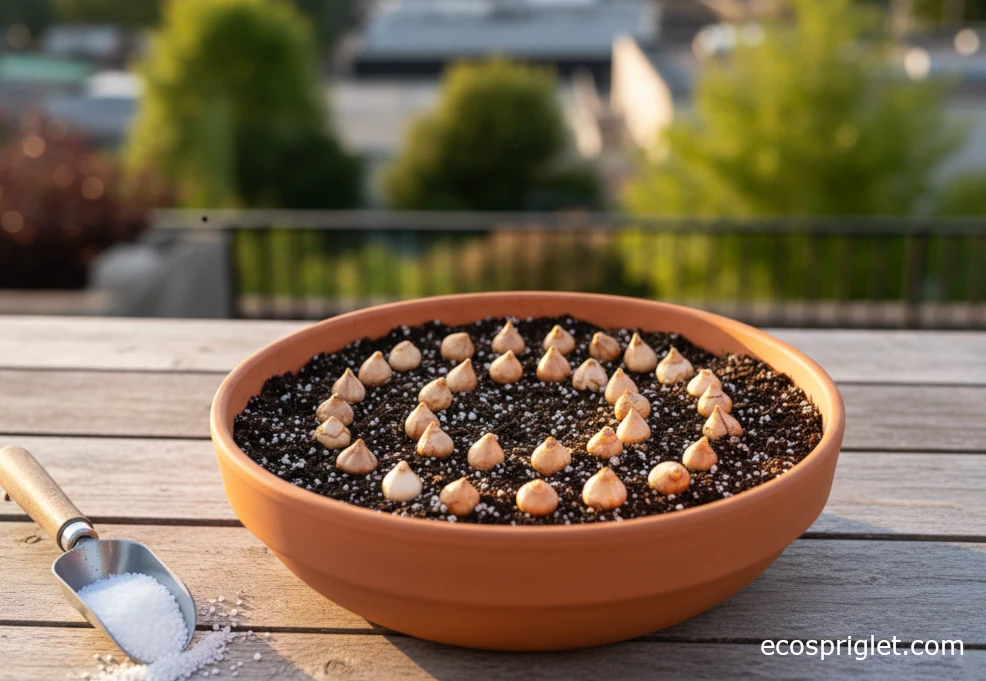
- 1. Fill the pot: Add potting mix up to about 2–3 inches below the rim, gently firming as you go.
- 2. Place the corms: Set corms pointy side up, about 2–3 inches apart in a loose grid or ring pattern.
- 3. Set planting depth: Cover corms so their tops sit roughly 2–3 inches below the final soil surface.
- 4. Top off the mix: Add more mix, leaving about 1 inch of space at the top for watering.
- 5. Water lightly once: Give the pot a slow drink until water just begins to drain from the bottom, then let it drain fully.
For most home setups, planting in late summer to early fall works well: the corms will root, send up leaves, and flower in fall. In mild climates you can even keep the pot outdoors in a sunny, sheltered spot through winter, bringing it inside if extreme cold or prolonged heavy rain is forecast.
If you’re growing saffron indoors under lights, treat the pot like a typical container bulb planting: keep it cool to mildly warm (around 50–70°F), give it strong light, and avoid soaking the mix after that initial watering. The roots are forming and the corms will rot if they sit in a waterlogged pot.
Sources for planting depth, spacing, and timing include container-focused saffron guides and university extension fact sheets on saffron crocus.
Daily Care: Light, Temperature, and Watering for Growing Saffron Indoors
Once your saffron is planted, caring for it indoors is mostly about balancing light and moisture. Saffron crocus prefers bright, direct light — think at least 5–6 hours of sun or an equivalent intensity from grow lights. University extension and specialist saffron guides suggest that full sun and well-drained soil are essential for healthy growth and flowering.
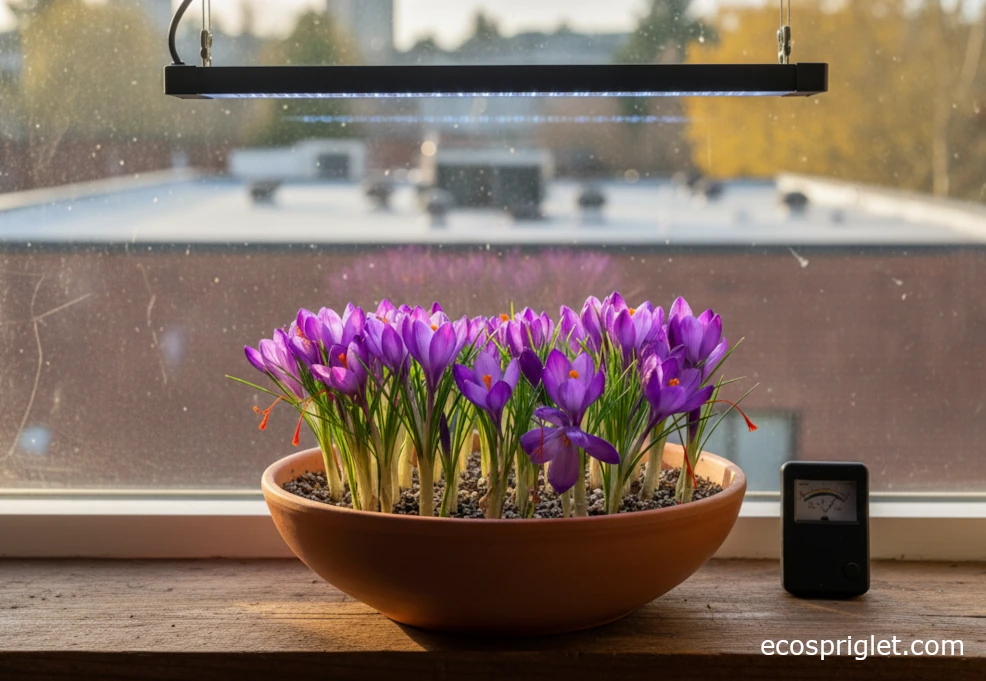
Indoors, a south-facing window is ideal. If your windows are shaded by other buildings or trees, supplement with an LED grow light positioned 6–12 inches above the foliage, running it 12–14 hours per day on a timer. The leaves are quite narrow and grassy, so they don’t cast a lot of shade on each other; even a compact light bar can keep a pot of saffron happy.
Temperature-wise, saffron crocus likes cool to mild conditions during active growth — roughly 50–70°F is a good target. Warmer temperatures up into the 70s can speed growth, but if your apartment regularly gets hotter than that, make sure there’s good air movement and avoid placing the pot right above a radiator or heating vent.
Watering is where many apartment growers go wrong. Instead of watering on a schedule, use the soil as your guide:
- Check the top 1–2 inches of soil with your finger.
- Water only when that layer feels dry to the touch.
- Water slowly until a little drains from the bottom, then empty the saucer after 10–15 minutes.
During the active season (from planting in fall through late spring), that might mean watering every 7–14 days indoors, depending on your home’s temperature and humidity. Once the leaves begin to yellow and die back in late spring or early summer, stop watering entirely and let the pot stay dry through the dormant season — this dry rest mimics the plant’s natural summer conditions and helps prevent rot. Specialist saffron and bulb-care guides consistently emphasize well-drained, relatively dry soil during dormancy.
If you like gadgets, a simple moisture meter can be handy, but your finger and a habit of lifting the pot to feel its weight work just as well.
Harvesting and Drying Your Homegrown Saffron Threads
The best part of growing saffron at home is the morning you spot those purple flowers opening. Harvesting is delicate but simple once you’ve done it once or twice.
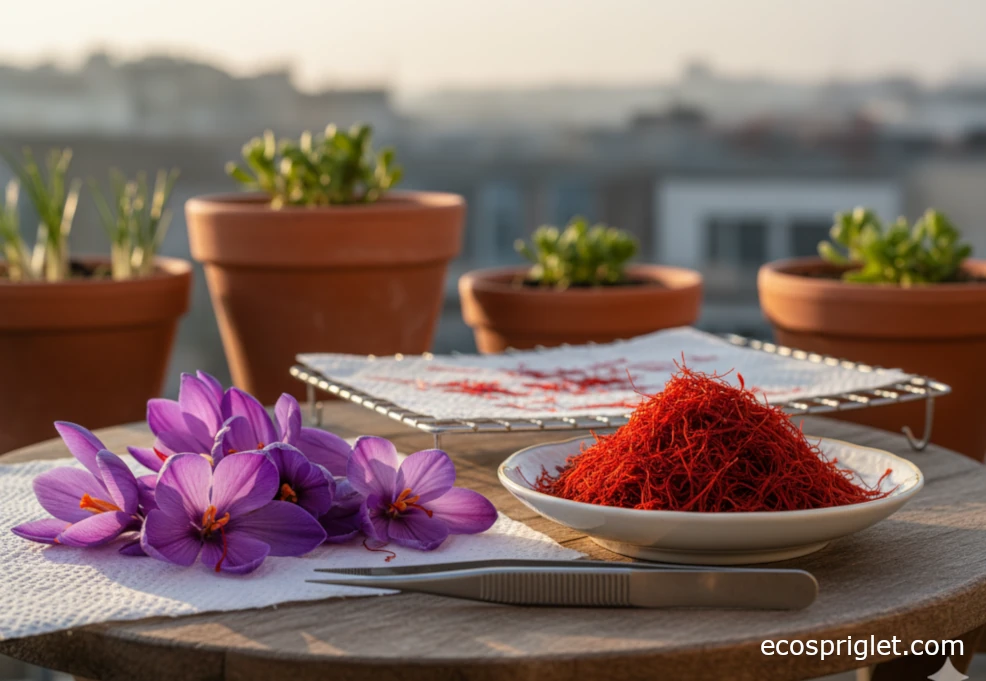
Most horticultural sources recommend harvesting in the morning once flowers are fully open but before they start to wilt. Gently pick or snip the flower, bring it indoors, and sit at a table where you can work comfortably. Peel open the petals to reveal three bright red stigmas (the saffron) and three shorter, yellow or orange stamens (which you don’t need for cooking).
- Use tweezers or clean fingers to pinch the red stigmas at their base and pull them free.
- Lay the threads on a paper towel or coffee filter on a wire rack in a warm, dry room.
- Let them dry at room temperature for at least 24–48 hours, until they feel crisp.
- Store in a small airtight jar away from light and heat.
Sources like RHS and UC Master Gardeners note that it takes roughly 150 flowers to produce about 1 gram of dried saffron, and each plant usually produces only 2–4 flowers. In a small apartment pot, your annual harvest might be just a pinch or two — still enough for several meals, since recipes generally use only a few threads per serving.
One thing I like to do is label the jar with the harvest year. Homegrown saffron keeps its best flavor for a year or two if you store it airtight in a dark cabinet.
Common Mistakes to Avoid When You Grow Saffron at Home
Every plant has its “gotchas,” and saffron crocus is no exception. I’ve made most of these mistakes myself at least once, so here’s a shortcut list you can learn from instead.
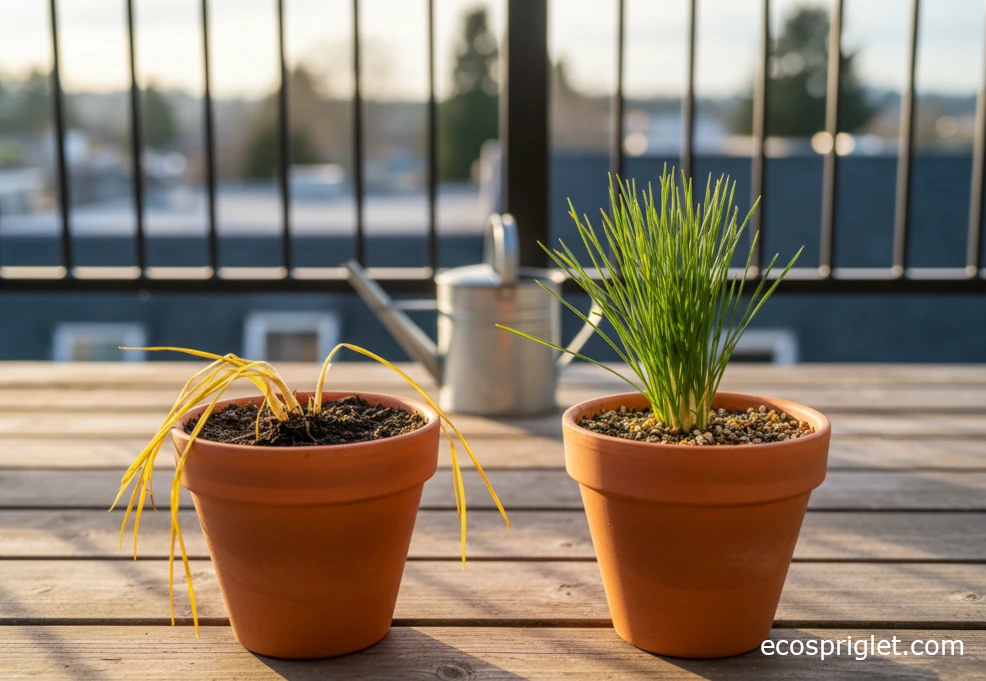
- Overwatering during dormancy: Once the leaves yellow and die back, stop watering completely until new growth appears in fall. Wet summer soil is a fast track to rotten corms.
- Heavy, soggy potting mix: Standard potting soil without added grit can hold too much water. Mix in coarse sand or perlite for sharper drainage, especially in plastic pots.
- Too little light: A dim windowsill gives long, floppy leaves and few flowers. Move your pot to the brightest possible window or add a modest grow light if needed.
- Planting too shallow or too deep: Keep corm tops about 2–3 inches below the soil surface. Very shallow planting can dry them out; very deep planting can delay or reduce flowering.
- Letting pots sit in water: Always empty saucers after watering so the base of the pot can drain and re-oxygenate.
One more subtle mistake: tossing the pot when the foliage dies back. Saffron crocus is perennial; as long as the corms stayed healthy and dry through summer, they’ll often flower better in their second and third years as new corms form around the original. Mark your calendar or add a reminder so you don’t accidentally recycle your future saffron harvest.
Can You Grow Saffron Indoors for Profit? (An Honest Look)
Because saffron is one of the most expensive spices in the world, it’s natural to wonder about growing saffron indoors for profit. The short answer: in a typical apartment, it’s more of a passion project than a business.
Extension and horticultural sources estimate that around 150 flowers are needed for 1 gram of dried saffron, and each plant usually produces only a handful of flowers each season. Even if you grew several large containers packed with corms, you’d likely harvest only a few grams per year — not nothing, but not enough to justify serious “cash crop” expectations when you factor in the cost of corms, containers, potting mix, lighting, and your time.
That said, there are small-scale opportunities:
- Trading or gifting tiny vials of homegrown saffron to food-loving friends.
- Supplying a local chef or café with a symbolic seasonal pinch if you already have a relationship.
- Pairing saffron with other balcony crops (like herbs and edible flowers) for occasional specialty bundles.
For most of us, though, the “profit” is the experience: learning how to grow saffron at home, seeing a famous spice go from corm to flower to jar, and enjoying a dish that truly came from your own windowsill. If you’re interested in efficiency or selling produce, crops like microgreens or cut herbs usually give a much better return per square foot indoors than saffron.
Enjoying Your Saffron: Simple Ways to Use the Spice and the Flowers
Once you’ve harvested and dried your threads, it’s time to enjoy them. Saffron is potent, so you use just a little at a time — think a few threads per serving, or a small pinch for a pot of rice. The RHS suggests a “pinch” is roughly 20 threads for several servings, which lines up with most cookbooks.
Here are a few easy ways to make the most of your small harvest:
- Saffron rice or quinoa: Crush a pinch of threads, soak them in a tablespoon or two of warm water for 10–15 minutes, then add both threads and liquid to your cooking pot.
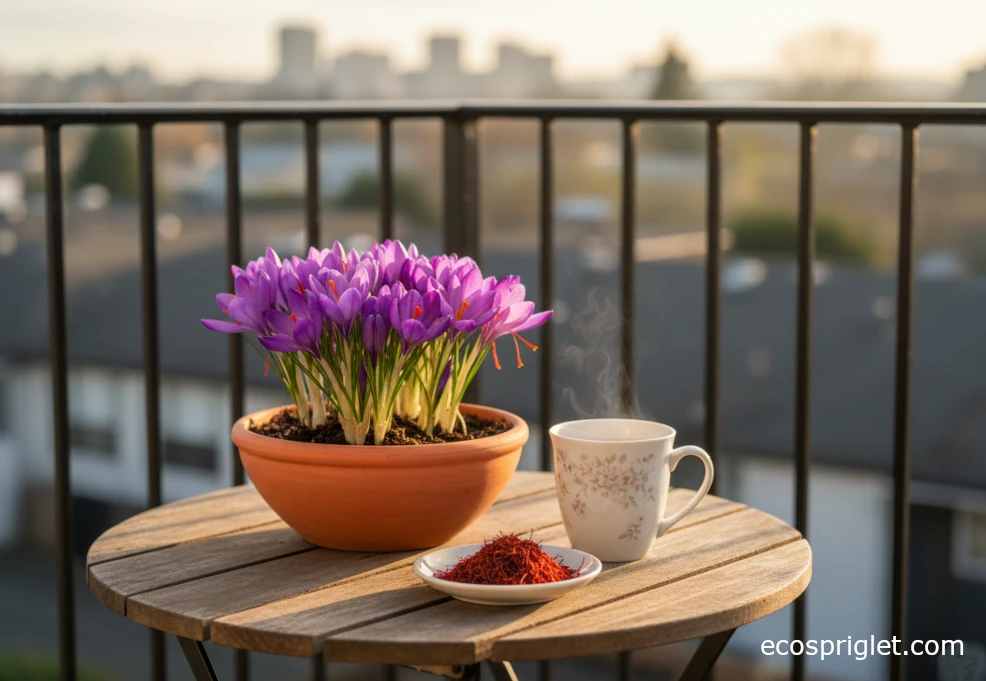
- Saffron tea: Steep a few threads with black tea, green tea, or herbal blends. A squeeze of lemon and bit of honey really brings out the aroma.
- Weekend paella or risotto: Use your homegrown saffron for one “hero” dish each season so you can taste the difference.
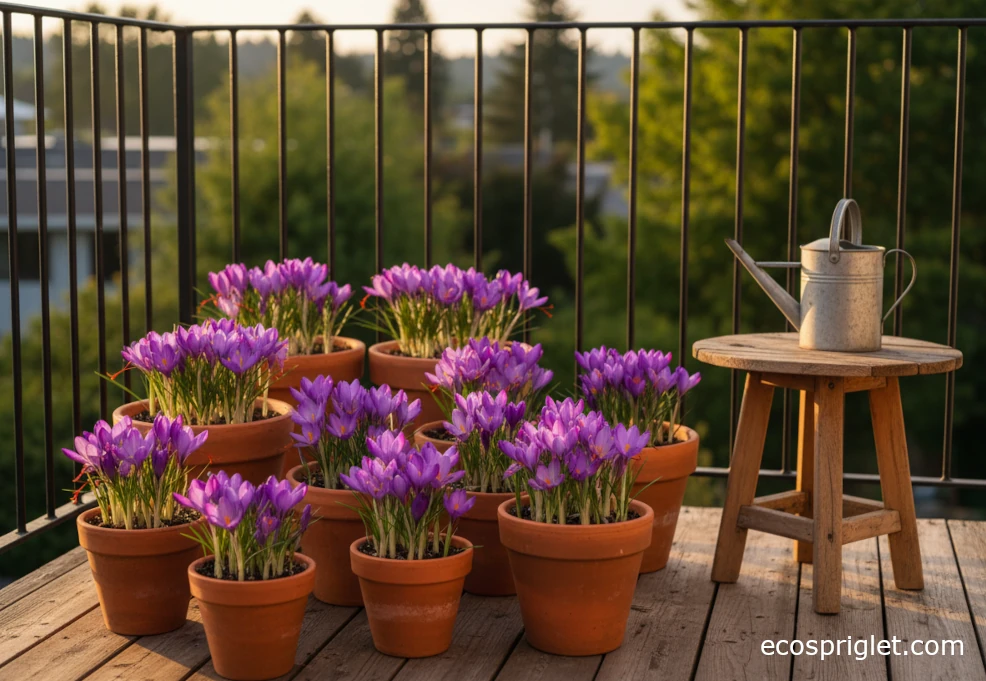
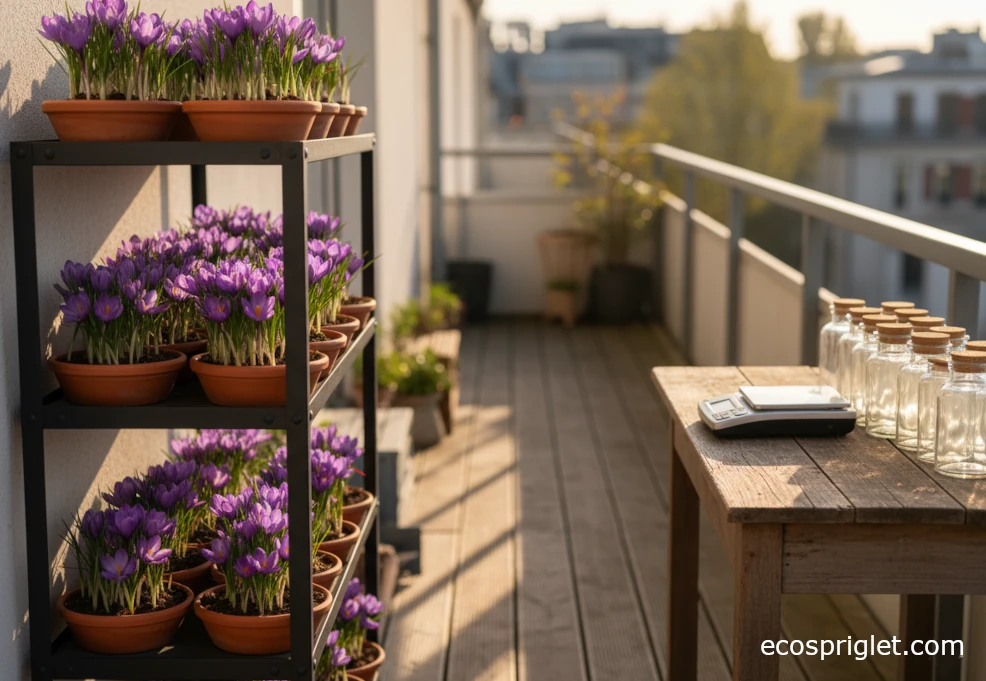
- Tabletop display: Keep the flowering pot on a coffee table or balcony table while in bloom — the flowers alone are worth the effort.
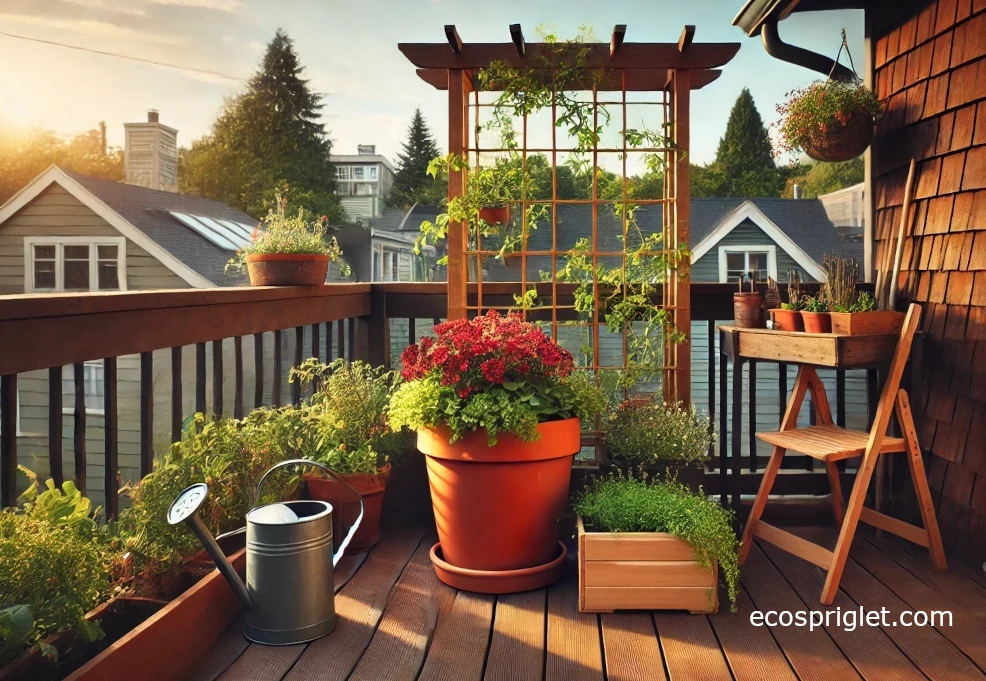
If you’re building a broader balcony garden, saffron crocus pairs nicely with pots of thyme, oregano, and parsley. You can tuck the saffron pot behind a low herb planter so the flowers peek up in fall. For herb ideas that play well with saffron dishes, see our balcony herbs guide.
Growing saffron at home looks exotic from the outside, but once you break it down, it’s just a small, tough bulb that likes bright light, well-drained soil, and a dry summer nap. A single wide pot, 10–12 inches across and at least 6 inches deep, is enough to get started. Plant healthy corms 2–3 inches deep in a gritty mix, give them strong light and modest watering through fall and winter, then let them rest dry when the foliage dies back.
You won’t be filling commercial spice tins, but you will get a front-row seat to one of the most famous crops on earth. A handful of flowers can flavor a pot of rice for friends, infuse a weekend risotto, or perfume a mug of tea on a rainy evening — all from a corner of your balcony or a sunny apartment window.
If this has sparked your curiosity, I’d encourage you to treat saffron as one character in a bigger container “cast.” Mix it with herbs, salad greens, or even edible flowers for a balcony that looks good year-round and tastes good too. And when those first purple blooms open, take a second to appreciate the fact that you coaxed a luxury spice out of a small city pot. That’s the kind of gardening win that keeps me potting things up every fall.