If your basil plants always seem to turn into one tall stem with a few sad leaves at the top, you’re not alone. I did that for years: I’d pluck a leaf here and there, the plant would sulk, and by mid-summer it was woody, flowering, and basically done. The good news is that basil is one of the easiest balcony herbs to “fix” once you know how to harvest it properly.
This guide walks you through how to harvest basil so it keeps growing: where to cut, how early you can start, how much to take at once, and how to pick just a few leaves for dinner without weakening the plant. We’ll stay focused on container and windowsill basil—exactly the kind you’d grow on an apartment balcony. With a little strategic snipping, you can keep each plant producing fresh, fragrant leaves for months, instead of just a few weeks.
Grab a small pair of scissors or pruners, take a look at your basil, and let’s turn it into the bushy, pesto-ready herb it wants to be.
How Basil Grows (And Why Harvesting Matters)
Basil is what gardeners call a “cut-and-come-again” herb. Instead of harvesting it once at the end of the season, you get the best results by trimming it a little and often. Each main stem grows pairs of leaves opposite each other, and at the base of those leaves are tiny buds—future side shoots. When you cut just above one of those pairs, the buds wake up and grow into new branches. That’s how you turn one skinny stem into a dense, leafy basil bush.
Organizations like the Royal Horticultural Society recommend regularly taking the shoot tips on basil to keep plants bushy and productive, rather than letting them stretch tall and flower. Frequent pinching keeps the plant focused on leaves instead of flowers and seeds, which is exactly what you want on a balcony where space is limited and every pot has to earn its keep.
Basil is also a warm-season annual. Once nights start dipping below about 50°F, growth slows and the plant can get stressed or damaged, even in containers. That’s your signal to do a bigger harvest for pesto or freezing and then let the plant wind down.
When to Start Harvesting Basil on a Balcony
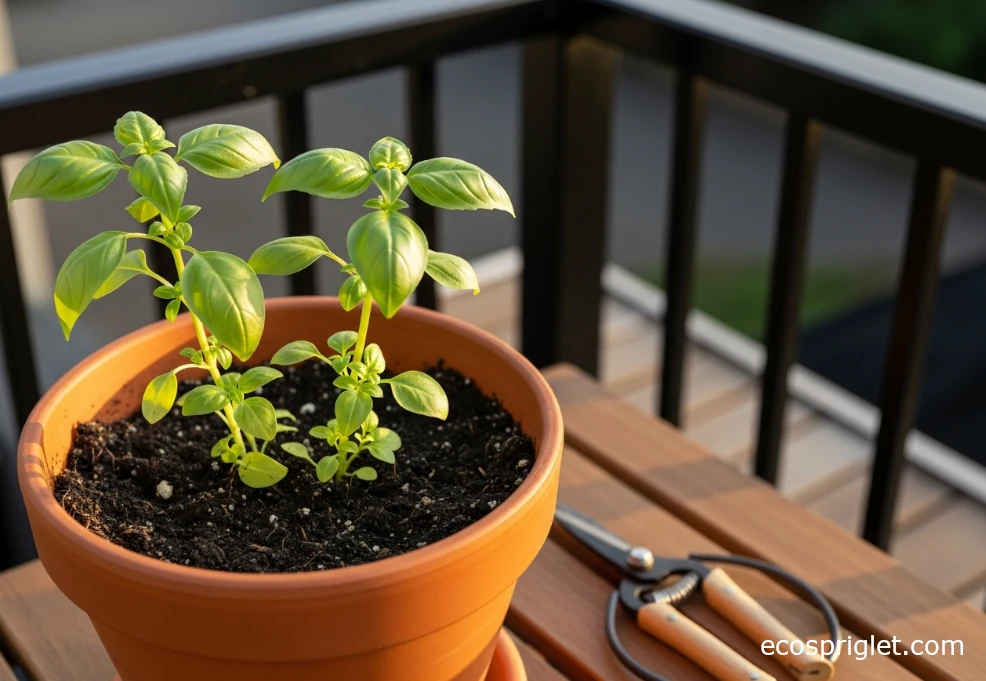
The biggest mistake I see (and absolutely made myself) is waiting too long to harvest. Basil actually wants you to start trimming it early. Once each plant is around 6–8 inches tall or has at least six good leaves on the main stem, it’s ready for its first “haircut.” Penn State Extension notes that when basil seedlings have their first six leaves, you can prune the main stem just above the second set to encourage branching.
Here’s a simple balcony-friendly rule of thumb:
- Height check: Start harvesting when plants are about 6–8 inches tall and look sturdy, not wobbly.
- Leaf check: The main stem should have at least three pairs of leaves; make your first cut just above the second pair.
- How much at once: Take no more than about one-third of the plant in a single harvest so it still has plenty of leaves to power new growth.
Timing in the day matters too. Harvesting in the cool of the morning—after the dew has dried—or in the early evening preserves the essential oils that give basil its flavor and puts less stress on container plants that are already coping with heat and wind. If you only have time after work, aim for a point when the sun is off your balcony and the leaves feel crisp, not limp.
How to Cut Basil So It Grows Back Bushier
This is where the magic happens. Instead of snipping random leaves, you’re going to take whole stem tips in a way that tells the plant, “Branch here, please.” Johnny’s Selected Seeds and other professional growers emphasize pruning basil by cutting stems back to a healthy set of side shoots, not just stripping leaves.
Try this step-by-step method on each stem:
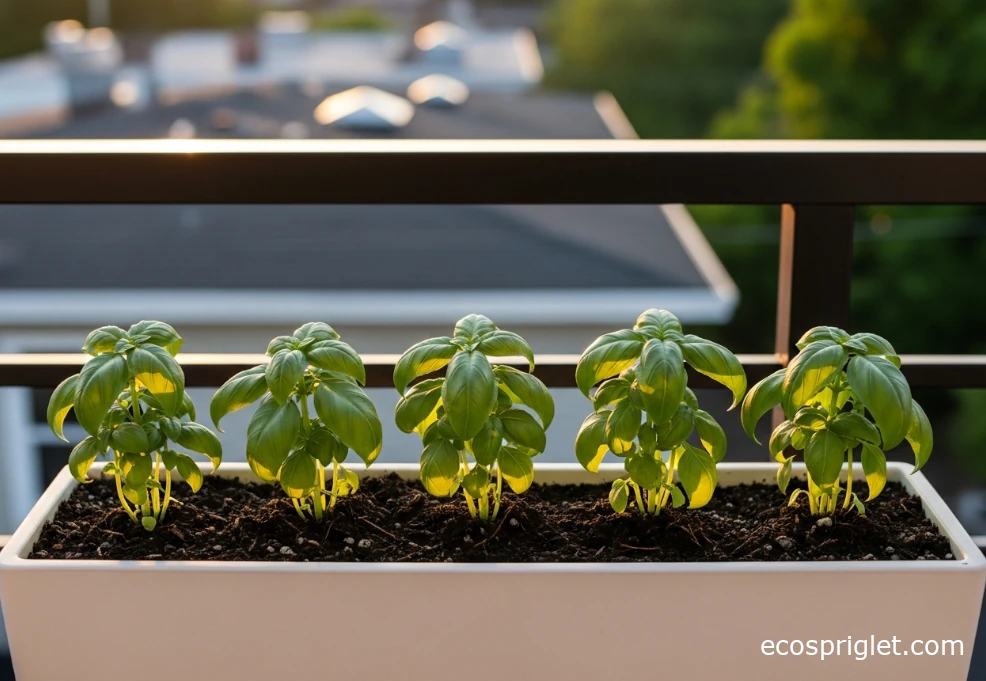
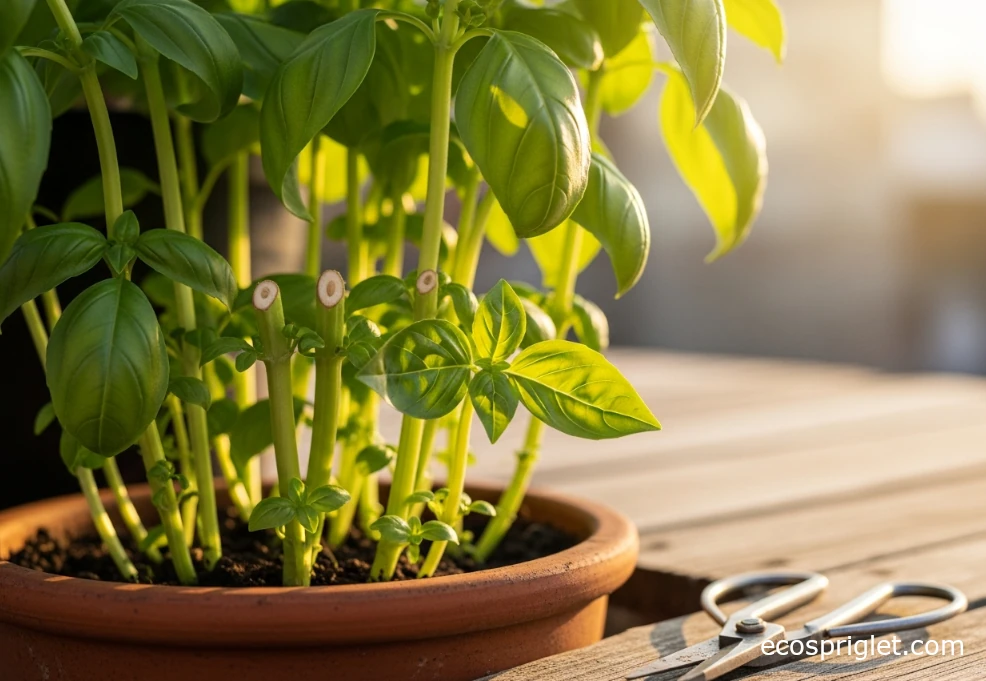
- Find the node. Look for a pair of leaves growing opposite each other on the stem. Tucked in that “V” are tiny new shoots.
- Cut above the node. Using clean scissors or pruners, cut the stem about ¼ inch above that leaf pair. Don’t cut below it or you’ll remove the buds you need.
- Leave several leaf pairs. Make sure each stem you harvest still has at least two to three pairs of leaves left on the plant so it can keep photosynthesizing. Gardeners’ World suggests leaving several pairs of side shoots so the plant can regrow strongly.
- Repeat on a few stems. Move around the plant, taking tips from different stems so you don’t over-harvest one section.
Every stem you cut this way will usually split into two new branches, each with its own set of leaves. According to UC Cooperative Extension, herbs like basil respond very well to frequent pinching, which keeps them compact and productive. It’s the same number of snips you’d make anyway, just targeted in the right spot.
If you’re growing basil in a narrow balcony planter, it’s worth spending a few minutes every week doing this kind of precise pruning. That planter space is prime real estate—turning a few lanky stems into a tight hedge of basil is one of the best returns on effort in the whole balcony garden. If you’re not sure about pot sizes or spacing, take a peek at our indoor herbs guide for container ideas.
Quick Kitchen Picks: How to Pick Basil Leaves for Tonight’s Dinner
Of course, life happens: sometimes you just want a handful of leaves for pizza or a quick pasta, not a full pruning session. The trick is to grab what you need without accidentally slowing the plant down.
When you only need a little, I like to think in “mini tips” rather than single leaves. Instead of stripping the biggest leaves off one stem, take the top two or three leaves from several different stems. That way you’re still encouraging branching near the top, but the plant barely notices the loss. It’s like a light haircut instead of shaving one side of your head.
For truly tiny harvests—say, a few leaves for a sandwich—you can pinch individual leaves, but follow two rules:
- Take older leaves first, usually a bit lower on the plant, and leave the youngest tiny leaves near the tips to keep growing.
- Don’t leave stems completely bare; any stem that’s naked is no longer doing much for the plant.
Gardeners’ World notes that you can be surprisingly generous when picking basil tops, as long as you leave several pairs of shoots so the plant can regrow. If you want the absolute best flavor for a big recipe, harvest in the morning and don’t wash the leaves until you’re ready to use them—washing too far in advance can make basil go slimy in the fridge.
On busy weeknights, I’ll often step outside, take a couple of quick tip cuttings, toss them straight into the pan, and promise the plant I’ll do a proper, careful prune on the weekend.
Common Basil Harvesting Mistakes to Avoid
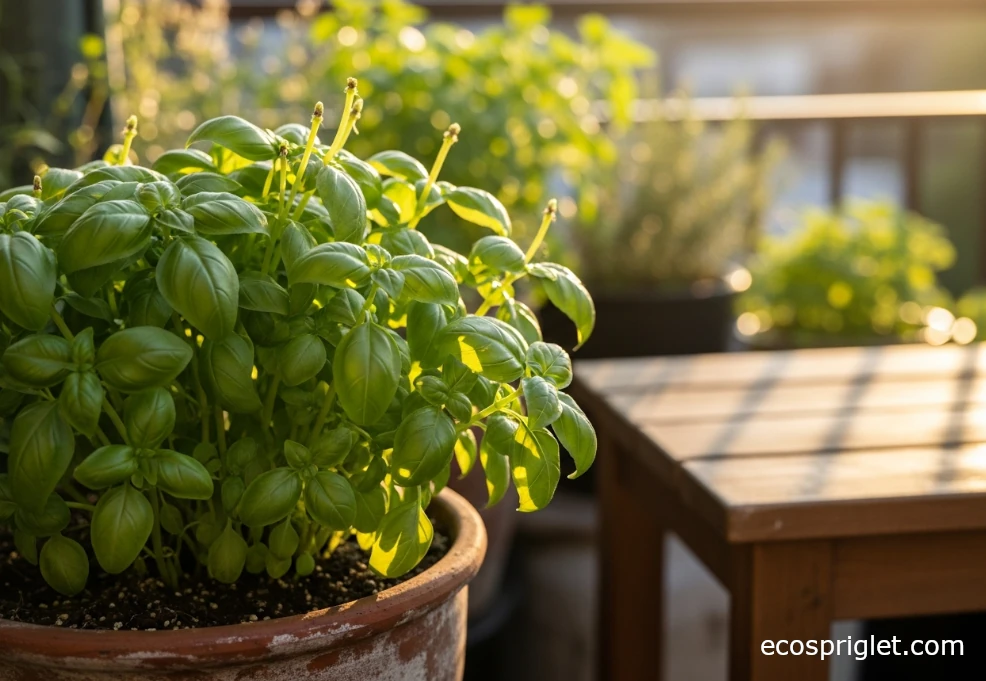
I learned most of these the hard way. My first balcony basil was a single stem that I “grazed” for leaves from the bottom up. By August it looked like a tiny palm tree with a tuft of leaves at the top and flowers everywhere. Flavor? Mostly gone. Here’s how to sidestep that situation.
- Harvesting too early. If you start cutting when the plant only has a couple of leaf pairs, it doesn’t have enough energy reserves to bounce back. Wait until it has at least 6–8 leaves or is 6–8 inches tall.
- Only plucking individual leaves. Taking leaves but not trimming stems means you’re not triggering that branching response. Pros and Extension guides recommend pruning stems back to a node instead of just picking leaves.
- Cutting too low on the stem. If you cut into the woody lower part of the plant where there are no leaves, it may not regrow well. Always cut just above a healthy leaf pair.
- Removing more than one-third at a time. It’s tempting to strip the plant for a giant pesto batch, but that can stall growth. Better to grow two or three plants and rotate heavy harvests among them.
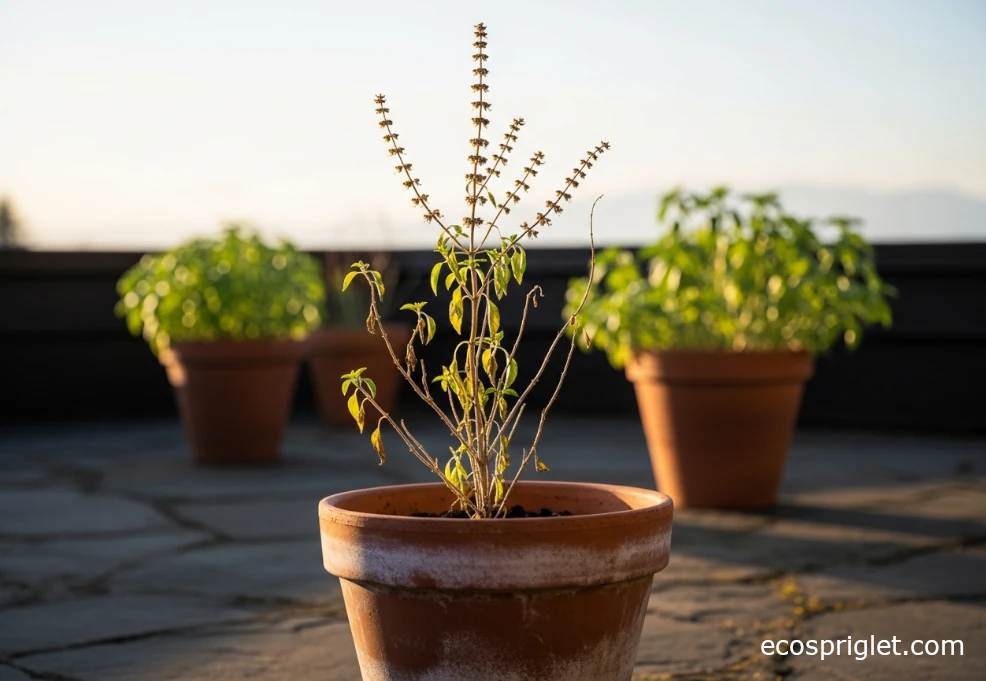
- Letting it flower and set seed. Once basil flowers, leaf production slows and flavor can become stronger and less sweet. Snip off flower spikes right away or plan to do a big harvest and start a new plant.
One more quiet culprit on balconies: harvesting right after a plant has been stressed by heat or drought. If the soil feels bone dry and the leaves are drooping, water first, let the plant perk up, and then harvest later that day or the next morning. A little patience here really pays off in leaf quality.
Keeping Basil Productive All Season on a Balcony
Once your basil is in a good rhythm, the goal is to keep that leafy momentum going as long as warm weather lasts. Think of it as gentle, regular maintenance rather than occasional big surgeries.
For most balcony gardeners, a simple schedule works well:
- Light harvest every week. Take a few stem tips from each plant, always cutting above a node and moving around so you keep the overall shape balanced.
- Bigger prune every 2–3 weeks. When plants start to look crowded, cut back some stems by up to one-third, again to just above a leaf pair, to open the canopy and trigger fresh growth.
- Watch for flower buds. If you see a tight cluster forming at the tip of a stem, snip that off and use it in the kitchen—the buds are flavorful too. This helps delay full flowering and keeps leaves tasting better.
Research from Washington State University notes that once basil really commits to flowering, yield drops as energy shifts into seeds, so it’s smart to avoid stress that pushes plants to bolt quickly. That means steady moisture (water when the top inch of soil is dry), good light, and avoiding strong midday wind on exposed balconies when you can.
If you notice one plant getting woody and unproductive by late summer, don’t be afraid to do a slightly harder prune—cutting stems back by up to half, but always to where there are still leaves—and treat it as a “backup” plant while you start a fresh one from seed or a cutting. Our container gardening basics guide has a simple rundown on starting herbs in pots if you want to stagger new basil plants through the season. For basil indoors, see Growing Basil Inside: Pot, Light, and Watering Made Easy.
Storing Fresh Basil After Harvest (So It Stays Perky)
Good harvesting is only half the story—what you do afterward decides whether your basil hits the pan bright green or limp and blackened. Basil is a bit fussy about cold and moisture, so treating it like lettuce in the fridge usually doesn’t end well.
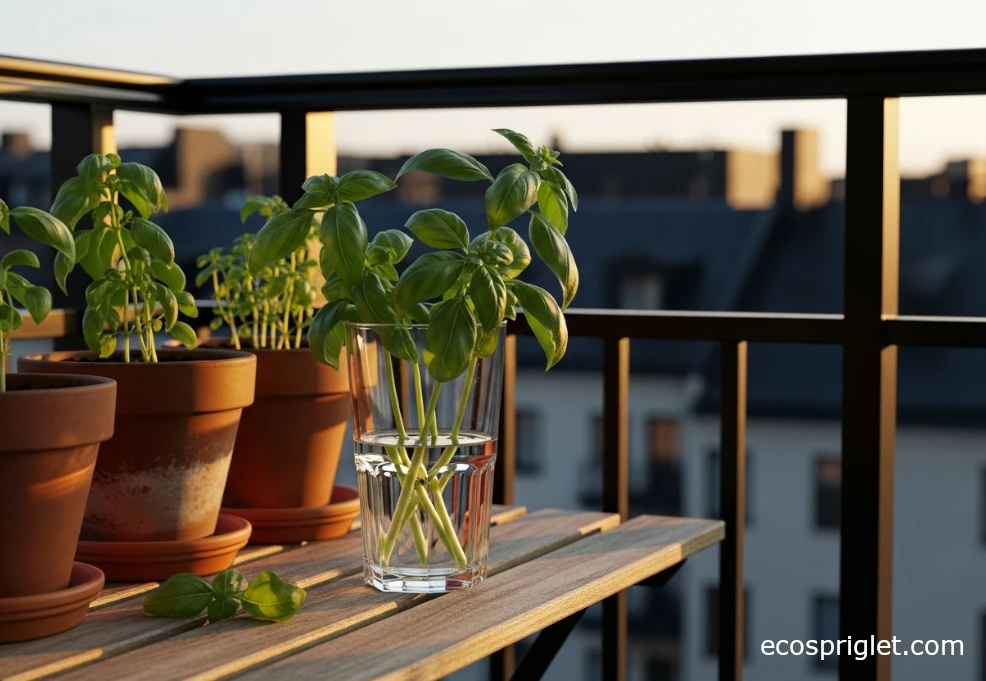
For short-term storage (a few days), my go-to container method is the “bouquet” approach:
- Trim the ends of the stems.
- Stand them in a glass of room-temperature water.
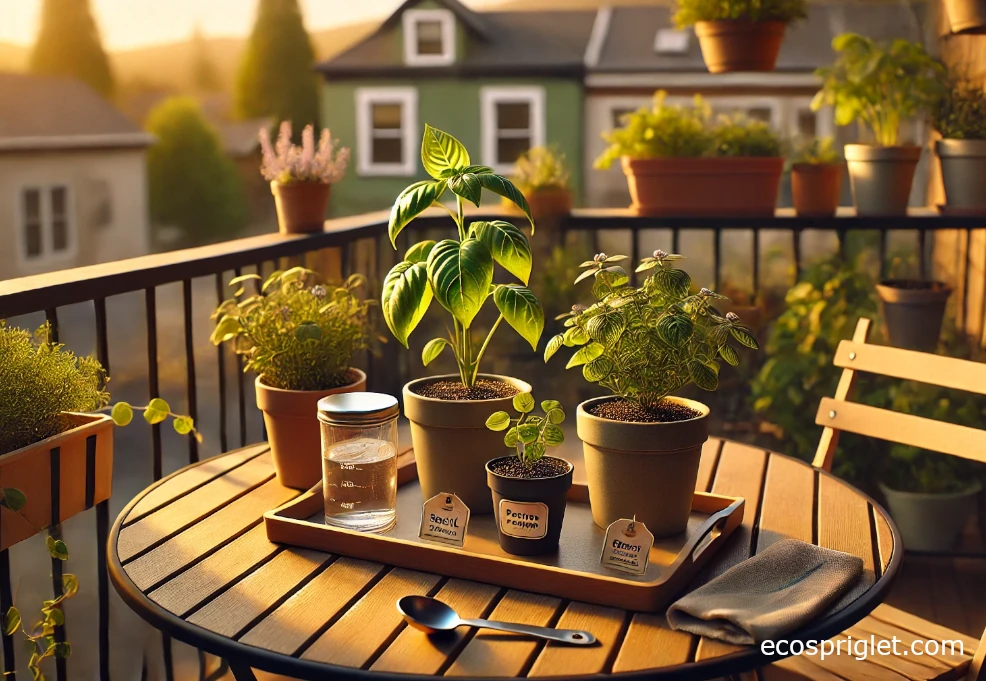
- Leave the glass on the counter, out of direct harsh sun; change the water daily.
For longer storage, Extension publications note that basil can be dried or frozen, but drying changes the flavor more than freezing. Freezing is fantastic for balcony gardeners because you can do it in tiny batches:
- Whizz leaves with a little olive oil into a paste and freeze in ice cube trays.
- Or loosely pack chopped leaves into a small freezer container, pressing out extra air.
One more balcony-life note: if you share your space with pets, basil is considered non-toxic to cats and dogs according to the ASPCA, so the occasional nibble from a curious roommate shouldn’t be a crisis. Just avoid using any sprays or products on your herbs that aren’t labeled safe for edible plants.
Harvested well, stored gently, and used often—that’s the whole basil cycle, and it fits beautifully into a small city kitchen.
Harvesting basil stops feeling scary the moment you see how fast a properly pruned plant bounces back. Start when your plants are about 6–8 inches tall, aim your cuts just above leaf pairs, and treat every snip as a chance to tell the plant where to branch. Regular, gentle harvesting—rather than occasional big raids—keeps those balcony pots cranking out fresh leaves all season while staying compact enough for small spaces.
I still remember the first time I committed to a “real” prune instead of timid leaf picking. Two weeks later, the plant had doubled in fullness and I had more basil than I knew what to do with. Once you see that response, it becomes weirdly satisfying to keep your basil shaped and productive. Add in smart timing (cool parts of the day), light but consistent watering, and a bit of attention to flower buds, and you’re well on your way to endless caprese salads and jars of pesto.