If you cook even a little, a pot of parsley within arm’s reach is one of the most useful things you can grow. It doesn’t need a yard, it doesn’t demand fancy equipment, and it actually prefers the cooler shoulder seasons most balcony gardeners struggle to use. Whether you’re in a high-rise with a narrow railing or a ground-floor apartment with a tiny patio, growing parsley in pots can give you a steady supply of fresh, bright flavor almost year-round.
In this guide, I’ll walk you through how to grow parsley in containers step by step: when to plant it, which pots and soil to use, how to grow parsley from seed (even though it’s famously slow), and how to harvest parsley so it keeps growing instead of stalling out. We’ll talk about growing parsley indoors on a windowsill or under lights, what to expect from this biennial herb over two seasons, and how to avoid the classic mistakes that make parsley sulk. I’ll also touch on pet safety, because a lot of us share our small spaces with curious cats and dogs.
Parsley Basics: Light, Temperature, and How It Grows
Parsley ( Petroselinum crispum ) is a cool-season, biennial herb. In plain language, that means it spends its first year making leaves and its second year trying to bloom and set seed. Most balcony gardeners grow it as a leafy “annual,” replacing the plant once it starts to bolt and send up flower stalks in year two.
Parsley likes full sun to partial shade and slightly cool conditions. Most reputable guides, including the Royal Horticultural Society and university extensions, agree it’s happy with at least 4–6 hours of sun per day and can tolerate more in cooler climates. It grows best in rich, well-drained soil and tends to be happiest when daytime temperatures hover around 60–70°F. In hot summers, especially on heat-reflecting balconies, a bit of afternoon shade helps prevent wilting and early bolting.
Because parsley forms a taproot, it appreciates pots that are deeper than they look like they “need” to be. We’ll get into exact pot sizes next, but it’s worth remembering that a little extra depth means a more resilient plant and less dramatic drying out between waterings.
Quick rule of thumb: if you can give your parsley pot at least half a day of sun, cool-ish temperatures, and soil that drains well but never quite bakes bone dry, you’re already most of the way to success.
Choosing the Right Pot and Soil for Parsley
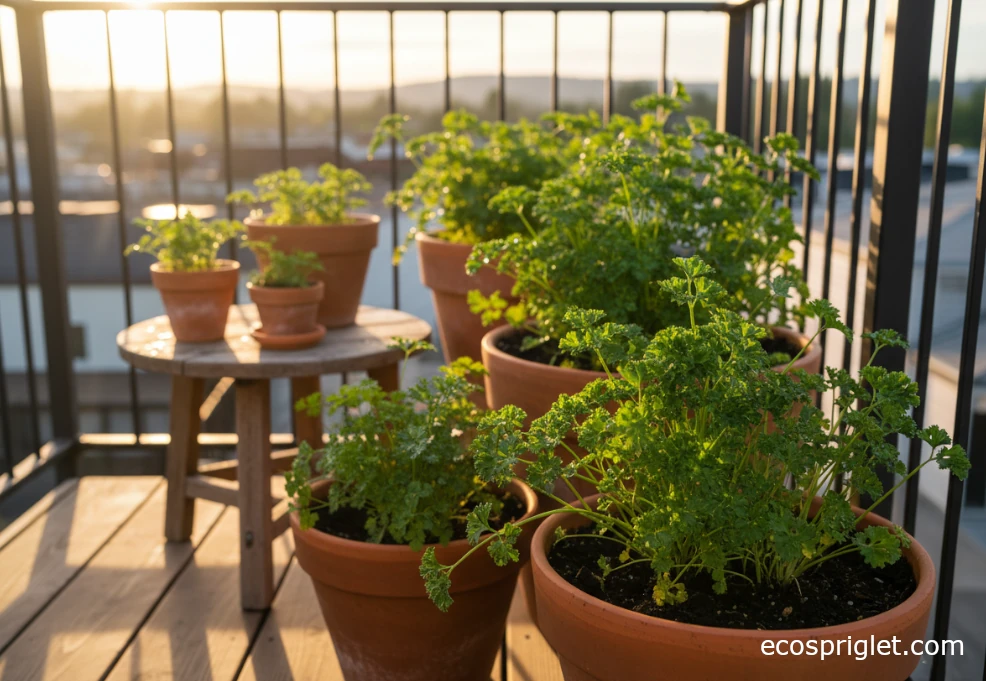
Pot choice can quietly make or break your parsley. Because of that taproot, parsley performs best in a container that’s at least 8 inches deep; 10–12 inches is even better if you want a big, bushy plant. Container charts and herb-growing guides commonly recommend a 1-gallon pot (about 6–7 inches wide) for one parsley plant, or a wider 2-gallon pot (8–9 inches across) for a small cluster. For a balcony kitchen pot, I like a container about 10–12 inches wide and 10–12 inches deep with drainage holes.
- For one plant: at least 8 inches wide and deep.
- For a “parsley bush” to harvest heavily: 10–12 inches wide and deep.
- For a mixed herb pot (parsley plus basil or chives): 12 inches wide or more.
Use a high-quality, soilless potting mix designed for containers, not garden soil. A mix with plenty of organic matter and good drainage is ideal. You can stir in about 20–30% perlite or coarse bark if your potting mix feels heavy; container resources and extension publications generally support this kind of airy mix for herbs. Avoid adding a gravel layer at the bottom of the pot—research shows it actually creates a “perched water table” and can keep roots wetter, not drier.
Before planting, pre-moisten the mix so it’s evenly damp but not soggy. If you squeeze a handful and it holds together without dripping, you’re in the right range.
How to Grow Parsley From Seed in Pots
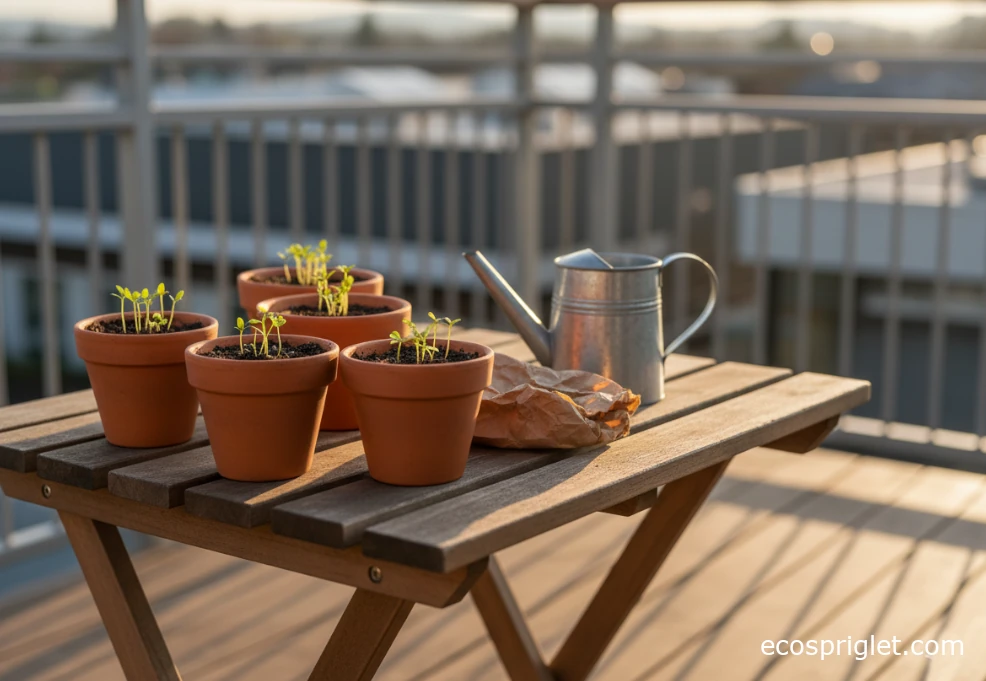
Growing parsley from seed has a reputation for testing your patience. It’s true: parsley can take 2–4 weeks to germinate, sometimes longer, and it resents drying out during that time. But once you understand its rhythm, growing parsley from seed in pots becomes very doable.
Here’s a simple method that works well in small spaces:
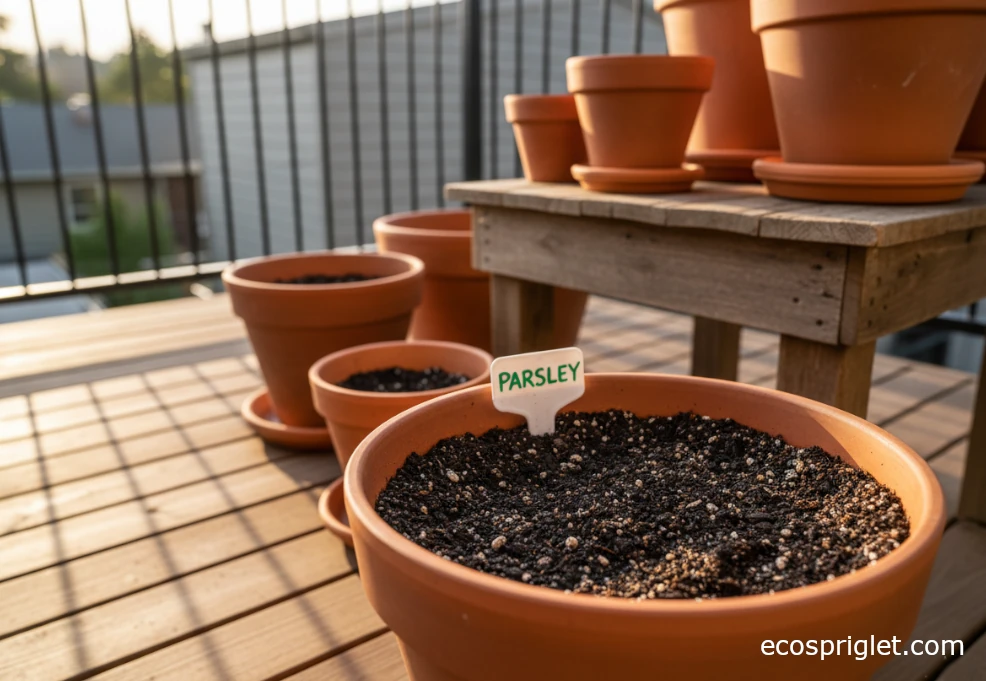
- Fill your pot (at least 8 inches deep) with pre-moistened potting mix.
- Sow seeds about 1/4 inch deep, scattering them fairly thickly over the surface.
- Water gently or bottom-water so the seeds aren’t washed into clumps.
- Keep the soil evenly moist; don’t let the top layer crust and dry completely.
- Expect germination in 14–28 days—sometimes a bit longer if it’s cool.
Some gardeners like to soak parsley seed overnight in warm water to help soften the seed coat. I’ve had better luck just sowing a bit heavier and thinning later, rather than fussing with soaking. When your seedlings are a couple of inches tall, thin or transplant so you keep the strongest plants spaced roughly 2–3 inches apart for a full-looking pot.
Because parsley dislikes root disturbance, it’s often easier to sow directly into the final pot instead of starting in trays and transplanting. Extension sources also note that starting indoors and moving out after frost is another option if your springs are short.
Sources: Toronto Master Gardeners, NC State Extension.
Planting Parsley Seedlings and Growing Indoors
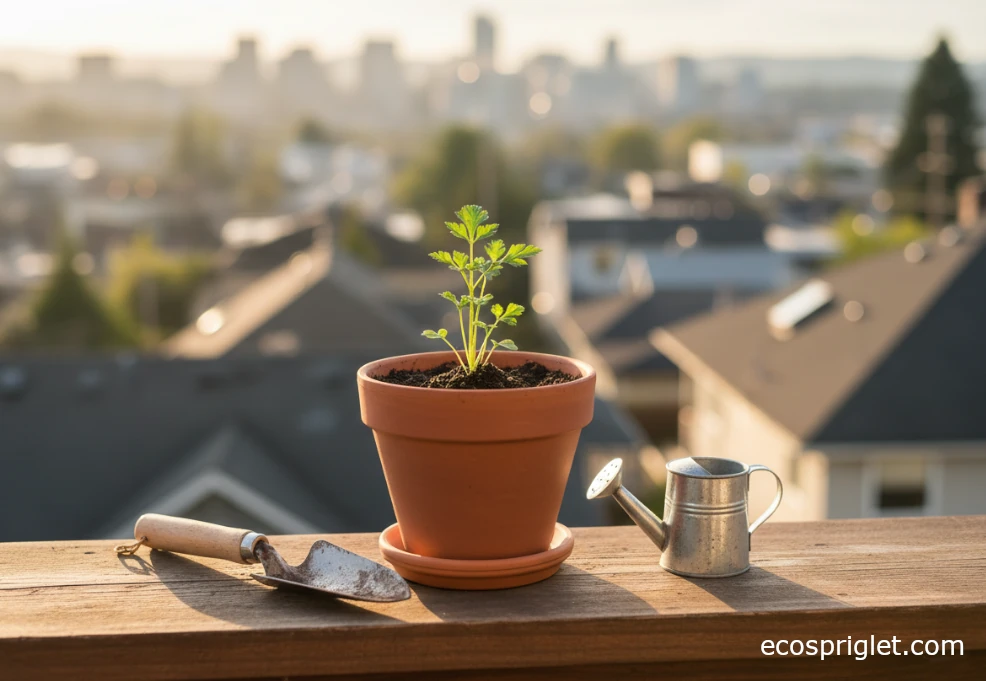
If you don’t want to wait on slow seeds, nursery seedlings are perfectly fine. Choose plants with healthy, deep green leaves and no yellowing or long, floppy stems. When you tip the seedling out of its cell or starter pot, try not to tear or break the taproot—parsley sulks when that root is mangled.
Set seedlings into your prepared pot at the same depth they were growing before and firm the mix gently around them. Water thoroughly so excess drains from the holes. If you’re planting multiple seedlings in a larger pot, space them about 4–6 inches apart so the crowns have room to fill in.
Growing parsley indoors works surprisingly well as long as you respect its need for light. Aim for:
- A bright south- or west-facing window, or a strong east window in summer.
- 4–6 hours of direct sun, or 12–14 hours under LED grow lights.
- Indoor temperatures below about 75°F to keep plants stocky and slow to bolt.
I like to think of indoor parsley as a mini leafy vegetable. It appreciates fertile, well-draining mix and a light drink whenever the top inch of soil feels dry. If your indoor air is very dry, a tray of pebbles with water under the pot (not touching the base) can bump humidity just enough to keep foliage fresh.
Everyday Care: Watering, Feeding, and Sun Adjustments
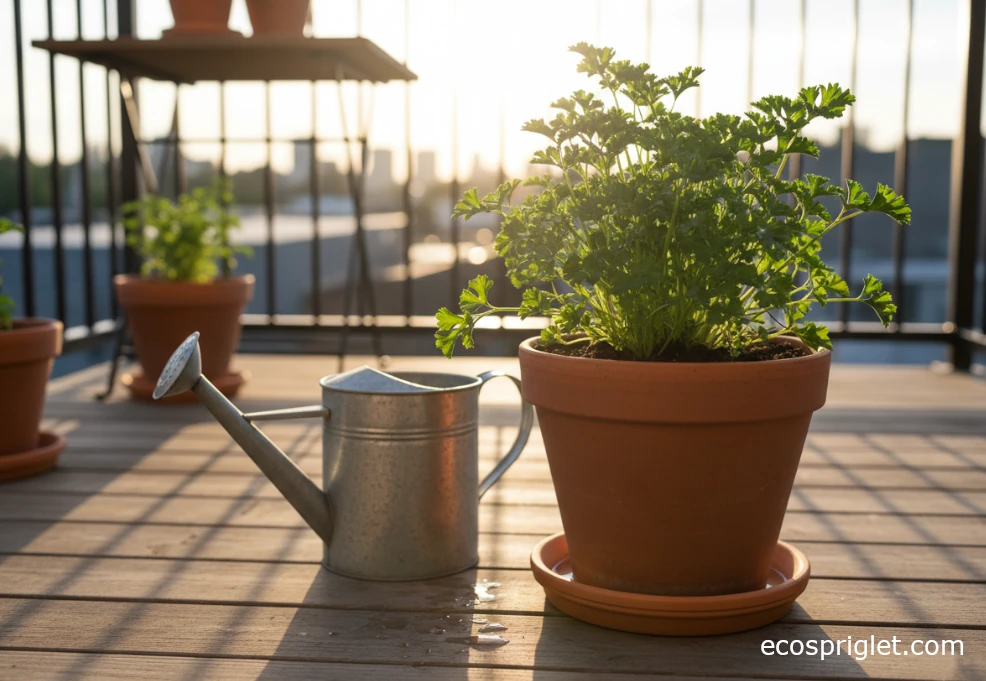
Parsley likes steady, moderate moisture—not desert dry, not swampy. University sources recommend watering deeply at least once a week in the ground and never letting plants dry out completely. In containers, things dry faster, so use this simple routine:
- Check moisture daily in warm weather by sticking a finger 1 inch into the mix.
- Water when that top 1–2 inches feel dry, until 10–20% of the water runs out the drainage holes.
- Empty saucers after 15–20 minutes so roots don’t sit in water.
In cool or rainy periods, you may only need to water once or twice a week. On a hot, exposed balcony, parsley in smaller pots might need water every day or two. If the leaves start to droop and the soil feels dry, that’s your cue to water thoroughly, then bump the pot slightly out of the harshest afternoon sun.
Parsley isn’t a heavy feeder. Many extension guides suggest top-dressing with compost at planting and once or twice during the season instead of constant fertilizer. In a pot, you can mix in a slow-release balanced fertilizer at the start, or feed with a half-strength liquid fertilizer every 4–6 weeks during active growth.
Light tweaks can make a big difference. If you notice pale, leggy growth, move the pot to a brighter spot or add a reflector (like a white wall or board) behind it. If leaves scorch or curl in peak summer sun, shift the pot to where it gets morning sun and light afternoon shade.
How to Harvest Parsley So It Keeps Growing
The secret to long-lasting pots is learning how to harvest parsley so it keeps growing instead of stalling. Think “outside-in,” not “top-down.”
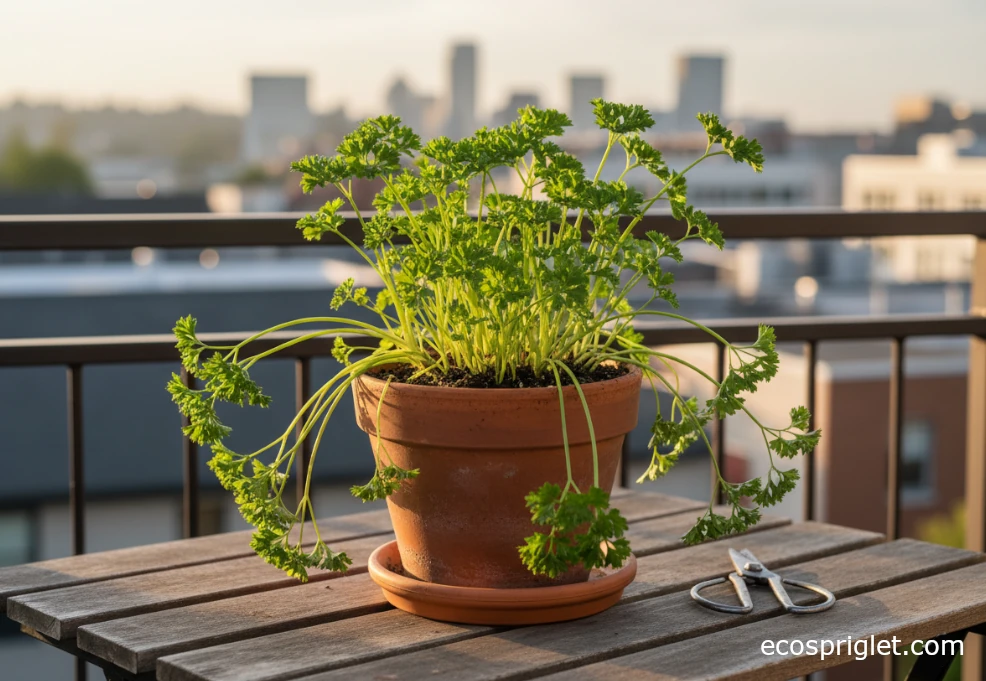
Once plants are about 6 inches tall and nicely bushy, start harvesting by cutting entire stems at the base, close to the soil, beginning with the outermost ones. University guides recommend this method because it leaves the inner stems to keep growing and pushing new leaves.
- Always cut full stems, not just random leaf tips.
- Harvest from the outside of the clump first; leave the middle alone to regenerate.
- In any one harvest, remove no more than about one-third of the plant.
I remember the first year I grew parsley on my tiny third-floor balcony. I treated it like a houseplant, just pinching a sprig here and there from the top, and the plant never really filled in. The next year I switched to cutting whole outer stems snug against the crown, and suddenly I had a dense, leafy “parsley fountain” instead of a sad little tuft.
If you need a lot at once for a recipe like chimichurri or tabbouleh, harvest heavily but give the plant a week or two to bounce back before another big cut. Regular, moderate harvesting actually encourages more growth and delays bolting.
Does Parsley Grow Back Every Year? Overwintering Pots
Parsley is a biennial. It doesn’t quite “grow back every year” like a woody perennial, but it can give you more than one season of leaves if you treat it right. In its first year, it focuses on foliage. In its second year, it sends up flower stalks, sets seed, and then dies back.
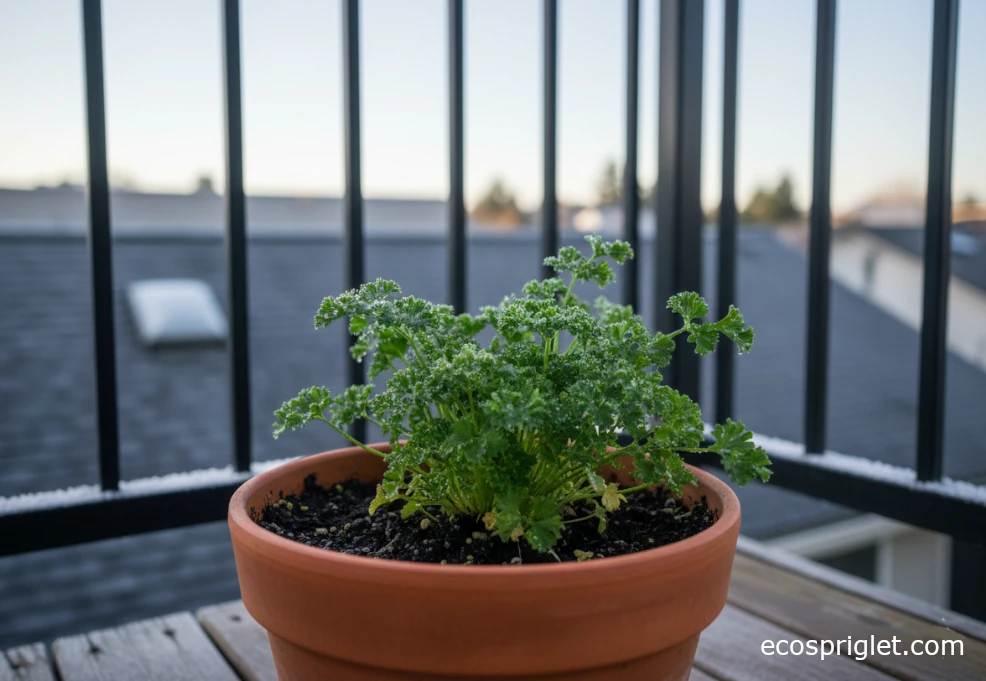
The good news is that parsley tolerates light frost and cool temperatures better than many herbs. In many climates (especially USDA Zones 5–9), you can overwinter a parsley pot outdoors with some protection and pick from it again the following spring before it bolts.
For overwintering on a balcony:
- Move the pot against a wall where it gets a bit of radiant warmth.
- Wrap the container with burlap or bubble wrap if winters are cold, to buffer the roots.
- Water sparingly in winter—just enough to keep the root ball from completely drying out.
Come early spring of year two, new leaves will appear, often quite vigorously. Enjoy these, but expect the plant to send up tall, hollow flower stalks once days lengthen and temperatures rise. At that point, flavor usually declines and leaves can get tough. Many gardeners simply treat that as the signal to start a fresh pot from seed or seedlings.
Common Parsley Problems in Pots (And Easy Fixes)
Even with good care, container parsley sometimes throws you curveballs. Here are a few common symptoms and what they usually mean:
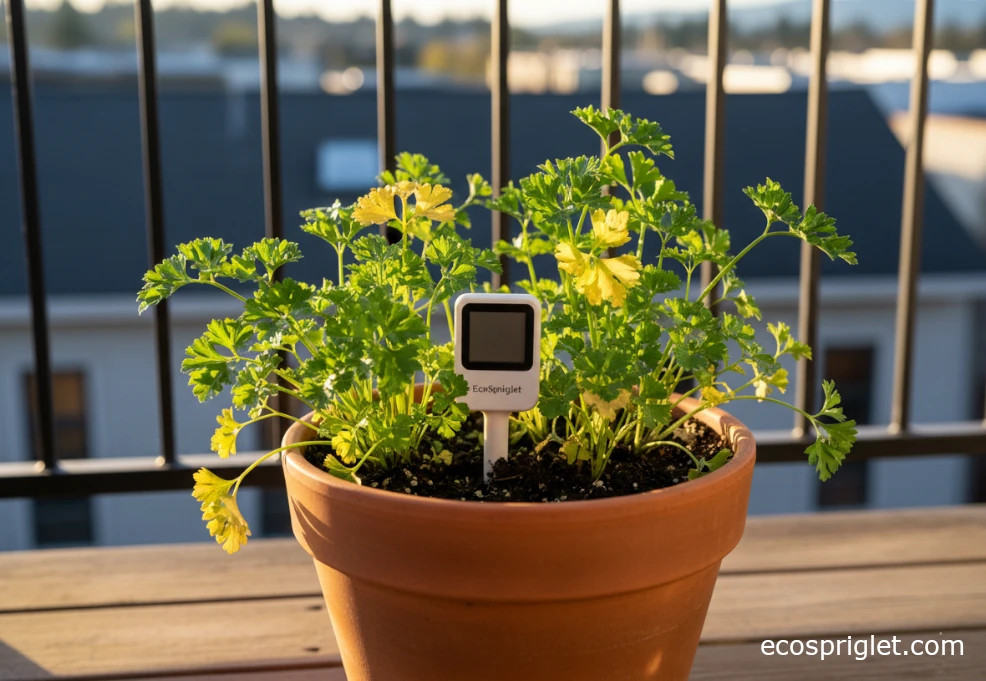
- Yellowing leaves, especially older ones – Often a sign of overwatering or soggy soil. Let the top 1–2 inches of mix dry before watering again and make sure drainage holes aren’t blocked. Occasionally, mild nutrient deficiency can also cause yellowing; a light feeding with a balanced fertilizer can help.
- Droopy, limp foliage – Can mean either underwatering or overwatering. Check the soil; if it’s dry and pulling from the sides of the pot, water deeply. If it’s wet and heavy, ease up on watering and improve drainage.
- Leggy, floppy stems – Usually not enough light. Move the pot to a sunnier spot or supplement with a grow light indoors.
- Early bolting (flower stalks forming in year one) – Often triggered by heat stress or very long days. Keep parsley a bit cooler if possible and harvest regularly to encourage leafy growth.
I like to keep parsley on the “edge” of where water drains well: never dust-dry, never swampy. If I notice repeated yellowing, I’ll check the pot’s weight; a heavy, wet container tells me to back off watering more than any calendar reminder.
Common Mistakes to Avoid With Parsley Pots
Parsley is forgiving, but there are a few classic traps that make people think it’s “hard” when it really isn’t. I’ve fallen into most of these myself at some point.
- Using a pot that’s too small and shallow. A 4-inch windowsill pot dries out so fast that parsley spends more time stressed than growing. Aim for at least 8 inches deep and wide.
- Letting seedlings or soil dry out during germination. One dry spell can wipe out most of your seeds. Keep the top layer just barely moist until plants are established.
- Harvesting only random leaves from the top. This leads to woody, uneven plants. Cut whole outer stems at the base instead.
- Keeping the pot in constant shade. Parsley will survive in low light but be thin and floppy. It truly prefers full sun to partial shade.
- Overfeeding with strong fertilizer. Too much nitrogen can give you big, soft leaves that are more prone to pests; light, occasional feeding is plenty.
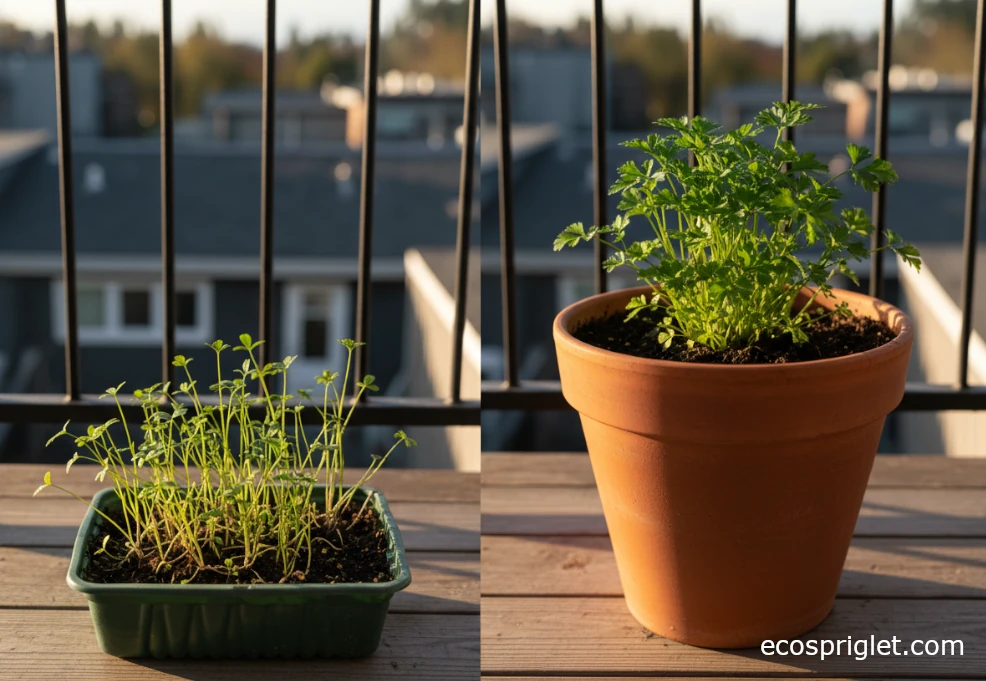
I learned the “too small pot” lesson the hard way on a narrow fire escape years ago. I planted a whole seed packet into a single 4-inch pot because it “looked cute,” and the seedlings baked dry every sunny afternoon. Once I upgraded to a 10-inch terracotta pot with a good, rich mix, parsley went from drama queen to incredibly reliable.
If you avoid these few missteps, growing parsley in containers suddenly feels much easier.
Fun Ways to Use Parsley Pots in a Small Space
Once your parsley pot is thriving, you can have some fun with how you use and arrange it. Because parsley stays relatively compact and upright, it fits nicely into a lot of small-space setups.
Some ideas I love:
- “Kitchen island” pot by the door. Park a parsley container right by your balcony or patio door so you can step out and snip stems while you’re cooking.
- Mixed herb bowl. Combine parsley, chives, and a compact basil variety in a 12-inch pot for an all-purpose cooking trio. (See also our balcony herbs guide for more pairings.)
- Rail planter with cool-season herbs. In spring and fall, tuck parsley into a deep rail box with cilantro and lettuce for a salad bar that loves the cooler weather.
- Indoor “garnish bar.” On a bright kitchen windowsill, grow parsley alongside mint and thyme in matching terracotta pots so you can finish dishes right at the counter.

Parsley in Pet-Friendly Homes: Safety Notes
If you share your balcony or indoor space with pets, it’s smart to think about where you place your parsley pot. The ASPCA lists parsley ( Petroselinum crispum ) as toxic to dogs, cats, and horses, mainly due to compounds called furanocoumarins that can cause photosensitization—especially if large amounts are consumed. The risk from a quick nibble on a leaf or two is generally lower, but it’s still worth being cautious.
Practical steps for pet-friendly homes:
- Keep parsley pots out of constant chewing range—on a table, plant stand, or wall shelf rather than right next to a pet’s bed or litter box.
- If you notice your pet is obsessed with chewing the plant, relocate it somewhere they can’t reach and offer safer greens instead, as advised by your vet.
- Call your veterinarian or a pet poison hotline if your pet eats a large amount of parsley or shows signs of skin irritation or digestive upset.
Many pet owners grow parsley on balconies and windowsills without problems; the key is paying attention to your particular animal. When in doubt, put the pot higher and choose clearly non-toxic plants for low-level planters.
(Always check up-to-date toxicity lists for your specific region and species.)
Quick Parsley in Pots FAQ
When should I start growing parsley in pots?
Outdoors, sow or plant parsley after the danger of hard frost has passed and temperatures are consistently above freezing; it prefers the cool of spring and fall. Indoors, you can start parsley from seed or seedlings any time of year if you have enough light.
Can you grow parsley from cuttings?
Parsley doesn’t root as reliably from cuttings as herbs like basil or mint. Most reliable sources recommend starting from seed or buying seedlings instead. You can experiment with rooting stems in water, but expect mixed results and don’t rely on it as your main method.
How long does potted parsley last?
A healthy parsley plant in a pot can provide harvests for most of its first year and into the second spring if overwintered, before it bolts and goes to seed. Many balcony gardeners simply replant yearly for best flavor and appearance.
Can I grow parsley indoors year-round?
Yes, as long as you provide enough light (a bright window or grow lights) and keep indoor temperatures below the mid-70s°F to avoid leggy growth and early bolting. Regular harvesting and occasional feeding will keep plants productive.
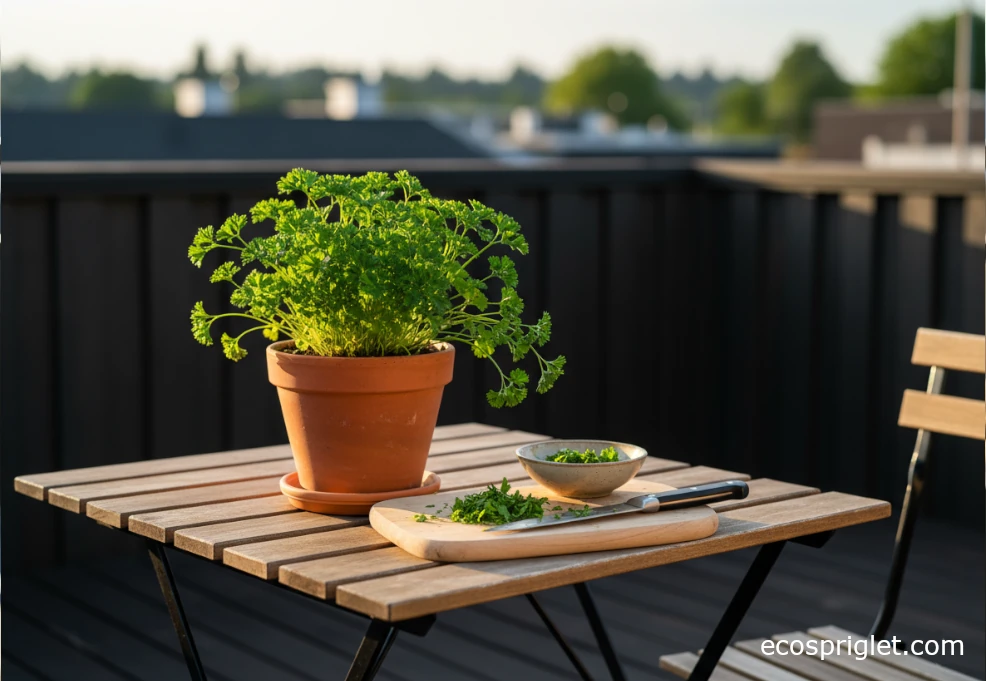
A single pot of parsley can quietly transform how you cook. You don’t need a yard, raised beds, or a greenhouse—just a reasonably deep container, a good potting mix, and a spot with a few hours of decent light. Once you understand how to grow parsley in pots, from slow-but-steady seeds to the “outside-in” harvest method, the plant becomes one of the most dependable residents of a balcony or windowsill.
If you remember the core habits—give it at least 8 inches of root room, keep the soil evenly moist but never soggy, harvest whole outer stems, and restart plants when they bolt—you’ll get months of fresh, bright flavor with very little drama. And if you share your space with pets, a bit of thoughtful pot placement keeps everyone safe and happy.