If you love homemade pizza, roasted veggies, or simple pasta, growing oregano in pots might be one of the easiest ways to upgrade your cooking from an apartment balcony or sunny windowsill. Oregano is a tough Mediterranean herb that actually prefers life a little on the lean and dry side, which makes it a perfect match for containers. Once you understand a few basics—sun, pot size, and how not to overwater—it quietly turns into a small, leafy workhorse you can harvest for most of the year.
In this guide, we’ll walk through everything you need to know about growing oregano in a pot: choosing containers, mixing the right soil, setting up indoors or outdoors, how often to water, when to prune, and what to do when it looks sad instead of bushy. We’ll keep the focus on growing oregano in pots, especially in small spaces like balconies and fire-escape-style ledges, and I’ll share the specific habits that have kept my own balcony oregano going strong season after season.
Why Growing Oregano in Pots Works So Well for Apartments
Oregano is one of those herbs that almost seems designed for container life. It’s naturally compact, has shallow to medium roots, and prefers well-drained soil that dries slightly between waterings. That combination is ideal for pots, which often dry out faster than garden beds. University extensions like Delaware Cooperative Extension and Illinois Extension list oregano among the herbs that grow especially well in containers when given full sun and well-drained soil.
From a small-space perspective, oregano also earns its keep. A single healthy plant in a pot can supply fresh leaves for most home cooks and still have enough growth to dry or freeze for later. Because it’s a perennial in many climates, you can often keep the same plant going for several years if you refresh the soil and prune regularly.
And unlike some thirstier herbs, oregano doesn’t demand daily attention—great if you’re juggling work, life, and remembering to water the rest of your balcony jungle.
I also like that potted oregano can be moved around as your light changes through the seasons. On my own balcony, it starts the year right against the railing for maximum sun, then shifts closer to the wall when summer heat reflects off nearby buildings. Having it in a pot keeps that kind of fine-tuning easy.
Choosing the Best Pot and Oregano Variety
When you’re growing oregano in a pot, the container you pick makes a bigger difference than most people think. Too small and the plant dries out constantly; too huge and the soil can stay soggy around a still-small root system.
For a single oregano plant, aim for:
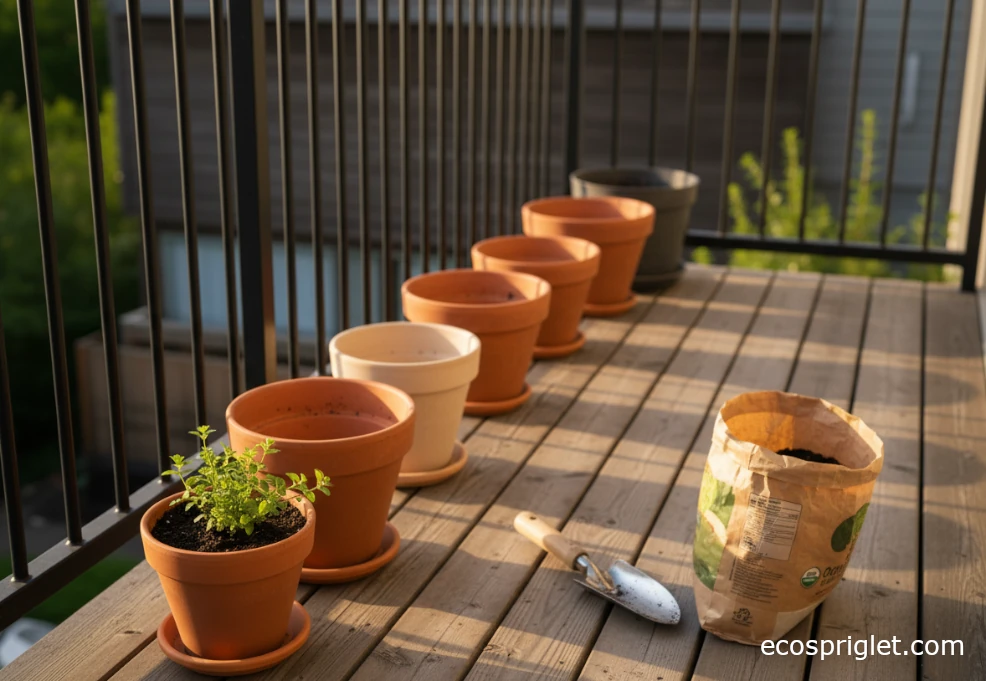
- A pot at least 8–10 inches wide and roughly 8–10 inches deep (about 1–3 gallons).
- Drainage holes you can actually see water coming out of.
- A sturdy saucer or tray so you don’t soak your downstairs neighbor’s balcony.
Guides on container herbs and oregano care note that pots in the 8–12 inch range balance root space with manageable watering; smaller containers dry out extremely fast on sunny balconies, while very large pots can stay too wet for Mediterranean herbs like oregano.
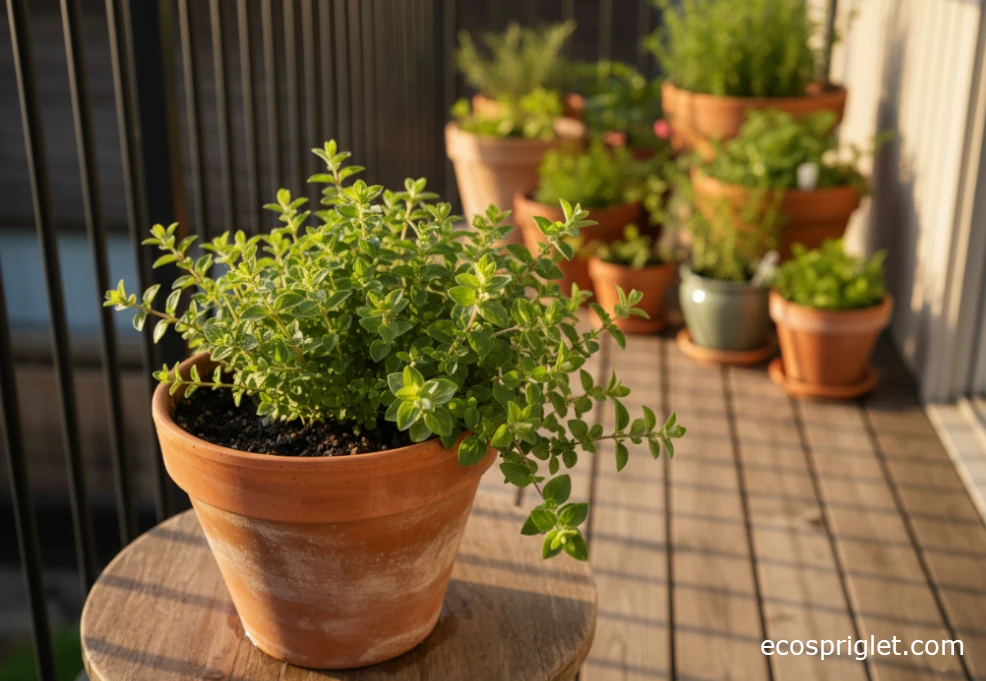
Material-wise, terracotta is classic and helps the soil dry a bit faster, which oregano loves. Glazed ceramic and thick plastic pots hold moisture longer—fine if you’re in a very hot, windy spot, but go a size smaller or be extra careful about overwatering.
As for varieties, look for Greek oregano (Origanum vulgare subsp. hirtum) for the strongest flavor. Common oregano (O. vulgare) is milder and sometimes grown more as an ornamental.
Extension resources and organizations like NC State highlight that there are many oregano types, but Greek is the go-to for classic cooking flavor.
If you’re planning a mixed herb pot, oregano pairs well with other drought-tolerant, sun-loving herbs like thyme and rosemary, provided the container is at least 12 inches wide and fairly deep. For more ideas on combo plantings, see our indoor herbs guide.
Soil Mix and Planting Steps for Potted Oregano
Oregano is at its happiest in light, well-drained, slightly lean soil. University sources like Delaware Cooperative Extension and UF/IFAS note that oregano prefers moderately fertile, well-drained soils and even tolerates somewhat tough conditions; it’s much more likely to suffer from soggy roots than from not enough fertilizer.
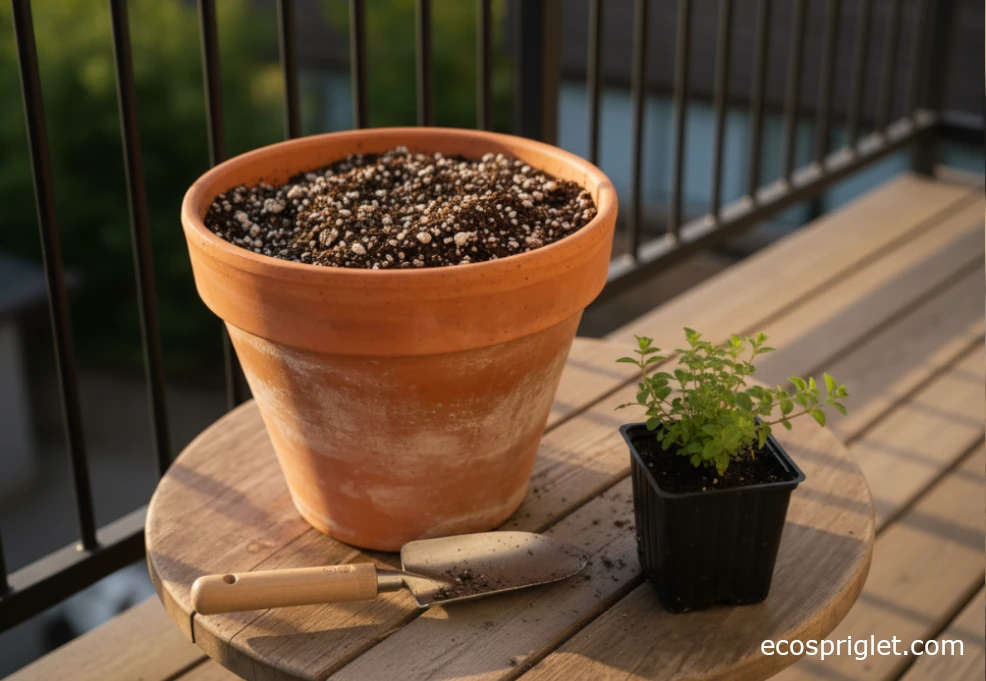
For growing oregano in pots, skip garden soil and use a high-quality all-purpose potting mix, then lighten it further. A simple recipe that’s worked well on my balcony:
- 2 parts all-purpose potting mix (peat or coir based).
- 1 part perlite or coarse pumice to boost drainage.
- Optional: a small handful of finished compost for a gentle nutrient bump.
Extension-backed guidance on container drainage strongly advises against adding a gravel or rock layer at the bottom of the pot. Research summarized by Washington State University and UC Master Gardeners shows that gravel actually raises the saturated “wet zone” higher in the pot instead of helping excess water escape – better to fill the pot with one consistent mix and rely on good drainage holes.
Planting is straightforward:
Fill the pot most of the way with your mix, gently tease the roots of your oregano seedling if they’re circling the pot, then set it so the top of the root ball is about 1 inch below the rim. Backfill, firm lightly with your fingers, and water until you see a clear stream from the drainage holes. That first deep watering settles any air pockets and gives the plant a strong start.
After planting, I like to add a very thin layer of fine bark or shredded leaves as mulch—just enough to slow evaporation but not so thick that the crown stays damp.
Light, Temperature, and Where to Put Your Pots
Light is the main make-or-break factor when you’re growing oregano in a pot. Multiple horticultural references, including container herb guides and oregano-specific care resources, agree that oregano does best in full sun—roughly 6–8 hours of direct light per day. If your balcony only gets 3–4 hours of direct sun, you’ll still get growth, but flavor and leaf production will likely be weaker.
Outdoors, choose the brightest, least shaded spot you have: usually near the railing rather than tucked against a wall. In very hot climates where the balcony bakes above 90°F, a little light afternoon shade can prevent leaf scorch, but still prioritize strong morning and midday sun.
Indoors, place your pot less than a foot from a bright south- or west-facing window. General herb recommendations from universities suggest that indoor herbs often need supplemental grow lights to match outdoor sun levels; oregano is no exception. If your plant grows tall, pale, and floppy, that’s almost always a sign of not enough light rather than too much fertilizer.
Temperature-wise, oregano prefers mild to warm conditions. Aim to keep it above about 50°F at night if it’s in a pot on an exposed balcony, and bring containers into a more sheltered spot or indoors when hard frost is forecast. In many regions, containers can overwinter outside against a wall with some protection, but in very cold climates you’ll treat oregano as either a plant you bring indoors or a perennial you renew every few years.
Watering, Feeding, and Day-to-Day Care
Most potted oregano problems start with either too much or too little water, and sometimes both in wild swings. University of Maryland Extension and other herb resources point out that oregano and its cousins like thyme and sage prefer to dry out between waterings, especially in containers.
Here’s a simple routine that works well for growing oregano in pots:
- Use your finger to check the top 1–2 inches of soil. Water only when this layer feels dry.
- When you water, do it thoroughly until 10–20% of the water runs out of the drainage holes.
- Always empty standing water from saucers after 10–15 minutes so roots aren’t sitting in a swamp.
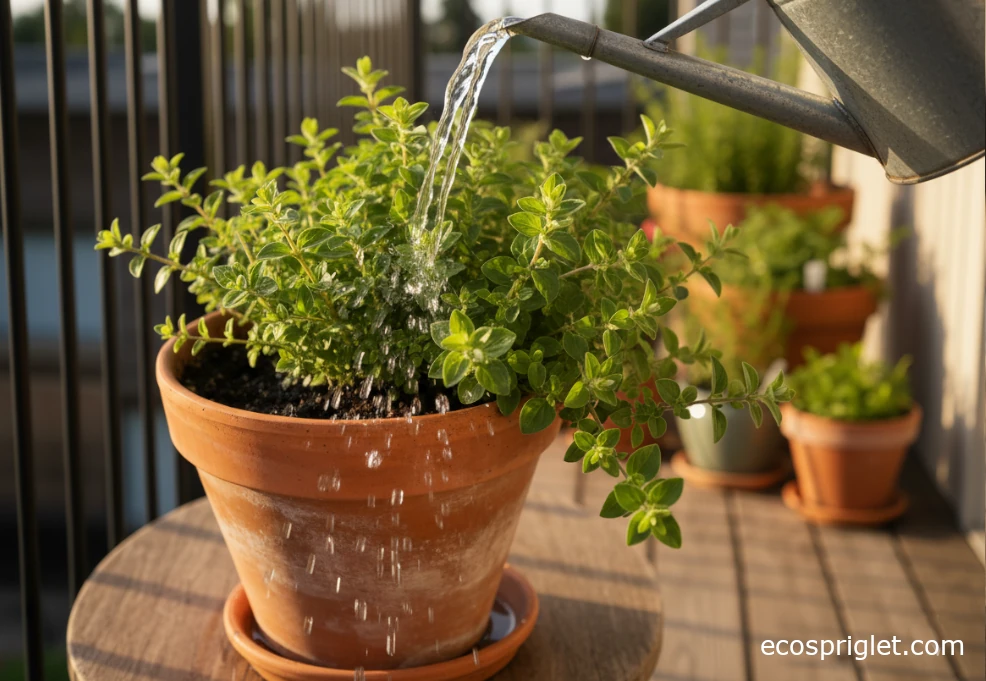
In spring and fall, that might mean watering every 3–5 days. In a hot, windy summer on a balcony, daily watering might be needed for smaller pots. If you travel a lot or your balcony gets intense afternoon sun, consider a pot with a built-in reservoir or a simple self-watering setup—just make sure the plant’s roots aren’t permanently submerged.
Feeding is where many people accidentally turn oregano into a floppy, tasteless shrub. Container herb guides generally recommend light, occasional feeding rather than heavy doses. A balanced, diluted liquid fertilizer once every 4–6 weeks during the main growing season is plenty; skip feeding in the depths of winter if growth has slowed.
I learned this the hard way the first year on my current balcony. I treated my oregano like a hungry tomato, fed it every two weeks, and ended up with huge, pale stems and surprisingly bland leaves. Dialing back the fertilizer and letting the soil dry more between waterings brought the flavor right back by the next season.
Pruning, Pinching, and Harvesting for Flavor
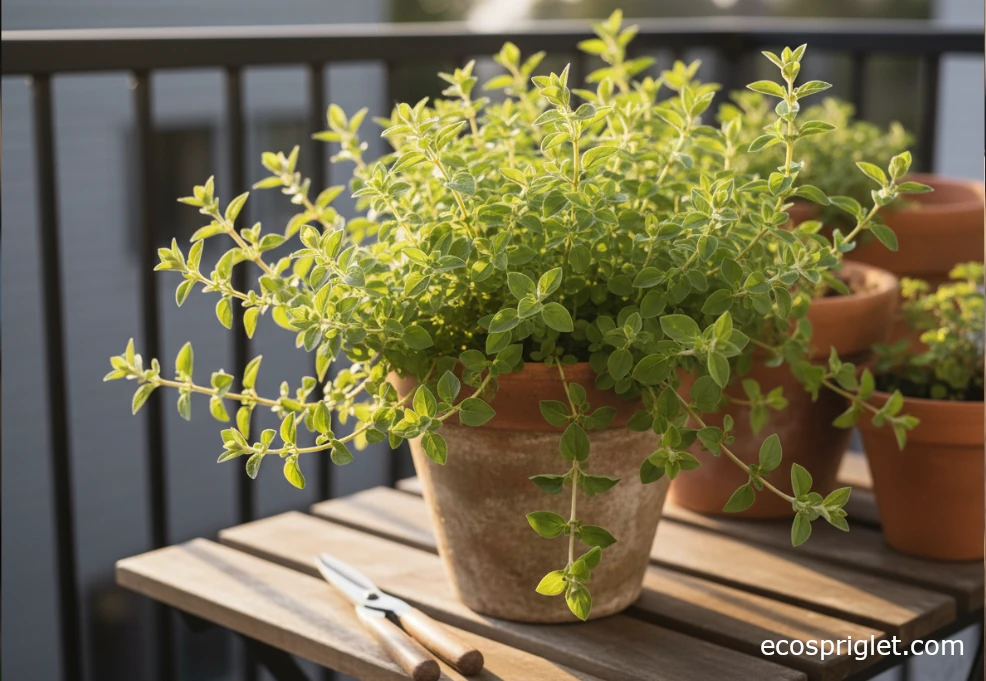
Regular pruning is the secret to keeping potted oregano bushy and loaded with flavorful leaves. If you let it grow without pinching, it tends to stretch, flop, and develop woody stems with sparse foliage.
Once your plant is 4–6 inches tall and producing multiple stems, start pinching the tips. Snip or pinch just above a pair of leaves—this encourages the plant to branch into two new shoots at that point. Never remove more than about one-third of the plant at a time; organizations like RHS and other herb guides echo this “one-third rule” as a safe way to keep perennial herbs vigorous.
For harvesting:
- Take small sprigs frequently rather than one huge harvest.
- Harvest in the morning once dew has dried but before strong midday sun for the best aroma.
- If you want to dry oregano, let stems get a bit longer, harvest, and tie them in small bundles to hang in a dry, airy spot.
If flower buds appear, you can let some open for pollinators, but flowering often softens the flavor slightly. I usually allow a few stems to bloom near the back of the pot and keep the rest pinched for cooking.
How to Grow Oregano Indoors All Year
If you’ve wondered “can you grow oregano indoors?” the answer is yes—with enough light and a bit of patience. Indoor oregano will often grow more slowly than plants on a sunny balcony, but it can still give you a steady supply of fresh leaves through winter.
Here’s what matters most:
- Light: A bright south- or west-facing window is ideal. Many indoor herb guides and lighting resources note that most herbs need the equivalent of at least 4–6 hours of strong sun, and oregano is happiest nearer the 6+ hour mark. A small LED grow light running 12–14 hours a day can make all the difference in darker apartments.
- Airflow: Crack the window occasionally or run a small fan on low nearby. Still, humid air can encourage fungal issues, especially if leaves stay damp.
- Watering: Indoors, soil usually dries more slowly. Stick to the “top 1–2 inches dry” rule and resist the urge to water on a fixed schedule.
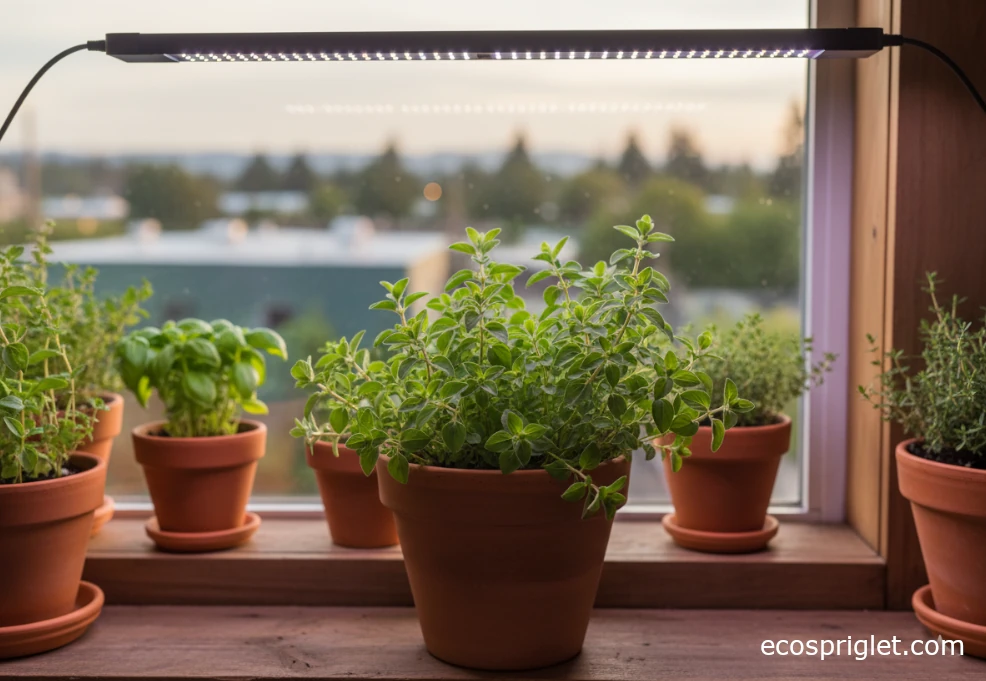
I like to think of indoor oregano as a “snipping plant” rather than a heavy producer. It may never be as dense as an outdoor summer pot, but it’s perfect for finishing dishes or tossing a handful into a sauce without a store run.
If growth really slows under indoor conditions, take it easy on pruning—let it build energy and only harvest small amounts until days get longer again.
Common Problems With Potted Oregano (and Quick Fixes)
Even though oregano is tough, container life can still throw it a few curveballs. The good news is that most issues have simple, balcony-friendly fixes.
Leggy, floppy growth: Stems stretch, lean toward the light, and leaves get sparse. This almost always means not enough light or too much fertilizer. Move the pot to a sunnier spot or add a grow light indoors, and cut back on feeding.
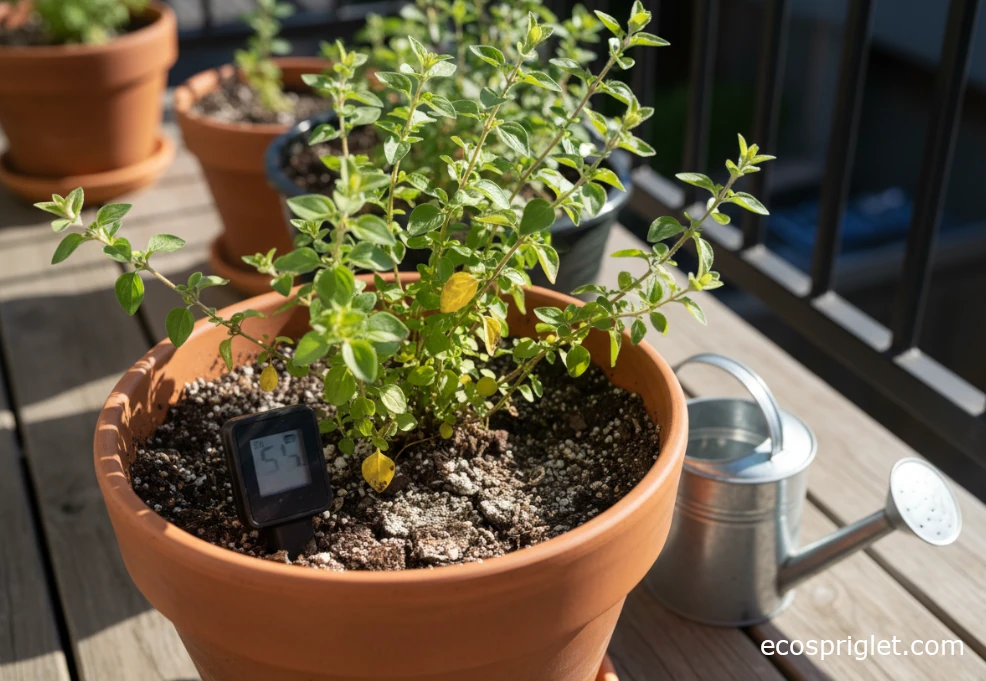
Yellowing lower leaves: A few older yellow leaves at the base aren’t a crisis, but widespread yellowing combined with heavy, wet soil usually points to overwatering or poor drainage. Check that the drainage holes aren’t blocked, consider repotting into a lighter mix with added perlite, and let the top of the soil dry more between waterings.
Brown, crispy leaf tips: This can be a sign of underwatering, strong hot wind, or excess fertilizer salts. If the soil feels bone dry and the pot is very light, water deeply. If you see a white crust on the soil surface, flush the pot thoroughly with water to wash out salts and ease up on feeding.
Powdery mildew or fuzzy spots: Oregano is relatively resistant, but poor airflow and constantly wet leaves can invite fungal issues. Trim affected stems, avoid overhead watering, and make sure the plant isn’t crammed into a still, humid corner without air movement.
Whenever your plant looks off, start by checking light, watering pattern, and drainage in that order. Nine times out of ten, fixing one of those restores that classic, fragrant mound of leaves.
Common Mistakes to Avoid With Potted Oregano
Over the years I’ve made just about every oregano mistake you can make in a pot. Here are the ones I see most often—and how to dodge them.
- Using a tiny pot “just to start.” Seedlings in 3–4 inch nursery pots dry out in hours on a sunny balcony. Pot up into at least an 8–10 inch container once roots fill the starter pot so you’re not a slave to the watering can.
- Keeping the soil constantly wet. Oregano is not a basil or lettuce; its roots want air. If the mix is still dark and cool an inch down, wait before watering. Overwatered oregano often looks “sad” in a way that tricks people into giving it even more water.
- Planting with gravel at the bottom. It feels intuitive, but research-based resources from Washington State University and UC Master Gardeners show that gravel layers don’t improve drainage and may actually keep a saturated zone closer to the roots. Use a good mix and drainage holes instead.
- Shoving it into deep shade. On a north-facing balcony with no direct sun, oregano will survive for a while but won’t thrive or taste its best. In very low light, switch to a grow light or choose herbs that tolerate shade better.
- Letting pets chew freely on the plant. According to the ASPCA and veterinary summaries, oregano is considered mildly toxic to cats, dogs, and horses if eaten in quantity, usually causing vomiting or diarrhea. Keep pots out of reach of curious chewers and contact a vet if a pet eats a lot of foliage.
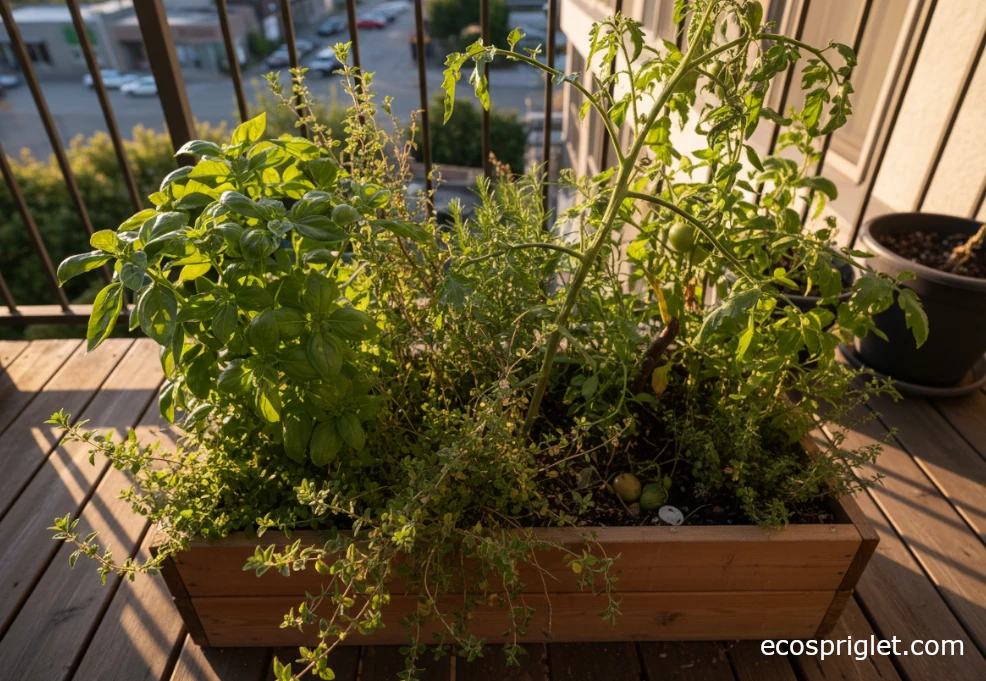
I still remember the summer I tried to be clever and squeezed oregano, basil, and a tomato into one decorative pot. The tomato swallowed the light, the basil sulked, and the oregano turned into a woody fringe. Giving each plant a more realistic amount of space the next year immediately turned that situation around.
Creative Ways to Use Potted Oregano on a Balcony
Once your oregano is happily established in its pot, it becomes more than just “the pizza herb.” On a small balcony, it can be a design element, a pollinator magnet, and a constant source of flavor all at once.
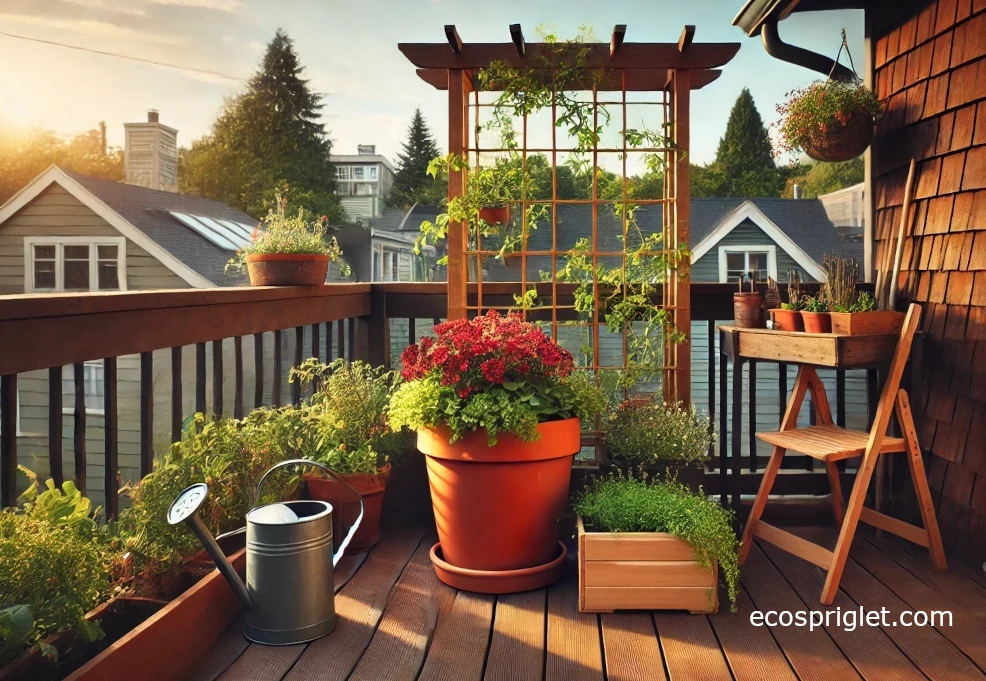
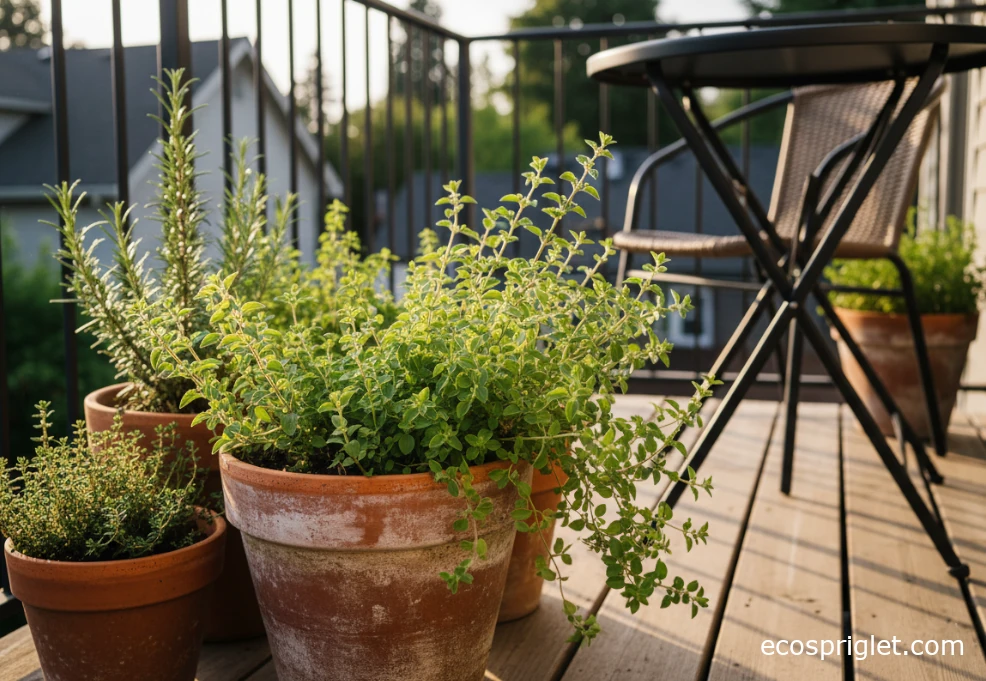
One of my favorite tricks is to use oregano as the “soft edge” of a container grouping. Place the pot at the corner of a cluster so stems can spill slightly over the rim, softening the line of the balcony. Behind it, you might position taller, vertical herbs like rosemary or chives to create a little herb skyline.
Oregano flowers attract bees and other beneficial insects, so if you have space, let a few stems bloom near where you sit. It adds a wild, meadow-like feel, even two stories up. Container and herb guides often recommend oregano as part of mixed plantings precisely because it pulls in pollinators while staying manageable in size, especially when grown in a pot.
Culinarily, potted oregano is perfect for last-minute balcony harvests: a quick handful for roasted potatoes, a few sprigs thrown under chicken thighs, or a chopped sprinkle over grilled vegetables. Dry any extra by hanging small bunches or laying stems on a mesh tray indoors, then store the crumbled leaves in a jar for winter cookups.
Growing oregano in pots is one of those low-effort, high-payoff projects that fits almost any urban space. Give it a reasonably sized container, a gritty, well-drained mix, strong light, and a watering routine that lets the soil dry a bit between drinks, and you’ll be rewarded with a tough evergreen (or nearly evergreen) herb that quietly powers your cooking. The same compact, drought-tolerant habits that make it thrive on rocky Mediterranean hillsides make it just as happy on a sunny second-floor balcony or bright windowsill.
As you experiment with growing oregano in a pot—indoors, outdoors, or both—pay attention to how the plant responds when you adjust light, watering, and pruning. Those simple tweaks matter far more than fancy fertilizers or complicated gear. Start with one sturdy plant, learn its rhythms, and then decide if you want to add a second pot or combine it with other herbs that like similar conditions. A few well-chosen pots can transform even the smallest ledge into a flavorful, green corner you’ll rely on all year.