If there’s one plant that can make an apartment kitchen feel like a tiny Italian café, it’s sweet basil. The good news is that growing basil in pots is not only possible, it’s one of the easiest ways to keep fresh leaves within arm’s reach of your stove. Whether you’ve got a sun-soaked balcony, a modest fire-escape, or just a bright windowsill, basil is happy to live its whole life in a container as long as a few basics are right: pot size, light, water, and regular harvesting. University and Extension sources consistently recommend at least six to eight hours of bright light and a well-drained growing mix, which makes movable pots a huge advantage for city gardeners.
In this guide, I’ll walk you through planting basil in pots step by step, from choosing containers and soil to pruning for big, bushy plants. We’ll look at how to grow sweet basil in a pot outdoors, how to grow basil inside when the weather turns cold, and how to keep things going with simple day-to-day care. I’ll also share some mistakes I’ve absolutely made myself (like cooking my basil in a black pot on a hot deck) so you don’t have to repeat them. By the end, you’ll be able to answer “How do I grow basil in a pot?” with a confident smile and a handful of fragrant leaves.
Why Basil Loves Life in a Pot
Basil is naturally suited to container life. In the ground it’s often competing with thirsty neighbors, erratic watering, and soil that may or may not drain properly. In a pot, you control almost everything: the potting mix, the drainage, the light exposure, and even the temperature (by moving the pot). That control is why growing basil in pots can be more reliable for beginners than planting it out in a garden bed.
Because basil is a tender annual that hates cold, pots also make it easier to dodge chilly nights. Once evening temperatures start slipping toward the 40s °F, basil begins to sulk and can be damaged or even blackened by cold. With a container, you can slide your plants closer to the building, tuck them behind a balcony windbreak, or bring them indoors temporarily. And if you share your apartment with pets, basil is one of the more relaxed choices: according to the ASPCA, sweet basil (Ocimum basilicum) is non-toxic to dogs and cats, though you still don’t want them eating huge amounts of anything green at once.
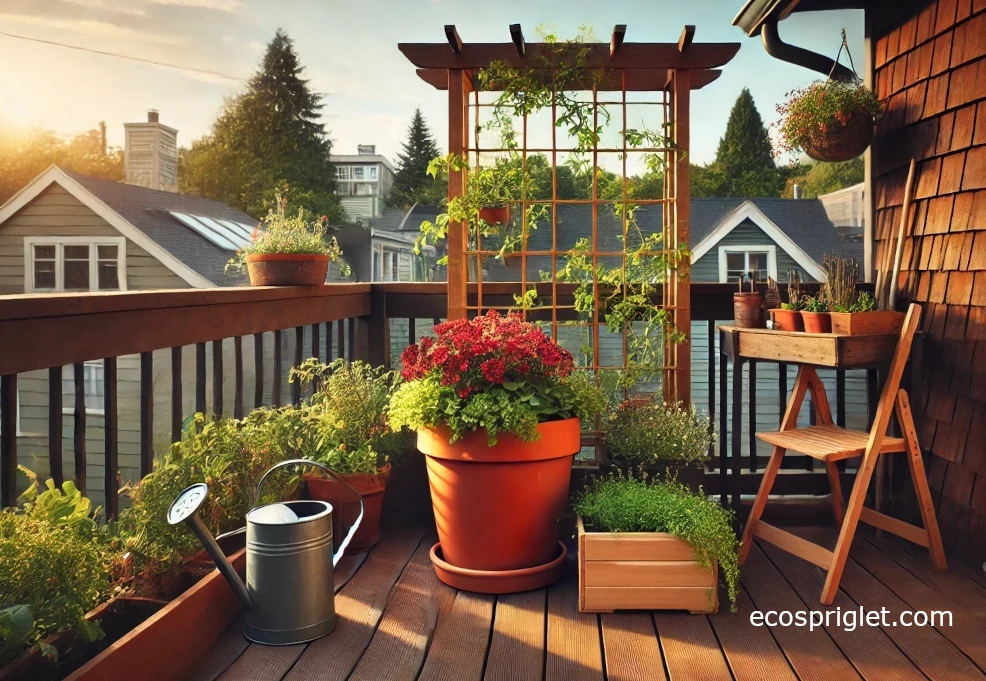
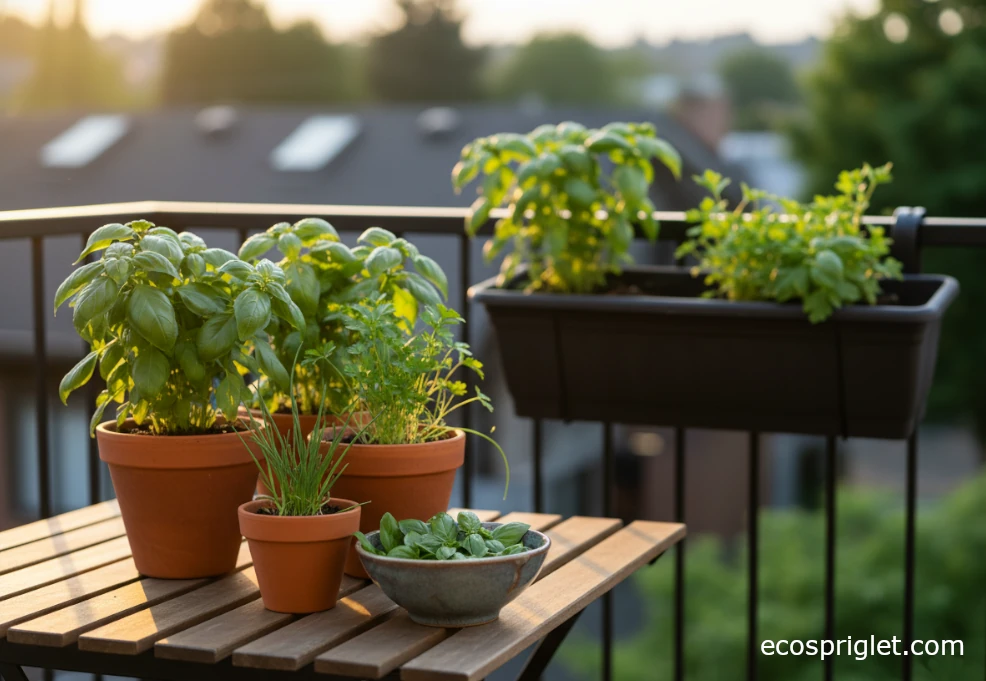
If you love the idea of a whole mini herb bar, basil also plays nicely with other pots of parsley, chives, and mint clustered together in a simple balcony herb corner.
Choosing the Right Pot and Soil for Basil
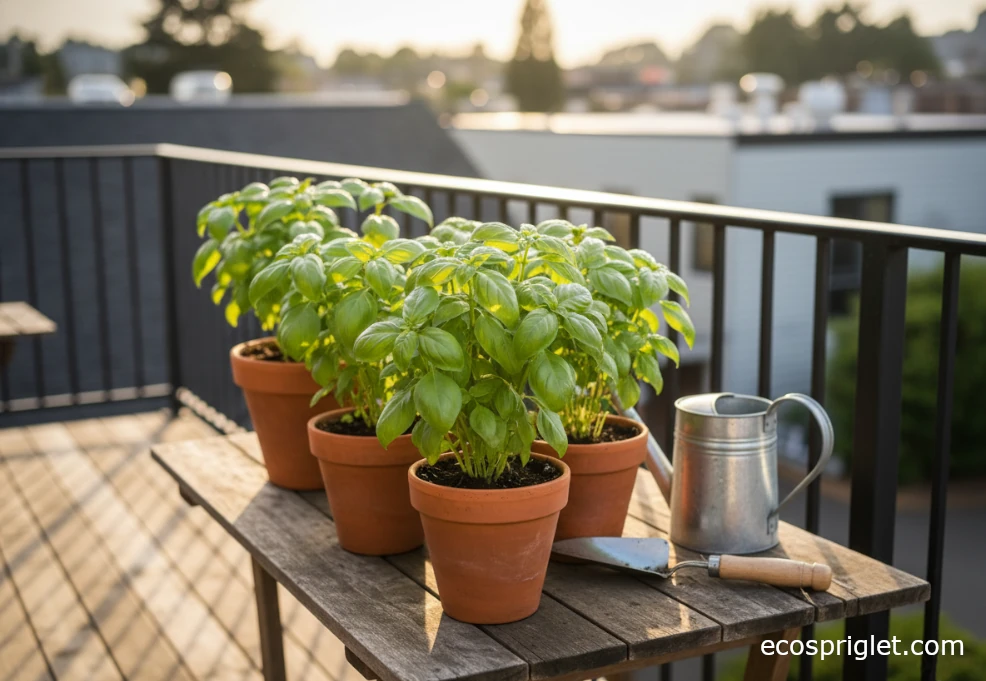
Pot choice is a huge part of growing sweet basil in a pot that stays happy instead of sulking. A pot that’s too small dries out in hours on a hot day and crowds the roots; one that’s too big stays soggy and can drown them. A good middle ground for a single mature basil plant is a container about 8–10 inches wide and at least 8 inches deep, roughly 1–2 gallons in volume. Many container charts list basil with a minimum pot diameter of 6–7 inches and a preferred size closer to 8–9 inches, which matches what I’ve seen on my own balcony—plants in the larger pots always look richer and less stressed.
For a 12-inch pot, you can usually grow two to three basil plants if you keep them well pruned and make sure air can move between leaves. If you’re planting a big “pesto pot” for summer, that’s a solid size to start with.
- Material: Terracotta breathes and helps prevent waterlogging but dries faster; plastic or glazed ceramic hold water longer.
- Drainage: Your pot must have drainage holes. If it doesn’t, treat it as a decorative cachepot and slip a draining nursery pot inside.
- Saucers: Use a saucer under indoor pots to protect floors, but empty standing water within 15–20 minutes after watering.
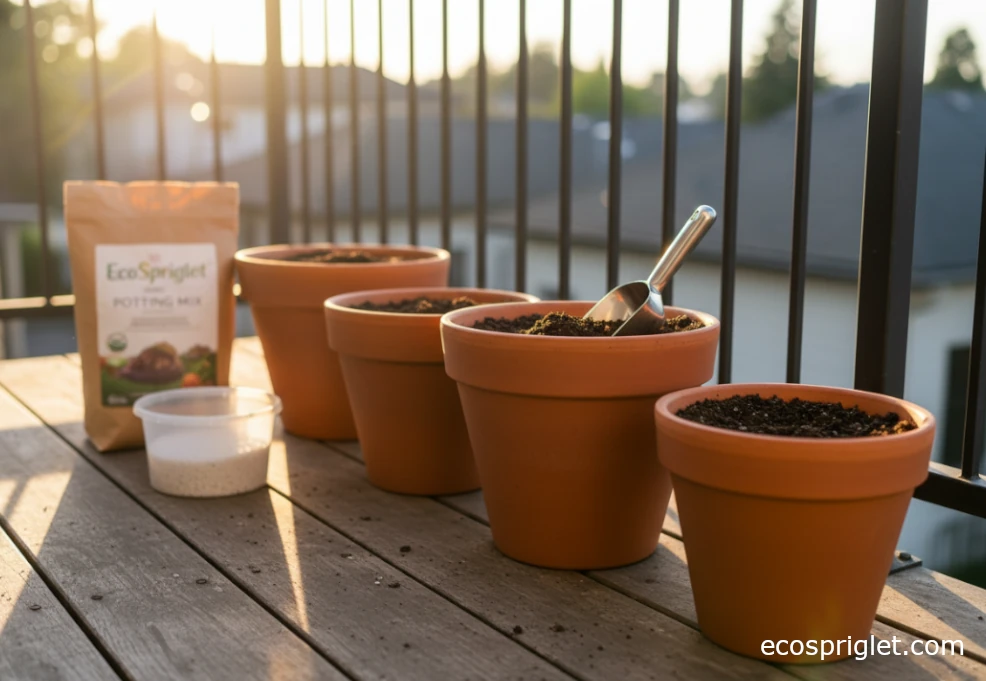
Skip garden soil and use an all-purpose, peat-free potting mix designed for containers. Many Extension sources emphasize that basil, like other herbs, needs a well-drained mix; you can boost drainage by adding about 20–30% perlite by volume if your mix feels heavy. Avoid adding gravel at the bottom—research on “perched water tables” shows that this actually keeps water higher in the root zone instead of improving drainage.
Planting Basil in Pots: Seeds, Starts, and Spacing
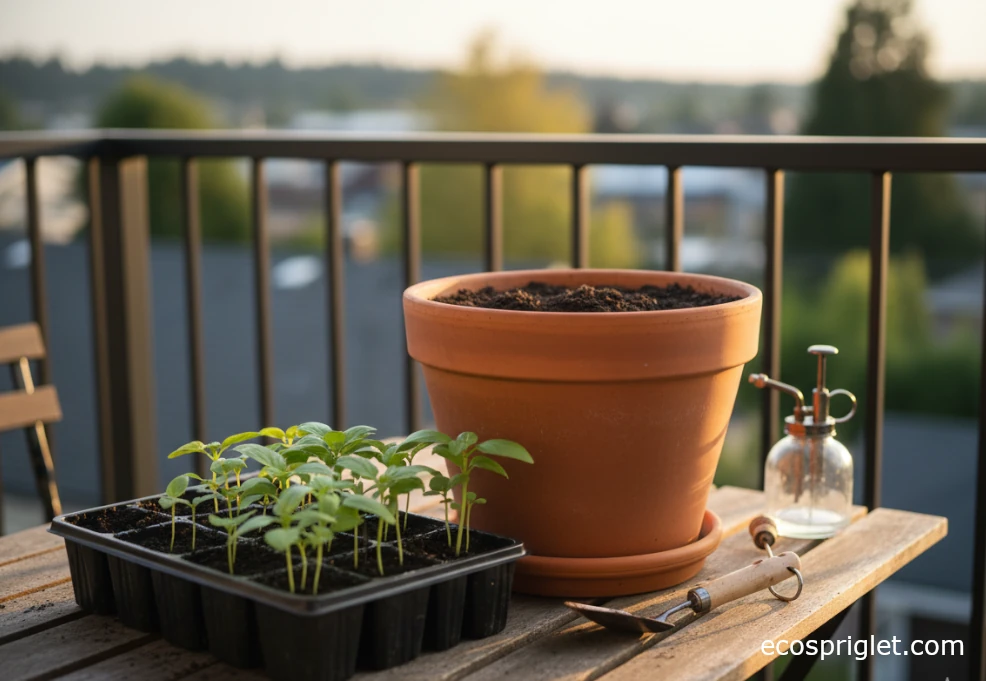
Once you’ve got a pot and soil ready, it’s time to actually plant. You can start from seed or buy small transplants; both work well in containers. Seed is cheaper and gives you lots of plants, while starts get you a head start on pesto season. University guides typically recommend sowing basil about ¼ inch deep and spacing plants roughly 10–18 inches apart in beds; in containers we mimic that spacing as best we can, just on a smaller scale.
Here’s a simple way to plant sweet basil in a pot:
- Fill the pot with potting mix, leaving about 1 inch of space at the top.
- If sowing seeds, sprinkle them evenly and cover with a thin layer of mix; for starts, plant them at the same depth they were in their nursery pots.
- In an 8–10 inch pot, plant one to two starts; in a 12-inch pot, plant two to three starts in a loose triangle.
- Water gently but thoroughly so excess water drains from the holes.
For seeds, keep the surface lightly moist (not swampy) until they sprout, usually in 5–10 days if soil temperatures are warm—many growers aim for a germination range around 75–85°F for speedy, even sprouting. When seedlings have at least two to three sets of true leaves and are a few inches tall, thin or transplant them so each plant has space to breathe. If that feels harsh, just remember that crowded seedlings always look good for a week, then collapse into a tangled, disease-prone mat.
Light, Temperature, and Growing Basil Inside
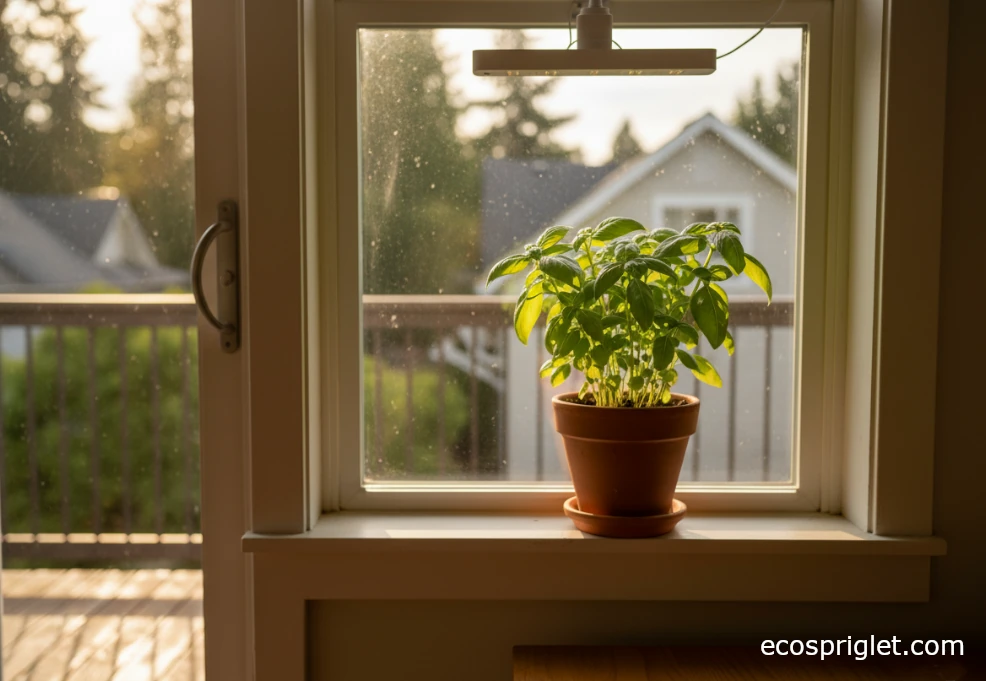
Light is where basil either thrives or languishes, especially indoors. Multiple horticultural references, including the University of Minnesota Extension, recommend at least six to eight hours of bright light per day for healthy basil growth. Outdoors, that usually means full sun, with perhaps a little afternoon shade in very hot climates to prevent wilting. On a typical city balcony, I aim for at least half a day of direct sun – if you can give your pots morning sun and light afternoon shade, you’ve hit a sweet spot.
Growing basil inside is absolutely possible, but you need to be realistic about light. A sunny south- or west-facing window is prime real estate; an east window can work if you nudge the pot as close to the glass as possible. When windows aren’t enough, a small LED grow light running about 12-14 hours a day, hung a few inches above the plant, makes all the difference for indoor basil.
Temperature-wise, think “barefoot weather.” Basil does best when days are comfortably warm and nights stay above about 50–55°F. Below the mid-40s °F, leaves can blacken or stop growing, so bring outdoor pots inside or closer to shelter when cold snaps are forecast. Indoors, keep basil away from cold drafts and right next to bright windows, not stuck on the back of the counter where it gets neither light nor warmth.
Watering and Feeding: Day-to-Day Basil Care
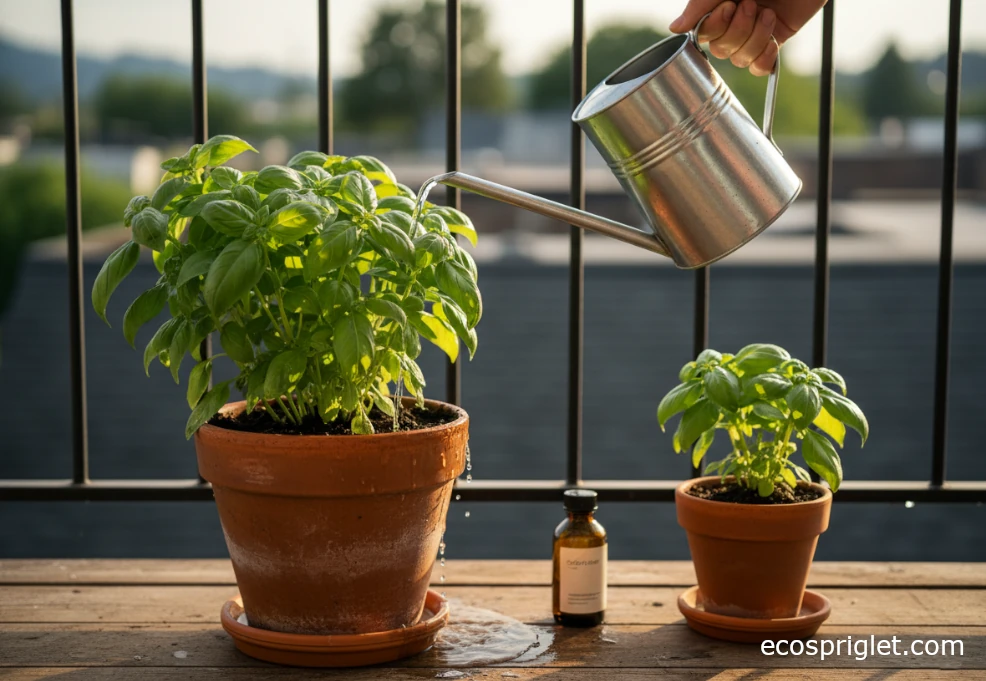
Most basil disasters in pots come down to water – either way too much or not quite enough. The simplest rule, echoed by many reputable guides, is to water when the top 1–2 inches of the potting mix feel dry to the touch. On a mild spring balcony that might mean watering every few days; in the height of summer, especially in small terracotta pots, you might water once or even twice a day.
Here’s a rhythm that works well for growing basil in pots:
- Check with your fingers: Stick a finger into the soil up to your second knuckle. If it feels dry at that depth, water; if it’s still cool and slightly moist, wait a day.
- Water deeply: Water until a little flows out of the drainage holes, then discard any water left in the saucer after 15–20 minutes.
- Mulch lightly: A thin layer of fine bark or compost on top can slow evaporation in hot weather.
Basil isn’t a heavy feeder, especially in containers where over-fertilizing can lead to lush but bland-tasting leaves. I usually mix a slow-release organic fertilizer into the potting mix at planting, then top up once or twice during the season with a diluted liquid feed (about half the label rate) every three to four weeks. That lines up with general herb recommendations to avoid pushing too much soft growth at the expense of flavor.
I still remember one July heatwave when I underestimated how fast my basil pots would dry. I came home after a long weekend to plants collapsed like overcooked spinach. A big drink revived most of them, but the leaves never quite tasted the same. Since then, I treat hot spells as “basil watch” days—checking moisture morning and evening, especially for dark-colored or small-volume containers.
Pruning, Harvesting, and Keeping Basil Bushy
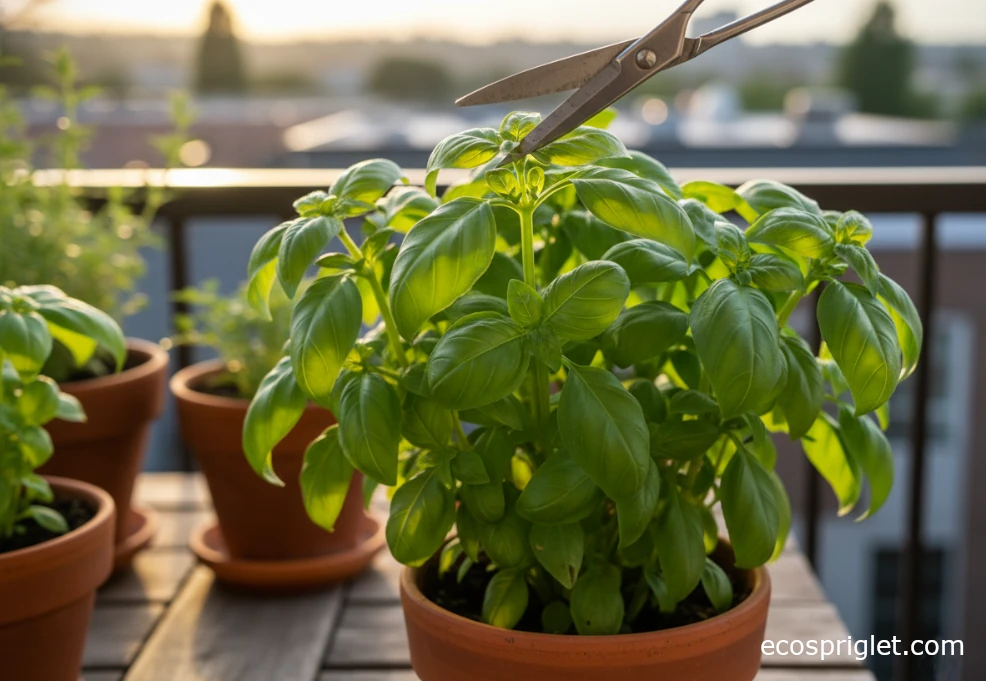
Pruning is the secret sauce to growing sweet basil in a pot that stays full instead of spindly. Instead of plucking single leaves from the bottom, focus on cutting stems just above a pair of leaves. Each time you do, two new shoots grow from that node, and your basil plant becomes bushier.
A few simple harvesting habits:
- Wait until plants are about 6–8 inches tall before your first big cut.
- Harvest by snipping the top few inches, just above a leaf pair, rather than stripping lower leaves.
- Try not to remove more than one-third of the plant at a time; give it a week to bounce back.
Whenever you see flower buds forming, pinch them off right away. Allowing basil to flower shifts its energy toward seeds, and the leaves can turn smaller and slightly bitter. Many experienced growers recommend regular “topping” every week or two during the main season to keep herbs leafy and vigorous, and basil is a prime candidate for that approach.
If you’re drowning in basil (a good problem), whip up pesto, freeze chopped basil in ice-cube trays with a bit of olive oil, or share bundles with neighbors. On my street, “pesto season” basically starts the week someone leaves a basket of basil on the building’s front steps.
Common Problems With Potted Basil (and Simple Fixes)
Even with good care, potted basil occasionally throws you a curveball. The nice thing about containers is that problems are often easier to diagnose because you control most of the variables.
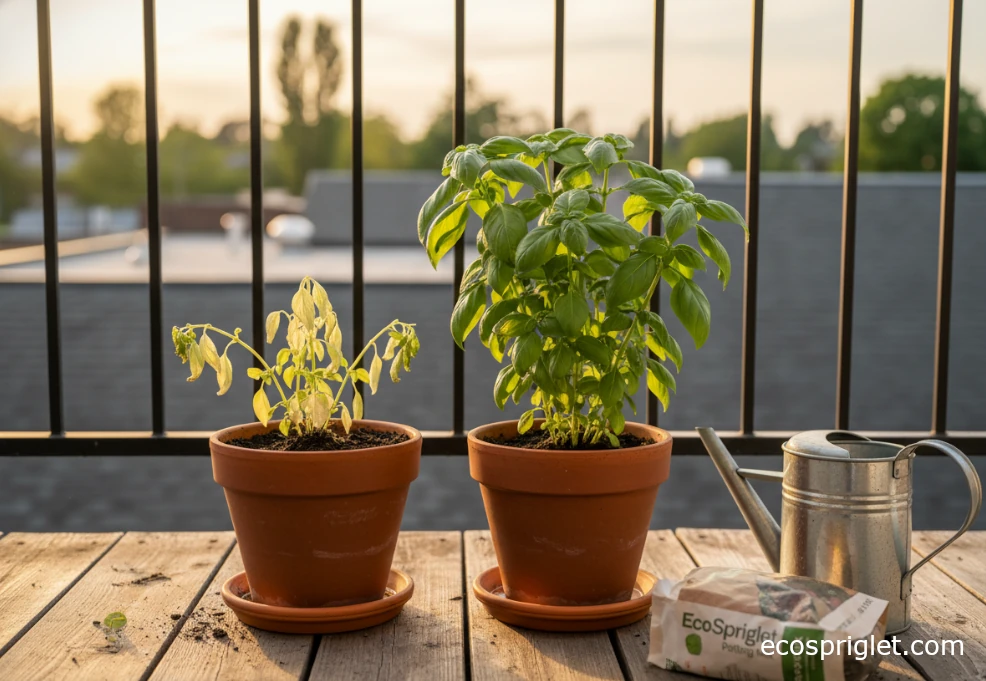
- Yellowing leaves from the bottom up: Often a sign of overwatering or poor drainage. Check that water can freely drain from the pot and let the top 1–2 inches of soil dry before the next watering.
- Leggy, pale growth: Classic low-light basil. Move the pot to a brighter spot or add a grow light if you’re growing basil inside.
- Blackened, mushy leaves after a cool night: Cold damage. Trim away the worst leaves and keep plants above about 50°F going forward.
- Powdery mildew or leaf spots: Improve air circulation by thinning crowded stems, avoid wetting the foliage, and consider repotting if the plant is very cramped.
For minor pest issues like aphids, a quick rinse with water and a little finger-squishing usually does the trick. Because containers are portable, you can isolate a problem pot away from your other herbs while you deal with it instead of watching an issue spread through a whole bed.
Common Mistakes to Avoid With Basil in Pots
I’ve learned more from messing up basil than from getting it perfect. Here are a few mistakes I see over and over—many of which I’ve made myself at least once.
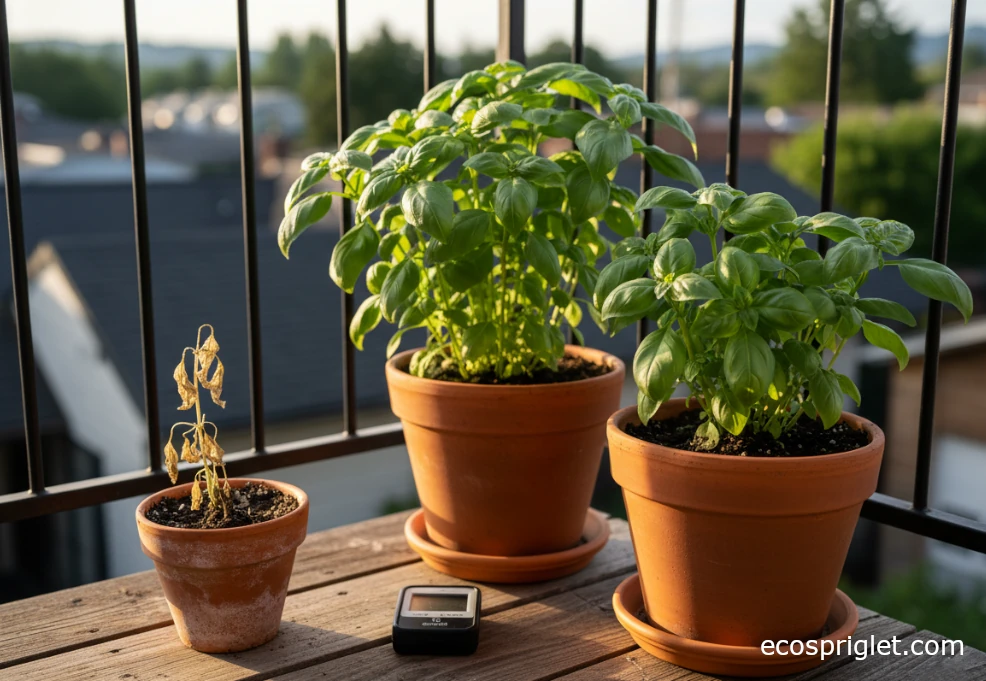
- Using pots that are way too small: That cute 3–4 inch pot from the shop looks nice on a windowsill, but basil quickly outgrows it, leading to root-bound plants and soil that dries out in a flash. Extensions generally suggest containers at least 6 inches wide for herbs; for basil, I’ve found 8–10 inches to be far more forgiving.
- Planting a crowded “basil forest” in one pot: It looks lush at first, then airflow drops and disease creeps in. Start with fewer plants and prune often instead.
- Letting basil sit in a puddle: Standing water in saucers suffocates roots. Water deeply, then empty saucers after 15–20 minutes.
- Keeping basil in deep shade indoors: A dim kitchen corner won’t cut it; move it right into the brightest window or add a grow light.
- Never pruning, just picking random leaves: This leads to tall, weak stems. Topping above leaf pairs is how you get those big, bushy plants.
I still remember one early season when I crammed six basil starts into a single 10-inch pot because the nursery tray looked so full and hopeful. They looked amazing for two weeks, then mildew and yellow leaves showed up seemingly overnight. Once I repotted them into a couple of larger containers and started pruning properly, they bounced back and produced far more than that crowded “forest” ever would have.
Fun Ways to Use Potted Basil in a Small Space
Once your basil is happy in its pots, you can have some fun with how you use and display it. On a balcony, I love clustering two or three basil pots together near the seating area. When friends come over, they absentmindedly bruise a leaf between their fingers and the whole space smells like summer. You can also tuck basil into a window box outside the kitchen window or pair it with compact peppers and marigolds in a larger container for a mixed “kitchen pot.”
Indoors, growing basil inside near where you cook is a simple luxury. A single 8–10 inch pot on a bright windowsill can supply more than enough leaves for regular pesto nights, bruschetta, or Thai-inspired dishes.
Don’t forget the non-culinary perks too: basil flowers (if you let a few stems bloom late in the season) are magnets for bees and other pollinators. Just keep main “harvest plants” pinched and let one or two backup plants flower when you’re ready.
Growing basil in pots is one of those projects that feels almost too rewarding for how little space it takes. Give your plants the basics—an 8–10 inch pot with drainage, a loose, well-drained potting mix, at least six hours of good light, and water whenever the top inch or two of soil feels dry—and they’ll usually respond with armfuls of fragrant leaves from late spring into fall. When nights cool off, you can shift a pot indoors and keep a small “basil tap” running on a bright windowsill with help from a simple grow light if needed.
If you remember nothing else, remember this: don’t be shy about pruning. Regular topping is what turns a single spindly stem into a generous, bushy plant that can handle frequent harvests. Combine that with sensible watering and a decent pot size, and you’re already ahead of most sad grocery-store basil experiments. When you’re ready to expand beyond basil, you can build out a full balcony herb corner with companions like parsley, thyme, and chives—our balcony herbs guide is a great next stop.
So grab a pot, a bag of mix, and a small basil plant (or a packet of seed) and claim a bit of green space, even if it’s just a single step outside your sliding door. That first handful of homegrown basil you tear over a hot bowl of pasta will absolutely taste like it’s worth the effort.