If you’ve ever searched for the best way to harvest lettuce, what you’re usually asking is: how do I cut lettuce without killing it? The good news is lettuce is one of the most forgiving crops you can grow in a container or a small garden bed—if you harvest it the right way.
I grow a lot of lettuce on my little Portland terrace, mostly because it’s the fastest path to that “I grew dinner” feeling. The trick is matching your harvest method to the type you planted: leaf lettuce likes repeated trimming, romaine can be picked leaf-by-leaf or taken as a head, and butter lettuce rewards a gentle hand (those leaves bruise if you glare at them).
Below you’ll find exactly when to harvest lettuce, how to harvest leaf lettuce so it keeps growing, how to harvest romaine lettuce cleanly, and how to harvest butter lettuce (including buttercrunch / butter crisp types). I’ll also walk through harvesting lettuce from the garden vs. containers, plus how to harvest lettuce seeds if you let a few plants bolt on purpose.
When to Harvest Lettuce for Best Flavor and Crunch
Lettuce tastes sweetest and stays crisp longest when you harvest before heat stress kicks in. My easiest “balcony test” is this: if the plant looks perky and cool to the touch, it’s a good harvest day; if it looks a little limp by midday, harvest early morning tomorrow and shade it today.
Here are practical signs your lettuce is ready:
- Leaf lettuce: start picking once leaves are about 4 inches tall, and keep going steadily instead of waiting for a giant plant.
- Romaine and other “heading” types: harvest as a head when it feels firm and well formed, or harvest outer leaves earlier for a longer window.
- Butter lettuce / buttercrunch: harvest when it has a clear rosette or loose head and the inner leaves look full-sized (but still tender), usually before it starts stretching upward.
Two quick quality boosters that matter in small spaces: harvest in the morning when leaves are naturally plumped with water, and get the greens into shade fast. The RHS even suggests dunking leaves in cool water right away in hot weather to prevent wilting.
How to Harvest Leaf Lettuce So It Keeps Growing
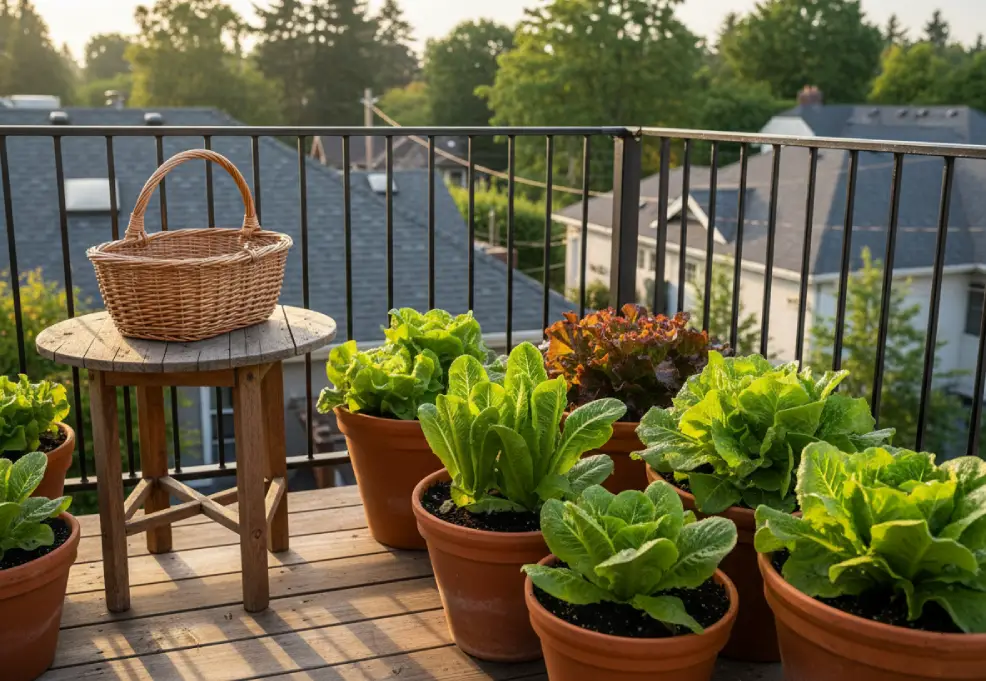
This is the “cut-and-come-again” magic, and it’s the reason leaf lettuce is my top pick for apartment growers. You have two reliable options, and both work in a raised bed or a pot.
Option A:
Pick outer leaves as needed. Take the biggest outer leaves first, and leave the smaller inner leaves alone so the plant keeps photosynthesizing. If you only need salad for one or two people, this is the least stressful method for the plant.
Option B:
Cut a whole “haircut,” then let it regrow. Gather the leaves gently in one hand and cut across the top, leaving a short stump above the crown so it can push new leaves. A common guideline is leaving about 1–1.5 inches above the base/crown.
Two tips that prevent rookie heartbreak:
- Don’t cut into the crown. If you slice too low, you’ll damage the growing point and the plant may stall or rot.
- Leave enough leaf behind. After a big cut, I like to leave a little green “engine” so it rebounds faster—especially if the weather is cool and days are short.
How to Harvest Romaine Lettuce Without Wrecking the Plant
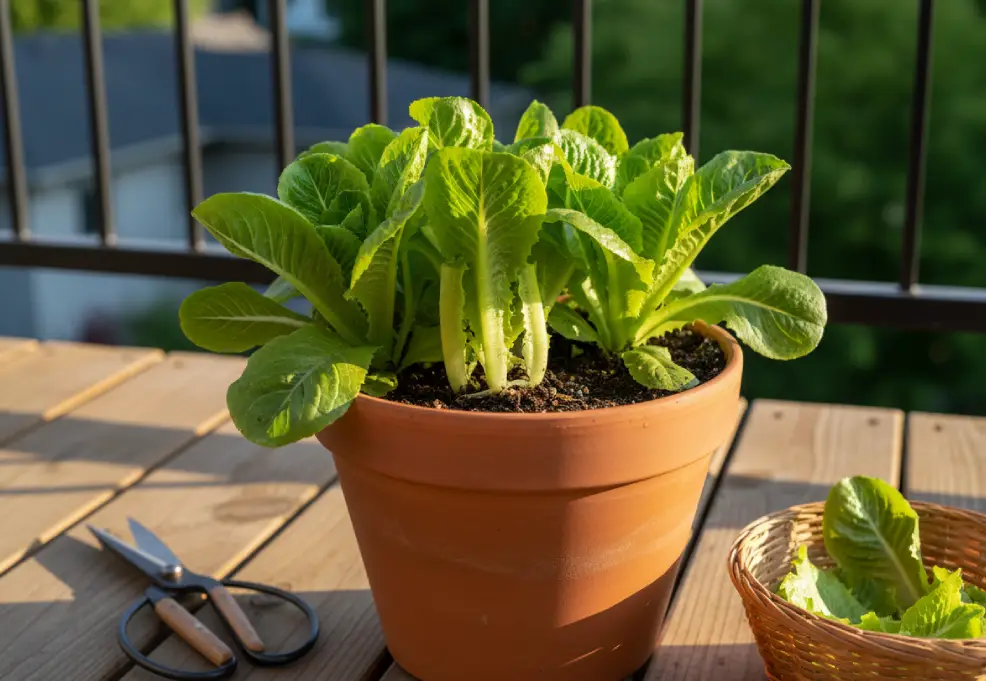
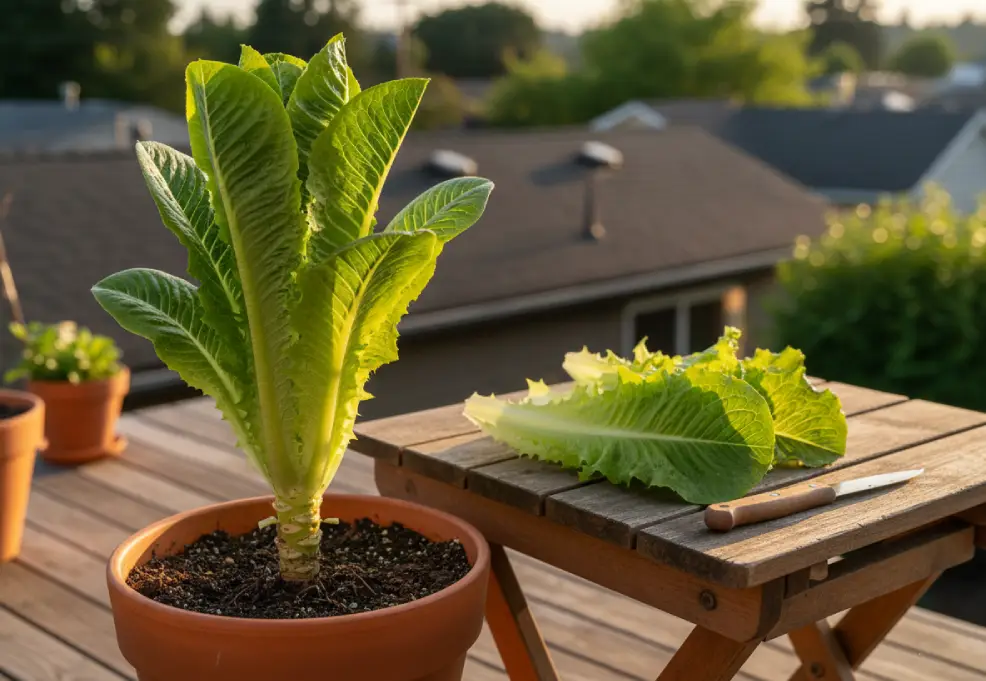
Romaine gives you choices. If you want “caesar-sized” leaves over a long stretch, harvest the outer leaves first. If you want a full, crunchy head, wait until the plant is firm and then take it in one cut.
For a long harvest (my usual method): remove 1–3 outer leaves at a time, always leaving the center intact. Snap them off cleanly near the base, or slice them with a small knife if they resist. The center is the factory—protect it.
For a full head: cut the plant at the base, just above the soil line, and keep a few outer wrapper leaves on the head if you’re carrying it inside. NC State Extension notes that head lettuce is typically harvested when firm and well formed, with wrapper leaves helping protect it during handling.
Common mistake: people tug upward and “half-pull” the roots, which drags soil onto leaves (and into your kitchen). If you’re harvesting a whole head, cut cleanly instead—especially in containers where potting mix is loose.
How to Harvest Butter Lettuce, Buttercrunch, and Butter Crisp Types
Butterhead lettuces (including buttercrunch and “butter crisp” types) are all about tenderness. That means your harvest should be gentle and quick—no rough tearing, no crushing the ribs in a tight fist.
You can harvest butter lettuce in two main ways:
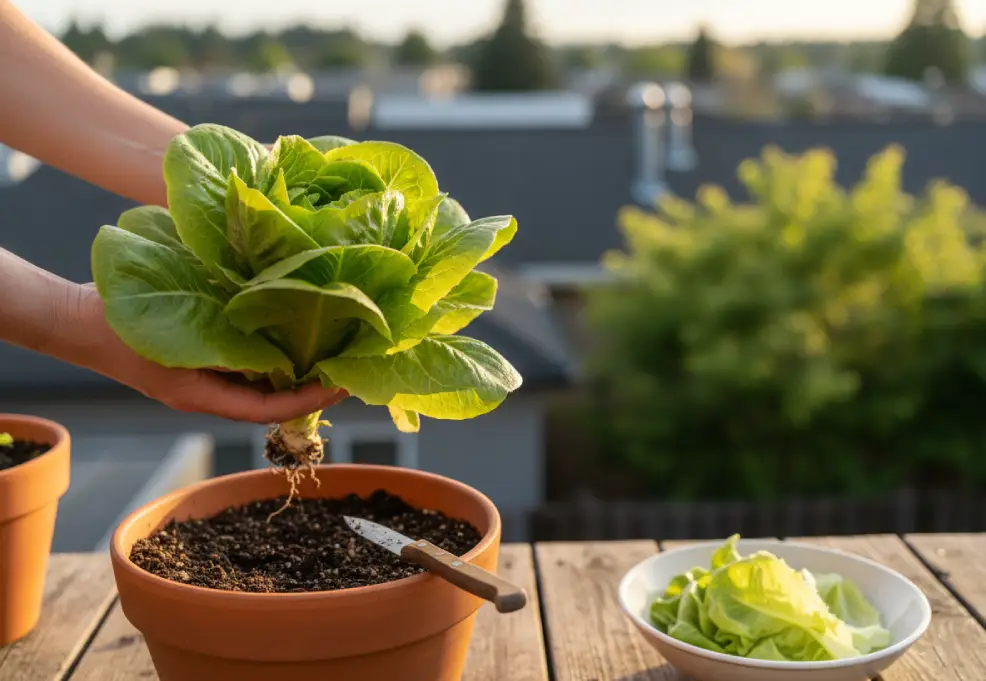
Whole plant harvest: cut the base just above the soil line and carry the rosette inside like a bouquet. If you’re not eating it immediately, leave the outer leaves on until you wash—those are your built-in “wrappers.”
Outer-leaf harvest: peel off outer leaves one at a time, starting with the biggest. This keeps the center growing, but it works best when the plant is healthy and not already stressed by heat.
My personal rule (learned the messy way): if butter lettuce starts to elongate in the center, harvest it soon. Once it shifts into “bolting mode,” the leaves can get noticeably bitter and the texture turns less silky.
Harvesting Lettuce From the Garden or Containers Without Grit and Wilting
If you’ve ever crunched down on potting mix, you know why harvest handling matters. Containers are especially prone to splash-up—one gust of wind or a heavy pour, and soil ends up where your fork is going.
Here’s my simple “clean harvest” routine for balcony growers:
- Use scissors or a knife, not tearing. Clean cuts bruise less, and bruising is what turns lettuce brown fast in the fridge.
- Rinse in cool water, then dry well. A salad spinner (or a clean towel) is the difference between crisp greens and a soggy bag.
- Store with a little humidity buffer. Put dry leaves in a container or bag with a lightly damp paper towel. Don’t seal in puddles—seal in crispness.
If it’s hot out, harvest early and move leaves straight into shade. The RHS notes morning harvest helps keep leaves “fresh and juicy,” and quick cooling reduces wilting.
Troubleshooting: Bitter Lettuce, Bolting, and “It Stopped Regrowing”
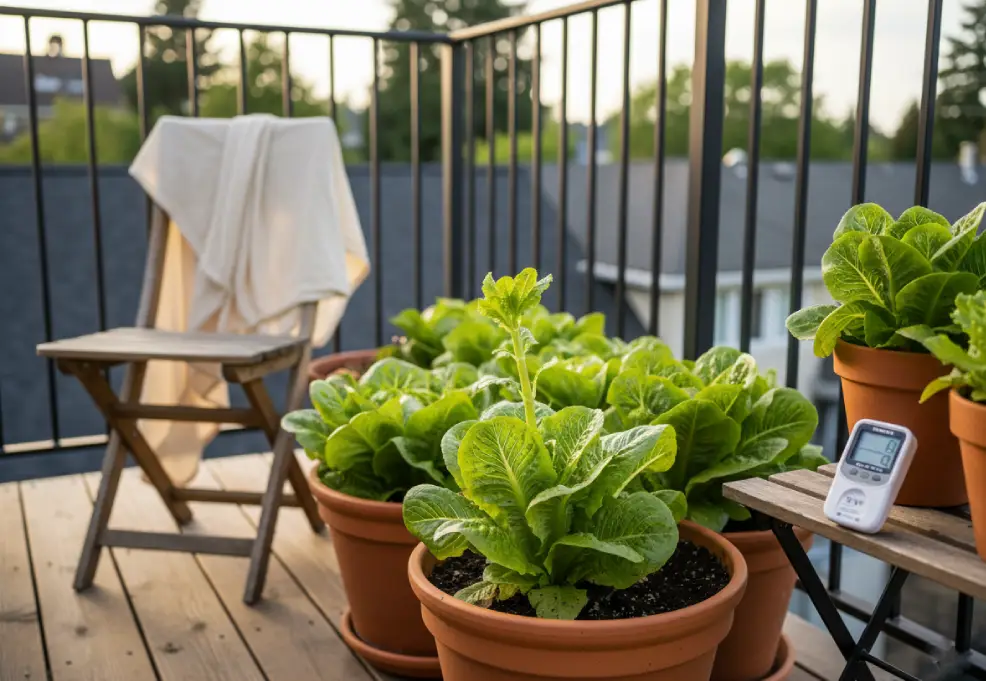
If your lettuce suddenly tastes bitter, bolts (shoots up a taller central stem), or refuses to bounce back after cutting, it’s almost always stress—usually heat, inconsistent moisture, or a harvest that was too aggressive.
Bitter leaves: harvest younger leaves and shift to morning picking. Give the pot afternoon shade when temps spike, especially on reflective balconies. If bitterness is already strong, treat that plant as a “finish it soon” crop and start a new sowing.
Bolting: lettuce is a cool-season plant. Once it decides to flower, leaf quality drops. In small containers, bolting happens faster because roots heat up. A simple fix is to cluster pots so they shade each other’s soil, or wrap pots with a light-colored cover during heat waves.
It stopped regrowing: this is often a crown problem. Either you cut too low (into the growing point) or water pooled in the cut area and invited rot. Next time, leave that 1–1.5 inch stump and water at the soil surface rather than overhead for a day or two after a big cut.
How to Harvest Lettuce Seeds (Yes, You Can Do This in a Pot)
This is the part that makes you feel like a wizard: you let a lettuce plant “fail” (bolt), and it turns into next year’s seed supply. Lettuce is generally self-pollinating, which makes it one of the easier crops for beginner seed savers.
Here’s the container-friendly approach I use:
- Choose 1–2 healthy plants and stop harvesting them. Let them send up a tall stem and flower.
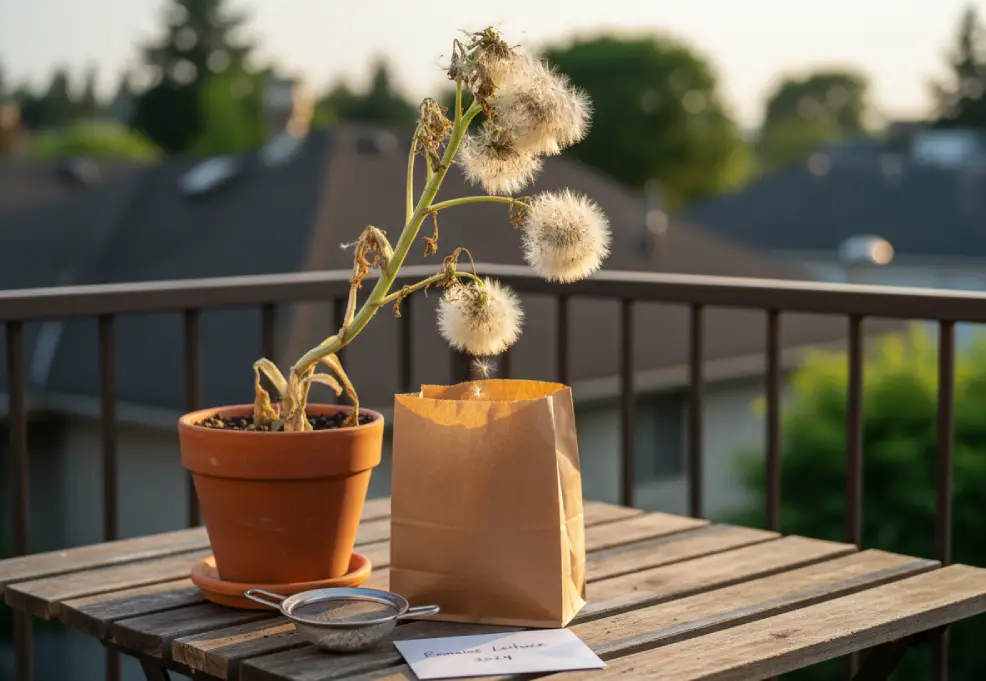
- Watch for fluffy seed heads. University of Nebraska–Lincoln Extension describes lettuce seed heads as taking on a fluffy, dandelion-like look—this is your harvest window.
- Bag it and shake it. Slip a paper bag over the seed heads and gently shake/rub to release seeds into the bag. Do a few passes over several days as heads mature at different times.
- Dry and store. Let seeds dry fully, then store cool and dry in a labeled envelope or jar. Oregon State University Extension has solid, practical guidance for drying and storing seeds for longer life.
If you’re growing multiple lettuce varieties and want “true” seed, keep it simple: save seed from one variety at a time on a small balcony. (That’s also a nice excuse to pick your absolute favorite.)
Common Mistakes New Balcony Gardeners Make
I remember my first “cut-and-come-again” attempt—I was so proud of my big harvest that I basically scalped the plant down to nothing. It did not “come again.” That little moment taught me that lettuce is generous, but it still needs a working crown and some leaf left to power regrowth.
- Cutting too low: leave about 1–1.5 inches above the base on loose-leaf harvests so the crown can push new growth.
- Harvesting in the heat: pick early morning for crisp leaves, and chill/soak briefly if needed on very warm days.
- Taking too much at once (leaf-by-leaf method): if you strip every leaf except tiny ones, regrowth slows. Leave a mix of small and mid-sized leaves.
- Letting pots dry hard between waterings: stress pushes bitterness and bolting; aim for steadier moisture, especially in windy balcony corners.
If you want help setting up a steady supply (so you’re not harvesting everything at once), this pairs nicely with a simple succession plan in How to Grow Lettuce Indoors .
Creative Ways to Use Harvested Lettuce (So None of It Gets Lost in the Fridge)
Lettuce is at its best when it’s used fast—so I like harvesting with a plan. A few easy “use-it-now” ideas that work even in a small kitchen:
Butter lettuce cups: use whole butter leaves as little taco shells for rice, beans, or salmon salad. If the leaves are delicate, rinse and dry them gently so they don’t tear.
Romaine ribbons: stack a few romaine leaves and slice into thin ribbons for crunch. It’s a great way to use slightly larger, tougher outer leaves.
Leaf lettuce “mix” jar: store a quick salad blend in a tall container with a lightly damp paper towel at the bottom and dry leaves above. I keep dressing separate so the greens stay crisp for a couple of days.
For more small-space salad pairings, I keep a running list in How to Grow Kitchen Herb Plants because fresh herbs make balcony lettuce taste like a restaurant salad with almost zero effort.
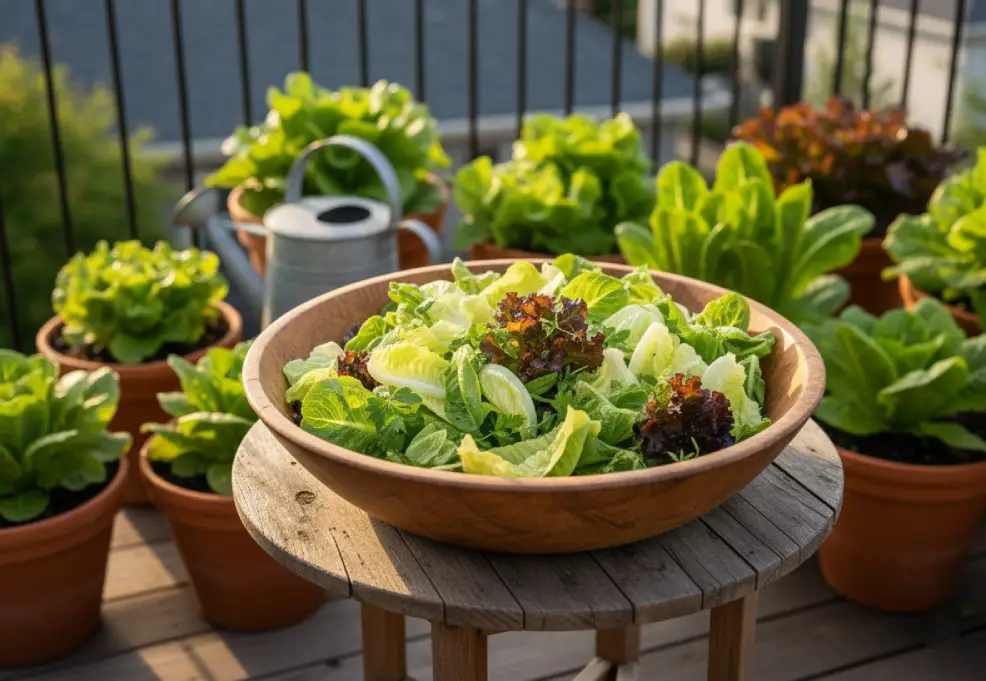
Harvesting lettuce is one of those skills that looks fussy until you do it twice. After that, it’s just a rhythm: pick early, cut cleanly, protect the crown, and don’t stress the plant more than you have to. If you’re growing leaf lettuce, the “how to harvest lettuce so it keeps growing” answer is simple—either take outer leaves or give it a careful haircut while leaving that 1–1.5 inch stump above the crown. For romaine, decide whether you want a long, leaf-by-leaf harvest or one satisfying head cut. For butter lettuce and buttercrunch types, handle gently and harvest before the center starts stretching.
And if you feel like leveling up, save seeds from one strong plant. It’s surprisingly doable in a pot, and it turns a bolting lettuce (usually a bummer) into something genuinely useful.