Getting seed timing right is one of those small decisions that changes your whole spring. Start too early, and you end up babysitting lanky plants on a windowsill that is already too crowded. Start too late, and warm-season crops like tomatoes never seem to hit their stride before summer heat rolls in.
For most apartment gardeners, the sweet spot is simpler than it looks: find your average last spring frost date, check whether the crop is better started indoors or direct sown, then count backward the number of weeks listed on the packet or crop guide.
University and Extension seed-starting guides consistently recommend that method, and they also remind us that the average frost date is not a guarantee. It is more like a planning anchor. I still use it every year on my own balcony, then add a little buffer for exposed, chilly spring nights. That one habit saves me more frustration than any fancy tray or grow light ever has. Sources: University of Maine Cooperative Extension and Illinois Extension.
How to Choose the Right Indoor Seed-Starting Date
Here is the simple rule I recommend: do not count backward from the day you feel excited to garden. Count backward from the date you can realistically move plants outside. For most spring crops, that outdoor date is tied to your average last frost date, but warm-season seedlings often need a little extra patience if your balcony stays windy or cold at night. Illinois Extension notes that the average frost date still carries risk, and many gardeners wait a bit longer for tender crops. That matters in apartment settings, where pots and rail planters can cool off faster than in-ground beds.
A good working formula is this: average last frost date minus crop-specific indoor weeks minus 7 to 10 days for hardening off. So if your transplant target is May 15 and tomatoes need about 6 to 8 weeks indoors, sow them in late March to early April, not in February. I remember starting tomatoes absurdly early one year because I thought bigger seedlings would mean earlier fruit. What I got instead were floppy stems, crowded roots, and a windowsill that looked like a rescue mission.
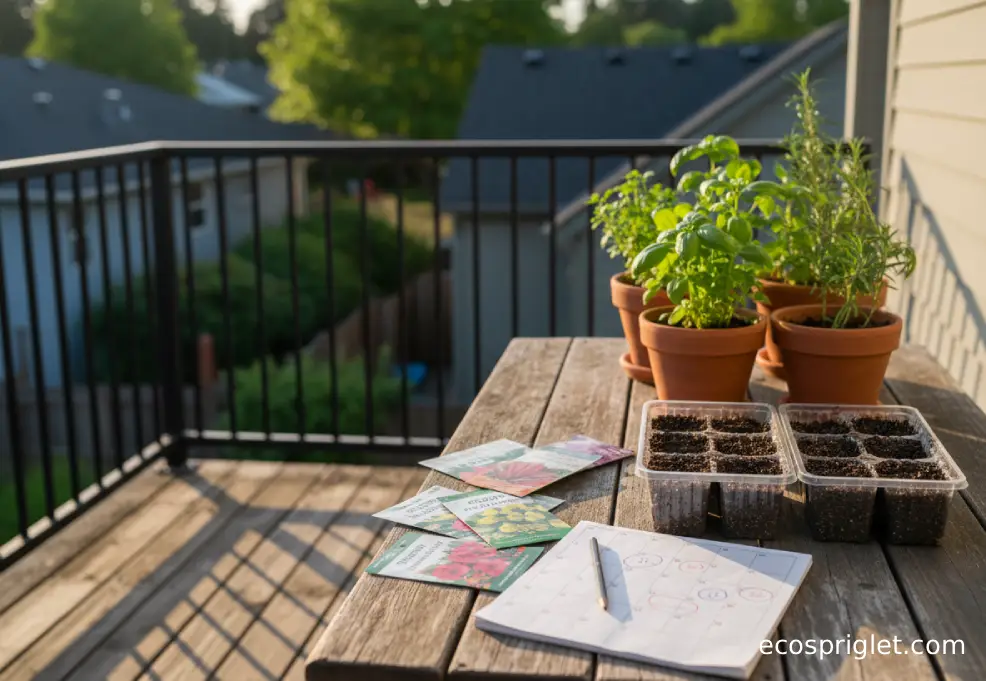
Keep a small note in your phone or on the fridge with three dates for each crop: sow indoors, begin hardening off, and transplant outdoors. It sounds basic, but it keeps your seed starting from turning into guesswork.
Sources: University of Maine Cooperative Extension and Illinois Extension.
Quick Timing Chart for Common Indoor Seeds
| Crop | Indoor Start Time | Best Outdoor Move | Small-Space Note |
|---|---|---|---|
| Tomatoes | About 6 to 8 weeks before transplanting | After frost danger passes | Excellent indoor-start crop for balconies and containers |
| Cucumbers | About 2 to 4 weeks before transplanting | After frost, once weather is truly warm | Do not start too early; roots dislike disturbance |
| Sunflowers | Usually direct sow, or start 2 to 4 weeks early for a head start | After frost danger passes | Use biodegradable pots if starting indoors |
| Marigolds | About 8 to 10 weeks before planting outside | After frost danger passes | Very forgiving choice for beginners |
This is the timetable I would tape to the wall over a seed shelf. It keeps the whole question of indoor seed timing from feeling abstract. You are not really planning by month names anyway. You are planning by weeks before safe outdoor planting.
Sources: University of Minnesota Extension, Cornell CALS, University of Missouri Extension, WVU Extension, and University of Maine Cooperative Extension.
Indoor Timing for Tomato, Cucumber, Sunflower, and Marigold Seeds
Tomatoes are the classic indoor-start win. Most extension guides land around 6 to 8 weeks before transplanting outside, which is why tomato seeds are often started indoors in late March or early April for many spring gardens. They need enough time to build sturdy stems and roots, but not so much time that they outgrow their cells and turn pale or rootbound. If your apartment runs cool, a heat mat during germination can help, but after sprouting, bright light matters more than extra warmth.
Cucumbers are a different story. They grow fast, and that speed tricks people into sowing them too soon. For cucumbers, think short runway: about 2 to 4 weeks before transplanting. A cucumber that sits too long indoors often sulks after transplant because the roots hate being jostled. I learned this the hard way after starting them at the same time as tomatoes one spring. The tomatoes forgave me. The cucumbers absolutely did not.
- Start marigolds about 8 to 10 weeks before outdoor planting if you want sturdy transplants and early color.
- Start sunflowers indoors only briefly, usually 2 to 4 weeks early, or direct sow after frost for the simplest route.
- Use biodegradable pots for sunflowers if possible so you disturb the roots as little as you can.
- For fast growers like cucumbers and sunflowers, smaller seedlings often transplant better than oversized ones.
Marigolds benefit from a longer head start than many beginners expect. They are easy from seed and respond well to an early indoor sowing. Sunflowers are best kept brief and optional indoors. Many gardeners direct sow sunflowers because they germinate and grow quickly, but a short indoor start can help if you want earlier blooms on a balcony that warms up late.
Indoor Setup That Keeps Seedlings on Schedule
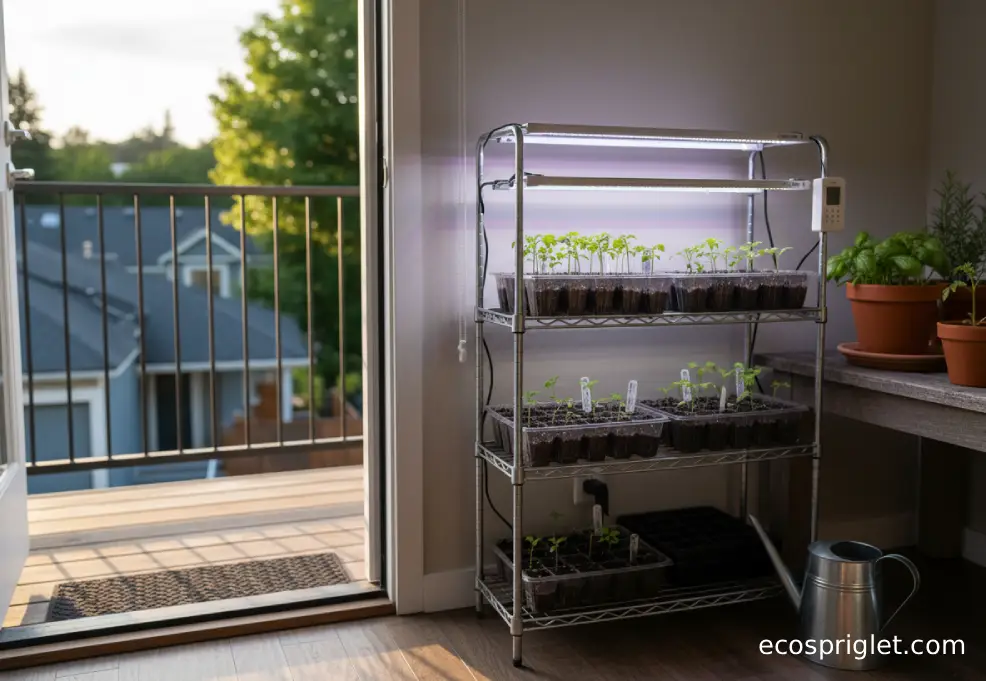
Timing is only half the game. The other half is giving seedlings conditions that let them stay compact while they wait for spring. University of Minnesota Extension recommends 12 to 16 hours of light a day and keeping lights very close to the seedling tops, roughly 2 to 4 inches above them. That single detail solves a lot of leggy-seedling problems. A bright window alone is usually not enough for stocky tomatoes or marigolds in early spring.
Use a sterile, soilless seed-starting mix rather than garden soil. Extension guides are consistent on this because outdoor soil is too heavy for trays and can bring disease issues indoors. Keep the mix evenly moist, not soggy. When beginners ask me why seedlings toppled over overnight, the answer is often the same: too much water, too little air movement, and not enough light. If you are sowing warm crops, a heat mat can help with germination, but once seedlings are up, focus on light, airflow, and not crowding them.
For apartment growers, I like a simple setup: one shelf, one timer, one tray underneath to catch drips, and labels written the day you sow. Fancy gear is optional. Consistency is not.
Sources: University of Minnesota Extension, University of Maine Cooperative Extension, and University of Wisconsin Extension materials.
Common Mistakes to Avoid
- Starting everything at once. Tomatoes, cucumbers, marigolds, and sunflowers do not share the same indoor calendar.
- Sowing warm-season crops too early. Bigger is not better when seedlings have to wait indoors for weeks.
- Relying on a dim window. Most seedlings need stronger, longer light to stay sturdy.
- Keeping trays wet all the time. Damp is good; soggy invites damping-off and weak roots.
- Skipping labels. Every tray looks obvious until the seedlings all look the same.
The mistake I see most often is enthusiasm outrunning the calendar. I get it. By late winter, planting anything feels better than staring at gray skies. But indoor seed timing is really a scheduling job, not a mood. Your best results come from matching each crop to its own window and then giving the seedlings just enough time indoors to become sturdy, not overgrown.
What to Do After Sowing So Spring Planting Goes Smoothly
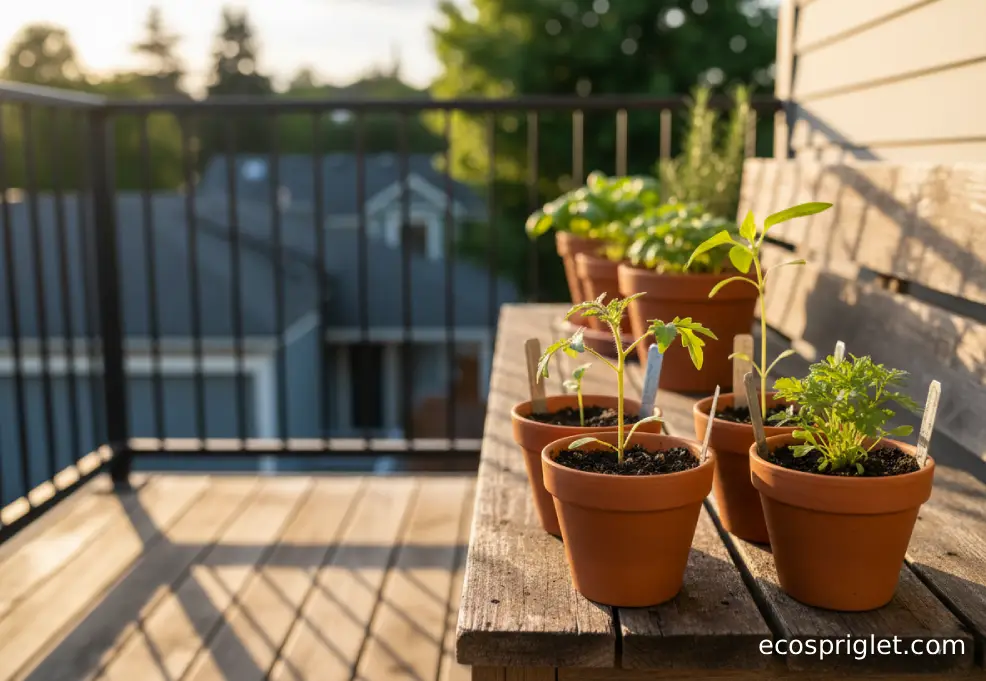
Once seeds sprout, the goal shifts from germination to pacing. Keep lights close, rotate trays if one side gets stronger window light, and pot up seedlings if roots fill the cell before outdoor conditions are ready. Tomatoes usually handle potting up well. Cucumbers and sunflowers usually do better if you avoid repeated root disturbance and move them along promptly.
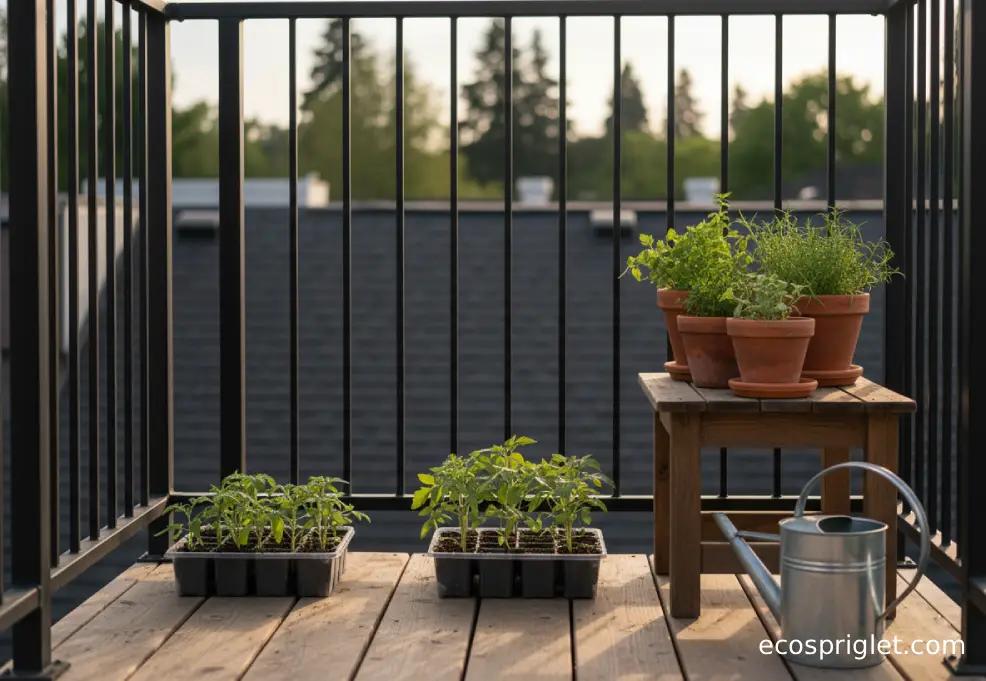
Before transplanting, harden seedlings off for about 7 to 14 days. Start with a few sheltered outdoor hours, then gradually increase sun, breeze, and overnight exposure as conditions allow. Cornell and WVU guidance both support that gradual transition, and it is especially important on balconies where wind can be more intense than ground-level gardens.
- Begin hardening off about a week before your target planting date.
- Bring plants back inside if frost or strong cold wind is still in the forecast.
- Transplant on a mild day, then water the root ball thoroughly after planting.
I still remember the first time I skipped hardening off because the forecast looked “close enough.” The seedlings looked fine for one afternoon, then pouted for the next week. Since then, I treat hardening off like part of the sowing schedule, not an optional extra.
A Practical Spring Seed-Starting Plan for Balcony Gardeners
Starting seeds indoors gets much less intimidating once you stop treating it like one big seasonal chore and start treating it like a short sequence of crop-by-crop dates. Find your average last frost, check which plants truly benefit from an indoor head start, and count backward. That is the backbone. From there, the details become manageable: tomatoes get the longer runway, cucumbers and sunflowers get a short one, marigolds are flexible and beginner-friendly, and every seedling does better when the light is strong and the timing is realistic.
For urban apartment gardeners, I think the smartest approach is to start less than you think you need. A few strong trays usually outperform a crowded indoor jungle. Keep notes this spring on what you sowed, when you sowed it, and whether the seedlings felt early, late, or just right by transplant time. Those notes turn into your best custom calendar next year.
Sources: University of Maine Cooperative Extension, Illinois Extension, University of Minnesota Extension, Cornell CALS, University of Missouri Extension, and WVU Extension.