If you’ve ever tossed a sad, wilted bundle of store-bought mint into the trash, you already know why growing mint inside is so appealing. A single healthy pot can keep you in fresh sprigs for tea, cocktails, and weeknight dinners for months. The good news: mint is one of the most forgiving herbs for indoor gardeners. With a bright window, a decent pot, and a simple routine, you can absolutely be growing mint inside — even in a small apartment with limited space.
In this guide, I’ll walk you through how to grow mint inside step by step: choosing varieties and containers, getting the light and temperature right, dialing in soil and watering, solving common problems, and weaving your new mint plant into daily life. I’ll also flag a few easy-to-miss mistakes (including some I learned the hard way) and share quick tips that fit into a busy schedule. Whether you’re wondering “can mint grow inside?” or you already have a leggy plant on the windowsill, you’ll come away with a simple, realistic plan you can stick with.
Can You Grow Mint Inside?
Short answer: yes, you can grow mint inside, and it’s one of the easiest herbs to adapt to indoor life. University and Extension sources regularly list mint among the top herbs for indoor windowsills because it tolerates a bit less light and inconsistent care better than fussier herbs like basil.
Mint is naturally vigorous and likes to spread, which is why it can take over outdoor beds. Indoors, that energy becomes an advantage: you get a steady supply of leaves from a single pot, as long as you give it enough light, moisture, and room for roots. Mint doesn’t need a fancy setup—just:
- A pot with drainage holes (at least 8–10 inches wide for one plant).
- A bright window with several hours of direct sun, or a small grow light.
- Light, well-draining potting mix and regular, but not constant, watering.
One important note if you live with animals: the ASPCA lists mint (Mentha species) as toxic to cats and dogs if they eat large amounts, mainly because of its essential oils. In practice, that often looks like stomach upset more than a medical emergency, but it’s still smart to keep your mint out of easy nibbling range or grow cat-safe relatives like catnip in a separate pot for curious felines.
If you’re nervous about starting an indoor herb collection, mint is a great “test plant.” Get this one right and you’ll have the confidence to branch out to other herbs (you can pair it with ideas from a general balcony herbs guide later on).
Choosing Mint Varieties and Containers for Indoors
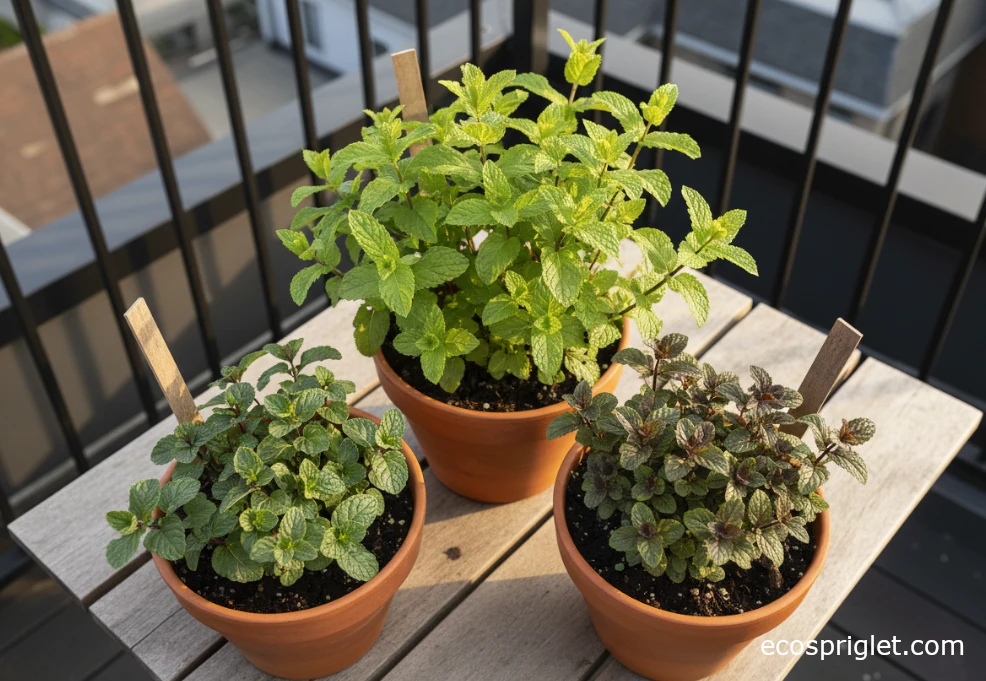
When you’re growing peppermint inside or any other mint, the variety you choose affects flavor more than difficulty. Most types behave similarly in a pot, so feel free to pick what you’ll actually use in the kitchen.
Some good options for indoors:
- Spearmint (Mentha spicata): Classic “mint gum” fragrance; great for savory dishes and drinks.
- Peppermint (Mentha × piperita): Stronger menthol kick; perfect for tea, hot chocolate, and desserts.
- Chocolate mint: Subtle chocolate aroma with mint; fun for baking and evening tea.
- Apple or orange mint: Milder, fruity notes; nice if you prefer gentle flavor.
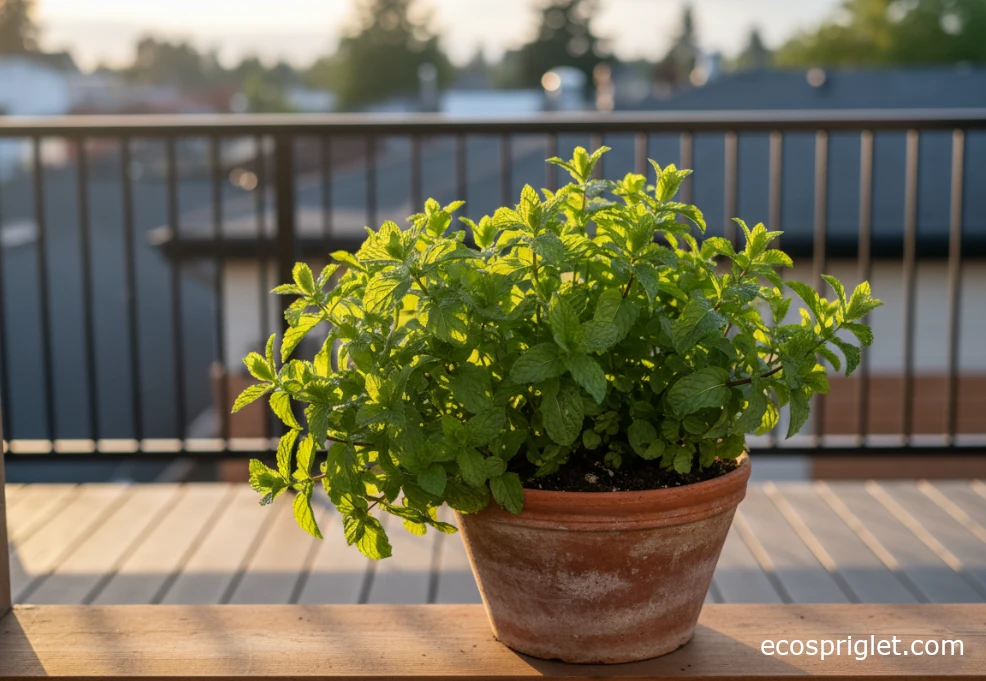
More important than variety is the container. Mint is a strong rooter. Gardening and herb references recommend at least a 10–12 inch diameter container for one plant so the roots don’t cram themselves into a tight ball too quickly.
Go for:
- Size: At least 8–10 inches wide and 8–10 inches deep (bigger is fine).
- Material: Terracotta breathes and helps prevent soggy soil, which is why I use it on my own terrace.
- Drainage: One generous drainage hole (or more) is non-negotiable.
Skip the decorative pots with no holes or the ultra-shallow bowls. Indoors, it’s surprisingly easy to overwater; a decent-sized pot with drainage gives you a lot more margin for error. If you fall in love with a decorative cachepot, just drop a plain nursery pot with holes inside it and empty the outer pot after watering.
The Royal Horticultural Society and several Extension services also encourage growing mint in containers even outdoors, simply to control its vigorous spreading habit. Indoors, that same habit means your plant will be happier in a roomy pot from day one.
Light and Temperature for Growing Mint Inside
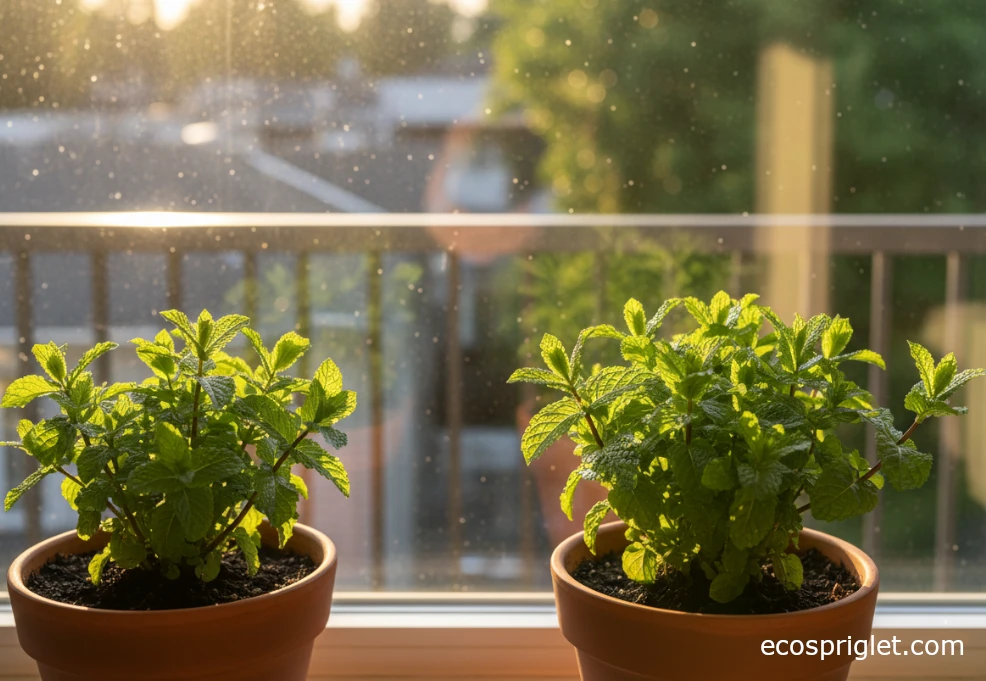
Light is the make-or-break factor for most indoor herbs, and mint is no exception. Mint will survive in low light, but it won’t give you the dense, leafy growth you’re hoping for. Extension specialists note that most herbs grown indoors need roughly six to eight hours of direct sunlight per day near a bright window to stay compact and productive.
For mint inside, use this as your rule of thumb:
- Best window: A south- or southwest-facing window that gets several hours of direct sun.
- Good backup: A bright east- or west-facing window, possibly boosted with a small LED grow light.
If you’re relying on grow lights, Iowa State University Extension recommends placing lights about 6–12 inches above the leaves and running them 12–16 hours a day for healthy indoor herbs. A simple clamp-on LED grow light over your mint pot is usually enough in a dim kitchen or north-facing room.
Temperature-wise, mint likes typical indoor conditions. Aim for roughly 60–75°F. Avoid cold drafts (right against winter window glass) and hot blasts of air from heaters.
I’ve crisped mint leaves before by parking a pot directly over a heat vent; now I keep mine a few inches away from vents and several inches in from the window glass during cold snaps.
Signs your mint wants more light include pale new leaves, long “stretchy” stems reaching toward the window, and weak flavor. Before you give up, try moving the pot to a brighter spot or adding a small grow light for a few weeks—you’ll often see sturdier growth within a couple of flushes.
Soil, Watering, and Feeding Indoor Mint
The right potting mix and watering habits are what turn “can I grow mint inside?” into “wow, this is actually easy.” Mint likes consistently moist but not waterlogged soil. University and Extension sources recommend a high-quality soilless potting mix for container herbs rather than dense garden soil, which compacts and stays wet too long indoors.
Here’s a simple setup I use for mint inside:
- Potting mix: A peat- or coco-based potting mix labeled for containers, not topsoil or garden soil.
- Drainage boost: If your mix feels heavy, blend in about 20–30% perlite for extra air space.
- No gravel layer: Skip the rock layer at the bottom; research shows it actually raises the water table in the pot instead of improving drainage.
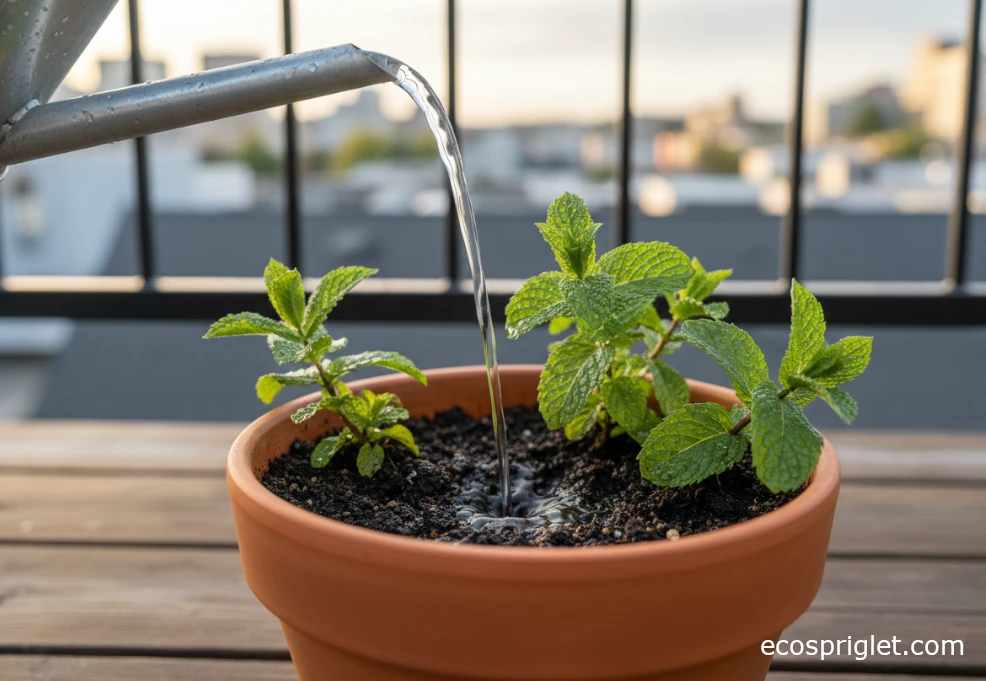
For watering, think “deep but not constant” rather than tiny sips every day:
- Check moisture with your finger; water when the top 1–2 inches of soil feel dry.
- Water thoroughly until a bit of water (around 10–20%) drains from the bottom.
- Empty any saucer or cachepot so the roots aren’t sitting in a puddle.
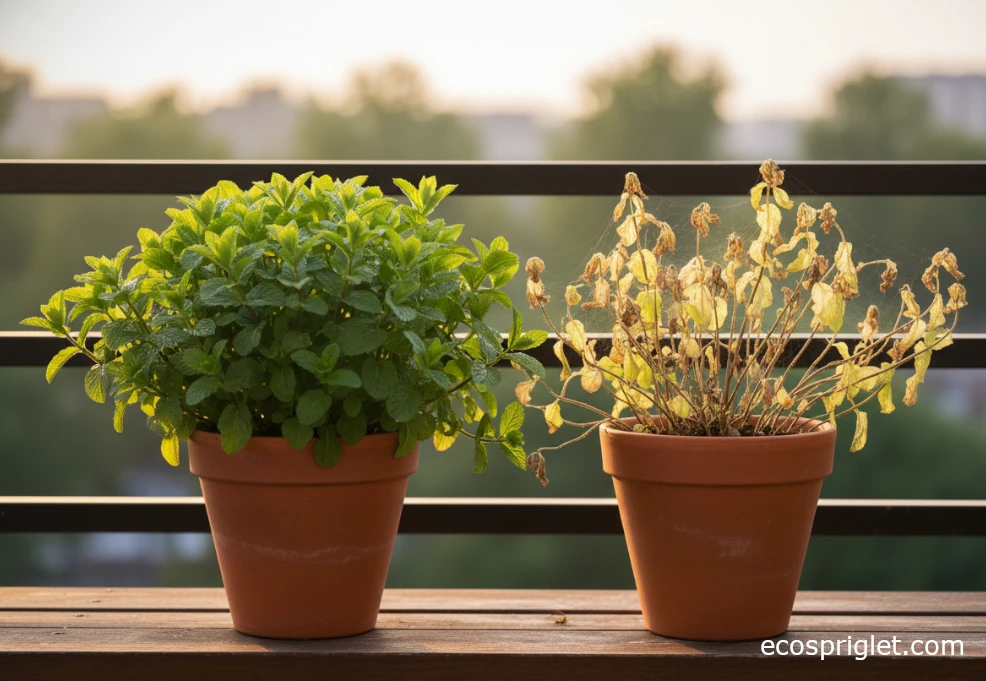
Overwatering is the number-one way indoor herbs die. If your mint’s lower leaves are yellowing and the stems feel soft at the base, ease up on water and make sure excess is draining freely. On the flip side, chronically dry soil will give you crispy edges and a droopy plant—especially near hot windows or heaters.
Mint isn’t a heavy feeder. A light dose of balanced, water-soluble fertilizer at half strength every four to six weeks in spring and summer is usually plenty. Several Extension resources note that herbs generally have more flavor when they’re not overfed, so don’t treat them like greedy houseplants.
Troubleshooting Common Indoor Mint Problems
Even though growing mint inside is fairly low-stress, a few issues pop up again and again. Fortunately, most are fixable once you know what to look for.
- Leggy, pale growth: This usually means your plant is stretching for more light. Move it to a brighter window or add a grow light, then cut stems back by about one-third just above leaf nodes to encourage bushier new growth.
- Yellowing leaves and droopy stems: Often a sign of overwatering or poor drainage. Check that the pot has open drainage holes, let the top 1–2 inches of soil dry before watering again, and remove any standing water from saucers.
- Brown, crispy leaf edges: Typically caused by underwatering or hot, dry air (common near heaters). Water more deeply when you do water, and if your home is very dry in winter, placing the pot on a pebble tray with water (without submerging the pot) can bump humidity around the plant slightly.
- Spider mites or other tiny pests: Indoor herbs can pick up pests, especially in warm, dry rooms. Look for fine webbing and speckled leaves. Rinse the plant gently in the sink, then use an insecticidal soap labeled for edibles if needed, following directions.
- Powdery mildew: A white, dusty coating on leaves, more common in still, humid air. Improve airflow, avoid wetting the foliage late in the day, prune out the worst-affected stems, and give the plant a little more space from its neighbors.
University herb-growing resources often remind indoor gardeners to harvest frequently. Regular snipping keeps mint leafy, helps you spot problems early, and keeps the plant from becoming an overgrown tangle against your window.
Common Mistakes to Avoid With Indoor Mint
I’ve lost more indoor herbs to simple, avoidable mistakes than to any exotic disease. A few patterns show up over and over when people try growing mint inside.
Here are the big ones to dodge:
- Using garden soil in the pot: It compacts, drains poorly, and can bring in bugs. Stick with a light, bagged potting mix designed for containers.
- No drainage holes: A pretty pot with no way for water to escape is a fast track to root rot. If you can’t drill holes, use it as a cachepot only.
- Parking the pot in deep shade: A dark corner might look stylish, but mint grown inside still needs bright light to taste good and stay bushy.
- Heavy-handed fertilizing: Dumping in lots of fertilizer can give you weak, overly soft growth and less flavor. Herbs prefer to be lightly fed.
- Ignoring pet safety: Letting a plant sit where a bored cat can chew it down isn’t ideal, especially since Mentha species are considered toxic to cats and dogs in larger quantities by the ASPCA.
I learned this the hard way with one of my first indoor mint pots. I’d tucked it into a beautiful, glossy pot with no drainage on a dim shelf above my stove. Between low light, steam, and soggy roots, the poor plant never stood a chance. Once I repotted into terracotta, added a saucer, and moved it to a brighter window, the difference was night and day.
Extension guides often mention that larger herbs like mint can outgrow indoor spaces quickly. Don’t be afraid to give yours a haircut when it starts to sprawl or to divide and repot it every year or two. Your cooking—and your windowsill—will be better for it.
Creative Ways to Use Mint Inside a Small Apartment
Once your mint inside is thriving, the fun part is weaving those fresh leaves into everyday life. You don’t need big harvests to make it worthwhile—small, regular snips are perfect for both the plant and your kitchen.
A few easy ways to use your mint without overwhelming a small space:
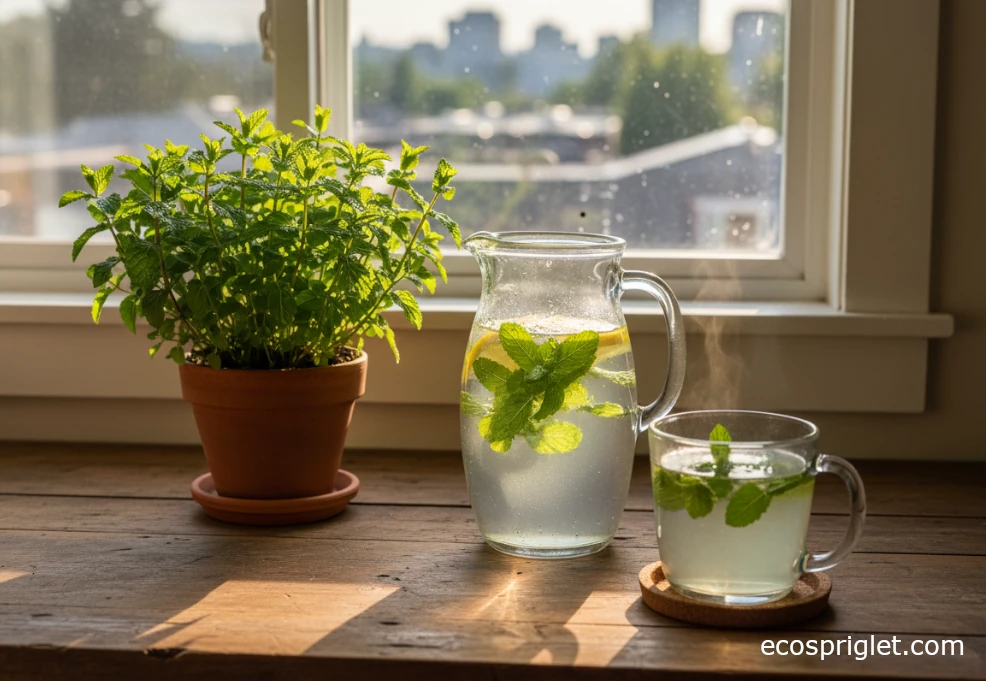
- Everyday teas: A handful of fresh mint steeped in hot water turns an ordinary evening into a calm ritual.
- Infused water: Toss a few sprigs into a pitcher with lemon slices in the fridge for a low-effort upgrade.
- Quick syrups: Simmer equal parts sugar and water with mint, strain, and keep in the fridge for coffee, cocktails, or desserts.
- Finishing herbs: Scatter chopped mint over grain bowls, salads, or roasted vegetables right before serving.
- Mini “scent station”: Keep the pot near where you work from home and crush a leaf between your fingers when you need a reset.
Regular harvesting like this lines up nicely with how mint wants to grow. Many university sources recommend periodic snipping to keep herbs compact and productive rather than letting them get tall and woody. I like to do a quick “mint check” while I’m waiting for the kettle to boil and remove any stems that are shading others or leaning away from the light.
Growing mint inside isn’t about creating a picture-perfect greenhouse; it’s about setting up one or two pots so they quietly support your everyday life. Give mint a roomy container, bright light, and a simple watering routine, and it will repay you with fresh, fragrant leaves for months on end. The same traits that make mint a bit pushy in garden beds are exactly what make it such a forgiving indoor plant for busy apartment dwellers.
If you remember nothing else, remember this short checklist: bright window or grow light, pot with drainage, light potting mix, water when the top 1–2 inches are dry, and harvest often. That’s the core of how to grow mint inside successfully. Everything else—variety, decorative pots, where you place it in the room—is just fine-tuning around those basics.