Cilantro is one of those herbs that feels “easy”… right up until it turns into a tall, skinny, bitter-stemmed plant overnight. Indoors, you’ve actually got an advantage: you can control heat, light, and watering so cilantro stays in its sweet spot—cool-ish, evenly moist, and growing steady leaves instead of rushing to flower.
This guide is built for real apartments: windowsills, small counters, and a few pots tucked near a bright window or under a simple grow light. You’ll learn how to plant cilantro seeds indoors, what size container actually works for coriander plant growing, how to water without inviting fungus gnats, and how to harvest cilantro so it keeps growing. I’ll also show you what to do when things go sideways (leggy seedlings, yellow leaves, bolting), because—speaking from experience—cilantro loves to test your confidence.
Cilantro vs. Coriander: What You’re Actually Growing
“Cilantro” usually means the fresh leaves and tender stems you cook with. “Coriander” usually means the seeds (the spice) from the same plant. So yes—if you’re wondering “can I plant coriander seeds to grow cilantro?” the answer is basically: you’re growing the same species, Coriandrum sativum.
One important indoor note: cilantro has a short, enthusiastic life cycle. If it gets too warm or stressed, it bolts (shoots up a flower stalk), and leaf flavor can turn sharp or bitter. Your goal indoors is to keep it comfortably growing leaves with steady light, cooler temps, and consistent moisture.
Choosing a Pot and Soil Mix That Cilantro Actually Likes
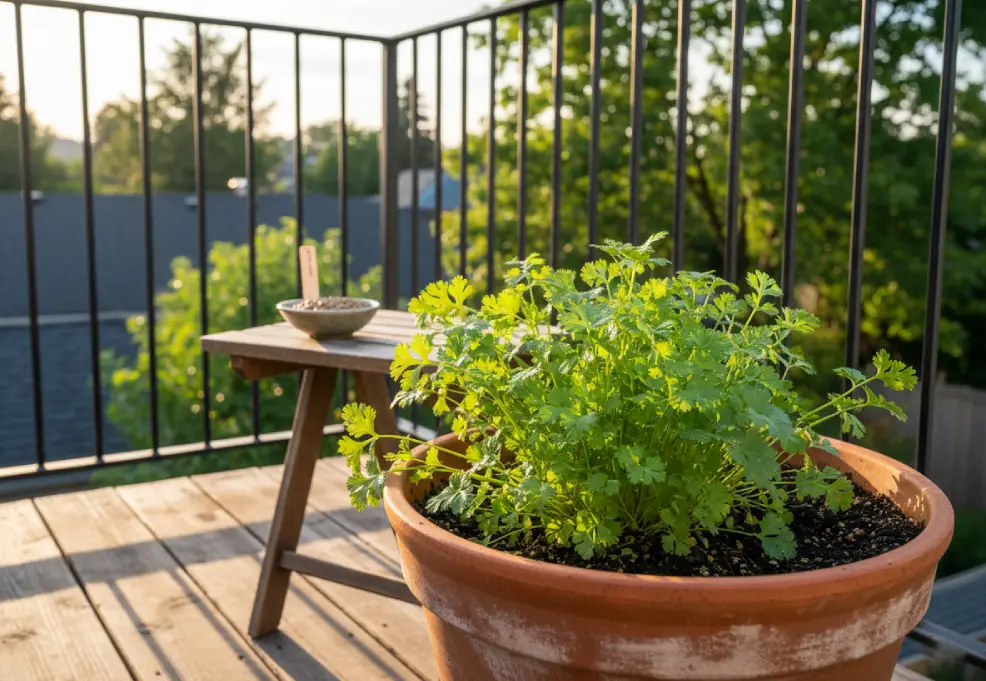
I remember when I first tried growing cilantro in a pot indoors, I grabbed the cutest little 4-inch container, sprinkled seeds, and felt very proud… until everything stalled. Cilantro can tolerate small quarters for a short time, but it’s happier when its roots have room and the moisture level stays stable (tiny pots swing from “swamp” to “dust” fast).
A solid starting setup for growing cilantro in pots indoors:
- Container depth: aim for at least 8 inches deep with drainage holes. Deeper is fine; just don’t go shallow if you want steady growth.
- Width: a 6–10 inch wide pot works well for a small clump (you’ll thin seedlings and harvest often).
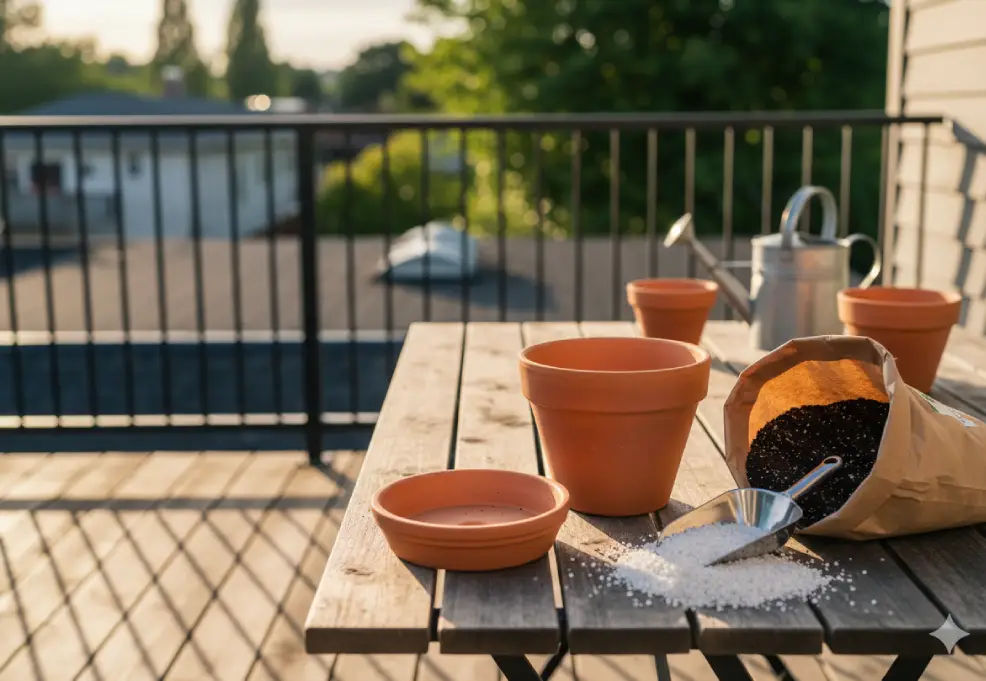
- Soil: use a soilless potting mix (not garden soil). If it’s dense, lighten it with perlite so roots get air.
- Skip the gravel layer: it doesn’t “fix drainage.” Drainage comes from holes + a good potting mix.
Beginner mistake I see a lot: planting in a decorative cachepot with no drainage. If you love the look, use the “pot-in-a-pot” approach—keep cilantro in a nursery pot with holes, then set it inside the decorative pot and pour off extra water.
How to Plant Cilantro Seeds Indoors for Reliable Sprouts
If you want to know how to grow cilantro from seed indoors, here’s the simplest approach: plant where it will live. Cilantro is famously touchy about transplanting because of its taproot, so it’s usually better to sow directly into the final pot and thin later.
Steps for planting cilantro seeds in a pot:
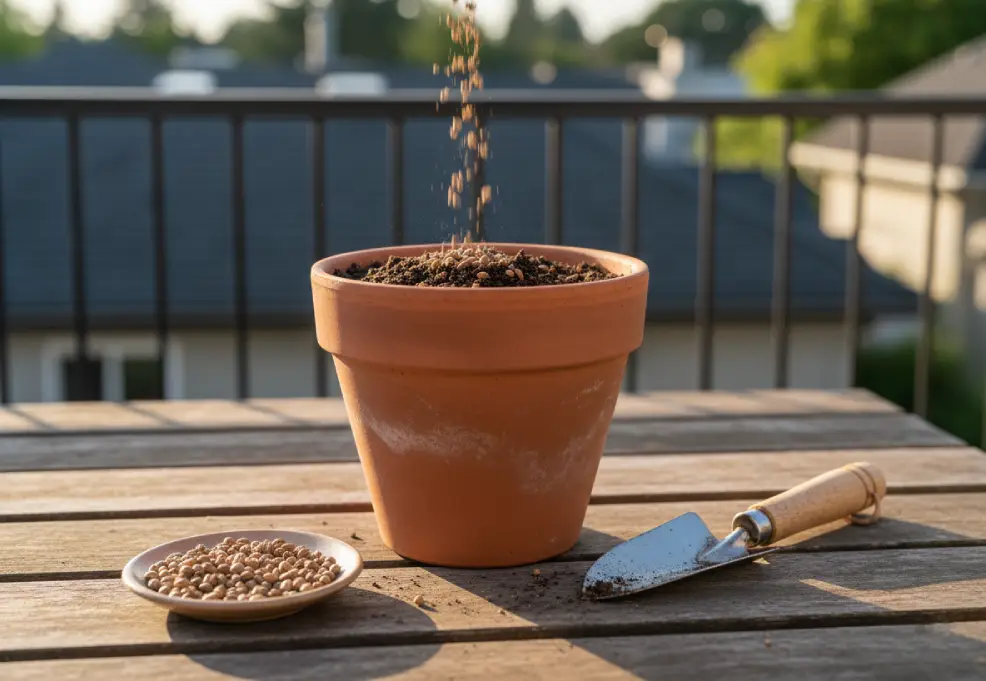
Fill your container with potting mix and water it so it’s evenly damp (think “wrung-out sponge,” not dripping). Sow seeds about 1/4 to 1/2 inch deep, then lightly cover and gently firm the surface. Keep the top layer slightly moist until sprouts appear.
What to expect: under decent indoor conditions, cilantro often germinates in about 7–10 days. Once seedlings are up, thin so plants aren’t packed shoulder-to-shoulder. For leaf harvest, I like to end up with seedlings spaced roughly 2–4 inches apart in containers so air can move and mildew doesn’t move in.
Two quick clarifications people ask all the time:
- Can you plant coriander seeds to grow cilantro? Yes—if they’re viable seeds. Grocery-store “coriander” spice may be old, heat-treated, or cracked. For dependable germination, buy seeds sold for planting.
- How to grow cilantro from cuttings? You can sometimes coax stems to root in water, but it’s hit-or-miss. Seeds are far more reliable for indoor harvests.
Light and Temperature: The Two Levers That Prevent Bolting
Indoor cilantro usually fails for one of two reasons: not enough light (it gets leggy and weak), or too much heat (it bolts). The sweet spot is bright light and cooler temps.
- Window light: aim for about 6 hours of bright light from a sunny window if possible.
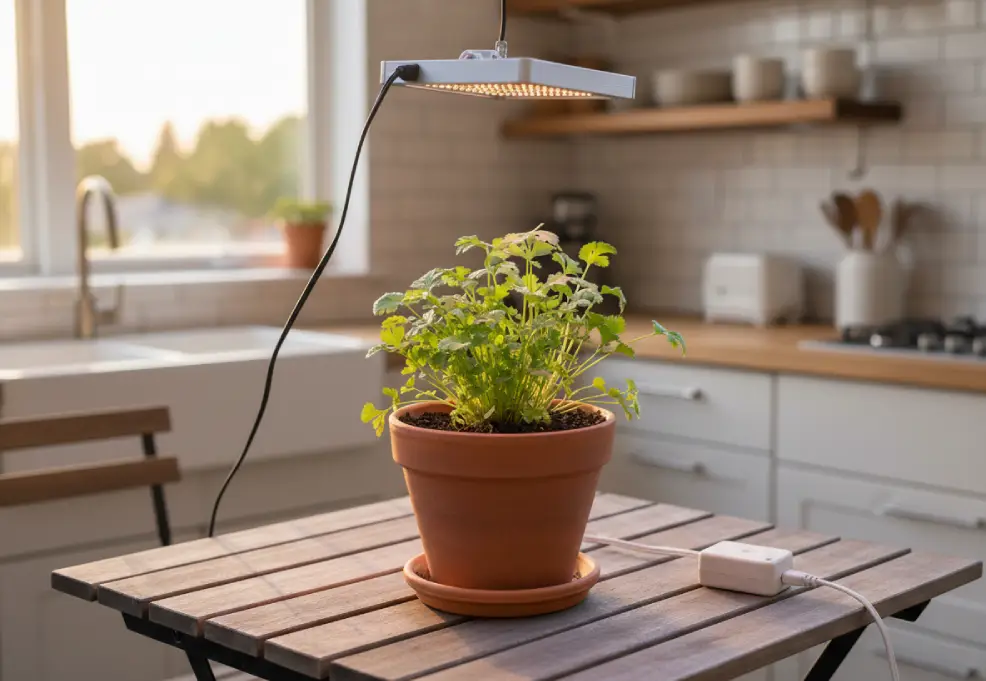
- Grow lights: if you’re supplementing, plan on 12–16 hours/day for sturdy growth (a simple timer makes this painless).
- Temperature: cilantro generally prefers cooler conditions; many guides place its comfort zone roughly in the 50–85°F range.
- Bolting trigger: warm conditions can push it to flower fast—if your kitchen runs hot, move the pot to a cooler room or use brighter light so you don’t “compensate” with heat.
Beginner mistake: putting cilantro on top of a refrigerator or near a heater because “plants like warmth.” Some do. Cilantro often does not. If your cilantro is suddenly shooting up a tall stem with tiny leaves, treat it like a heat warning and cool the plant down.
Watering and Feeding Without Root Rot or Fungus Gnats
Indoor cilantro wants “evenly moist,” but that phrase causes chaos because it sounds like “always wet.” In containers, the simplest rule is a feel test: water when the potting mix feels dry about 1/2 inch below the surface. In a warm apartment with strong light, that might be every few days; in winter window light, it might be less often.
When you water, do it thoroughly—slowly pour until water drains from the bottom, then empty any standing water in the saucer after a few minutes. That one habit prevents a lot of root problems.
Feeding: cilantro doesn’t need heavy fertilizer indoors. If your potting mix didn’t include slow-release nutrients, a light, water-soluble feed can help. Many indoor herb programs recommend low-dose feeding rather than strong, occasional blasts. If growth looks pale and slow after several weeks, try a gentle feed and watch new leaves, not old ones, for improvement.
Fungus gnats love constantly damp soil. If you see little flies, let the surface dry a bit more between waterings, bottom-water once in a while, and remove fallen leaves.
How to Prune and Harvest Cilantro So It Keeps Growing
This is where cilantro rewards you—if you harvest correctly. The goal is to encourage fresh side growth while avoiding the “scalped plant” look that stalls for weeks.
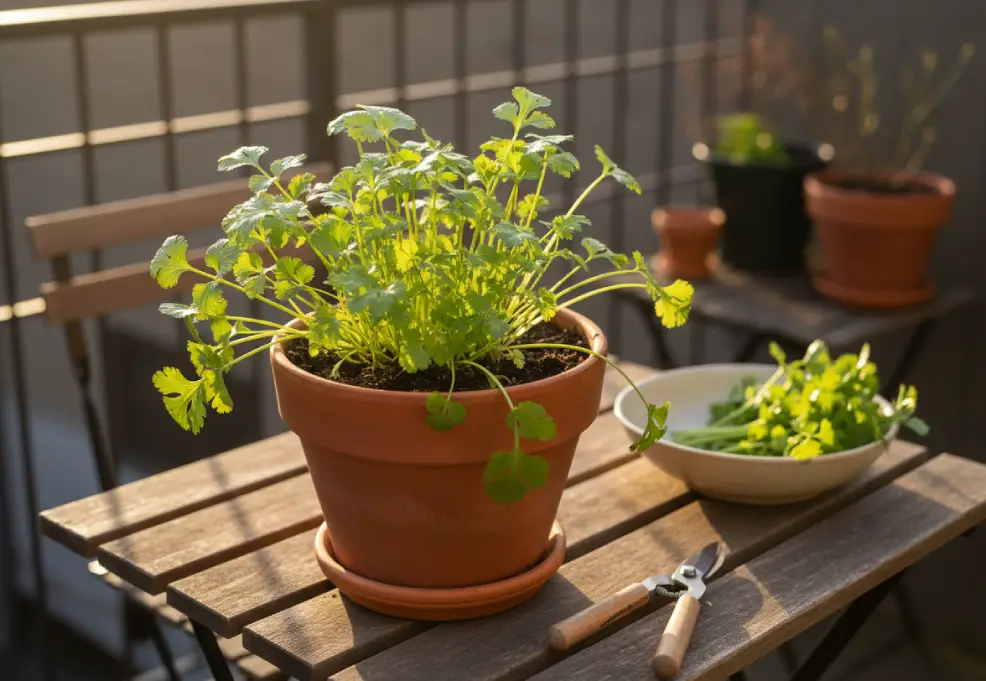
- Start harvesting once plants are roughly 6 inches tall and have multiple stems.
- Cut outer stems first, close to the base, and let the center keep producing.
- Don’t take more than about 1/3 of the plant at once; it needs leaves to rebuild energy.
- For a bigger harvest: you can cut the whole plant back to about 1–2 inches above the soil and often get a second flush, especially if it hasn’t started bolting.
Beginner mistake: plucking random leaves from the middle and leaving long bare stems. Instead, treat cilantro like a bouquet—snip complete stems, and the plant stays fuller. If you want a constant supply, sow a small pinch of seeds every couple of weeks so you’re always bringing a new pot online.
Troubleshooting Indoor Cilantro: What the Plant Is Telling You
Leggy, Floppy Seedlings
This is almost always a light problem. Move the pot to brighter light or add a grow light for longer daily coverage. Rotate the pot every few days so it doesn’t lean hard toward the window.
Yellow Leaves
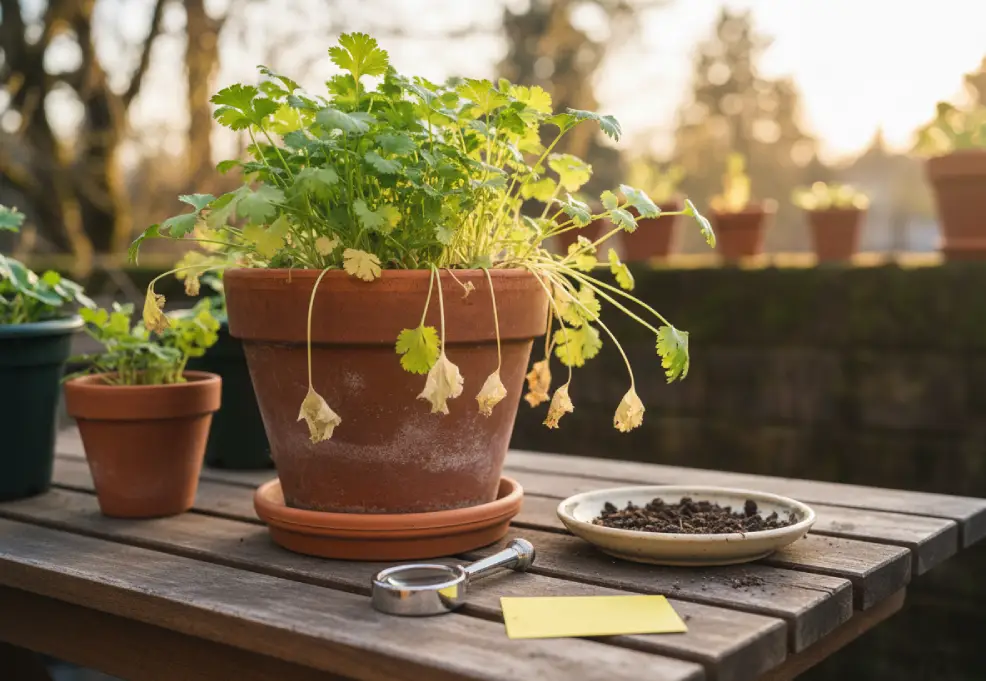
If older, lower leaves yellow first, it can be normal aging—especially once you start harvesting. If many leaves are yellowing at once, check watering habits. Consistently wet soil can suffocate roots. Let the mix dry slightly deeper between waterings, and make sure your pot drains freely. If growth is pale and slow after several weeks, a gentle feeding can help.
Bolting (Tall Flower Stalk, Tiny Leaves)
Heat and stress are the usual triggers. Move the pot to a cooler spot, keep moisture steady, and harvest what you can. Once bolting is underway, leaf production slows—this is when many indoor gardeners simply restart from seed and treat cilantro as a quick, repeat crop.
Fungus Gnats
Let the surface dry more between waterings, remove plant debris, and consider bottom-watering occasionally. Gnats thrive in wet top layers.
Common Mistakes New Indoor Cilantro Growers Make
- Starting in a pot with no drainage: roots sit in water and decline fast. Use drainage holes or a pot-in-a-pot setup.
- Not enough light: cilantro stretches, weakens, and never really “fills in.” Bright window light or 12–16 hours under LEDs helps.
- Keeping it too warm: cozy kitchens can push cilantro to bolt. Cooler rooms often grow better cilantro.
- Overcrowding seedlings: dense clumps invite mildew and slow growth. Thin early for airflow.
- Harvesting the wrong way: random leaf-plucking leads to bare stems. Cut outer stems low for a bushier plant.
Creative Ways to Grow and Use Cilantro Indoors
If you want more cilantro flavor per square inch (and fewer bolting headaches), try mixing in a couple of “side projects” alongside your main pot:
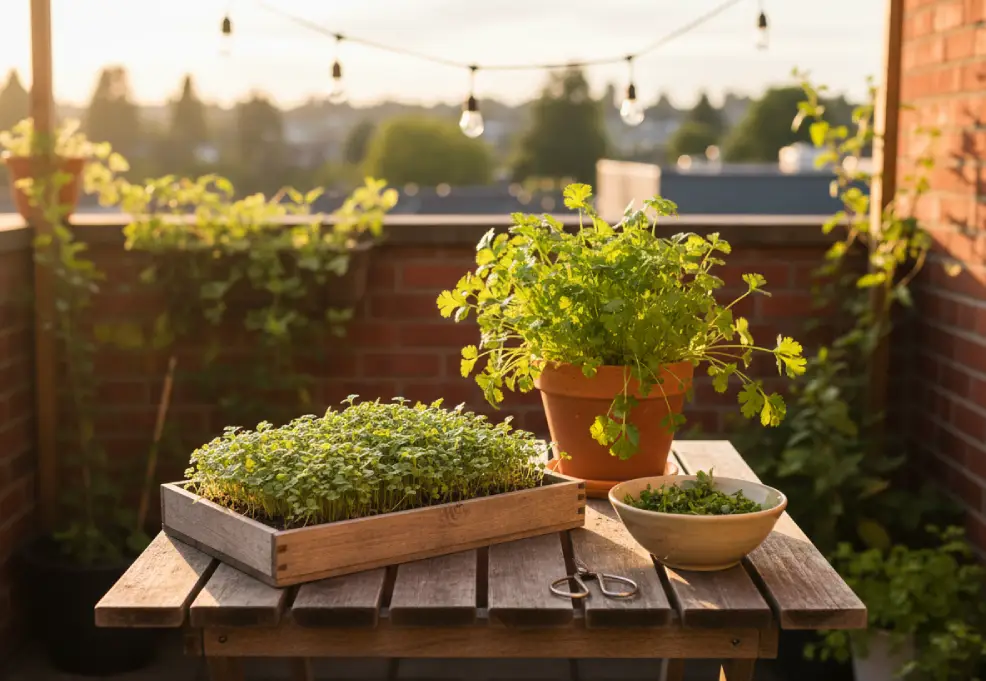
Cilantro microgreens or sprouts: you’ll get harvestable greens fast in a shallow tray under bright light. The flavor is different—more concentrated and a little peppery—great for topping soups and tacos.
Staggered pots for a steady supply: instead of trying to keep one cilantro plant going forever, start a new pot every couple of weeks. In real apartments, this is the most frustration-free way to always have fresh leaves.
Let one plant flower for coriander: if you’ve got space, let one pot bolt on purpose. The flowers are pretty, and you can collect the dried seeds for coriander once they mature—just treat it like a bonus project, not your main leaf supply.
Ready for your first indoor cilantro pot? Start with a deep container, sow seeds directly, give it bright light, and keep it cool enough that it doesn’t panic-bolt. If you only remember one thing: cilantro is a “quick repeat” herb—most apartment growers do best by planting small batches regularly instead of trying to keep one plant perfect for months.
Once you get your rhythm, it becomes ridiculously satisfying: snip a handful for dinner, watch fresh leaves push out a few days later, repeat. And if a pot starts getting tall and bitter, don’t take it personally—compost it, re-sow, and enjoy the reset.
If you want more small-space herb ideas, browse “How to Grow Kitchen Herb Plants” and build a little indoor lineup that makes cooking easier all week.